Toussaint House // 1879

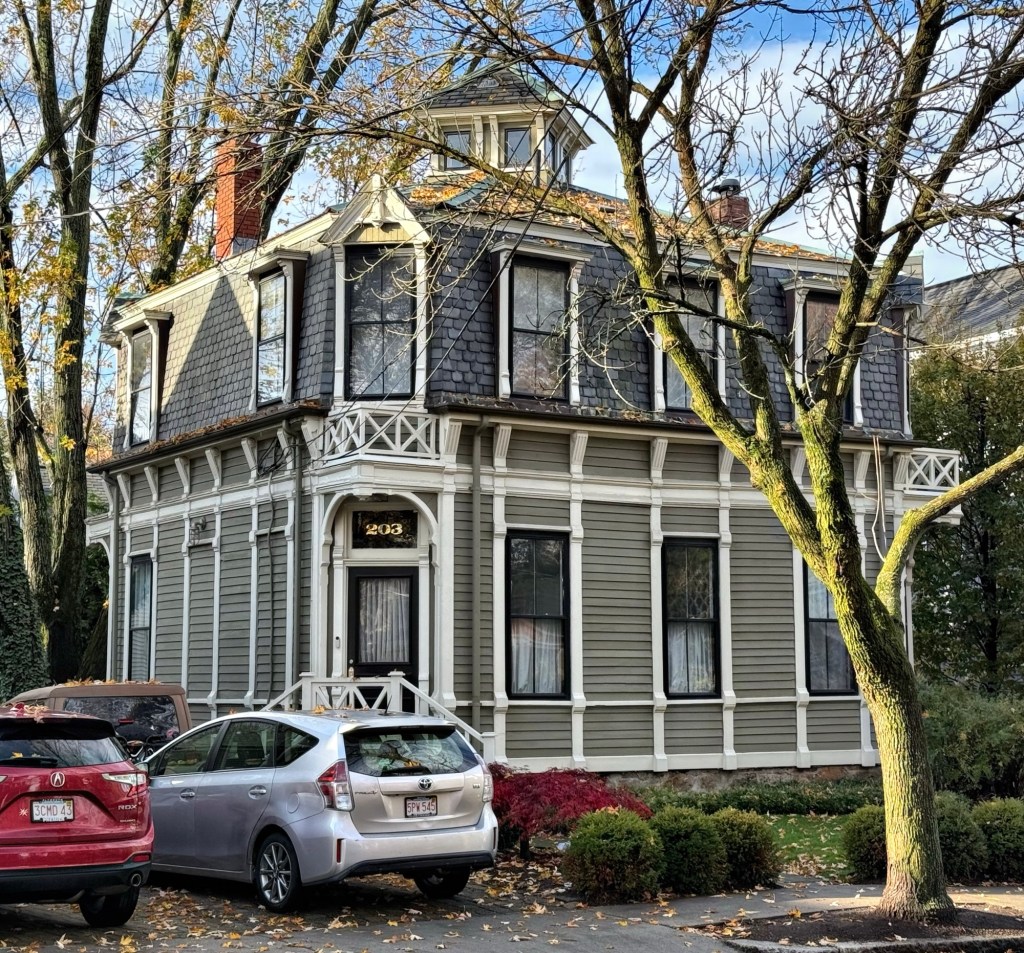
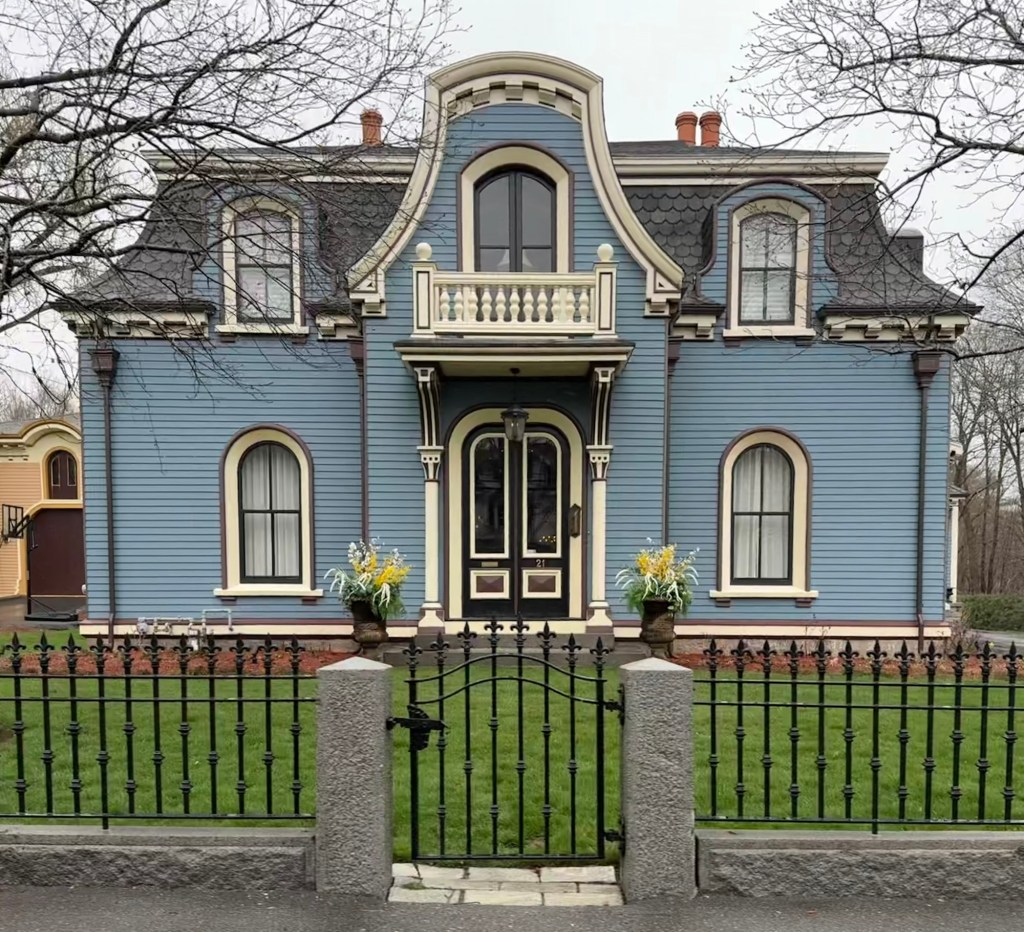
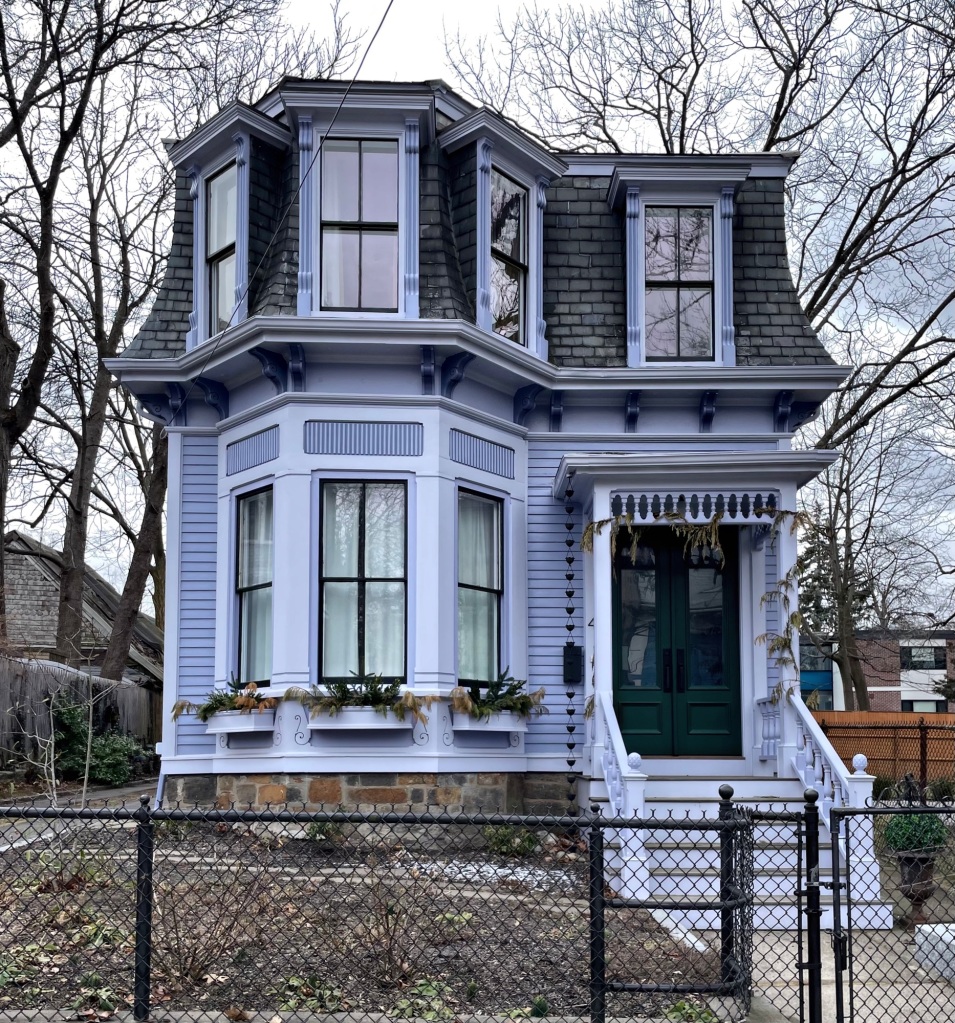
In 1879, furniture-maker and amateur architect, Winand Toussaint (1826-1904), built this unique mansard roofed house at 203 Aspinwall Avenue in Brookline Village. Toussaint was born in Belgium, and immigrated to the United States about 1841, where he originally settled in Roxbury and operated a cabinetmaking business. Toussaint moved from Roxbury to Brookline about 1873, but lost his fortune in the Panic of 1874. After a few years, he found work and eventually purchased a house lot here, and designed and built this home in 1879. Winand was born into a family of architects and engineers in Europe with his grandfather being Jean Lambert Toussaint of Liege, an architect who reportedly built the first railway introduced in Belgium. He is said to have studied in France and Italy before working in furniture-making in the United States. He maintained a professional office from his Brookline house until his death in 1904. After his death, the family home was inherited by daughter, Emma Toussaint, who was unmarried and worked as a linguist and writer under the name “Portia”. The charming Toussaint House blends Second Empire and Stick styles with unique beveled corners, one of which contains the main entrance, and a belvedere at the crest of the mansard roof. Due to its unique architecture, the Toussaint House was individually listed in the National Register of Historic Places in 1985.

Tatro-Tyng House // 1873

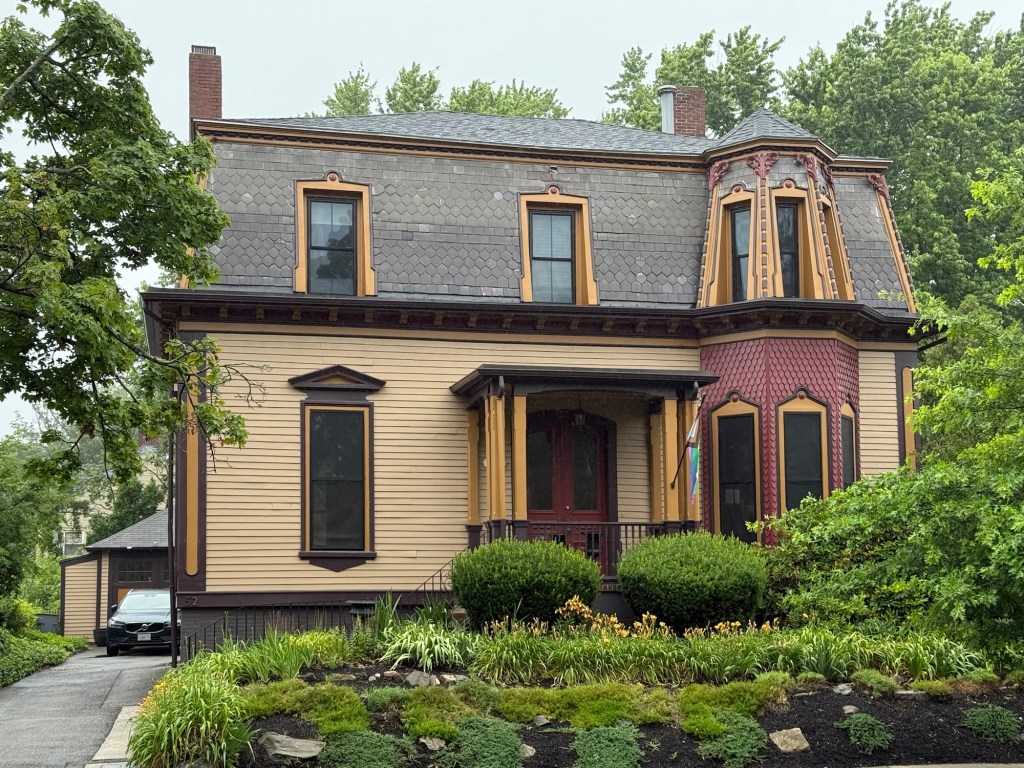
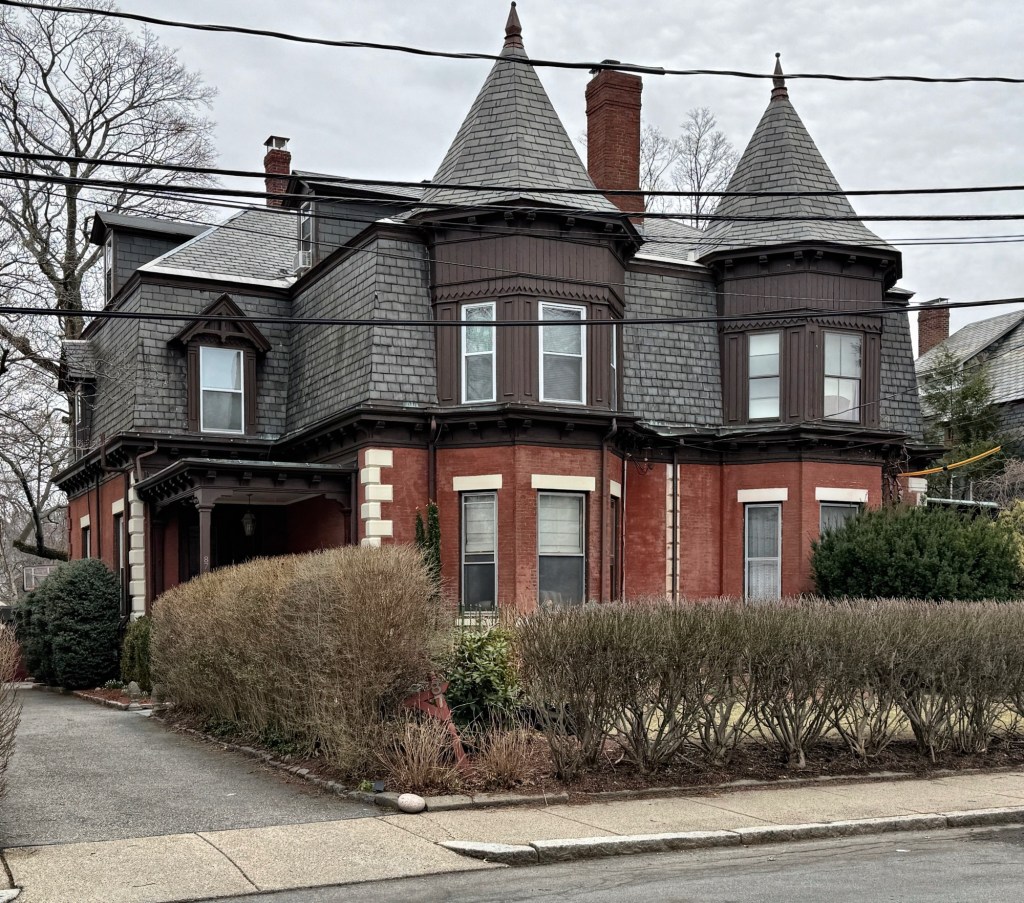
The neighborhood now known as Ashmont Hill had its origins in 1870, when George Derby Welles, who was 26 years old and living in Paris, inherited extensive landholdings in this area from his grandfather’s estate in Dorchester. Welles engaged representatives to subdivide the land. Some parcels were developed with high-style rental properties, managed by his representatives while living abroad, and others were sold and developed by builders, designing homes in the prominent styles at the time. In the early 1870s, the Second Empire style was most popular, though began waning in popularity for Stick and Queen Anne styles. Lots on Welles Street were purchased by Mr. George Tatro, a builder and developer who seemingly designed and built two near identical houses at 48 and 52 Welles street. The houses were completed by 1873 at the time of The Panic, an economic downturn triggered by industrial and railroad over-expansion and consequent bank and business failures. The property was sold, but remained vacant until it was taken over by a bank and then purchased by Catherine Stevens Tyng, the widow of Reverend Dudley Atkins Tyng, who died at just 33-years-old from a freak accident at home. Catherine moved to the area, first settling in Cambridge, to follow her two sons who attended Harvard College, before selling the house and moving to New York. The Tatro-Tyng House is a stunning, and well-preserved example of the Second Empire style, with a shingled bay window and bay dormer in the mansard with applied ornament.

Reed-Loring House // c.1872

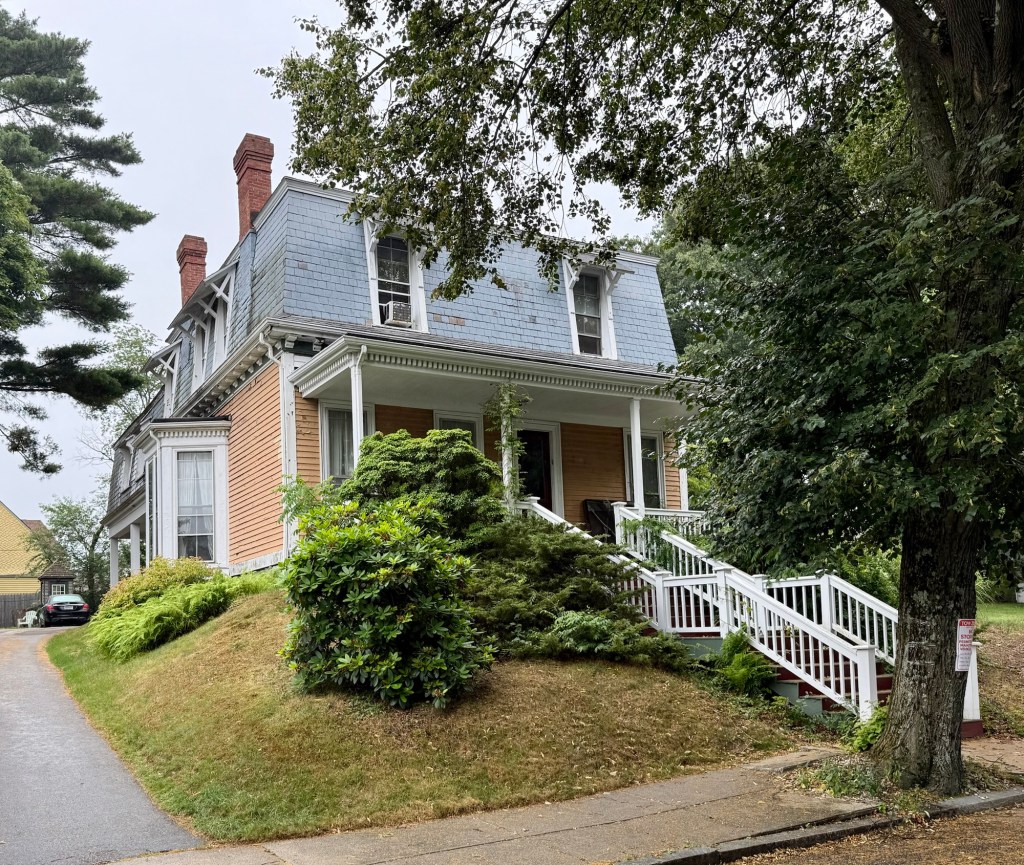
Another of the early houses built in the Ashmont Hill neighborhood by George D. Welles, a young man who inherited and subdivided his family estate in Dorchester, is this mini-Mansard on Harley Street. Like a few others in the neighborhood, this house was built for Welles, likely as a rental property. The house was rented by Charles and Nellie Reed, who had painter, Frank Henry Shapleigh over as a guest. Shapleigh would paint the house in the 1870s, shortly after a stint in Paris. The property would be purchased by Stephen L. Emery, a coal and wood merchant in Boston, and later by Clara Reed, the daughter of Charles and Nellie Reed, who took up permanent residence in this house with her husband Royden Loring, the vice president of the Arnold Roberts Company on Congress Street. Clara Reed Loring lived here until the early 1970s. The Second Empire style house and large, preserved barn at the rear of the lot, provides a glimpse into the early development of Ashmont Hill.

John A. Turner Cottage // c.1875 

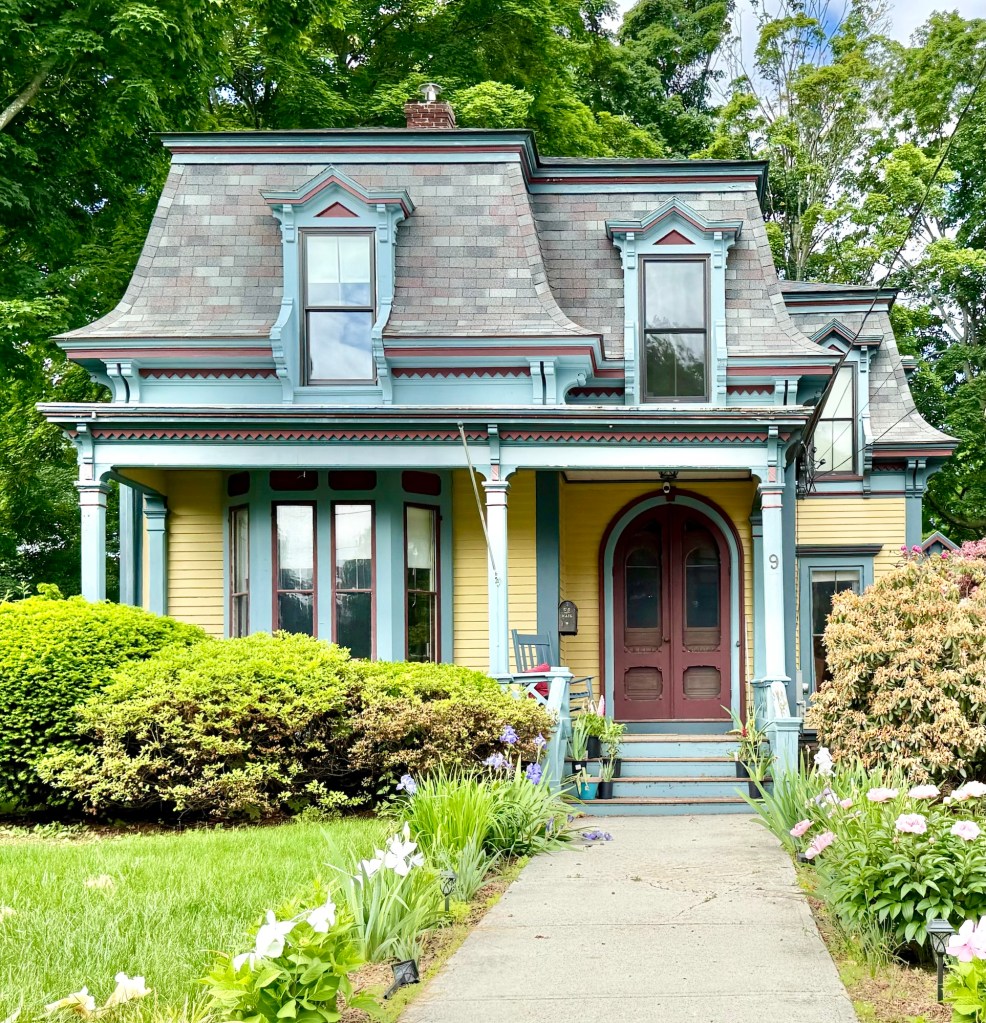
One of the most charming houses in Westborough, Massachusetts, can be found on Central Street, in the commercial village of town. The house was built around 1875 as a Mansard cottage, a style that was beginning to wane out of style by this point. The cottage was built for John Addison Turner (1833-1900) and his wife, Mary Ann Fiske. John worked as a superintendent at the National Straw Works factory, a local manufacturer of straw hats and other goods. The Turner House remains one of the best-preserved Victorian-era homes in Westborough and is even painted to highlight the many intricate details. 

Richmond J. Lane House // c.1860

Located next door to his brother’s house on Union Street in Rockland, Massachusetts, Richmond J. Lane, a shoe manufacturer, built this charming cottage for his family. Built around 1860 in the Second Empire style, this residence includes a concave mansard roof, dentilled cornice with brackets, and arched windows and dormers, and a stable at the rear. Richmond J. Lane (1826-1905) worked in shoe manufacturing and was said to have been instrumental in establishing the Hanover Branch Railroad, and served as president of local banks. The Richmond J. Lane house is an important, and well-preserved example of the Second Empire style in Rockland.

Langley-Dudley Cottage // c.1870

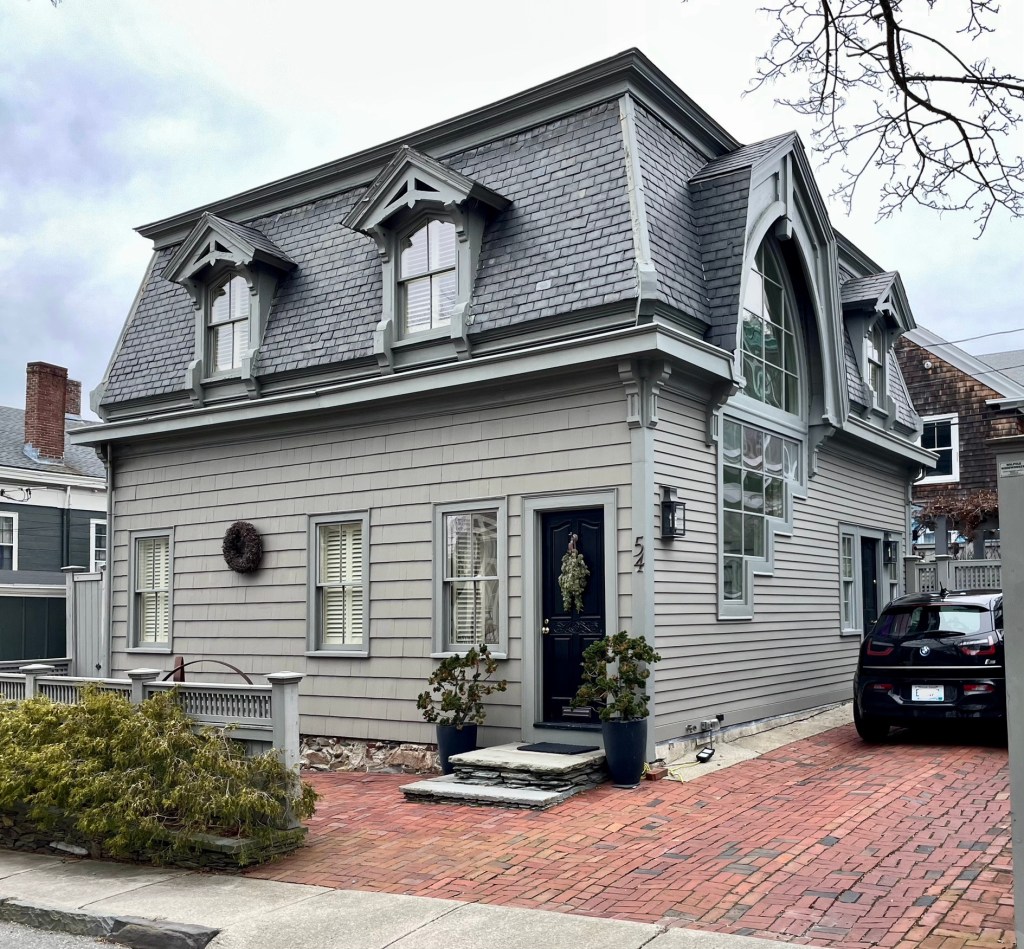
This charming mansard-roofed cottage can be found at 54 Prospect Hill Street in Newport, Rhode Island. While presently a residence, the cottage was originally built around 1870 as a stable or carriage house for the former Bowen-Newton-Tobin House at 204 Spring Street. After the Bowen heirs sold the property, this structure was owned by Mr. John S. Langley, an furniture dealer (who also made coffins and caskets) with the firm Langley & Bennett. The building may have been used for the storage of horses or as a workshop until it was purchased by Mary B. and Dudley Newton, a prominent local architect. They appear to have converted the former stable into a cottage, and rented the property out for additional income. In the renovation, Dudley Newton preserved much of the original detailing above the cornice, and altered openings to provide windows and doors convert the formerly utilitarian structure into a cottage.

Patrick Dempsey Cottage // c.1875

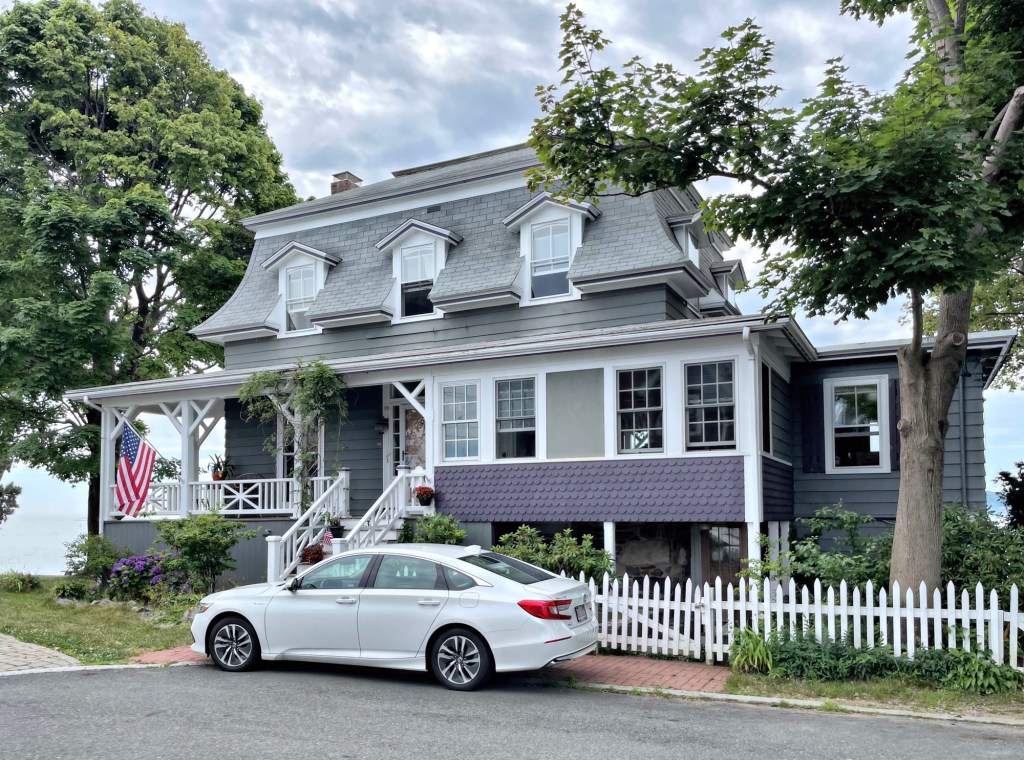
This charming mini-mansard summer cottage is located in the coastal neighborhood of Salem Willows, in Salem, Massachusetts. The neighborhood developed in the 1870s-1900s as a summer colony for middle-income families who wanted a second home away from the hustle-and-bustle of urban living in favor of ocean breezes. The cottage likely dates to the mid-1870s as one of the earliest summer homes in the neighborhood, and historic maps show it was owned by a P. Dempsey. It appears this is Patrick Dempsey (1821-1902), an Irish immigrant who settled in Lowell, Massachusetts, making it big as a liquor dealer and saloon-keeper. The Second Empire style cottage has a partially enclosed porch, but retains much of its original character and is located right on the water with sweeping views of the Atlantic Ocean.

Bread Loaf Campus – Birch Cottage // c.1900

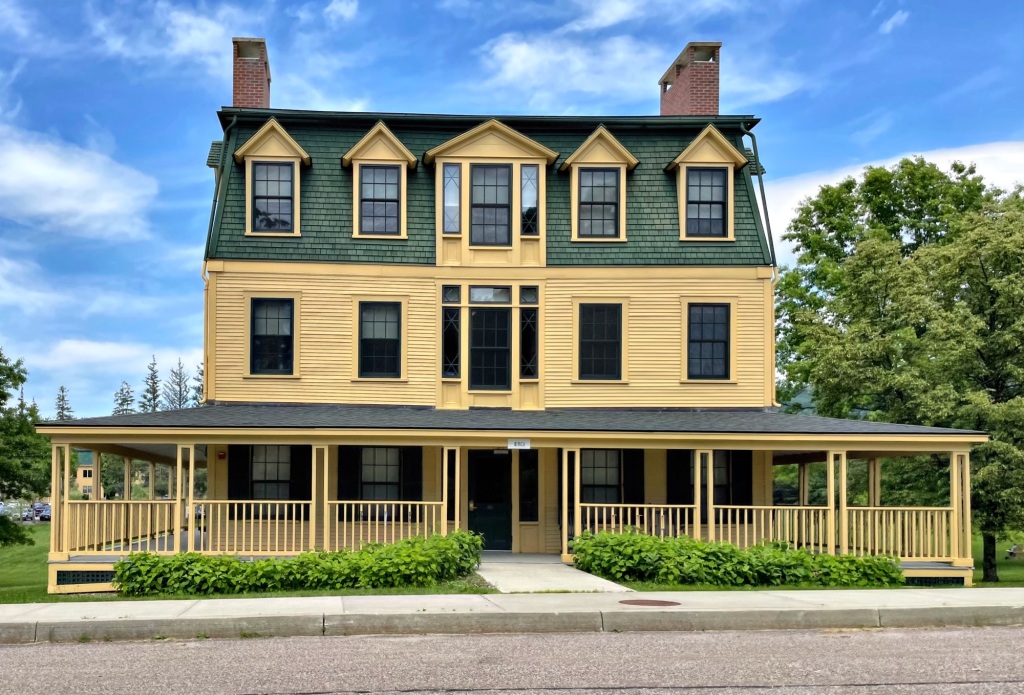
Welcome back to the Bread Loaf Campus! For more early history and context of the complex, check out the post on the Bread Loaf Inn. By 1900, owner Joseph Battell’s enterprise exceeded the capacity of the original inn, and cottages were added to accommodate more guests visiting his new permanent home in the mountains of Ripton, Vermont. An early cottage built by Battell is this late-Mansard structure, named Birch Cottage. The structure clearly took cues from the Bread Loaf Inn, built over a decade earlier, and originally had two floors of porches wrapping around the entire structure.

Sears-Amster Cottage // c.1865

Prior to 1850, the area today known as the Longwood neighborhood of Brookline remained largely farmland on the banks of the Muddy River, the border of Boston. In the first half of the 19th century David Sears (1787-1871) and Amos Lawrence (1814-1886), both prominent Boston businessmen, bought up large tracts of what had been Sewall’s estate. The arrival of the Brookline Branch Railroad (now the MBTA Green Line D branch) served as an impetus to develop the area more fully. Some of the houses built by Lawrence and Sears became homes to friends and business associates, but neither lived in the area. One of the rented houses built and rented by David Sears is this Second Empire cottage likely built in the 1860s. The house was long-rented to wealthy families until the Sears heirs sold the house to Nathan Leo Amster and his wife, Estelle Dreyfus who was raised in Boston. Nathan L. Amster was a railroad executive who eventually became president of the Manhattan Railway Company. When the purchased the cottage, the Amster’s hired Boston architect Clarence Blackall to renovate and “modernize” the home, which added the Classically inspired elements. The couple did not appear to live in the house long, as they spent most of their years in their Fifth Avenue NYC residence. The Sears-Amster Cottage remains an important early house in the Longwood development of Brookline.

Betteley Cottage // c.1883

Albert Cabot Betteley (1816-1893) was an inventor and coal dealer in Boston. He invented an elevator to hoist goods into a warehouse, a peat grinder for the speedy drying of peat for fuel, and even patented wooden pavement…seriously. He eventually would build this home on Cobden Street in Roxbury where he and his wife Mary Jane would live out their retirement. While he didn’t “make it big” persay with his inventions, he exemplified the typical middle-class resident of Roxbury at the time and built this modest home, with its two-story form with octagonal bay, bracketed cornice, and mansard roof. The cottage was recently repainted the purple color, which I really enjoy!