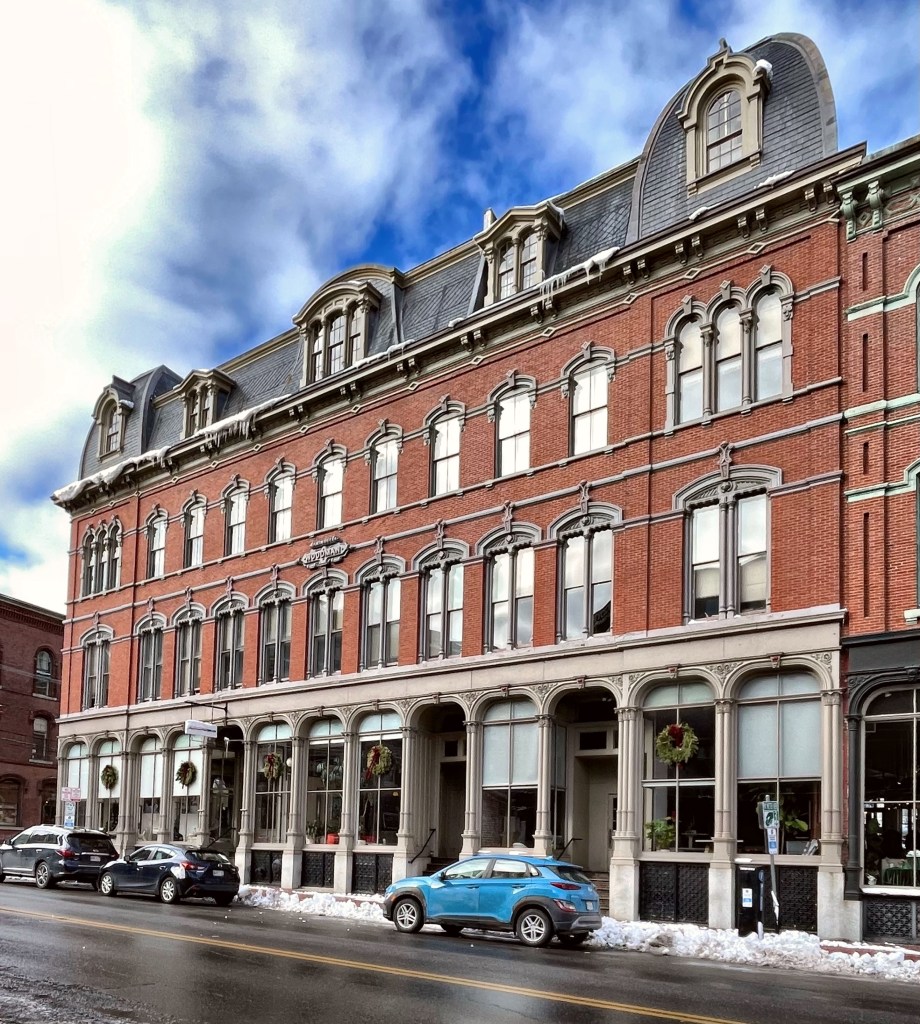
Woodman Block // 1867

Located next-door to the Rackleff Block, this high-style Second Empire commercial block in Downtown Portland, Maine really turns heads. The Woodman Block (like its neighbor) was built in 1867 from plans by architect George M. Harding, who designed the building for George W. Woodman, a drygoods dealer. This stunning commercial block originally housed Woodman’s dry goods firm, Woodman, True, and Company. It later held a druggist and medicine company. The building retains much of its original architectural character minus the iron cresting which once capped the mansard roof. They don’t make them like they used to!
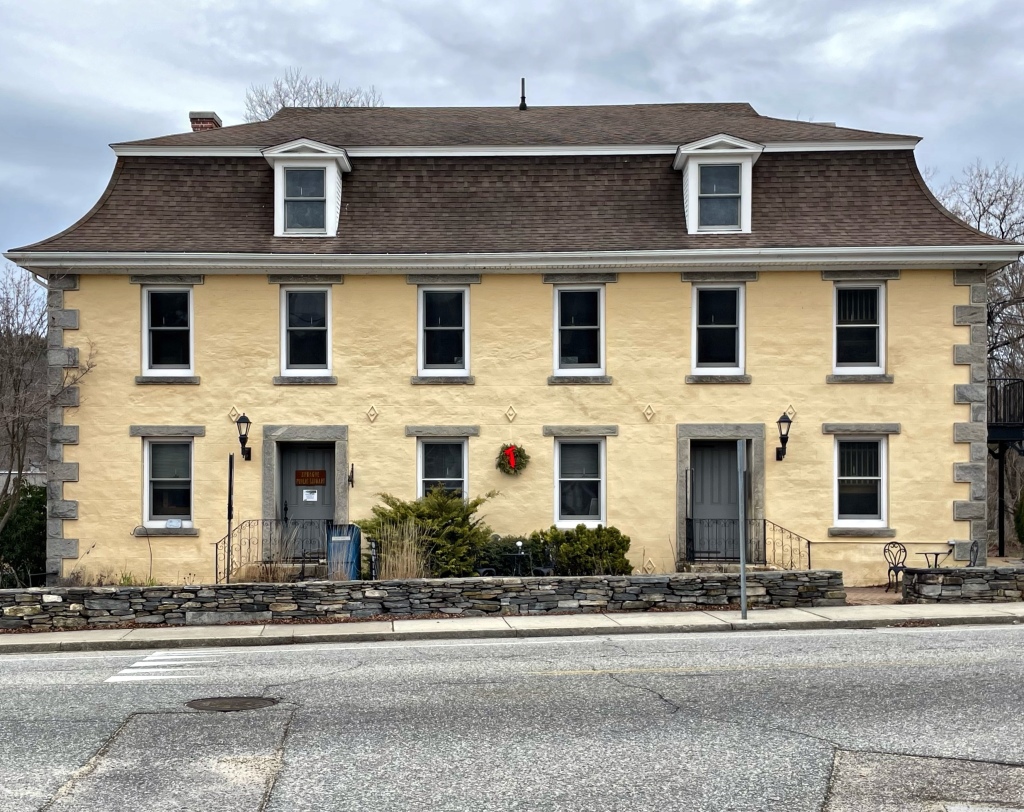
Sprague Grist Mill – Sprague Public Library // c.1875

The town of Sprague, Connecticut was incorporated in 1861, with the land formed from portions of the town of Franklin. A few years earlier, in 1856, former Rhode Island Governor and U.S. Senator William Sprague III of Rhode Island had laid out plans to build “the largest mill on the Western Continent” in eastern Connecticut, only to die later that year. His nephews William and Amasa Sprague constructed the Baltic Cotton Mill in what was to become the village of Baltic, which is today the geographic and population center of the town of Sprague. The village of Baltic developed largely between the years 1857-1861, when the Sprague brothers developed the mill, commercial buildings, and workforce housing for the employees. In 1870, 804 men, 396 women, and 210 children worked in the Baltic mill. This building was constructed after the initial period of development for the town in about 1875 as a grist mill. It is now home to the town’s library!

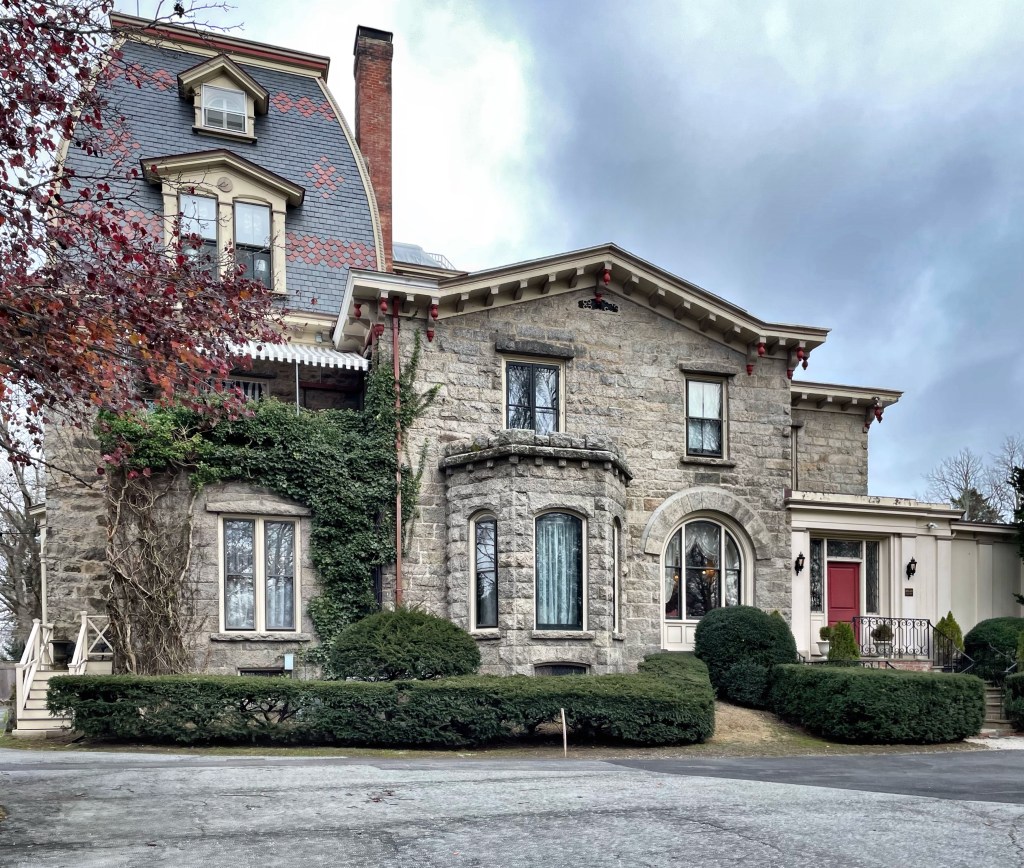
Belair Mansion // 1850

One of the most stunning summer “cottages” in Newport, Rhode Island is this stone behemoth named “Belair”. The house is set back way off the street and was one of the first summer estates built in this section of Newport. Belair was built in 1850 for New York oil baron H. Allen Wright in the Italianate style and constructed of roughly dressed stone and was originally about half of the size of the current footprint. The mansion was designed by architect Seth C. Bradford, who is also credited as architect of the similarly designed Chateau-sur-Mer, built one year later. Wright sold this house to George H. Norman two years after its completion. Norman (1827-1900), founded the Newport Daily News in 1848 and made his fortune as an engineer, first establishing gas works and later water works systems across New England, New York, and the Midwest. Norman made a fortune, and renovated and expanded his mansion in 1870 from plans by Newport architect Dudley Newton, with grand Second Empire additions, including the high convex-mansard corner tower. The original four acre Belair property has been extensively subdivided, and this house now occupies a lot of about an acre; with the original outbuildings sold off, and Belair is now 11 condominium units!

Andrew Hunt House // 1878

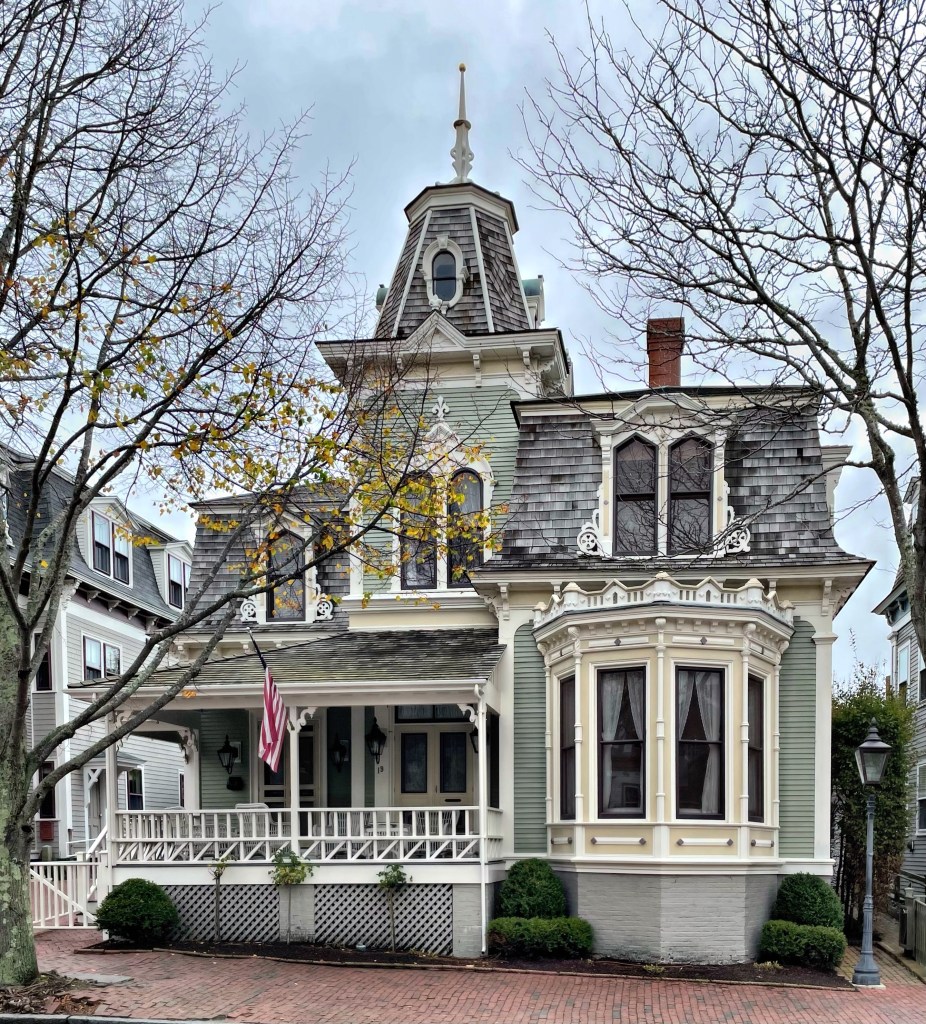
When one thinks of architecture on Nantucket, many would think of old Colonial-era capes and stately Federal and Greek Revival whaling captains mansions. There are Victorian-era houses on Nantucket, but building on the island tapered off by the mid 1800s after the mid-1700s to the late 1830s when Nantucket was the whaling capital of the world. In December of 1877, Nantucket coal dealer Andrew Hunt purchased a vacant lot on Broad Street to erect a new home for his family. Mr. Hunt hired local builder Charles H. Robinson to design and construct the Second Empire cottage, which today, remains one of the best-preserved and high-style Mansard residences on the island.

Coney House // c.1870

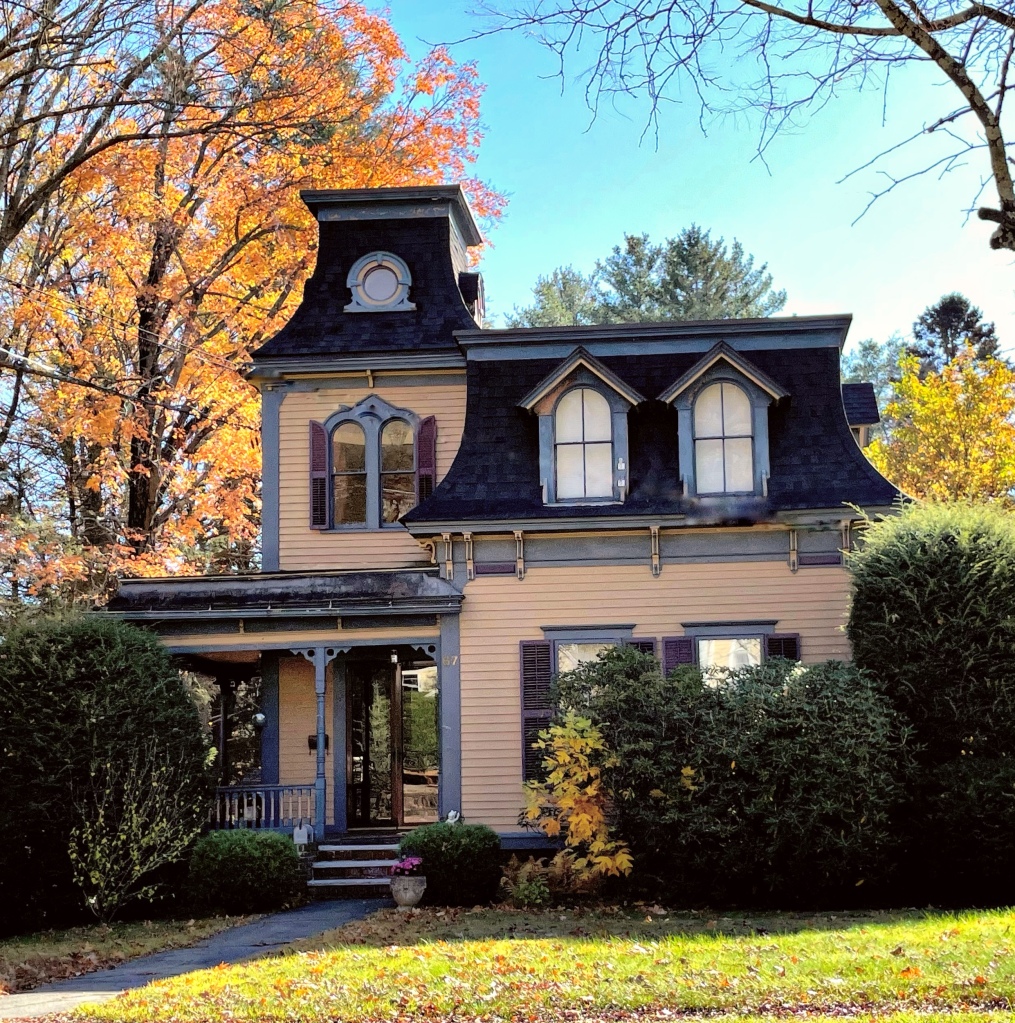
Located on Church Street, the best architectural stretch of buildings in Ware, Massachusetts, you’ll find this absolutely charming mini-Mansard house. The property was built after the Civil War and historic maps show it was owned by a J. Coney. Upon further research, it seems J. Coney is John Coney (1809-1884), a farmer who retired in 1870 and was later referred to as a carpenter in census’. It is likely that Mr. Coney built this mansard cottage around his retirement and relocation to Ware’s industrial village, building it himself. The home features gabled dormers with round-headed sash projecting from the mansard roof. A two-story tower has paired, round-headed windows with oculus windows. Perfection.

Francis Carpenter House // c.1857

I love a good Second Empire style house with a mansard roof, and luckily, New England is full of amazing examples. This house in Providence’s College Hill neighborhood dates to about 1857 and appears to have been built for Francis W. Carpenter, a successful businessman who would later serve as President of the Congdon & Carpenter Company, an iron and steel company which was founded in 1792. Carpenter did very well for himself and would later move out of this house and into a stunning Beaux Arts mansion further up the street (featured previously), designed by the premier architectural firm of Carrère and Hastings. The house is today owned by RISD, and appears to be used for residences.

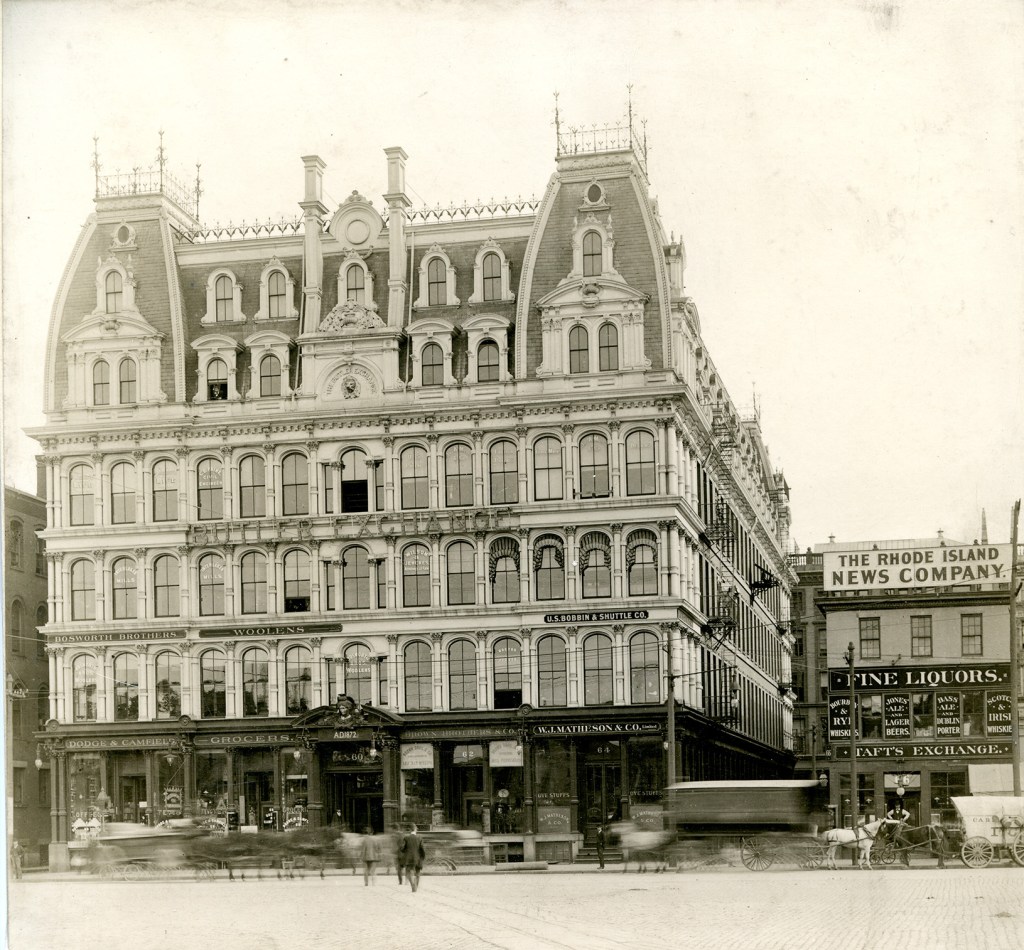
Butler Exchange // 1871-1925

Image Courtesy of Providence Public Library collections.

This magnificent structure formerly in Downtown Providence would likely still exist today had a devastating fire not destroyed it in 1925. When construction on the Butler Exchange began 1871, the area we know today as Downtown was only a cluster of small wooden and brick residences with commercial operations on the ground floors; the key retail shopping districts were across the river around where Brown University is today. The first major commercial development in modern-day Downtown was the Providence Arcade (featured previously), built in 1828, by Cyrus Butler. The Arcade languished in tenants and shoppers earning it the name, “Butler’s Folly”. A half-century later, a new Butler project was about to take off. Cyrus’ heirs built the Butler Exchange, which upon completion in 1873, was the largest building in Providence and its splendid French-inspired two-story mansard roof was a nice pairing with the City Hall being built nearby. The Butler Exchange saw commercial use, offices, and a school before a fire destroyed much of the building, leading to its demolition. The building was later replaced by the Industrial National Bank Building aka the “Superman Building”.

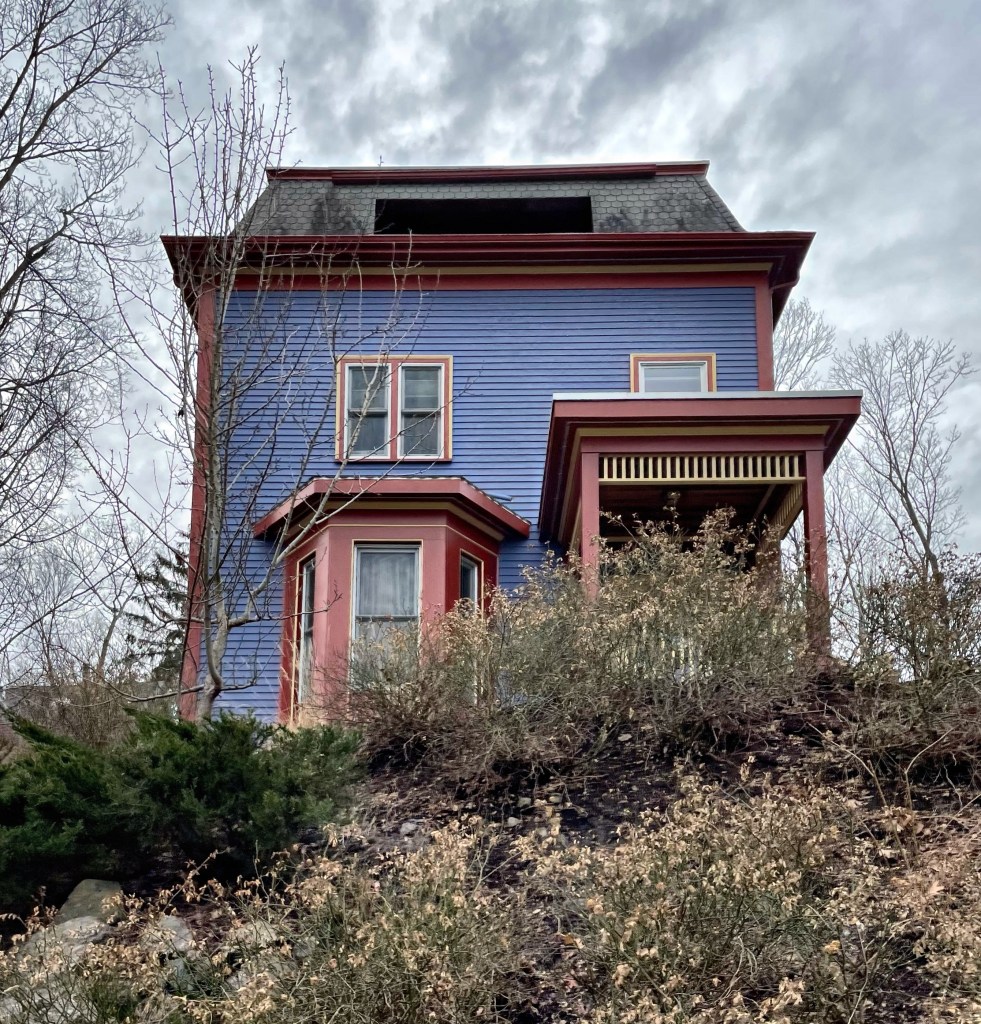
Isaac Cary House // c.1870

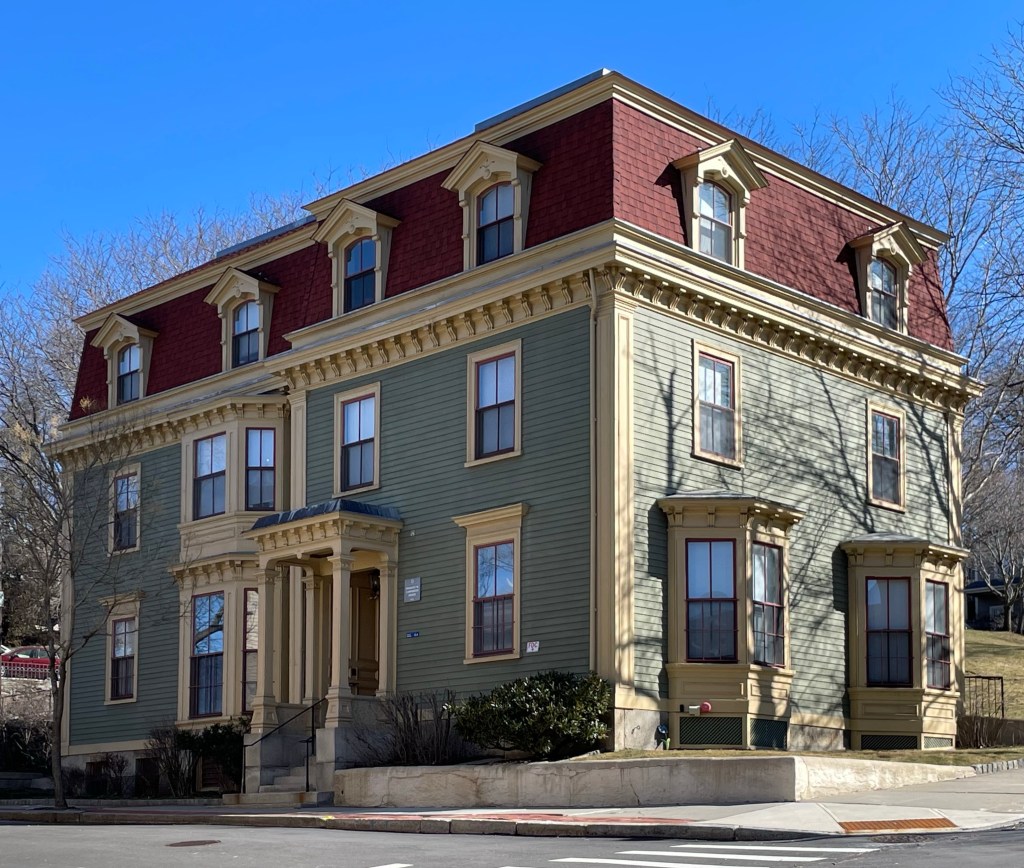
Isaac Harris Cary (1803-1881) was born in Charlestown, MA to an established, old New England family. He eventually settled in West Roxbury, an area that is now known as Jamaica Plain, where he operated a tannery along a branch of Stony Brook, a tributary of the Charles River. Isaac built this home and a couple income-producing rental properties on a hill adjacent to the newly established Forest Hills Cemetery. The Second Empire style home today features bright colors and a modern recessed window set into the mansard roof, likely providing views to Boston’s skyline.

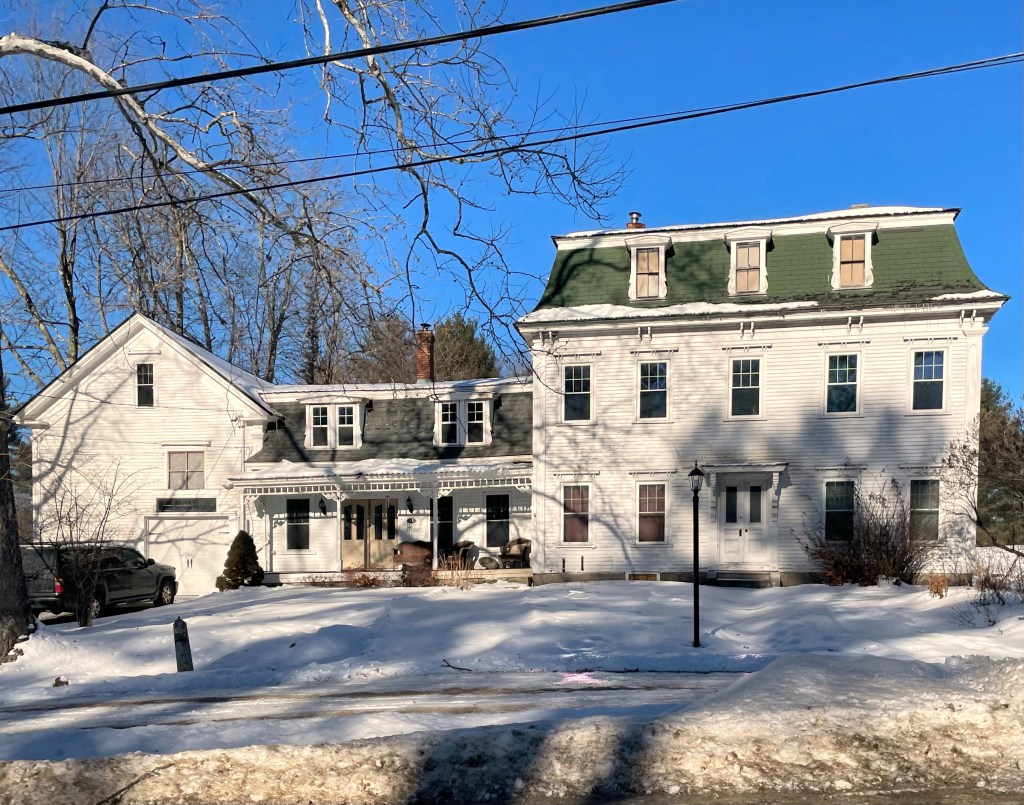
Boothby House // 1870

The Second Empire style did not take off in Maine as it did in other parts of New England (and the U.S. for that matter), so it’s always a treat to spot one driving the backroads of the Pine Tree State! This house in Denmark, Maine, was built around 1870 for E. A. Boothby, who worked as Assistant Engineer of the Maine Central Railroad. The Second Empire style is evident here from the mansard (French style) roof, bracketed eaves, and a hooded double-door entry.

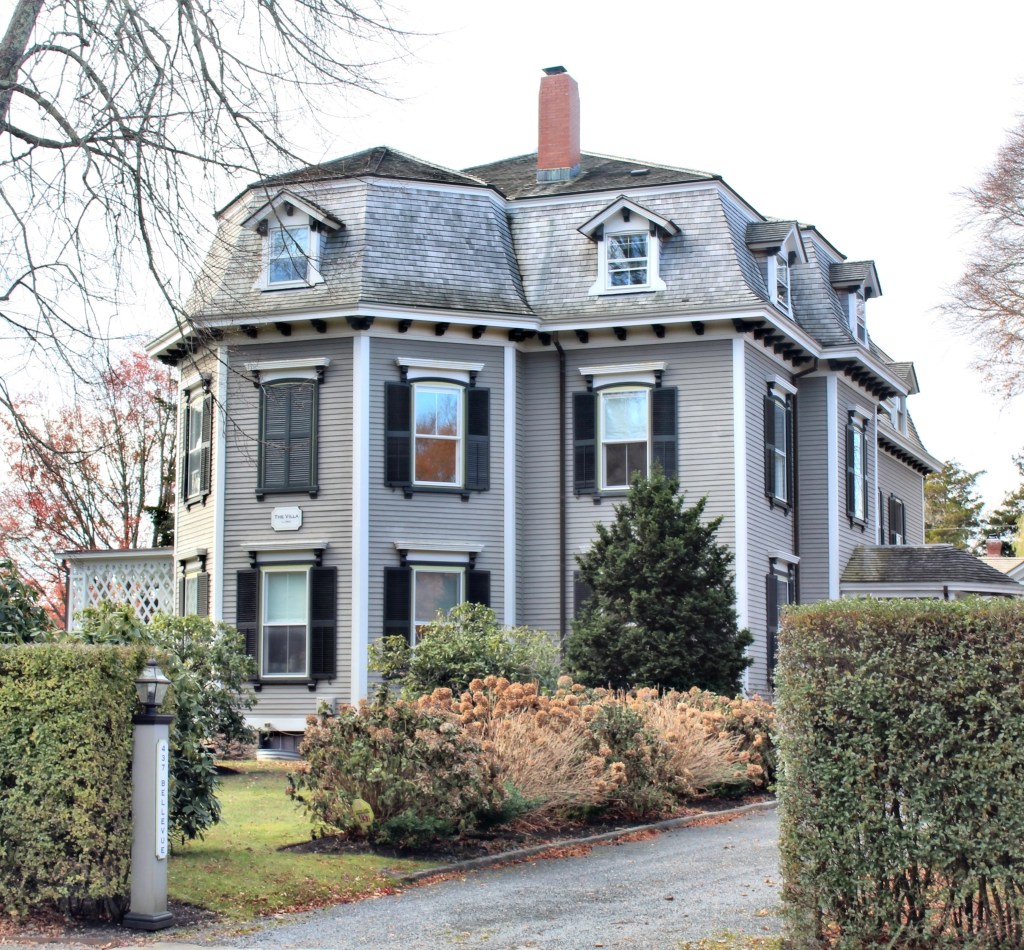
The Villa – Sigourney House // 1864

Margaret Barker Sigourney was the wife of Boston lawyer Henry Sigourney (1783–1849). In 1864, just as the Civil War was coming to a close, Sigourney purchased a piece of land on Bellevue Avenue in Newport soon after the time that Newport had been rediscovered as a tourist destination for the elite class. Sigourney wanted to make a splash as a single woman summering in Newport, so she hired local architect George Champlin Mason to design her cottage in the fashionable Second Empire style. The refined facade is more academic, while the rear and side facades exhibit porches with delicate bargeboards and trim. Sigourney spent summers at her cottage with her only son until 1873 when he and his family perished and were lost at sea aboard the Ville du Havre, when it collided in the Atlantic with another ship, killing a total of 226 aboard the ships, many of which drowned and their bodies never recovered. Alone, Margaret Sigourney continued to spend her summers in Newport until her own death in 1885.