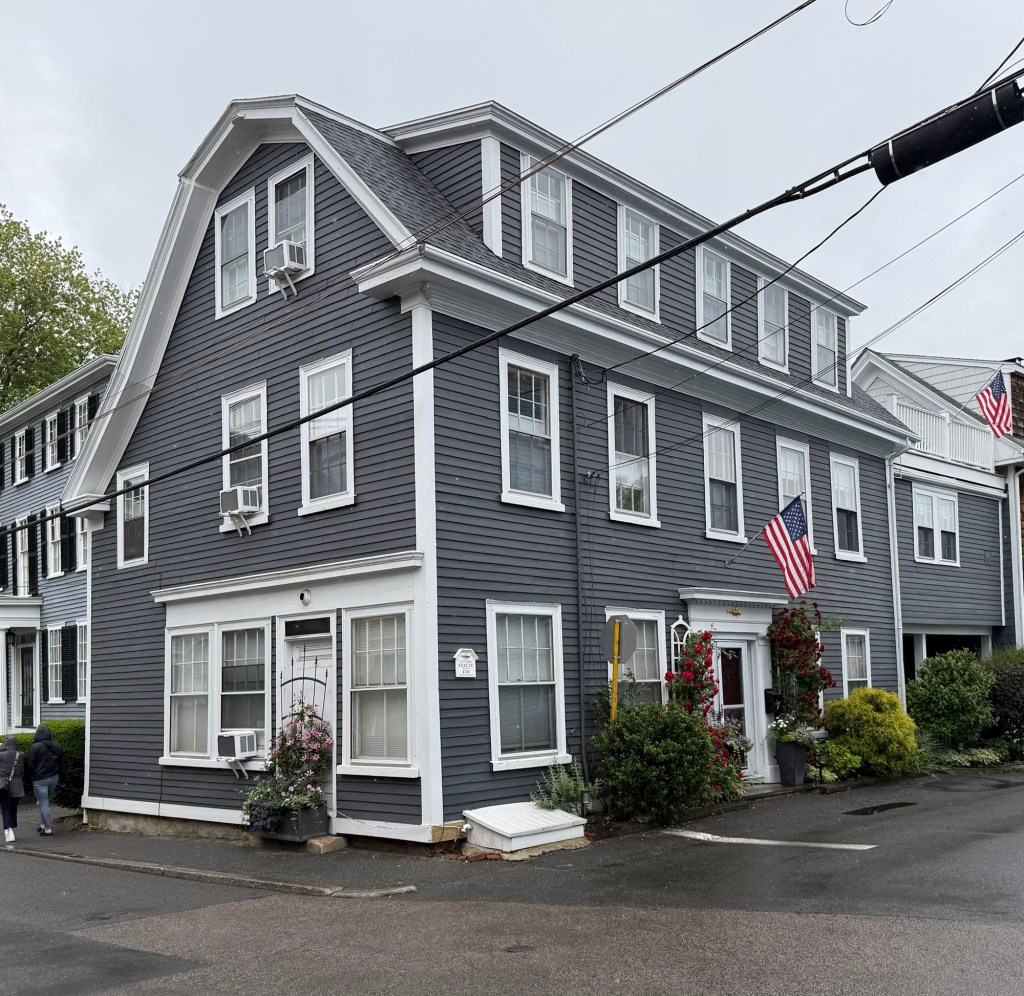
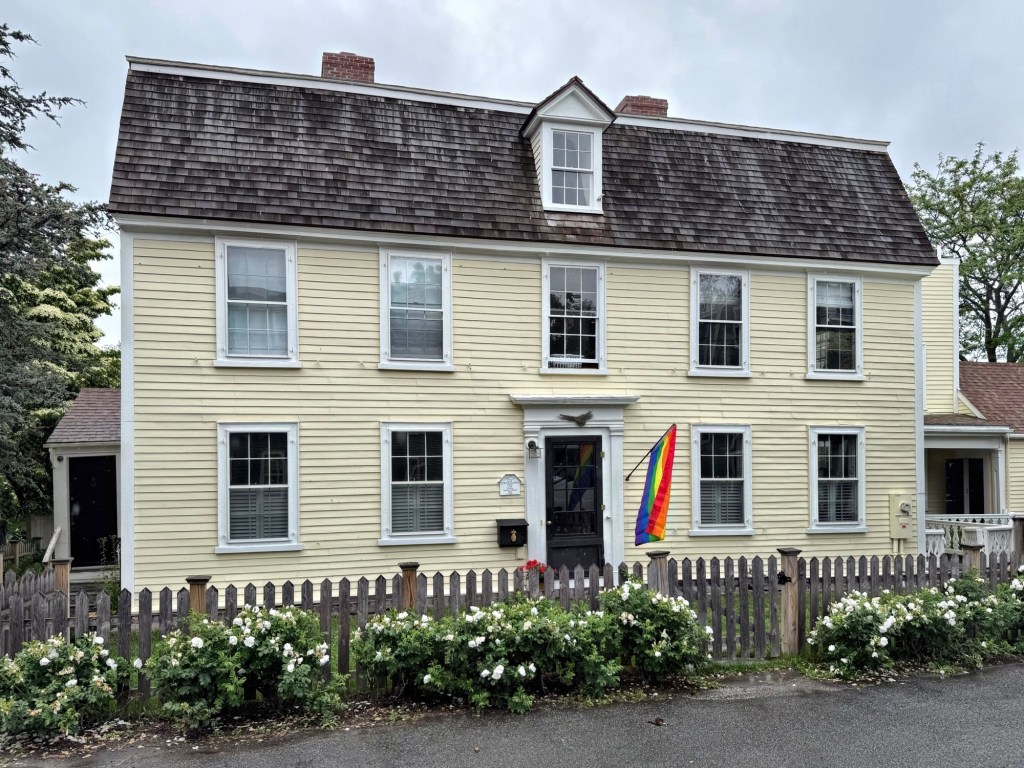
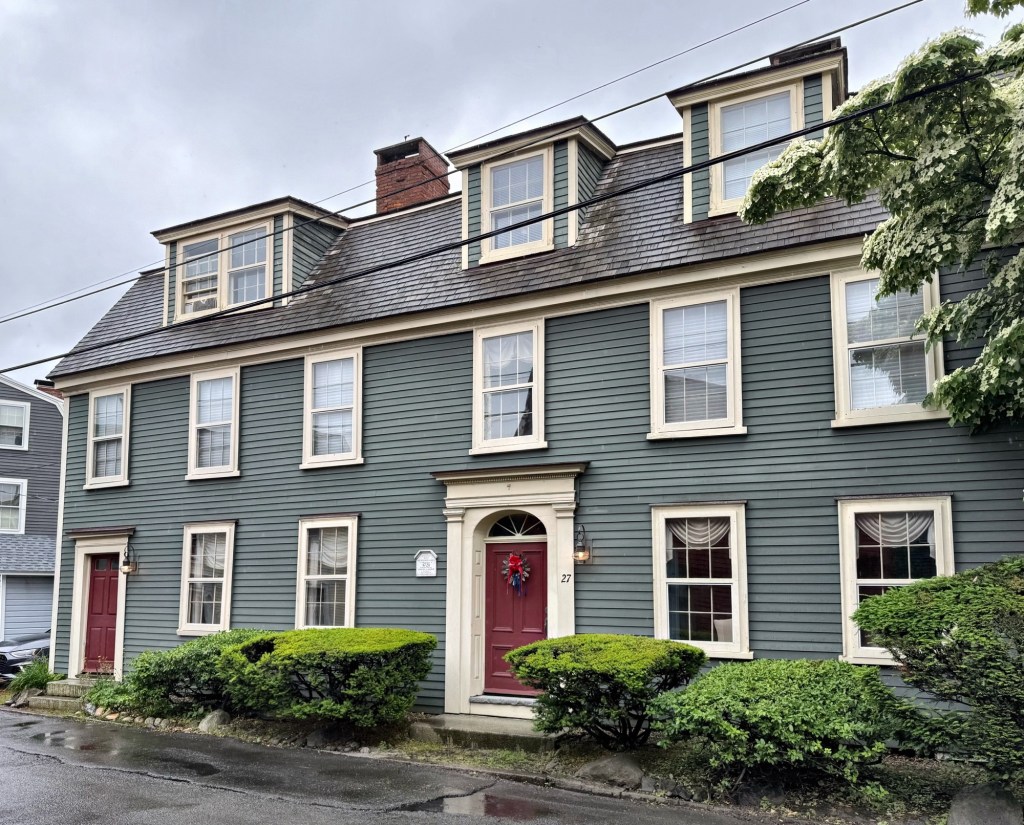
In 1731, Captain John Stacey, a merchant and shipowner in Marblehead, had this gambrel-roofed house built on family land. Due to its orientation from the main street, a passageway allowed access to the rear of the property where other buildings were constructed by the family. By 1850, the house was jointly owned by Hawkes and Brown, with Mr. Hawkes operating a store in the first floor corner room. Eventually, by 1912, Brown had bought the whole building and moved his meat market into the store in this building. The property was later purchased and restored by Donald Mackenze Stacey (1916-1998), a contractor and descendant of the home’s original owner, John Stacey. Donald was a veteran of the U.S. Navy and served in World War II, before moving back to Marblehead and worked in the building trade. In town, he restored antique clocks, furniture, and buildings, including the Old Town House and Abbott Hall, the current town hall.
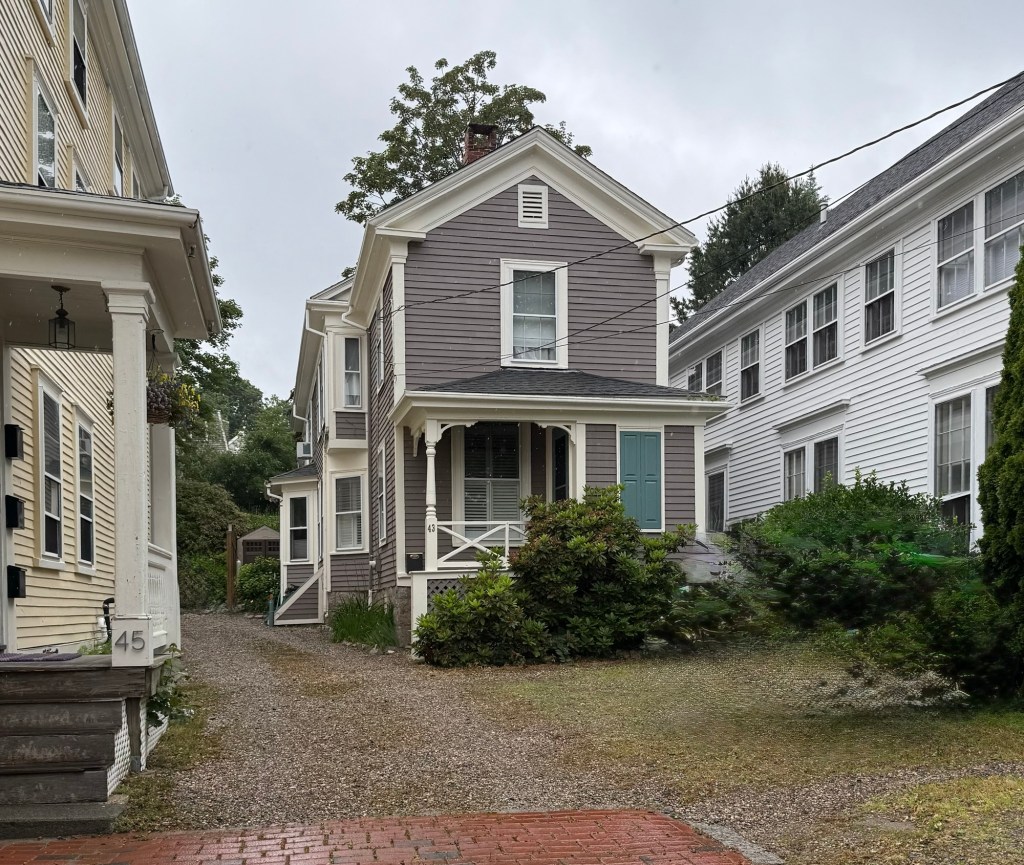
While Marblehead is best-known for its Georgian and Federal period houses, there are some great examples of later styles, sometimes tucked behind and in side yards of earlier residences. This is the Joseph Lindsey Cottage on Washington Street, a vernacular, Folk Victorian style residence built in 1886 by carpenter and housebuilder, Joseph W. Lindsey (1823-1902). Mr. Lindsey lived nearby on High Street, and purchased an earlier house at 45 Washington Street by 1881, building this cottage five years later and rented both out to boarders. Joseph Lindsey worked his entire life as a carpenter, except for a few years when he and his brother, Philip B. Lindsey, travelled west to seek gold and fortune during the California Gold Rush. The Lindsey Family Papers are part of the collections of the Marblehead Museum.
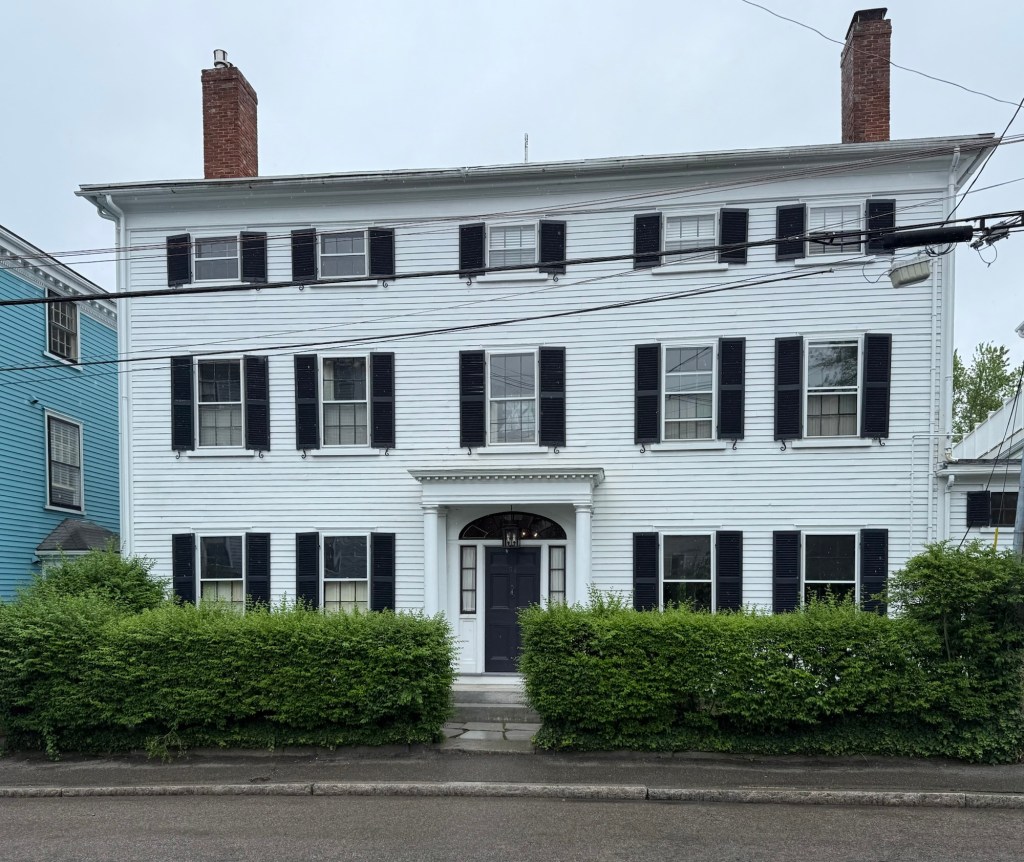
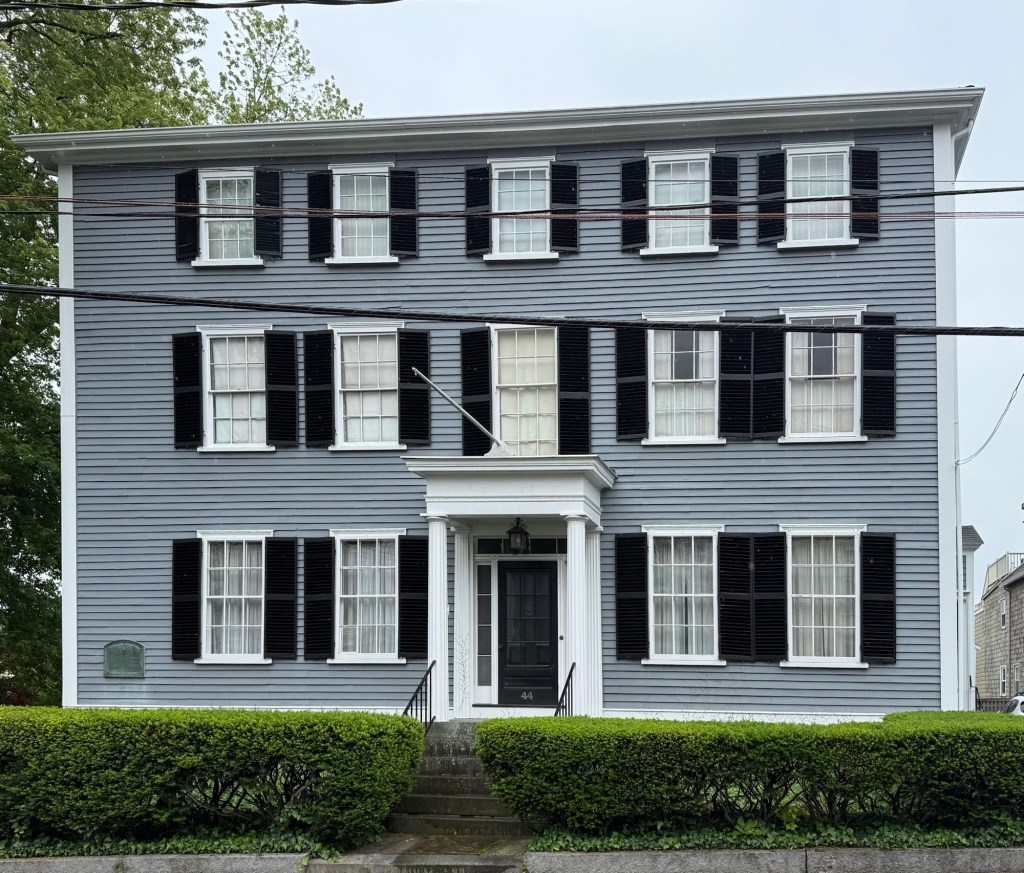
The Reverend Samuel Dana (1778-1864) was appointed the minister of the Old North Congregational Church in Marblehead in 1801, and remained in his position for 36 years. During his rectorship, he started a Sunday School, the congregation built chapel on Pearl Street in 1819 and the Old North Church stone church in 1825. Before all of these accomplishments, he had this stately Federal style mansion built on Washington Street, a short walk to his place of worship. The house appears to have been built shortly after his marriage to Henrietta Bridge in 1808. The house and its design rivals many of the Salem Federal period houses, and stands three stories with five bays and a center entry. A Doric portico shelters the door which is surmounted by a fanlight transom and sidelights.
Richard Trevett Jr. (1690-1749) was a wealthy shipwright and sparmaker (a carpenter who finishes and installs spars, masts, and cargo booms) in Marblehead, and part of a wealthy shipowning family. He would build this house on Washington Street (originally named King Street before the Revolution) and reside here with his family. Trevett lived here for just a few years until the death of his father, and he sold the property, which was later purchased by Joseph Pedrick, a wealthy ship owner, who’s son, John Pedrick, built an even larger mansion down the street. By the turn of the 19th century, this house was owned by Captain Samuel Horton, a commander in the Revolution under General John Glover. After the war, Samuel Horton engaged in mercantile pursuits, importing goods from all over the world. He likely brought home pineapples similar to the pineapple motif over the doorway from plantations in the Caribbean and South America as well.
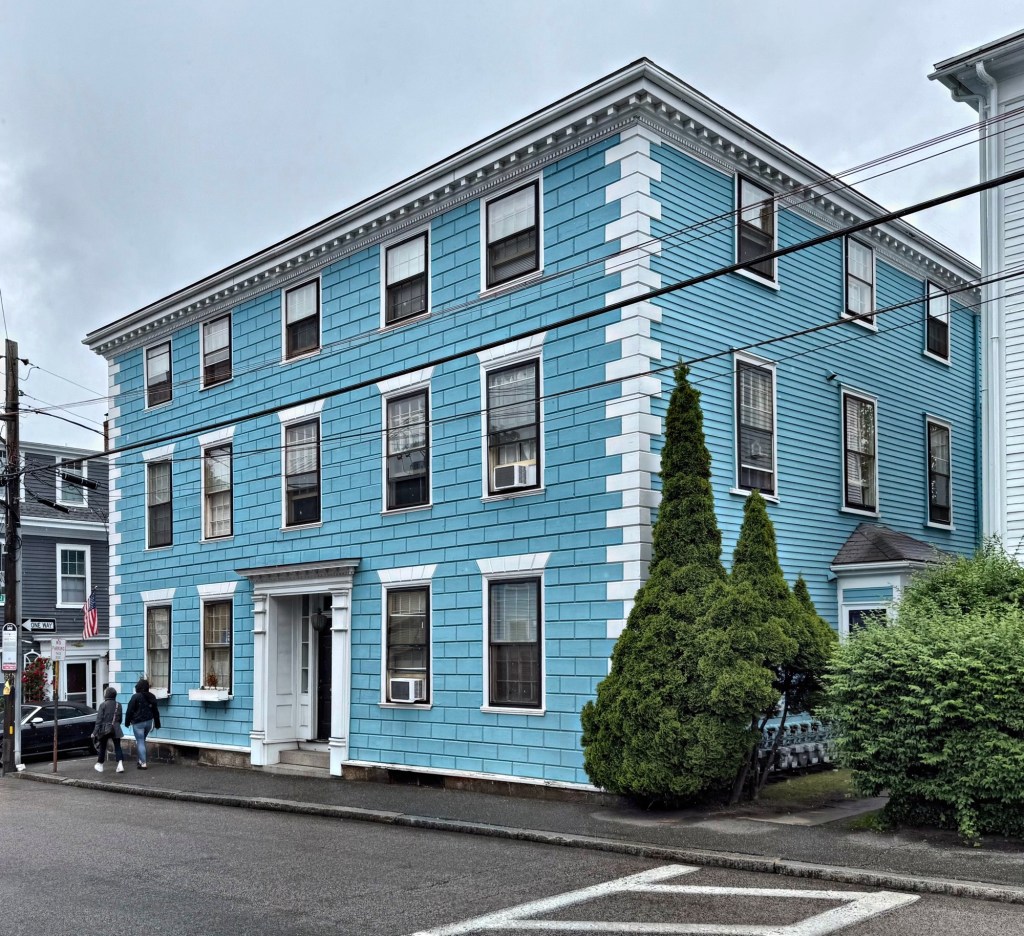
One of the great Colonial-era houses of Marblehead is this stately residence, the John Pedrick Mansion on Washington Street. The house dates to about 1756 and was built for John Pedrick (1733-1780), a wealthy shipping merchant. According to ‘The History and Traditions of Marblehead’, Pedrick’s “ships sailed to nearly every port in England, Spain, and the West Indies, and his transactions were with some of the largest mercantile houses of Europe. At one time, it is said, he owned twenty-five vessels engaged in the foreign trade.” The Revolutionary War, which proved so disastrous to the merchants of Marblehead, bore with especial severity upon Major Pedrick, as several of his vessels were destroyed by British cruisers in Massachusetts Bay, and many others rotted in port from blocades and engagements. The property was likely modernized after John Pedrick’s death in 1780 with a more Federal form, possibly adding the third floor and shallow hipped roof. The building’s facade is scored to resemble ashlar masonry, giving it a more stately appearance, but the bright blue really diminishes the feature, which should typically be colored a natural stone.
The Elbridge Gerry House is a historic house on Washington Street in Marblehead, Massachusetts that was built by local merchant, Thomas Gerry around the time of his marriage to Elizabeth Greenleaf. Architectural evidence suggests that the house was a two-story L-shaped Georgian frame structure, that in about 1820, was raised to its present three-story form in the Federal style. It was in this house that Founding Father, Elbridge Gerry (1744-1814) was born, and spent many formative years in. Gerry was a wealthy merchant, politician, and diplomat who served as the fifth vice president of the United States under President James Madison from 1813 until his death in 1814, and is arguably best-known for Gerrymandering. The term, originally written as “Gerry-mander,” first was used on March 26, 1812, in the Boston Gazette — a reaction to the redrawing of Massachusetts state senate election districts under then-Gov. Elbridge Gerry. One of the remapped, contorted districts in Essex County (where Marblehead is located) was said to resemble the shape of a mythological salamander, hence the name “Gerry-mander”. The newly drawn state senate district in Essex County was lampooned in cartoons as a strange winged dragon, clutching at the region. Elbridge Gerry would live mostly in Cambridge and the family home was sold by around 1820 and modernized about that time.
This house has a lot of history! Originally built around 1717 by Ephraim Sanders, this house on Franklin Street in Marblehead was later purchased by Thomas Gerry (1702-1774), a merchant who operated ships out of Marblehead, and father to Elbridge Gerry, the fifth Vice President of the United States. The home was likely a three-bay, side hall Georgian house and expanded to the current five-bay configuration by Thomas Gerry around 1750. Thomas Gerry was born in Derbyshire, England, but came to Marblehead by around 1730 and was active in local politics and had a leading role in the local militia, later speaking out against the Crown and sought independence. Thomas Gerry died in 1774, and did not get to see the Revolution nor his son become a Founding Father. The property was later the home of one of his granddaughters, Sarah Gerry Conklin, and her husband, Frederick Conklin, an infantry captain, who housed officers in command of nearby Fort Sewall during the War of 1812. In the 1940s, historical novelist Anya Seton after researching her genealogy, led her to base her 1948 novel, The Hearth and Eagle, on the history of the seaside town. She set the novel in the Hearth and Eagle Inn, based on the Gerry House here.
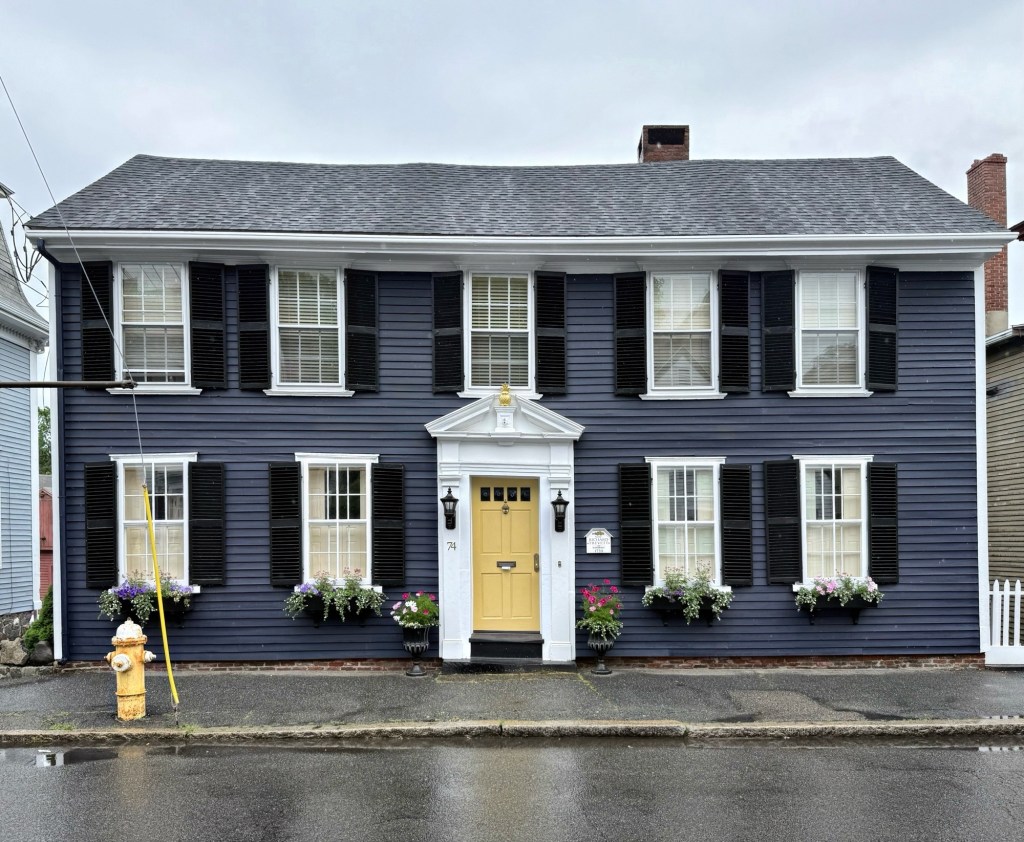
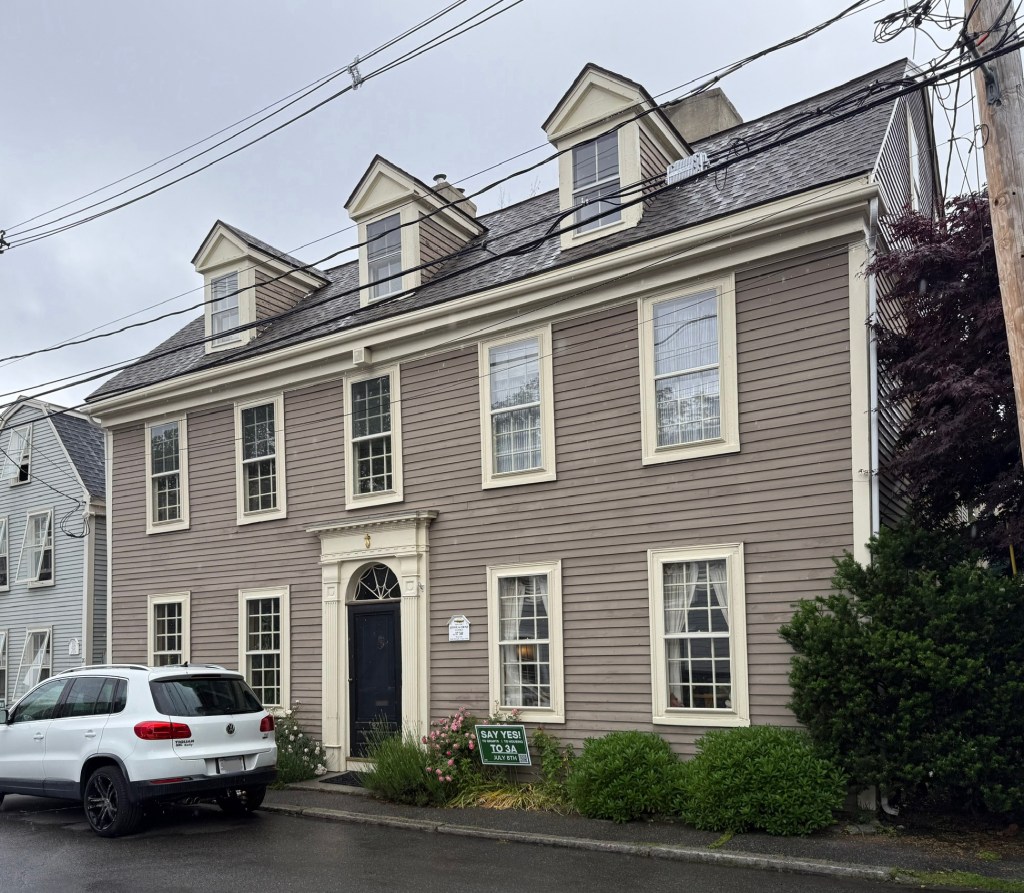
Joshua Orne (1708-1772) was born in Marblehead and attended local schools there. He would marry Sarah Gale, and they had one son together, Azor Orne, who would become a merchant, politician and patriot, fighting in the American Revolution. Sarah Gale died in 1743 and Joshua would remarry to Annis Stacey, having one child together, Joshua Orne Jr., who was a Patriot and fought in the Revolution, fighting alongside his half-brother, Azor. Joshua Orne and Annis owned a c.1663 house on this site and appear to have completely rebuilt the house or greatly modernized it around 1750. Joshua was a cordwainer and shipowner and later got involved with discussions of revolution and liberation from England. He likely inspired his sons to follow-suit and shared the same beliefs and values, though Joshua Sr. would die in 1772, not seeing the beginning of the War, nor freedom from tyranny. The house would be inherited by Joshua Jr. and later deeded to his son-in-law, John Bubier Prentiss, a shipmaster, who likely added the Federal period doorway and pedimented dormers.
This Georgian-era house sits on Franklin Street in the charming coastal town of Marblehead, Massachusetts. The residence was built in 1721 for Benjamin Gale, who worked as a shoreman at the nearby harbor. The original structure (likely the left half) was likely just three bays wide with a side hall entrance that was later expanded by a later owner in the Federal style with a fanlight transom over the new main entrance. In the 19th century, this residence was the home of Glover Broughton (1797-1869), the grandson of Nicholson Broughton, the first commodore of the American Navy and, as part of the Marblehead Regiment, commanded George Washington’s first naval vessel USS Hannah. Nicholson’s grandson, Glover Broughton, was also an ardent Patriot and at just 15 years old, joined the crew of the privateer America, and was serving on the ship when it was captured and its crew imprisoned at the infamous Dartmoor Prison in Britain, the principal location for American prisoners during the War of 1812. Broughton drew the world’s attention to the inhuman treatment prisoners were subjected to in a rhyming long form poem that detailed the April 6, 1815, massacre that took place at Dartmoor. He also drew a map of the prison from memory to accompany the poem. Once Glover Broughton returned to Marblehead, he became a successful merchant and also served the town of Marblehead in a variety of offices including town clerk and postmaster. In later years, Glover also used his time to help fellow veterans of the War of 1812 by writing letters for them to help them get benefits for their time in service to the United States, as many men at the time could not read or write. It is possible that Broughton had his house “modernized” with the Federal period doorway and gambrel roof addition.
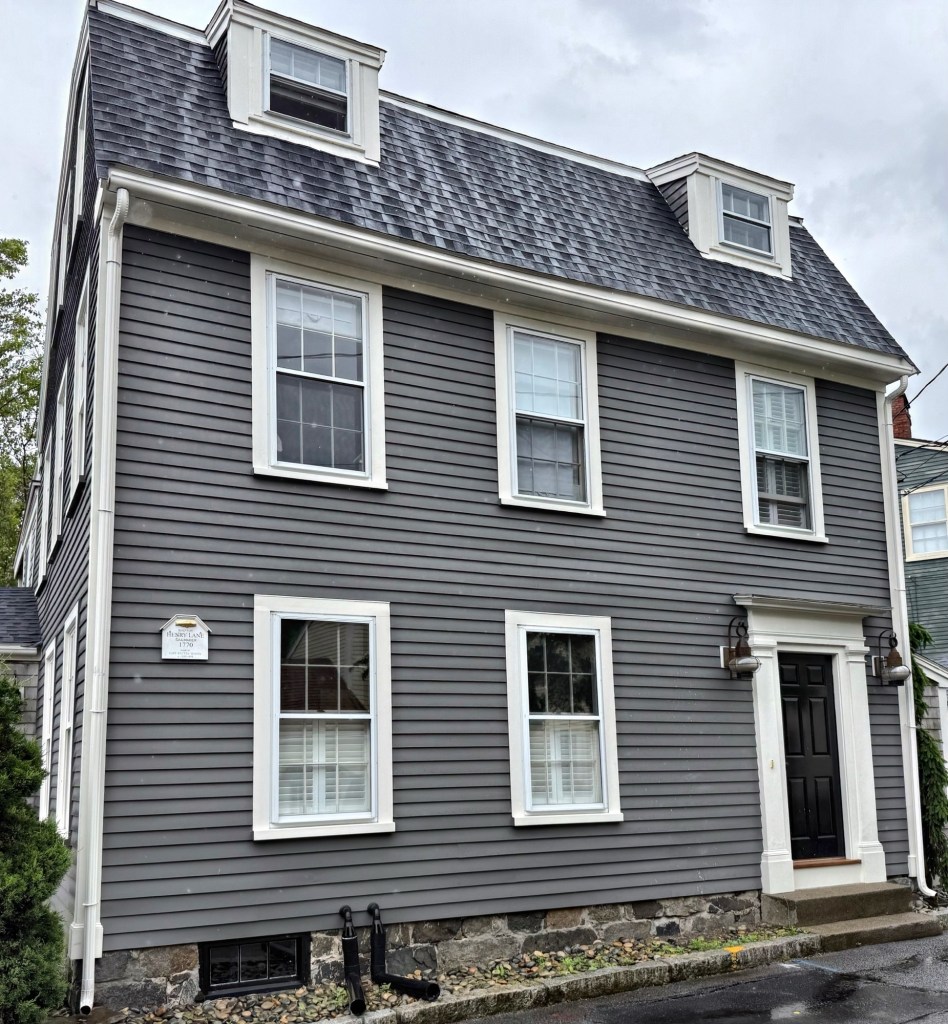
This gambrel-roofed Georgian house on Franklin Street in Marblehead was built before the American Revolution for Mr. Henry Lane, a sailmaker, but is best-known as being the home to Captain Knott V. Martin. Knott Martin (1820-1898) was born in town as was descendants from early settlers of Marblehead, and after attending local schools, became a shoemaker beginning at the age of just thirteen. After over a decade as a shoemaker, he began a butchershop and had a slaughterhouse to the rear of his property. When the Civil War broke out, Captain Knott was among the first to reach Faneuil Hall to begin duty. A Boston Globe article from 1918 detailed his finding out of the war, “Late in the afternoon of April 15, 1861, Lieut. Col. Hinks of the 8th Mass. Regiment rode into Marblehead to notify the Commanders to be ready to take the first train, the following morning to answer President Lincoln’s call for troops… I found Captain Martin in his slaughter house, with the carcass of a hog, just killed. On communication to the Captain my orders, I advised him to immediately cause the bells of the town to be rung, and to get all the recruits he could. Taking his coat from a peg… with his arms stained with blood and his shirt sleeves but half rolled down, he exclaimed, ‘Damn the hog!” In a battle at New Bern he was wounded by a spent cannonball and lost eight inches from the main bone of his right leg, becoming permanently disabled. Following his discharge from the War he was elected a member of the Massachusetts House of Representatives serving in that capacity during 1866 and 1867. He was then appointed Messenger to the House of Representatives for two more years. In May 1869 he was appointed Postmaster in Marblehead, a position he held until he retired on May 16, 1885. Knott Vickery Martin died at his home in 1898, but it has been lovingly preserved ever-since.
 Buildings of New England