Arthur Blanchard House // 1892

I do not feature enough Queen Anne style buildings on my account, as penance, I present this beautiful example of the style with a painted lady color scheme! Located on Windsor Avenue in West Acton, Massachusetts, this house was built in 1892 and has all the hallmarks of the Queen Anne style. The use of varied siding materials and forms, asymmetrical form, applied ornament, and large five-sided tower capped by a conical slate roof with weathervane. The home was built for Arthur F. Blanchard, a local businessman who operated an apple farm and marketing business opened by his father. Mr. Blanchard was a philanthropist in town and used his wealth to enhance his hometown by funding the Blanchard Auditorium at the Acton High School (1925) and was a benefactor of the West Acton Women’s Club in 1925. He and his son, Webster, also founded the Blanchard Foundation in town in 1946, an organization which funded and sponsored educational projects for the community.
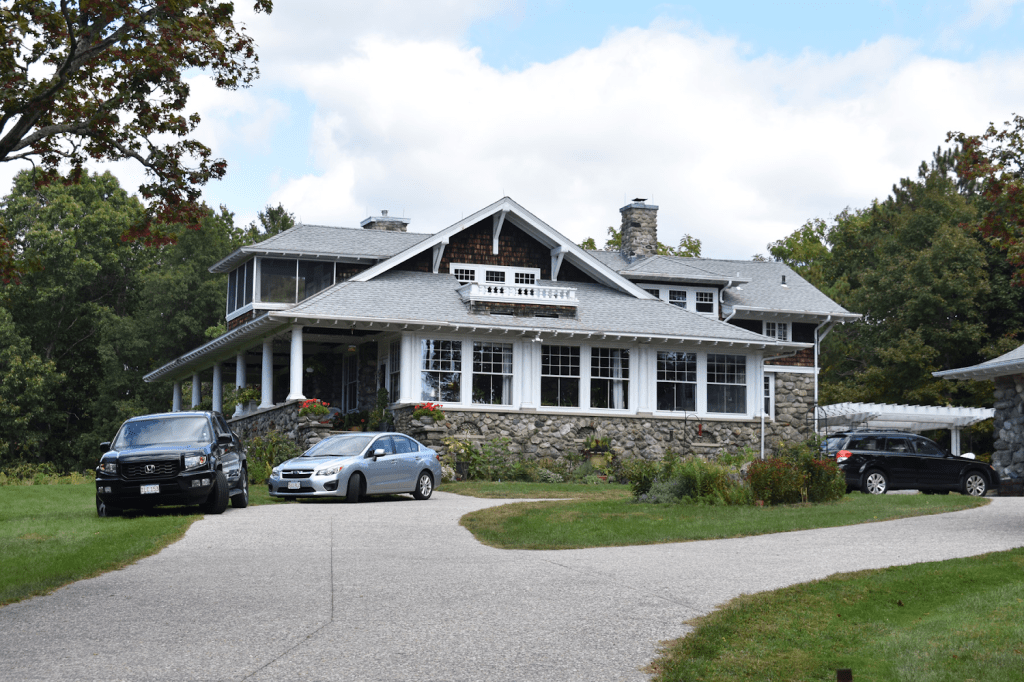
George and Effie Mead House // 1911

Prominently sited upon a hill on a dead-end street in West Acton, Massachusetts, this Craftsman Bungalow is a very elaborate and well-preserved example of the style. The house was built in 1911 for George Varnum Mead (1861-1940) and his wife Effie Wright Mead (1860-1926) as their summer home when they weren’t living in Somerville. Mr. Mead was born in West Acton to Varnum Balfour Mead, who operated the A. O. W. Mead Company, a produce marketing business in Acton and Boston. Varnum’s brother built an elaborate Second Empire style mansion in town which was featured on here yesterday. George Mead followed his father’s footsteps and worked in the family business, which was in operation starting in the 1840s. The A. O. W. Mead Company gathered produce from farmers all over West Acton, kept the produce in cold storage facilities erected by the family, and sent it to Boston for sale at Quincy Market until George’s death in 1940. The Craftsman style house has a fieldstone base, low, overhanging flared gable roof, and is sheathed in shingle siding. Characteristic features include the multiple dormers, exposed rafter tails, grouped windows, and the large fieldstone chimney.

Homan-Devereaux House // 1764

In 1764, Joseph Homan, a wealthy merchant, built this house on a lot that was formerly a “mowing field” in Marblehead, Massachusetts. The Georgian style home is of a more elaborate design, showcasing Mr. Homan’s wealth at the time. His wealth was not all acquired ethically, however. Joseph Homan was engaged in international trade, and enslaved Africans at his Marblehead home. In the Boston Daily Newsletters in September 1770, Homan posted a notice that Jack, one of his enslaved humans escaped. It read: “At Night, a Negro Man, named Jack, about 6 feet high, near 50 years of age, speaks bad English, and Born in Martinico [Martinique]; had on when he went away, a blue Coat with Mohair Buttons, a blue Jacket with black Glass Buttons, blue Breeches with white metal Buttons, and a red worsted Cap, but may have changed his Cloaths [sic], as he had more at Beverly.-Whoever shall take up said Negro, and deliver him to Mr. Brown, Deputy-Sheriff, in Salem, shall have Two Dollars Reward, and all necessary Charges paid them. All Masters of Vessels, and others, are cautioned against carrying said Negro off, as they would avoid the Penalty of the Law.” Homan would later sell the property to Elbridge Gerry, who served as the fifth vice president of the United States under President James Madison, and who Gerrymandering is named after. Gerry gifted the house to his sister Elizabeth, who married Burrell Devereaux a year later. Burrell was a sea captain that later was a privateer.

Thomas D. Hamson House // c.1895

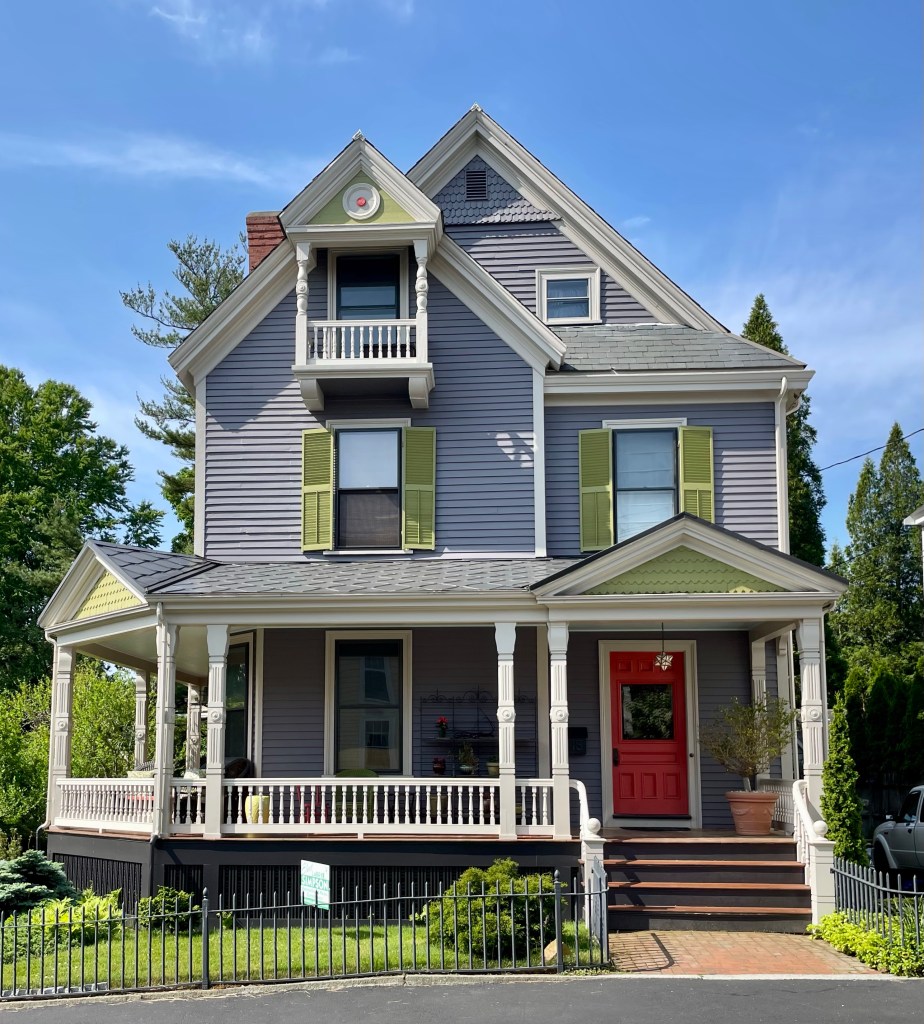
Marblehead, Massachusetts is better known for its Colonial-era homes, but there are definitely some amazing old Victorians interspersed in the warren of narrow streets and alleys. This Queen Anne style house was built in the 1890s for Thomas D. Hamson, who was listed in directories as a shoe manufacturer. Queen Anne style Victorians typically exhibit asymmetrical plans, varied projecting and receding planes, varied siding materials and forms, turned posts and porches, and towers and turrets. This house has it all!

Franklin Street Fire Station // 1886

When your town grows organically without zoning, fire prevention becomes even more important to the preservation and protection of the town. Before paid firemen worked for the town, volunteers would either be stationed or rush to the aid of those in trouble via these neighborhood stations. The Franklin Street Firehouse in Marblehead, Massachusetts, was constructed in 1886 by local contractors Ramsdell Brothers replacing the former on the same site with plans drawn by Nathan P. Sanborn. The station was built to house a horse-drawn handtub and the horses were stabled nearby. The wood-frame structure blends Second Empire and Stick style detailing elegantly and is one of my favorite old buildings in Marblehead.

Stoneham Fire Station // 1916

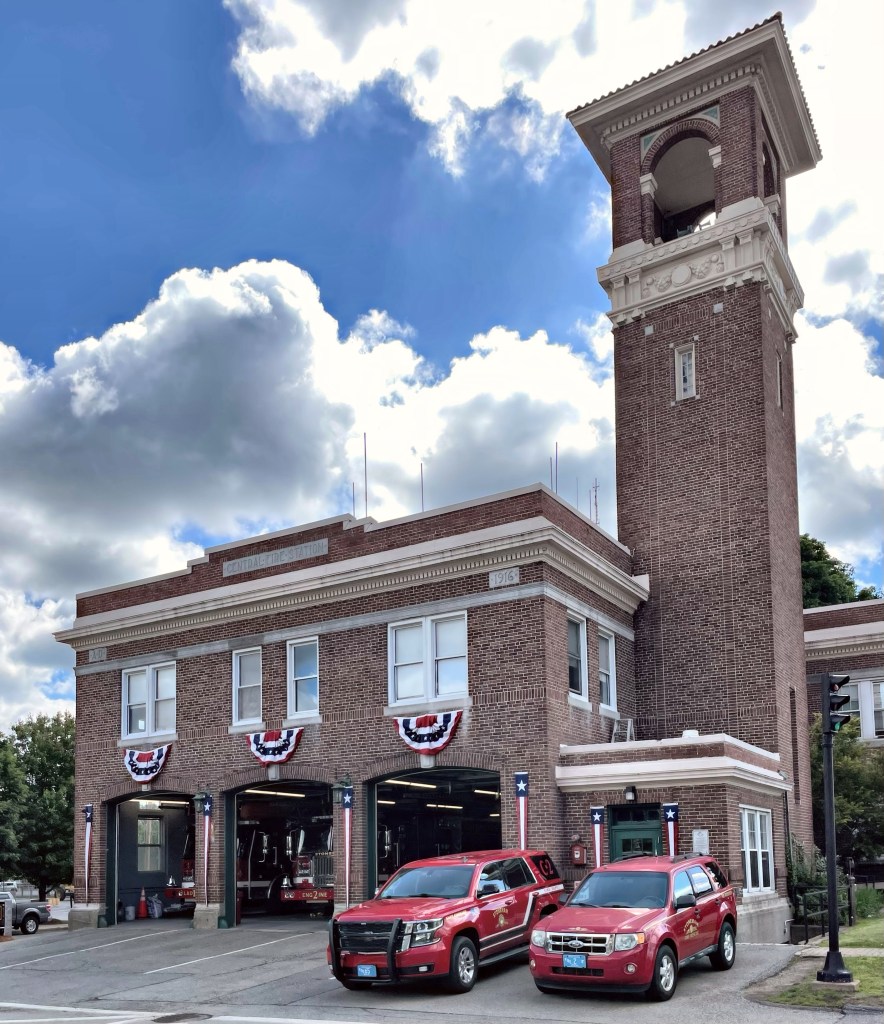
Fire stations are some of the most recognizable and iconic buildings in any city or town, but to find historic fire stations is becoming less and less common as larger trucks and facilities put a strain on the older buildings. The two-story brick Renaissance Revival fire station in Stoneham, Massachusetts was built in 1916 and continues to serve as the town’s central fire station. Its most prominent feature is its four-story hose drying tower, which is reminiscent of Italian Renaissance-era towers. The building was designed by architect Penn Varney and has been well-maintained by the town for over 100 years.

Tudor Barn // c.1845

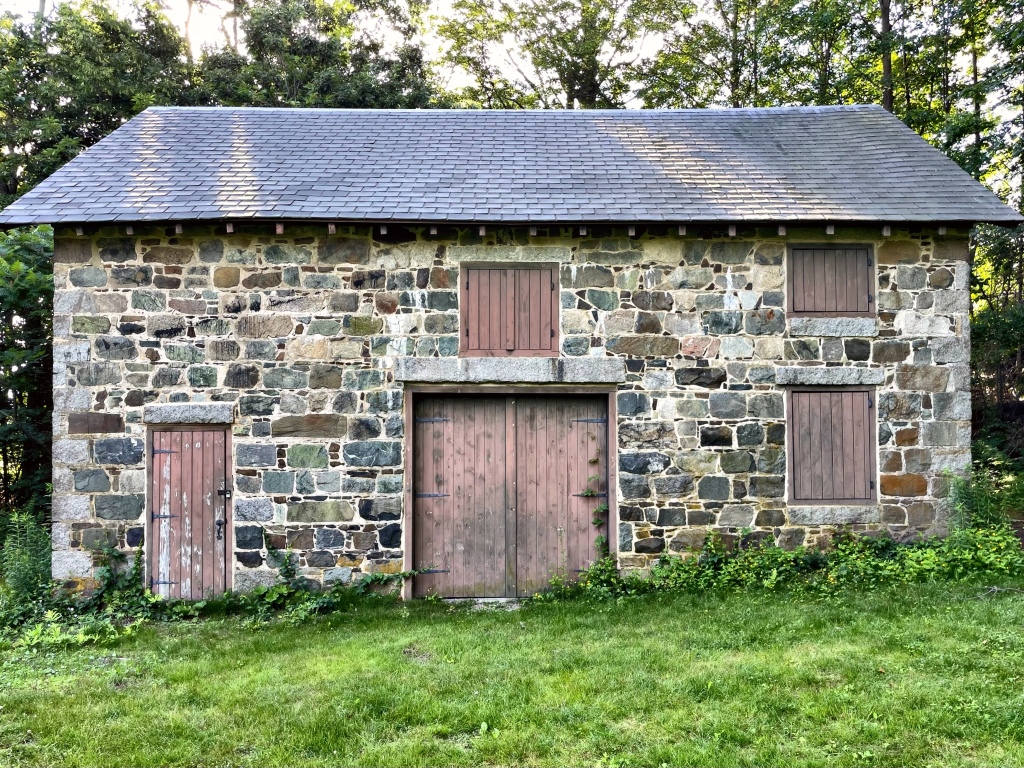
Built in the 1840’s as a carriage barn, and once attached to a nearby mansion now gone, this barn sits near the eastern shores of Spot Pond, a major feature in the Middlesex Fells Reservation, just north of Boston. The barn sits in Stoneham, Massachusetts, and was a part of Frederic Tudor’s rural estate out in the “country”. Frederic Tudor is best known as Boston’s “Ice King”, he was the founder of the Tudor Ice Company and a pioneer of the international ice trade in the early 19th century. He made a fortune shipping ice cut from New England ponds to ports in the Caribbean, Europe, and as far away as India and Hong Kong. After the turn of the 20th century, many of the buildings surrounding Spot Pond were razed as to secure the watershed, protecting the surrounding town’s drinking water. Frederic Tudors large estate was razed, but the barn survived. Years of deferred maintenance and lack of preservation by the late 1990’s made the old barn threatened with demolition. This was exacerbated by a fire damaging the roof and in 2003, a wall collapsed. Local preservationists rallied together to acquire funding (both private and public grants) to restore the building. It remains a highlight on the walks around Spot Pond and Middlesex Fells Reservation, and is a visual link to the earlier days in what was once remote “Boston”.

Spot Pond Gatehouse // 1900

The Middlesex Reservoir and Spot Pond are located just north of Boston and have long been a little piece of the outdoors near the heart of New England’s largest metropolitan area. In 1894, the Massachusetts Legislature established the Metropolitan Parks Commission, which was endowed with the authority to acquire, maintain, and make recreational spaces available to the public. By 1900 the new commission had acquired 1,881 acres for the reservation. Part of this reservation, Spot Pond, is a natural water feature that for a number of years was integrated into the Boston area public drinking water supply, servicing the towns of Stoneham, Melrose, and Malden with drinking water. As part of this, gatehouses were built with hardware to open and close the pipes delivering the water to the adjacent towns. This gatehouse is in Stoneham was built in 1900 by the architectural firm of Shepley, Rutan & Coolidge, to not only protect the machinery inside, but to beautify the parkland, then maintained by the Metropolitan Parks Commission. The Renaissance Revival style building is today surrounded by a tall chain link fence, which really diminishes its presence in the landscape (but it does help prevent graffiti).

Dimock Center – Goddard Nurses Home // 1909

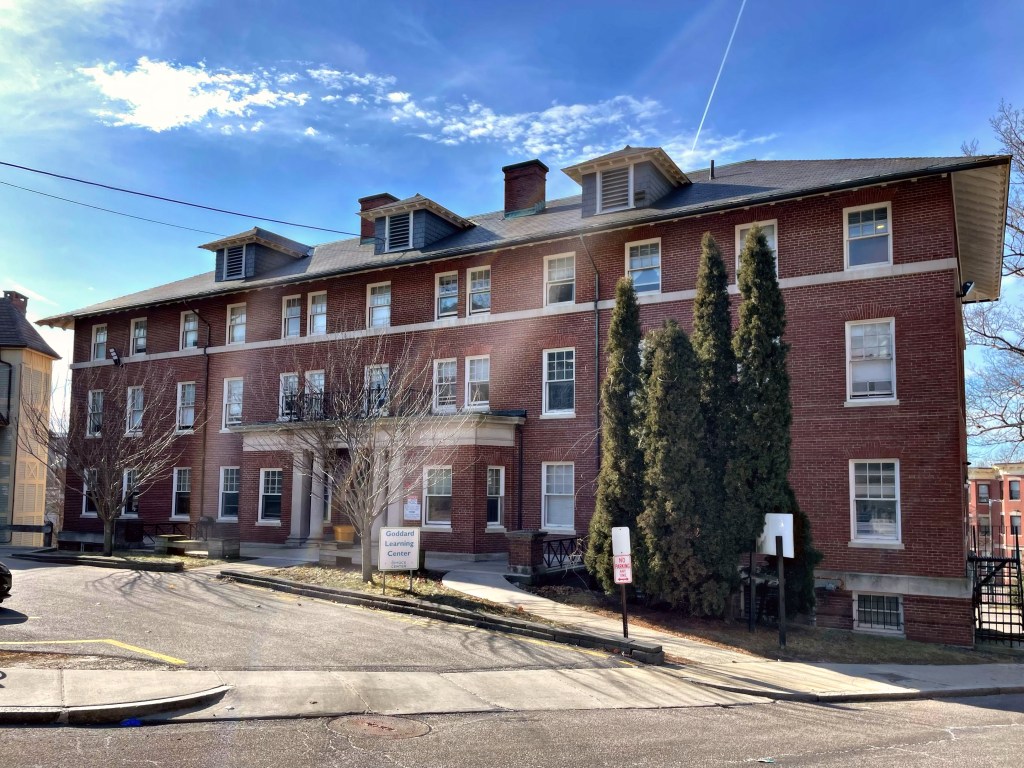
Located adjacent to the Zakrzewska Building and Cary Cottage at the former New England Hospital for Women and Children is the 1909 Goddard Nurses Home, designed by John A. Fox. This three story brick building typifies the Classical Revival style with its recessed central entranceway and symmetrical fenestration with flared brick keystone lintels. The slate hipped roof is perforated by three dormers on the front facade. The broad overhanging eaves have exposed rafters which is an element of Craftsman design, common at the time. The Goddard Nurses Home provided living accomodations for up to fifty nurses who worked at the hospital. It was named after Lucy Goddard, one of the original incorporators of the women’s hospital, she served as president for twenty-five years.

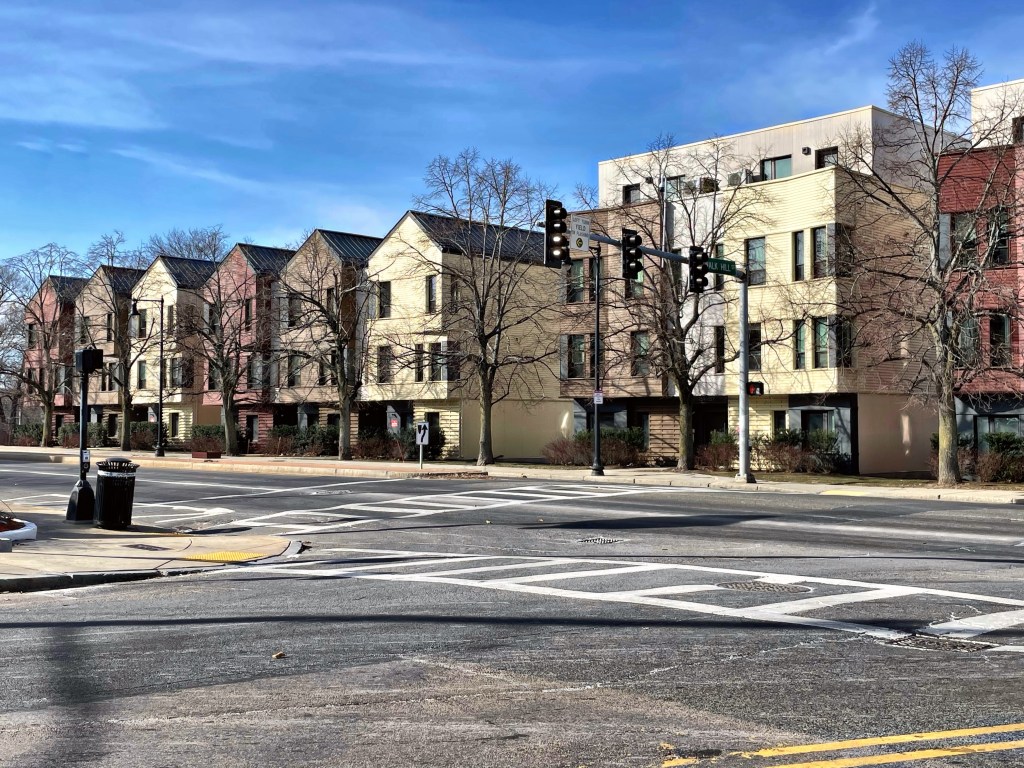
Tilia Jamaica Plain // 2020

As many of you likely agree with me, most contemporary architecture and buildings in Boston (and in many U.S. cities) is bland and mundane, but there are some projects that really stand out for creative and contextual designs. Tilia in Jamaica Plain is one of the latter! When the Massachusetts Bay Transportation Authority (MBTA) began accepting bids for the development of an undeveloped linear parcel along Washington Street just south of the Forest Hills T-stop, developers jumped at the opportunity. Urbanica Inc., a local design/development group had the winning proposal which consists of approximately 110‐120 residential units in buildings of varied density ranging from a larger apartment building to more human-scaled townhouses. Led by architect Stephen Chung with Kamran Zahedi as developer, the design for the townhouses specifically is a contemporary nod to the triple-decker form we see so much in the surrounding area. The varied color and recessed sections provide a lot of depth and character to the development along the streetwall.