Everett Masonic Hall // 1910

Further up Broadway from Everett City Hall, you’ll find the town’s Masonic Hall, a now-vacant institutional building which contributes to the diverse streetscape and character of Everett’s built environment. The local Palestine Lodge of the Masons in Everett originally met in its original lodge, built in 1870. A corporation known as the Everett Associates, which included only Masons, subsequently constructed the original Masonic Building. The property burned in a fire in 1908, leading to a new building campaign by members. A site was acquired further up Broadway, and the groundbreaking was held on June 11, 1910, led by Everett Mayor Charles Bruce, a past master of the Palestine Lodge. Mayor Bruce also served as the chair of the Building Committee. In his remarks at the groundbreaking, Bruce noted the membership of the lodge as over 500 men! Inside the cornerstone, members placed: original papers from the former Masonic Building, a history of the Palestine Lodge, a list of lodge members, photographs, news articles, and other ephemera. The Boston architectural firm Loring and Phipps was responsible for the design of the building, which is constructed of water-struck brick and is of the Classical Revival style. After WWII, membership declined sharply, and the organization sold the building in the 1980s. From the mid-1990s to 2019 the building was owned by the Islamic Association of Massachusetts, and suffered from deferred maintenance. The red “X” on the building is for firefighters not to enter the building in case of fire or emergency. Luckily, the building was purchased and the new owner hopes to convert the building into housing, preserving the structure and using Historic Preservation Tax Credits. Fingers crossed!!

Everett City Hall // 1960

Welcome to Everett, Massachusetts, a diverse, vibrant community of roughly 50,000 residents just north of Boston. Present-day Everett was originally part of Charlestown, which separated and became Malden. In 1870, the Town of Everett separated from Malden and was so-named after former Charlestown resident Edward Everett (1794-1865) who served as U.S. Representative, Senator, the 15th Governor of Massachusetts, U.S. Secretary of State and as President of Harvard University. From 1894, the Town (later City) Hall was located in the Hapgood Building, but was outgrown after WWII. In 1960, ground was broken for a new, Modern City Hall for Everett, with Harold Michael Turiello (1910-2001) of Revere, as architect. Everett City Hall (love it or hate it) is a testament to Mid-Century Modern/International style design with curtain wall construction originally included bright blue panels which were recently replaced with a bland white panel color.

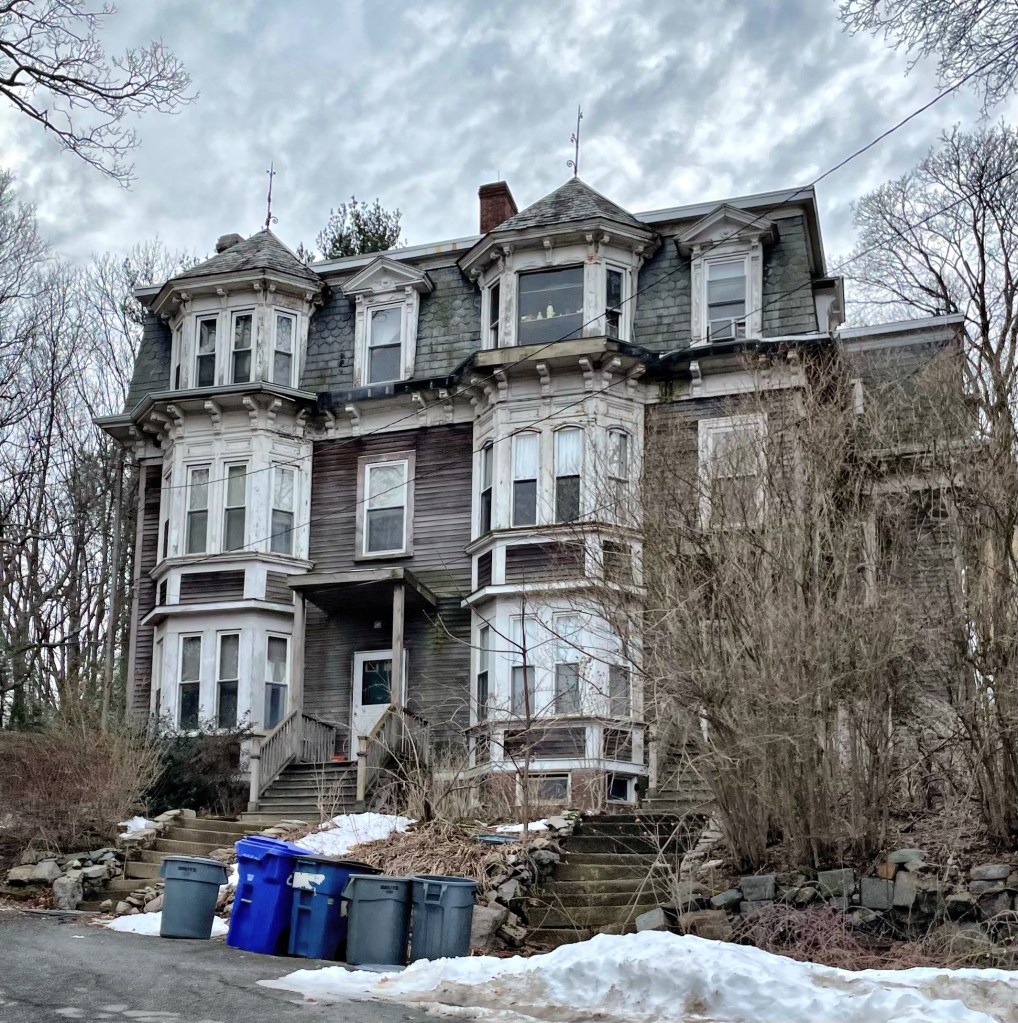
Susanna Cary Rental Property // c.1884

Isaac Harris Cary’s land holdings adjacent to Forest Hills Cemetery in Jamaica Plain, Boston, saw a surge in value when the cemetery and Forest Hills Station were constructed, opening up the area for development. After Isaac’s death in 1881, his unmarried daughter Susanna, built this large Second Empire style building contributes to the varied 19th century architecture of the street. This double-house was constructed around 1884, seemingly as a rental property which provided Susanna income while residing nearby. The two units suffer from some deferred maintenance, but are excellent examples of the Second Empire style in a double-house form.

Hovey House // 1897

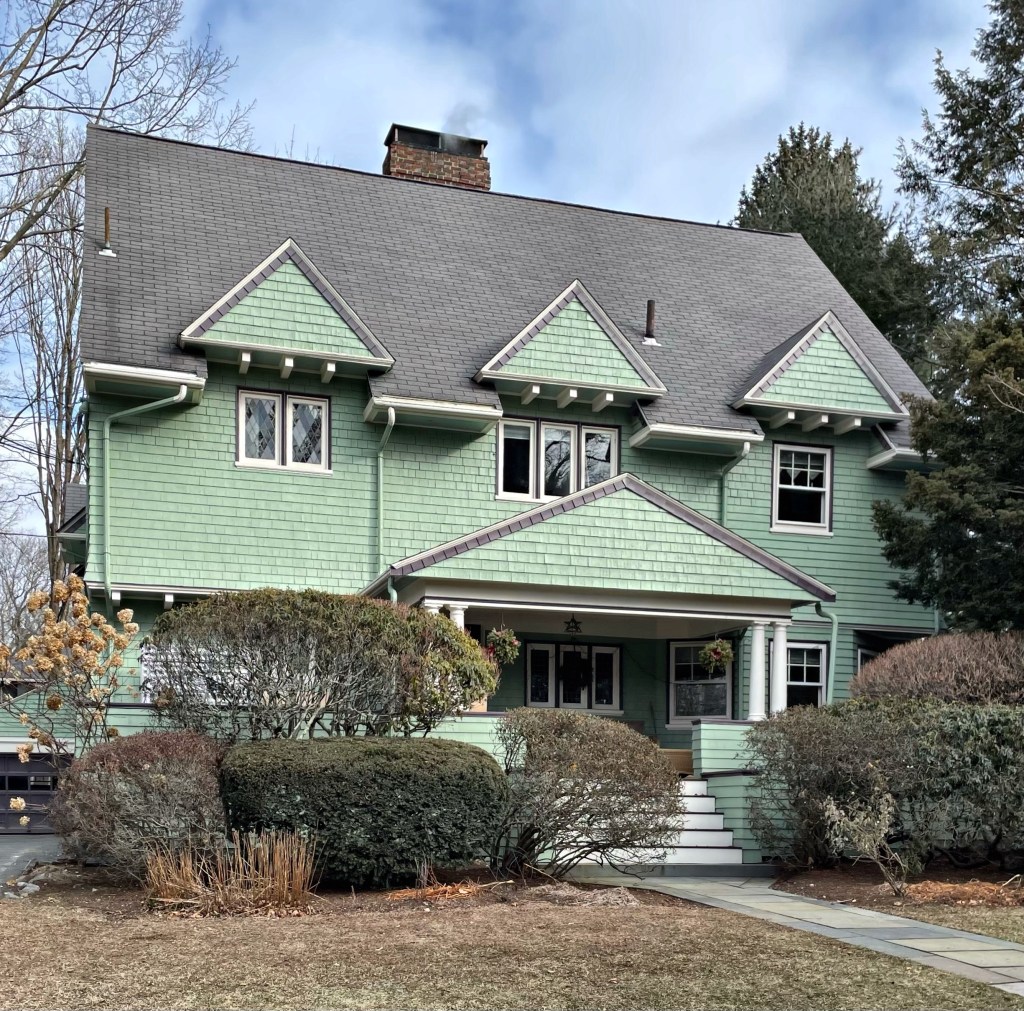
In 1897, tailor Charles L. Hovey and his wife Bertha, had this house in Waban built for their family. The architecture really stands out as an eclectic blending of styles, common at the end of the 19th century, when architects and builders would design homes to exhibit architectural details from multiple styles, all under one roof. The shingled house has a steep gable roof and three gabled dormers, which reflects Queen Anne theme. The diamond-pane windows and the technique of cantilevered dormers and the second floor overhanging the first, is First Period-Medieval in style, a unique interpretation of American architecture. What do you think of this home?

Millbury Post Office // 1940

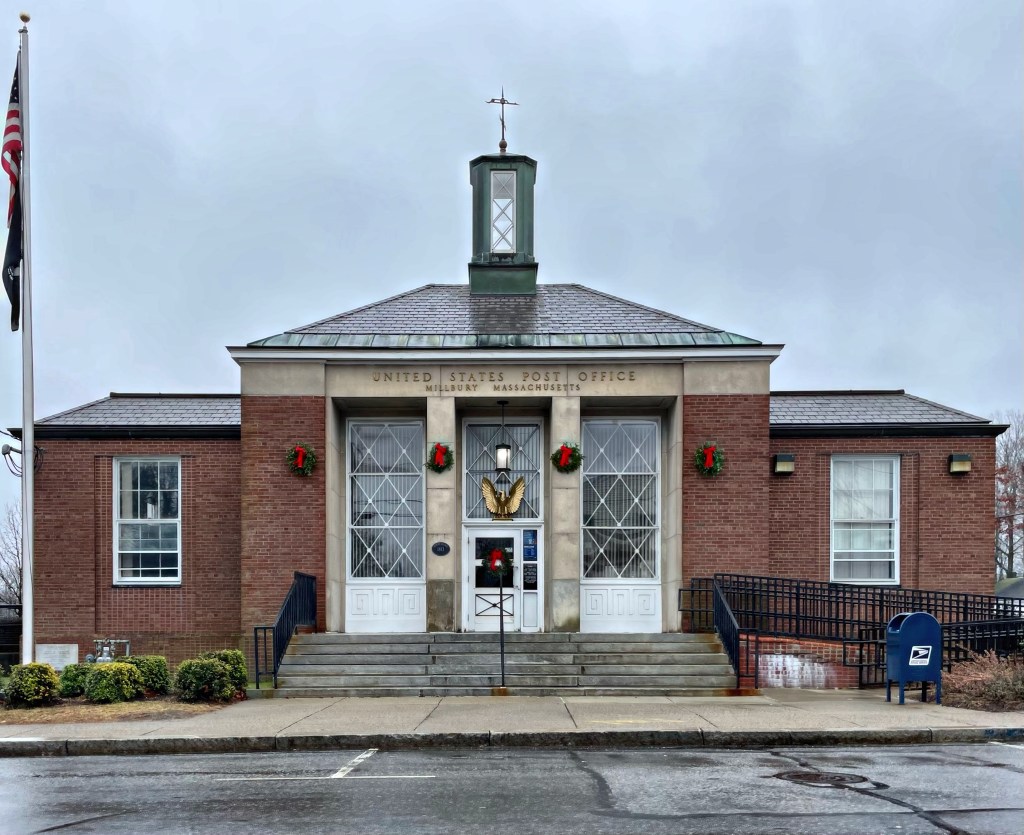
Located in downtown Millbury, MA, the town’s local post office stands as a great example of Art Deco and Colonial Revival architecture styles, showing how well different styles can be incorporated into a single, complimentary design. The Millbury Post Office building was constructed in 1940 from plans by Louis Adolph Simon, who served as Supervising Architect in the Office of the Supervising Architect for the U.S. Treasury from 1933 until 1939, when the office was moved to the Public Works Administration / Works Progress Administration. The post office was designed at the tail end of the New Deal programs to help stimulate local economies by building infrastructure and providing jobs to locals. Inside, a mural “An Incident in the King Philip’s War, 1670” was painted by Joe Lasker and installed in 1941 and was “revivified” in 1991.

Grass Hill School // 1861

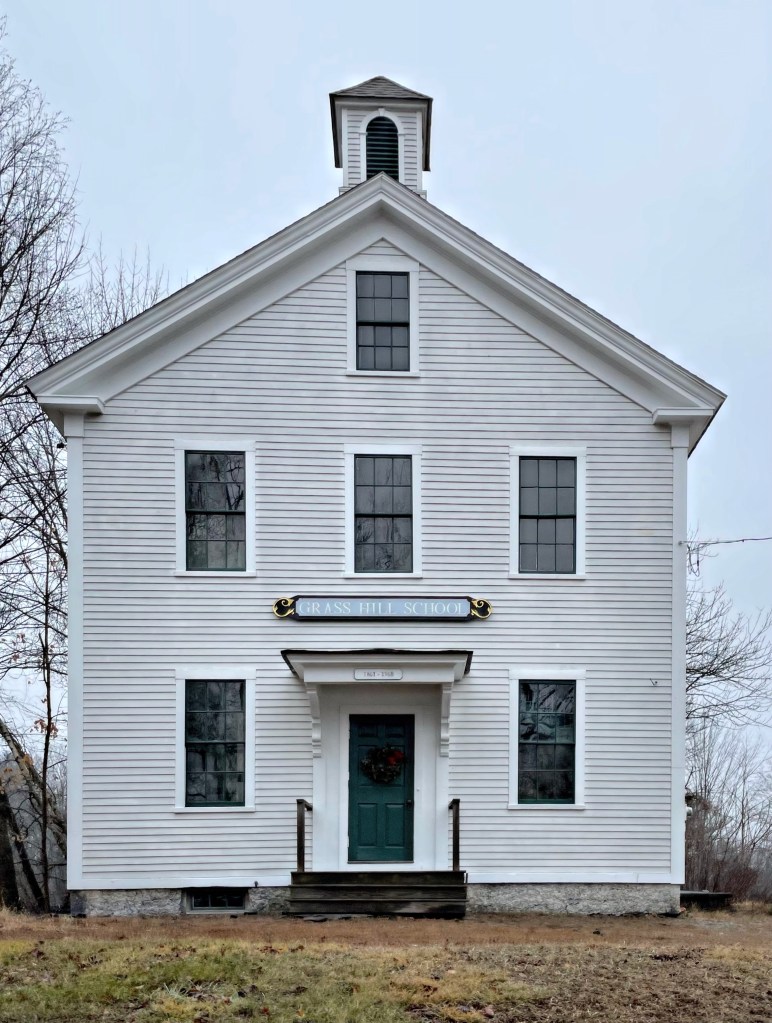
In western Millbury, the Grass Hill school was constructed to provide a place of learning for children in the agricultural section of town. The district school, a remnant of the system of autonomous school districts that characterized the educational system of Massachusetts in the 19th century, this is a larger example of many of them. West Millbury had many wealthy farmers and they financed a district school here as far back as 1814. After two earlier, smaller school buildings, this two-story school was erected and was one of the most substantial. At one time, students in eight grades taught there, all at the same time, with grades 1-4 downstairs and 5-8 upstairs. As there weren’t many students, each grade only took up one or two rows. The building remained as a school for the town until 1968, and the building was leased to the Millbury Historical Society long term. They just completed a massive restoration project for the building, it looks great!

Hall-Balcom House // 1810

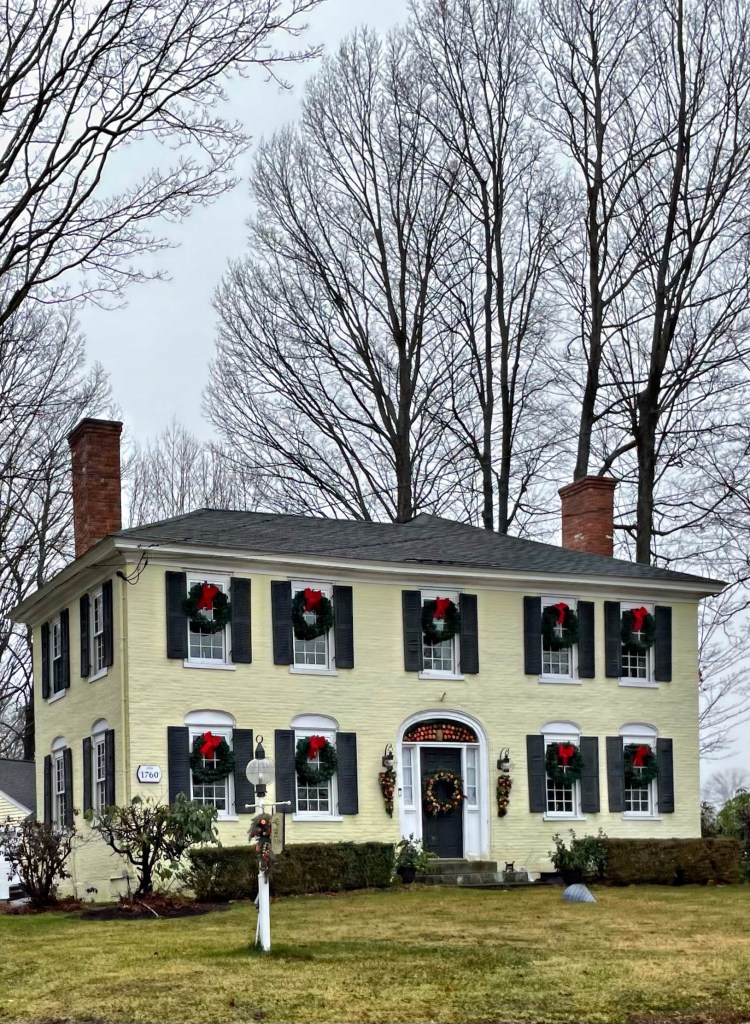
This historic house in West Millbury, Massachusetts, began in the end of the 18th century as a one-and-a-half-story wood-frame farmhouse. By 1810, the home was rotated 90 degrees and a more substantial, two-story brick house was constructed facing the street. The Federal style home was owned by Thaddeus Hall (1779-1855), and after his death, it was owned by his son, Orson Eddy Hall, who possibly rented the property for income while he resided in New Orleans and ran the iconic St. Charles Hotel there. The property was later acquired by Willard Balcom and remained in the family. Oh what I wouldn’t do to see the paint come off this old brick house!!

Longley Farmhouse // 1819

Backroads in New England are just amazing! When driving through Millbury on my way to visit one of the finest examples of Federal style architecture in the state, I stumbled upon this gorgeous rural Federal style farmhouse, and had to snap a picture! Millbury is best-known as a mill town (hence the name), but you can find dozens of rural farms dispersed between the mill villages in the township. The Blackstone River cuts through the town, and during the Industrial Revolution, it provided much of the water power to the town’s many textile mills and factories. Like many former mill towns, the shifting of the economy away from manufacturing towards the service sector, harmed the economy of Millbury in the 20th century. Many mills were abandoned and demolished, others adaptively reused. Before we get to some industrial history, I wanted to share this charming farmhouse. This home was built for Nymphas Longley upon the time of his 1819 marriage to the love of his life, Nancy Bond. They ran a farm on over 80 acres, with Nymphas also serving as a town selectman, an overseer of the poor, and led recruitment efforts in town at the start of the Civil War. Like many farms, this one saw suburban development take some of the former land, but this home still sits on over 9 acres, not bad for being so close to Worcester!

Unity Church Parsonage // 1878

Architects William Robert Ware and Henry Van Brunt designed this parsonage in Easton, Massachusetts for the Unity Church in town (featured previously). The Victorian Gothic house is constructed of polychromatic stone, wood trim, slate and copper roof surfaces, and terracotta finials. The architecture is very well-developed and stands toe-to-toe with the other architectural landmarks in town, just a short walk away.

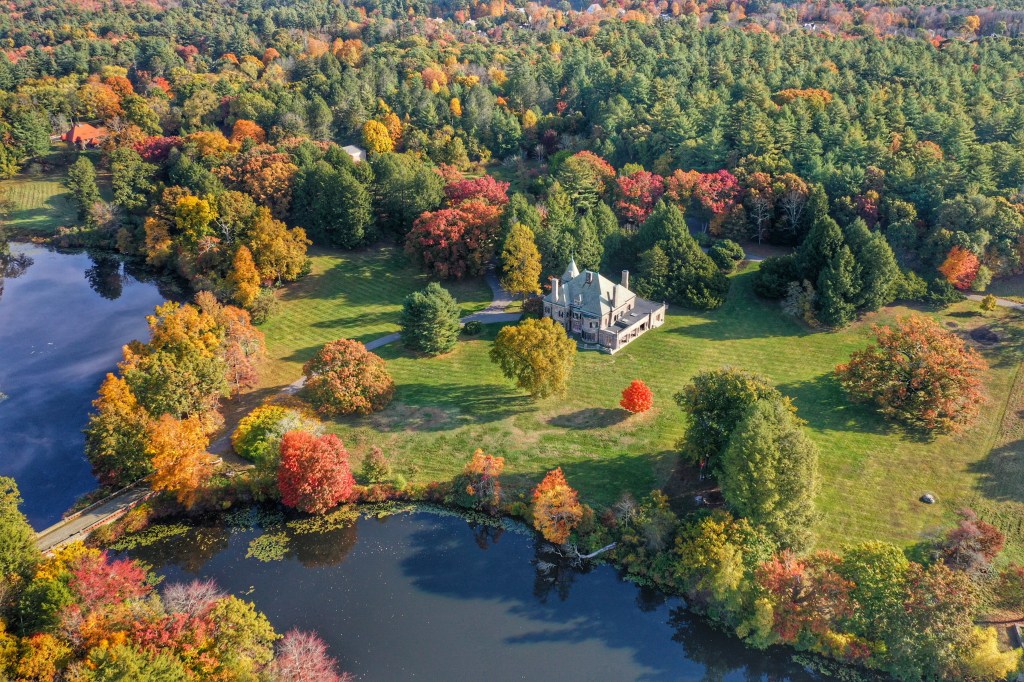
Langwater // 1859

The country estate of Frederick Lothrop Ames (1835-1893), “Langwater” sits in North Easton amongst a collection of some of America’s greatest architectural treasures, all thanks to the Ames Family. The Ames family was a wealthy family which had lived in Easton for many generations. Frederick’s grandfather Oliver Ames Sr. founded the Ames Shovel Works in Easton, Massachusetts. The Shovel Works earned the family a huge fortune, during a time when aggressive canal and railroad expansion was built by the hands of thousands of men using shovels. Frederick’s father Oliver Jr. was president of the Union Pacific Railroad during the building of the transcontinental railroad. Frederick’s cousin Oliver Ames was governor of Massachusetts 1887–1890. Frederick himself was Vice President of the Old Colony Railroad and director of the Union Pacific railroad. At the time of his death, Ames was reported to be the wealthiest person in Massachusetts. With this immense wealth, Frederick built a castle where he would spend most of the year, overseeing his various businesses, in his hometown of Easton, Massachusetts. The mansion was designed by architect George Snell and built around 1860, with a couple additions and updates until Frederick’s death. A few years before his death, Frederick hired famed architect Henry Hobson Richardson, who he already worked with in designing the Oakes Ames Memorial Hall(Easton’s Town Hall), to design a gate house leading to Langwater (more on that later).