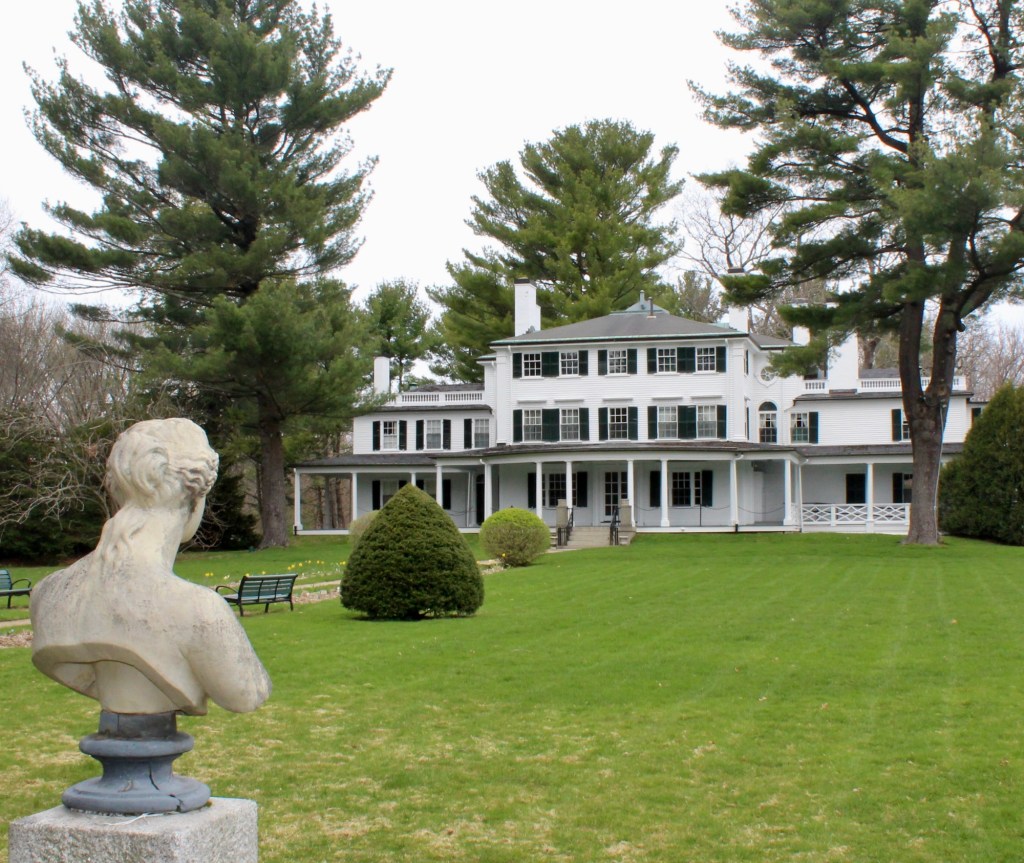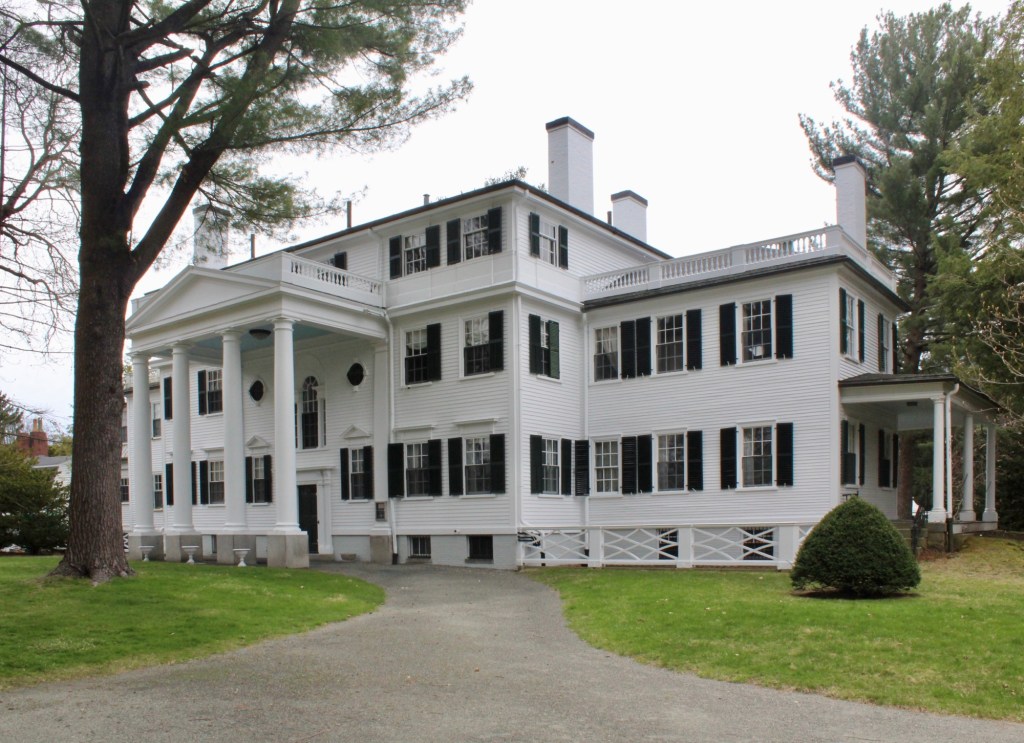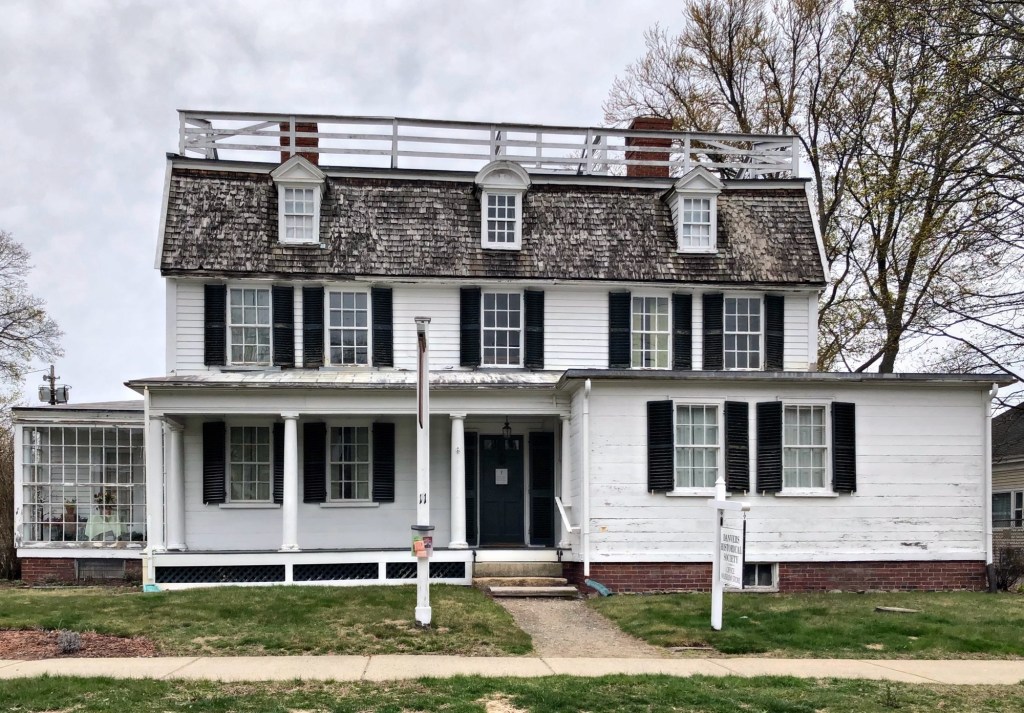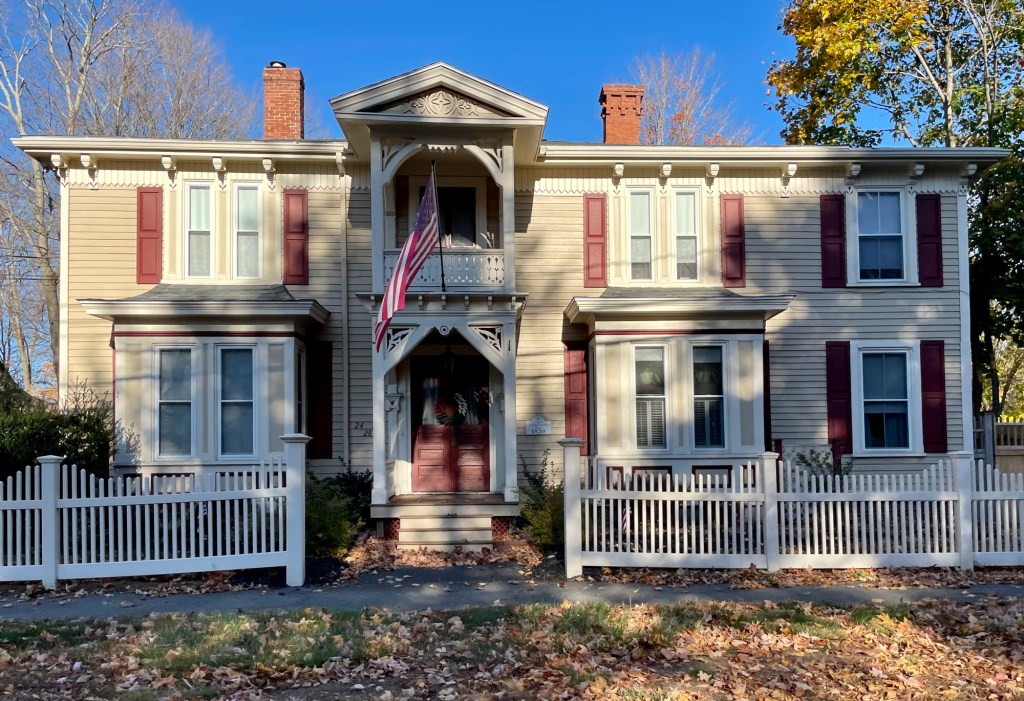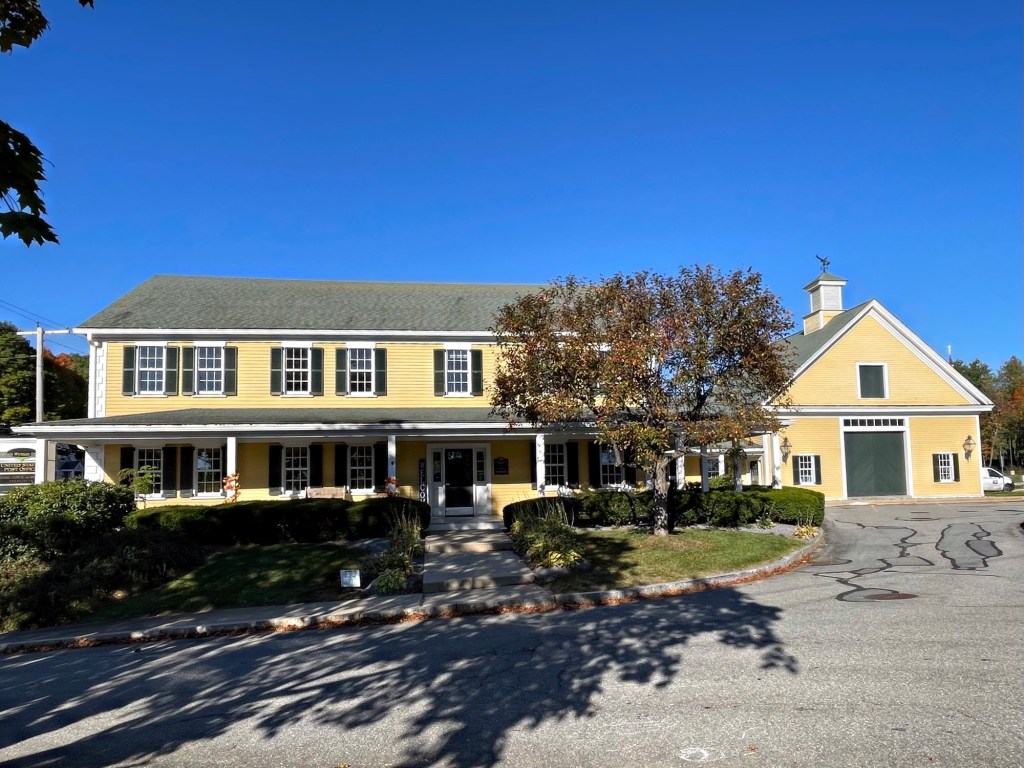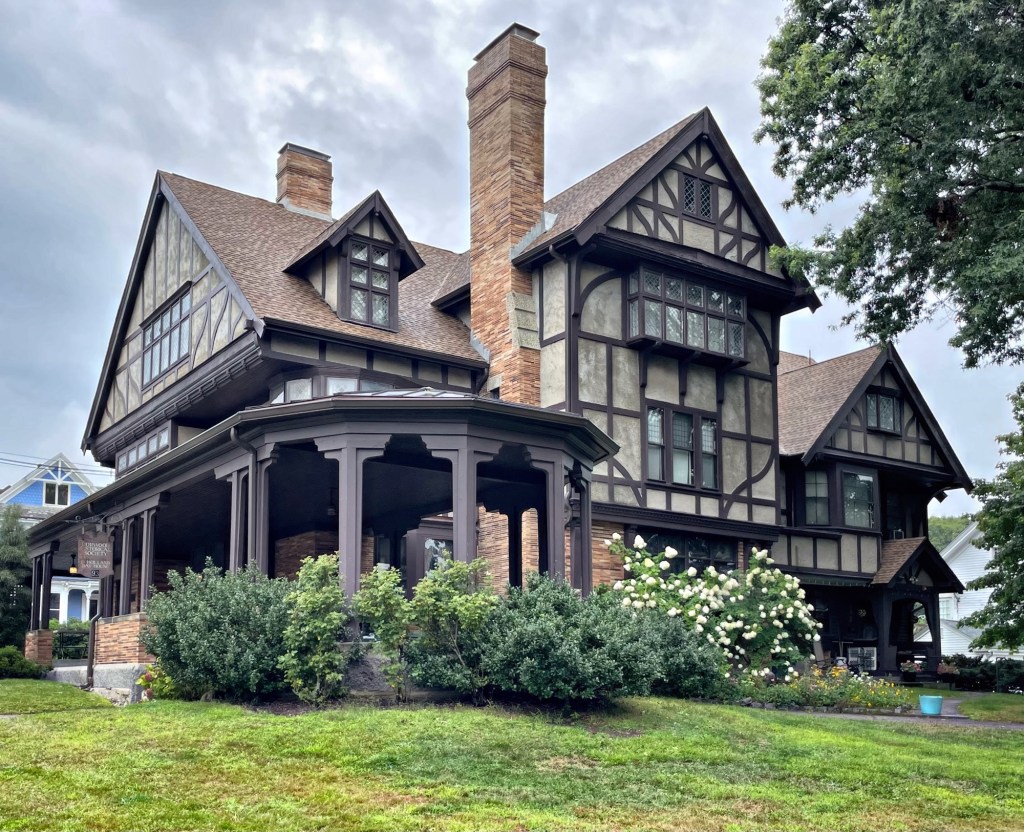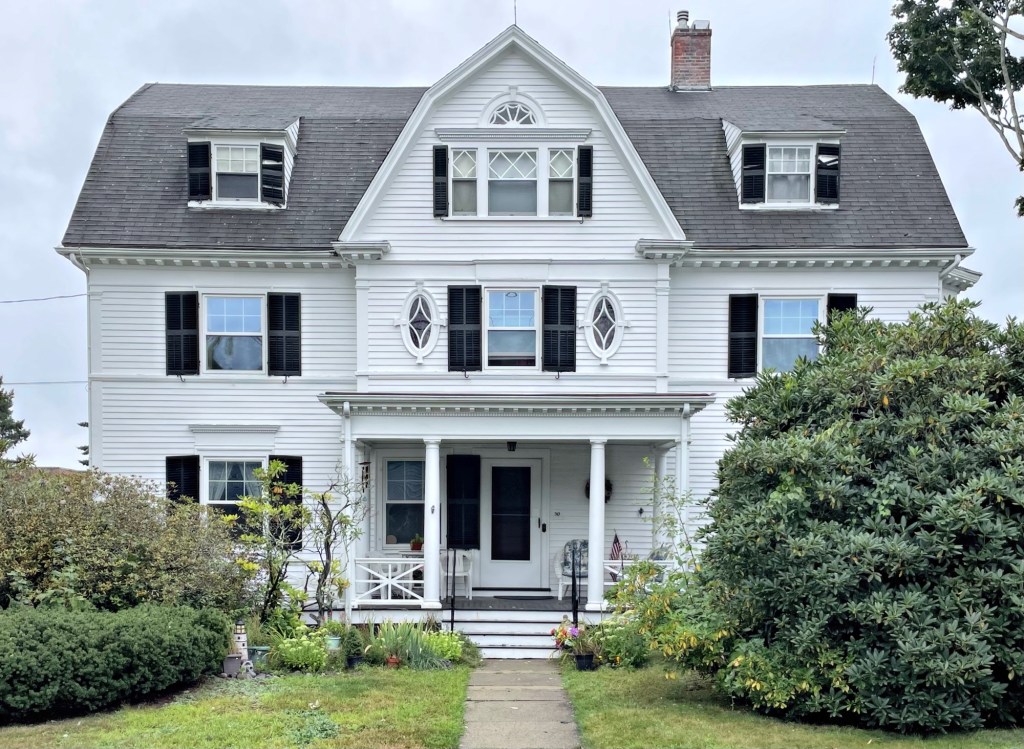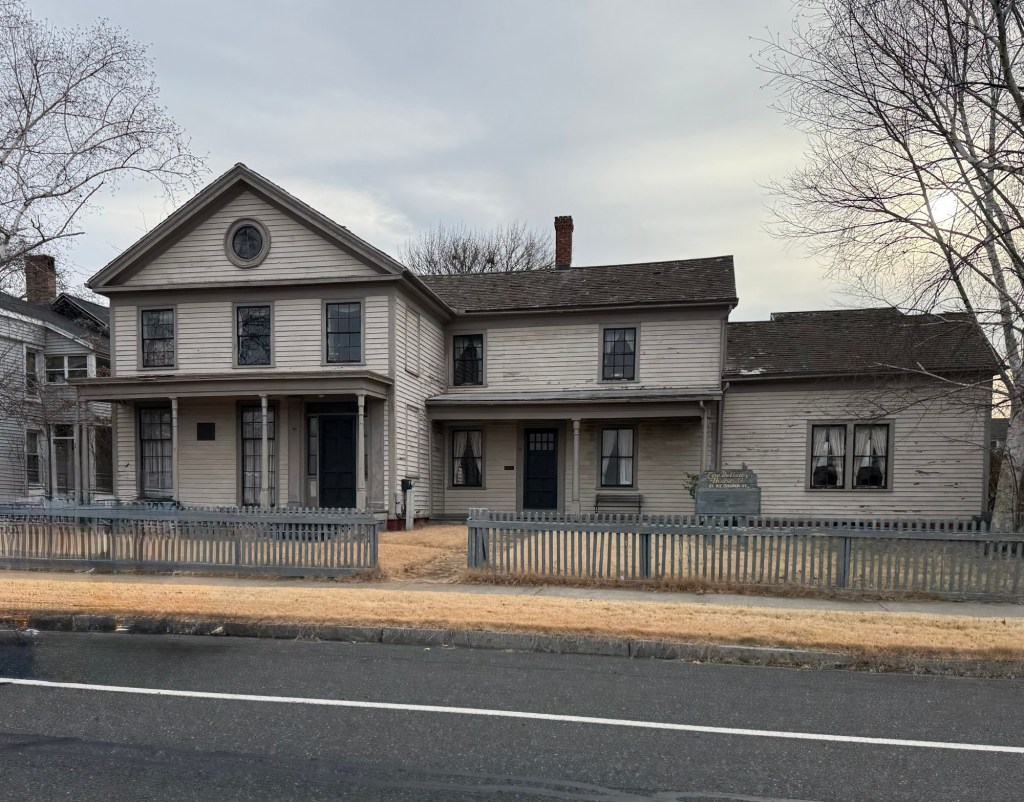
Edgar Hall House // 1889

Another of Acton’s amazing old Queen Anne homes is the Edgar Hall House, an 1889 gem on Windsor Avenue. The house was built for Edgar Henry Hall and his wife Angelina who raised their daughter, Alice, in the home. Edgar and his brother inherited the family business from their father, Enoch Hall, and they produced wooden pails, tubs, clothing racks, and other wooden goods. The company employed over 30 workers in the early 20th century until it closed during the Great Depression. Edgar retired and relaxed from this stunning Victorian home until his death in 1954.

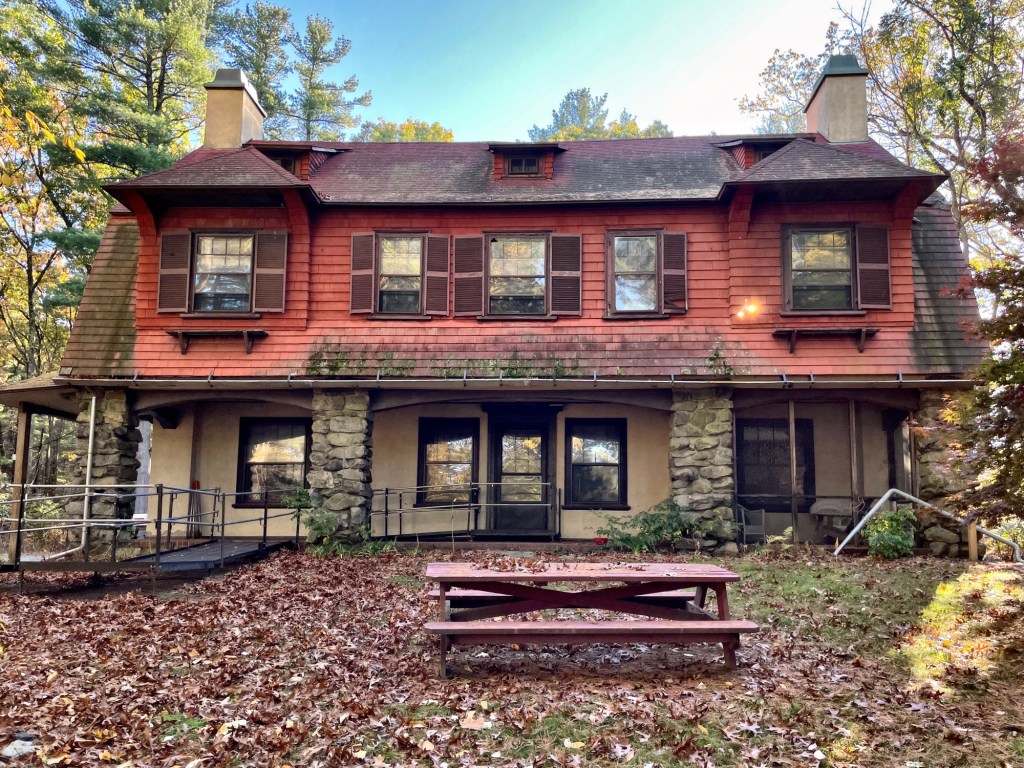
George and Effie Mead House // 1911

Prominently sited upon a hill on a dead-end street in West Acton, Massachusetts, this Craftsman Bungalow is a very elaborate and well-preserved example of the style. The house was built in 1911 for George Varnum Mead (1861-1940) and his wife Effie Wright Mead (1860-1926) as their summer home when they weren’t living in Somerville. Mr. Mead was born in West Acton to Varnum Balfour Mead, who operated the A. O. W. Mead Company, a produce marketing business in Acton and Boston. Varnum’s brother built an elaborate Second Empire style mansion in town which was featured on here yesterday. George Mead followed his father’s footsteps and worked in the family business, which was in operation starting in the 1840s. The A. O. W. Mead Company gathered produce from farmers all over West Acton, kept the produce in cold storage facilities erected by the family, and sent it to Boston for sale at Quincy Market until George’s death in 1940. The Craftsman style house has a fieldstone base, low, overhanging flared gable roof, and is sheathed in shingle siding. Characteristic features include the multiple dormers, exposed rafter tails, grouped windows, and the large fieldstone chimney.

Thomas D. Hamson House // c.1895

Marblehead, Massachusetts is better known for its Colonial-era homes, but there are definitely some amazing old Victorians interspersed in the warren of narrow streets and alleys. This Queen Anne style house was built in the 1890s for Thomas D. Hamson, who was listed in directories as a shoe manufacturer. Queen Anne style Victorians typically exhibit asymmetrical plans, varied projecting and receding planes, varied siding materials and forms, turned posts and porches, and towers and turrets. This house has it all!

Enoch Fuller Octagon // c.1850

Oh the Octagon! The very rare Octagon house was a unique house style briefly popular in the 1850s in the United States and Canada. The style can generally be traced to the influence of one man, amateur architect and phrenologist Orson Squire Fowler. In his book, The Octagon House: A Home for All of 1848 (and reprinted with more photos in 1853), Fowler advocated for the shape’s benefits for buildings in that the octagon allowed for additional living space, received more natural light, was easier to heat, and remained cooler in the summer. These benefits all derive from the geometry of an octagon: the shape encloses space efficiently, minimizing external surface area and consequently heat loss and gain, building costs etc. Some were convinced and built Octagon houses, but the style and its brief period of popularity, died by the 1860s. This example in Stoneham, Massachusetts was built around 1850 for and by Enoch Fuller, a close personal friend of P. T. Barnum, founder of the Barnum & Bailey Circus. Fuller visited Barnum’s octagonal home in Bridgeport, Connecticut and he decided to construct an octagon house in Stoneham. The home was owned by Col. Gerrry Trowbridge not long after completion. The home was built with a fireplace in every room, a spiral, “flying” staircase, and a sweeping veranda.

E. A. Durgin House // 1870

Would you just look at this house?! Massachusetts may have the most Second Empire/Mansard style houses in the United States, but some really stand out. This home in Stoneham, Massachusetts was built around 1870 for local shoe dealer Erastus A. Durgin. The mini mansard home is pretty typical besides the prominent square tower with a steeply pitched gable roof that stands over the entrance. Charming!

Harrishof Houses // 1899 & 1900

I think I found it… My favorite street in Roxbury. Harrishof Street is a surviving streetscape that shows the beauty and potential of the Washington Park district of Roxbury, a surviving span of houses that dodged the wrecking ball during a period of Urban Renewal. This section of the street runs a stone’s throw from the ruins of the 1857 Horatio Harris Villa (featured previously) and was laid out by Horatio’s heirs who developed the former sprawling estate into multi-family housing, to cash in on suburbanization caused at the turn of the 20th century thanks to electric trolley lines in the neighborhood. The development is credited to Alexander Colin Chisholm (1868-1941), a Canadian-born architect and developer who grew up in Roxbury. He specialized in small residential enclaves of similar houses, including these houses on Harrishof Street, and later on Elm Hill Park. The two-family houses blend Queen Anne and Colonial Revival styles in such a fun way that pushes the boundaries of academic architecture. The houses on the street are all slightly different and have had varied alterations over time, but this is a great candidate for a historic district!

Gorham Hussey House // c.1820

This Colonialized Federal period house sits just down Vestal Street from the Maria Mitchell Association campus on the ever-charming island of Nantucket. The home was built around 1820 for Gorham Hussey (1797-1879), who would have been around 23 at the time. He married Lydia Macy in 1820 and the couple had twin daughters that same year, likely right after this house was completed (talk about a busy year)! The home was later owned by photographer John W. McCalley, who photographed this and other houses in the area. The home retains a high-style Colonial Revival fanlight over the door, likely added in the first three decades of the 20th century as colonial homes were romanticized.

Folger House // 1807

There is so much to love about this house! The lot here was purchased by Paul Macy and Gideon Folger in 1807, and they had this house built on the site that year. Paul Macy and, Gideon Folger were two major shareholders in the ill fated whaling schooner “Essex”. In 1820, while at sea in the southern Pacific Ocean under the command of Captain George Pollard Jr., the ship was attacked and sunk by a sperm whale. Thousands of miles from the coast of South America with little food and water, the 20-man crew was forced to make for land in the ship’s surviving whaleboats. The men suffered severe dehydration, starvation, and exposure on the open ocean, and the survivors eventually resorted to eating the bodies of the crewmen who had died. When that proved insufficient, members of the crew drew lots to determine whom they would sacrifice so that the others could live. Seven crew members were cannibalized before the last of the eight survivors were rescued, more than three months after the sinking of the Essex. This ordeal was inspired Herman Melville to write his famous 1851 novel Moby-Dick. The Folger House was owned for some time by Walter Folger, a lawyer who served in the state senate.

Coney House // c.1870

Located on Church Street, the best architectural stretch of buildings in Ware, Massachusetts, you’ll find this absolutely charming mini-Mansard house. The property was built after the Civil War and historic maps show it was owned by a J. Coney. Upon further research, it seems J. Coney is John Coney (1809-1884), a farmer who retired in 1870 and was later referred to as a carpenter in census’. It is likely that Mr. Coney built this mansard cottage around his retirement and relocation to Ware’s industrial village, building it himself. The home features gabled dormers with round-headed sash projecting from the mansard roof. A two-story tower has paired, round-headed windows with oculus windows. Perfection.

Otis Company Agent’s Residence // 1870

This house in Ware, Massachusetts was built after the Civil War by the Otis Company, the major employer in town, for use as an agent’s house. Crazy I know! Historically, it was a common practice for New England textile companies to provide housing for employees (though agents got the nicest dwellings). Many of the agents were brought from Boston and a comfortable residence was a benefit of the job. The first agent to reside in this house was Sylvester Bowen Bond, agent of the company between 1870 and 1877. Mr. Bond sadly would die in the dwelling of typhoid fever, aged 36. The Italianate style property on a large lot continued to be used as an agent’s residence until the Otis Company left Ware. The property was acquired by the nearby St. Mary’s Church as a convent.