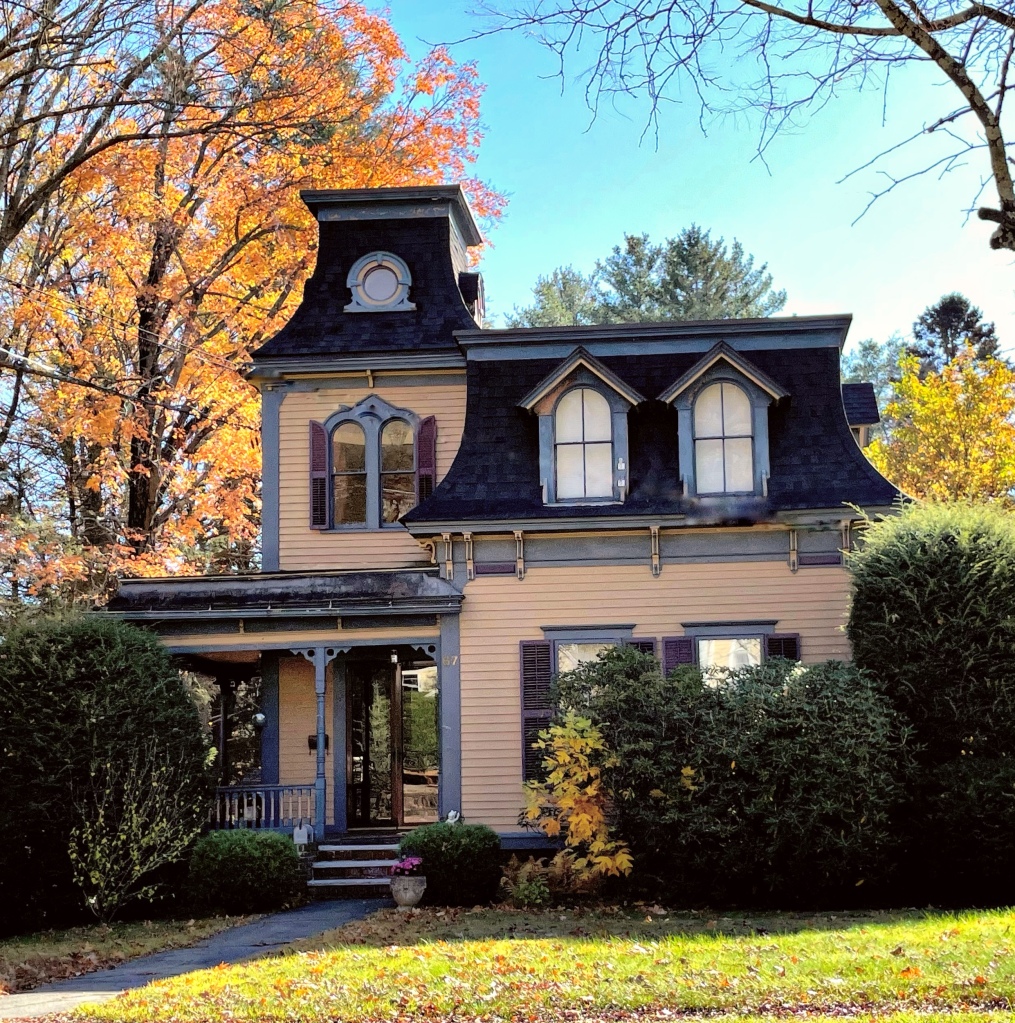
Coney House // c.1870

Located on Church Street, the best architectural stretch of buildings in Ware, Massachusetts, you’ll find this absolutely charming mini-Mansard house. The property was built after the Civil War and historic maps show it was owned by a J. Coney. Upon further research, it seems J. Coney is John Coney (1809-1884), a farmer who retired in 1870 and was later referred to as a carpenter in census’. It is likely that Mr. Coney built this mansard cottage around his retirement and relocation to Ware’s industrial village, building it himself. The home features gabled dormers with round-headed sash projecting from the mansard roof. A two-story tower has paired, round-headed windows with oculus windows. Perfection.

Otis Company Agent’s Residence // 1870

This house in Ware, Massachusetts was built after the Civil War by the Otis Company, the major employer in town, for use as an agent’s house. Crazy I know! Historically, it was a common practice for New England textile companies to provide housing for employees (though agents got the nicest dwellings). Many of the agents were brought from Boston and a comfortable residence was a benefit of the job. The first agent to reside in this house was Sylvester Bowen Bond, agent of the company between 1870 and 1877. Mr. Bond sadly would die in the dwelling of typhoid fever, aged 36. The Italianate style property on a large lot continued to be used as an agent’s residence until the Otis Company left Ware. The property was acquired by the nearby St. Mary’s Church as a convent.

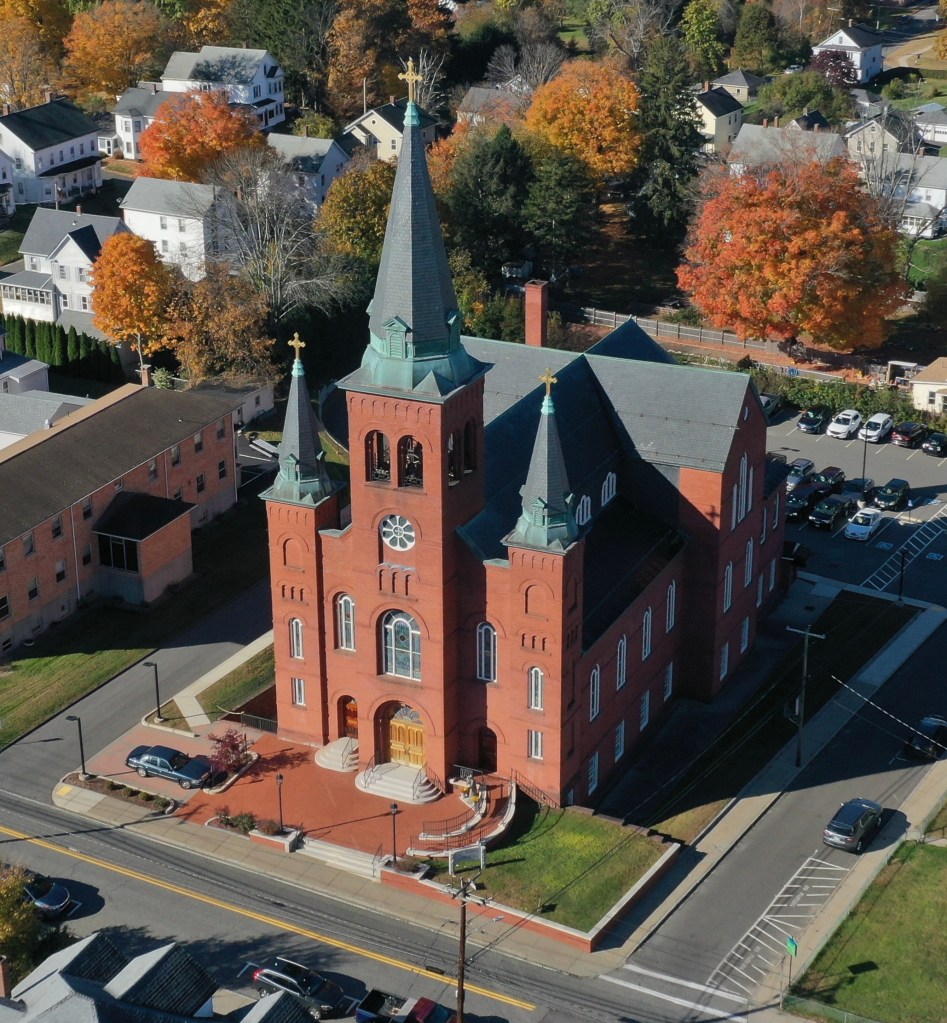
St. Mary’s Catholic Church, Ware // 1906

As the industrial town of Ware developed into a manufacturing powerhouse in Central Massachusetts, European immigrants moved to the town for work in the textile mills. Polish workers were a large proportion of this workforce in Ware, and they sought a place of worship, establishing St. Mary’s. Polish residents initially worshiped in the basement of a church in town until 1906 when a lot was acquired just south of the mills. The Archdiocese seemingly noted the desire for a church and possibly bankrolled some of the building and design costs for the new congregation. The late Romanesque Revival church building is stunning inside and out, and I would love to learn the architect for the building. Does anyone know?

Otis Company Mill #3 // 1856

One of the later mill buildings constructed in the mid-19th century for the Otis Company is this brick building which contributes to the rich industrial heritage of the town. Built in at least three stages, this long industrial building probably grew from a middle section dating 1856, expanded in both directions over the next several decades and but was largely completed by 1869. The building was a major manufacturer, supplying thousands of jobs for the town until it closed after WWII. In 1945, the top two stories of this building along with their towers were removed in 1945, which echoes the history of many similar mills all over New England (but hey, at least this one is occupied today!)

Otis Company Mill #1 // 1845

This five-story granite mill building was one of the major catalysts for the 19th century population surge in Ware, Massachusetts. As New England’s fledgling textile industry of the era played a vanguard role in transforming the U.S. into an industrial nation, the significance of this type of mill can hardly be understated. The Otis Mill #1 in Ware is one of the last remaining granite textile mills of this early period in central/western Massachusetts. The mill was built in 1845 for the Otis Company, which initially manufactured woven cotton fabric, but later branched out into stockings, woolen shirts and drawers underwear. The company was Ware’s largest employer for about 100 years! The company prospered thru WWI employing over 2,500 people. During the 1920’s the business began a decline due to the southern state’s mills and lack of modernization. In the mid 30’s the Otis Co sold its property to the citizens of Ware, which they formed Ware Industries, Inc to continue the major employer in the town. Due to this Ware came to be known nation-wide as “The Town That Can’t Be Licked.” The mill is now home to local small businesses as a sort of incubator, providing jobs to local residents!

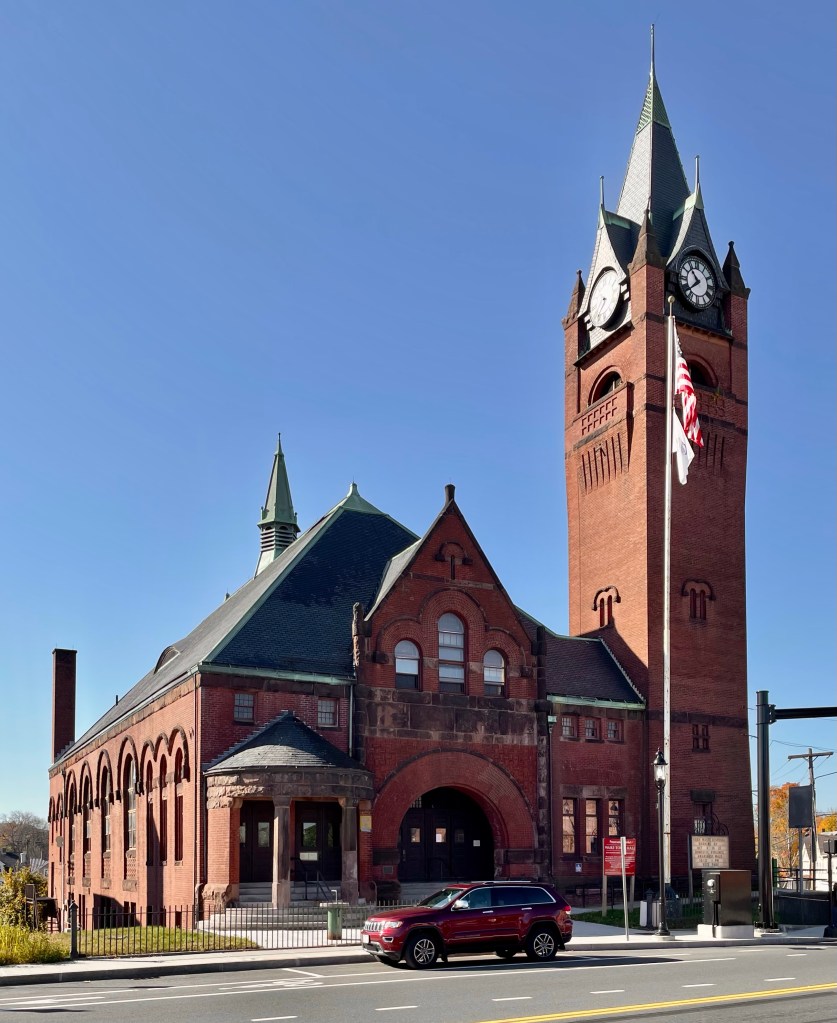
Ware Town Hall // 1885

After learning a little about some of the buildings in Dorset, Vermont, which were saved and relocated to the town from land flooded for the Quabbin Reservoir, I wanted to visit one of the surviving towns there to see it for myself. I found myself in Ware, Massachusetts, a town with a history that parallels many in central and northern Massachusetts. The town was first settled by white European colonists by 1717, and incorporated in 1775. The town was named after the English town of Ware in Hertfordshire. The Town of Ware began as a sleepy farming town with inns and taverns dotting the landscape until industrial sites were developed on the banks of the Weir River. The post Civil War era (1860s–1900s) brought a new prosperity to the now established textile mill town. “Ware Factory Village” sprang up overnight and formed the basis for new growth and development, to the east of the former town center. From this, a new Town Hall was needed, and where better to locate it, than the economic and population center of town?! The Ware Town Hall was built in 1885-1886 from plans by the prominent Boston firm of Hartwell & Richardson. Sadly, a fire gutted much of the building in 1935, but the shell remains (though needing much repair). The town, like many former industrial centers, has struggled to re-invent itself, but a growing population is a great indicator of good things to come!

Kistler House // 1893

In 1852, Beacon Street in Newton was extended westward from Chestnut Hill through Newton Centre. The village’s suburban development accelerated through the activities of real estate developers as the city became connected to Downtown Boston by roadways and rail. This home was built in 1893 for Andrew and Ann Kistler. Andrew Kistler worked as a leather dealer in Boston, and commuted into the city daily. The Kistler House is an excellent example of Colonial Revival with some added oomph.

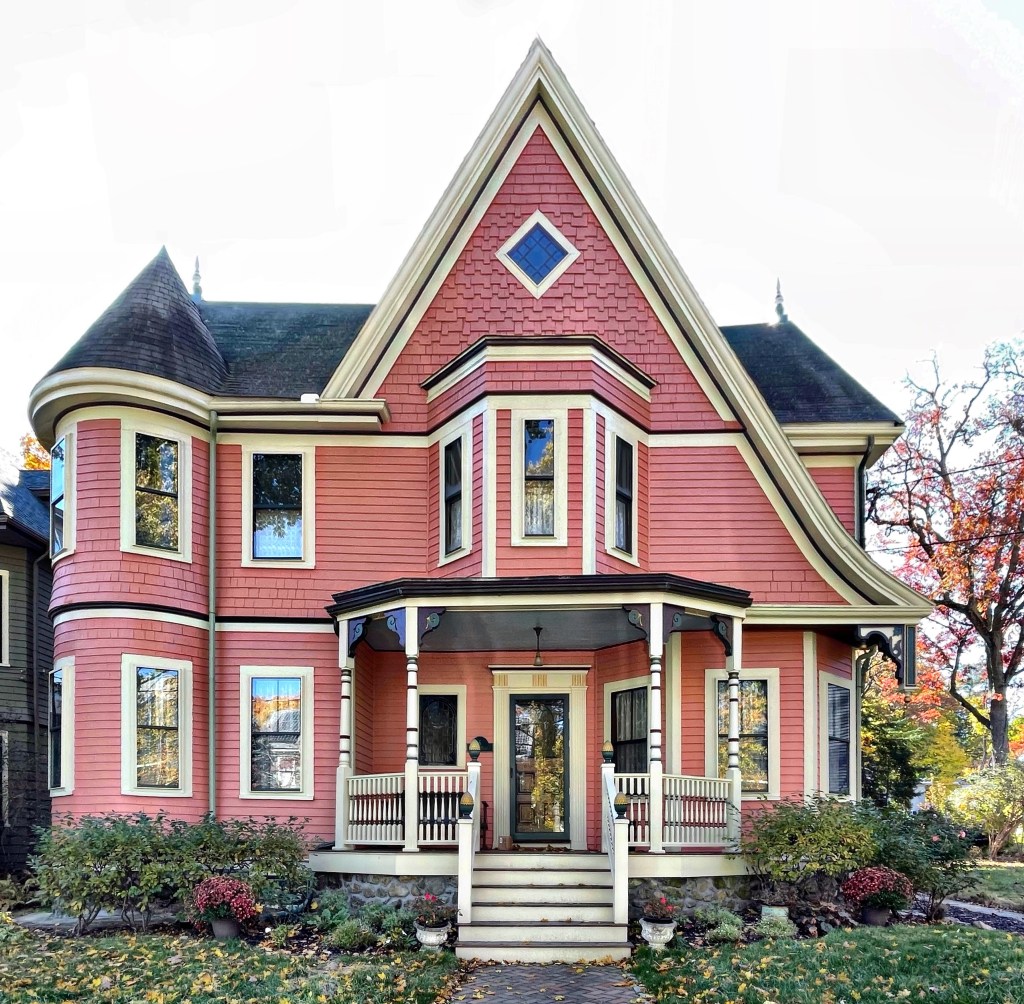
Ms. Grace Weston House // c.1898

At the end of the 19th century, much of Boston’s suburban communities saw rapid development where country estates and farmhouses were razed and their properties laid out for residential development. This house in Newton was built around 1898 as a late Queen Anne and it has so many details and intricacies. The earliest known owner was Grace M. Weston who was mentioned often in local newspapers as an expert on antiques.

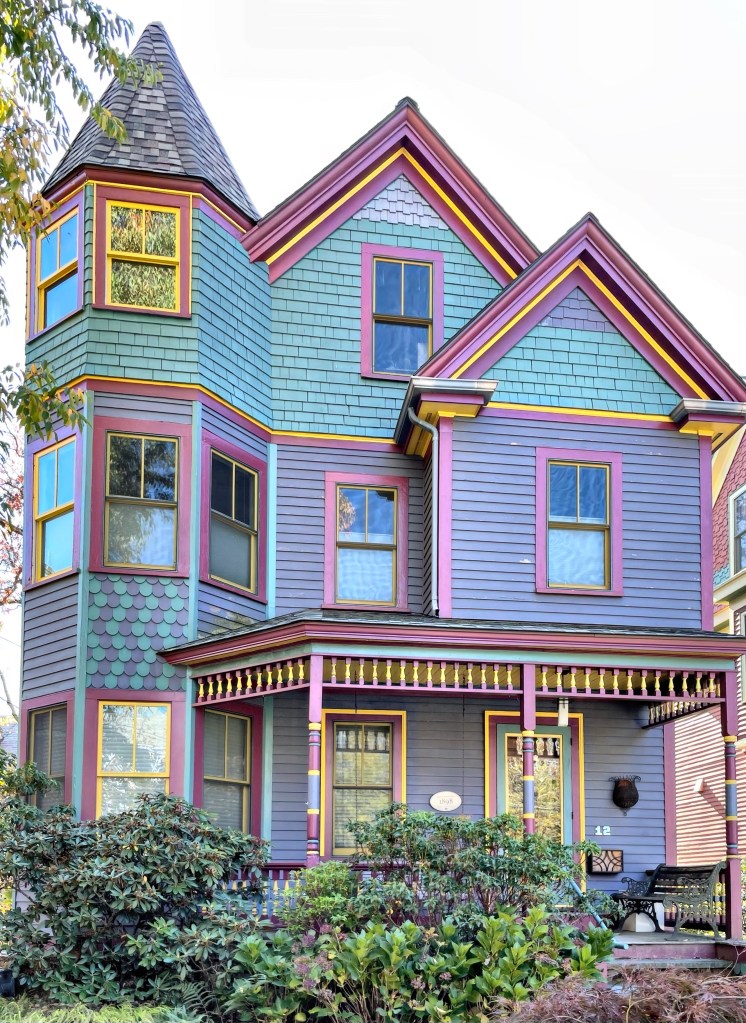
T. C. Sullivan House // 1898

Behold this Queen Anne painted lady in all her glory! This home was constructed in 1898 as a late Victorian addition to Newton’s built landscape. The home’s earliest known owner was a T. C. Sullivan, who left the property to his family upon his death. The house is painted some pretty bold colors, which does an effective job at highlighting the many architectural details and intricacies in the design, but the home would have never been painted like this historically. A little history lesson: the “painted lady” trend took off in San Francisco when after WWII, disinvestment in the urban core led many Victorian homes there to be demolished, altered and covered with siding, and many were painted gray with war-surplus Navy paint (battleship gray). In 1963, San Francisco artist Butch Kardum began combining intense blues and greens on the exterior of his Italianate-style Victorian house. His house was criticized by some, but other neighbors began to copy the bright colors on their own houses. Kardum became a color designer, and he and other artists / colorists began to transform dozens of gray houses into Painted Ladies. By the 1970s, the colorist movement, as it was called, had changed entire streets and neighborhoods. This process continues to this day. The trend took off all over the United States as urban centers saw re-investment and gentrification. While not historically appropriate, the Painted Ladies can really make people happy and show pride in ownership.

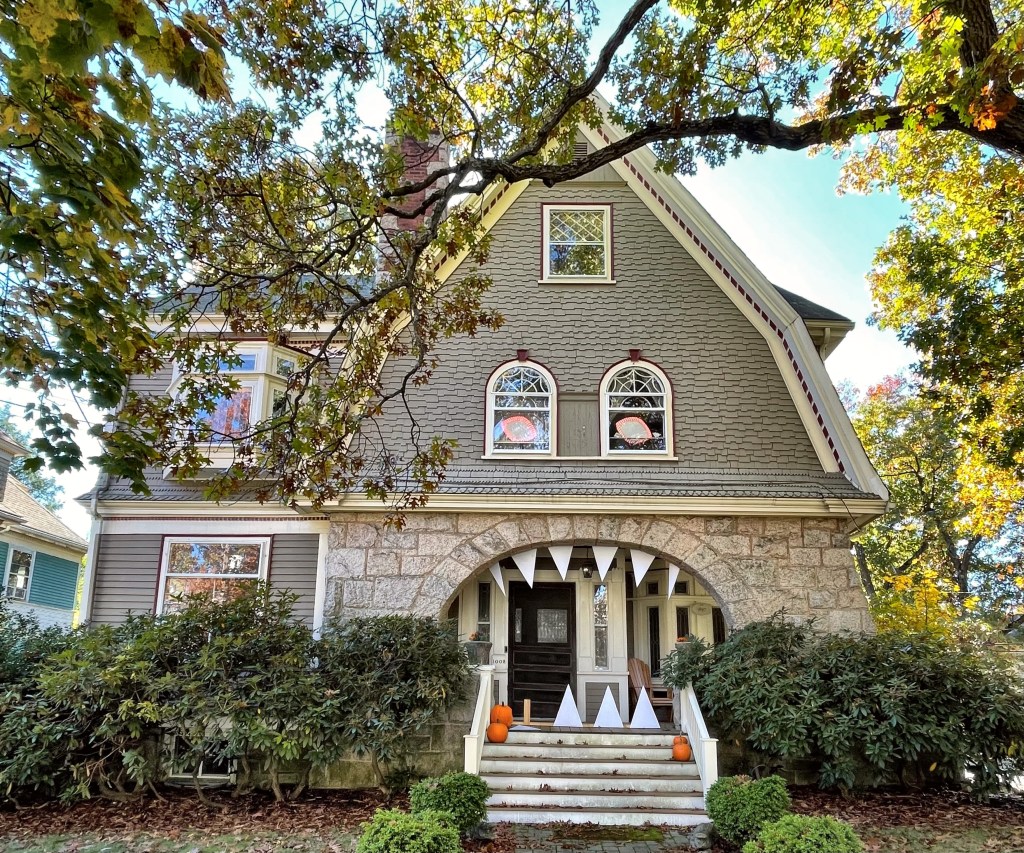
Barrows-Goddard House // 1898

Happy Halloween! To celebrate I wanted to feature one of the more creatively decorated houses in the Boston area, which blends spookiness with architecture! This is the Barrows-Goddard House, so named after its first two owners. The house is located in Newton and was built in 1898 as an eclectic Queen Anne/Shingle style home. The original owner was Joseph Barrows, who developed the property and sold it within a year, relocating to a new home on a less busy street. The property was owned next by Christopher Goddard, an insurance agent with offices in Boston. Architecturally, the gable roof of the main block is intersected by an over-scaled gambrel cross-gable clad in patterned cut wood shingles. The focal point of the design is the Syrian-arched entrance porch of coursed, dressed fieldstone which this time of year, eats trick-o-treaters!