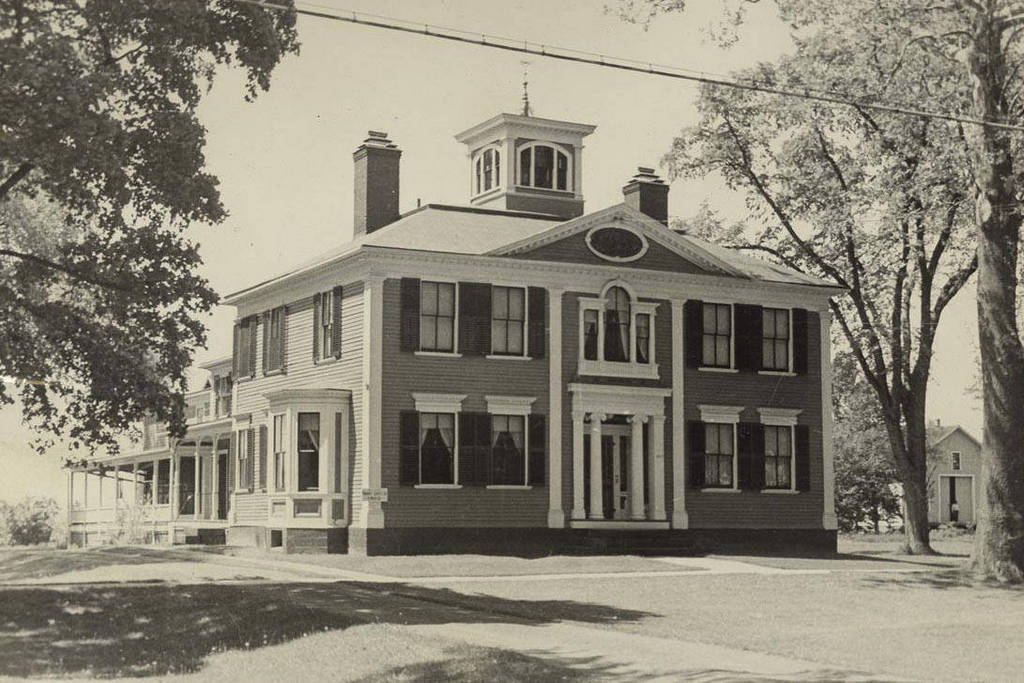
Phelps-Hatheway House // c.1762

Set back from tree-lined Main Street in Suffield, the Phelps-Hatheway House is but one of many handsome eighteenth and nineteenth century homes in the town. The house began construction sometime between 1732-1762 as a modest gable-roof Georgian home built by Abraham Burbank. In 1788, the home was purchased by Oliver Phelps. at the beginning of the Revolutionary War, Phelps joined the Continental Army and fought in the Battle of Lexington. He left service in 1777 and, relying on his experience as a merchant, became Massachusetts Superintendent of Purchases of Army Supplies, a Deputy Commissary of the Continental Army. He was introduced to Robert Morris, the great financier of Revolutionary times. He supplied troops and received commendation from George Washington for his efforts. After the war ended, he became a prominent businessman and was elected to the Massachusetts Senate in 1785 and served on the Governor’s council in 1786 (Suffield was still a part of Massachusetts at this point).
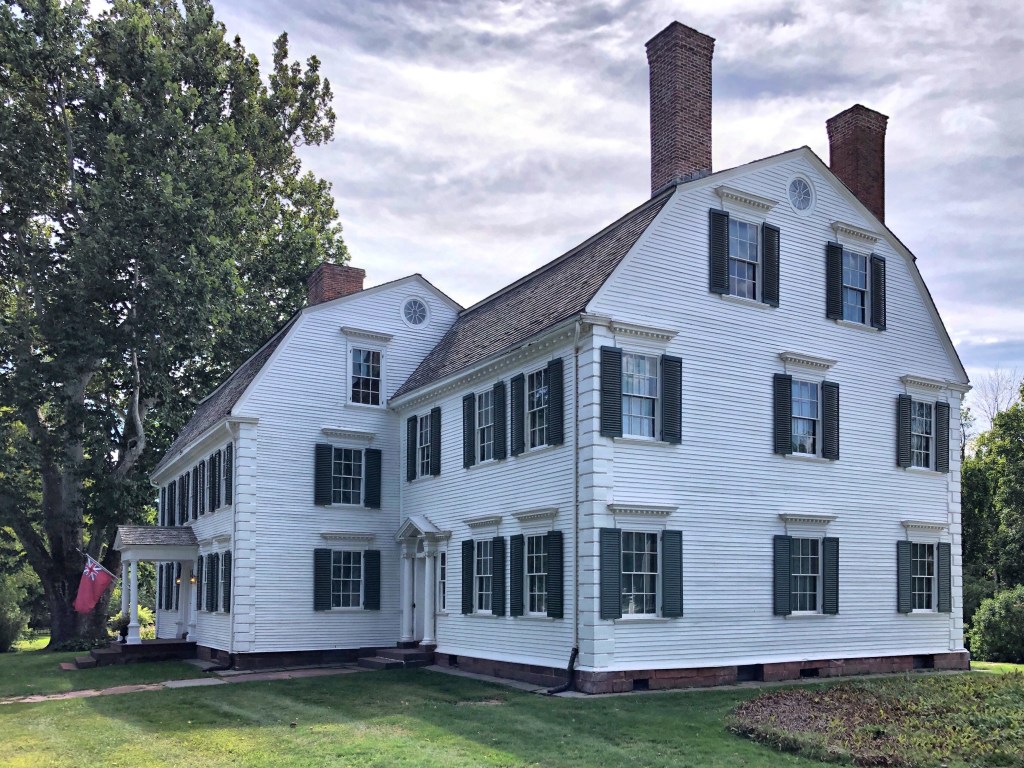
Upon returning, Phelps hired architect Asher Benjamin (when he was in his early 20s!) to redesign the home into a gambrel roof mansion and construct numerous additions to make the house a suitable home for a wealthy, sophisticated man such as himself. Phelps was a principal in the Phelps and Gorham Purchase of six million acres of land in upstate New York, making him one of the nation’s largest landowners. Phelps lived here until 1802, when he moved to Canandaigua, New York, to more closely oversee the development and sale of his holdings. Phelps or his heirs sold the house, which was purchased by Asahel Hatheway and it remained in the Hatheway family for a century. It is now owned by Connecticut Landmarks and operates as a house museum.
Old Kent Memorial Library // 1899

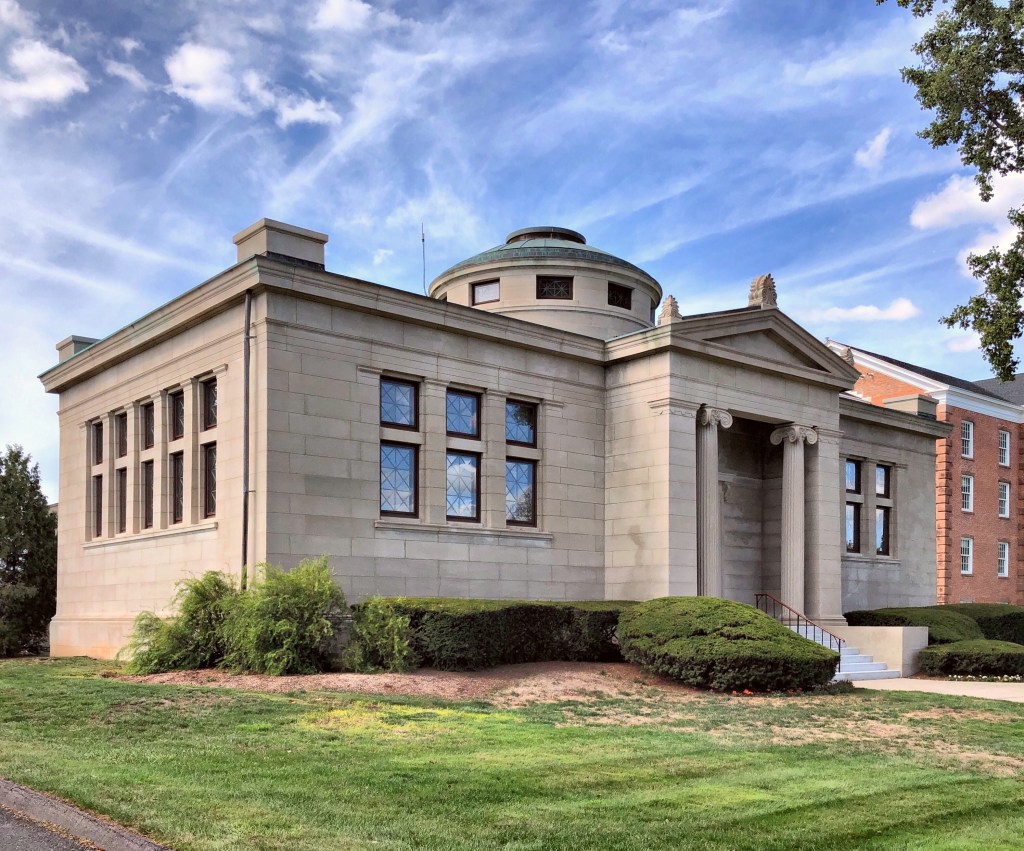
In 1897, Sidney A. Kent, a Suffield native, graduate of Suffield Academy and successful Chicago businessman sought to build a $35,000 library as a memorial to his parents in his home town. Land was purchased from the academy, demolishing a significant academic building, and the new Kent Memorial Library erected. Kent hired architectural giant Daniel Burnham (architect of the famous Flatiron Building in Manhattan) who also designed Kent’s home in Chicago. It sat on the site of land purchased by the first Kent ancestor in Suffield. Sidney Kent furnished nearly 7000 books and periodicals and left an endowment of $25,000. The building was dedicated on November l, 1899. It was eventually outgrown and a new building was constructed across the street.

Thaddeus Leavitt Jr. House // 1800

One of the (many) grand homes on Main Street in Suffield is this Federal style home built in 1800 for a 21-year-old Thaddeus Leavitt. Like his father, Thaddeus was a merchant with a store in Suffield, and was known by the title Colonel, meaning he probably served in the local militia after the Revolutionary War. Immediately after the home was completed, Thaddeus got married and moved into the home with his new wife, Jemima Loomis. They lived happily in their mansion until Thaddeus’ death in 1828 and his wife’s death in 1846. The home was altered in the 1850s with Italianate features including a belvedere and bay windows, which lasted into the 20th century. The home was recently restored back close to original conditions with the removal of the belvedere at the roof.

Elihu Kent Jr. House // 1787

In 1775, when news of the Battle of Lexington reached Suffield, Elihu Kent Sr. (1733-1814) at the age of 42 took command of a local militia of 59 men the next day, along with his son Elihu Kent Jr., 18, and his slave Titus Kent, and marched to Springfield, before heading toward Boston. Initially, slaves were discouraged from enlisting in the Continental Army as the Continental Congress was trying to appease the southern states into fighting in the Revolution. England offered freedom to slaves who fought for their side. forcing the Continental Congress to do the same in order to keep a balance. The militia later ended up on Long Island and Kent Jr. was captured by British forces and confined for a long time as a prisoner of war in the old Rhinelander Sugar House in New York. After his return to Suffield, Elihu Kent Jr. had this Georgian home built for his family.

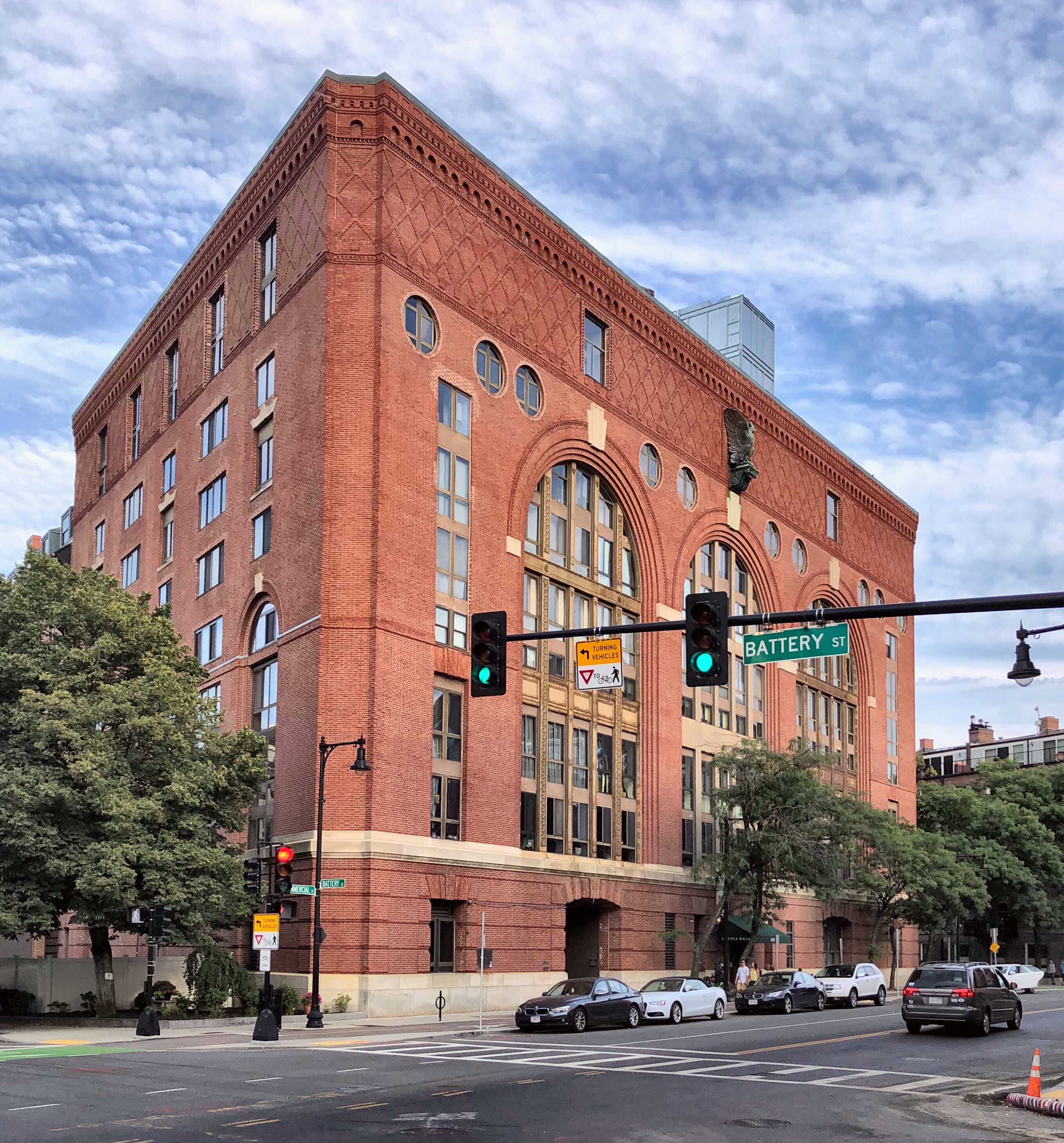
Lincoln Wharf Power Station // 1901

Back in the day, even power stations were gorgeous!

The Boston Elevated Railway Company, and its successor, the Massachusetts Bay Transportation Authority (MBTA), operated Lincoln Wharf Power Station from 1901 to 1972. The Boston-based engineering firm of Sheaff & Jaastad, specialists in electric power and lighting plants, designed this 1901 power station to serve the Atlantic Avenue Line and provide supplementary
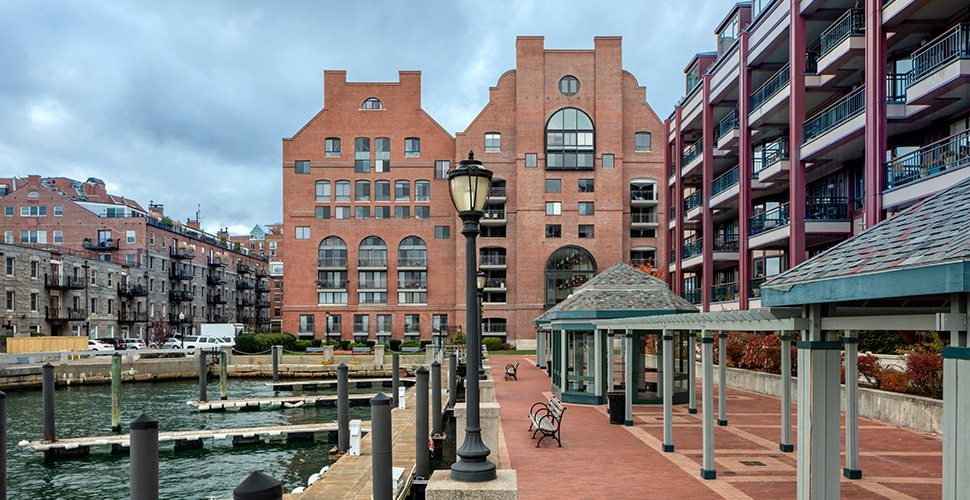
power for the Downtown Boston elevated and surface lines. Due to increased demand in 1907, a massive addition was constructed at the rear, facing Commercial Street, which now is the main orientation of the large structure. By 1971, all elevated tracks powered by this station were removed and the power station was sold by the MBTA to a private developer for housing. Eventually, San Marco Housing Corporation, hired the Boston Architectural Team, Inc., to renovate the power station in 1987 for low- to moderate-income housing. The result is an innovative and stunning example of adaptive reuse providing much-needed housing, while retaining historic fabric of old Boston.

1901 Power Station viewed from waterfront.

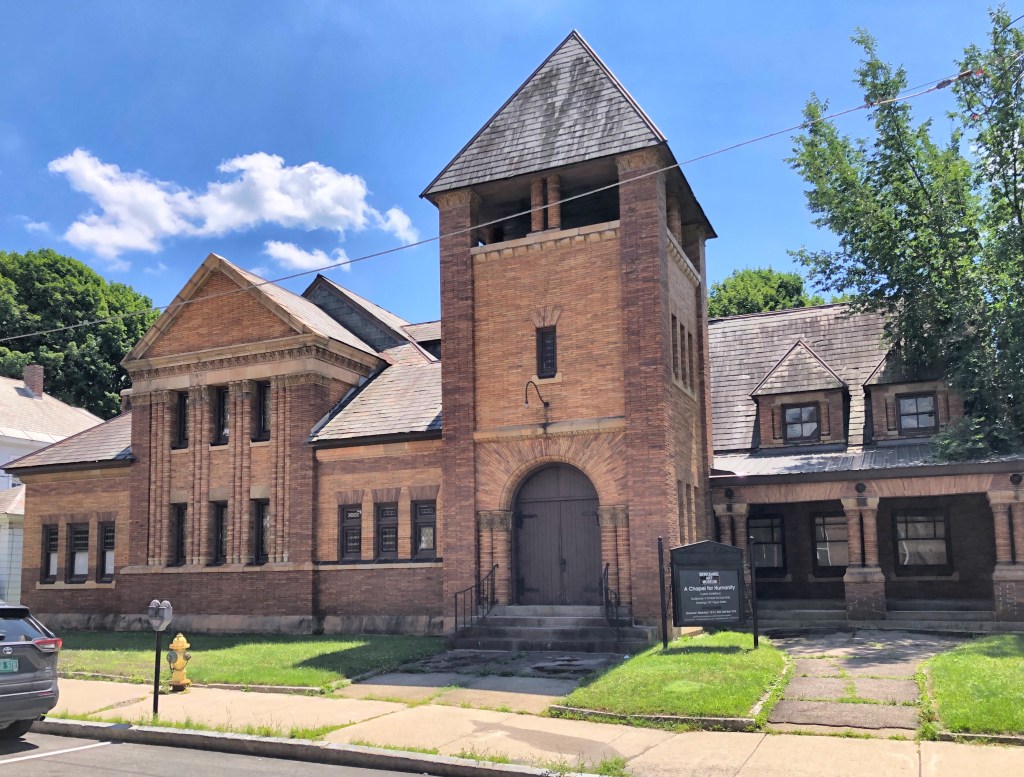
North Adams Universalist Church // 1893

Tucked away off Main Street in North Adams you’ll find this charming little church. The Universalists were organized in North Adams in 1842, restoring an existing church near the Hoosic River. The congregation chose a site for a new church in 1852, and erected a white wooden chapel. It is unclear if the church was outgrown or a fire destroyed it, but the Unitarian society voted to build this church for a cost of approximately $25,000 in 1892. Architect Henry Neill Wilson of Pittsfield drew the plans, and the firm of Porter and Harnam of North Adams constructed the church. Due to the declining population in town in the mid-20th century, the church struggled and was sold to a private owner. The building began to decay by the 1970s and was later sold in 1996 to Barbara and Eric Rudd to house artist Eric Rudd’s installation entitled “A Chapel for Humanity”. The building is currently used as the Berkshire Art Museum Annex.

Captain Valentine Pease House // c.1830

This charming little Greek Revival house has a lot of history, tied to literature and the whaling industry that shaped Edgartown in the 19th century. The home was built in around 1830 for Captain Valentine Pease (1797-1870), a master mariner and captain of the Acushnet, a prominent whaling vessel which often departed from New Bedford. In 1841, Captain Valentine Pease, his crew, and a 21-year-old Herman Melville shipped out of New Bedford 1841 for eighteen months as Melville’s only whaling voyage. Melville took part in the hunting and killing of whales and in harvesting and processing whale oil aboard ship. He endured gales and calm, experienced excitement and boredom, followed ship’s discipline, all the while absorbing the lore of the veteran seamen who made up the Acushnet’s diverse and colorful crew. It is speculated that Valentine Pease was an inspiration for the character of Captain Ahab in Melville’s book “Moby Dick”.

Norton-Coffin House // c.1740

This home on the idyllic Water Street in Edgartown (maybe my favorite town in Massachusetts) was built in two main phases in its storied history. What is now a rear ell, was built as a home around 1740 by “Squire” Norton, who ran the Customs office out of the house in his role as Customs Collector in town. The home was located in the current location of North Water Street, which had to jog around the home until the early 19th century when it was moved to the current location and altered as an ell of the new house standing there. The home was later owned by Captain Edward Coffin (1850-1917), a renowned sea captain. At just 15 years old, Edwin Coffin left Edgartown to be a cabin boy on his first ship. Through the end of the 19th century, he voyaged on numerous whaling vessels and served as captain on many. In 1902, Captain Coffin was chosen to command the steamer America, which carried the Fiala-Ziegler Expedition, a failed attempt at reaching the North Pole. The party remained stranded north of the Arctic Circle for two years before being rescued, yet all but one of its members survived.

Edgartown Town Hall // 1828

Located on the idyllic Main Street in Edgartown, on Martha’s Vineyard, this historic building stands out for its design. It was built in 1828 as the first meeting house for the Methodists of Edgartown, the former building was shared with the Baptists there, but was quickly outgrown. Ten years after this church was built, the space was already becoming too cramped with the booming population of the town due to the success of the whaling industry here. The Methodists then constructed a larger church (known as the Old Whaling Church nearby and sold this structure to the town as a new Town Hall. After the Town bought it, the first floor was remodeled to accommodate the fire engine and also the Town’s police station. Today, it contains town offices on the ground floor and the former upstairs church
auditorium is now used as a movie theater. The infamous nails on the chalkboard scene in the movie Jaws was filmed in this building!

Trinity Methodist Church // 1878

Located on Trinity Park in Wesleyan Grove (aka the Martha’s Vineyard Camp Meeting Association), this 1878 church served the year round Methodist community in Oak Bluffs. The Trinity Methodist Church is a towered, Victorian Gothic structure of some distinction. Edward M. Hyde, a Methodist minister who had trained in architecture and art, designed it. The property that the church and Parish House sit on belongs to the Association, but the buildings are maintained by the congregation. Interestingly, should the congregation disband, the buildings would return to the Association.