Architects William Robert Ware and Henry Van Brunt designed this parsonage in Easton, Massachusetts for the Unity Church in town (featured previously). The Victorian Gothic house is constructed of polychromatic stone, wood trim, slate and copper roof surfaces, and terracotta finials. The architecture is very well-developed and stands toe-to-toe with the other architectural landmarks in town, just a short walk away.
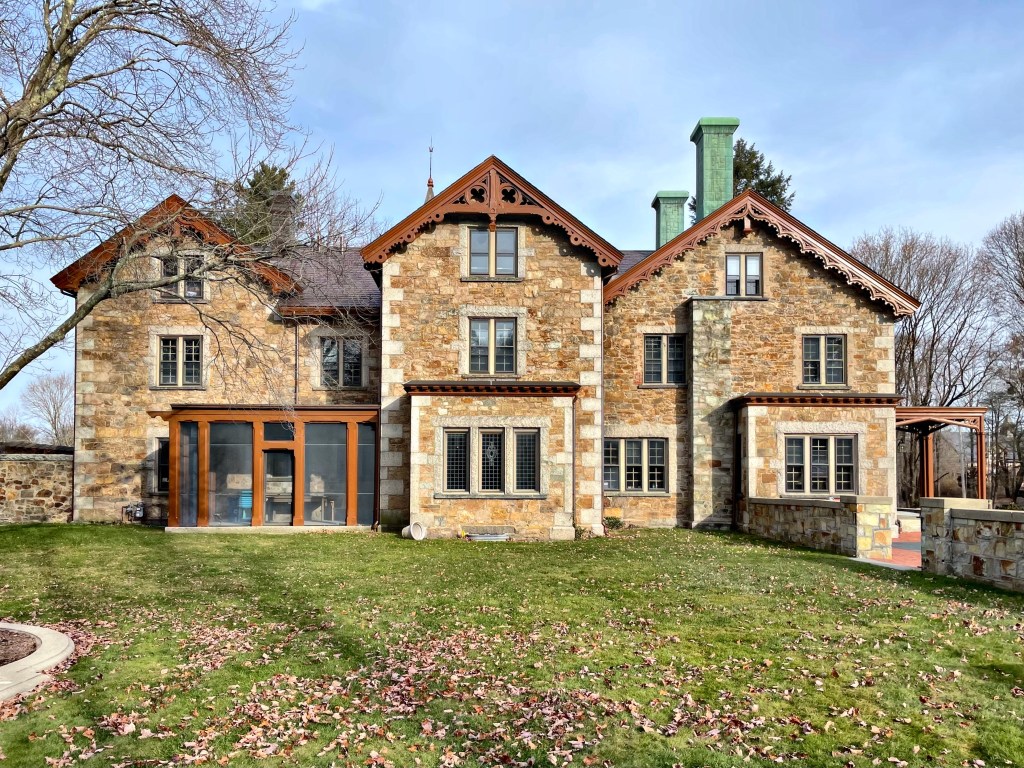
Tucked away behind the Ames Free Library in Easton, you will find one of the most stately examples of Gothic Revival architecture in a house in New England. The house is known as Queset House. Queset was commissioned to be built in 1853 and it was completed the following year for Oakes Angier Ames, of the wealthy Ames Family, who ran a shovelworks in town, and built some of the most handsome structures in the state. The house’s front portion design was drawn from a plan by noted architect Andrew Jackson Downing (who died in 1852). Downing collaborated with Alexander Jackson Davis who provided architectural drawings. The two architects created pattern books which greatly influenced Gothic Revival and Italian Villa style architecture for the next decades, with many wealthy people hiring builders to complete homes in their designs. Queset House is different than most in that the house is constructed of local stone. Oakes would later hire Harvard-educated architect John Ames Mitchell, (a first cousin of Oakes Angier and architect of the nearby Unity Church in Easton) designed the rear addition in 1873, adding the copper-clad chimneys. In the later years of his life, Oakes wanted to help further-improve his town and worked with his family to consult with starchitect H. H. Richardson and landscape starchitect Frederick Law Olmsted on projects in town (the Library, Town Hall, Rockery). After his death in 1899, the home was occupied by his son, famous theatrical producer Winthrop Ames, and his wife. The family would eventually gift the property to the Town of Easton, who today occupy it as an extension of the Public Library, open to the public!
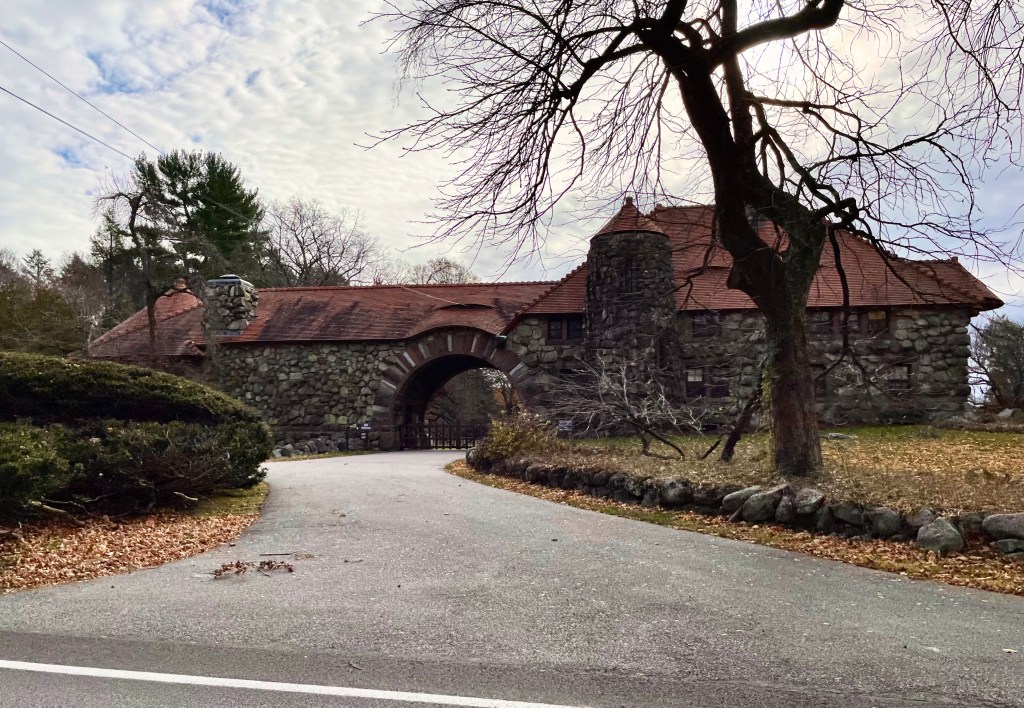
In 1880, twenty years after Frederick L. Ames built his rural estate “Langwater”, he felt the need to give the property more rural character, especially given the close proximity to the Ames Shovel Works. Emulating old European estates with gatehouses, Ames hired star-chitect Henry Hobson Richardson, to design a gate lodge at the entrance to his property, fitting of one of the richest men in Massachusetts. Richardson’s design for the gate lodge was oriented longitudinally and is bisected by the arched entry to the estate. The large room on the left was intended to serve as a storeroom for flowering plants, and the two-story portion had a caretaker’s residence on the lower floor and a “bachelor hall” for men’s socializing and spill-over bedroom. The building uses glacial boulders found on the expansive grounds and older stone walls, with trim of Longmeadow brownstone. The bright red terracotta roof contrasts boldly with the rough stone walls. The building is one of the most beautiful structures I have seen, but can be difficult to photograph without trespassing. Ugh!
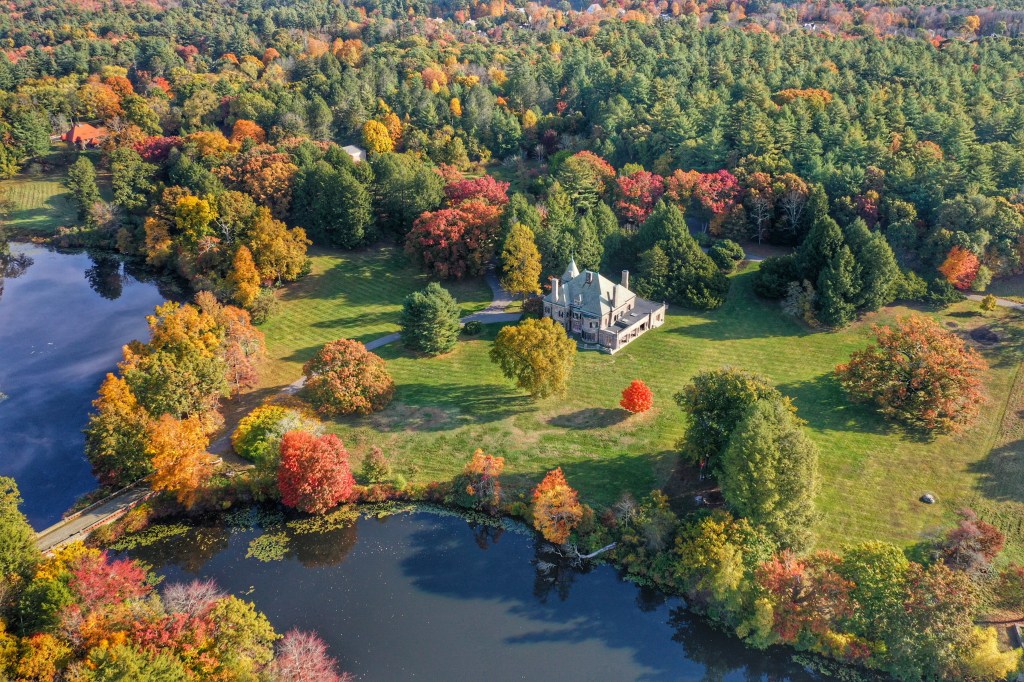
The country estate of Frederick Lothrop Ames (1835-1893), “Langwater” sits in North Easton amongst a collection of some of America’s greatest architectural treasures, all thanks to the Ames Family. The Ames family was a wealthy family which had lived in Easton for many generations. Frederick’s grandfather Oliver Ames Sr. founded the Ames Shovel Works in Easton, Massachusetts. The Shovel Works earned the family a huge fortune, during a time when aggressive canal and railroad expansion was built by the hands of thousands of men using shovels. Frederick’s father Oliver Jr. was president of the Union Pacific Railroad during the building of the transcontinental railroad. Frederick’s cousin Oliver Ames was governor of Massachusetts 1887–1890. Frederick himself was Vice President of the Old Colony Railroad and director of the Union Pacific railroad. At the time of his death, Ames was reported to be the wealthiest person in Massachusetts. With this immense wealth, Frederick built a castle where he would spend most of the year, overseeing his various businesses, in his hometown of Easton, Massachusetts. The mansion was designed by architect George Snell and built around 1860, with a couple additions and updates until Frederick’s death. A few years before his death, Frederick hired famed architect Henry Hobson Richardson, who he already worked with in designing the Oakes Ames Memorial Hall(Easton’s Town Hall), to design a gate house leading to Langwater (more on that later).
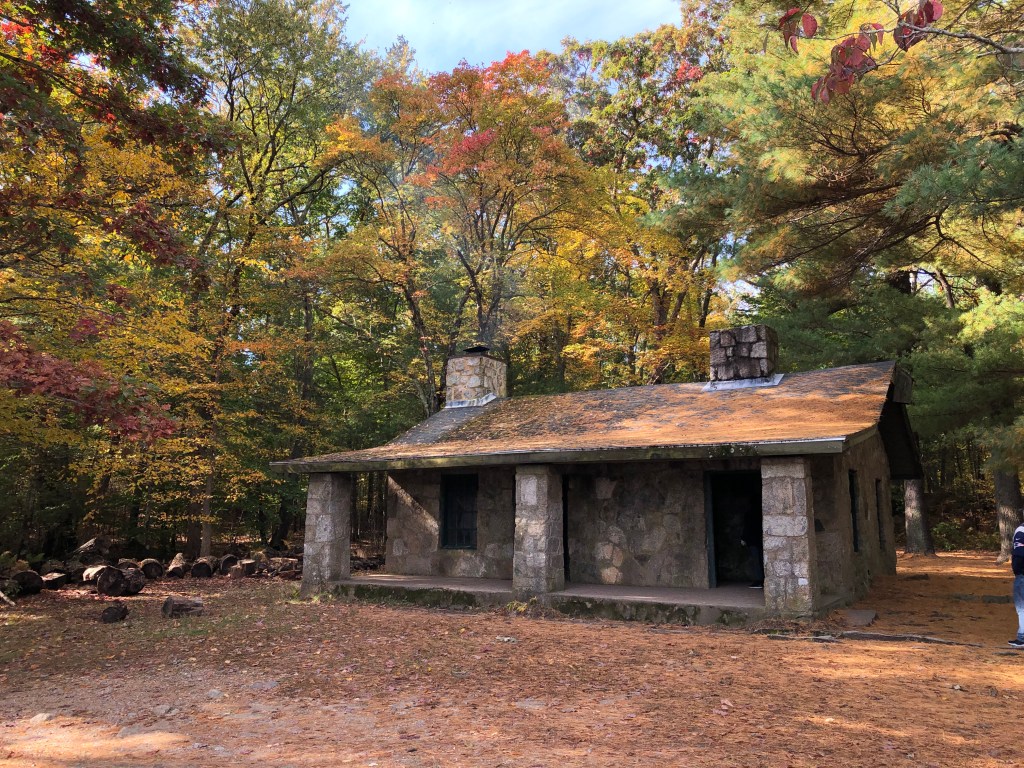
Located near the banks of Leach Pond in Borderlands State Park, this handsome stone structure set the style for one of the most iconic and beautiful buildings in Easton, the Ames Mansion. The one-story concrete and stone structure was designed and constructed under the supervision of Blanche Ames, and may have been a prototype for the construction technique used in the Ames Mansion, built just years later. Blanche was an amazing woman. She was an artist, political activist, inventor, writer, and prominent supporter of women’s suffrage and birth control. In 1900, she married Harvard University botany professor Oakes Ames (no relation). She took the married name Blanche Ames Ames. She illustrated her husband’s botanical research on orchids, and later got involved in designing the family’s country retreat. Originally designed as a warming hut during hunting season, this lodge was originally minimally designed with exposed stone walls. In the 1930s, the lodge was renovated to contain a living space, a kitchen, and a bedroom. When the Commonwealth of Massachusetts acquired the Ames Estate in the 1970s for a state park, the Lodge was restored to its original condition. The hunting lodge is open to the elements and the public, who can warm themselves in one of the two six-foot fireplaces.
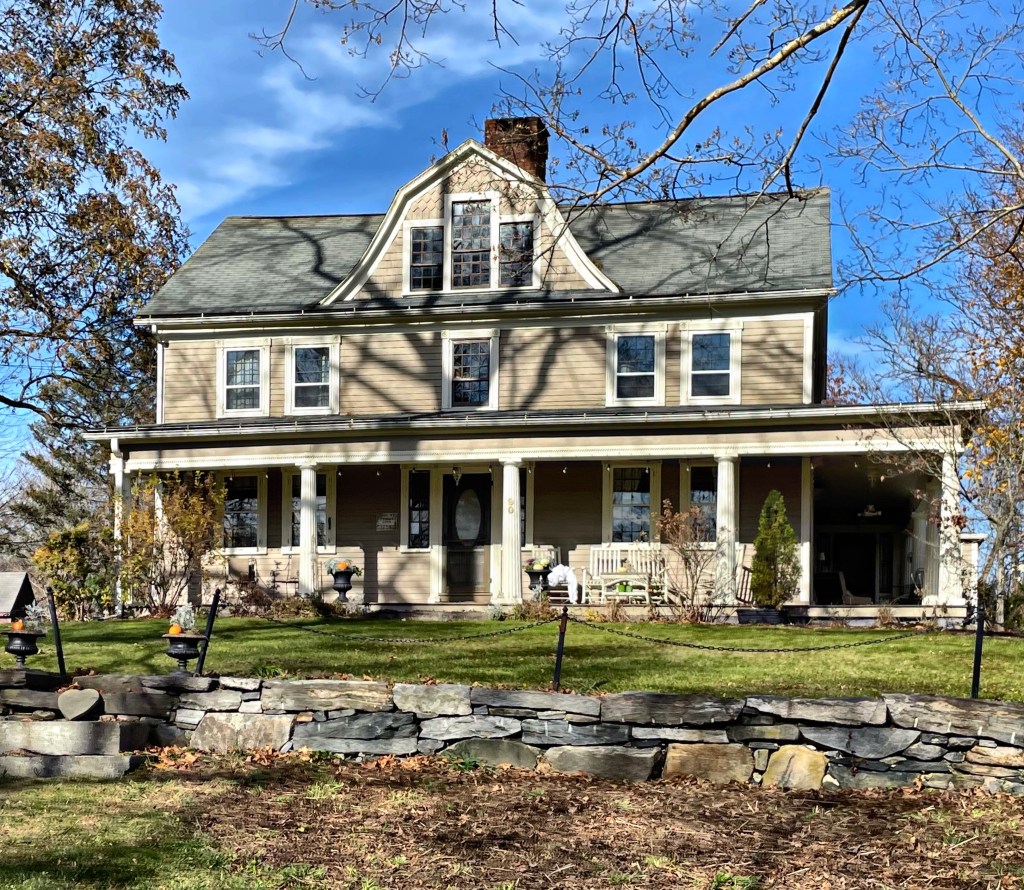
Built by Benjamin Dyer for his son Thomas in 1756, this mansion is believed to be the oldest extant house in Canton, Connecticut. The most famous resident of the house was William Edgar Simonds (1842-1903) who married Sarah Jane Mills, a descendant of Dyer. Simonds was a prominent patent attorney who was awarded the Congressional Medal of Honor for his heroics at the Civil War battle of Irish Bend, Louisiana. After his military service, he attended Yale University, was admitted to the bar and commenced the practice of law in Hartford, Connecticut. In 1883 and 1885, he was a member of the Connecticut State Legislature. In 1889, he was elected as a Republican to the 51st US Congress served until 1891 and was a United States Commissioner of Patents (1891-93). He died at age 60 in Hartford, Connecticut.
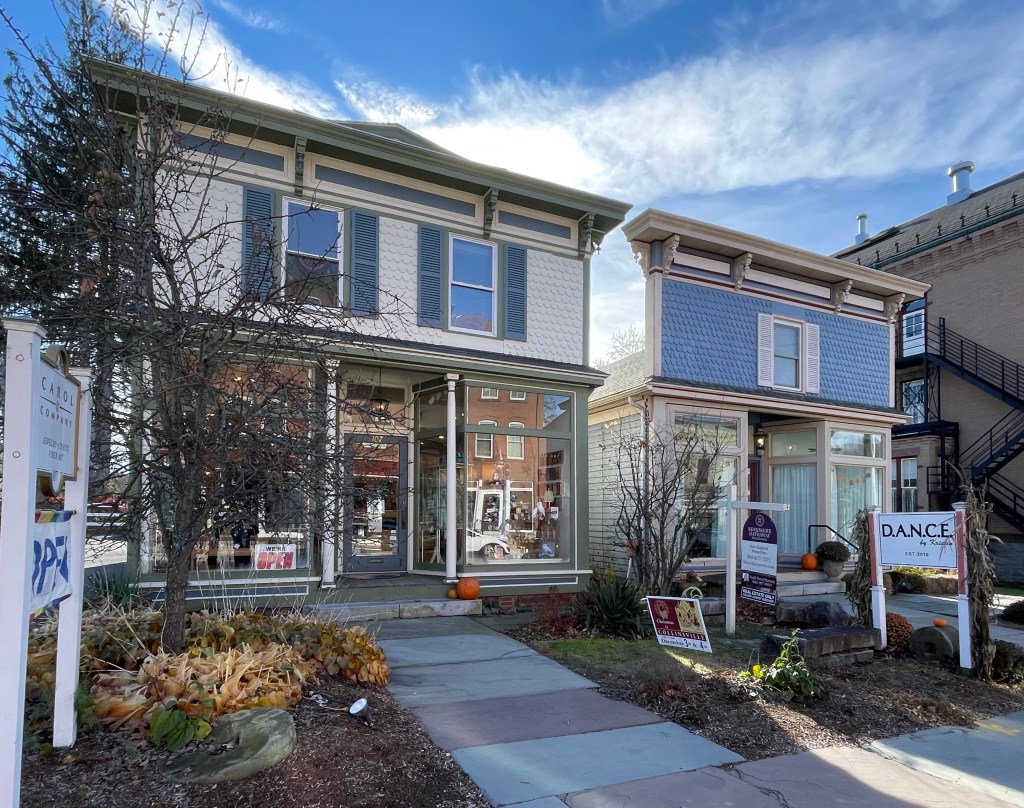
These two Italianate-style stores sit on Collinsville’s Main Street, a walkable main street village along the banks of the Farmington River. Each structure has a central, recessed entry with storefront windows meeting the sidewalk. One structure is two stories with a very shallow gable roof and the other is 1 1/2 stories with a false front. These false front facades remind me of old frontier towns in western movies, they are great!
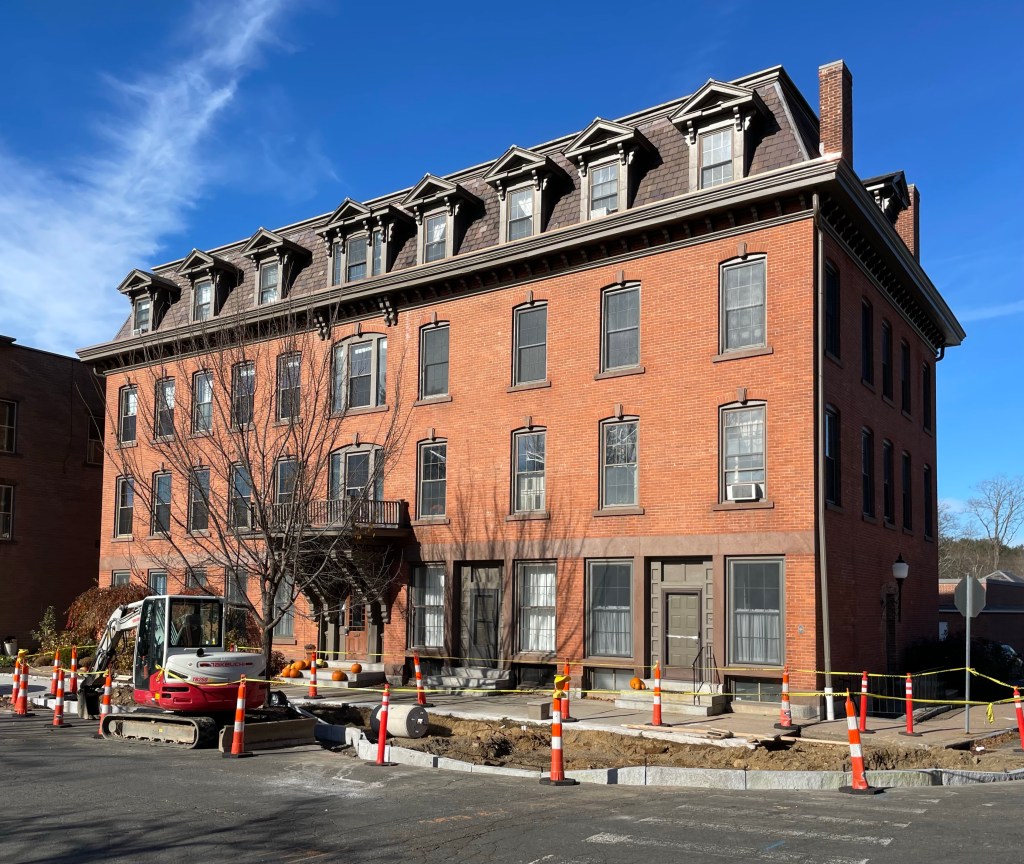
This massive Second Empire structure on Main Street in Collinsville, CT, was built in 1868 by the Collins Company, the major industry in town as housing and stores. In the 19th and early 20th centuries, large industrial employers often provided affordable housing for workers in close proximity to factories to incentivize the long days and difficult working conditions. The Valley House was known as a hotel, but was essentially an apartment hotel, where workers and visitors could reside in a room without a set lease or contract. At the ground floor, retail shops would provide goods and services to residents of the building and the greater village. Today, the rooms have been converted to condominiums.
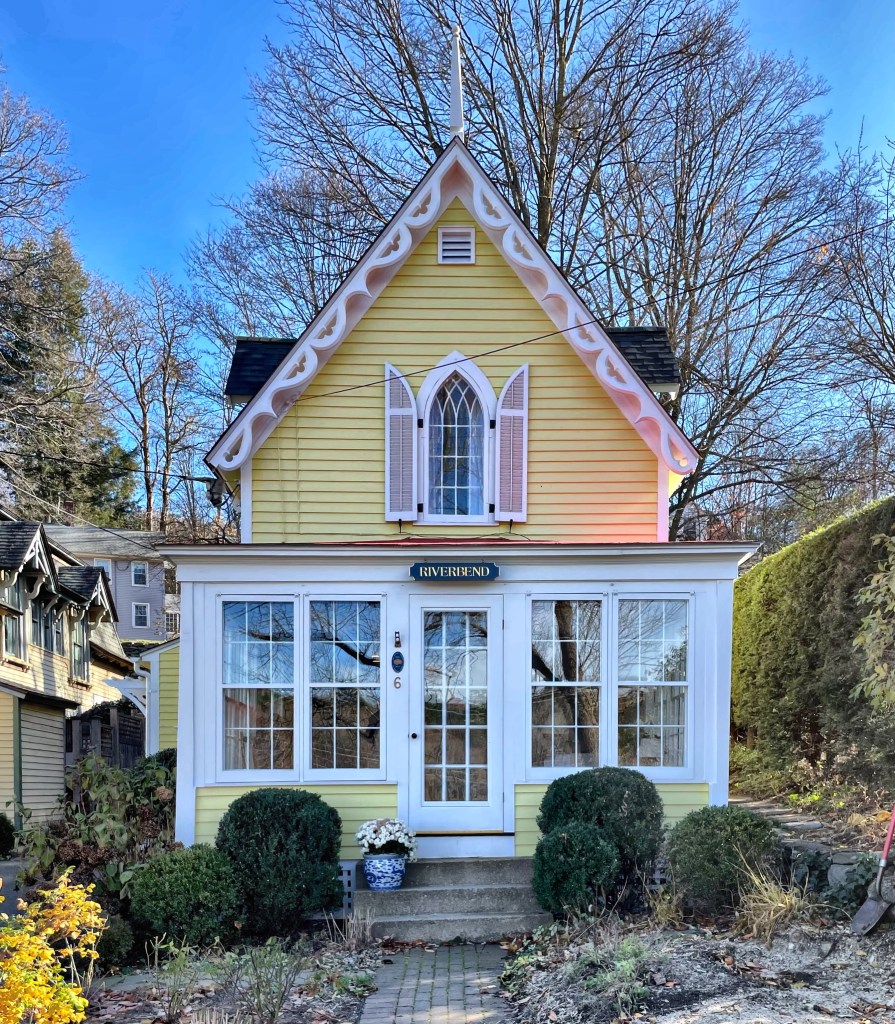
No, this is not Martha’s Vineyard, it is Collinsville, Connecticut! Perched on a hill near the banks of the Farmington River, this quaint little Victorian cottage is one of the better-preserved examples of worker’s cottages in the former industrial village. I could not locate much on the house’s history, beyond that it may have once been part of a larger home, and moved to this site in the 20th century.
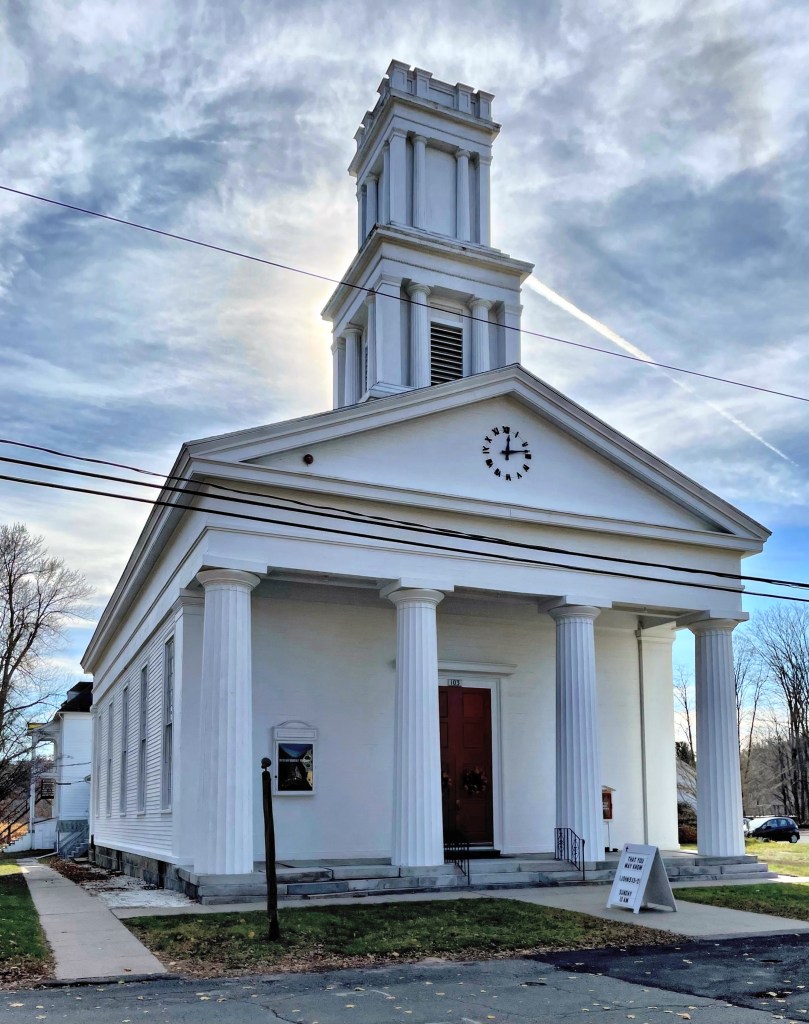
Shortly after Collins and Company was founded in 1826, religious services were held in various homes in the South Canton Village which came to be known as Collinsville. In 1830, the Collins Company erected its first office building on Front Street, and religious services were held there on the second floor. The first church building was erected on land bought by Collins and Company in 1826. By the mid-1850’s, the church membership was outgrowing the building. Although there may have been plans to enlarge the building, tragedy struck and in January 1857, and the church was consumed by fire, which started in the chimney, during a winter storm. The current building was erected almost immediately and dedicated on February 25, 1858. The present church is a grand Greek Revival style building, with a full pediment and large entablature supported by four monumental fluted columns. The two-tiered, square belfry has engaged columns as well. What a great example of a New England church!



 Buildings of New England