Rochester Grange Hall // 1924

The Grange, officially named The National Grange of the Order of Patrons of Husbandry, is a social organization that encourages families to band together to promote the economic and political well-being of the community and agriculture. Grange Halls can be found in rural towns and villages all over New England, and historically served as a gathering place to discuss agriculture-based business, crops, trade, and issues faced in the community. The Rochester Grange Hall was constructed in 1924 to the designs of architects Brown and Poole of New Bedford, MA and is of the Craftsman style. The National Grange has sharply declined in membership since the late 19th century. In 2013, the Grange signed on to a letter to Congress calling for the doubling of legal immigration and legalization for undocumented immigrants currently in the United States. The Grange now emphasizes an expansion in the H-2A visa program to increase legal immigration and address the crisis-level labor shortage in agriculture.
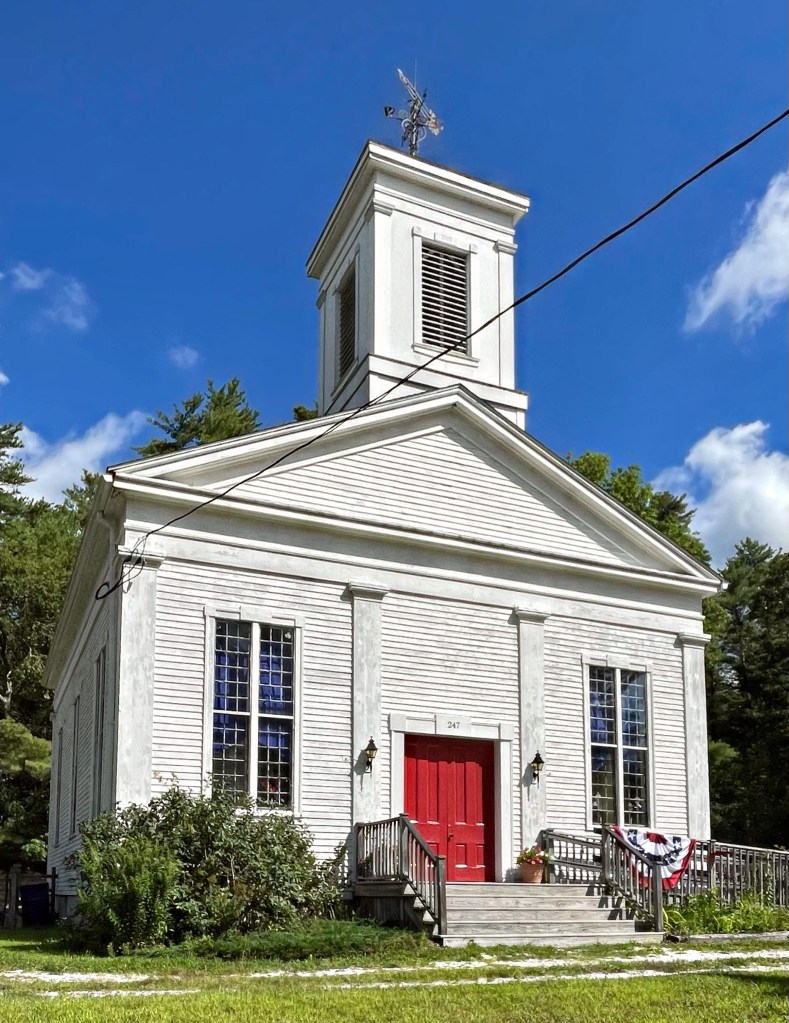
North Rochester Congregational Church // 1841

The North Rochester Congregational Church is located in a distinctly rural, area in the northwest corner of the largely pastoral town of Rochester, Massachusetts. This church, built 1841, is locally important to the development of religion and community in North Rochester. In Rochester as in other early New England towns, the building of a church symbolized the founding of a community. North Rochester’s first church was built in 1748, about 1 mile west of the present building, and was served by traveling ministers from other communities. The church congregation was formally organized in 1790, and a new church was built at that time, serving a larger area. The current church building was built in 1841 by Solomon K. Eaton, a noted regional builder whose credits include several other area churches. The church is of the Greek Revival style, which was frequented in the designs of hundreds of churches all over New England in the mid-19th century.

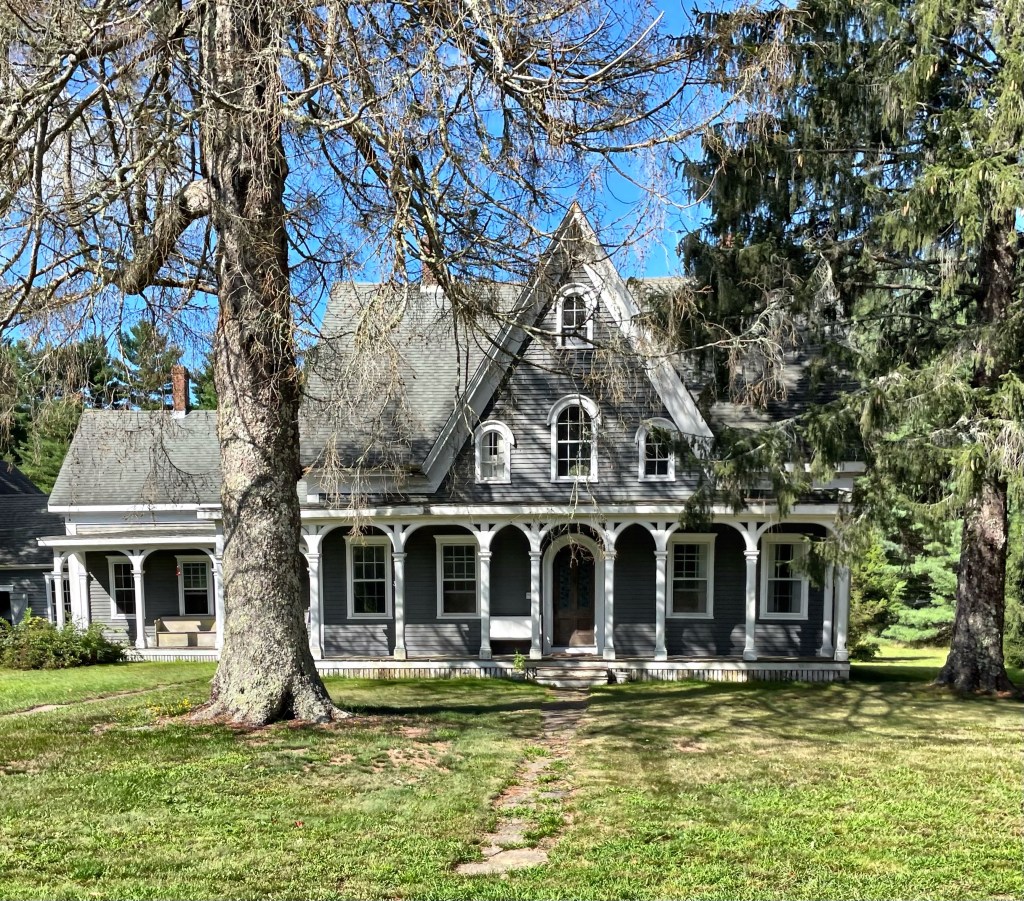
Chaddock Boarding House // 1799

Calvin Chaddock (1765-1823) graduated from Dartmouth in 1791 and three years later earned a Master of Arts degree from the college. In 1792, he married Meletiah Nye and they settled in Rochester, Massachusetts, where he became pastor of a Congregational parish in the rural northern part of town. In 1798, he opened an academy for boys and girls in the village and built this beautiful Federal style home as a boarding house for students to reside in (the schoolhouse is no longer extant). By 1804, he had “a respectable number of students from different parts of the United States.” The man moved to Ohio before settling in Charlestown, West Virginia, where he lived in a homestead with his family and three enslaved people, Charles, Thomas, and an unnamed woman. Upon his death in 1823, the three people enslaved by Chaddock, were sold at auction. The former boarding house in Rochester was later occupied as a tavern and stagecoach stop, and a store, when it was given some 19th century alterations. It has been a private home for the past hundred years.

Charles Dexter House // c.1910

Craftsman bungalows are a rarity in New England. The Craftsman style surged in the early 1900s, which coincided with the ever-popular Colonial Revival styles reign as most commonly built house style. Many of the Craftsmans that were built are less “ornate” than the West Coast counterparts, lacking deep exposed rafters, sweeping porches, and low-pitched roofs, but they are out there. This bungalow in Rochester was built around 1910 and has some Colonial qualities, including the Tuscan columns, boxed eaves, and shingle siding. I do love that full-length porch and hipped roof with a cute centered dormer! Do you wish we had more Craftsmans in New England?

Rochester Academy // 1838

In the early 19th century, the schools in the town of Rochester, Massachusetts (and many other rural towns in New England), were under the control of a district system. This system divided the town into districts, with each district having its own schoolhouse and an elected committeeman. The committeeman selected the teacher to run his district school and was responsible for providing school equipment. Each district had to provide its school with a building that included a hall or closet, desks and benches on three sides with 10 square feet of open space in the center for recitations. The schools held two terms (winter and summer) and each term averaged a length of 3 months, much of the “off-time”, students would assist their families on farms. By 1859, Rochester had 11 districts, each with its own schoolhouse that stood throughout the town. Rochester Academy was built at the town center, and educated the “older” students in the town. The school later admitted younger students to ease congestion in the smaller rural schoolhouses. The Greek Revival building, constructed in 1838, presently serves as a community space for the town, but is in need of some maintenance!

Captain John Dexter House // 1860

This beautiful house was built by retired whaling Captain John G. Dexter in 1860. The Dexter family’s ties to Rochester, Massachusetts, began when William Dexter became the first descendant of the Dexter
family to settle in town around 1679. William, one of the 32 original grantees of the town (from land by Sachem Metacomet), died in Rochester in 1694 and his four sons and grandsons remained in Rochester through the 19th century. After being away for months or years at a time, Captain John Dexter returned to his hometown to build this home on family land that was previously undeveloped. The Dexter family remained in the house well into the early 20th century, carrying on the family’s deep rooted history in the area. The home is a blending of Gothic and Italianate styles, which work really well in the rural area.

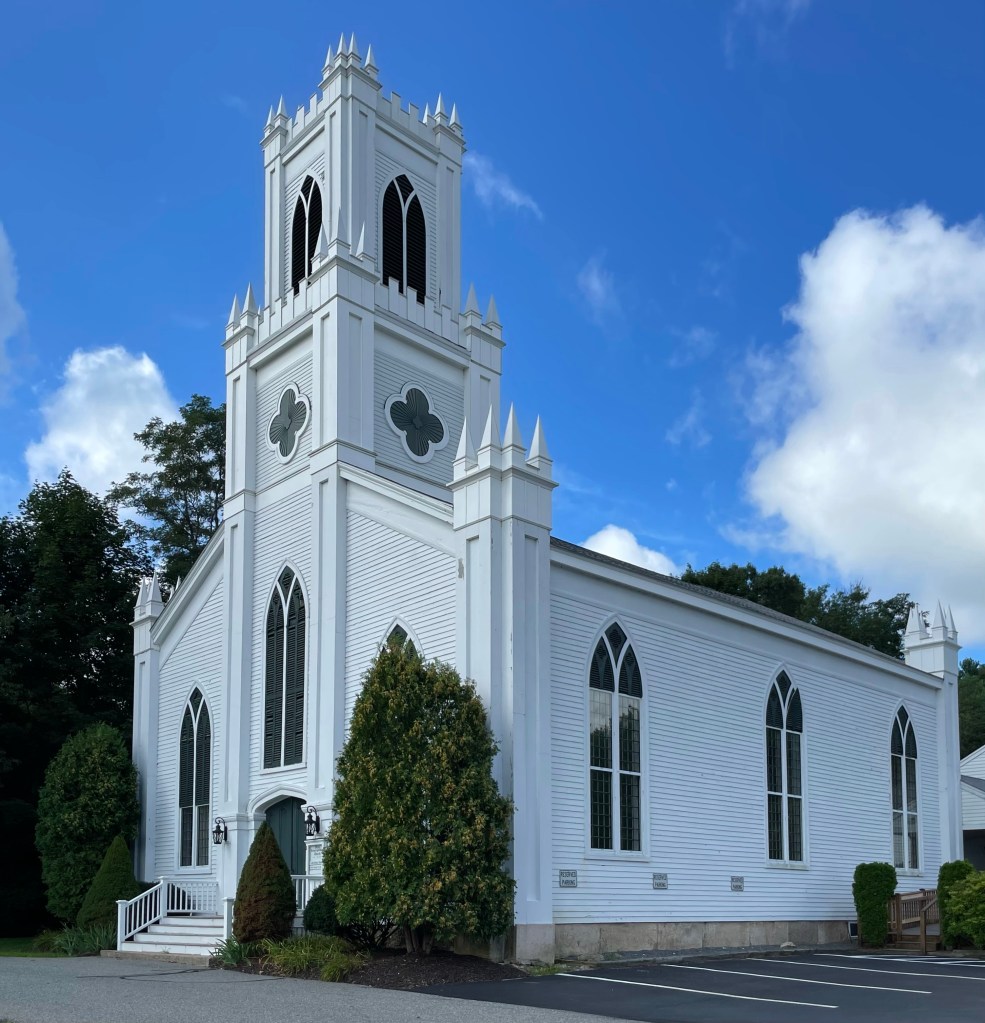
Rochester Congregational Church // 1837

Rochester’s First Congregational Church is the oldest extant building still standing on the Town Green in Rochester Center and is the fourth house of worship to occupy the site. Constructed in 1837 to the designs of architect, Solomon K. Eaton, the beautiful Gothic Revival church building is among the most beautiful in the state. Eaton was well-known for his ecclesiastical structures, but also designed other prominent civic buildings in Southeastern Massachusetts. A fun fact about Eaton is that at age 55, he volunteered for the Union Army during the Civil War and his unit saw action in North Carolina, he returned home after the war and lived out his final days. The church stands out to me for the quatrefoil windows on the bell tower, the pointed finials and comer posts, and large lancet windows. Swoon!

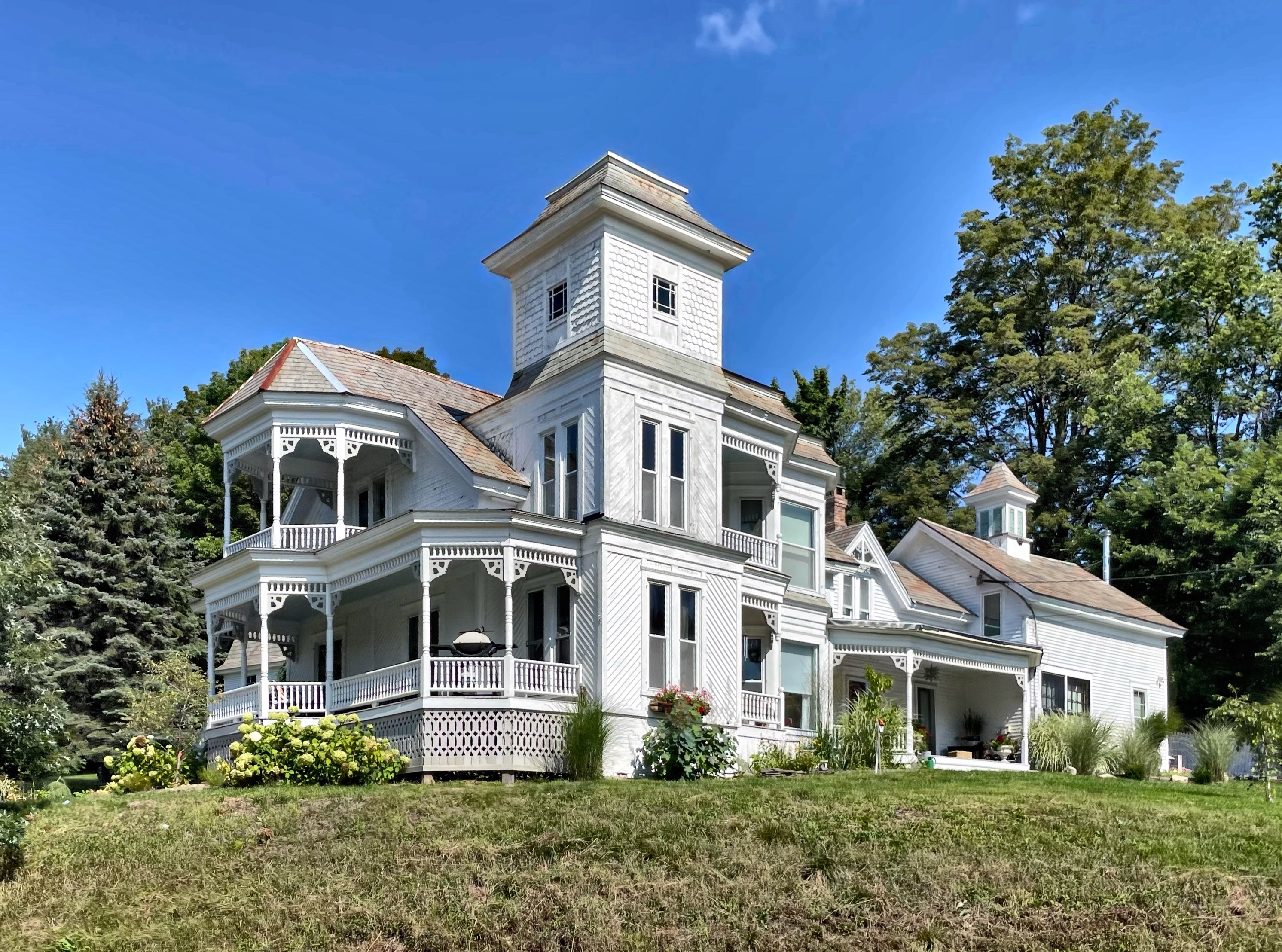
Durand House // 1861

One of the most visually striking homes in little Chester, Vermont, is the Durand House. Sited prominently on a hill, the 1861 home resembles a wedding dress in bright white with intricate spindles that look like lace. The house was seemingly built for Urban Durand, one of the proprietors of the successful Durand Brothers Market in Chester village. The home has an elaborately trimmed full-front porch with a second-story polygonal balcony, and a three-story corner tower with a shallow mansard roof, all possibly later additions. The house stands out in the village, which is largely dominated by classical Federal and Greek Revival houses.

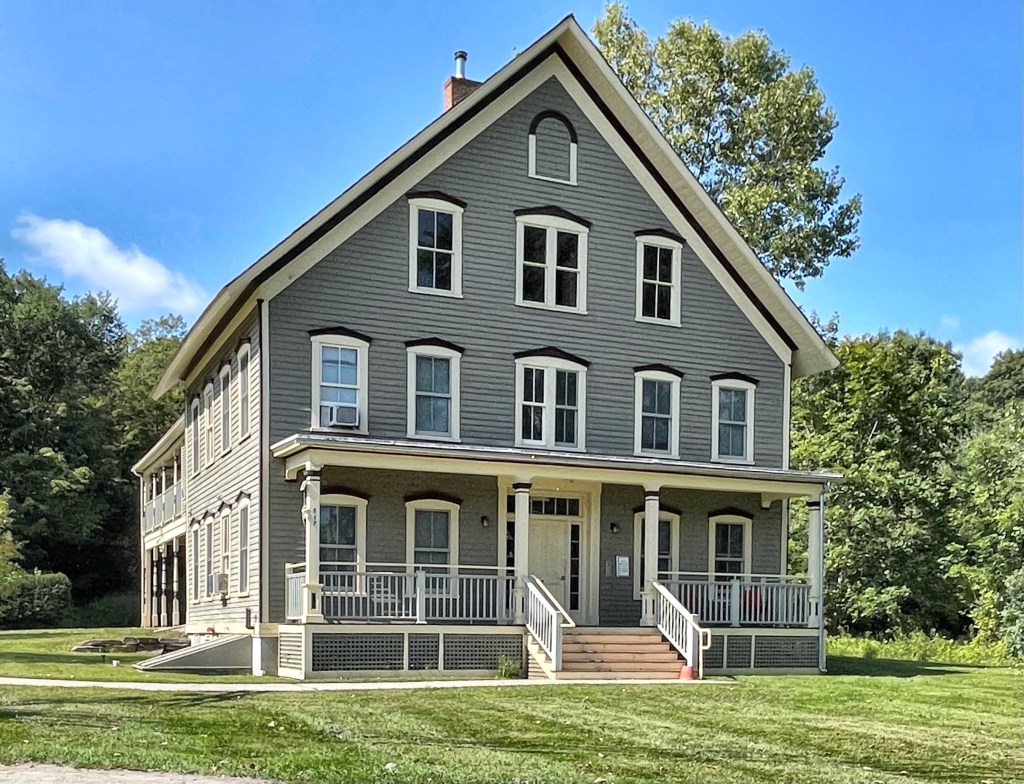
Blaisdell House // 1868

This Italianate style house was built in 1868 for Augustus and Laura Blaisdell, natives of New Hampshire who moved here to Chester, Vermont, in 1860. The Blaisdell’s operated a company that manufactured fireproof roofing and paint at their home base in New Hampshire, and built this building on a prominent site in the village to promote sales, which were conducted from a storefront on its ground floor. The location of the Blaisdell House alongside the tracks of the local railroad depot, was strategic in order to provide ease in the transportation of goods to the village of Chester Depot from the New Hampshire-based headquarters of A.H. Blaisdell & Co.The home and store is significant in the local economy and is itself, a significant example of the Italianate style in town.

Chester Tin Shop // c.1830

Located on the edge of the Chester Town Green, you can find this beautiful Federal style commercial building. The use of blind arches at the facade is a fairly common feature found in brick Federal style buildings in Vermont. The structure was built around 1830 and has served a variety of uses through its existence, the most notable being the tin shop owned by various members of the Miller and Hadley families that sold stoves and hardware during the latter half of the 19th century. The tin business in New England grew rapidly after 1820. Tin shop owners imported tinplated sheet iron from Great Britain, shaped it into a variety of forms, and distributed their finished goods through peddlers and country stores. They also sold tinware in their shops. Colanders, dippers, dish kettles, funnels, measures, and pans were in greatest demand. Other common items included lanterns, foot stoves, teapots, coffeepots, “tin kitchens”, skimmers, and sconces. After its use as a tin shop, the building was occupied as a telephone exchange and electric utility company office. It presently is home to an antique store.