Colby Hall – Andover Newton Theological School // 1866

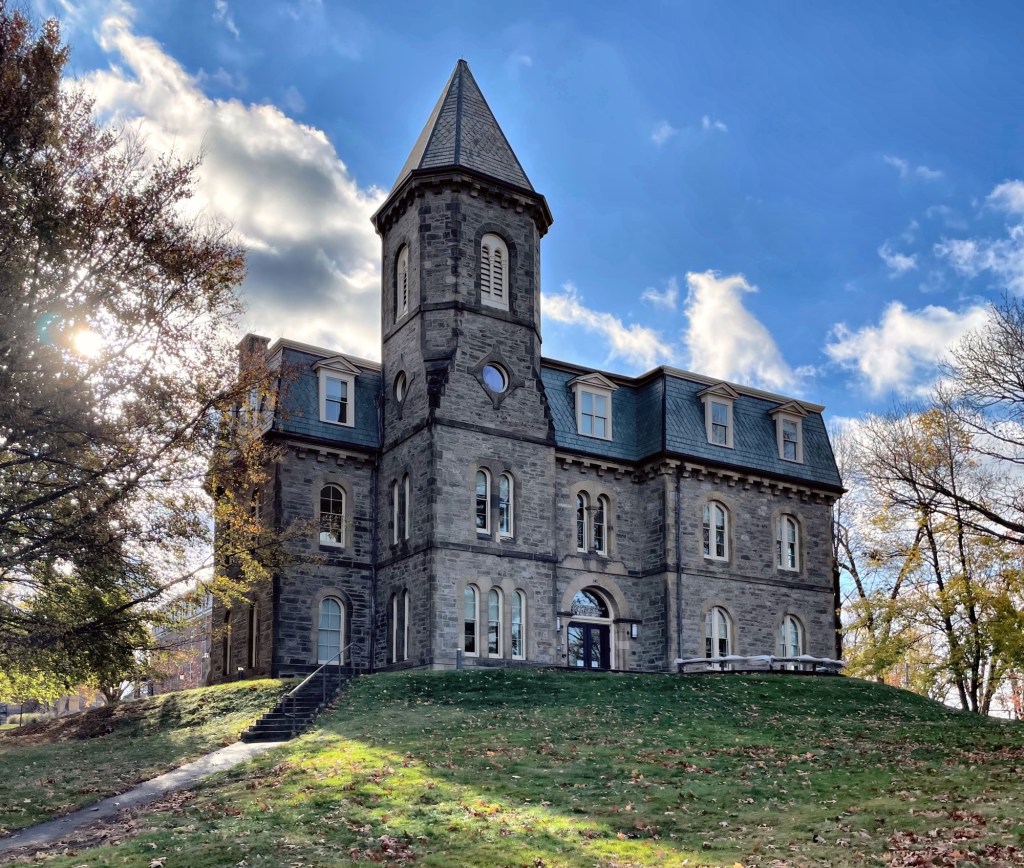
Colby Hall sits perched atop a hill overlooking Newton Centre, Newton, and is located in the Andover Newton Theological School campus. The building was constructed in 1886 for the Newton Theological Institution, which was founded on this site in 1825, and used for the a Baptist seminary, educating young students in theology. By the 1860s, the school had outgrown its space and following a donation from benefactor,  Gardner Colby (1810–1879), who was treasurer of the school (and was also the benefactor and namesake of Colby College in Maine) plans were drawn up for the new lecture spaces and chapel building. The unique building was designed by Alexander Rice Esty, a prominent architect at the time, and it blends Second Empire and Romanesque Revival styles under one roof. The three-story structure is of a light buff, rough cut stone with sandstone trim and features an imposing four-story tower at the eastern end. In November 2015, the school announced that it would sell its campus and become part of Yale Divinity School in New Haven, Connecticut. The Newton campus was purchased by the Windsor Park School with Colby Hall now occupied by the Boston Psychoanalytic Society & Institute.
Farwell Hall – Andover Newton Theological School // 1829

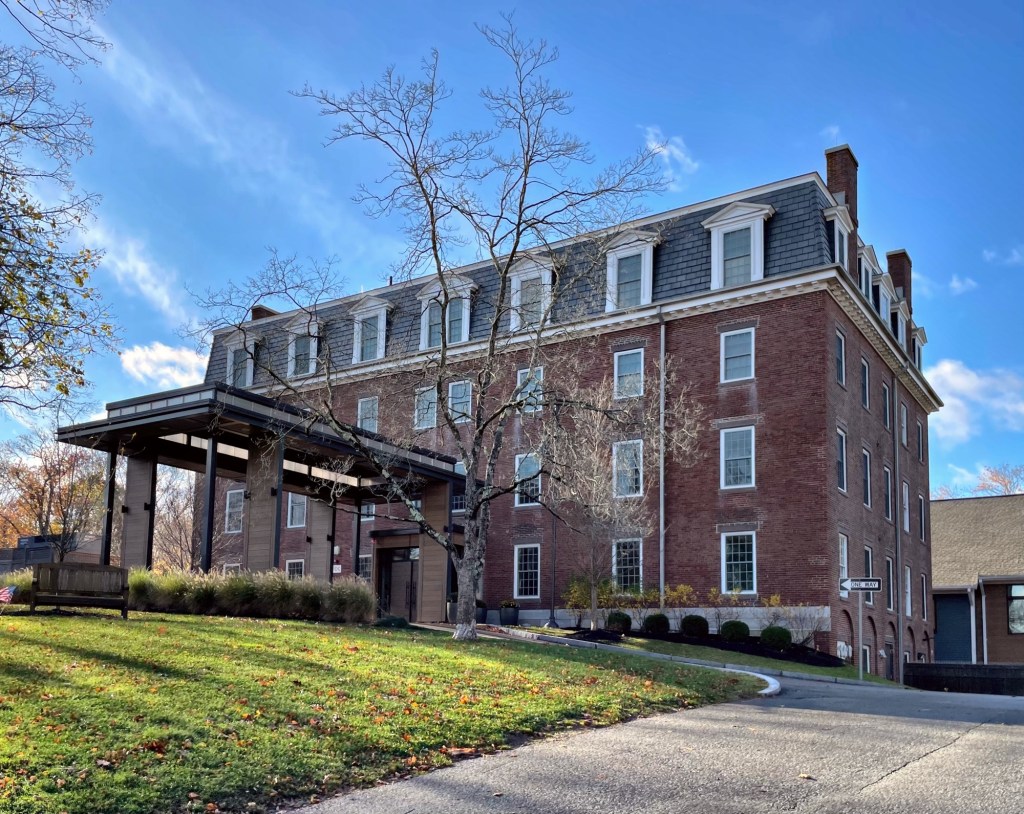
The Newton Theological Institution, a school originally founded for the Baptist ministry, opened on Institution Hill in Newton Center in 1825. The 40-acre campus started with six buildings, including this one, Farwell Hall, built in 1829. Farwell Hall is the oldest extant building on the campus today and is named after benefactor and early founder of the school, Levi Farwell. The brick building began as a late-Federal-designed building with a classic Federal Style window fenestration and Adamesque brick arches on the first story side elevations, but the formerly Federal style building was modernized in 1871 with the addition of a fourth floor via a mansard roof, and a more recent, unfortunate altered entry with projecting roof. After the Andover Newton Theological School sold their campus, the building has since been home to an assisted care facility.

Frank and Elizabeth Ratcliffe House // 1890

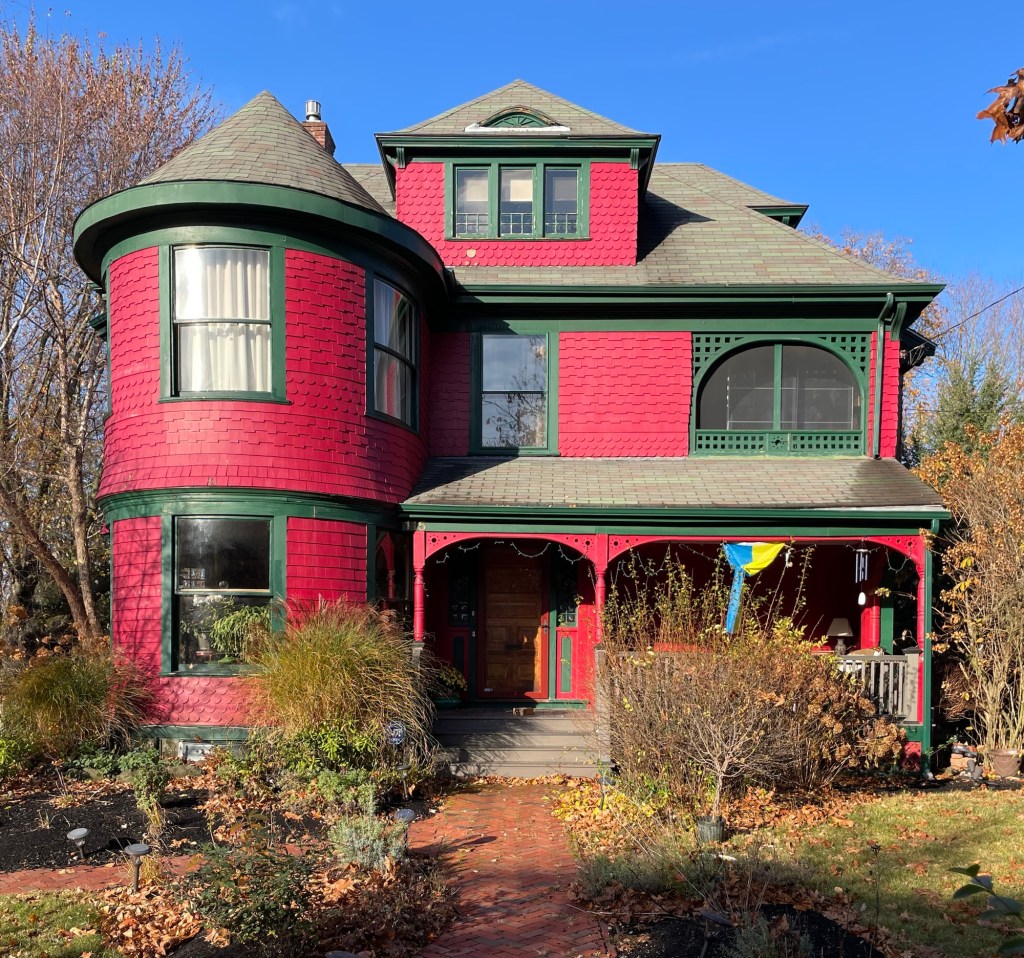
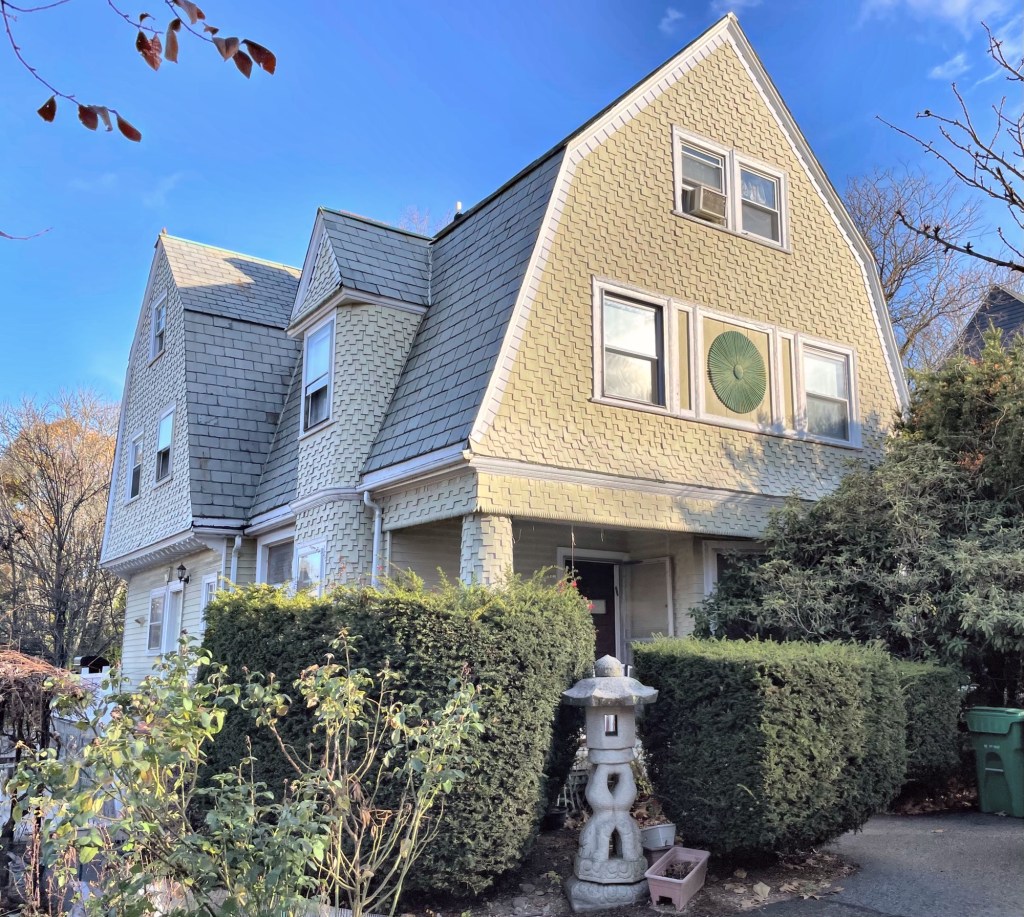
I do not think that I have ever seen rounded shingled columns like this before… What a treat! This house is located on Rice Street in Newton Centre, and was built in 1890 by Henry H. Read, a leather dealer who developed the entire street. This house was built on speculation and initially rented out to tenants before it was sold to Frank Ratcliffe and his wife, Elizabeth Ratcliffe. Frank Ratcliffe was born in England and would become treasurer of the Boston & Albany Railroad, which had a stop in Newton Centre. Frank and Elizabeth would sell or gift this property to their daughter, Mary Elizabeth Ratcliffe Holt and her husband, Warner R. Holt. Besides the unique shingled columns, the house features a broad gambrel roof and sunburst panels and a two-story rounded shingled bay. I could not locate the architect for this one, sadly.

Daniel T. Kidder House // 1884

This charming Shingle/Queen Anne style house is located on Sumner Street in Newton Centre, a street of fine suburban houses built for businessmen who commuted into Boston. This house was built in 1884 for Daniel Tufts Kidder (1852-1941), a glass dealer. Daniel got his start under the employ of Hills, Turner & Harmon, jobbers of plate, window and mirror glass, and manufacturers of mirrors, eventually working his way up to salesman and later as president of the consolidated company, Boston Plate and Window Glass Co. It is believed that Mr. Kidder used antique and imported glass in his home when it was built. The house remains well-preserved and characteristic example of the fanciful Victorian styles.

Former Newton Centre Methodist Episcopal Church // 1899

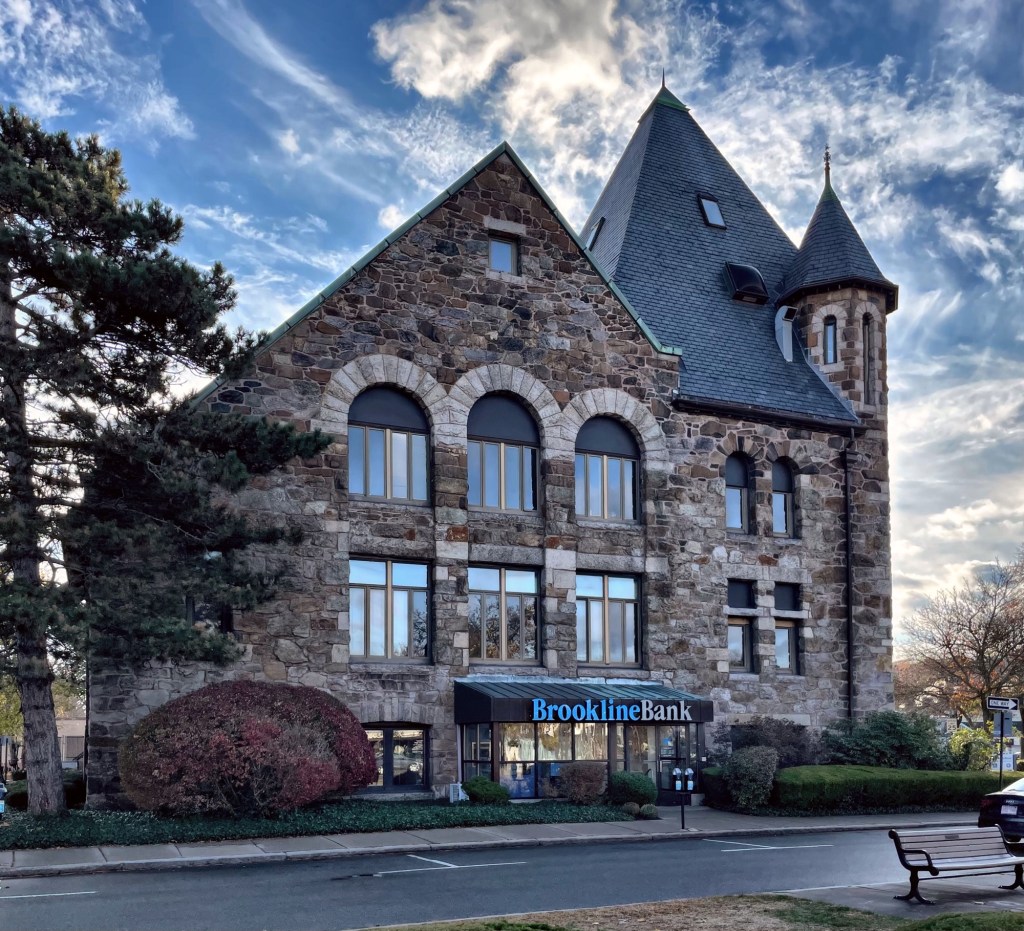
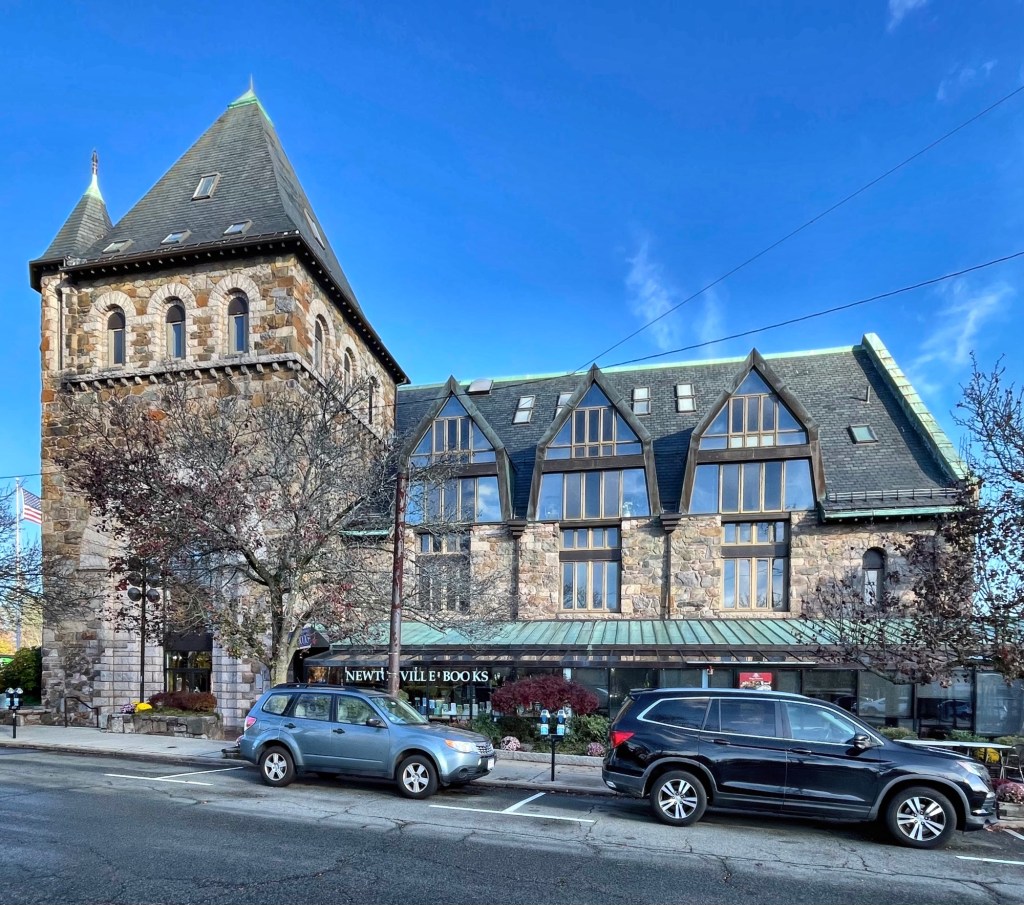
This building, the former Newton Centre Methodist Episcopal Church, is Romanesque in style, and is one of the more notable adaptive reuse projects in Newton. The church was designed by the esteemed architectural firm of Andrews, Jacques & Rantoul and completed in 1899 for the local Methodist Episcopal congregation. The edifice is built of locally quarried rubblestone, often called Roxbury Puddingstone, and trimmed with rough cut Milford granite. The granite is used at the windows, forming the arches and heads, and most strikingly in the large arched entrance. The church eventually closed and was renovated with modern windows, additions, and more, and currently houses a restaurant, bank, book store, and professional offices.

Kennard Estate // 1907

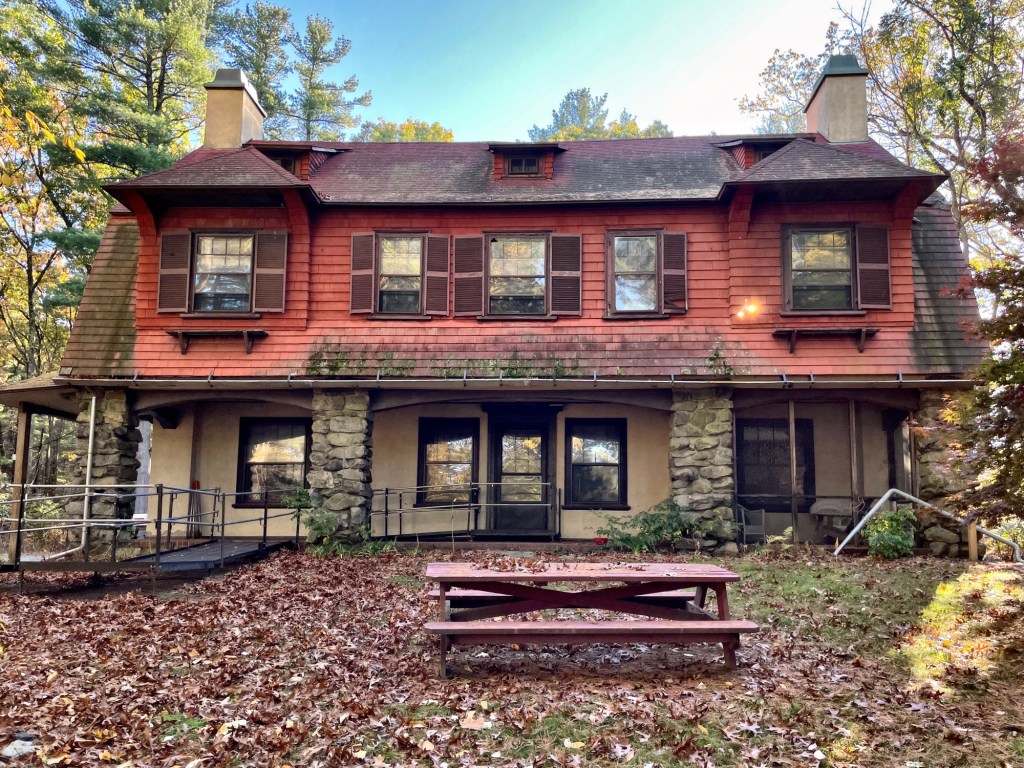
A significant house and grounds are tucked away, hidden off Dudley Road in Newton, Massachusetts. This is the Kennard Estate. Frederic Hedge Kennard (1865-1937) was born in Brookline and attended Harvard College. He did graduate work for a time at the Bussey Institution and the Lawrence Scientific School, and entered the employ of Frederick Law Olmsted, the noted landscape architect, with his office in Brookline. By 1906, he decided to open his own landscape architecture office, opening locations in Boston and Philadelphia. He would purchase this expansive wooded property, and had this house built by 1907. He laid out the grounds, creating paths and gardens on the property and planted native trees. It is unclear who designed the house, sadly. Mr. Kennard was also a noted ornithologist (an expert on birds) and would host visiting scholars at his home, walking the grounds and studying birds there. After his death in 1937, the property was inherited by his son, Harrison Eisenbrey Kennard, and ultimately willed to the City of Newton upon his death in 1982. Since then, Newton Parks and Recreation have maintained the house (though they could be doing more to preserve it), and opened the grounds as Kennard Park, a free public park comprised of wooded trails and streams.

Leatherbee House // c.1870

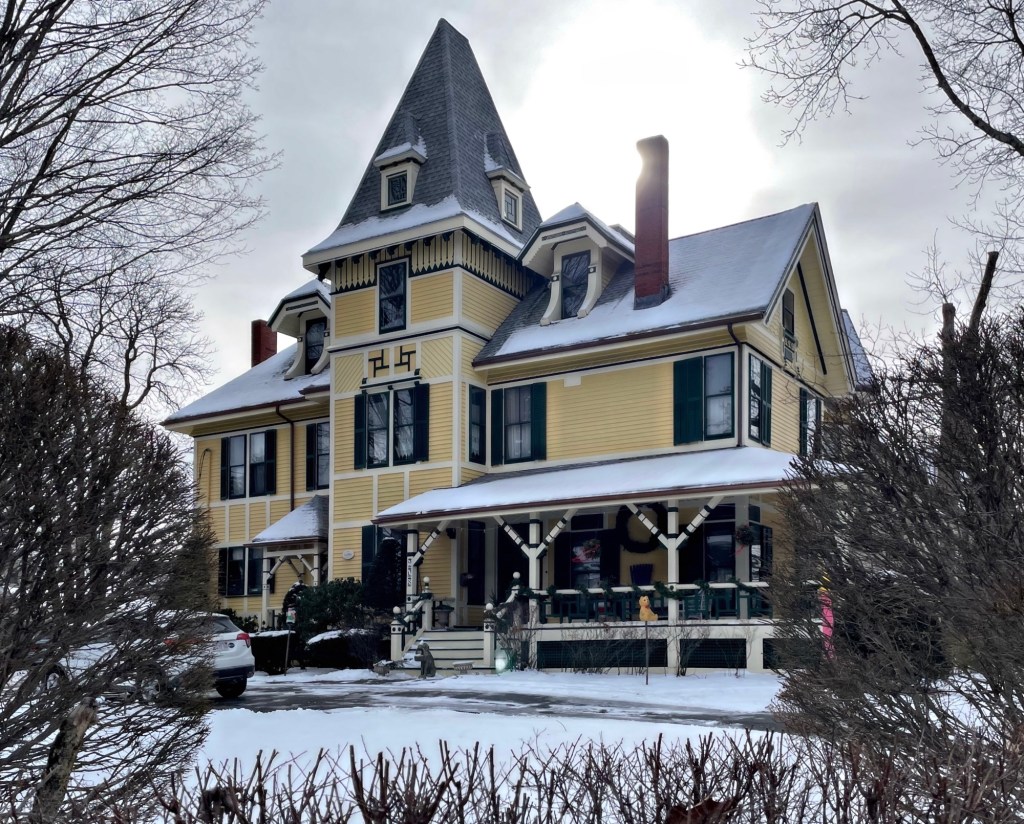
Andrew F. Leatherbee (1842-1920), a wealthy lumber dealer in Boston, built this large Stick style victorian house in Newton Center around 1870, likely using his own lumber products! The large frame house is prominently sited on a corner lot on Beacon Street, a short walk to Crystal Lake, a natural pond in the center of town. I could not find information as to who the architect was, but it was likely a notable local firm. As Andrew got older, he downsized and relocated to a smaller apartment in Cambridge. Upon his death in 1920, the property was sold by his heirs to Mae Van Dusen. The house is a high-style example of the Stick style of architecture, with large half-timbers, heavy porch bracing, and a central tower with pyramidal roof. Swoon!!!

Charles S. Davis Cottage // c.1868

When wealthy Boston manufacturer Charles S. Davis began subdividing his suburban Newton Centre estate, “Mount Pleasant”(last post) in the 1860s he was extremely particular on the dwellings and residents that would be his new neighbors. He sold off some parcels to friends and affluent members of the community and he also built some small gingerbread cottages – like the house seen here – for rent. This Victorian Gothic gingerbread house was rented to provide Mr. Davis with some additional income. It was eventually sold off to a private owner and has been meticulously preserved ever since.