Thayer Block – Home National Bank of Milford // 1912

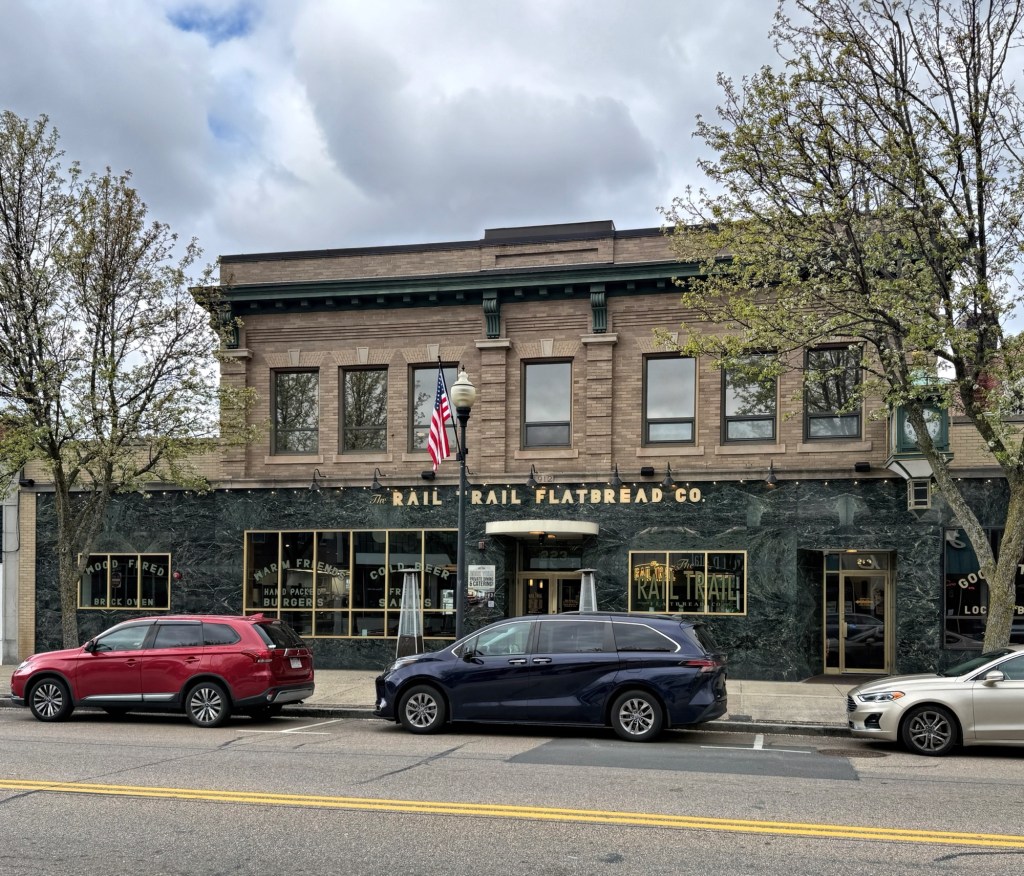
The Thayer Block and its twin, the Claflin Block, on Main Street in Milford, Massachusetts, stand as prototypical early 20th century commercial blocks commonly found in nearly any city in New England. The two-story commercial block was built in 1912 and was long the location of the Home National Bank of Milford. The bank added the iconic clock on the facade, which is one of the remaining clocks made by the McClintock-Loomis Clock Company or successive company, O.B. McClintock Co., which specialized in sidewalk clocks for banking and financial institutions. The green marble storefront was likely added in the 1950s or 1960s and is an eye-catching change to the building. Today, the bank space is occupied by the Rail Trail Flatbread Co., a local restaurant and bar.

Former Brookline Savings Bank // 1898

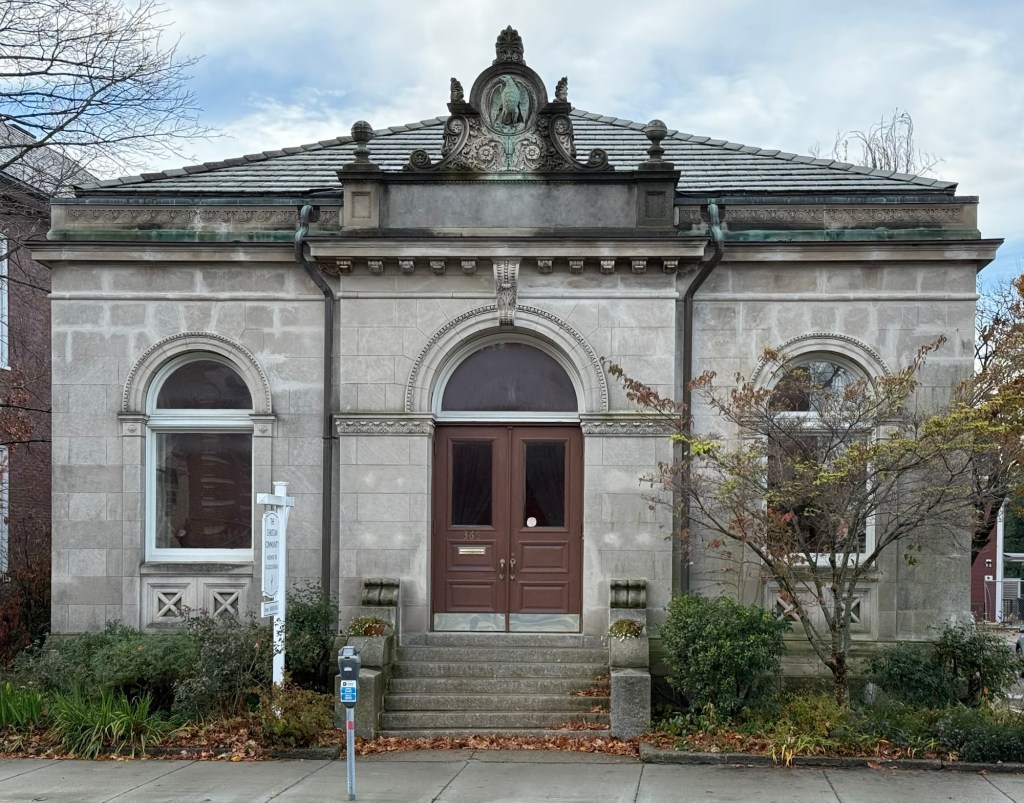
The diminutive former Brookline Savings Bank building on Washington Street in Brookline Village is in stark contrast in scale and design from the 1965 Brookline Town Hall down the street. The building committee hired Franz Joseph Untersee, a Swiss-born architect who settled in Brookline, to furnish designs for their new bank, which opened in November 1898. Covered in Indiana limestone, the Beaux Arts style bank building features a modest, three-bay facade that is adorned by large round arched windows surrounded by an egg-and-dart motif, and an elaborate pediment with acanthus leaf and a central eagle in copper. Like many local banks, the Brookline Savings Bank saw a series of acquisitions and mergers throughout the 20th century, and this small bank building was sold. Today, the former Brookline Savings Bank on Washington Street is occupied by a church.

Former Birmingham National Bank // 1892

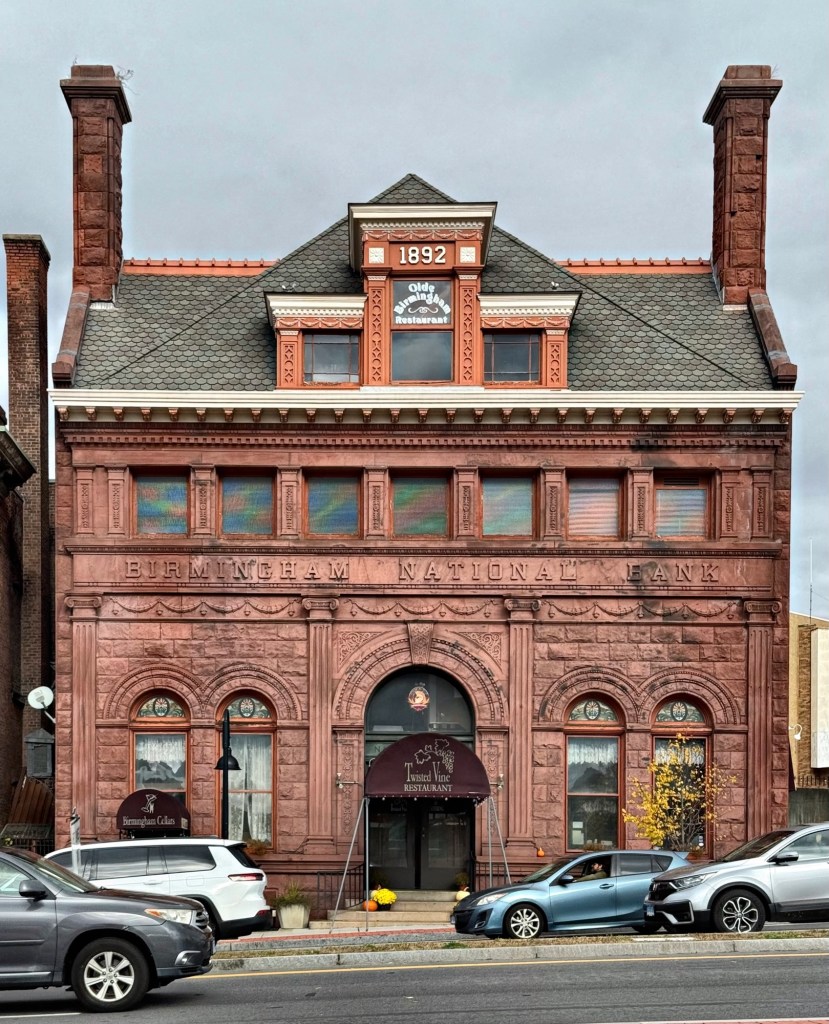
The former Birmingham National Bank building on Main Street in Derby, Connecticut, is one of the finest buildings in the former industrial village of Derby (originally named Birmingham). The bank was originally chartered in 1848 as the Manufacturers Bank of Birmingham, with Edward N. Shelton as its first president, and became a national bank after the Civil War. Designed by architect Warren R. Briggs and constructed in 1892, the building features an elaborately detailed facade of red sandstone with terracotta trim in the Sullivanesque and Romanesque Revival styles. Like many local and regional banks in the mid-late 20th century, the bank merged with others and the building was vacated. Today, the former Birmingham National Bank building is occupied by the Twisted Vine restaurant.