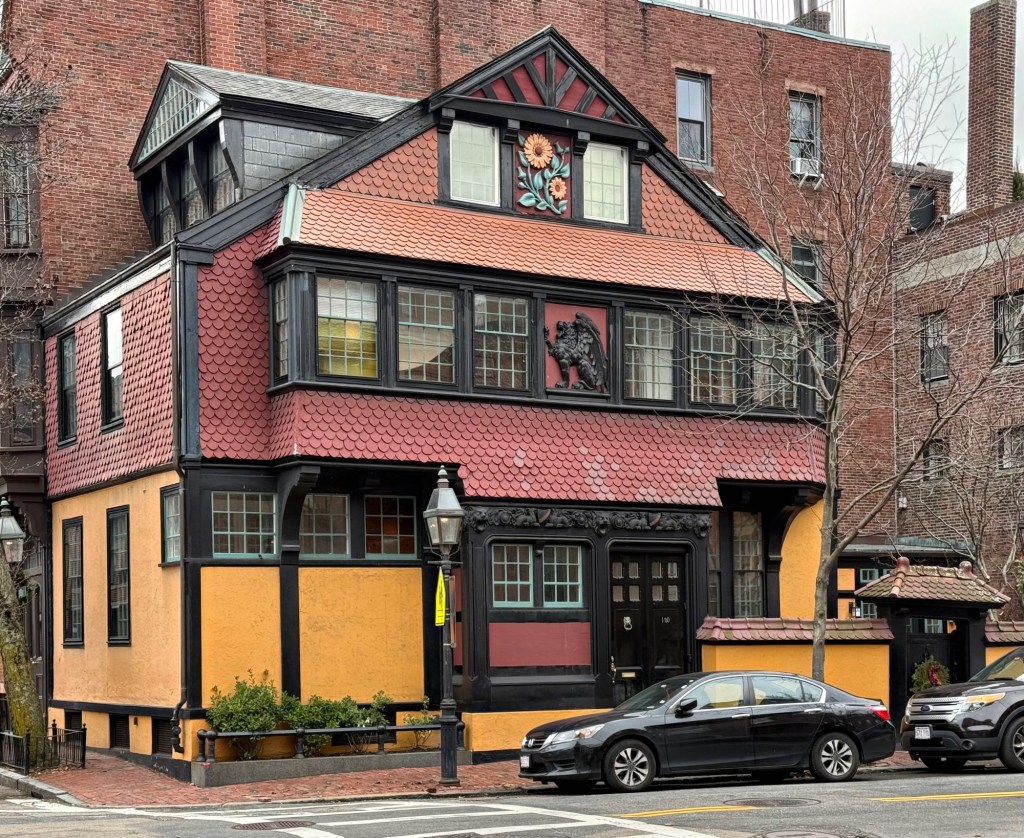
Dr. Edson F. Whitman House // 1852 

One of the most eccentric and architecturally unique houses in Somerville can be found on Bow Street, in the middle of the busiest commercial district of the city. This is the Dr. Edson F. Whitman House (often known as the E.C. Mann House), which was built around 1852 and long-occupied by Dr. Whitman until just before his death in 1900. The house was likely a modest, 1850s Italianate style residence with its gable facing the street. Over time, as business increased, Dr. Whitman expanded his house and practice, adding Victorian flair to the once usual house. An entry tower with pyramidal roof and final was added with quatrefoil window and Stick style porch, an angled two-story addition was also added to the facade with a second-story porch, and applied ornament and curiosities were added to the doctor’s office and residence through the 19th century. Luckily for us, the Dr. Whitman house has remained relatively unaltered for the next 125 years! 

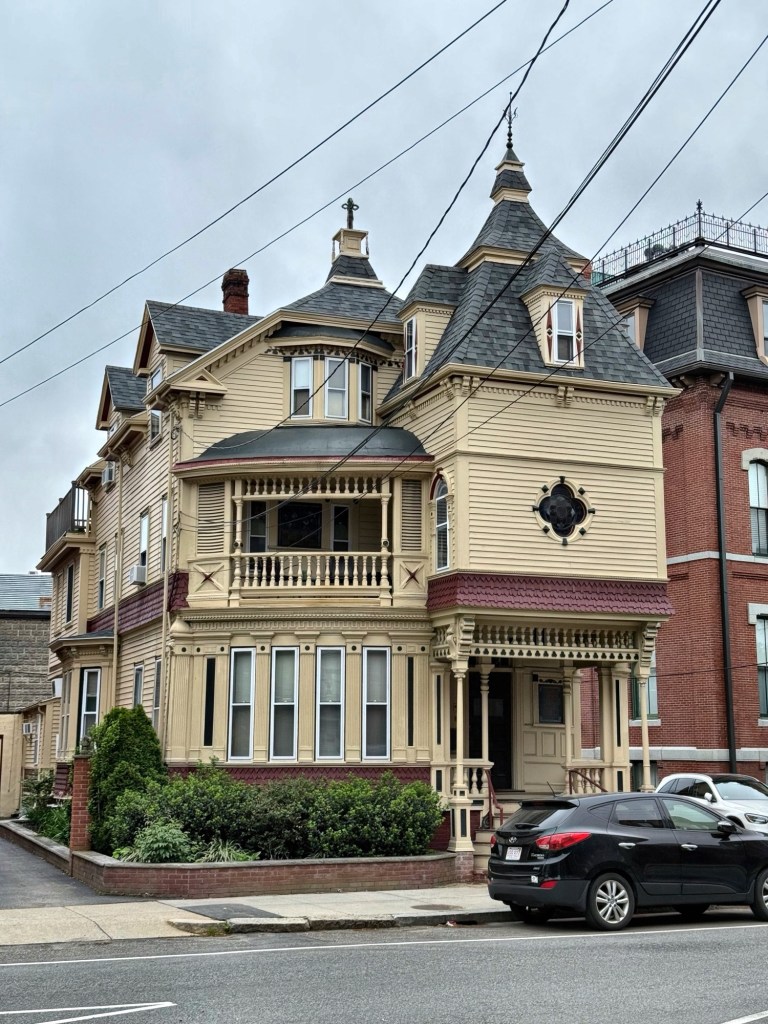
Winfield S. Richards Cottage // c.1890

Summer cottages of the late 19th century are always a treat to come across! While most cottages I feature on here are more high-style and were built for the wealthy, Hull, Massachusetts, has some of the best middle-class summer cottages in New England! Steamships and rail service from Boston and other cities opened up Hull and Nantasket Beach to summer residents and day visitors alike, creating a massive increase in building in the latter decades of the 19th and early 20th centuries. This cottage was owned by Winfield S. Richards and his wife Myra of Newton, Massachusetts. The cottage blends Queen Anne and Craftsman styles with complex Queen Anne massing, turned posts, and recessed second story porch, and sloping roof extension to create the Craftsman-esque front porch. The cottage is one of the better-preserved in town and an excellent blending of architectural styles.

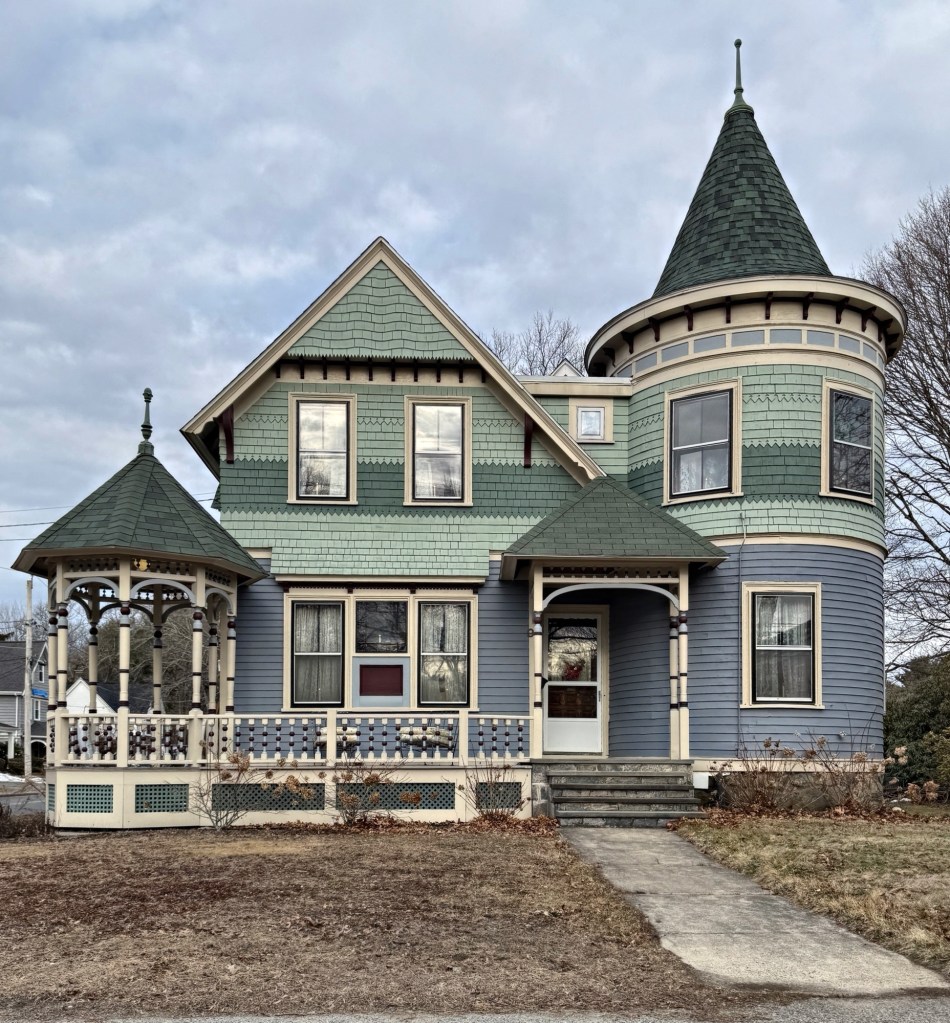
Buckingham House // 1903

This period Queen Anne residence in Warren, Rhode Island was erected for Erastus and Hannah Buckingham and today remains essentially as originally built. Erastus Buckingham made his money by opening an oyster plant where he would collect and package oysters. I think it is safe to say that someone opening up a similar plant would not be able to afford such a house today… Its simple forms, coupled with its use of natural materials illustrate early 20″ century design simplification while retaining the use of materials typical of late 19″ century Queen Anne style. Oh and those diamond pane windows are something special too!

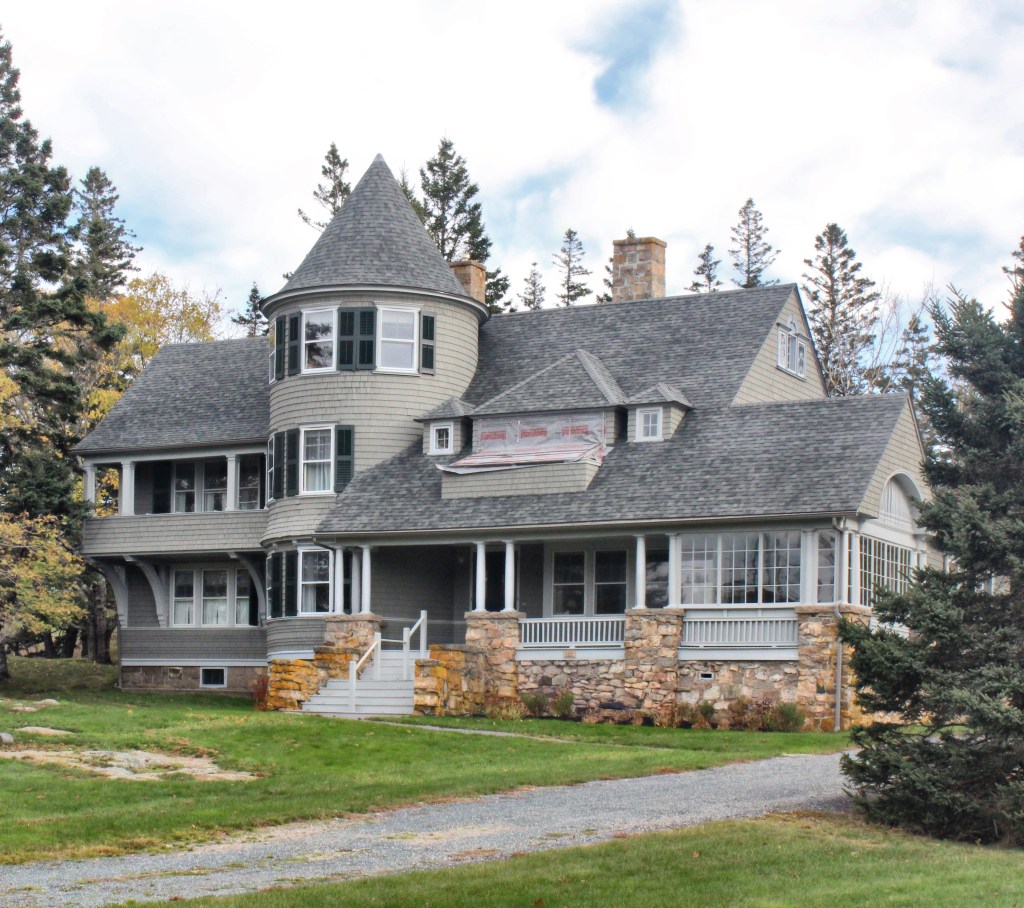
Dixon Cottage // c.1891

The Dixon Cottage on Grindstone Neck was built around 1891 for Alexander J. Dallas Dixon (1850-1948) who appears to have either shared the summer house with his brother Thomas, or sold the property soon after. The Dixon brothers (along with George Dallas Dixon), were early investors in the Grindstone Neck colony and they built summer homes here in its early development. The Dixon Cottage was the summer retreat for Thomas’ eldest son, Fitz Eugene Dixon, who married Eleanor Elkins Widener, a philanthropist and heiress to the Widener and Elkins families. Eleanor and Fitz would later own Park Cottage, featured previously. The Dixon Cottage deviates from the traditional Shingle style cottages seen so frequently on Grindstone Neck and is a refined example of the Queen Anne style with its varied siding, rounded tower, and asymmetrical plan.

Park Cottage // 1892

Queen Anne Victorian perfection! This is the Trotter Cottage on Grindstone Neck in Winter Harbor. The house was built in 1892 for one of the proprietors of the Gouldsboro Land Improvement Company, the group that developed the Grindstone Neck Summer Colony. Nathan Trotter (1852-1915) was a commission merchant from Philadelphia who made a name for himself there, eventually investing his money into real estate. He had Philadelphia-based architect Lindley Johnson, who also built other cottages on Grindstone Neck (including one for himself), to design this cottage for his family to visit for the summer seasons. The property became known as Park Cottage under later owner Eleanor Widener Dixon, she and her husband would summer here when not occupying their palatial Pennsylvania estate. Her father, George Dunton Widener and brother, Harry Elkins Widener both perished in 1912 aboard the Titanic. After the Titanic disaster, Eleanor’s mother presented to Harvard University the $2,000,000 Widener Memorial Library in memory of her son. Park Cottage is one of the finest cottages on Grindstone Neck.

Nesmith-Kent Cottage // 1891

One of the most iconic summer “cottages” in Kennebunkport’s late 19th-early 20th century summer colony is the Nesmith-Kent Cottage, located next door to the often photographed St. Ann’s-by-the-Sea summer chapel. The cottage was built for Julia and Mary Nesmith, the daughters of John Nesmith a wealthy industrialist and textile manufacturer from Lowell MA. The sisters named the cottage “The Pebbles”, and spent their first night there on July 24, 1891. The half-timbered shingled house stood at the edge of the ocean near a former War of 1812 fortification. The sisters sold the property in 1910 to Arthur Atwater Kent, prominent radio manufacturer based in Philadelphia, who invented the modern form of the automobile ignition coil. Kent renovated the cottage extensively, increasing its size, and renamed “The Pebbles”, “At Water’s Edge” in a cheeky play on his last name. In 1919, he expanded again, purchasing a lot adjacent to his mansion which was the old fort constructed to protect the ships moored in the harbor during the War of 1812. In early 1919, workmen uncovered a few bones of what was calculated to be a seven-foot-tall man and two skulls of white men that had clearly met their end at the hands of Native people; one pierced by an arrow and the other scalped. The Kennebunkport Historical Society has one of these skulls in their collections. Today, the Nesmith-Kent Cottage is owned by the St. Ann’s-by-the-Sea congregation as their rectory.