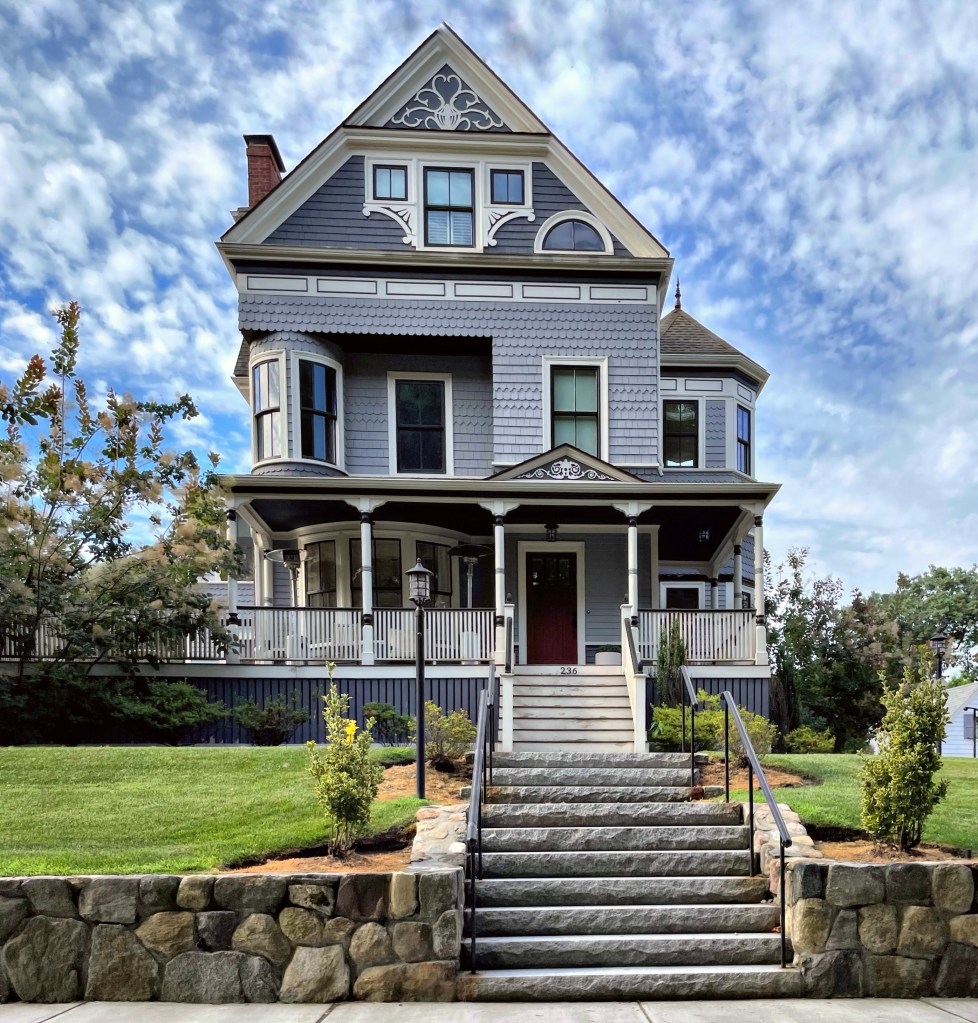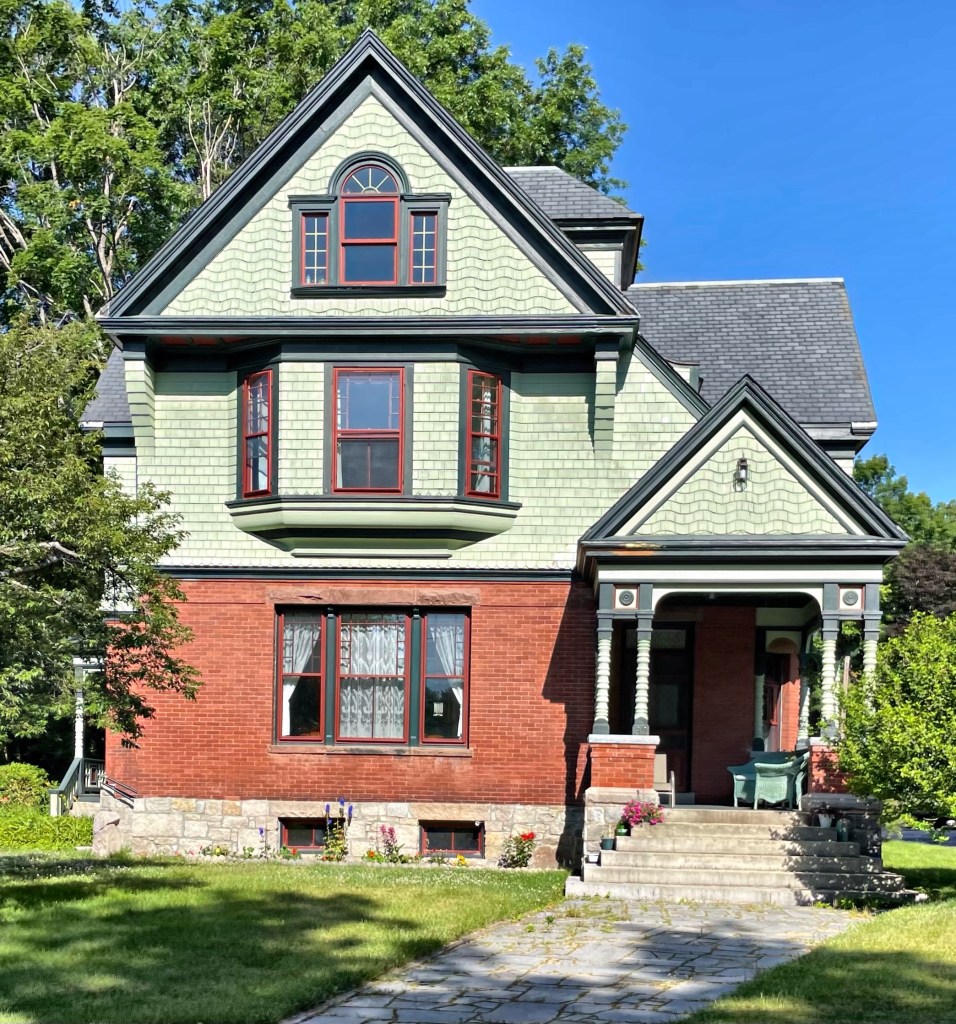
Barnes-Luce House // c.1890

This lovely Queen Anne style home can be found on Highland Avenue in Somerville, Massachusetts. Built around 1890, the residence was built for Walter Saunders Barnes (1838-1931), a manufacturer with a paper box business in Boston. The property was sold in 1903 to Robert Luce (1862-1946), a prominent businessman and politician who founded the Luce’s Press Clipping Bureau before he was elected a member of the Massachusetts House of Representatives in 1899 and 1901–1908. He was elected the 42nd lieutenant governor of Massachusetts in 1912. After serving as Lt. Governor, Luce would spend the next decades in the House of Representatives. His Somerville house is a well-preserved example of the Queen Anne style and includes a steeply pitched hipped roof with gable and dormers, asymmetrical plan, porch with braced supports, and a half-round window in the gable.

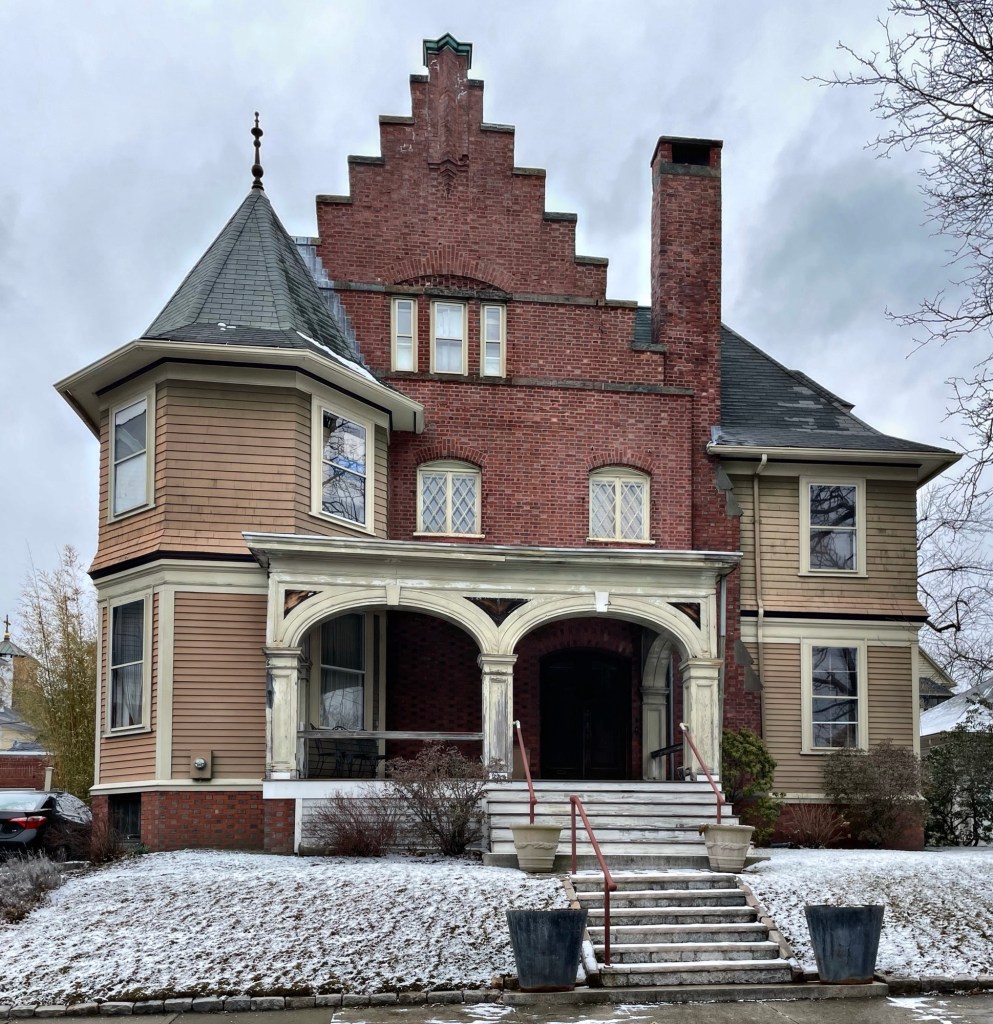
George M. Thornton House // c.1870

One of the finest homes in Central Falls, Rhode Island, is this eclectic Victorian residence on Clay Street. The home was seemingly built around 1870 and modified by the end of the 19th century by later owner, George Mumford Thornton (1850-1916). Mr. Thornton was an industrialist who was elected as one of the first aldermen when Central Falls incorporated in 1895. The well-preserved house features varied siding, a rounded corner tower with spiral-columned porch and conical roof, and original multi-light sash windows. What a spectacular home.

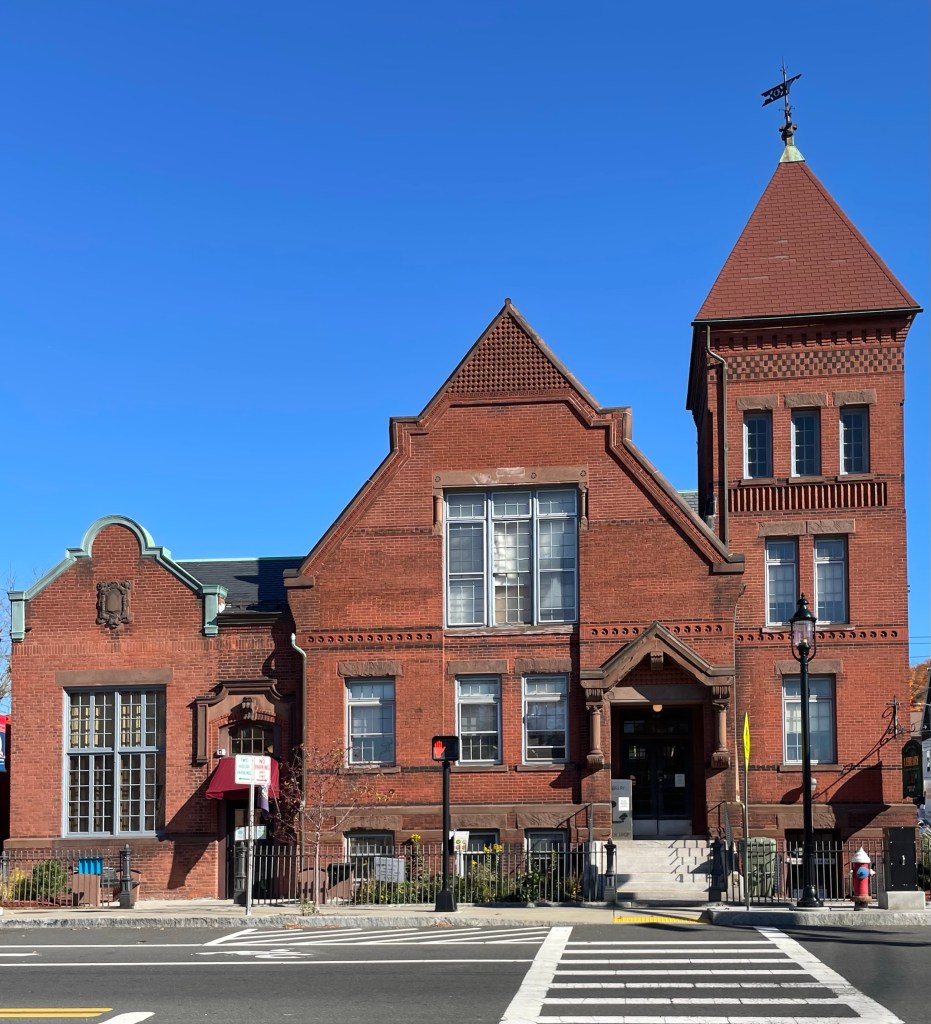
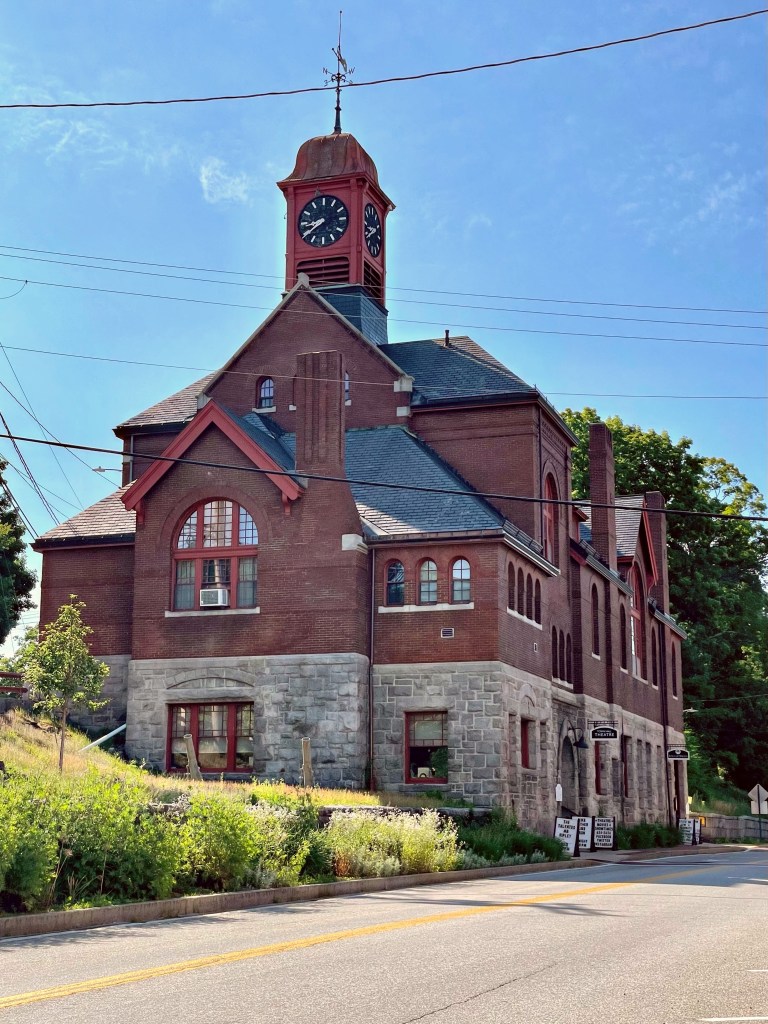
Central Falls City Hall // 1888

Welcome to Central Falls, an industrial city in Providence County, Rhode Island. With an area of only 1.29 square miles it is the smallest and most densely populated city in the smallest state, and the 23rd most densely populated incorporated place in the United States. Originally, Central Falls was one of the many villages within the town of Smithfield, but in 1871, the town split into three smaller towns: Smithfield, North Smithfield and Lincoln. Central Falls village then became part of the town of Lincoln until Central Falls’ industrial character and differing needs had it split off to form the small city of Central Falls in 1895. Before it was its own city, Lincoln officials had this building constructed in 1888-9 on Broad Street, the commercial and civic center of the city. This red brick, Queen Anne building with its four-stage tower was built as Lincoln High School, the first school in the town built exclusively for secondary education. Designed by William R. Walker & Son, architects, the building features shingles in the gable, asymmetrical plan, and carved terracotta panels. The building continued as Central Falls High School until 1927, when the city offices were moved there, and it has remained as the City Hall ever-since.

Odell House // 1887

Built in 1887 for Charles Odell and his wife, Alice, this Queen Anne house on Winter Street in Salem, Massachusetts, stands out as a high-style example of Victorian architecture on the street notable for early-mid 19th century architecture. The house lot was purchased by the Jewett Family who lived in the brick house next door and long used the lot as a garden. Charles and Alice Odell married in 1888, so this Victorian home was built for the newlywed couple to raise their family. Charles A. Odell (1863-1931) worked at his father’s insurance and real estate business, later assuming ownership of business upon death of his father and was a district agent for New England Mutual Life Insurance Company. Sheathed in a combination of wood clapboards and shingles in a variety of patterns, the house has a steeply hipped, slate roof punctuated by cross gables and hipped dormers. The predominant window sash style consists of a distinctive sash in which the upper displays a triangle with central muntin over a conventional two-light lower sash. The property has been lovingly preserved for well over a century and is a landmark example of a Queen Anne style house in Salem.

Roughwood Estate Cow Barn // 1892

Like the Roughwood Mansion and carriage house, this building was designed and built in Brookline, Massachusetts, in the early 1890s as part of the “Roughwood” estate. Despite its high-style and ornate detailing, the building was actually constructed as a cow barn. Built in two phases for its two owners, William Cox and Ernest Dane, the large barn structure blends Victorian design into a use more reserved for vernacular detailing. The building was designed by Andrews, Jacques and Rantoul, and like the mansion and carriage house, blends Queen Anne and Shingle styles under one roof. Ever-since the estate became a college in the 1960s, the building has been used as a maintenance building. It appears that since it has been owned by Boston College as part of it’s Messina Campus, it is undergoing a thoughtful restoration!

Blaisdell-Carter House // 1890

The Blaisdell-Carter House is a great example of a Queen Anne style home in Chicopee, Massachusetts. The house was built in 1890 for Harriet P. Blaisdell following the death of her husband, Samuel Blaisdell, a cotton broker, in 1888. Mrs. Blaisdell hired David B. Griggs, a builder in Chicopee under the firm D. B. Griggs & Sons, to design and build the residence, which sat across the street from Griggs’ own home. Harriet would pass away just three years after her home was built, and the property would eventually be sold to Nathan P. Ames Carter (1864-1959). The residence sits on a large lot and exhibits varied siding, asymmetrical plan with porches, additions, and steep gable roofs, and the use of irregular windows of varied sizing and locations. While the second floor porch has been enclosed, the house retains much of its original fabric and has not been covered by vinyl or aluminum siding, a rarity in Chicopee.

Ellen and Charles Baker House // 1898

The versatility of the Queen Anne style of architecture is unmatched! This stunning example is located at 67 Stimson Avenue in Providence, Rhode Island, and was built in 1898 for Charles H. Baker and his wife, Ellen. Mr. Baker was a superintendent at the Gorham Manufacturing Company, one of the largest manufacturers of sterling and silverplate tableware in America. Sadly, Charles Baker would not get to enjoy the house for long as he died within a year of the house being finished. Ellen and the couple’s daughter, Maude, would reside here for years later. The Providence architectural firm of Gould and Angell designed the house with a large brick Flemish gable breaking the shingled mass of the house in a really abrupt, yet pleasing way.

William Dexter House // 1899

One of the best examples of the eclectic architecture designed at the of the 19th century in Norwood, Massachusetts, can be found on Beacon Street in the William Dexter House. Built in 1899 for William W. Dexter (1827-1911), who in 1852, married Harriet Blake, later settling in Massachusetts. Tragedy struck the family in 1871, when on the same day, his wife and daughter died; two days later, his sister-in-law, and six days after that, his other daughter Carrie died, all of bacterial infections. All that remained of the family was William and his only surviving daughter, Nellie. William remarried and built a blended family until his death in 1911. This house was built by Dexter, who worked as a contractor and painter, and George F. Bagley, a local builder. The complex form, rooflines, varied siding types, corner tower, and intact historic windows all add to its beauty. If only it had a historically appropriate color scheme to compliment it!

C. D. Hammer House // 1893

This lovely Queen Anne style residence near the Longwood section of Brookline was built in 1893 for C. D. Hammer, the General Agent for the Provident Life and Trust Company of Philadelphia. The stately suburban dwelling was designed by architect Julius A. Schweinfurth, a noted architect who designed many buildings in the region. While some of the stickwork and applied ornament has been covered by vinyl siding, much of the original detailing and some windows remain. The dropped pendants in the gables with flared bargeboard and highly ornamental corbels are a great touch and remain to this day. I bet all of the original details are still under that vinyl, just waiting to be shown again!

Krogman-McManus Mansion // c.1890

Built ca. 1890 for Boston salesman Washington Libby Krogman (1858-1894), one of Boston’s finest Queen Anne style homes can be found in the Clam Point neighborhood of Dorchester. The pronounced sculptural qualities of this residence, together with the juxtaposition of clapboards and patterned shingles, variety of window sizes, and ornamentation place this house squarely within the pantheon of important Queen Anne designs within the city of Boston. Painted in a manner that showcases its sheathing and ornament to great advantage, this well-preserved house is particularly noteworthy for its graceful verandah that encircles a distinctive, round, conically-capped tower at its northeast corner. The home was only occupied by Washington Krogman for less than four years when he died unexpectedly in 1894 at just 35 years of age. The property was deeded to his widow Carrie for a few years before she sold the property to Thomas Francis McManus, a noted naval architect (schooner designer). The home remains one of the finest mansions in Dorchester.