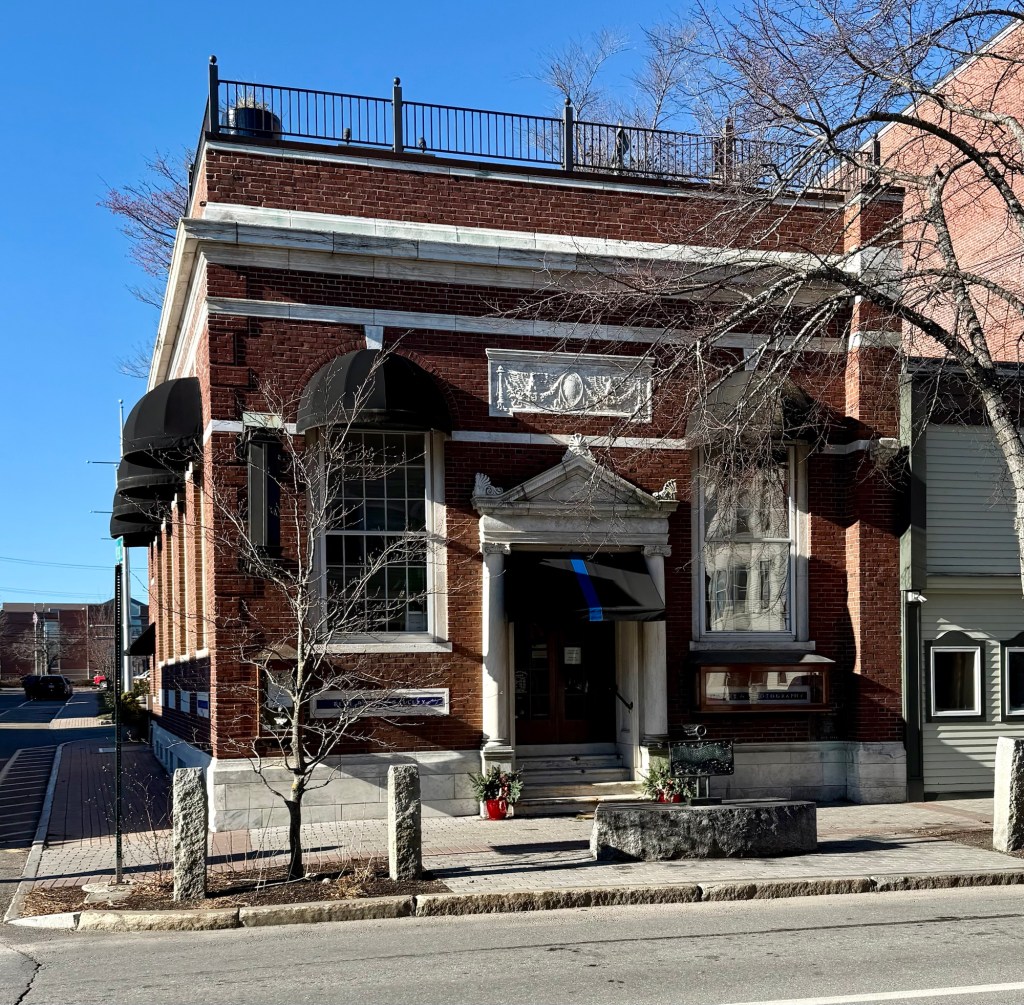
Rockland Security Trust Building // 1912

The Rockland Security Trust Building is a significant Colonial Revival style bank structure located on Main Street in Downtown Rockland, Maine. Built in 1912 from plans by Boston architect Richard Clipston Sturgis, the brick building is trimmed in marble, to provide a visual representation to the financial wealth and stability the bank could provide its clients. The bank closed and the building is presently occupied by an art gallery. Sadly, the rooftop deck railing takes away so much from the building’s presence.
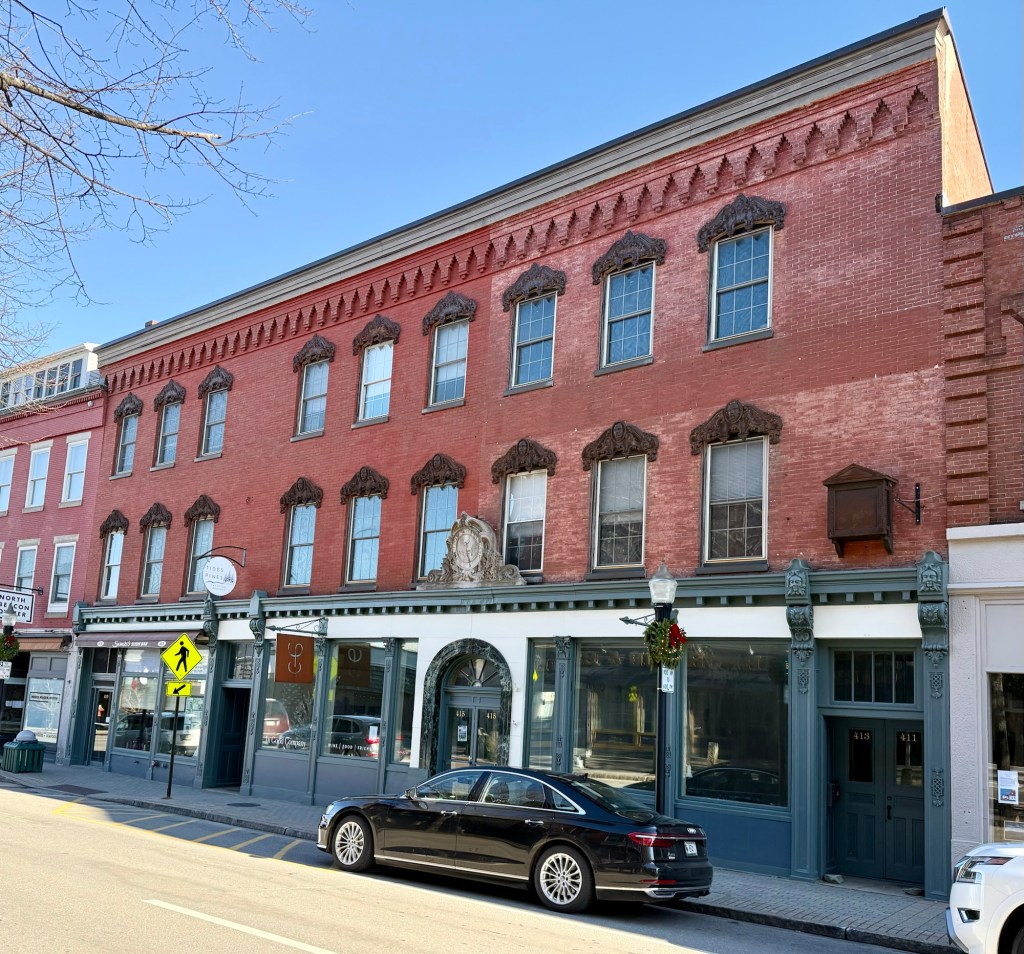
Custom House Block // 1853

This stately commercial block is found on Main Street in Rockland, Maine. The block originally housed the local custom house (before a larger, purpose-built custom house was erected nearby in 1873) with other retail and commercial spaces at the ground floor with offices and meeting space above. The block is a great example of the Italianate style with an intricate brick corbeled cornice and cast iron and marble storefronts. The commercial space occupied by the First National Bank also exhibits a stone medallion with deer set within a wreath over the entrance. The detail that stood out to me most was the cast iron lintels over the windows, with the second floor lintels including a man’s face! The building is well preserved and is today occupied by local businesses.

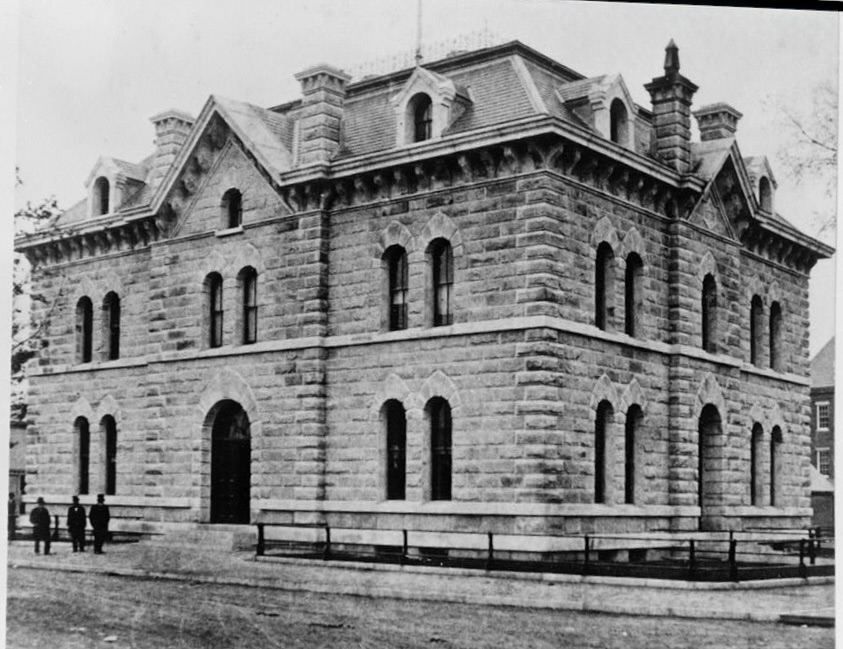
Rockland Custom House & Post Office // 1873-1969

Photo included in HABS documentation

It saddens me to see photos and learn about some of the amazing buildings demolished in the name of “progress”; it is even more disappointing when said building is replaced by a surface parking lot (over 50 years later)! This great stone building was built in Rockland, Maine, in 1876 as the town’s post office and custom house by the Federal government. Relatively unknown architect Alfred B. Mullett is credited with the design as he served from 1866 to 1874 as Supervising Architect of the United States Treasury Department. The building can be classified as Italianate-Second Empire in style and is constructed of massive, rough-faced granite block walls with a shallow mansard roof above. The building was offered for sale by the U.S. Government in 1967, likely due to the upkeep costs and a shrinking local population with the dependency on maritime trade diminished. The building was ultimately razed in late 1969, with a new, uninspiring, post office built next door to this site.

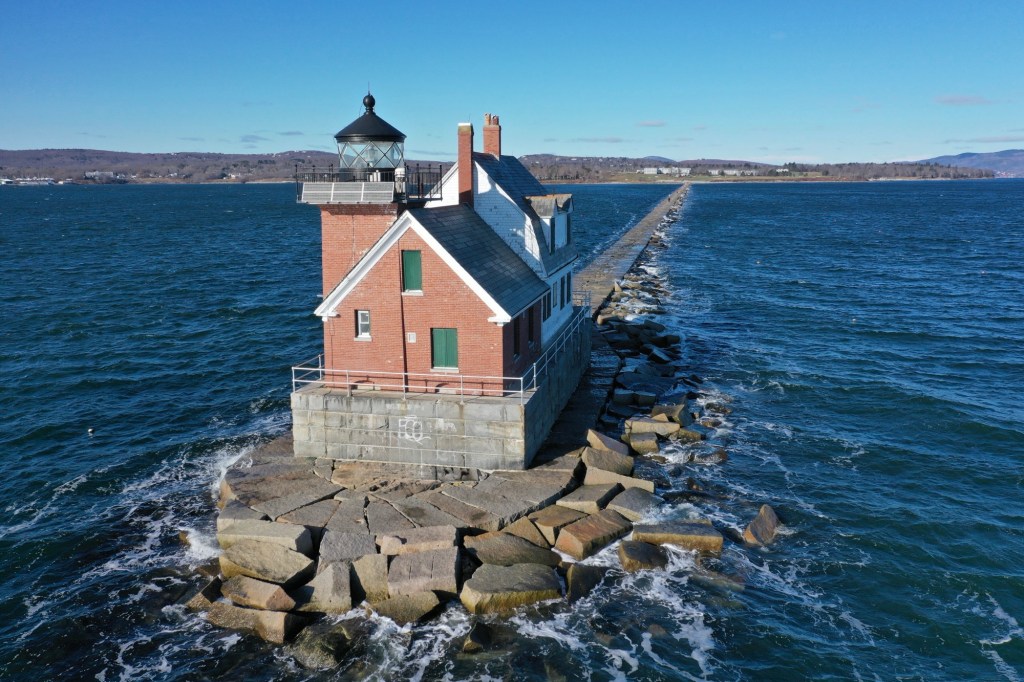
Rockland Harbor Breakwater Light // 1902

The Rockland Harbor Breakwater and Lighthouse is arguably the most iconic structure in the coastal town of Rockland, Maine. As Rockland was a major port and harbor, relying on the transportation of lime and shipbuilding for its economy, protecting the harbor was of paramount importance. Major storms in the 1850s highlighted the need for improved harbor protection, but federal appropriations for a breakwater were not approved until 1880. Between 1880 and 1900 the United States Army Corps of Engineers, under a series of Congressional appropriations, built the breakwater, a 4,364 foot long wall in the harbor built of locally quarried blocks of granite. It is truly a feat of engineering! The lighthouse standing at its end was added in 1902. The iconic breakwater is accessible by those who brave the crashing waves and distance to the end of the nearly mile-long walk out to the lighthouse. The structure is today maintained by volunteers and the City of Rockland.

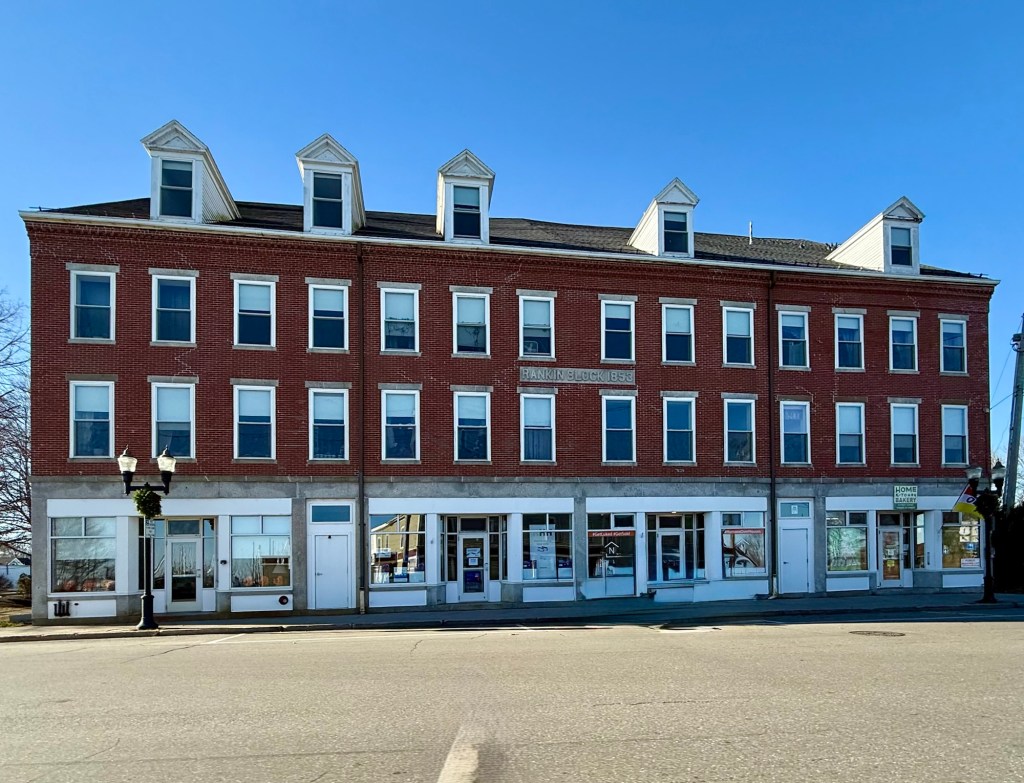
Rankin Block // 1853

The Rankin Block is a significant early commercial building in Rockland, Maine. The brick block was built in 1853 by Samuel Rankin, a descendant of one of the area’s first European settlers. Its location was near the center of the city’s shipbuilding industries, and replaced an earlier commercial building destroyed by fire. Its early tenants included a ship chandlery, shipping offices, and a sail loft. The vernacular Greek Revival style building is constructed of brick and granite, showcasing the no-frill architecture that working Maine sailors preferred. The building is now occupied by a senior living facility. Talk about a great adaptive reuse!

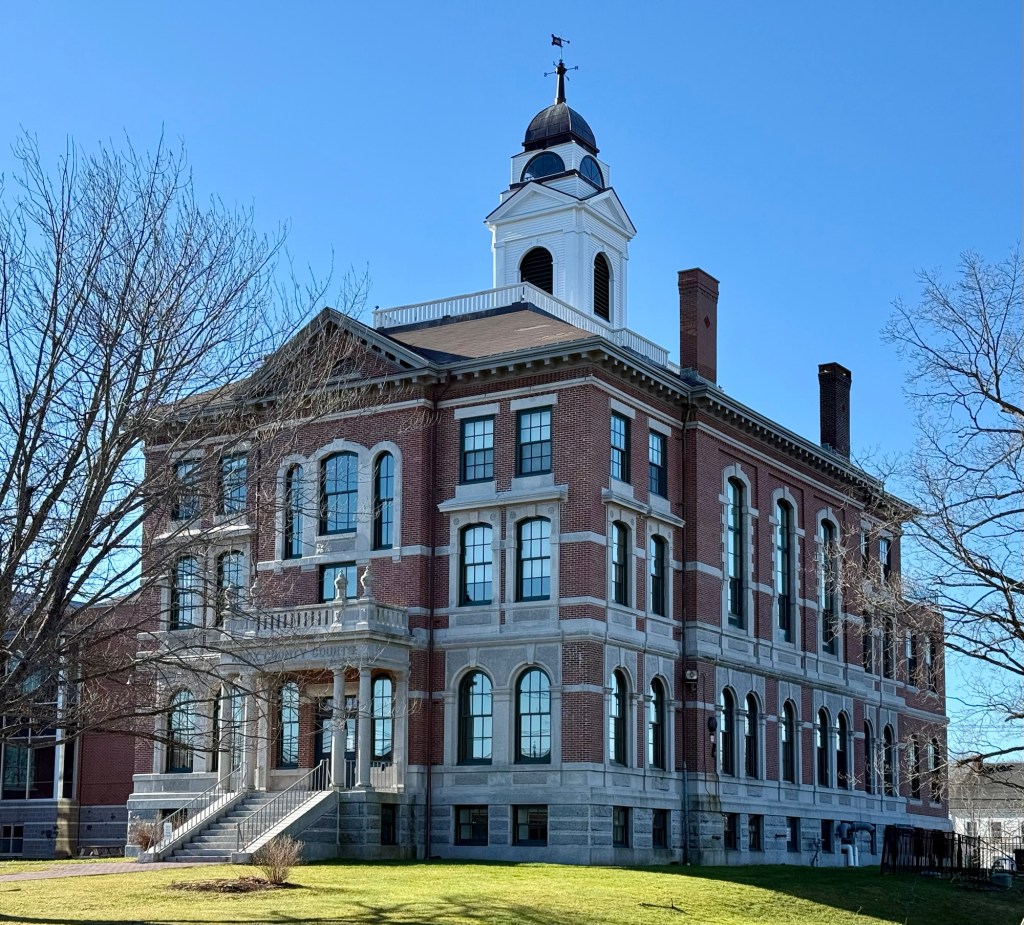
Knox County Courthouse // 1874

The Knox County Courthouse stands in Downtown Rockland, Maine, and is a landmark example of a Civic building constructed in the Italianate style. Knox County was separated from adjacent Lincoln County in 1860, with the coastal city of Rockland established as its county seat. For its first fifteen years, county offices were dispersed amongst buildings until in 1874 when the county retained Boston architect Gridley James Fox Bryant to design the present building. The building was constructed at a cost of $83,000, well over the anticipated $50,000 cost, and opened in 1875. The first floor accommodated all the county offices, with fireproof storage areas for records. The second floor was be taken up by the courtroom, and at either end were rooms for judges, jury and counsel.