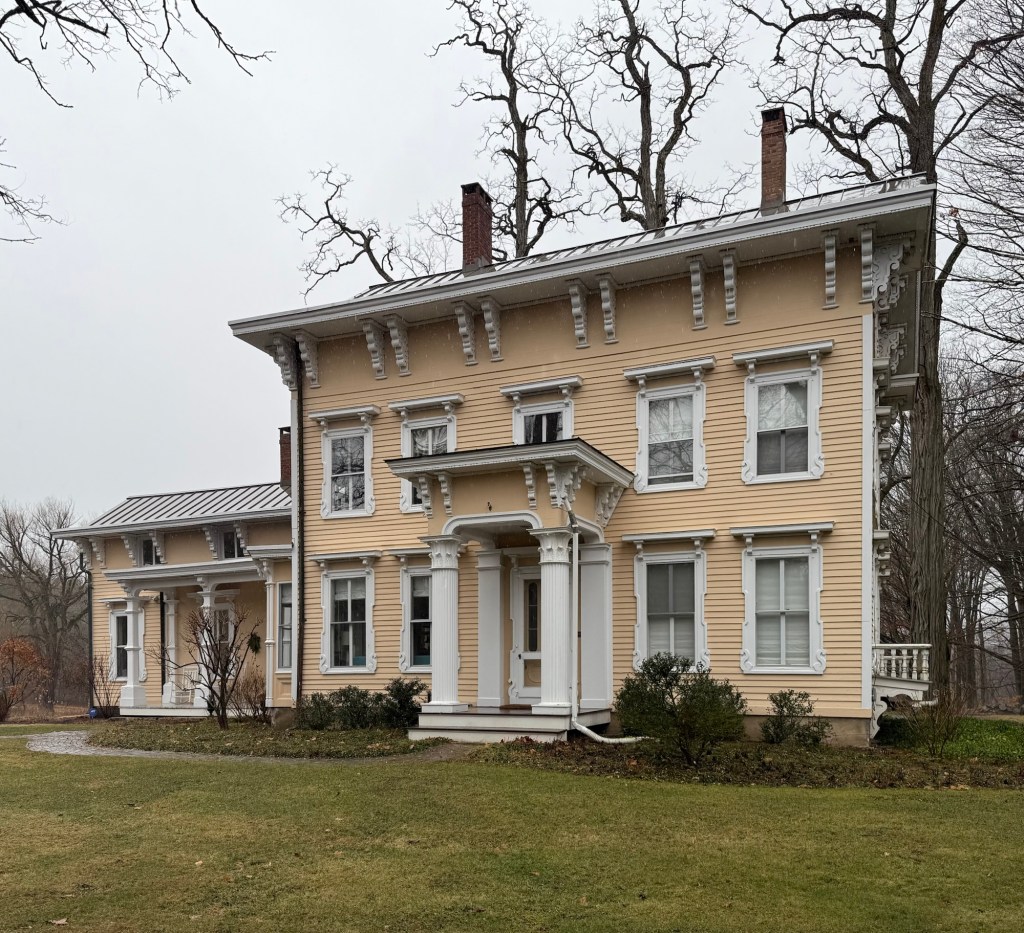
General John Sedgwick House // 1860

The Major General John Sedgwick House is located in Cornwall Hollow, Connecticut, and stands out as one of the finest residences in this part of the state in a rural setting. The house was built by 1860 for General John Sedgwick (1813-1864), who was born in a house standing on this site, which had been built by his grandfather, a veteran of the Revolutionary War. In 1859, the Sedgwick family homestead burned to the ground. Sedgwick, then already well established in his military career, took leave to oversee construction of its replacement. This house was built, apparently on the foundation of the old house, in 1859–60. The work was done by Cyrus Marsh, a local builder, in the Italianate style with decorative brackets, window mouldings, hoods, and a large columned entry portico. Major General Sedgwick was active in many campaigns, and during the American Civil War, he was killed by a sharpshooter at the 1864 Battle of Spotsylvania Court House, he was the Union Army’s highest-ranking casualty of the war and never got to reside in his Cornwall home.
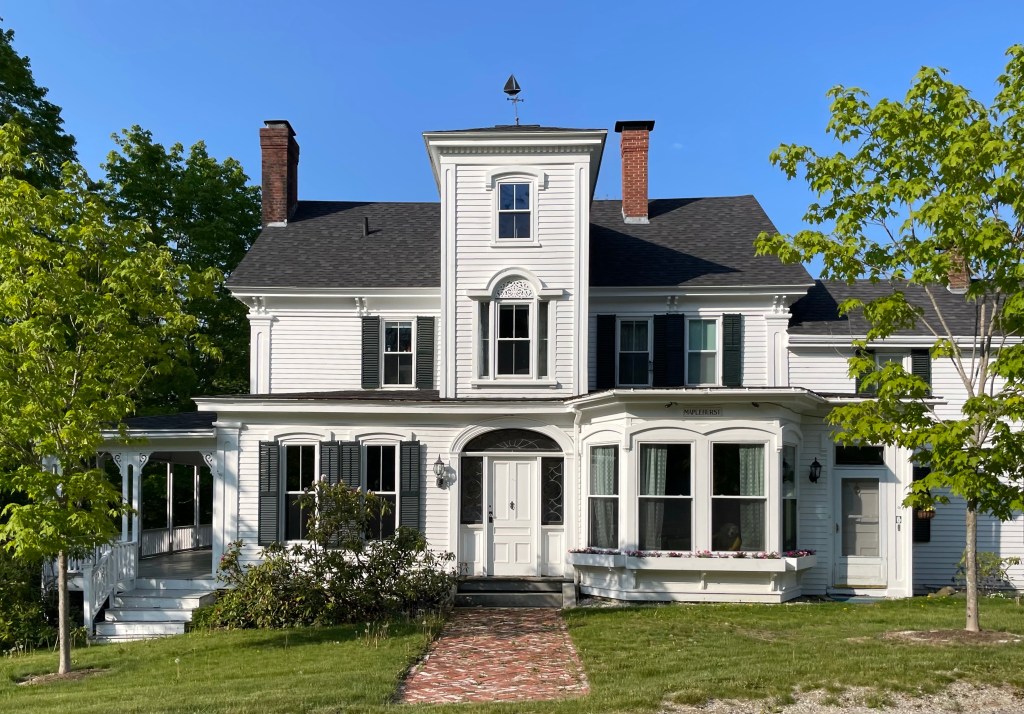
“Maplehurst” // 1837

Wyer Groves Sargent (1810-1900) was a descendant of the famous Sargent and Choate families and at the age of seven, arrived to the sparsely developed town of Sedgwick, Maine in 1817 with his parents. Twenty years later, Wyer has this house built in 1837. The original house was a one-story Cape house with a central chimney and an ell connected to a barn. He worked in the village of Sargentville in the town of Sedgwick as a merchant, operating a store, and traveling extensively to buy and sell goods along the New England coast. Operating a lucrative business allowed him to expand his outdated and cramped home in 1868 to the current configuration. It was then known as Maplehurst. Wyer raised the house and extended the front by adding a floor beneath it. When Wyer died in 1900 the house went to his daughter Martha Spooner. Martha sold it to Dr. Frederick Sweet. Last known, the home is still owned by Dr. Sweet’s great-granddaughter.

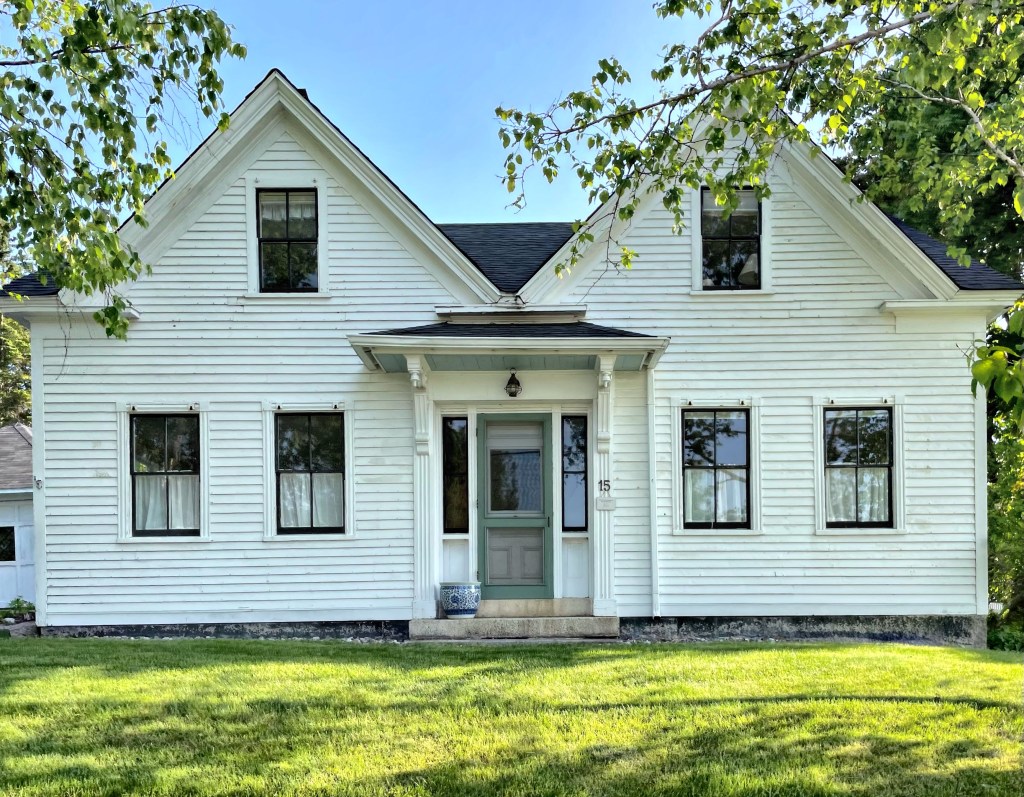
Dr. Hagerthy House // c.1860

Dr. Rufus Hagerthy (1859-1933) was born in Surry, Maine to father, Daniel Hagerty (sic) a naturalized citizen in 1871 who hailed from County Kerry, Ireland and mother, Carrie. Rufus went to Bowdoin College where he completed his study of medicine in 1884. He moved back to Sedgwick, Maine and married Jane C. Holden (1861-1896), the couple lived in this home, which served as a home-base for Dr. Hagerthy to make house calls by horse or sleigh (depending on the weather). Dr. Hagerthy was eventually wealthy enough to get involved in real estate, and developed Byard’s Point in Sedgwick in 1909, the town’s first sub-division.

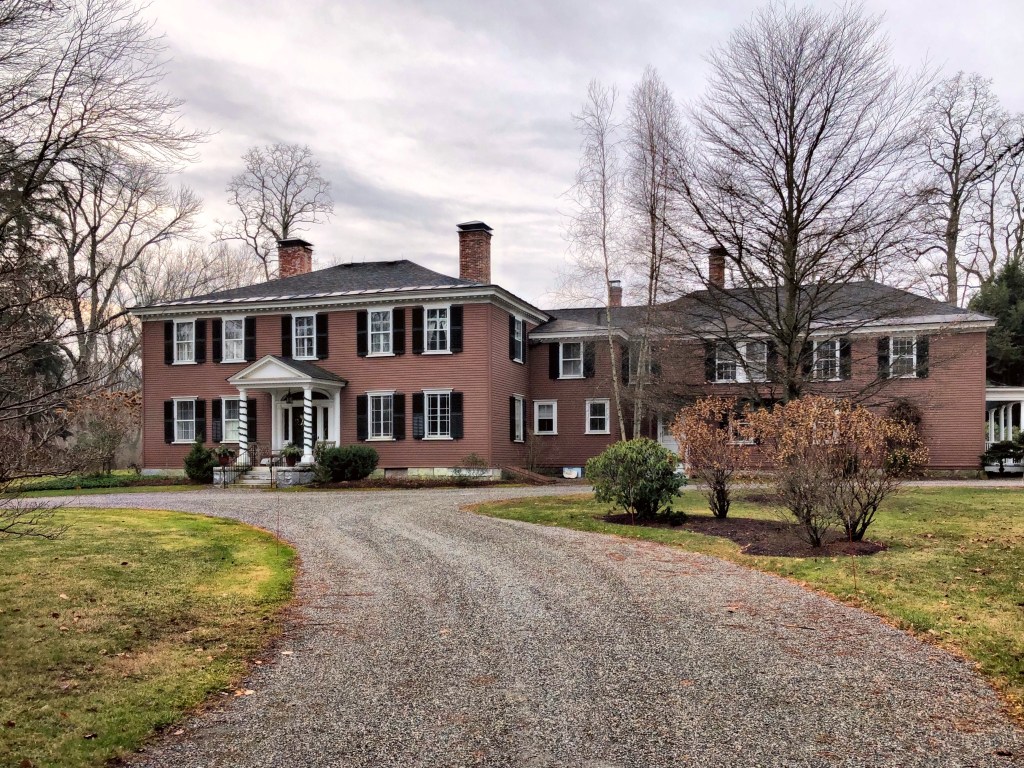
Sedgwick House // 1785

Built in 1785, the Sedgwick House on Main Street in Stockbridge, MA, is the oldest of several Federal mansions built in town after the Revolution. Theodore Sedgwick (1746-1813), one of the early lawyers of Berkshire County, moved to Stockbridge in 1785 and built this house. From 1796 to 1799 he was a Senator in the federal government, and declined a position of Secretary of the Treasury offered by George Washington. Before this, when a House Representative, he was nominated the fourth Speaker of the House. An ardent Federalist, Theodore retired from the national arena upon Thomas Jefferson’s election. Sedgwick was also a member of an early abolitionist society organized in Pennsylvania in 1775 and played a key role in abolishing slavery in Massachusetts by his win in the case of Bett v. Ashley. In this case, Sedgwick served as attorney of Mum Bet (also known as Elizabeth Freeman) an enslaved woman in nearby Sheffield and argued that slavery was inconsistent with the 1780 Massachusetts State Constitution, and won. Bet became the first enslaved African American to file and win a freedom suit in Massachusetts, effectively abolishing slavery in the state. She was later buried in the Sedgwick Family burial plot in Stockbridge. The home was later owned and occupied by Catharine Maria Sedgwick, Theodore’s daughter, who became one of nineteenth-century America’s most prolific women writers. She published six novels, two biographies, eight works for children, novellas, over 100 pieces of short prose and other works.