Mary S. Hartford House // 1890

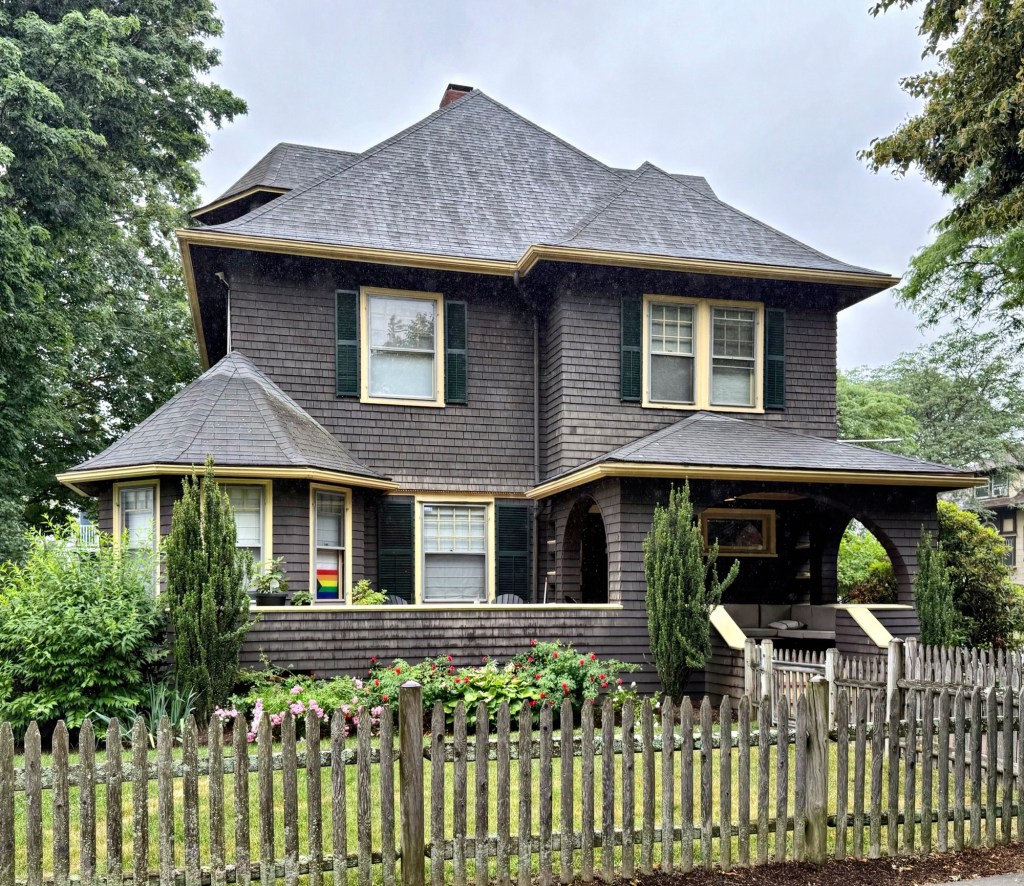
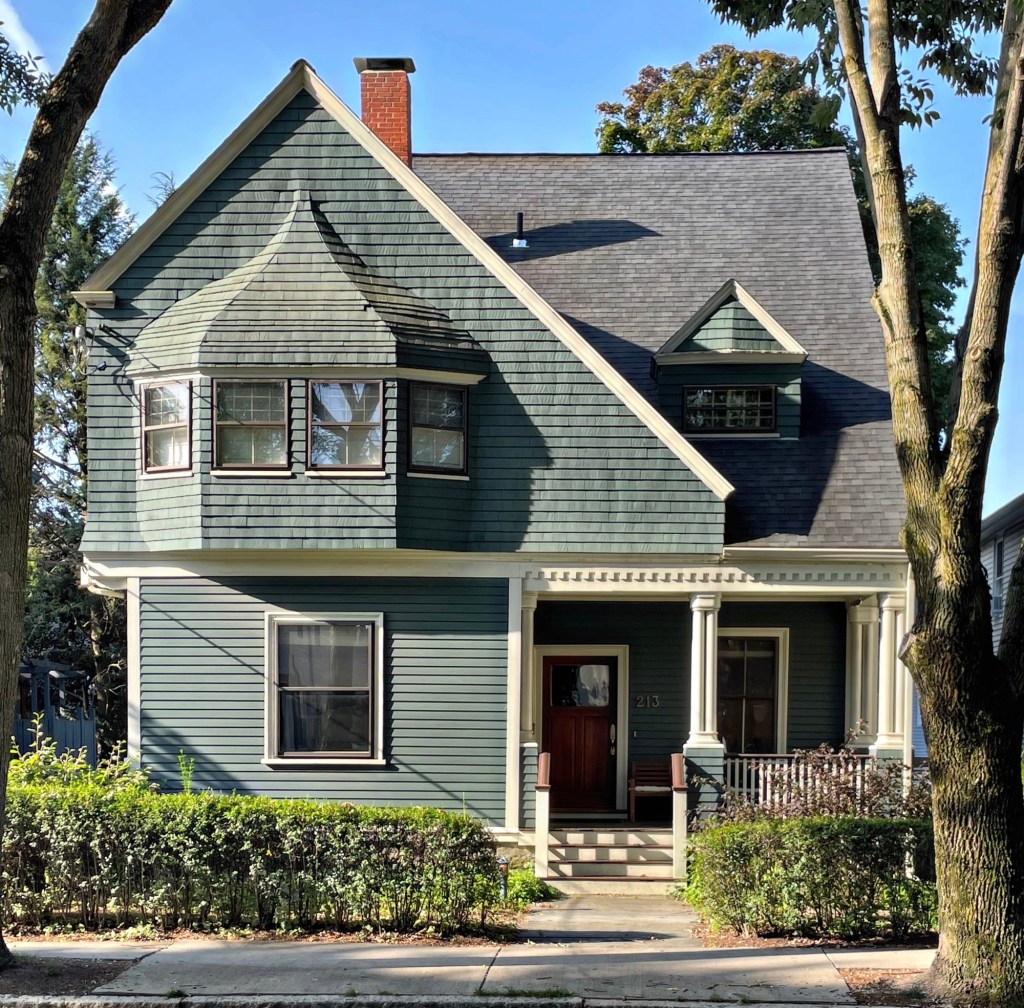
This charming Shingle style bungalow at the corner of Harley and Walton streets in Dorchester’s Ashmont Hill neighborhood, was built around 1890 for Ms. Mary S. Hartford. Mary Hartford (1840-1910) was the mother of famed American painter, Edmund Charles Tarbell, and the wife of Edmund Whitney Tarbell, who died in 1863 after contracting typhoid fever while serving in the Civil War. After the death of her husband, Mary sent her son to live in Groton, Massachusetts with his grandparents to raise them as she remarried to David Francis Hartford, a shoe manufacturer. David and Mary lived nearby on Alban Street, and rented this and other houses to tenants for supplemental income. Local architect Edwin J. Lewis furnished plans for the house as a prototypical example of the Shingle style. Mary died in 1910 and in 1917, David Hartford, as his wife’s executor, deeded this property at 17 Harley Street to Emma C. Rich, the wife of George M. Rich, a Boston banker. The house is excellently preserved, even down to the appropriate brown stained shingles.

Gallup Farm Carriage House // 1906

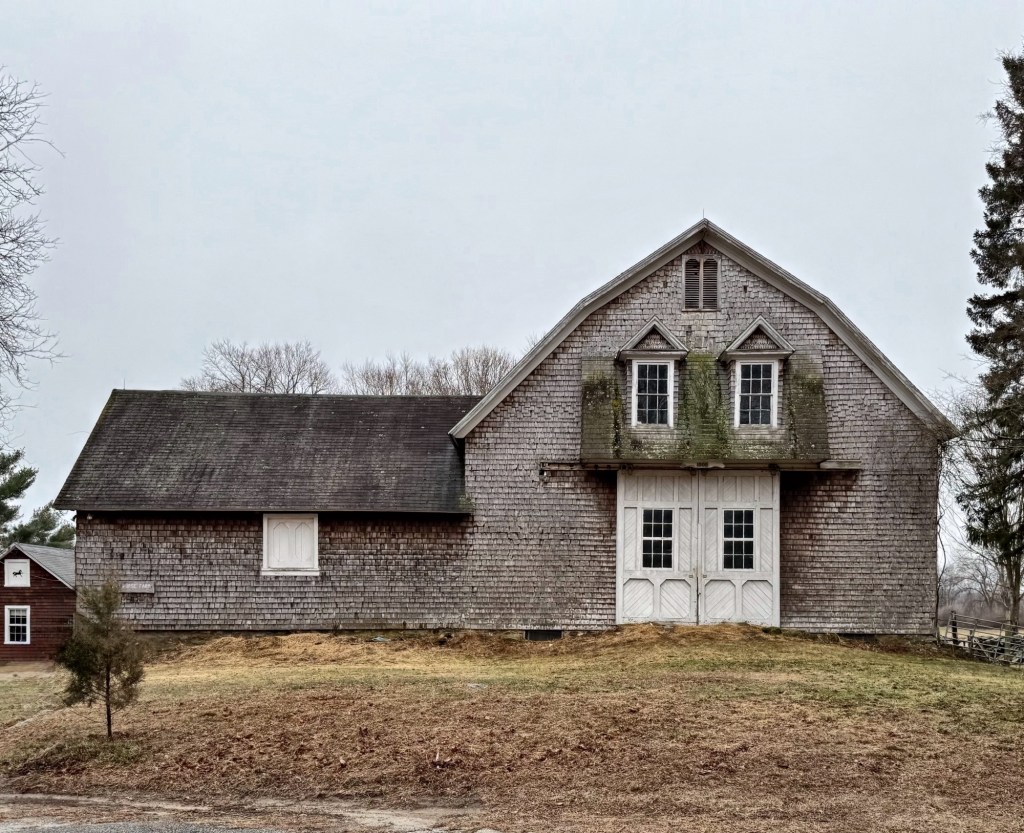
This handsome Shingle style building was constructed in 1906 as a carriage house of a larger farm property in Scotland, Connecticut. The barn is said to have been built for Archie Gallup, who purchased the old Manning farm just west of the town green in Scotland. The 1 1/2-story carriage-house with a gambrel-roof stands out for its principal entry of paneled wooden doors and above, a large, flared hood featuring two pedimented gable-dormers. The entire building is clad with varied shingles to add complexity to the design, catching the attention of all who drive by.

New Ipswich Public Library // 1895

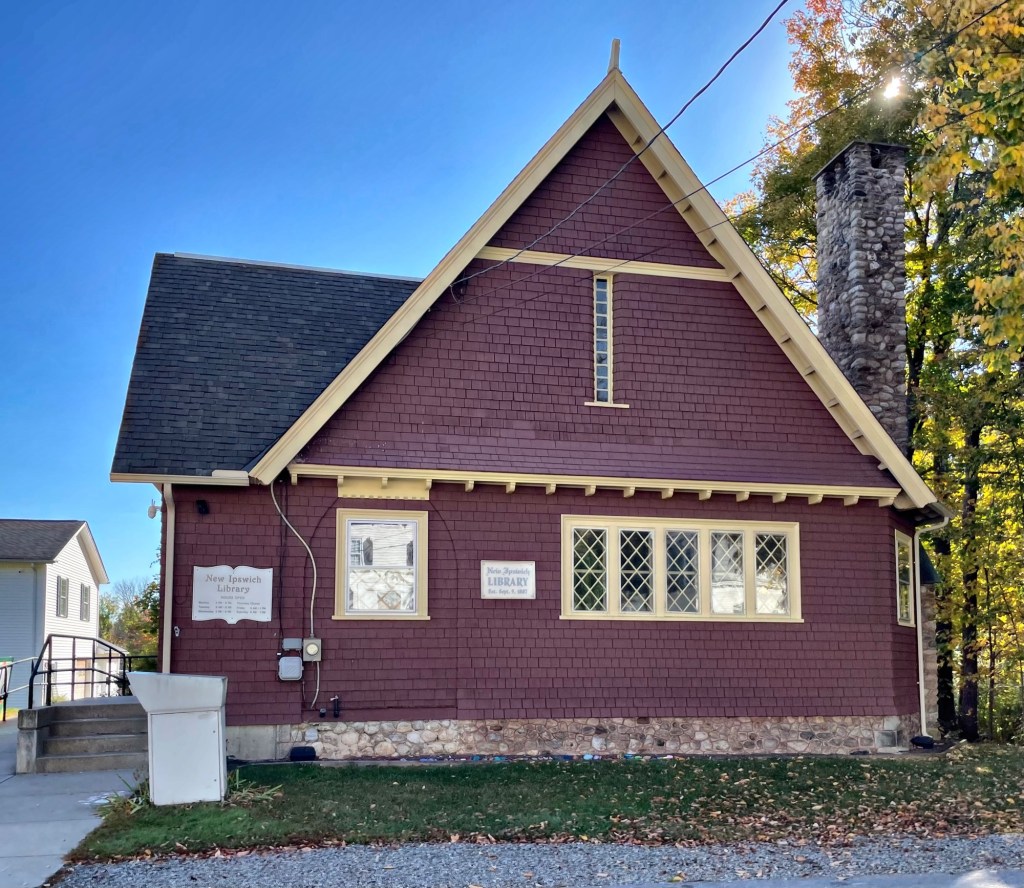
The New Ipswich Public Library is a one-story Shingle style building on Main Street in the charming village of New Ipswich, New Hampshire. The library building was likely designed by Ernest M. A. Machado, one of the best, and relatively unknown architects of the late 19th and early 20th century in Salem. The entrance which faces the side, is flanked by two diamond-pane windows, which can also be found on the primary facade. A special ten-light vertical window is recessed within a shingled depression in the gable, which adds some complexity to the design.

Frederick & Arabella Holden House // 1893

The Frederick & Arabella Holden House sits on Aspinwall Avenue in the Brookline Village neighborhood of Brookline, Massachusetts. Built in 1893, the excellently designed Shingle style dwelling was actually built on speculation by developers, and sold upon completion to the couple. Fred G. Holden (1858-1927) was a marble dealer who managed the Boston Marble Company and had connections in his home state, Vermont for the highest quality marble to sell around Boston, largely for building products and grave memorials. Arabella Proctor Holden (1859-1905) was born in Cavendish, Vermont, as the eldest daughter of Redfield Proctor, 37th Governor of Vermont and the founder of the Vermont Marble Company, the largest such company in the world. I could not find the architect of the house, so any more information, let me know. I’d love to solve the mystery!

Soldier’s Memorial Library of Mansfield // 1901

Arguably the most beautiful building in Mansfield, Massachusetts is the Soldier’s Memorial Library in the center of town. Constructed in 1901, the Soldiers’ Memorial Library is a well-preserved example of 19th
century High Victorian architecture with Shingle style elements, designed by the prominent Boston architectural firm of Peabody & Stearns. In as early as 1896, the idea of constructing a building as a memorial to the soldiers who died in the Civil War had prominent local members of the community. In 1898, a relatively new resident in town, Mrs. Elizabeth Noble, donated a parcel of land for the building with the stipulation that the first floor was to be used as a library and the second floor as an “audience room”,
banquet room, and kitchen for the use of the G.A.R. The architects created one of their most significant civic buildings with an interesting juxtaposition of Gothic elements with Shingle style details. The Gothic lancet window and door surround blends surprisingly well with the use of rubblestone on the first story with buttresses and shingle siding above which give the building a fortress-like appearance.

McCrea Cottage // 1891

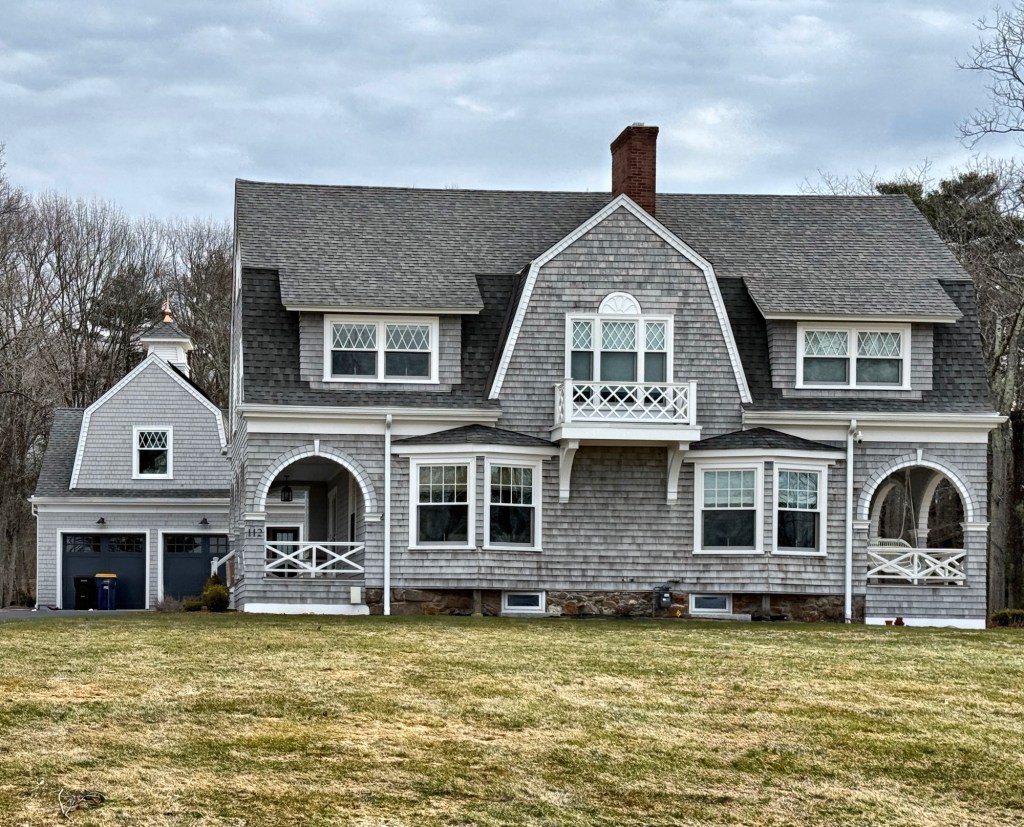
In 1891, Laura Denby McCrea, a wealthy widow based Philadelphia, sought to maintain her social standing all year by building a summer cottage on Grindstone Neck, a summer colony in Winter Harbor, Maine. She was one of the first to build a cottage here, and she hired renowned architect Wilson Eyre to furnish plans for the rustic home. The Shingle style house is dominated by its massive gambrel roof and was historically clad entirely with wood shingles (asphalt shingles have since replaced cedar at the roof).

Tonandowa Cottage // c.1892

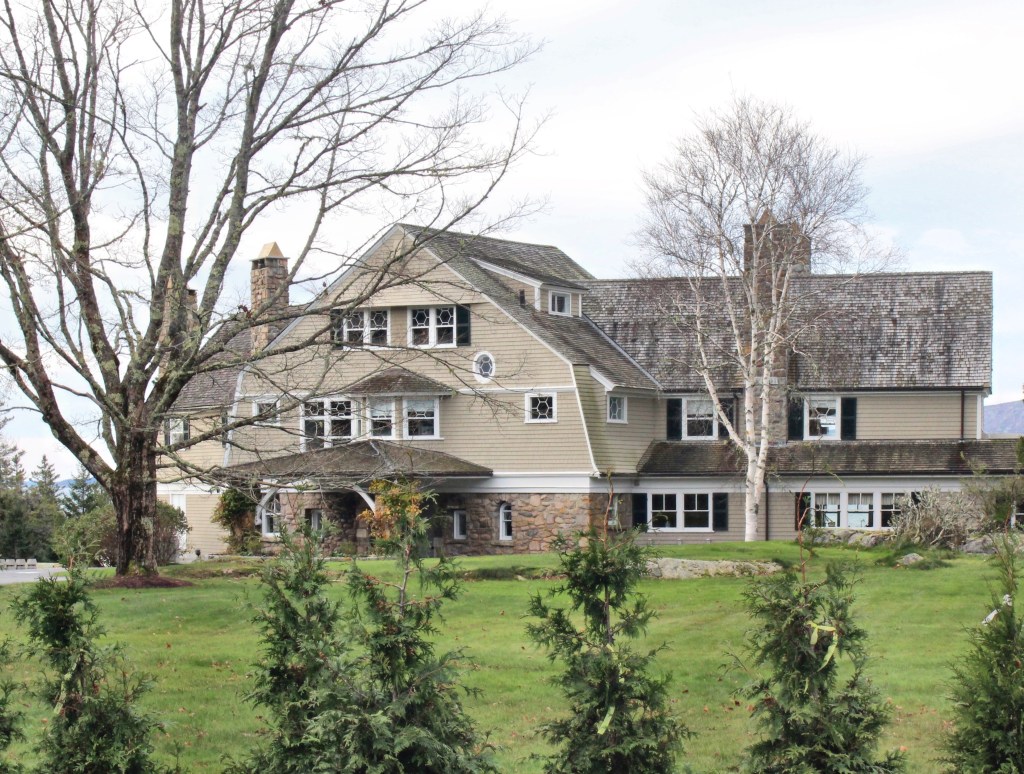
One of the two largest summer “cottages” on Grindstone Neck, Winter Harbor, Maine is this massive Shingled mansion overlooking Frenchman’s Bay. Due to its scale and design, the house possibly replaced a more modest cottage in the early 20th century. The “cottage” was owned by Samuel Price Wetherill, a Philadelphia-based manufacturer and businessman. Wetherill spent most of his time at a Rittenhouse Square Beaux Arts mansion in Philadelphia, which after his death, was purchased by the Philadelphia Art Alliance. The Wetherills hosted lavish events in the mansion and clearly wanted to make a statement with their summer home, which rivals almost any “cottage” in the more prestigious Bar Harbor over the bay.

Samuel P. Tilton Cottage // 1880

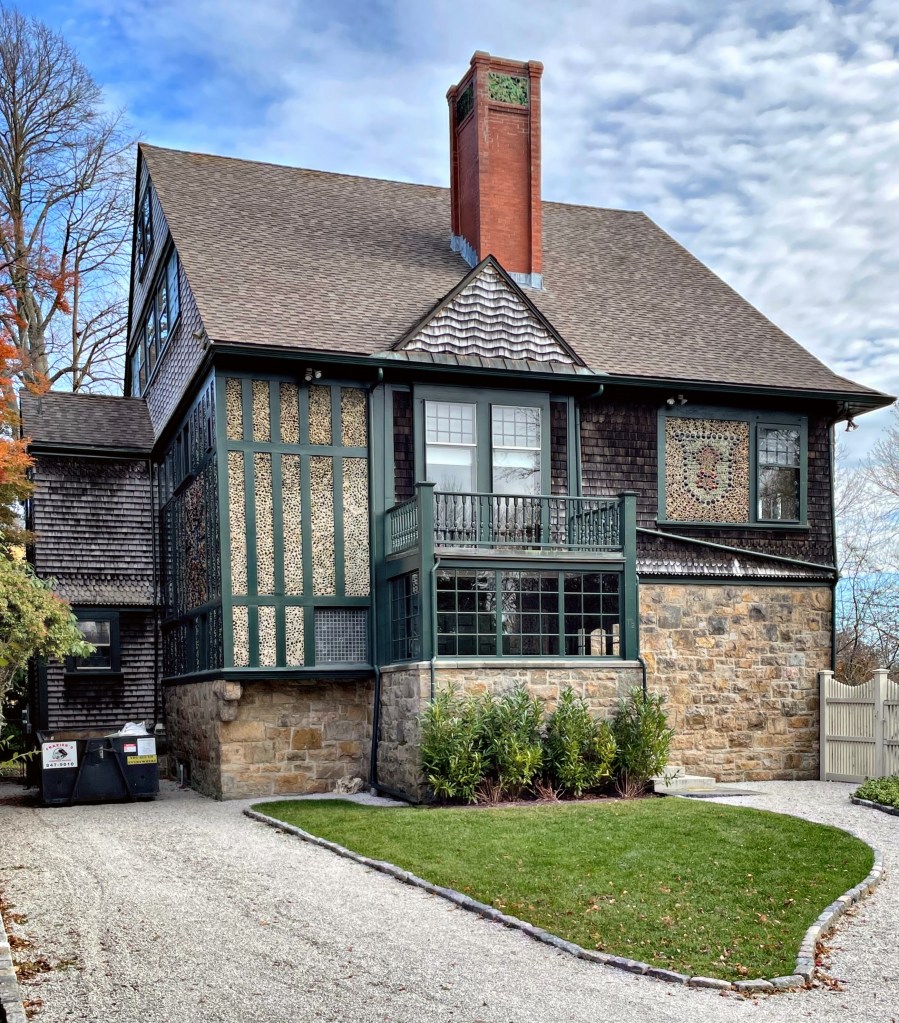
One of the most well-designed and least-pretentious summer cottages in Newport is this charming dwelling on a dead end street. The Samuel P. Tilton Cottage was designed in 1880 by the prestigious firm of McKim, Mead & White as an idiosyncratic blending of Queen Anne and Shingle architectural styles. Mr. Tilton was a milliner (maker and seller of women’s hats) with stores in Boston and Paris, France. He had this cottage built to summer close to the nation’s wealthiest, likely marketing some hats at elaborate Gilded Age events. The facade is assertively Queen Anne with its massing and decorative panels, with shingled side elevation seemingly sprouting from the earth. The architectural terminology for these unique decorative panels is “sgraffito” where here, cement or plaster siding is set and adorned with shells, pebbles, colored glass, and pieces of coal into a cartouche design. The house is one of the finest in Newport, and shows that bigger isn’t always better!

Benjamin H. Davidson House // 1897

Benjamin H. Davidson, a wool merchant had this stunning property built in Waban for his family in 1897. Benjamin and his architect envisioned a large, Shingle style mansion, set back off the street. The house obviously exhibits shingle cladding along all surfaces including stone piers coming up from the ground at the porch, giving the house an organic feeling. The design also includes a large stairhall Palladian window, which is obscured from the street by a balustrade.

Louis K. Harlow House // 1888

One of the best houses in Waban Village in Newton is this absolutely stunning Shingle style/Queen Anne home perched high on Moffat Hill. This house was built in 1888 for Louis K. Harlow, who began his career as a professional artist in 1880 and traveled Europe to study the work of prominent painters. Back in the Boston area, Harlow painted nature and landscapes and produced etchings that were shown in the Boston Art Club and sold worldwide. He later got into poetry and published multiple works. Harlow hired the firm of Longfellow, Alden, and Harlow, to design this country retreat. I assume there is a relation between Louis K. and the architect Alfred Branch Harlow, but I would love to find out the connection! The design is quintessentially Queen Anne, with the asymmetry, complex roof form, varied siding types, and diamond window sashes. The shingled second floor overhangs the fieldstone first floor which to me, evokes the Shingle style where the house seems to have grown out from the earth. I can only imagine how spectacular the interior is!