Located on stunning West Broadway in Bangor, Maine, the Smith-Miller House stands out as a beautiful blending of the Shingle and Queen Anne styles. Built in 1893 from the designs of Connecticut architectural firm Cook, Hapgood, and Company, the home was featured in The American Architect and Building News journal for its design success. The home is clad with continuous cedar shingle siding, with a prominent corner tower, wrap-around porch, and porte-cochere, all together provide complexity and intrigue on the street of large homes. What do you think of this home?
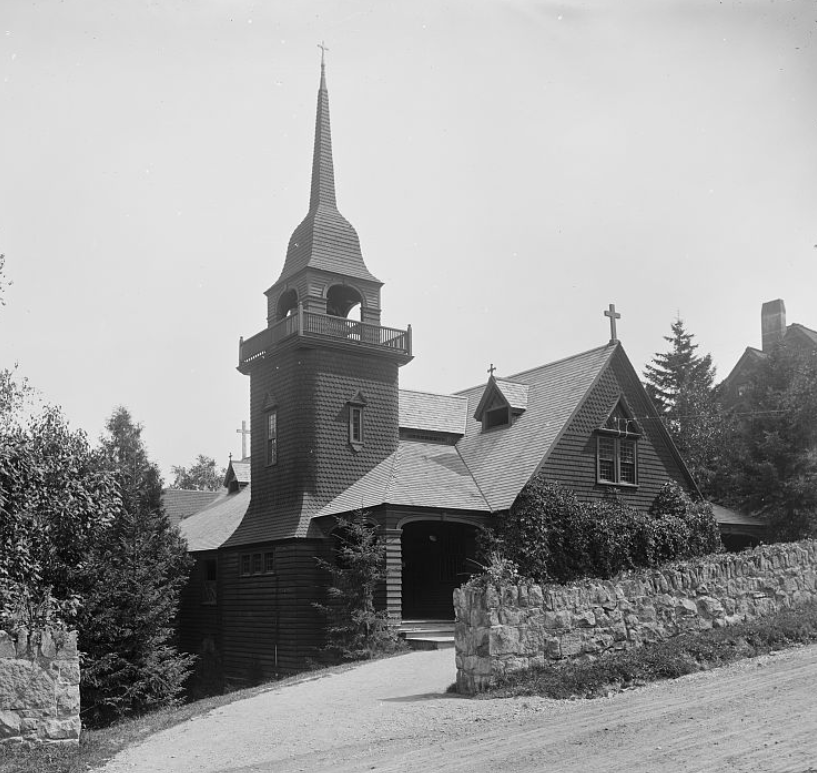
As wealthy citizens from cities like Boston, Philadelphia and New York, began building summer cottages on Mount Desert Island in Maine, an influx of carpenters and tradespeople from Ireland followed to construct and work on them. Realizing this, cottager DeGrasse Fox along with Brooks White of Philadelphia, donated land for a new Catholic church building. Maine architect, William Ralph Emerson, donated plans for the church. A masterpiece of Shingle style design, the church, which seated 300 people, was deemed too small for the growing village’s summer congregation. A new, stone church was built closer to town (featured previously). The spire and belfry resemble another church Emerson designed in Beverly, MA, St. Margaret’s Catholic Church. Sadly, St. Sylvia’s burned down in 1909.
My favorite home in Marion, Massachusetts is this summer cottage on Water Street, overlooking Sippican Harbor. The home is said to have been built from a c.1840s house and enlarged by Reed as a summer home in the fashionable Shingle style. H. R. Reed, an agent for the Revere Sugar Refinery in Boston was well-connected in town and hosted President Grover Cleveland with Rev. Percy Browne ( a summer resident) at his cottage during the summer months. Evidently, Reed added the rubblestone elements, modified the porch, added a tower on the south elevation, the massive dormers at the roof, and is responsible for the exquisite Colonial Revival-style interior, from architect James Templeton Kelley. The home is arguably best known as the summer White House of Grover Cleveland, the only U.S. president to marry in the White House and the only two-time president to serve non consecutively – from 1885-89 and from 1893-97. The Cleveland’ Family summered in Marion between their time in the White House. In 1891, the President hoped to purchase the home, but could not settle upon a reasonable price, so he bought Grey Gables, a summer cottage in nearby Buzzards Bay (no longer extant).
Augustus Nickerson, a Boston-based businessman and secretary of the League of American Wheelmen (bicycling group) built this home as a summertime retreat from the stresses of city living. Nickerson was associated with F. Nickerson ad Company, sailing and steamship owners and general merchants, and rose to become treasurer of the Boston and Savannah Steamship Company in the 1880s. He built a home in Dorchester, MA for his family, and just two years later, built this absolutely perfect Shingle-style home in Marion. The home exhibits strong horizontal massing and weathered wood shingle sheathing, characteristic of the Shingle Style.
“Point Rock” is one of the smaller summer cottages built during the end of the 19th century for wealthy city-dwellers to escape for summers from the stress and pollution of city life. This home was built around 1890 for David W. Lewis, a concrete and stone dealer in Boston. The home is sited in the middle of a waterfront lot, overlooking Sippican Harbor and Buzzards Bay. The house is a great example of the Shingle style, popular in the late 19th century, and features a strong horizontal emphasis and continuous shingles from the roof to the foundation. The chippendale porch balustrade is a great added touch.
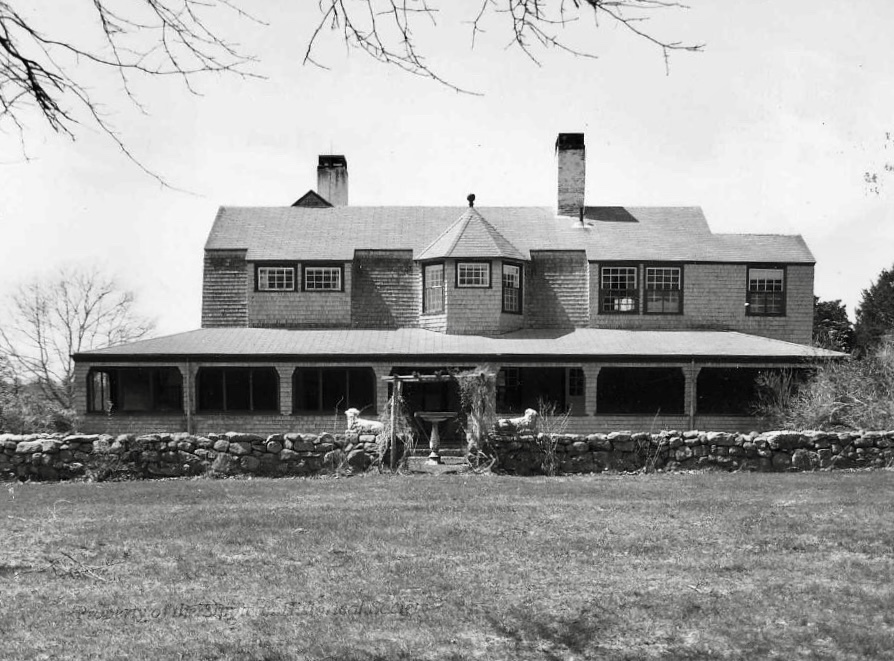
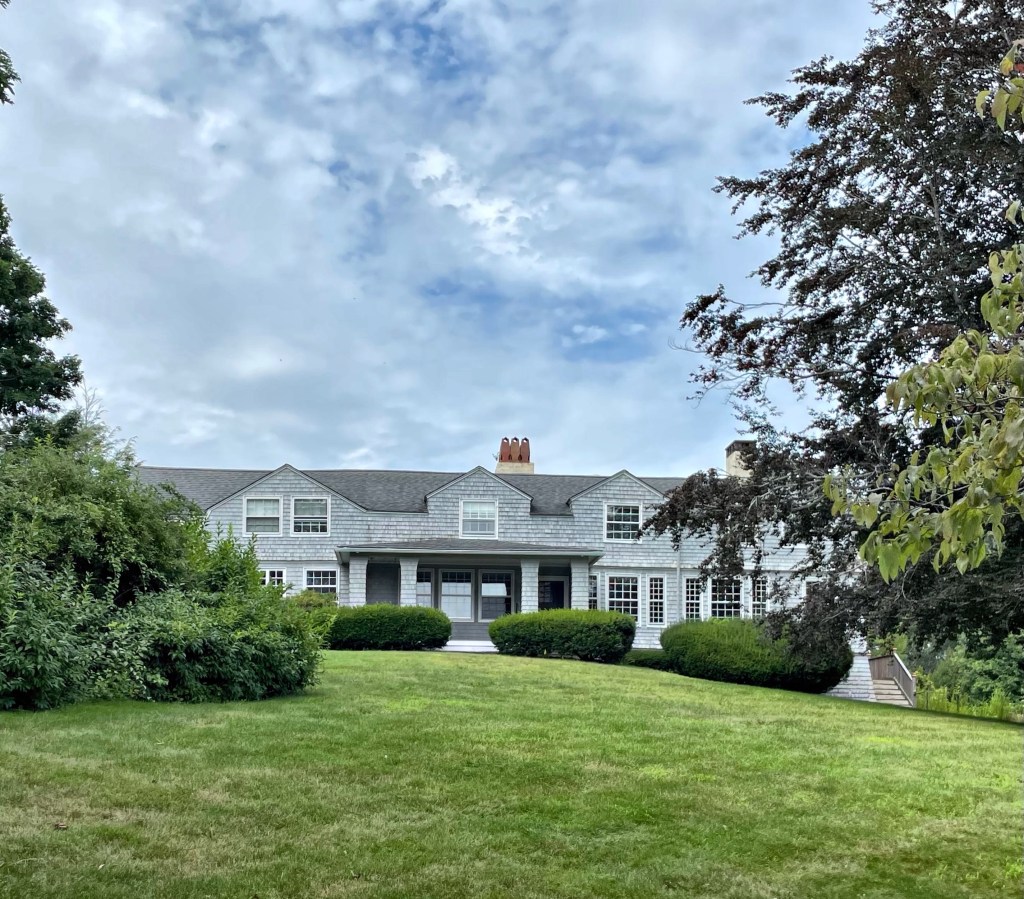
Charles Allerton Coolidge (1858-1936) was born in Boston and grew up in the iconic Beacon Hill neighborhood, known for its stunning architecture. Inspired by his surroundings, he attended Harvard and MIT and studied architecture, graduating in 1883. He entered into Henry Hobson Richardson’s architectural practice as a draftsman until Richardson’s death in 1886. Upon his death, Coolidge continued Richardson’s commissions as a partner, as Shepley, Rutan and Coolidge. Shepley married Richardson’s daughter; and Coolidge later married Shepley’s sister. It is likely that Coolidge became aware of Marion from Richardson’s earlier design of the Percy Browne Cottage in town. He must have liked the town so much, since he built this summer cottage in 1891 in a sparsely developed area across Sippican Harbor from the village. The Shingle style home was later rented to Isaac Henry Lionberger, a lawyer who served as assistant Attorney General of the United States by appointment of President Cleveland (who also summered in Marion). Lionberger, who spent most of his time at his home in St. Louis, married Coolidge’s wife’s sister, so the families often hung out at this home together. The summer cottage in Marion is still owned by Coolidge’s heirs to this day.
In 1881, Henry Hobson Richardson furnished plans for this modest, shingled cottage in the town of Marion, overlooking Sippican Harbor. At the same time, he was also completing designs for Austin Hall at Harvard and overseeing the construction of Albany City Hall in New York, both in his iconic Richardsonian Romanesque style. This Shingle style home in Marion was designed for Reverend William Percy Browne (1838-1901), who was educated at Kenyon College in Ohio alongside John Cotton Brooks, the youngest brother of Phillips Brooks, who would become the Rector of Boston’s Trinity Church and briefly Bishop of Massachusetts. Brooks would hire H.H. Richardson to design Trinity Church in Boston in the early 1870s. From this connection and being members of the St. Botolph Club of Boston, Reverend William Percy Browne and H.H. Richardson began a working relationship designing Browne’s summer cottage in Marion. The legend is that at the club, Browne bet Richardson that he could not design a small house for $2,500. Browne lost. This modest house was completed in 1882 and represented an early, significant example of a Shingle style home in Massachusetts. Browne died in 1901 and the house was sold to Sidney Hosmer, a Boston electrical engineer. Under his ownership, the home was expanded and altered, somewhat obscuring Richardson’s original design. The cottage was eventually purchased by Tabor Academy, who in 2019, pulled a demolition permit for the house. Architects and historians quickly rallied and advocated for the preservation of the cottage, saving it from the wrecking ball. The academy is undergoing alternative plans, which were stalled due to Covid-19.
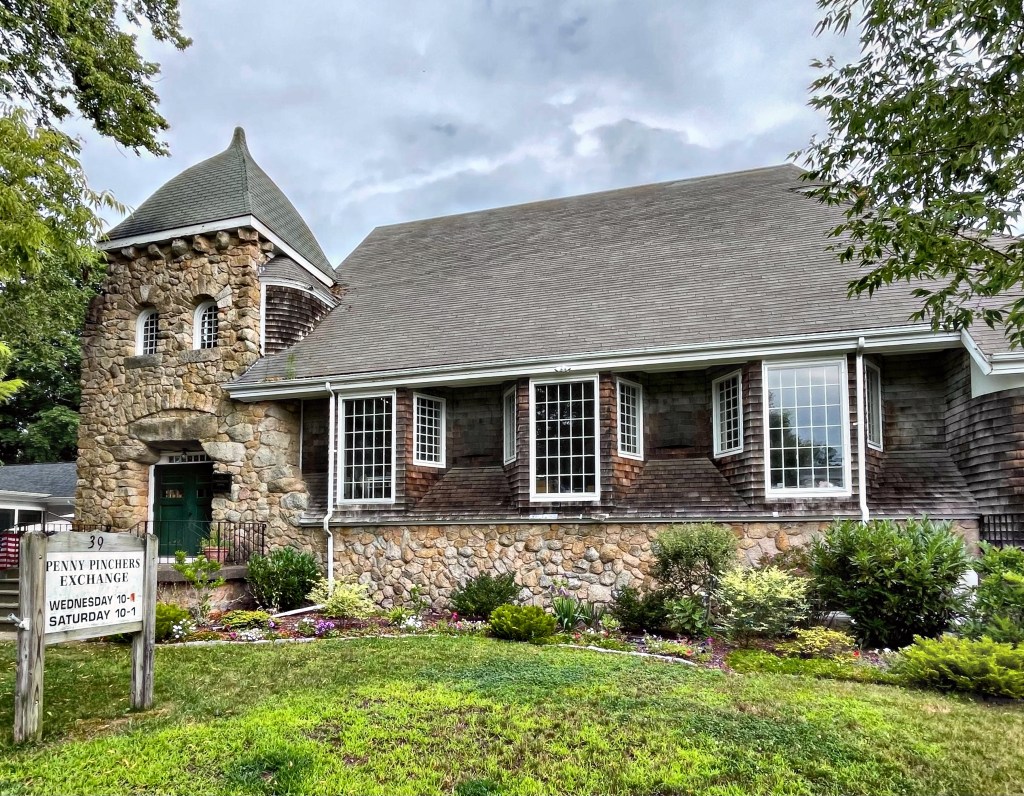
Built in 1885, Marion’s Congregational Chapel represents one of Elizabeth Pitcher Taber’s last substantial gifts to her community. Born in Marion in 1791, Mrs. Taber taught grammar school in Marion as a young woman, marrying, Stephen Taber, clock maker and whaling ship-owner in 1823, subsequently living in Acushnet and New Bedford. She refocused her interest in Marion after the death of her husband in 1862. A wealthy, childless widow, Mrs.Taber funded a library/natural history museum, music hall, and during the mid-late 1870s, she set about the daunting task of founding a private academy in Marion which still thrives in the town as Tabor Academy. Three years before her death in 1885, Mrs. Taber, in one of her last acts of generosity to her church and town, purchased a vacant lot owned by her Tabor Academy’s principal and her downstairs neighbor in Tabor Hall, Clark P. Howland. She paid him $300.00 for his land and subsequently had the Congregational Chapel built in the up-to-date Shingle Style. Composed of rubble stone, the church features a south-facing wall with a trio of polygonal bays that add depth and provides the hallmark cedar shingle siding in the style. The church is one of the most rustic and beautiful in the state of Massachusetts. The church here also runs Penny Pinchers Exchange, a church-run thrift shop.
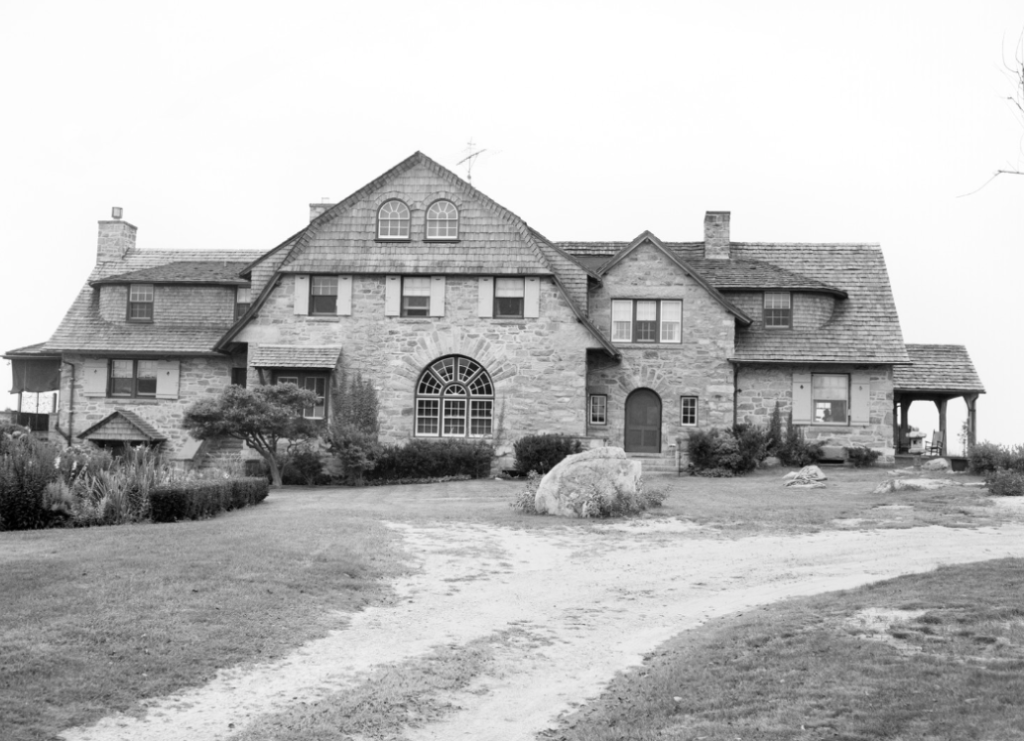
Henry Cooke White (1861-1952), the patriarch of an extremely artistic family, purchased undeveloped land on a coastal part of Waterford, Connecticut in 1891. When passing through the area he found a vantage point overlooking the water, he was overwhelmed by the panoramic view of Long Island Sound, writing in his memoirs, “…I was convinced that this was my Promised land.” Not long after, he built a summer cottage on what became known as White Point the following year. The Whites wintered with his parents in Hartford until they built a year-round home in Waterford in 1913, designed by Wilson Eyre, a Philadelphia architect, after he was inspired by Charles Lang Freer’s home in Detroit. The rustic Shingle style house was constructed of ashlar stone masonry with shingles above, which is sited perfectly on the rocky shoreline. Also on the site is a boat house and garage (which I could photograph from the street) in similar detailing. Henry‘s son and grandson both followed his footsteps: Nelson Cooke White (1900-1989), who was born at White Point, and inherited his father’s love of the sea, became a noted marine and landscape painter; and Nelson Holbrook White (1932-) who was taught by his grandfather and later studied in Italy how to perfect his painting.
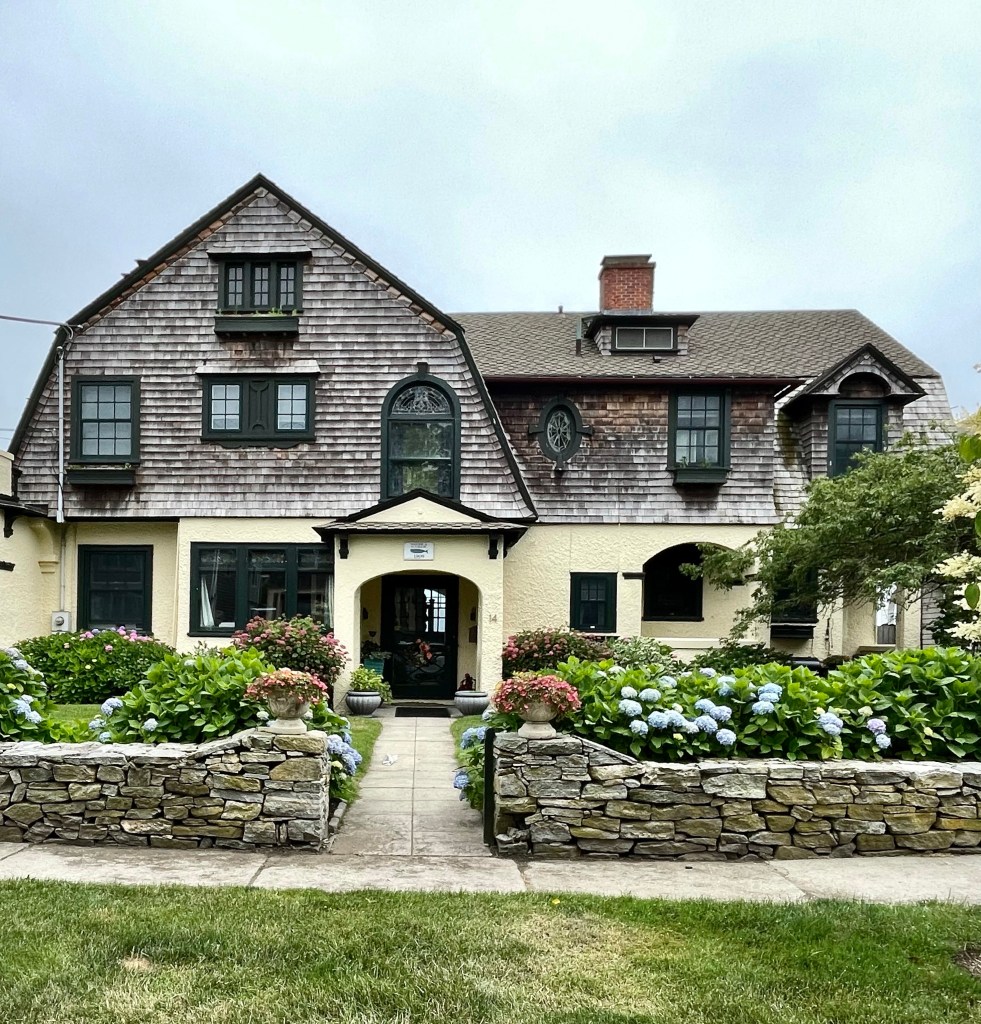
This summer cottage in the Neptune Park development of New London, Connecticut, was built around 1910 for Walter Garde, a resident of Hartford and New London. Walter built this home as a retreat from city-living where he could breathe the fresh sea breeze and not worry about smoke and pollution from the growing industrial cores of Hartford and New London. The home blends styles and forms elegantly with a stuccoed ground floor and shingles above. A cross-gambrel roof adds depth with windows in various shapes and sizes creating a pleasing composition at the street. Walter Garde was a businessman who notably opened the Garde Theatre (now Garde Arts Center) in Downtown New London.

 Buildings of New England