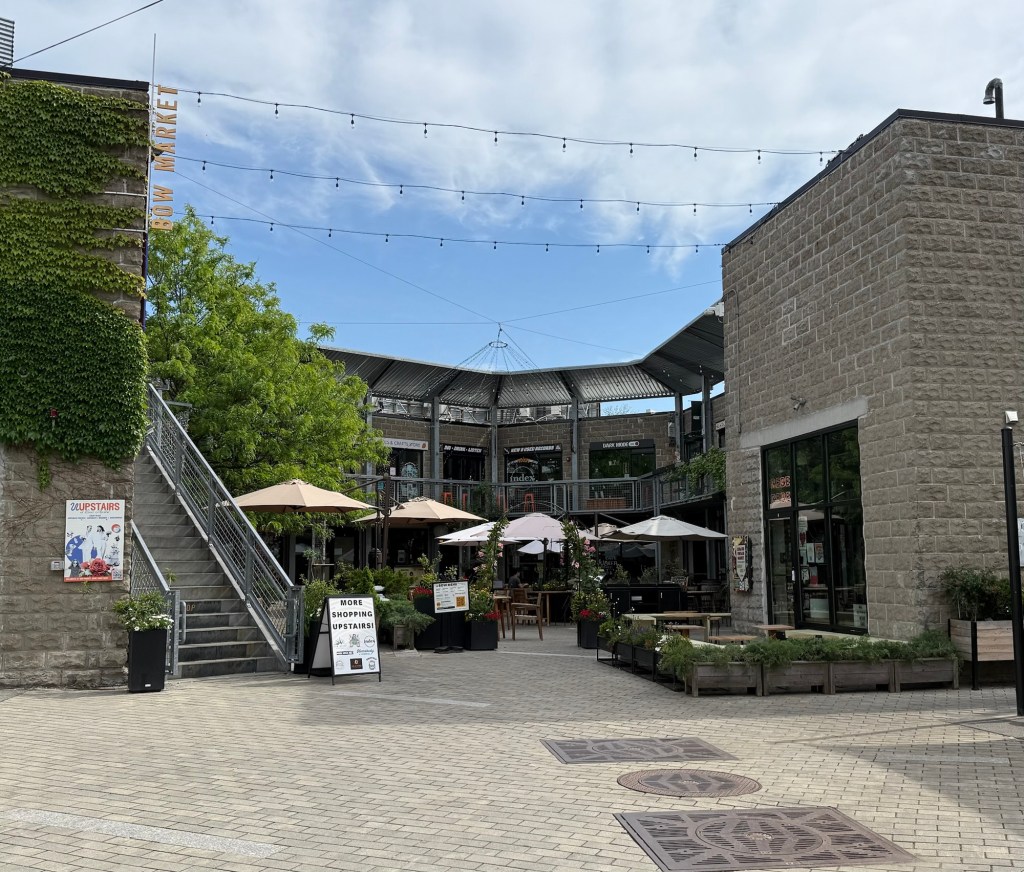
One of the best and most successful examples of adaptive reuse in the Boston area has to be Bow Market in Somerville’s Union Square commercial district. Tucked away behind buildings on the busy streets, a former concrete block storage facility was reimagined as a vibrant, European style marketplace of local vendors and businesses. The project was envisioned by business partners Matthew Boyes-Watson and Zach Baum, who worked with Matthew’s father, architect Mark Boyes-Watson, to renovate the storage building to create storefronts. The team worked with landscape architects, Merritt Chase, to make the public courtyard more enticing, which each micro-commercial space opening onto the landscaped communal courtyard. Design elements include seat walls constructed from recycled granite from the renovation of the Longfellow Bridge and reclaimed wooden beams from a ship building facility in Hingham. If you haven’t been to Bow Market yet, you must. This project is exactly what good urban planning and design is all about!
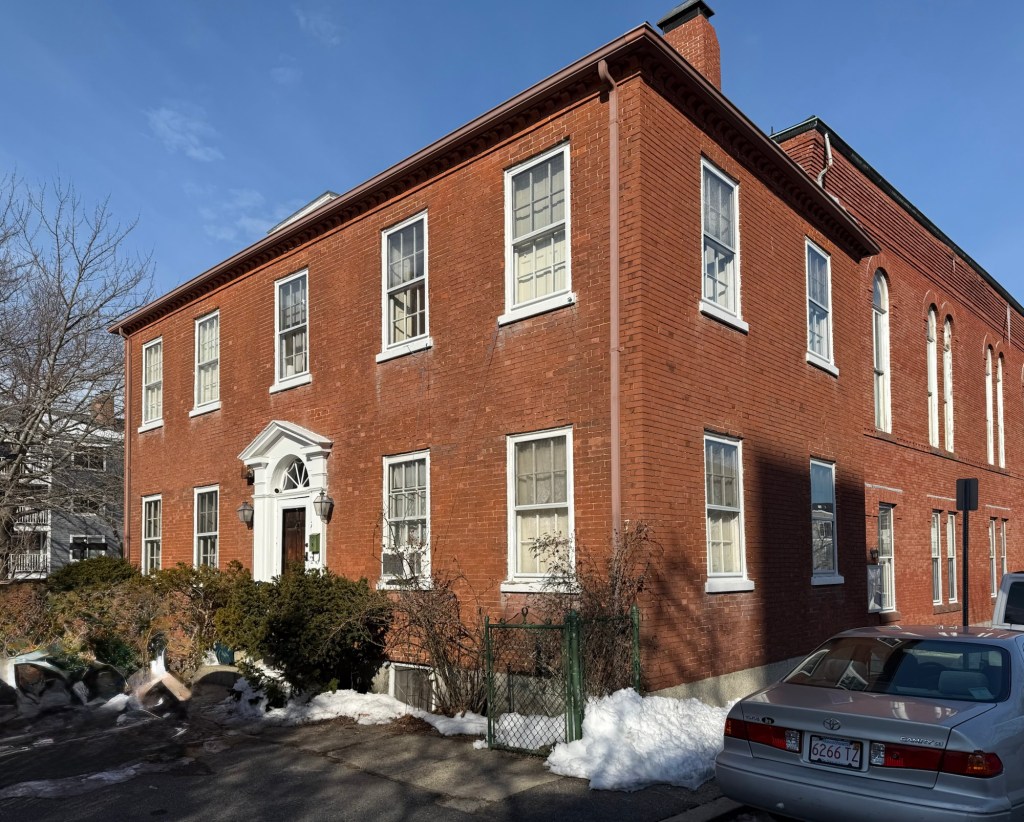
This brick, Federal style house, is located adjacent to the First Universalist Church of Salem amongst a sea of urban renewal-period housing, and is a reminder for Planners to think about the long-term implications in their work. This house was built in 1811 for Thomas Perkins, a local merchant whose brother was its first occupant. After successive ownership throughout the 19th and early 20th centuries, in 1950, Bessie E. Monroe purchased the premises and moved into the home. When the city began urban renewal planning for the area in the 1960s, the building was occupied by Bessie Monroe, who at the time was an elderly woman. The Salem Redevelopment Authority acquired the house through eminent domain and the house was targeted for demolition. The Redevelopment Authority, concerned with how relocation would affect Bessie Monroe’s health, decided to take the property but allow Mrs. Monroe to live there until her death. This decision delayed the planned demolition of the building, even though all other targeted properties were demolished. Luckily, the renewal plan changed its focus from new construction to restoration of existing buildings between the time of the taking and Bessie Monroe’s death. The building was then sold to an owner interested in restoring the structure, now the building is listed on the National Register of Historic Places and is a testament to the benefits of preservation over short-sighted planning policy.
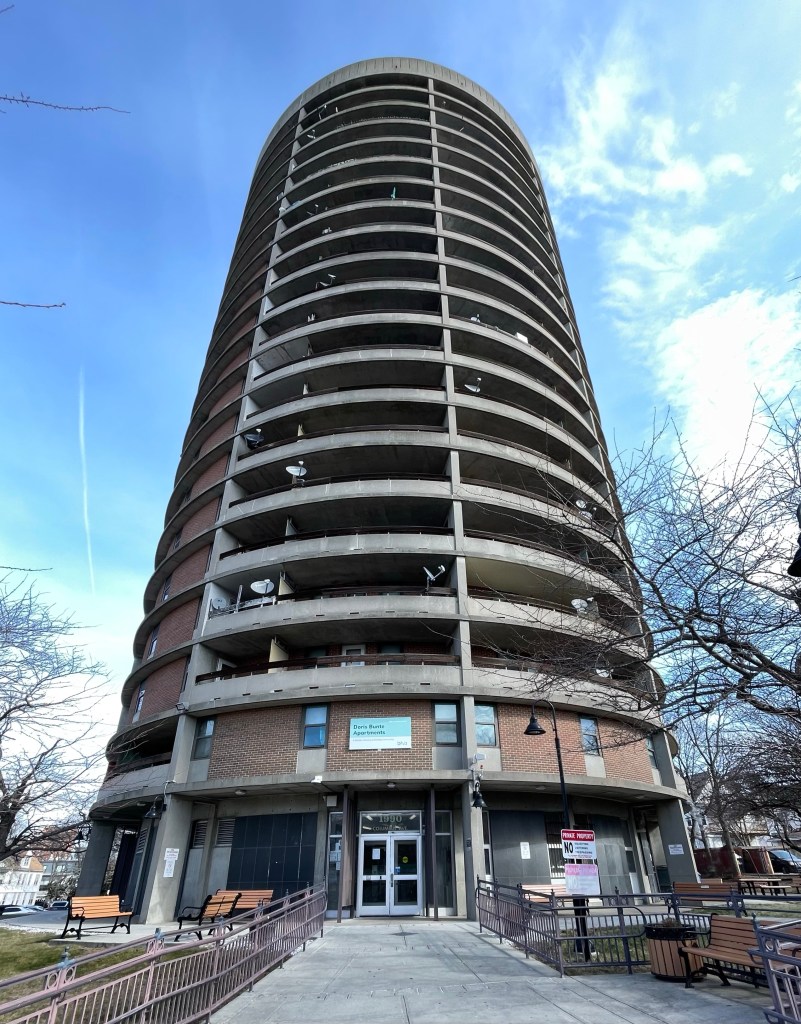
In the second half of the 20th century, parts of Boston saw disinvestment by private property owners as well as local and state government. With people leaving Boston for the suburbs, the hemorrhaging of tax revenue led urban planners to go big and institute ‘Urban Renewal‘ policies and planning to demolish what they believed to be substandard housing and invest in Modern apartments and car-oriented developments. The triangular shaped new community was as comprehensive as any urban renewal district in the region; indeed of the ten General Neighborhood Renewal Plans created by the BRA in 1961, Washington Park was the most self contained Urban Renewal District in the city. It included new police and fire stations, a courthouse, two public libraries, a shopping mall, a health center, elementary school and five garden style housing developments totaling almost 2000 apartments or townhouses. At its completion in 1975, $70.4 million had been invested to build the new community of which $31. 3 million came from the federal government. Part of this massive undertaking was the construction of elderly housing, which resulted in this 20-story cylindrical tower at the southernmost edge of the Urban Renewal area. The tower was constructed between 1967 and 1970 and was designed by Boston-based architectural firm Richmond & Goldberg, led by Isidor Richmond and Carney Goldberg. Apartments were “integrated” with with 70% Black and 30% White residents, all with private balconies and an emergency pull-chain system in kitchens and bedrooms for the elderly residents. As far as mid-century apartment towers go, this one is pretty interesting and unique. The building was renovated a few years ago and renamed the Doris Bunte Apartments. In 1969, Buntè was nominated to the Boston Housing Authority board, making her the first female public housing tenant to serve. In 1972, she was elected to the Massachusetts House of Representatives, becoming the first woman of color to serve in the Massachusetts legislature, and the first female to serve in the House leadership in 68 years. While there, Buntè helped found the Black Legislative Caucus and the Caucus of Women Legislators.
When elevated train service from Boston extended to Forest Hills in Jamaica Plain in 1909, the residents of the surrounding neighborhoods and points south were ecstatic to realize the chance to enjoy quicker transit to the city. The station, which opened in 1909, was an architectural landmark and engineering feat, as the new terminal was the largest structure of its kind and the most costly in the country at the time. The large station was made of steel and reinforced concrete, finished in copper at the elevated section, and took nearly two years of construction. City architect Edmund M. Wheelwright designed the station, and upon its opening, it was called “the chef-d’œuvre of rapid transit development in Boston”. Like with many cities all over the country, shifting transportation planning and priorities and shrinking investment necessitated the once grand station to suffer the fate of the wreckingball. As part of the Southwest Corridor project, this station was to be demolished, with a modern station constructed to service the MBTA trains on the Orange Line. Also, plans were developed for a 12-lane highway along the railroad right-of-way between Boston through Cambridge. The residents of the affected areas, including Jamaica Plain, Roxbury, South End, Back Bay, and Cambridge, protested against the destruction of their neighborhoods by the planned highway, and won! The old Forest Hills Station was a casualty of the proposal, but a lasting reminder for neighborhood planning and advocacy, preserving character and people over cars.
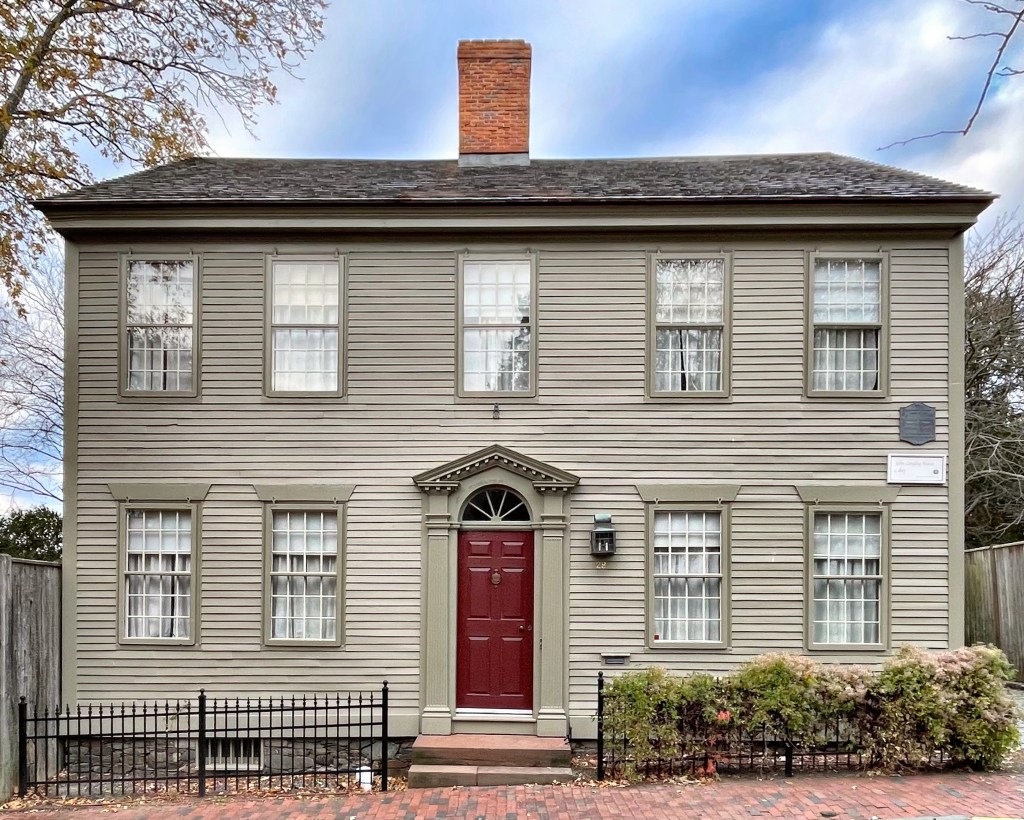
Smack-dab in the middle of Newport, Rhode Island’s dense network of downtown streets, you’ll find Queen Anne Square, a rare bit of open space in a web of alleys and ways. Did you know that this park is only 50 years old? It’s true! In the late 1960s and early 1970s, Newport (and many cities all over New England) were grappling with suburbanization and dwindling tax revenue with people and businesses moving out. Their solution was “urban renewal”, which entailed the razing of buildings and sometimes, neighborhoods which were deemed “blight”. Historic buildings and communities were destroyed with modern planning (high capacity roads and high-rises connected by open space) to take its place. In Newport, this saw the form of America’s Cup Avenue and Memorial Boulevard, which cut through the city to allow for more cars and less-congested side-streets. Years later, planners realized that Newport was without a traditional town common like many New England towns, so they cleared buildings in front of Trinity Church to provide that traditional feeling. At the time, preservationists were trying to save significant buildings, with the Langley House being one of them. This house was set for the wrecking-ball, from Memorial Boulevard’s construction but moved and restored by Newport Restoration in the last hour to the south side of Church Street. Seven years later when Queen Anne Square was built, this house was moved to the north side, saving it once again. This house is a survivor!
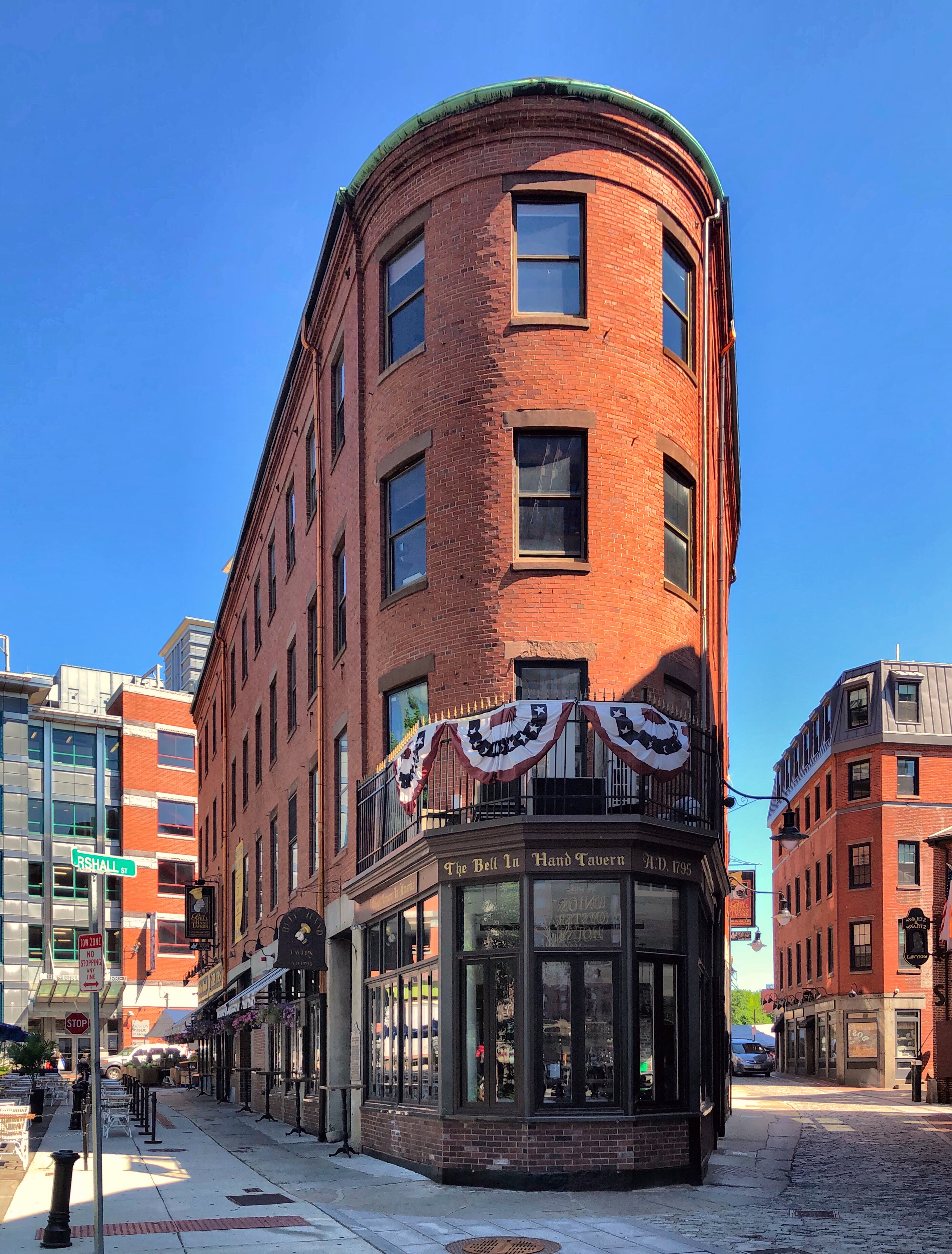
Located in the Blackstone Block of Downtown Boston, this flatiron building encloses Marshall Street on the Freedom Trail, creating a tight, pedestrian-oriented street that once covered old Boston. The Union Block (c.1842) is a Greek Revival commercial block which typifies this network of short, narrow streets which somehow survived Urban Renewal and the coming of the highway in Boston. The longest running occupant of the building was Ward & Waldron Paper Hangings, which from my understanding, made wallpaper for the estates of Beacon Hill which were being built on the other side of town. After successive ownership, atlas maps show the ownership of the building in 1888 conveyed to Massachusetts General Hospital, which still held title to it past 1938. The building is now home to Bell in Hand, an iconic local pub that was founded in 1795 at another location.

 Buildings of New England