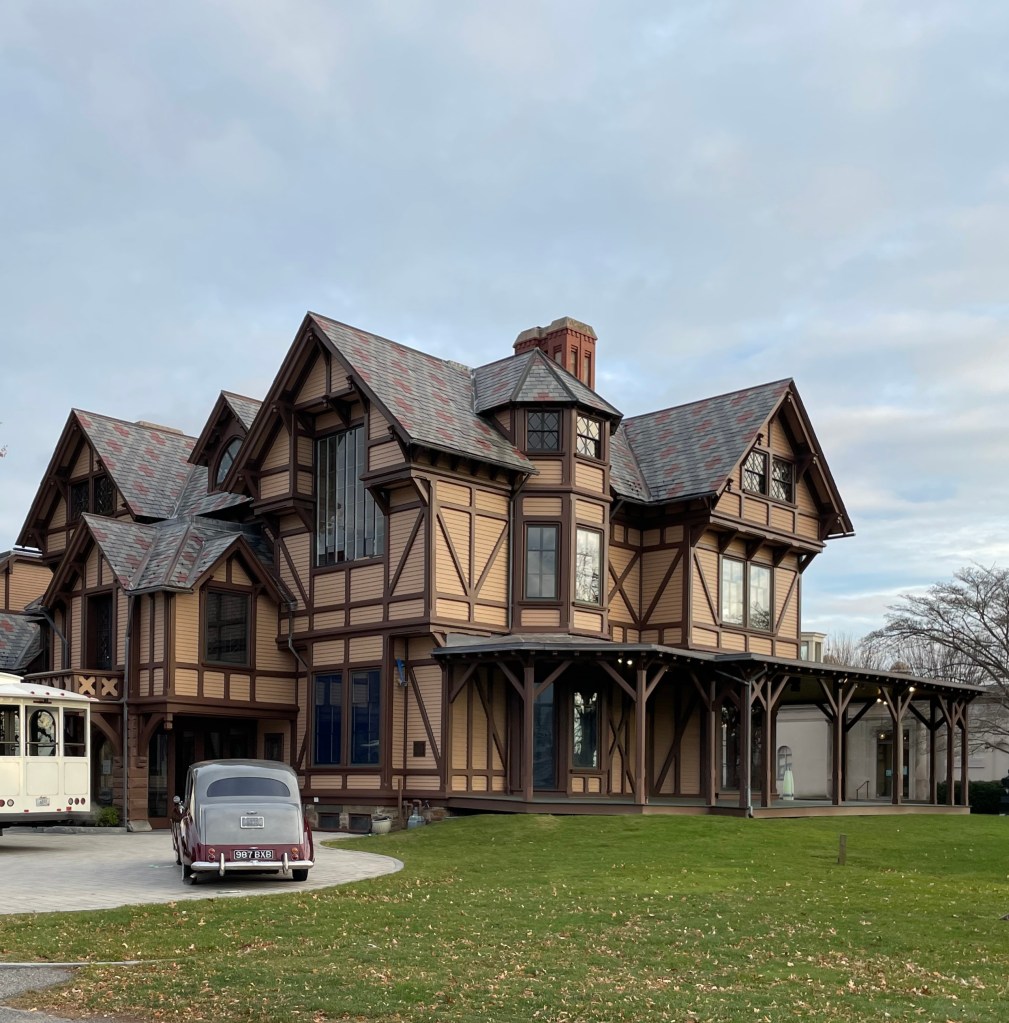
Architects William Robert Ware and Henry Van Brunt designed this parsonage in Easton, Massachusetts for the Unity Church in town (featured previously). The Victorian Gothic house is constructed of polychromatic stone, wood trim, slate and copper roof surfaces, and terracotta finials. The architecture is very well-developed and stands toe-to-toe with the other architectural landmarks in town, just a short walk away.
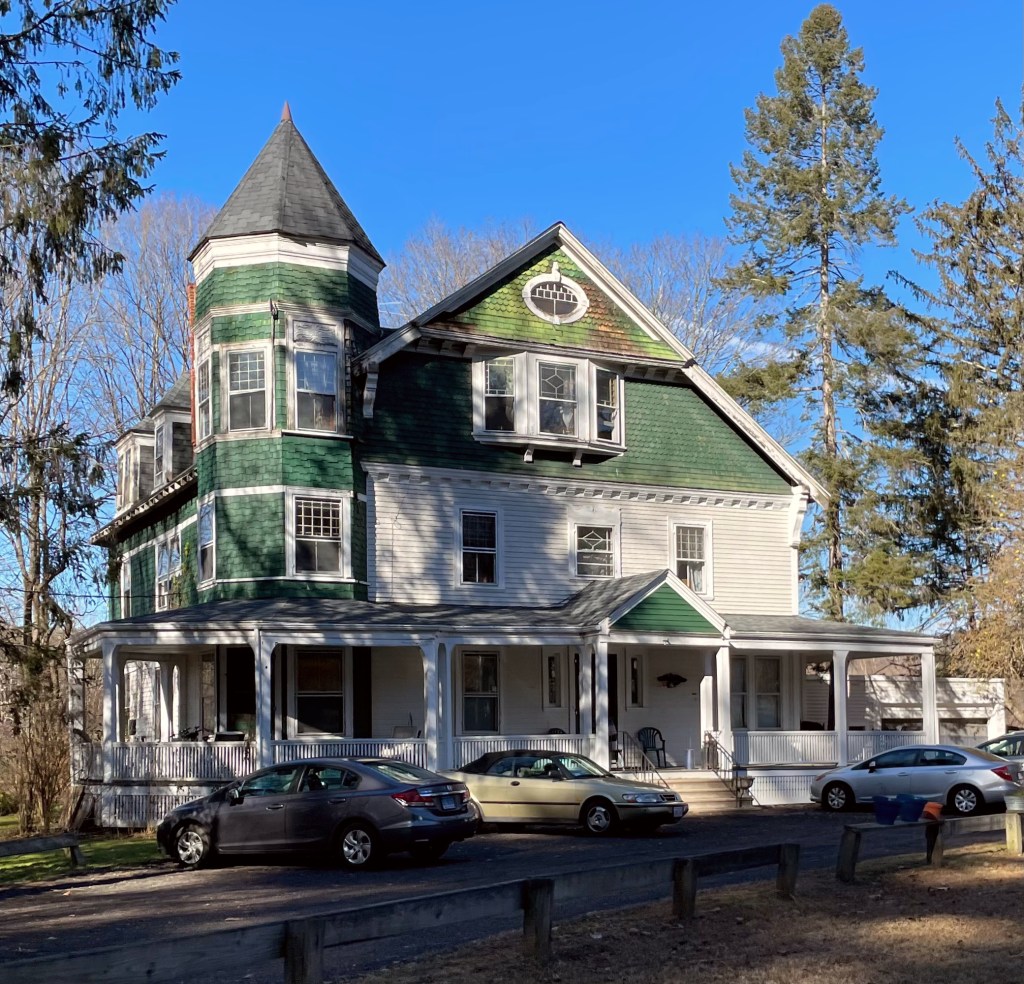
This large Queen Anne Victorian house in Canton Center was built for Benjamin Franklin Case (1861-1931), a banker and businessman who incorporated the town creamery. He made his fortune harnessing the rural character of the village, creating the Canton Creamery, where farmers could package and sell their dairy products to the rapidly growing communities nearby. Case was credited as bringing the telephone to town, with his office in his home serving as a switchboard room. He is also known as the first person in town to own an automobile. After his death, the property was used by his daughter Ruby as a vacation house. After WWII, she realized it was too much house for her to upkeep, and she converted the single family home into apartments.
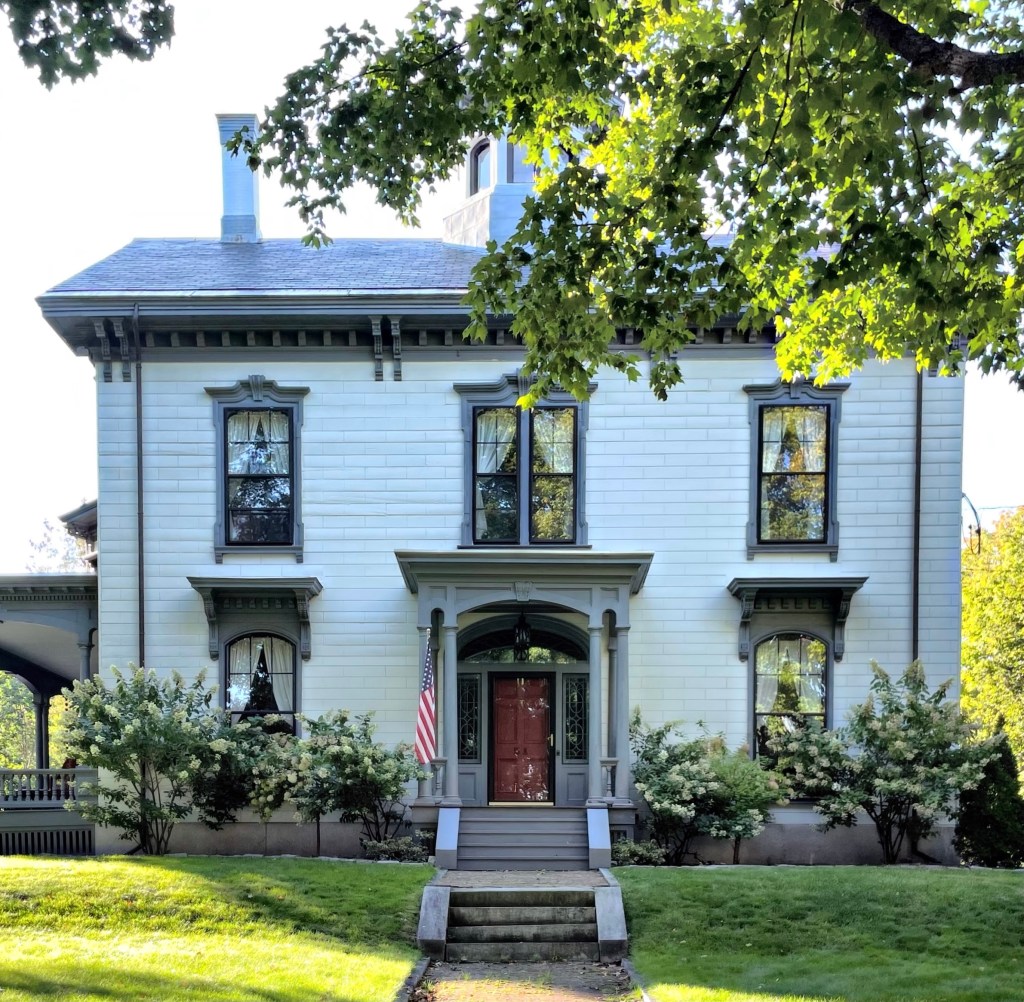
The neighbor to the iconic Thomas Hill Standpipe (last post), this pre-Civil War Italianate mansion predates the water tower and has long been one of the most grand homes in Bangor, Maine. The house was constructed in 1857 for Joseph W. Low, a businessman and trustee of the Bangor Savings Bank. The house he had built is one of eastern Maine’s outstanding Italianate residences, designed by Boston architect Harvey Graves, who was born in Maine. Soon after the Civil War, Graves moved west to California, likely seeking additional wealth from the spurned from the success of the Gold Rush. He appears to have lived out the remainder of his life out west, giving his family in Maine this home. The house exhibits flushboard siding with scored wood to resemble ashlar masonry, gorgeous window hoods and mouldings, and a large belvedere at the roof, which would have provided sweeping views of the Maine frontier when built, atop one of the highest hills in Bangor.
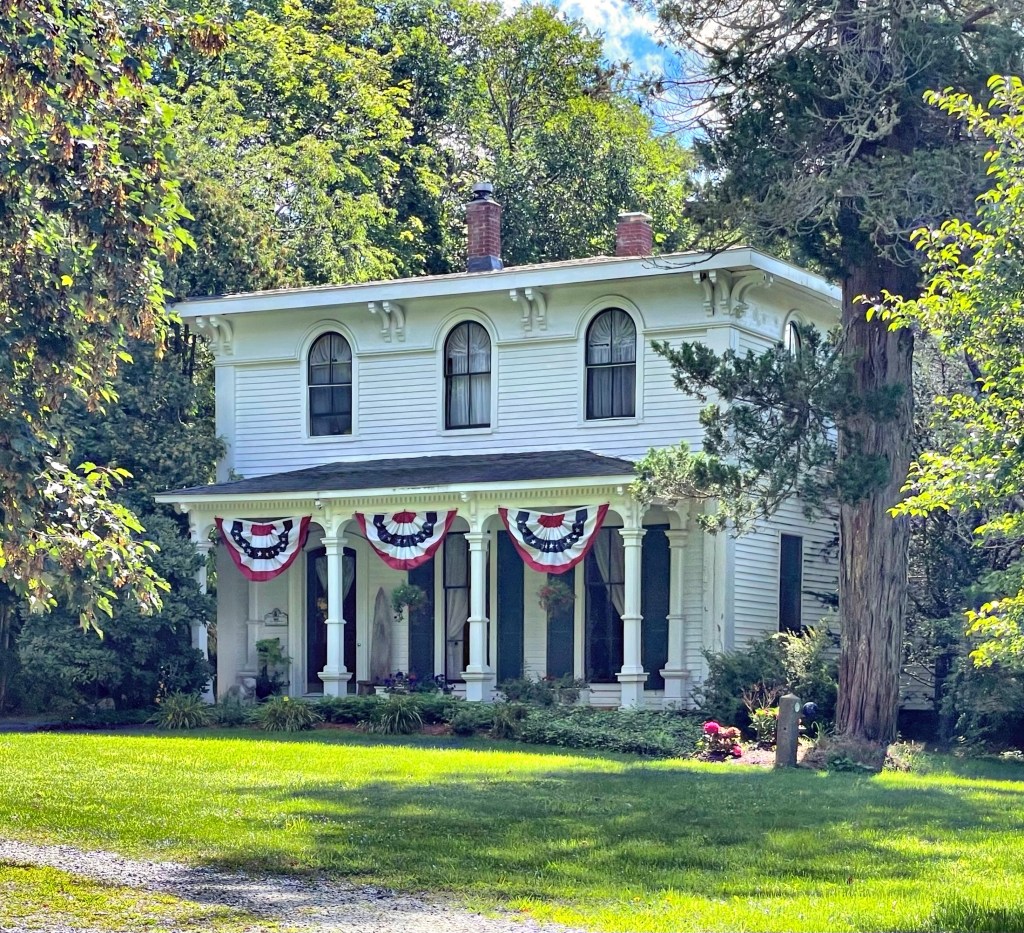
One of the more high-style houses in rural Rochester, Massachusetts, is the Weld-Haskell House. The house was built around 1854 in the Italianate style for a recently widowed Susan Haskell. Susan was the daughter of Jesse Haskell, who was a state representative and served in the War of 1812, and a descendant of one of the town’s earliest colonial settlers. The home remained in the Haskell family until the second half of the 20th century.
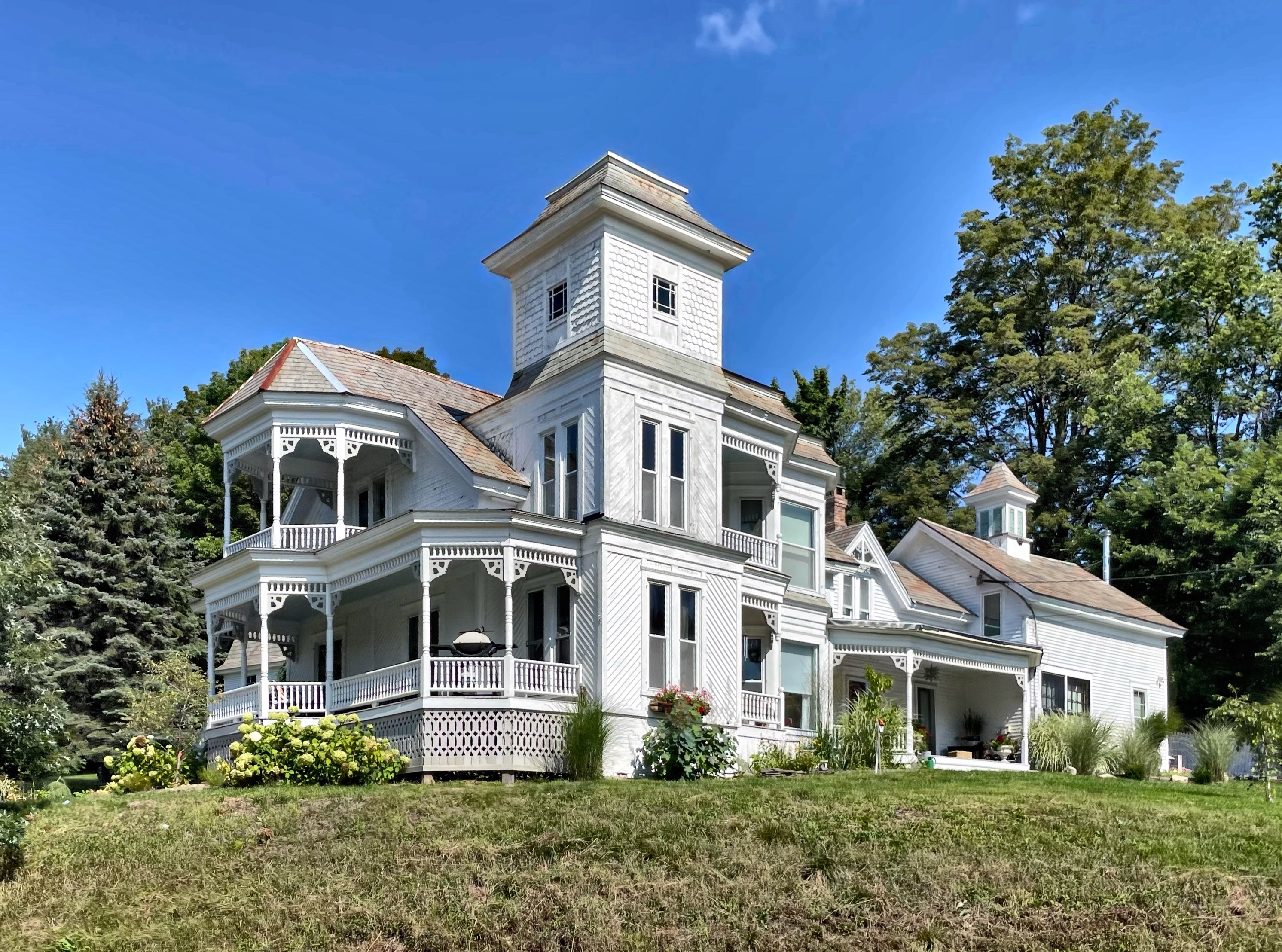
One of the most visually striking homes in little Chester, Vermont, is the Durand House. Sited prominently on a hill, the 1861 home resembles a wedding dress in bright white with intricate spindles that look like lace. The house was seemingly built for Urban Durand, one of the proprietors of the successful Durand Brothers Market in Chester village. The home has an elaborately trimmed full-front porch with a second-story polygonal balcony, and a three-story corner tower with a shallow mansard roof, all possibly later additions. The house stands out in the village, which is largely dominated by classical Federal and Greek Revival houses.
Built in the 1890s by Dr. A.W. Rice, the ground floor of this Queen Anne style house served as the physician’s office, and he lived with his family in the upper floors. The home stands out as a fairly uncommon example of the Queen Anne style in Marion, a town dominated by Shingle style homes in that period. An enterprising Danish immigrant named Viggo V. Petersen, purchased the home and adjacent carriage house in 1921 and opened an ice cream parlor in it. When Viggo V. died in 1941, his son, Viggo C., attempted to carry on, until wartime cream shortages and rationing forced him to close for the duration of the conflict. Thereafter, Petersen’s ice cream resumed production and remained a Marion fixture until its final closing in the 1970s. The home is now occupied by two offices, and the former carriage house is home to the Mary Celeste Wine and Whiskey Library, a fun place that educates about wine and whiskey, offering tastings and events.
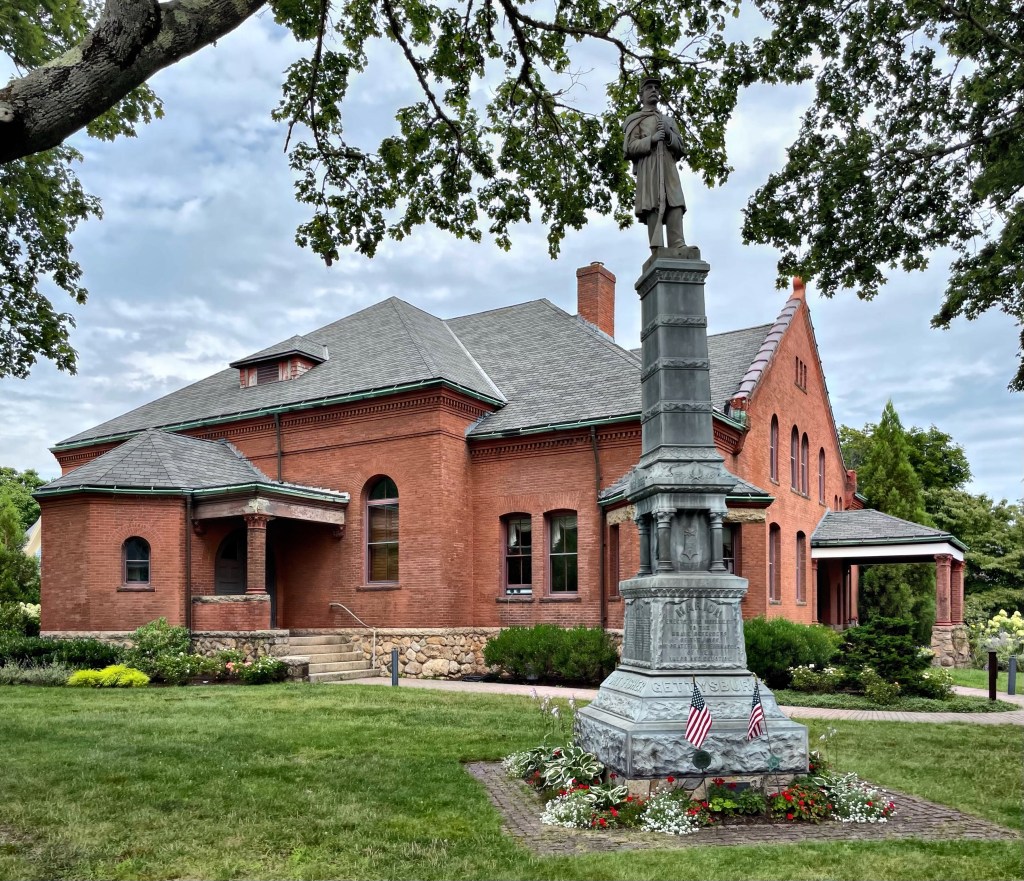
You know a town is fancy if it has its own music hall! The Marion Music Hall was (you guessed it) largely funded by none other than Elizabeth Taber the prestigious benefactor of Tabor Academy, the Library, and more in her hometown. This building was first envisioned after Ms. Taber was dismayed by the poor quality of “worldy theatricals” that were taking place in the only such venue at the time, the Congregational Chapel. Her last gift to the town via a provision in her will, allotted money for the construction of a “suitable building for a lecture and music hall”, costing a total of $23,000. Her go-to architect, William Gibbons Preston, was hired to design the Music Hall, which is a pleasing late-Victorian, Queen Anne-Romanesque Revival building constructed of brick. The Music Hall’s lawn was deemed worthy as the site of a handsome cast-iron Soldiers Monument which was dedicated during the summer of 1894 and remains on the site today.
Summer is here and I am missing my favorite place to explore, Oak Bluffs on Martha’s Vineyard. The town is sleepy most of the year, but in the Summer, the place explodes with summer residents and tourists, providing such a lively and diverse atmosphere. One of the most beautiful of the cottages in the Wesleyan Grove campground is the Kickemuit Cottage, built in 1869 for a family from Rhode Island. They so-named the cottage after the Kickemuit River which runs from Massachusetts through Warren, RI and spills out into the Mt. Hope Bay. The story goes that this double cottage was actually just a single peaked home until it was combined with another giving it the double-peaked appearance we see today. The cottage retains the turned posts, delicate gingerbread detailing, and the lancet windows and doors. Swoon!
Side note: If anyone has a cottage in Oak Bluffs that they’ll let me rent, I would love to be in touch!
Located in the Foss Beach section of Rye, NH, this Victorian summer cottage stands out among the later new construction of lesser detailed and quality late 20th century homes seen here lately. The home, known as “Tower Cottage” was built at the end of the 19th century and exhibits Victorian Gothic elements with a massive center tower. The steep wood shingle roof is punctuated by two rows of delicate dormers which add detail and views to the ocean. The massive wrap-around porch is also a must for such a prime location fronting the Atlantic Ocean!
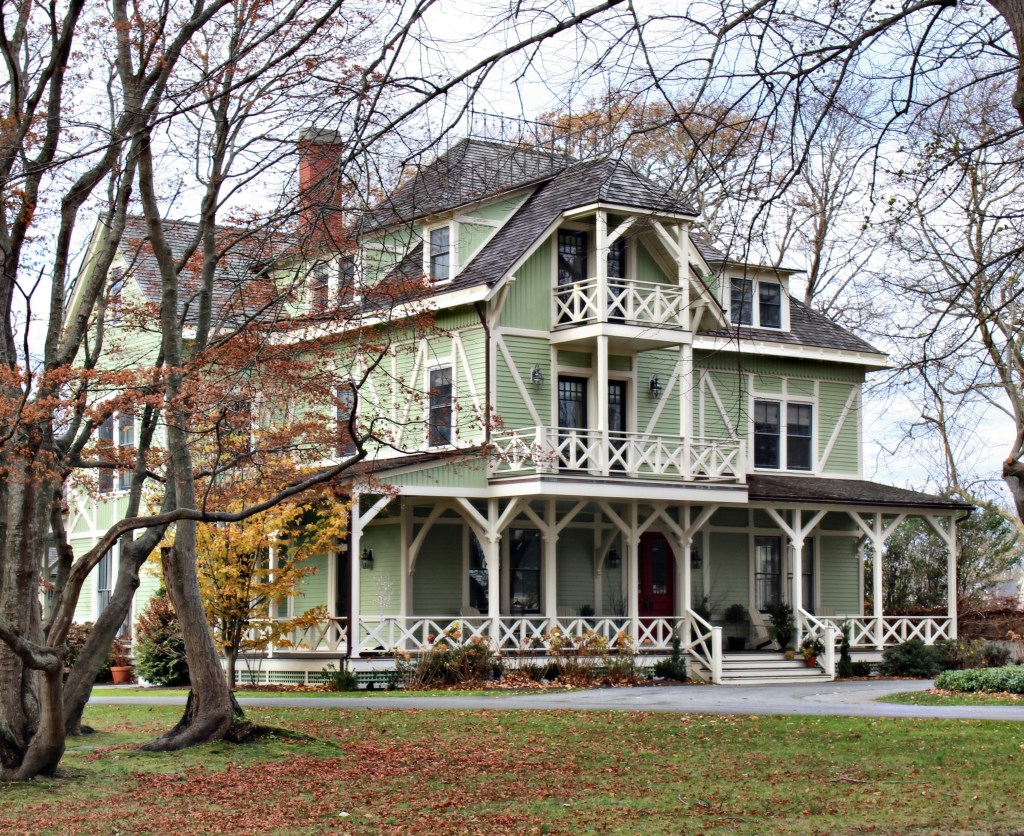
This house was built and first occupied by George G. Lougee, owner and proprietor of the Sea View House Hotel (demolished) across the street. Before building his own hotel, Lougee was a clerk at the Atlantic House, another summer resort. Lougee eventually worked his way up and ended up managing that hotel. Lougee’s success managing the Atlantic and later, the Farragut, enabled him to pursue his own enterprise and build his Sea View Hotel. When Lougee sold the Sea View hotel, he also sold this house with it. His former Stick style home was then converted to additional rooms at the hotel until it closed in the 20th century.