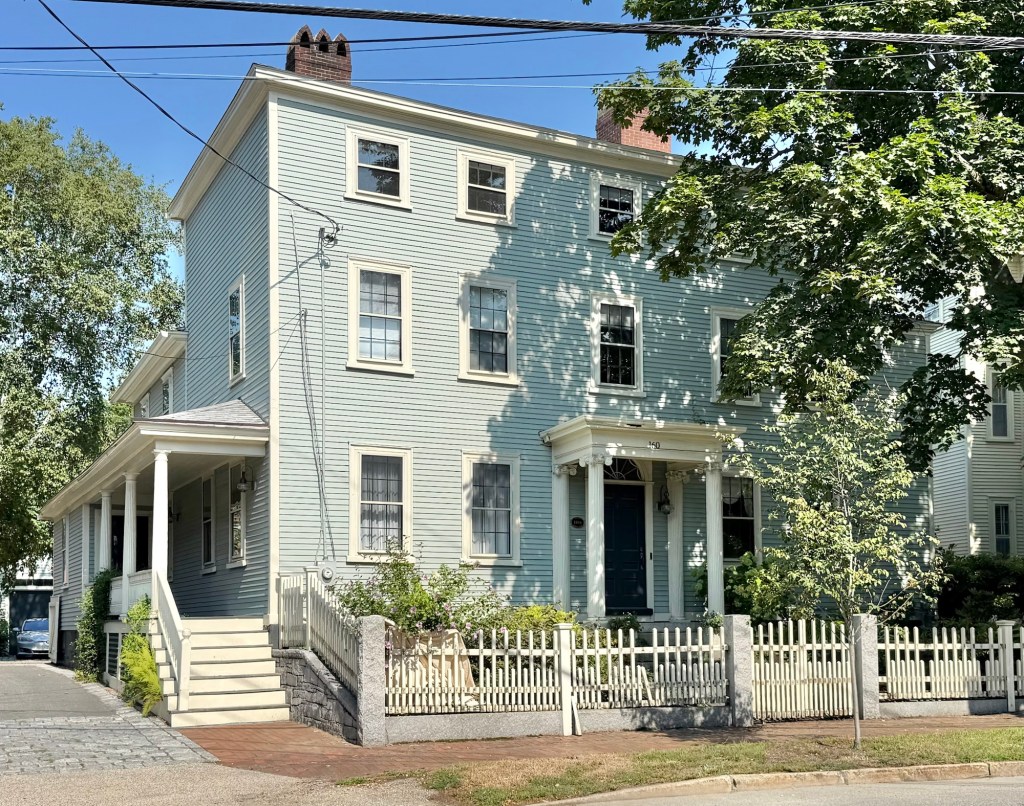
Samuel Larkin House // c.1804

Before wealthy Portsmouth merchant and auctioneer, Samuel Larkin (1773-1849), built his brick Federal style mansion (last post), he lived in this more traditional Federal style house next door at 160 Middle Street. The three-story mansion was occupied by Samuel Larkin, his wife, Ann, and seven of their children who lived to adulthood, before the War of 1812, when he made his fortune auctioning goods stolen from British vessels by Portsmouth privateers. When he built his home next door, he retained ownership of this home, and rented it out to boarders until financial hardship in the late 1820s required that he sell his mansion and move back here to live out his retirement. The facade of the Samuel Larkin House is symmetrical with a central entrance door with fanlight and pilasters under a flat-roof portico supported by fluted columns with scrolled capitals.
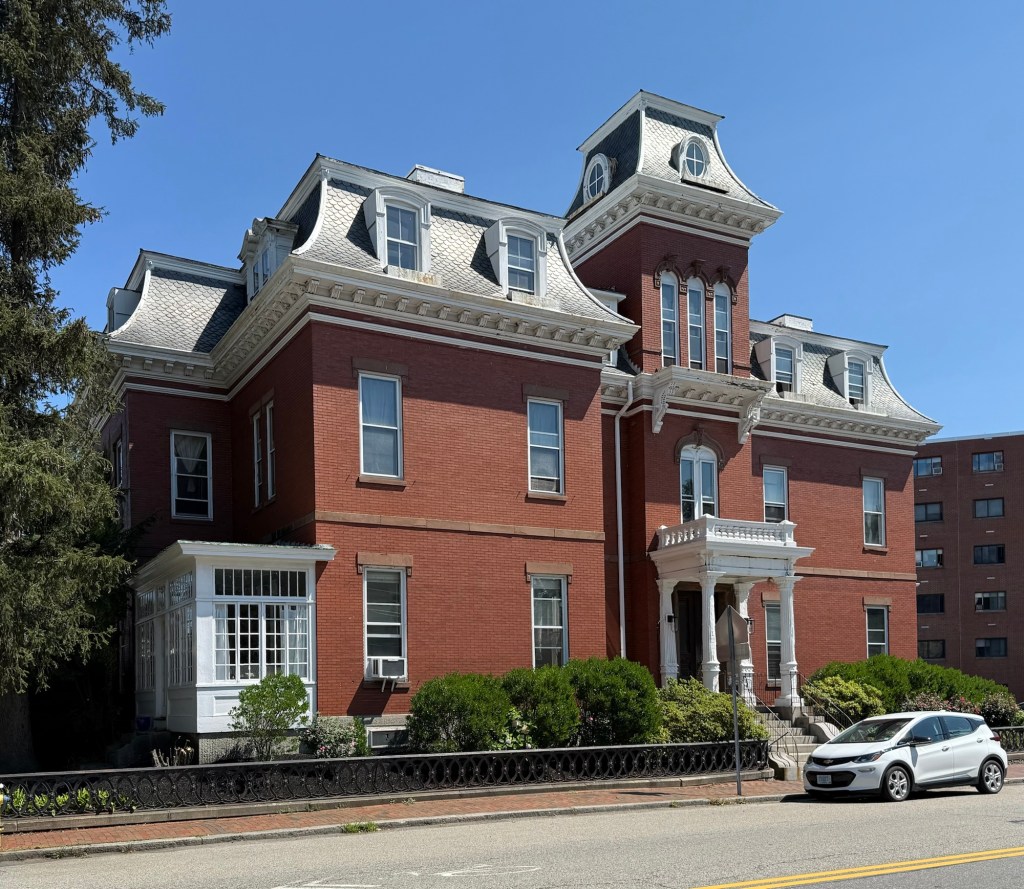
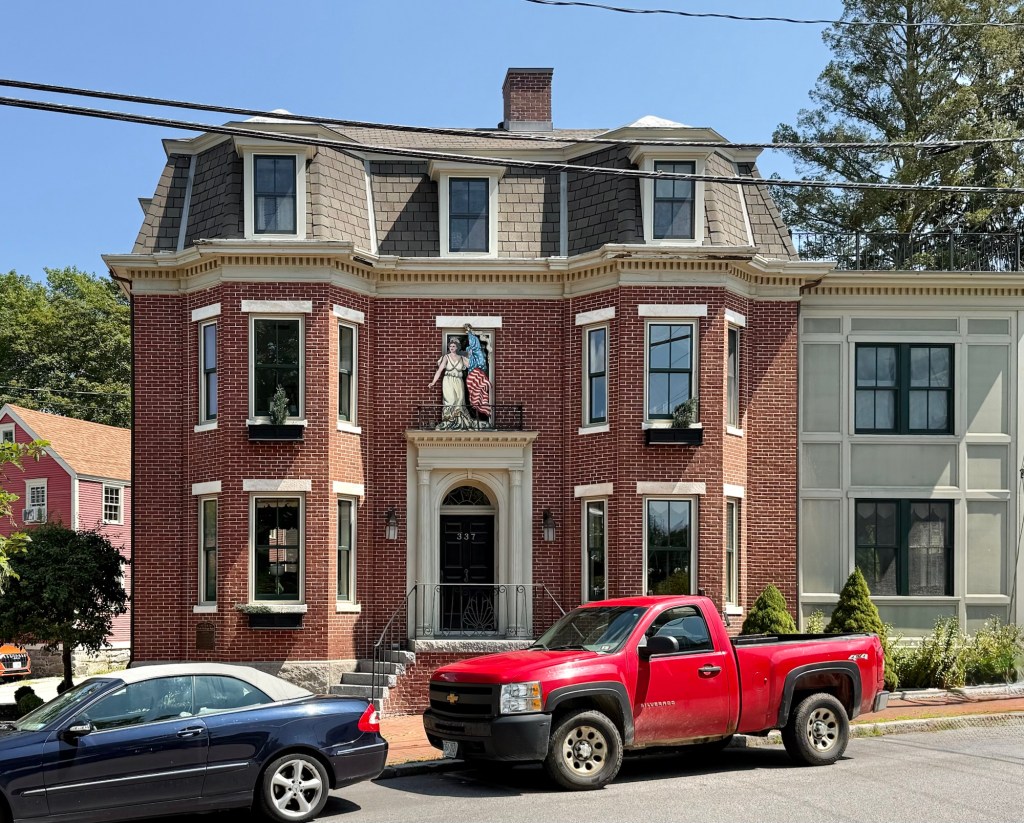
Jones-Sinclair House // 1865

One of the finest Victorian-era residences in Portsmouth, the Jones-Sinclair House at 241 Middle Street, is a stately and oversized Second Empire style mansion built in the location of an even more significant home. Originally on this site, at the convergence of two busy streets, Thomas Haven, a wealthy merchant and half-brother to William Haven who lived across the street, built an impressive brick, Federal style mansion here in around 1818. Admiral George Washington Storer, Commander in Chief of the Brazil squadron of the U.S. Navy, later purchased the Federal style octagonal house. Mary Washington Storer, inherited the house after her father’s death in 1864, and she with her husband, Albert L. Jones, demolished the old octagonal-shaped house around 1865-1867, replacing it with this mansard-villa style mansion. By about 1890, Charles A. Sinclair and his wife, Emma, is said to have received the house as a gift from her uncle, the famous Portsmouth industrialist and politician, Frank Jones

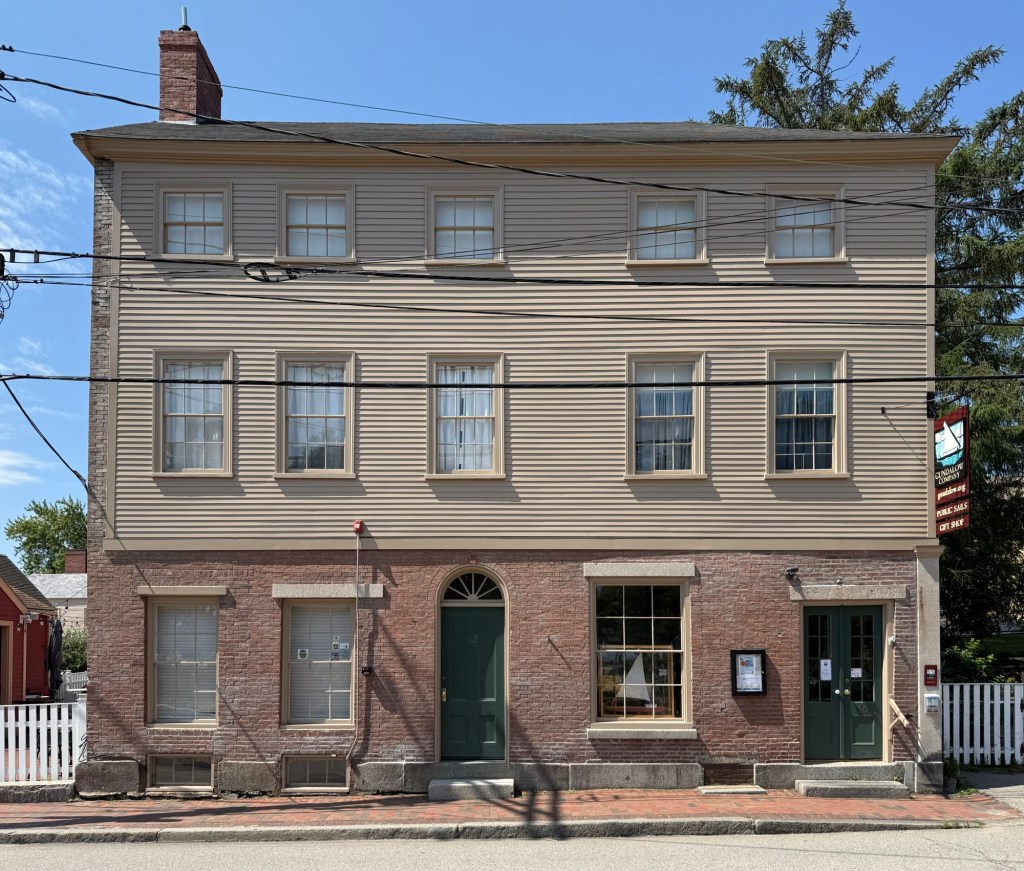
Jefferson House and Stores // c.1816

The Jefferson House and Stores on Marcy Street sits near the working port and harbor of Portsmouth, New Hampshire, as a historic Federal style mixed-use building. The structure dates to the early 19th century and consists of a brick first floor and clapboarded upper stories. Likely due to coastal flooding during storms, the brick ground floor with slightly raised granite foundation would provide some relief from floodwaters getting inside the building. The shortened windows at the third floor, fanlight over the main entrance, and form with shallow hipped roof, are all hallmarks of the Federal style. The building is today owned by Strawbery Banke and rented out to the Gundalow Company, a non-profit that seeks to, “protect the Piscataqua Region’s maritime heritage and environment through education and action.”

John E. Colcord House // c.1870

While Portsmouth, New Hampshire, is arguably best-known for Georgian and Federal style houses of the 18th and early 19th centuries, there are some great examples of Victorian style residences built after the Civil War to be discovered. This brick Second Empire style residence on Pleasant Street was built around 1870 and originally owned by Ebenezer Lord (1788-1877), who lived elsewhere in Portsmouth, likely gifting this home to his daughter, Susan (Lord) Colcord, and her husband, Charles Colcord. Both Charles and Susan died one year apart in 1872 and 1873 respectively, and the property was inherited by their son, John. John Edward Colcord worked as the Clerk at the Portsmouth Navy Yard. The building has a Mansard roof with overhanging eaves, denticulated cornice, and three shed-roof dormers at the facade. Walls are brick and rest on a granite foundation, with a later, wood-frame side addition that employs similar design details of the main house. 

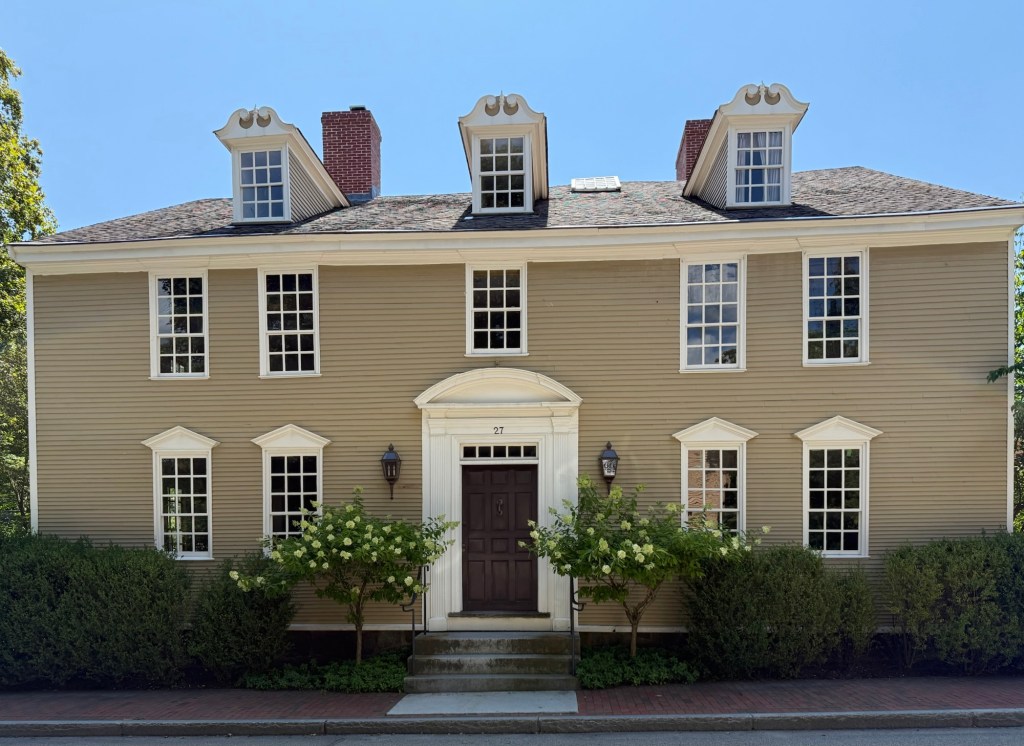
Joshua Wentworth House // 1770

The Joshua Wentworth House at 27 Hancock Street in Portsmouth, New Hampshire, is a high-style Georgian residence built before the American Revolution, and was almost demolished in the name of “urban renewal.” The house has a side-gable roof with three broken-pediment dormers and a wood paneled door with segmental entablature, pilasters, and a five-light transom. Joshua Wentworth (1742–1809) the namesake of the house, was a grandson of John Wentworth (1671–1730), who had served as an early Lieutenant Governor for the Province of New Hampshire, and was himself, a merchant and State legislator. The house was originally located in the North End of Portsmouth, but in the 1970s, urban renewal and local politicians sought to raze portions of the town to “revitalize” the port town. If only they knew that Portsmouth would be the largest tourist draw in the state just for people to see historic, walkable neighborhoods! Businessman Harry Winebaum acquired the house and sought to preserve it. The solution: move the house by barge to the south side of town near Strawberry Banke. Luckily for us, the house was moved in 1973 and was restored. It is a private residence.

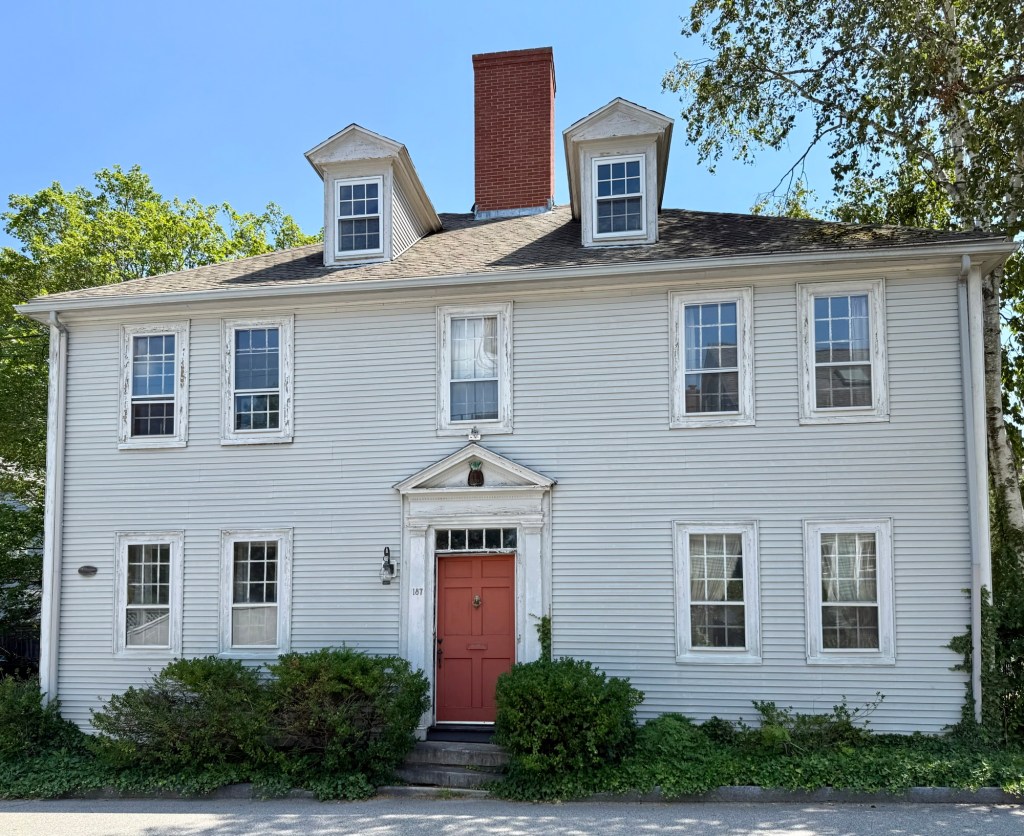
Tredick House // c.1802

The Tredick House is located at 187 Marcy Street in Portsmouth, New Hampshire and was built in 1802 for Captain Jonathan Martin Tredick (1777-1803) and his new wife, Martha Marshall on land gifted to them by Jonathan’s father, William Tredick. In a tragic shift of fortune, Captain Jonathan Tredick never got to live in his new house as he died at sea, with accounts differing, either from fever or being swept overboard. At the time, Jonathan and Martha had two children, 2 year-old Catherine Marshall Tredick (1801-1822) and newborn Jonathan Marshall Tredick (1802-1875). Martha, a sudden widow at the age of 26 with two children, was aided by her family and that of her late husband, and operated a store nearby to supplement her income until her death at home in 1872, she was 96 and never remarried. The late Georgian style house features a hipped roof with central chimney, pedimented dormers and a pedimented entry and 9-over-six sash windows on the house.

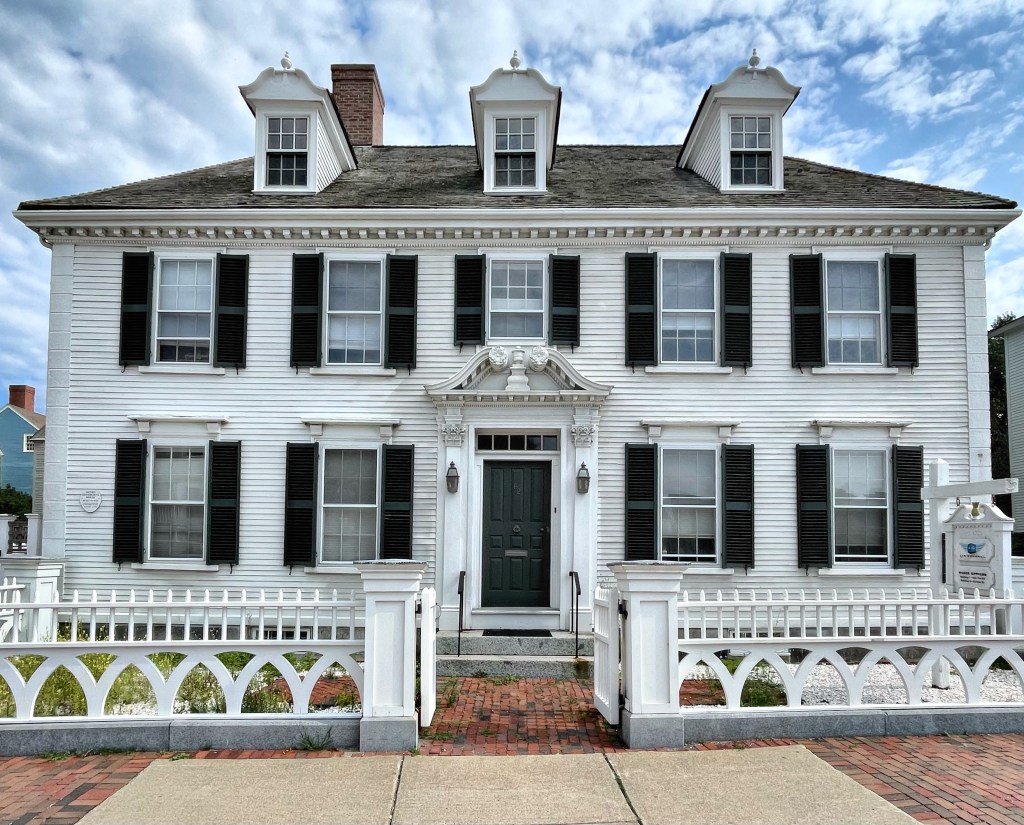
Henry Sherburne House // c.1770

This house in the Hill District of Portsmouth, NH was built sometime between 1766 and 1770; however a sign posted on the house indicates an earlier date of 1725. Regardless, the house is one of the best-preserved Georgian homes in the city. The colonial-era home was apparently built for a Henry Sherburne, who was a member of some of New Hampshire’s leading families. By the 1900s, the property was the only in the city with a surviving scrolled pediment doorway from the period. Like other colonial homes in the old North End of Portsmouth, it was barely saved by the bulldozers and urban renewal when it was moved in 1972 to its present site.