First Baptist Church of Stoneham // 1892

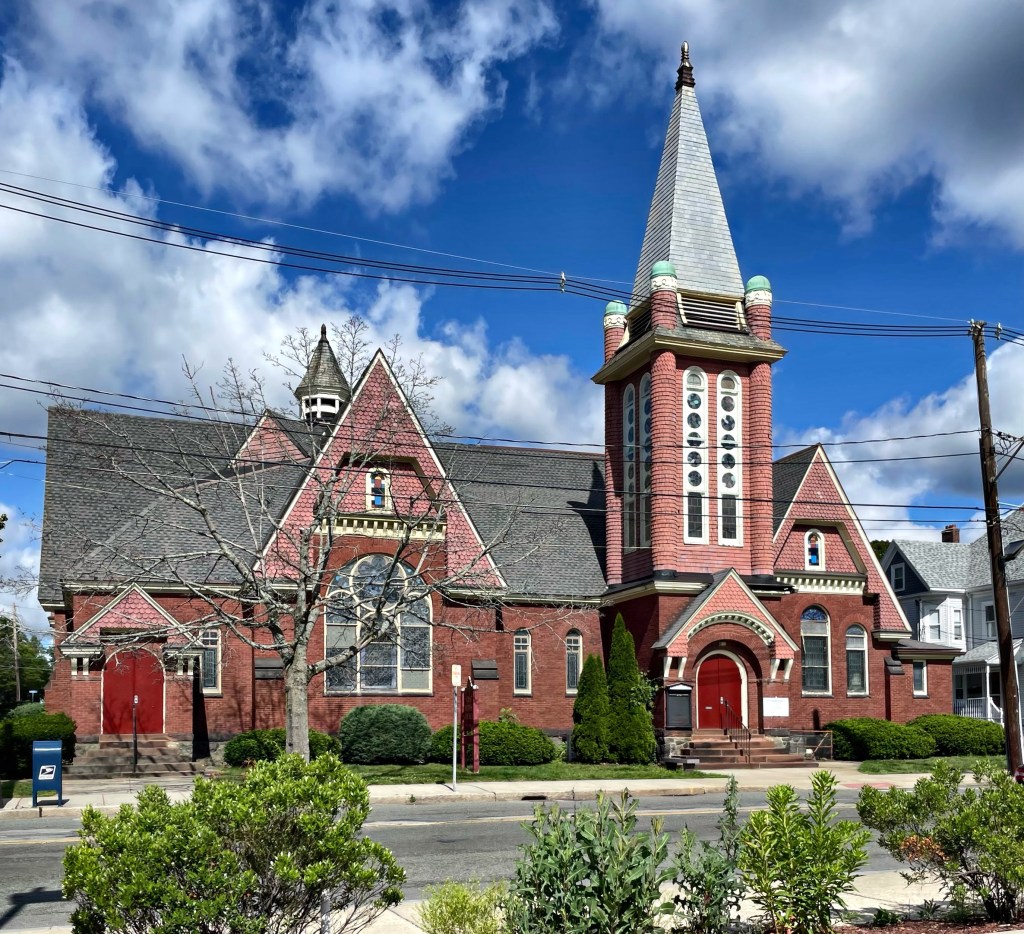
In 1891, the Baptist Society of Stoneham, Massachusetts unveiled that it had acquired funding and approved the plans for its first purpose-built church building in town. The organization met in a shared chapel in town since its founding in 1870. The new church would be unique in the Boston suburb as the only in town to be of the Queen Anne/Shingle style. A prominent site on South Main Street was acquired and work began in 1892 to erect the new house of worship. The design of the church is credited to the firm of L.B. Volk & Sons, a firm who specialized in church buildings with commissions all over the country. The church is complex in plan and combines brick and shingle siding in its construction with a prominent two-story tower with rounded corners and stained glass rondels (round windows).
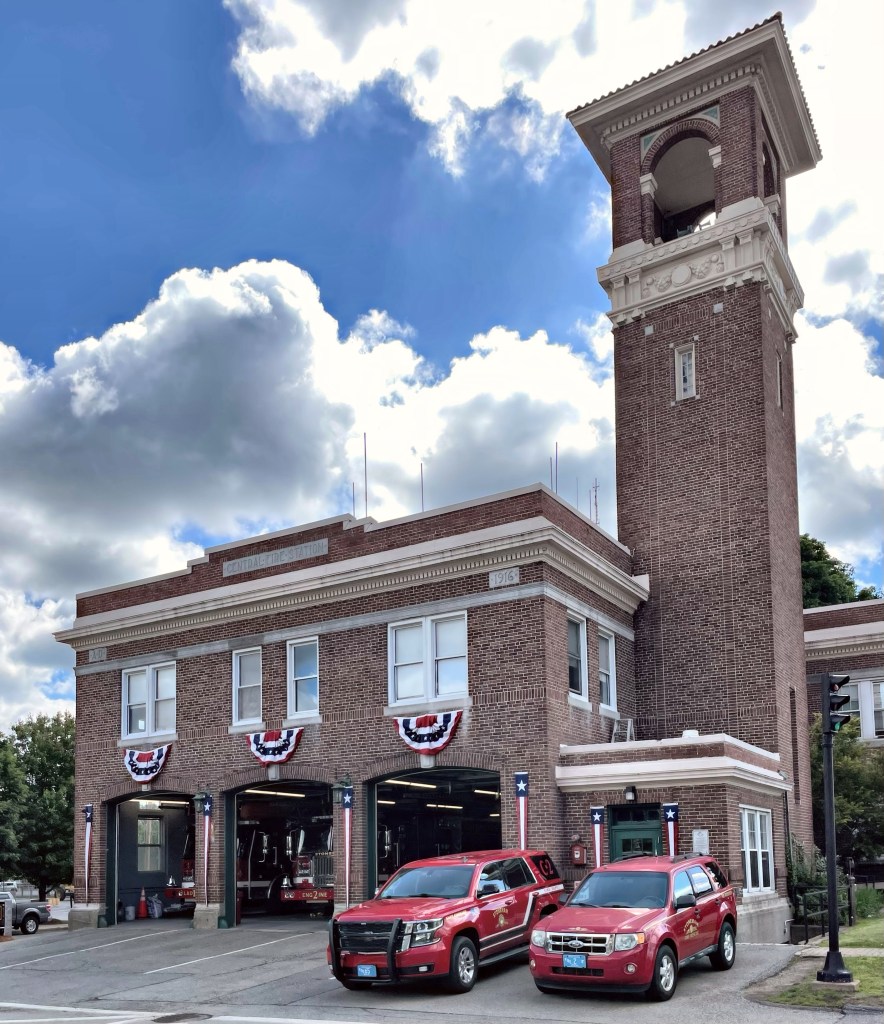
Stoneham Fire Station // 1916

Fire stations are some of the most recognizable and iconic buildings in any city or town, but to find historic fire stations is becoming less and less common as larger trucks and facilities put a strain on the older buildings. The two-story brick Renaissance Revival fire station in Stoneham, Massachusetts was built in 1916 and continues to serve as the town’s central fire station. Its most prominent feature is its four-story hose drying tower, which is reminiscent of Italian Renaissance-era towers. The building was designed by architect Penn Varney and has been well-maintained by the town for over 100 years.

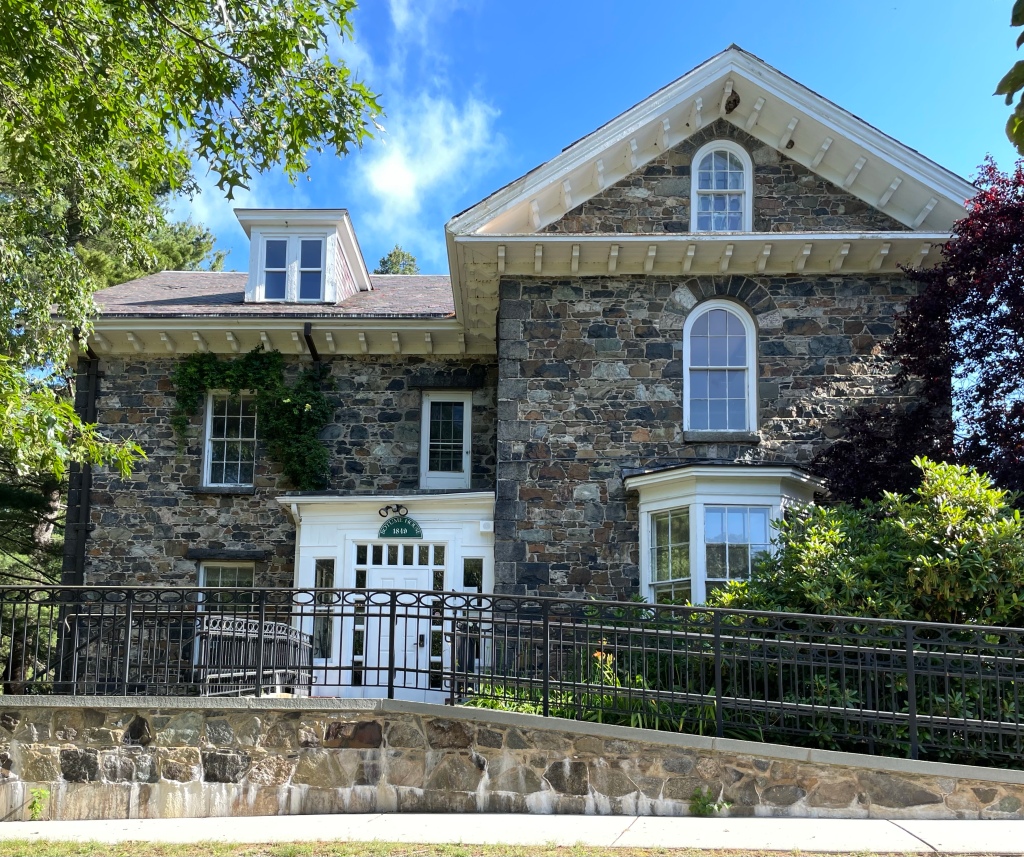
John Bottume House // c.1858

The John Bottume House in Stoneham, Massachusetts was built c.1858, this stone house was one of several built along the shore of Spot Pond by a Boston businessman as a retreat, and is the only one to survive. The coursed granite residence is an excellent and high-style example of the Italianate architecture style. It is owned today by the Massachusetts Department of Conservation and Recreation, and houses the visitors center for the Middlesex Fells Reservation.

Charles Copeland House // c.1875

Spot Pond, now encompassed by the Middlesex Fells Reservation, became a site of country retreats for Boston businessmen in the mid-late 19th century. One of the property owners was Charles Copeland, a confectioner and ice cream dealer, had ice houses on Spot Pond where he harvested ice for production into ice cream in Boston area shops. Copeland’s main house was located near the ice houses at the eastern shores of the pond, but this home was also owned by him in the 1870s. This residence was possibly rented out by Copeland or occupied by one of his many children. It remains a great example of the Stick and Shingle styles of architecture. The residence is maintained as part of the Massachusetts Department of Conservation and Recreation’s property in the Fells Reservation park.

Tudor Barn // c.1845

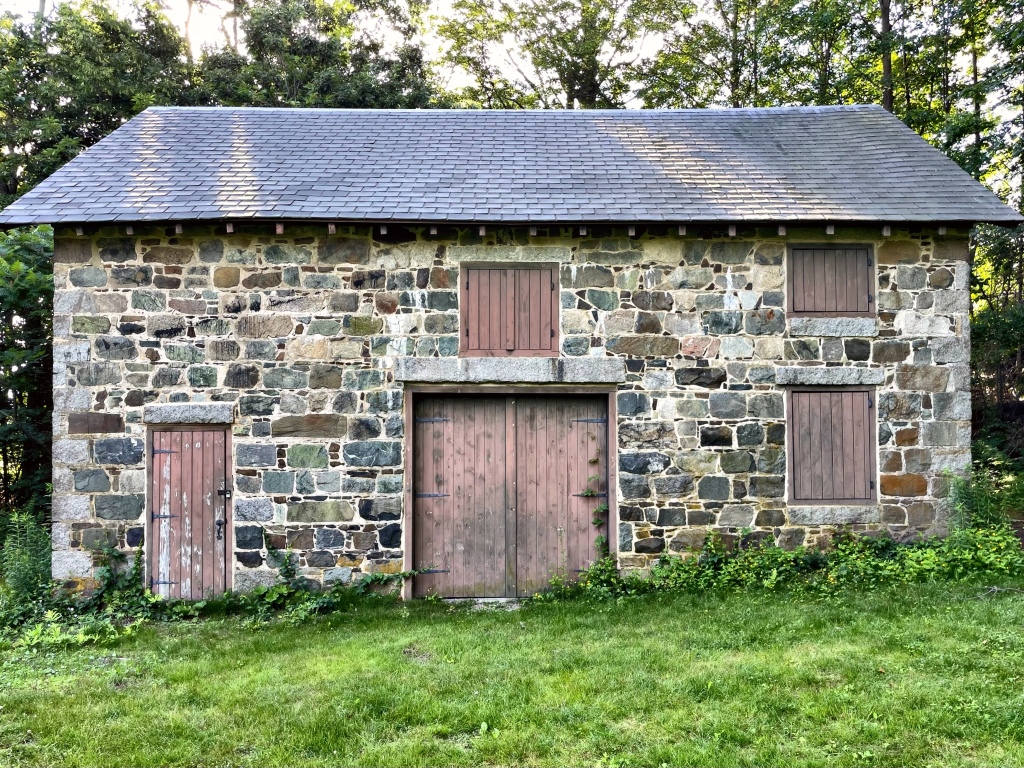
Built in the 1840’s as a carriage barn, and once attached to a nearby mansion now gone, this barn sits near the eastern shores of Spot Pond, a major feature in the Middlesex Fells Reservation, just north of Boston. The barn sits in Stoneham, Massachusetts, and was a part of Frederic Tudor’s rural estate out in the “country”. Frederic Tudor is best known as Boston’s “Ice King”, he was the founder of the Tudor Ice Company and a pioneer of the international ice trade in the early 19th century. He made a fortune shipping ice cut from New England ponds to ports in the Caribbean, Europe, and as far away as India and Hong Kong. After the turn of the 20th century, many of the buildings surrounding Spot Pond were razed as to secure the watershed, protecting the surrounding town’s drinking water. Frederic Tudors large estate was razed, but the barn survived. Years of deferred maintenance and lack of preservation by the late 1990’s made the old barn threatened with demolition. This was exacerbated by a fire damaging the roof and in 2003, a wall collapsed. Local preservationists rallied together to acquire funding (both private and public grants) to restore the building. It remains a highlight on the walks around Spot Pond and Middlesex Fells Reservation, and is a visual link to the earlier days in what was once remote “Boston”.

Spot Pond Gatehouse // 1900

The Middlesex Reservoir and Spot Pond are located just north of Boston and have long been a little piece of the outdoors near the heart of New England’s largest metropolitan area. In 1894, the Massachusetts Legislature established the Metropolitan Parks Commission, which was endowed with the authority to acquire, maintain, and make recreational spaces available to the public. By 1900 the new commission had acquired 1,881 acres for the reservation. Part of this reservation, Spot Pond, is a natural water feature that for a number of years was integrated into the Boston area public drinking water supply, servicing the towns of Stoneham, Melrose, and Malden with drinking water. As part of this, gatehouses were built with hardware to open and close the pipes delivering the water to the adjacent towns. This gatehouse is in Stoneham was built in 1900 by the architectural firm of Shepley, Rutan & Coolidge, to not only protect the machinery inside, but to beautify the parkland, then maintained by the Metropolitan Parks Commission. The Renaissance Revival style building is today surrounded by a tall chain link fence, which really diminishes its presence in the landscape (but it does help prevent graffiti).

Barncastle // 1884

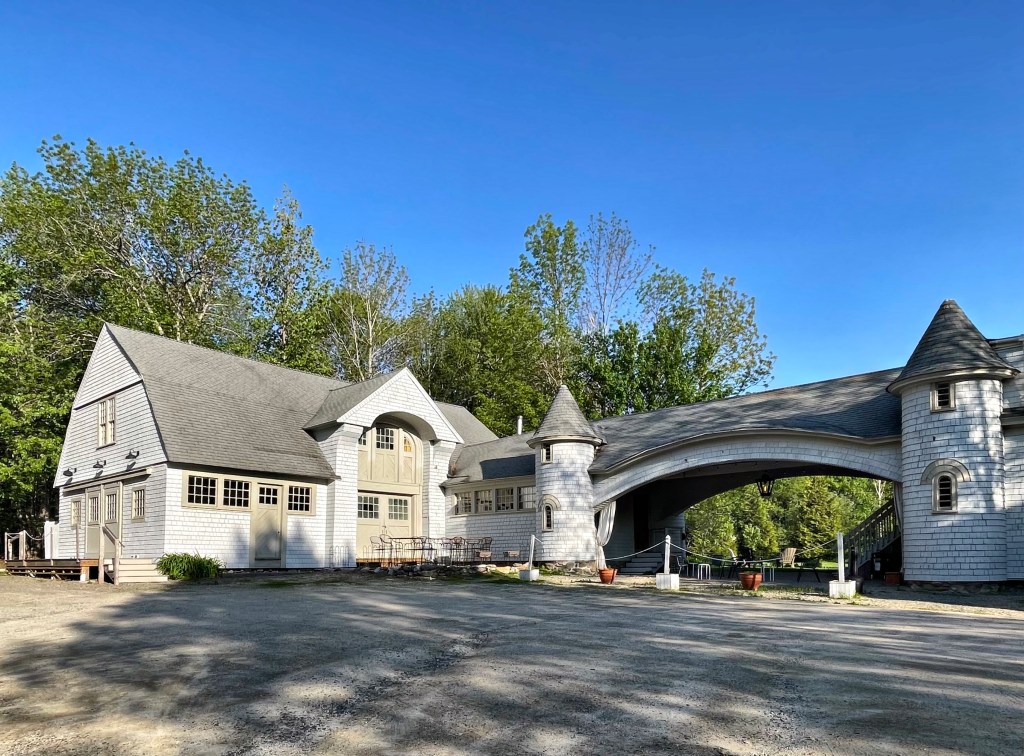
Barncastle, located in the Town of Blue Hill, Maine, is an elaborate and distinctive house. Designed by George A. Clough and built in 1884, the building is a sprawling complex in the Shingle style with additional eccentric details. As Blue Hill and other coastal communities of Down East Maine saw popularity as summer colonies of wealthy city-dwellers flocking to the rugged coastline, many new residents either built new “cottages” or renovated older (often ancestral) homes. Effie Hinckley Ober (1843-1927) who was born in town, married Virgil P. Kline, personal attorney to John D. Rockefeller, and for thirty years worked as attorney for the Standard Oil Co. of Ohio. Effie founded the Boston Ideal Opera Company in 1879 and traveled with the group extensively, retiring in 1885, upon that time, she would move into Barncastle for summers (then named “Ideal Lodge” after her opera company). In 1884, before her retirement, Effie hired her childhood friend, architect George A. Clough, who was born in Blue Hill and worked in Boston, to completely redesign her ancestral home. Clough’s design engulfed a smaller Cape Cod-style house owned by Effie’s mother Mary Peters Hinckley Ober Atherton, a descendant of early Blue Hill settlers, creating an absolutely elegant Shingle-style summer cottage. The house is highly visible on a main street, but what many do not see is the arch-and-turret link between kitchen wing and carriage barn. “Barncastle” is now home to an elegant inn and restaurant!

Parker House // 1814

Wrapping up this series on a tour of buildings in Blue Hill, Maine, we have two stunning old homes left! 

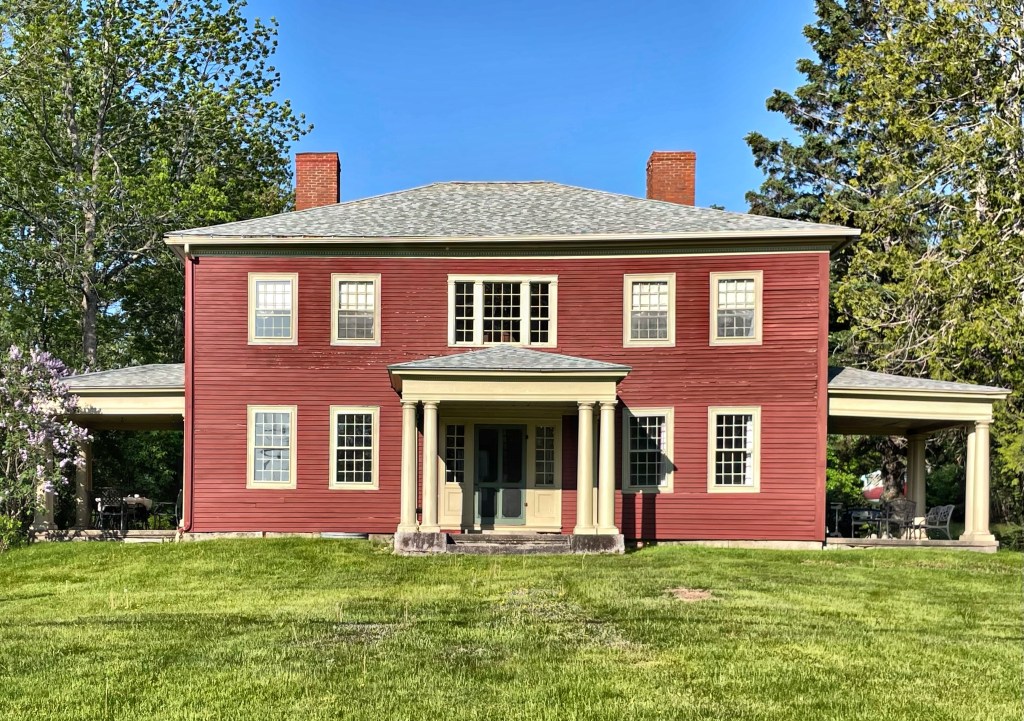
This landmark Federal style house was built sometime between 1812 and 1816 by Robert Parker, whose wife was a daughter of Joseph Wood, one of the first two white settlers of Blue Hill. The home is significant not only architecturally, but for its connections to a number of old settlers to Blue Hill and their families.

By the turn of the 20th century the farming, mining and granite producing town of Blue Hill had been discovered. Writers, artists, musicians, and wealthy urban families from all over the East Coast found inspiration or retreat in many coastal Maine communities including Blue Hill, building “cottages” to summer at. Not all those who arrived to Maine were ‘from away’, as many built new or renovated their old ancestral homes to be occupied when seeking the peace and tranquility of coastal Maine. The Parker House was no different. In 1900, it was renovated in the Colonial Revival style as a summer home for Frederick A. Merrill and his wife, Elizabeth, residents of Boston. The couple hired George A. Clough, who worked as the first City Architect of Boston, but grew up locally in Blue Hill. Mrs. Merrill was descended from Mrs. Robert Parker’s sister. The current owner, the Merrill’s great-grandson, has undertaken a restoration of the house which pays homage to its Colonial Revival past. The stunning house can even be rented!

Elwin Cove // 1908

While Blue Hill has historically been a summer colony for wealthy city-dwellers to escape to experience the beauty of Maine, it has never gotten the coverage as Bar Harbor or the other Mount Desert Island towns. Many of Blue Hill’s summer cottages are more refined and hidden away amongst the trees, and that is how the town likes it, unpretentious. I was lucky enough to take a wrong-turn and stumbled upon this gem of a cottage between the Blue Hill village and East Blue Hill, I had to take a photo! Upon further research, the rambling cottage was built in 1908 for Ellen and Edward J. Brooks of New Jersey. The cottage was named Elwin Cove, possibly as a merge of their children’s names ELinor and WINfred.

East Blue Hill Library // 1920

Every village needs a library, and East Blue Hill is no different! Without easy access to the main Blue Hill library, a group of “willing workers” amassed a collection of books with the hopes to donate to a future village library organization. A campaign to build the present building began in 1914 with the acquisition of land adjacent to the village post office, with major fundraising undertaken in 1917. The building, completed in 1920, was designed by John W. Merrow, a New York City theatrical architect and is an uncommon example of a small, Arts and Crafts style library in the state of Maine.