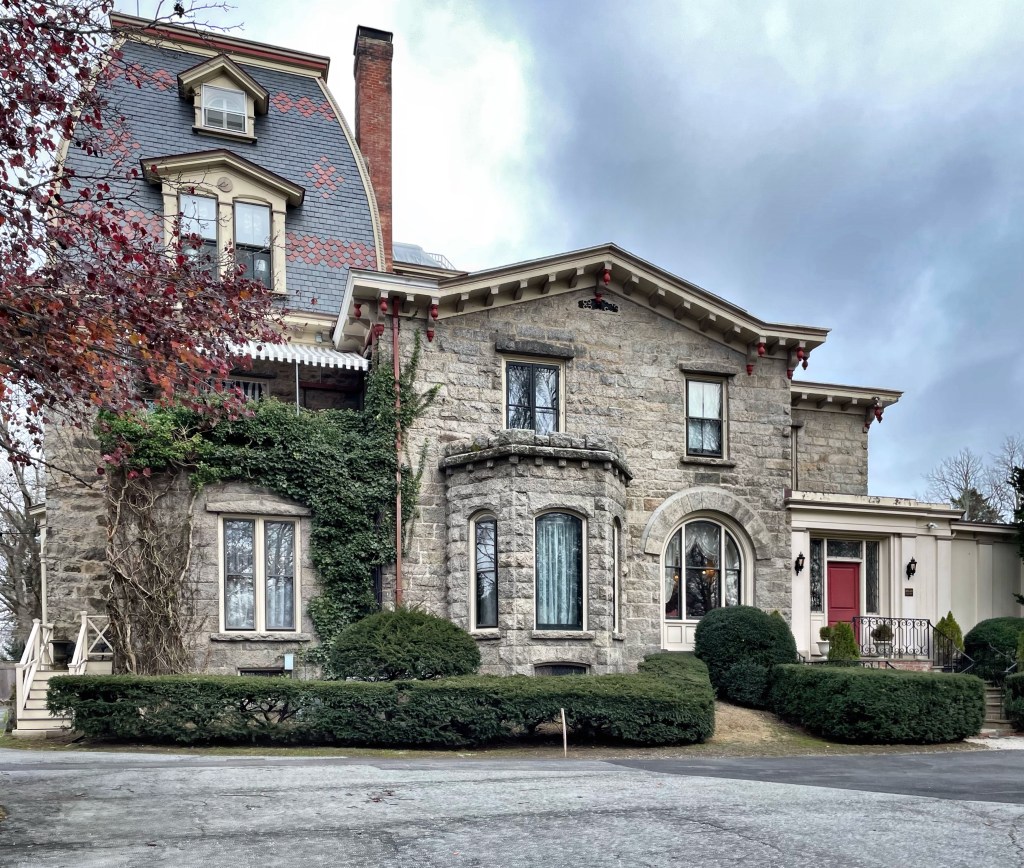
Francis Ashby Waldron (1816-1898) was born in Buckfield, Maine to an old New England family. He moved to Portland for job opportunities and worked as a merchant, eventually establishing Waldron and True with business partner Samuel True. The firm was engaged in dealing grain, salt, corn, and more. After a few years of profits, Francis had this Italianate style mansion built on the fashionable Deering Street just west of Downtown. The property was passed down to his children after his death in 1898, and it remained in the family until 1950. The house originally had a prominent belvedere at the roof, but it was eventually removed. The former Waldron House is now maintained as a law office.
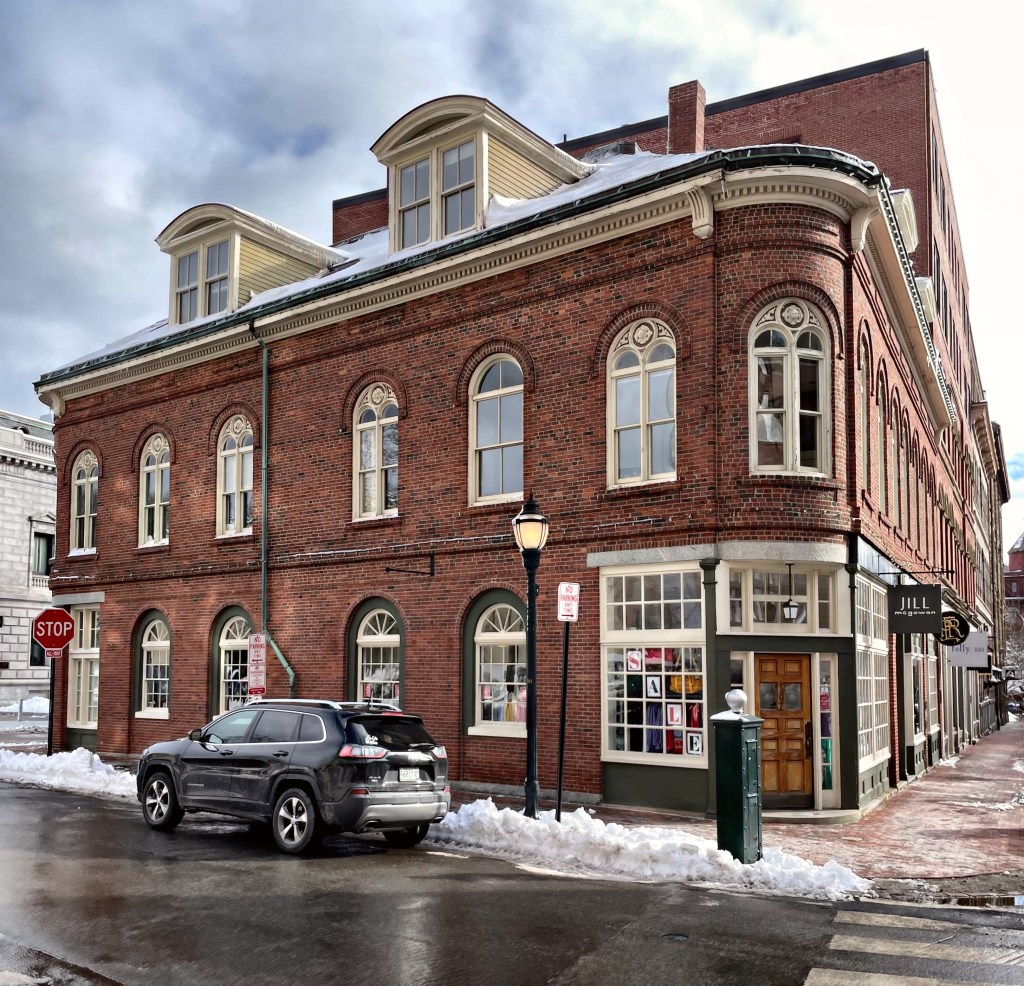
Why is commercial architecture from the second half of the 19th century so perfect? This structure in Downtown Portland is known as the Printer’s Exchange Building and was built in 1866, amongst the ashes of the buildings lost in the Great Fire of 1866. Charles Quincy Clapp is credited as the designer of the structure, which is Italianate in style with the paired round arched windows set into larger openings. The rounded corners are a really subtle but splendid touch in the design. The building got its name as it was home to the Eastern Argus and the Portland Daily Press, among other newspapers who rented the space from owner, Horatio Nelson Jose. I really like this one!
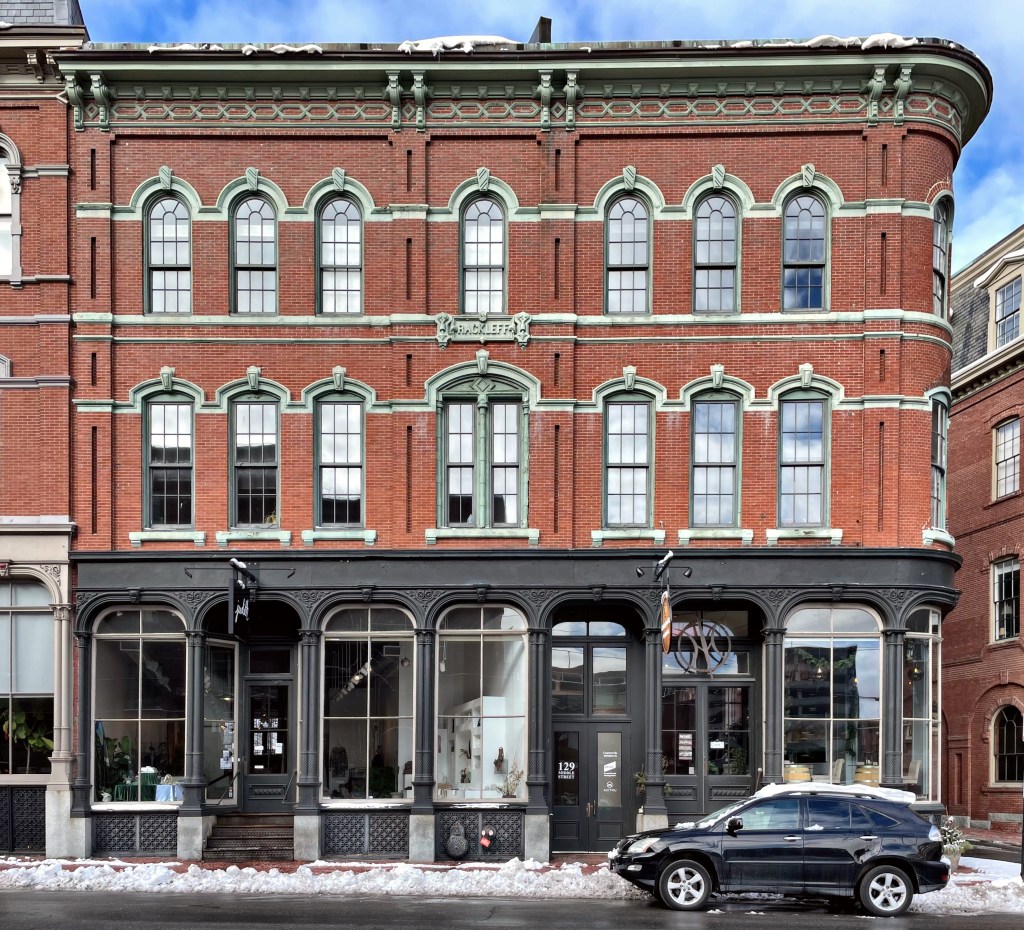
Late 19th century commercial architecture in downtowns all across New England always transport me to the past because they evoke the days of carriages in the streets and the hustle and bustle of post Civil War American cities. After Portland’s Great Fire of 1866, many standing or damaged wooden buildings were replaced with fireproof construction in the event of another conflagration. Five years before the Great Chicago Fire, this was the greatest fire yet seen in an American city. It started in a boat house then spread across the city. Amazingly, only two people died in the fire, but ten thousand people were made homeless and 1,800 buildings were burned to the ground. This is one of the buildings constructed in the rebirth of the downtown/waterfront of Portland. The Rackleff Block was built in 1867 from plans by architect George M. Harding, who designed the building with details reading Italianate and Victorian Gothic. The building retains its original cast iron storefronts and ornate cornice with brackets.
After the Civil War, the Village of Versailles’ Congregational Church was seeing less attendance and its deathknell was a fire which destroyed the building in 1870. That next year, a vote was taken by members of the Congregational Church as to a preference for their denomination. A majority voted for Methodist Episcopal and asked the New England Conference to appoint a Pastor for the new church. Funds were gathered and this church was opened in 1876, in the Italianate and Victorian Gothic styles. The building sits upon a raised brick foundation with small windows on the facade. In 1887, the Versailles church was linked with Baltic and Greenville (Norwich) the following year.
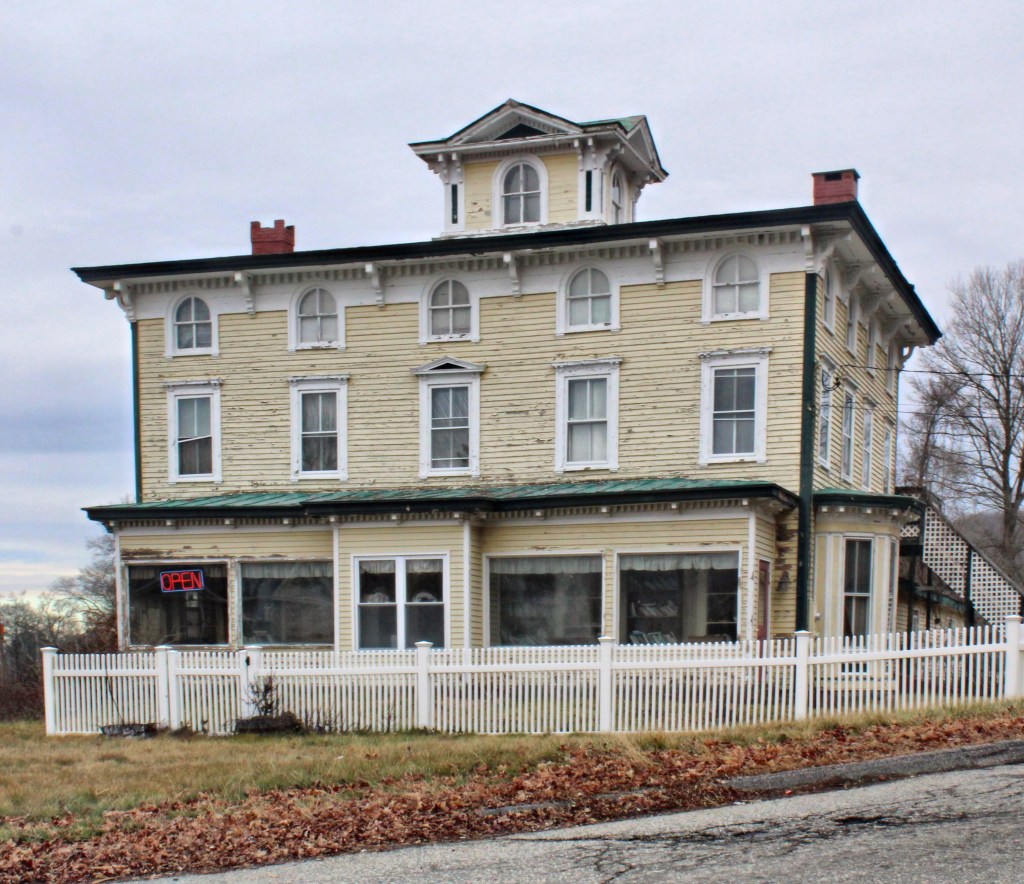
One of the largest and most stunning buildings in the town of Franklin, Connecticut is this Italianate style structure along the Hartford-Norwich Turnpike. The building appears to have been built soon after the conclusion of the American Civil War by brothers John Owen Smith (1819-1896) and Prentice Orrin Smith (1817-1898) who possibly operated the building as a tavern or inn along the route between Hartford and Norwich. The three-story, five-bay facade structure featured round arched windows at the top floor, a raised belvedere at the roof, bracketed cornice with overhanging eaves, and later storefronts at the facade. The building is occupied today by Victorian House, a furniture store.
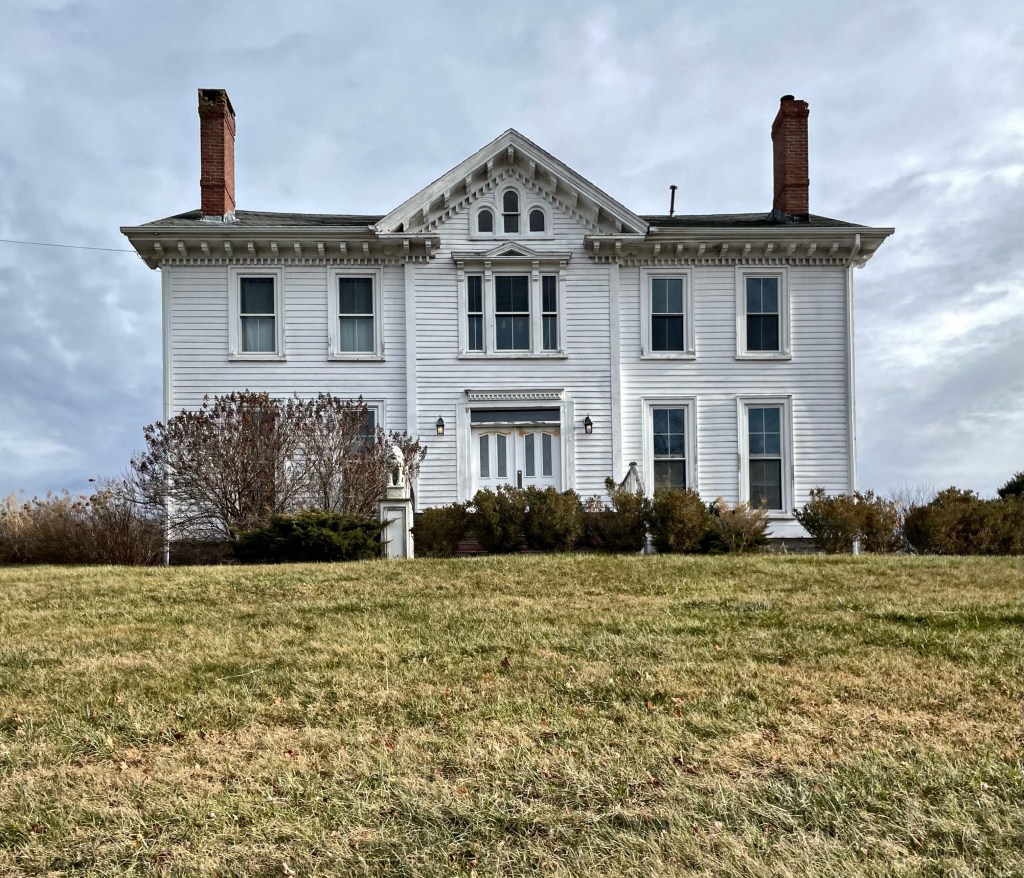
Jacob Kingsbury was born in Norwich, Connecticut on July 6, 1756, to Nathaniel and Sarah Hill Kingsbury. On July 11, 1775, at the age of 19, he enlisted in the 8th Connecticut Regiment, which was part of the Continental Army in the Siege of Boston. Kingsbury remained in the Continental Army when it was reorganized in 1776, and he was promoted to sergeant and then was commissioned an ensign in Webb’s Additional Continental Regiment on April 26, 1780. He served until the Continental Army was disbanded on November 3, 1783. At this time, Jacob moved back home and appears to have had this house built, or moved back into his father’s home. He would later serve with the United States military on campaigns against British allies and Native tribes. During the War of 1812, Kingsbury was appointed to command the defenses of Newport, Rhode Island. He served as Inspector General for Military District No. 2 (comprising the states of Connecticut and Rhode Island) from April 8, 1813, to October 31, 1814. He was discharged in 1815, and moved back to Franklin to live out his final days. The original vintage of this house in unclear, but it appears to have been built before or shortly after his return to Franklin in 1815. After his death in 1837, the property was inherited by his son, Col Thomas Humphrey Cushing Kingsbury, who updated the old homestead with Italianate detailing including the replacement double doorway, bracketed and dentilled cornice, tripartite window in the gable, and 2/2 windows. What a cool blending of styles here!
When the town of Franklin, Connecticut was still a part of Norwich, it was known as West Farms. The residents there had a meetinghouse built there as it took too long to travel into Norwich for town meetings and church services. The first meetinghouse was built in 1718 on what became Meetinghouse Hill. Decades later, the primitive building was replaced by a newer structure. That building was replaced two more times until the present Congregational Church was erected in 1863. The building takes cues from the Greek Revival church designs of decades prior and looks to the future with Italianate detailing and steeple. There remains a small, but active congregation here to this day, who maintain the old building very well!
One of the most stunning summer “cottages” in Newport, Rhode Island is this stone behemoth named “Belair”. The house is set back way off the street and was one of the first summer estates built in this section of Newport. Belair was built in 1850 for New York oil baron H. Allen Wright in the Italianate style and constructed of roughly dressed stone and was originally about half of the size of the current footprint. The mansion was designed by architect Seth C. Bradford, who is also credited as architect of the similarly designed Chateau-sur-Mer, built one year later. Wright sold this house to George H. Norman two years after its completion. Norman (1827-1900), founded the Newport Daily News in 1848 and made his fortune as an engineer, first establishing gas works and later water works systems across New England, New York, and the Midwest. Norman made a fortune, and renovated and expanded his mansion in 1870 from plans by Newport architect Dudley Newton, with grand Second Empire additions, including the high convex-mansard corner tower. The original four acre Belair property has been extensively subdivided, and this house now occupies a lot of about an acre; with the original outbuildings sold off, and Belair is now 11 condominium units!
This large frame house in Newport, Rhode Island was built for Tillinghast Tompkins in 1854. The house is a formal example of the Italianate style of architecture, of which many great examples can be found in the coastal town. Character-defining features of the style on this house include the elaborate round-arch bargeboard with acorn pendants, tripartite round-arch windows in façade’s attic, and the important wide cornice with large triple-arch paired brackets with acorn pendants. The house was occupied by Tillinghast for just a few years until his death in 1860. His widow, Charlotte owned the property until her death in 1899, upon which time it was inherited by their son, Hamilton Bullock Tompkins, a historian and author.
Another of the less common Victorian-era houses on Nantucket is this beauty located right on Main Street, named after its first owner. Eliza Starbuck was the third child of Joseph Starbuck and Sally Gardner, a Nantucket family that had become wealthy in the whale oil industry. At 18, Eliza married Nathaniel Barney and despite their wealth, the couple shared a home with Eliza’s sister, Eunice, and her husband William Hadwen. The husbands became business partners, opening a whale oil refinery on the site of the current Nantucket Whaling Museum. This house was built around 1873 for Eliza Starbuck Barney after the death of her husband. Mrs. Barney is best known as an abolitionist, a temperance and women’s suffrage advocate, and a local genealogist. The home is a fine example of Italianate-style architecture. Note the round-arch or Roman windows and bracketed cornice typical of the style.





 Buildings of New England