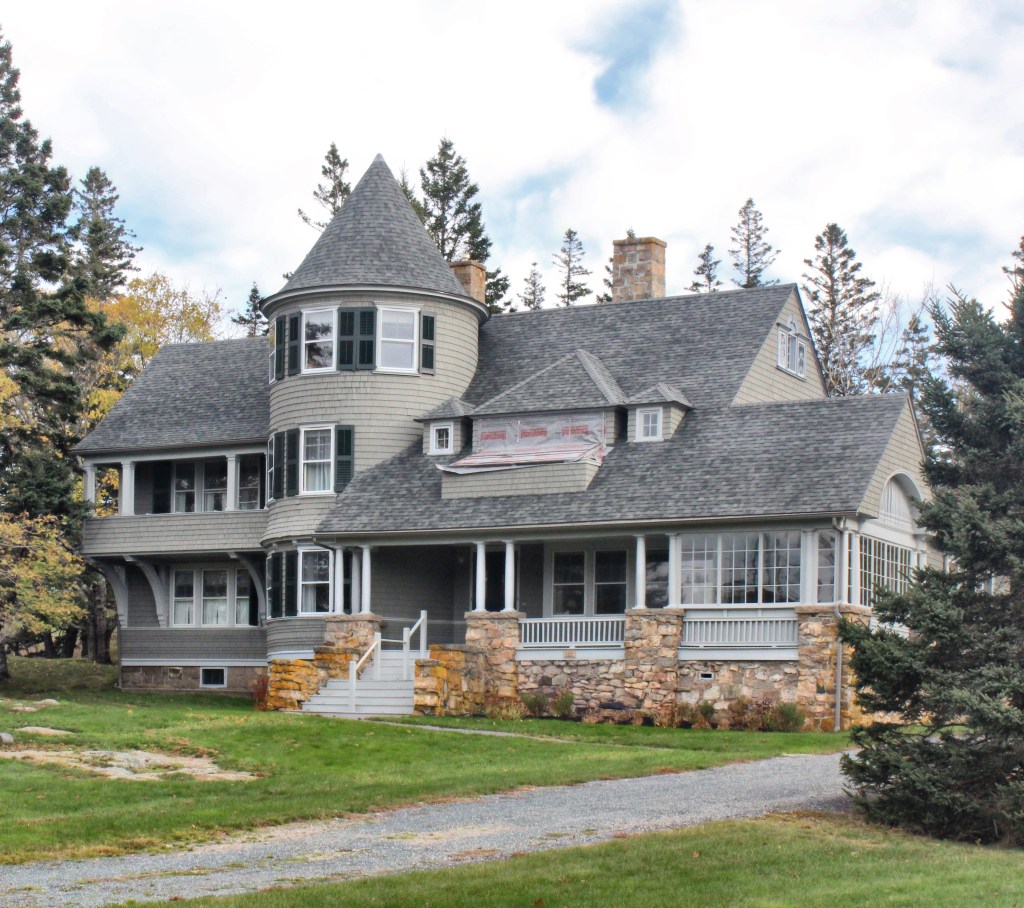
Dixon Cottage // c.1891

The Dixon Cottage on Grindstone Neck was built around 1891 for Alexander J. Dallas Dixon (1850-1948) who appears to have either shared the summer house with his brother Thomas, or sold the property soon after. The Dixon brothers (along with George Dallas Dixon), were early investors in the Grindstone Neck colony and they built summer homes here in its early development. The Dixon Cottage was the summer retreat for Thomas’ eldest son, Fitz Eugene Dixon, who married Eleanor Elkins Widener, a philanthropist and heiress to the Widener and Elkins families. Eleanor and Fitz would later own Park Cottage, featured previously. The Dixon Cottage deviates from the traditional Shingle style cottages seen so frequently on Grindstone Neck and is a refined example of the Queen Anne style with its varied siding, rounded tower, and asymmetrical plan.
Park Cottage // 1892

Queen Anne Victorian perfection! This is the Trotter Cottage on Grindstone Neck in Winter Harbor. The house was built in 1892 for one of the proprietors of the Gouldsboro Land Improvement Company, the group that developed the Grindstone Neck Summer Colony. Nathan Trotter (1852-1915) was a commission merchant from Philadelphia who made a name for himself there, eventually investing his money into real estate. He had Philadelphia-based architect Lindley Johnson, who also built other cottages on Grindstone Neck (including one for himself), to design this cottage for his family to visit for the summer seasons. The property became known as Park Cottage under later owner Eleanor Widener Dixon, she and her husband would summer here when not occupying their palatial Pennsylvania estate. Her father, George Dunton Widener and brother, Harry Elkins Widener both perished in 1912 aboard the Titanic. After the Titanic disaster, Eleanor’s mother presented to Harvard University the $2,000,000 Widener Memorial Library in memory of her son. Park Cottage is one of the finest cottages on Grindstone Neck.

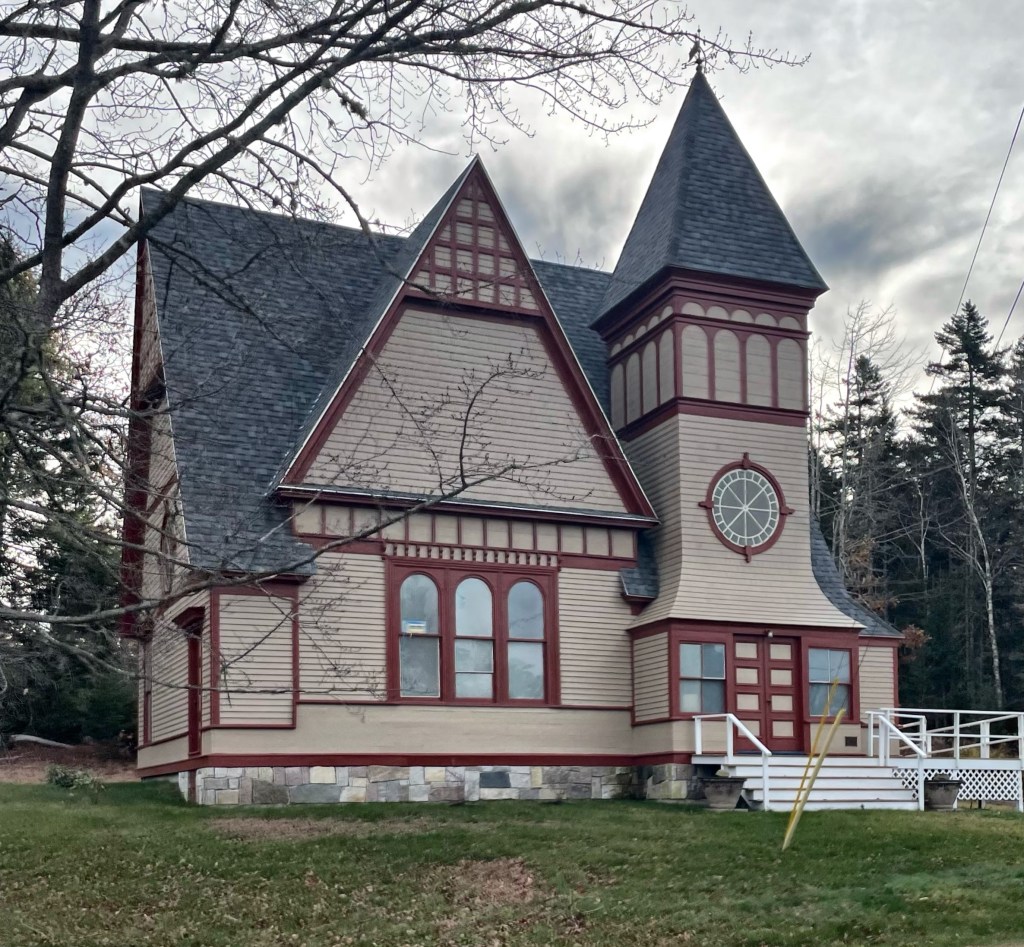
West Gouldsboro Union Church // 1888

In 1888, the West Gouldsboro Union Church Society had enough funds to build this Queen Anne style church, built completely from member donations. By November 1888, the exterior was completed, but so much money was spent on the detailing on the exterior, no funds were available for the exterior painting and interior spaces. In 1891, the new church was finally dedicated. The West Gouldsboro Union Church is a stunning example of a church in the Queen Anne style with varied siding forms, asymmetrical plan, and square tower capped by a pyramidal roof. My favorite part about this building is its historically appropriate paint colors. For a long time, the church was fully painted a bright white, but now its details really shine!

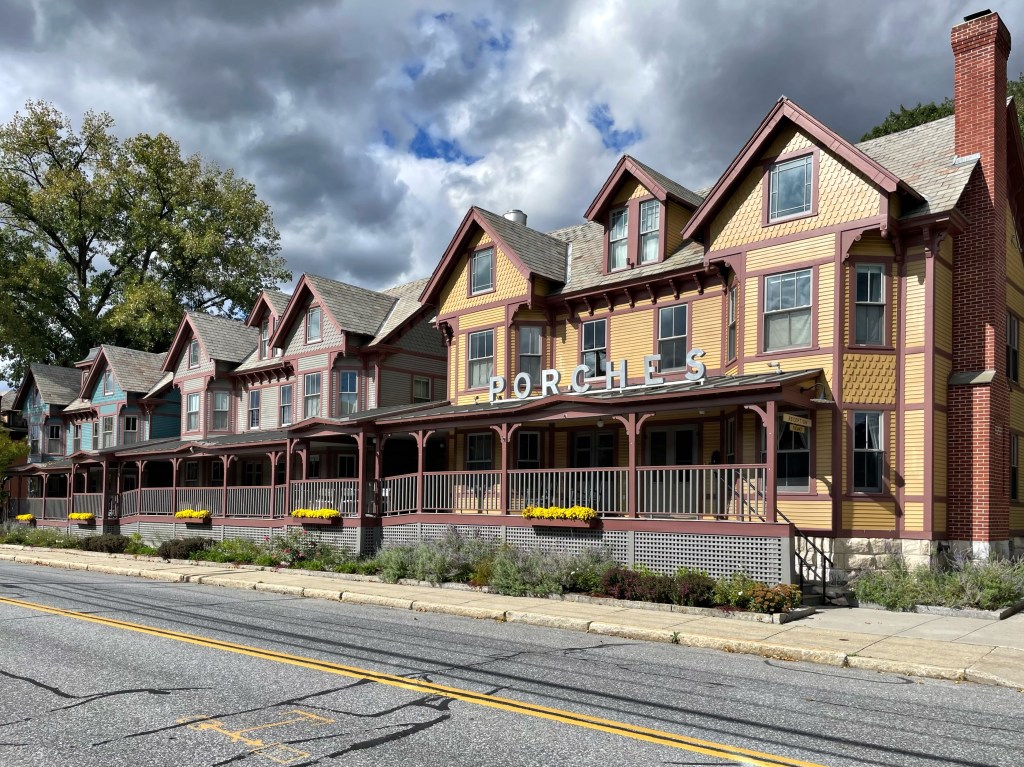
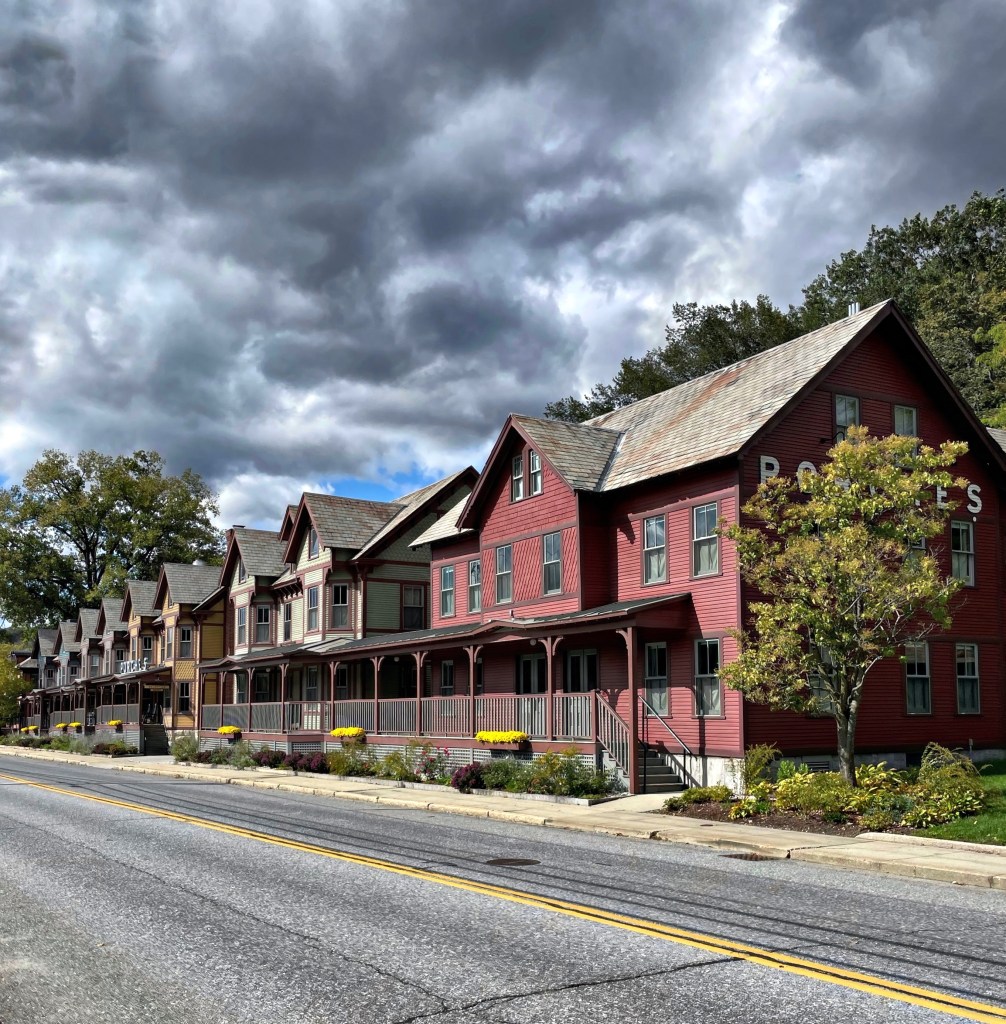
The Porches Inn // 1895

Prior to a few decades ago, there were not many reasons one would visit or stay a weekend in North Adams, Massachusetts. The former industrial city, like many others in the region, saw a sharp decline in population, services, and quality of life when many of the local factories closed in the second half of the 20th century. The major draw of tourists today is Mass MoCA, a museum in a converted factory building complex that is now one of the largest centers for contemporary visual art and performing arts in the United States! The new museum has created a huge demand for restaurants, housing, and hotels of all types in the formerly decaying river city. This is a story of perseverance and rebirth! In the early 2000s, Jack Wadsworth, an alumnus of nearby Williams College, wished to revitalize a block of vacant 19th-century workers houses across from the growing attraction of MASS MoCA. He worked with Burr and McCallum Architects of Williamstown to convert the decaying workers cottages into a boutique hotel. The span of Queen Anne and Colonial Revival cottages were joined via a long porch lined with rocking chairs, and the space between the buildings is bridged with skylights, giving the complex its appropriate name, Porches Inn.

The Boardman Rowhouses // 1899

Built between 1899-1901, the Boardman rowhouses of North Adams, Massachusetts were constructed by developer and hardware dealer Walter Penniman and his wife Susan Boardman Penniman to serve as much-needed middle-class housing for workers in the growing city. The name “Boardman” was likely taken from Susan’s maiden name. The entire row is comprised of nine rowhouses, all with a front porch, as well as servants’ quarters on the third floor. Each residential unit is fronted by a porch of granite block with Tuscan columns supporting a shed roof. Entrances are recessed behind round-arched openings, also composed of granite blocks. While much architectural details on the second story are obscured by synthetic siding, the
building’s gables retain simple bargeboarding, and eaves are bracketed. The Boardman’s designer was Edwin Thayer Barlow who opened an architecture practice in the town in the 1890s. The rowhouses are still some of the finest example of middle-class housing built in North Adams in the 19th century.

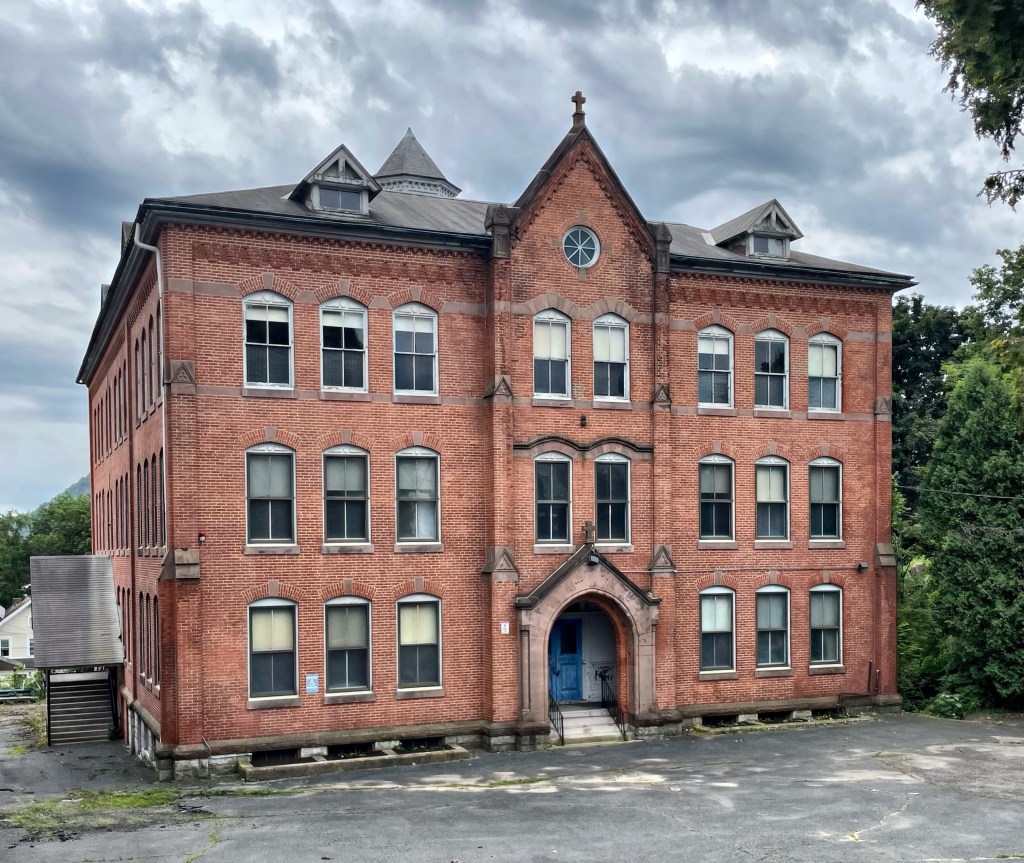
Former Notre Dame Parochial School // 1898

Located next door to the former Notre Dame Roman Catholic Church in North Adams, Massachusetts, this stunning former school building stopped me in my tracks. The sad fact is that the former school is seemingly vacant makes me really sad and concerned for the future of the building. This beauty was constructed in 1898 to serve as a school associated with the Notre Dame Roman Catholic Church located to its east. Local architect Edwin Thayer Barlow, who formerly worked with Carrere and Hastings, designed the building in the Queen Anne and Romanesque Revival styles, both popular at the time. The school remained in operation until the 1968-1969 school year, after several years of declining enrollment. The City of North Adams leased the school beginning in the 1969-1970 school year to relieve overcrowding at the public schools. In 2008, the City of North Adams purchased the school and church properties from the Springfield Roman Catholic Church Diocese after the church closed in 2005, but no plans have yet materialized to restore the beauties. What would you like to see this building converted into?

Sullivan Three-Deckers // 1895

The three-decker is a commonly found housing type in New England’s urban industrial cities. These buildings are typically of light-framed, wood construction, where each floor usually consists of a single apartment, and frequently, originally, extended families lived in two, or all three floors. These were affordable housing, largely built by and for first- or second-generation immigrant families who could build a home and rent the other two units to family or friends to offset the steep cost of a mortgage. These three buildings were constructed around 1895 by David Sullivan, a cabinet-maker in North Adams, Massachusetts. They are all Queen Anne in style with applied stickwork, gabled roofs, and multi-story porches. Housing like this is what keeps so many New England towns and cities (relatively) affordable with increased density without sacrificing character or charm.

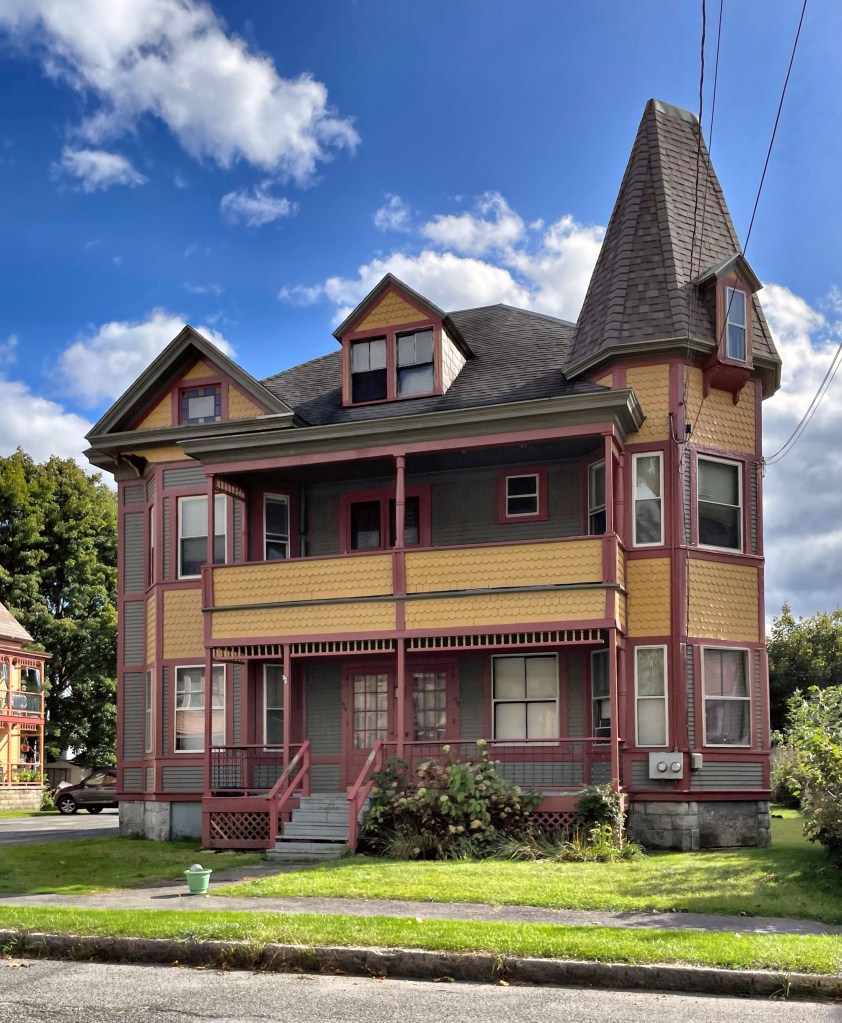
Merrill Whitney Tenements // 1897

In the late 19th century, Merrill Whitney, a former stone mason, and his wife Harriett, built a dozen multi-family housing units or “tenements” for the surge of working-class residents moving into the City of North Adams, Massachusetts. As the factories and mills were overrun with immigrant workers, rental units were built to provide housing for them and also lined the pockets of established residents of the city who could supply the much needed housing there. Some landowners like the Whitney’s built high-style housing that rivaled some of the single-family homes there. This was a two-family home that was rented through the early 20th century, and still features front porches, a tower, and Victorian-era detailing.

Samuel Dearborn House // 1886

Queen Anne perfection! The Samuel Dearborn House sits at the beginning of Concord Avenue in Nashua, New Hampshire and is among the city’s finest examples of the great architectural style. Samuel Gerrish Dearborn was born in Northfield, New Hampshire, August 10, 1827. His father was an industrious farmer and allowed Samuel to be educated at Sanbornton Academy and the New Hampshire Conference Seminary. He graduated from Dartmouth in 1849 and began practicing medicine in various New Hampshire towns. He served as a surgeon during the Civil War and after, settled in Nashua, remaining a prominent doctor. He and his family were avid travelers and had trips to the Pacific northwest and Mexico. He had this stately Queen Anne style residence built in 1886 which exhibits all the hallmarks of the style. Varied materials and siding types, asymmetrical plan, ornate turned columned porch, gables with detailed shingling, and complex roofline are all so eye-catching.

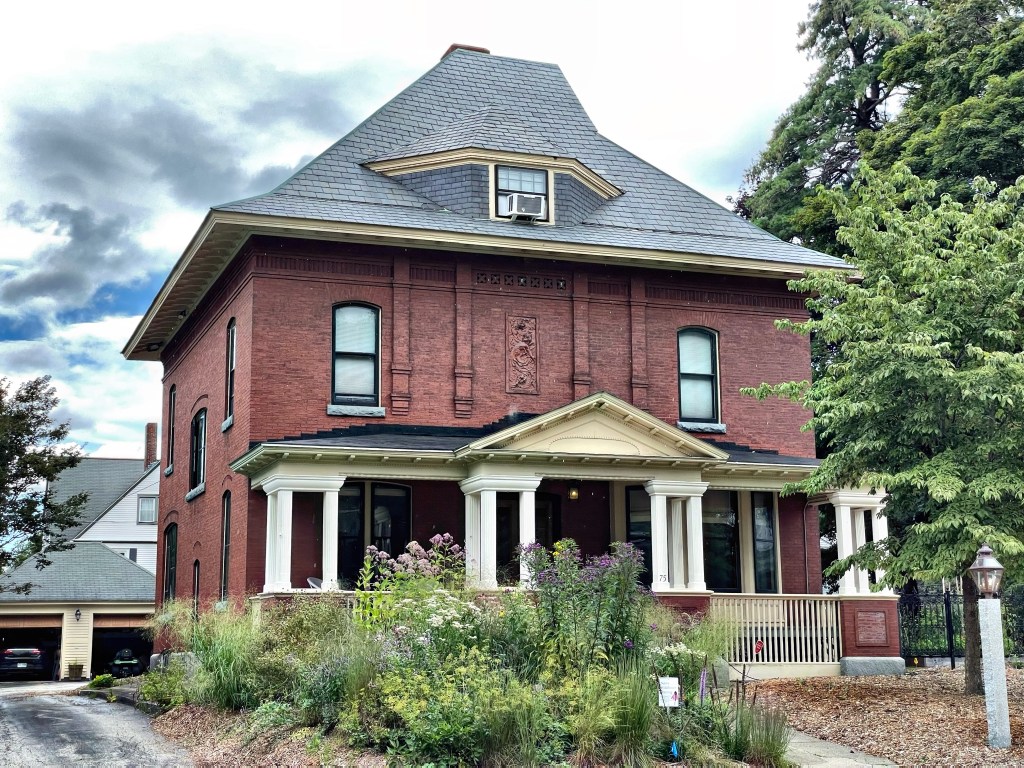
George French House // 1890

Yet another of Nashua’s fine estates on Concord Street is the George French House, a more academic example of the Queen Anne style of architecture. The French House was built in 1890 for George Barstow French (1846-1933), an attorney in town. I really wish I could find more on the architect, as this seems to be a more academic example of the style with bold material choice of brick construction with brownstone and terracotta trim and detailing. The hipped roof with flared eaves and brick pilaster detailing on the second floor add a lot to the design and are not common! Does anyone know more?