Charlesgate Stables // 1892

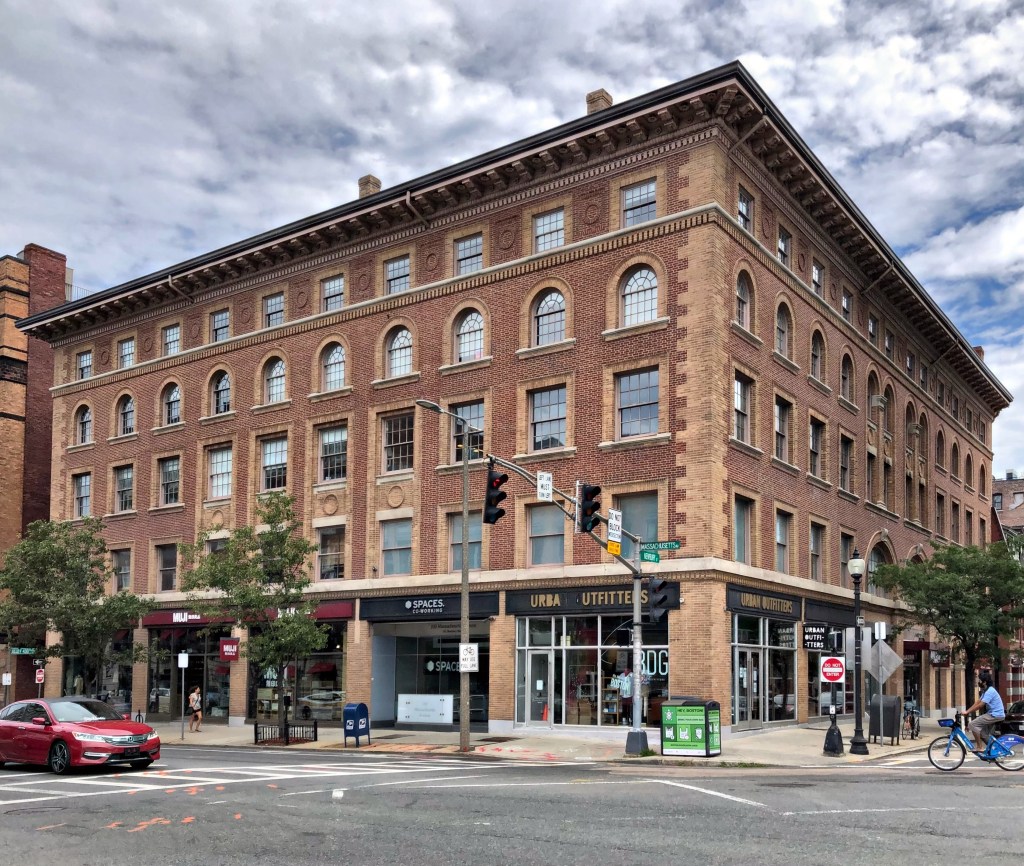
Buildings not built for people, but for horses! This handsome masonry building sits at the heavily trafficked corner of Newbury Street at Massachusetts Avenue in the Back Bay neighborhood of Boston. It may get overlooked by some, but when you are not attempting to avoid shoppers on Newbury and cars and bicycles speeding along Mass. Ave., you’ll notice the amazing brickwork and details found on the former Charlesgate Stables. The building was constructed in 1892 as a five-story plus basement brick livery stable for owners Charles Kenney and Eugene L. Clark. Their permit called for storage of over 200 horses and other goods. The architectural firm of Peabody and Stearns designed the building to fit well within the surrounding area which is dominated by large, ornate townhouses and institutions. Inside the building horses were led up ramps to second floor stables leaving the first floor for carriage storage. This layout made it very difficult to save horses when fires occurred. The Renaissance Revival style building with contrasting brick was purchased by the Maxwell-Briscoe Trust after owners Eugene Clark died in 1907 and Charles Kenney died in 1909. The trustees were manufacturers of the Maxwell automobile, and they converted the former stable into an auto salesroom and garage, to keep up with the shift from horses to automobile. The building today has been converted to commercial use with retail on the ground floor and offices above.

Grader Block // 1885

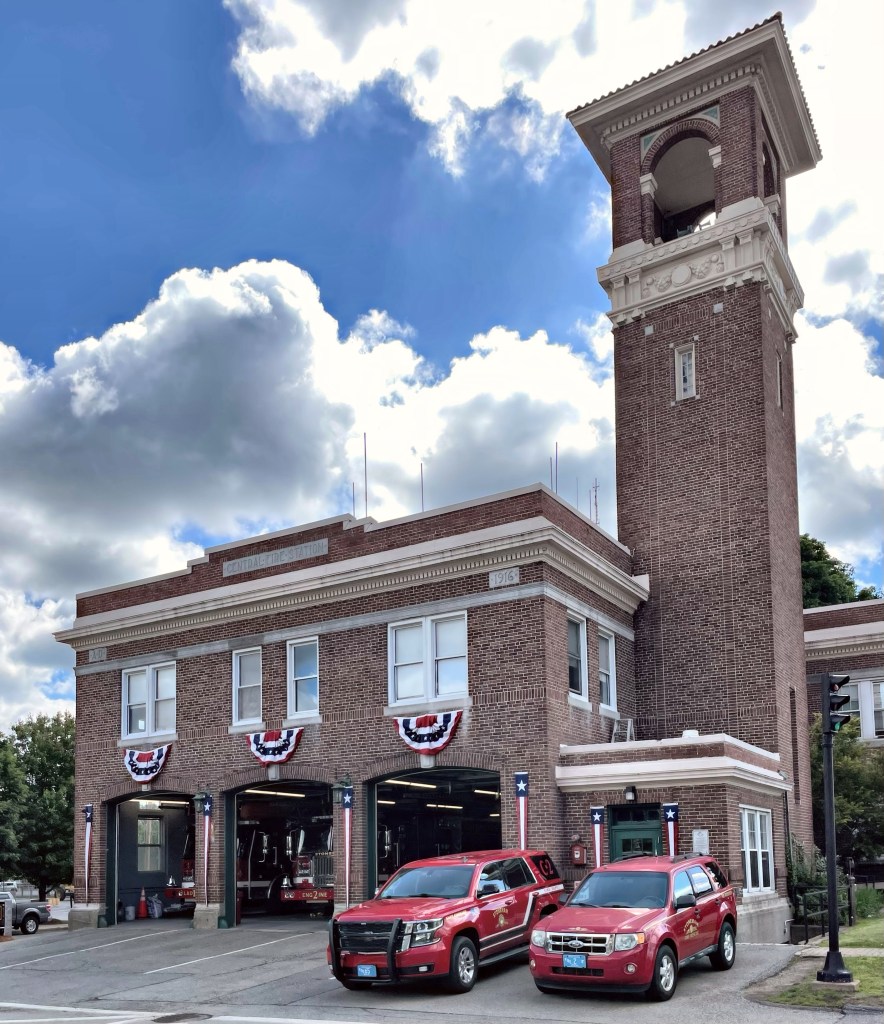
Commercial districts and Main Streets in historic New England towns are full of amazing architecture that is meant for pedestrians. Strolling through these areas, the varied styles, materials, storefronts, and signage provides a sense of artistry and community that is impossible to achieve in suburban strip-malls and shopping centers. Historic buildings serve not only as visible anchors to communities, but are more often occupied by local, women, and/or minority-owned businesses compared to modern buildings and districts. Marblehead has many historic (sometimes Revolutionary-era) buildings that are commercial and contribute so much to the town’s vibrancy. This building was constructed in 1885 as a high-style Italian Renaissance Revival style commercial block, replacing a late 18th or early 19th century building. The Grader Block features a rounded corner, scored siding to resemble ashlar masonry construction, and Classically inspired design features like pilasters and pediments. Today, the storefronts are occupied by local small businesses.

Stoneham Fire Station // 1916

Fire stations are some of the most recognizable and iconic buildings in any city or town, but to find historic fire stations is becoming less and less common as larger trucks and facilities put a strain on the older buildings. The two-story brick Renaissance Revival fire station in Stoneham, Massachusetts was built in 1916 and continues to serve as the town’s central fire station. Its most prominent feature is its four-story hose drying tower, which is reminiscent of Italian Renaissance-era towers. The building was designed by architect Penn Varney and has been well-maintained by the town for over 100 years.

Spot Pond Gatehouse // 1900

The Middlesex Reservoir and Spot Pond are located just north of Boston and have long been a little piece of the outdoors near the heart of New England’s largest metropolitan area. In 1894, the Massachusetts Legislature established the Metropolitan Parks Commission, which was endowed with the authority to acquire, maintain, and make recreational spaces available to the public. By 1900 the new commission had acquired 1,881 acres for the reservation. Part of this reservation, Spot Pond, is a natural water feature that for a number of years was integrated into the Boston area public drinking water supply, servicing the towns of Stoneham, Melrose, and Malden with drinking water. As part of this, gatehouses were built with hardware to open and close the pipes delivering the water to the adjacent towns. This gatehouse is in Stoneham was built in 1900 by the architectural firm of Shepley, Rutan & Coolidge, to not only protect the machinery inside, but to beautify the parkland, then maintained by the Metropolitan Parks Commission. The Renaissance Revival style building is today surrounded by a tall chain link fence, which really diminishes its presence in the landscape (but it does help prevent graffiti).

Egleston Square Substation // 1909

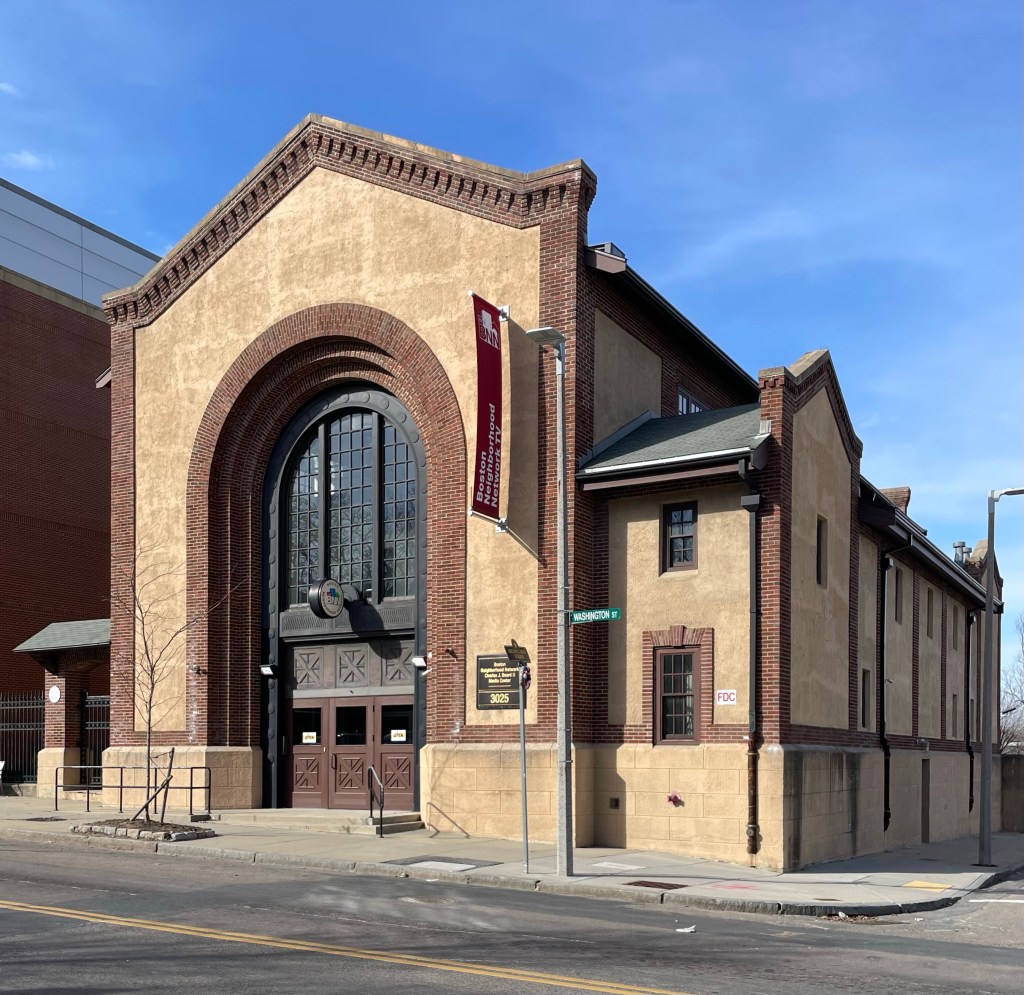
Streetcar suburbs of Boston have long been connected to the city by horse-drawn streetcars. As the city expanded and transportation shifted electrical, things changed in a big way! By the time the last horse-drawn streetcar was retired in 1897, the West End Street Railway Company had replaced its fleet of 9,000 horses with electric streetcars. Things were built upwards, with an elevated railway constructed between 1898 and 1901 that ran down Washington Street in the Roxbury neighborhood of Boston along the boundary of Jamaica Plain. The route had a stop in the middle of Egleston Square, with the surrounding neighborhood largely occupied by wood-frame, detached triple-deckers, two-family, and single-family houses, with many occupied by workers from the breweries nearby. Located on Washington Street in Roxbury, the Egleston Square substation was built in 1909 by the Boston Elevated Railway Company (predecessor of the Massachusetts Bay Transportation Authority) to convert AC (alternating current) electricity to DC (direct current) for use by its street railway cars and elevated cars. The building was designed by Robert S. Peabody of Peabody and Stearns, a prominent and expensive firm (yes the MBTA once invested in their infrastructure). After the station was effectively abandoned by the MBTA, the substation fell into disrepair, with a roof in failure in 2005. It was then acquired by Boston Neighborhood Network Media, a local nonprofit, who have converted it for use as office and television studio space. Scott Payette was the firm responsible for the intensive restoration and renovation.


282 Beacon Street // 1927

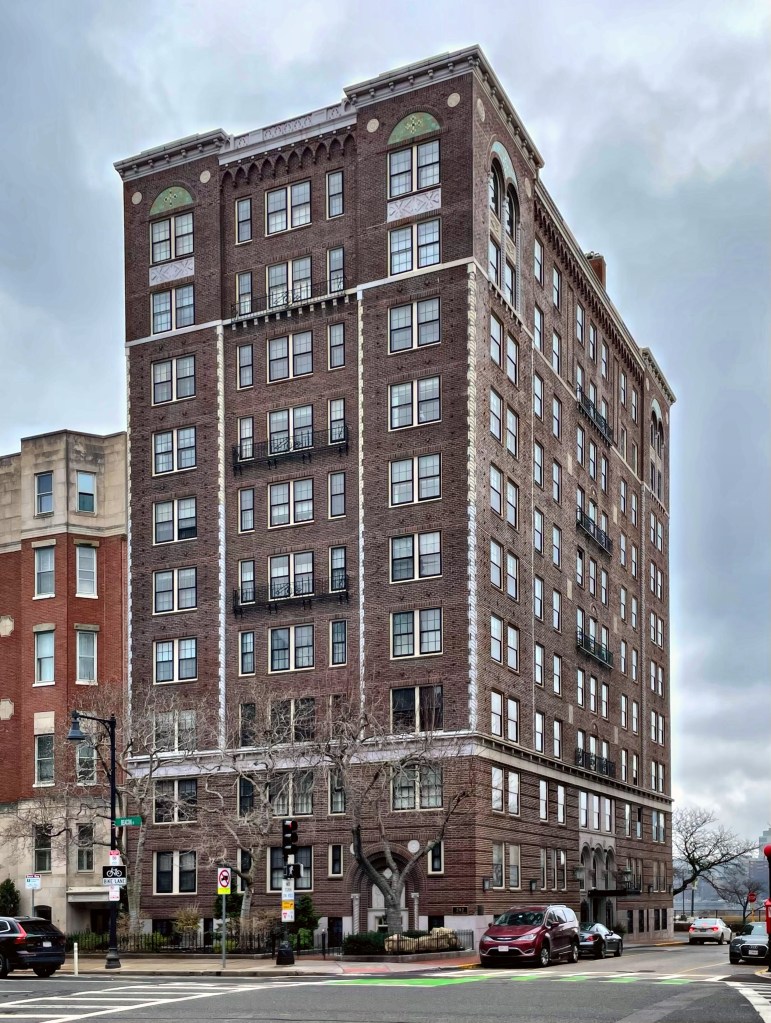
One of the finest apartment-houses in Boston is this towering building at the corner of Beacon and Exeter streets in the Back Bay neighborhood. In 1926, real estate dealers Elliott Henderson and Roger B. Tyler purchased two townhouses on small lots and demolished them for the present structure. They hired the architectural firm of Blackall and Elwell furnished the plans for the 11-story Renaissance Revival style residence which included ten large apartments. The design is unique to the Back Bay with amazing cast stone details at the entries with rounded arch windows, fanciful brickwork, and spiral columns!

Portland Custom House // 1868

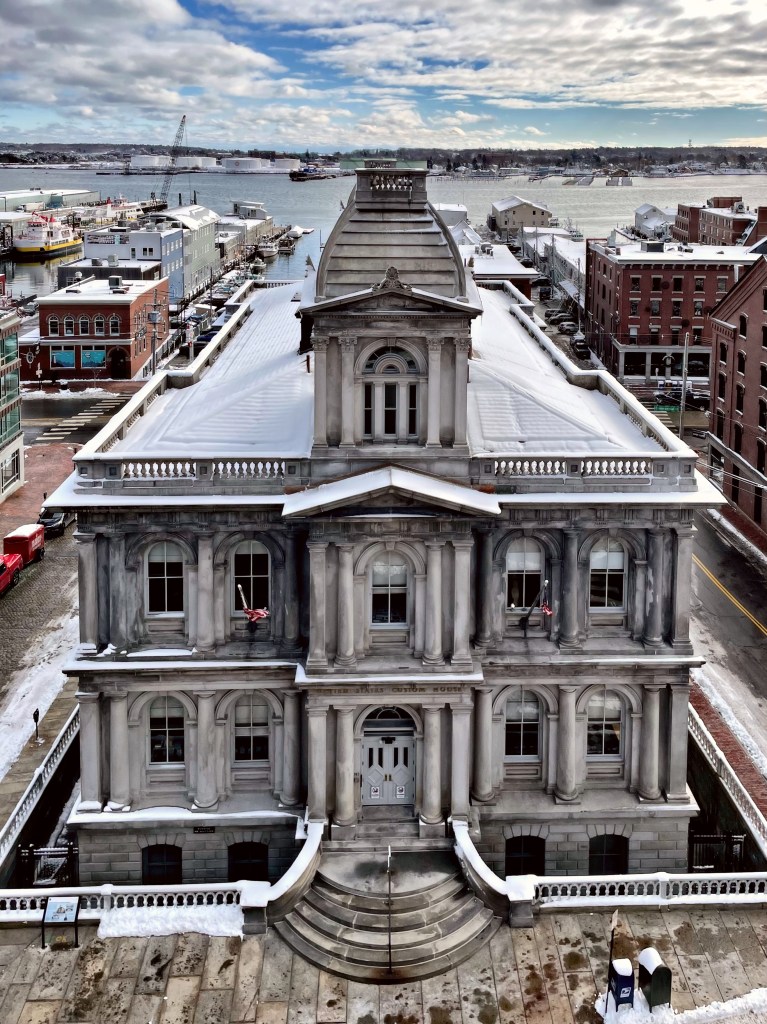
Probably my favorite building in Portland, Maine is the former Custom House building, an imposing granite building located a stone’s throw from the Portland Harbor. It was built to accommodate the city’s growing customs business, which, by 1866, was collecting $900,000 annually in customs duties—making Portland one of the most significant seaports in the country. The building is typical of the notable designs completed under the direction of Alfred B. Mullett, Supervising Architect of the Treasury from 1865 to 1874. Constructed between 1867 and 1872 (due to delays in obtaining granite for the upper stories) the U.S. Custom House combines elements of the Second Empire and Renaissance Revival styles and is one of the best preserved custom houses in New England. The interior custom hall is especially remarkable.

Portland City Hall // 1909

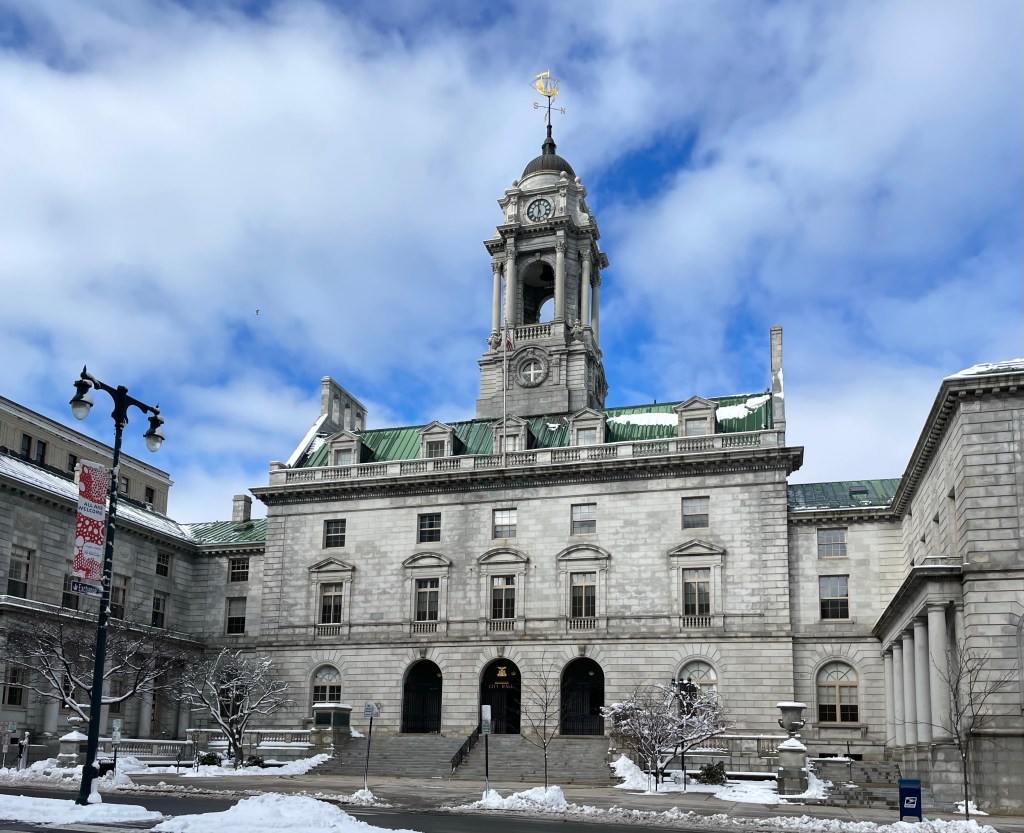
The City Hall in Portland, Maine is among my favorite civic buildings in New England and is the third that was built on this site. The previous city hall on the site of the present City Hall, completed in 1862, burned in Portland’s Great Fire of 1866. It was reconstructed in 1867 by designs of Francis H. Fassett, a Portland-based architect. In 1908, it burned again. So much damage was done that the building had to be removed. The present Portland City Hall was designed by the New York architectural firm of Carrere and Hastings, assisted by local Portland architects John Calvin Stevens and his son, John Howard Stevens who together, oversaw day-to-day changes and work to the building. Interestingly, John Carrere is quoted as saying he would rather have his reputation rest on the Portland City Hall than upon any other building he designed (and he designed MANY great buildings). The impressive structure was inspired by the New York City Hall, which was built about 100 years prior in 1803-1812. The Portland City Hall remains today as a great visual anchor for the revitalizing downtown area of Portland.

Versailles School // 1924

While Baltic has long been the dense population center of the Town of Sprague, Connecticut, the Village of Versailles has also had ties to industry and growth. The village was originally named Eagleville but was renamed sometime in the late 19th century. The village is located along the Shetucket River and has had industry, which was slower to grow than neighboring Baltic. The village had a wood-frame school building, which was consumed by fire in the early 20th century. In 1924, this substantial “fire-proof” school was built just at the time the Town of Sprague was consolidating schools, in the three main population centers: Baltic, Hanover and Versailles. The schools were consolidated again and this building was sold in the mid-1950s. It was later a Masonic Lodge and is now a commercial use, occupied by Dark Manor, Inc., a haunted house company.

De La Salle // 1884

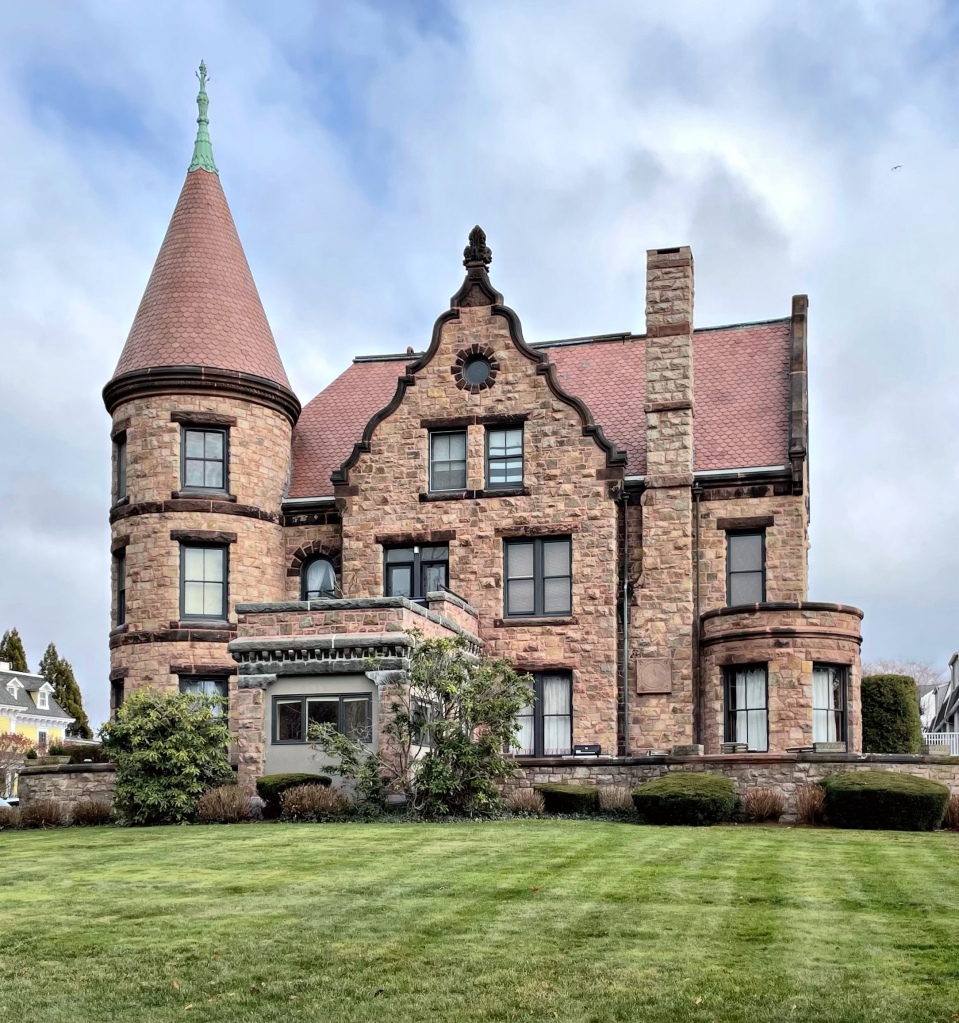
The Weld family has long been a prominent family in Boston, with ancestors dating back to the 17th century in New England. One of these men was William Fletcher Weld, a merchant, later making investments in railroads and real estate. By the time of his death in 1881, he had an estate of approximately $20 million, or more than half a billion in today’s dollars, and he left nearly all of it to his family. His eldest son, William Gordon Weld II, received a large inheritance and he began construction on this summer “residence”cottage” in Newport. The house was designed by local architect Dudley Newton, who had the estate built of locally-quarried granite. Architecturally, the dwelling is eclectic in style with Dutch Renaissance gables with conical roof forms seen typically in Queen Anne and Romanesque buildings. Weld spent his summers here for over a decade until his death in 1896. His widow Caroline, summered in the mansion until her death in 1918. By this point, Newport was beginning to fall out of favor as a wealthy resort community, and the many Gilded Age mansions were increasingly viewed as costly white elephants from a previous era. This property was sold by the Weld family in the early 1920s and became the De La Salle Academy, a Catholic school for boys, and remained in use until it closed in the early 1970s. After the school closed, the mansion was converted to condominiums and some townhomes were built on the expansive property.