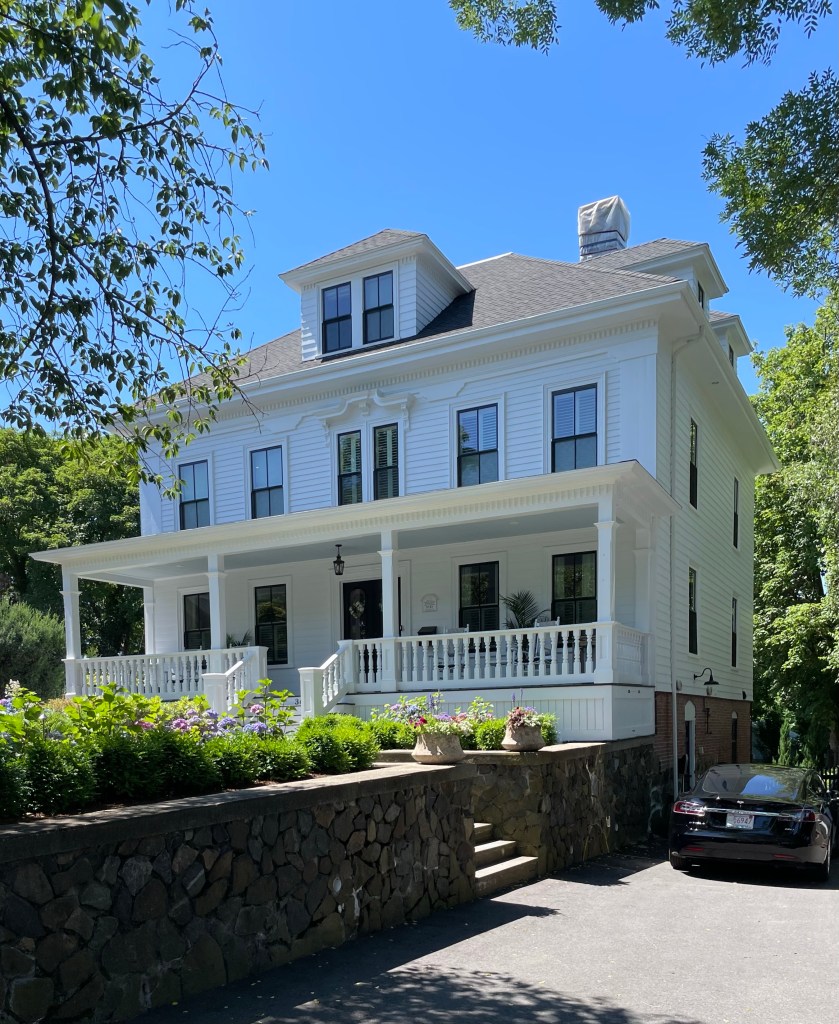
In 1870, Samuel Sparhawk built a large Second Empire style mansion on Mugford Street in Marblehead. Samuel and his brother Peter were among the first large shoe manufacturers in Marblehead, and did very well for themselves. Samuel also worked as Director of the Marblehead Savings Bank. In the early 20th century, the property was sold to Asa A. Schofield. In 1910, a fire at the Second Congregational Church destroyed the 1832 building and embers carried and burned the roof of the old Sparhawk House. The mansard roof was replaced with a simpler hipped roof with dormers.
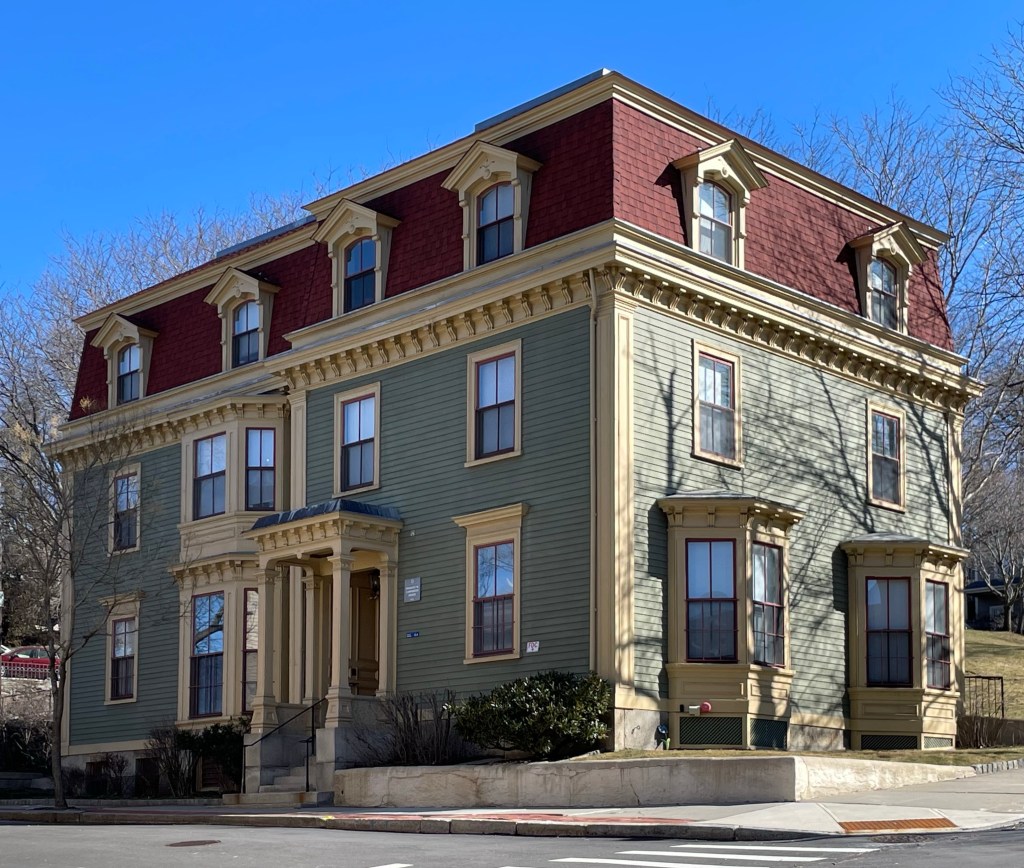
I love a good Second Empire style house with a mansard roof, and luckily, New England is full of amazing examples. This house in Providence’s College Hill neighborhood dates to about 1857 and appears to have been built for Francis W. Carpenter, a successful businessman who would later serve as President of the Congdon & Carpenter Company, an iron and steel company which was founded in 1792. Carpenter did very well for himself and would later move out of this house and into a stunning Beaux Arts mansion further up the street (featured previously), designed by the premier architectural firm of Carrère and Hastings. The house is today owned by RISD, and appears to be used for residences.
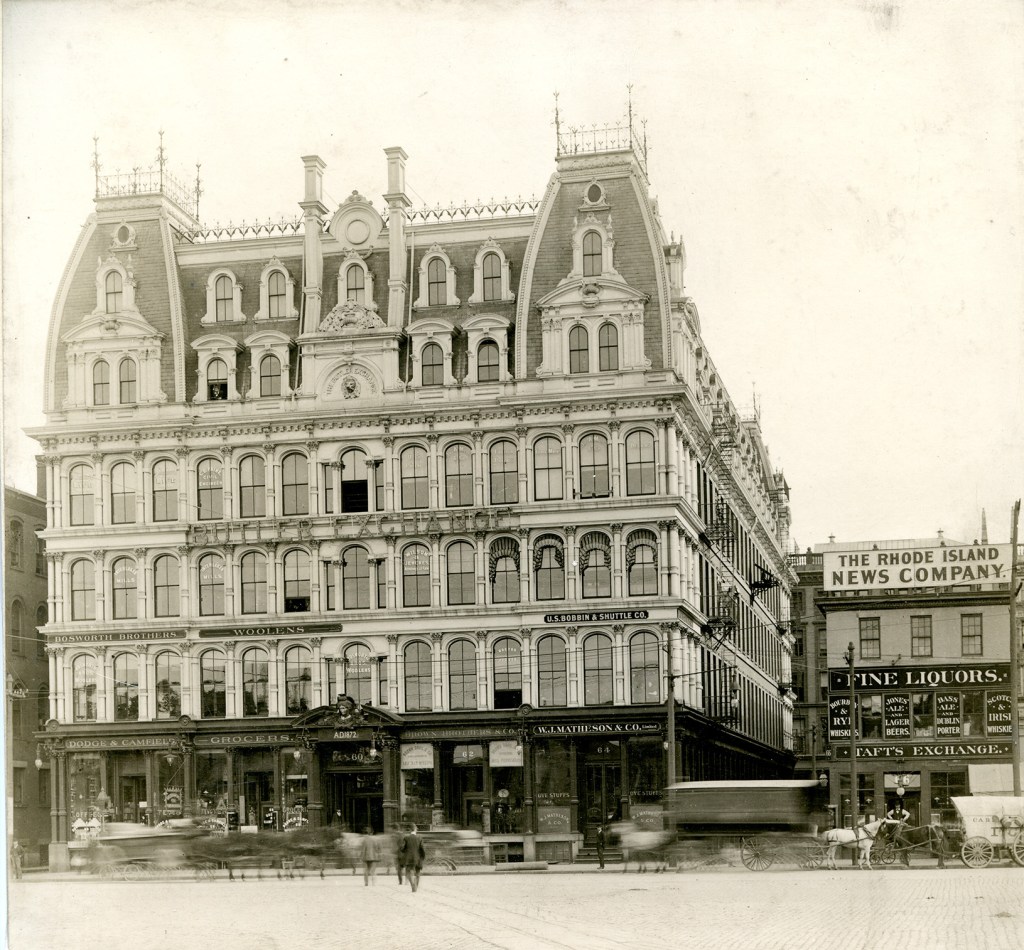
Image Courtesy of Providence Public Library collections.
This magnificent structure formerly in Downtown Providence would likely still exist today had a devastating fire not destroyed it in 1925. When construction on the Butler Exchange began 1871, the area we know today as Downtown was only a cluster of small wooden and brick residences with commercial operations on the ground floors; the key retail shopping districts were across the river around where Brown University is today. The first major commercial development in modern-day Downtown was the Providence Arcade (featured previously), built in 1828, by Cyrus Butler. The Arcade languished in tenants and shoppers earning it the name, “Butler’s Folly”. A half-century later, a new Butler project was about to take off. Cyrus’ heirs built the Butler Exchange, which upon completion in 1873, was the largest building in Providence and its splendid French-inspired two-story mansard roof was a nice pairing with the City Hall being built nearby. The Butler Exchange saw commercial use, offices, and a school before a fire destroyed much of the building, leading to its demolition. The building was later replaced by the Industrial National Bank Building aka the “Superman Building”.
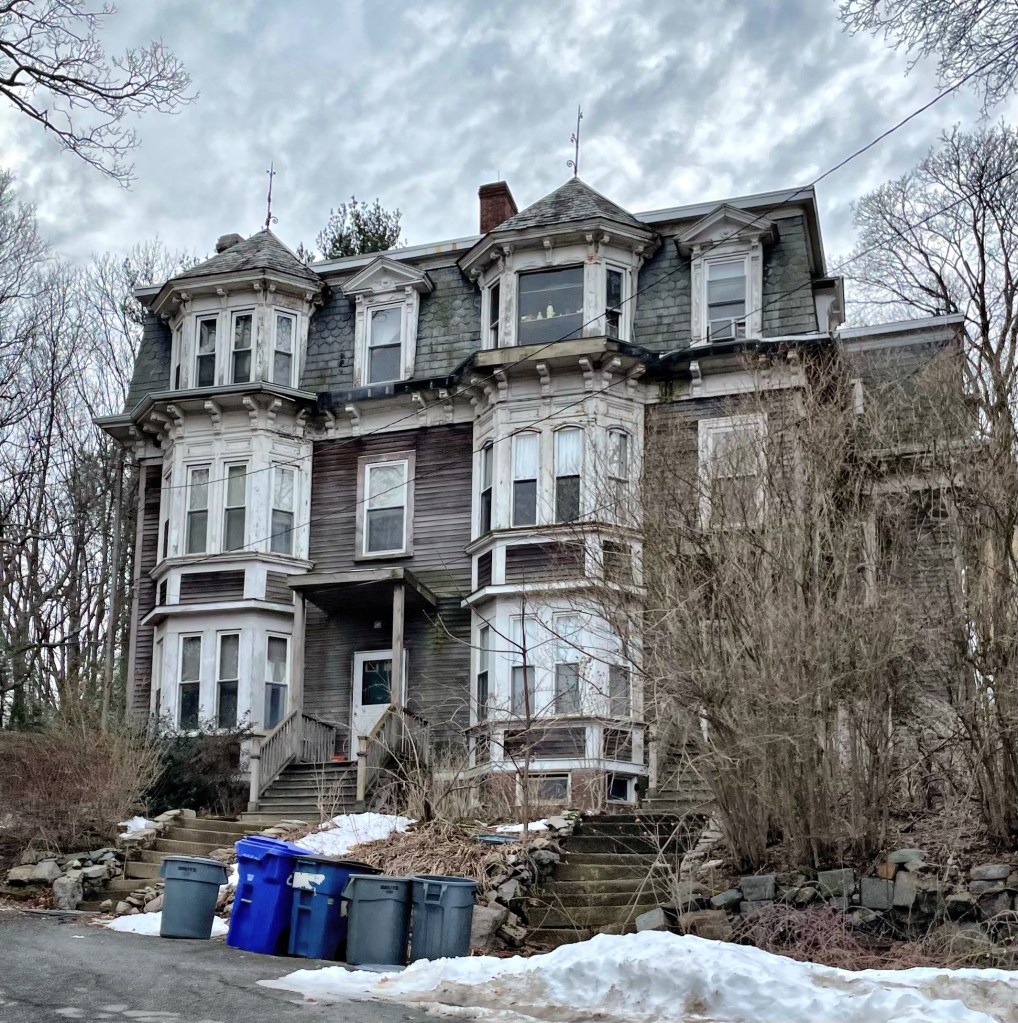
Isaac Harris Cary’s land holdings adjacent to Forest Hills Cemetery in Jamaica Plain, Boston, saw a surge in value when the cemetery and Forest Hills Station were constructed, opening up the area for development. After Isaac’s death in 1881, his unmarried daughter Susanna, built this large Second Empire style building contributes to the varied 19th century architecture of the street. This double-house was constructed around 1884, seemingly as a rental property which provided Susanna income while residing nearby. The two units suffer from some deferred maintenance, but are excellent examples of the Second Empire style in a double-house form.
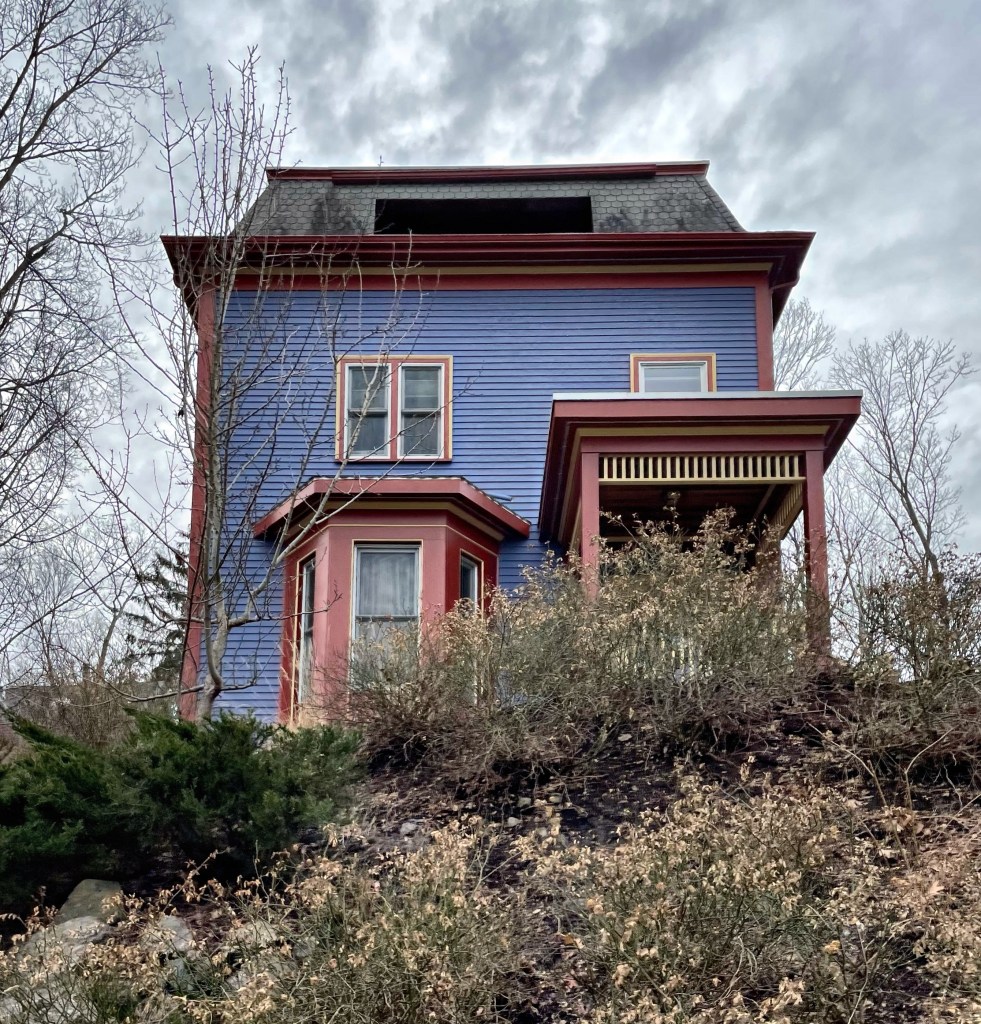
Isaac Harris Cary (1803-1881) was born in Charlestown, MA to an established, old New England family. He eventually settled in West Roxbury, an area that is now known as Jamaica Plain, where he operated a tannery along a branch of Stony Brook, a tributary of the Charles River. Isaac built this home and a couple income-producing rental properties on a hill adjacent to the newly established Forest Hills Cemetery. The Second Empire style home today features bright colors and a modern recessed window set into the mansard roof, likely providing views to Boston’s skyline.
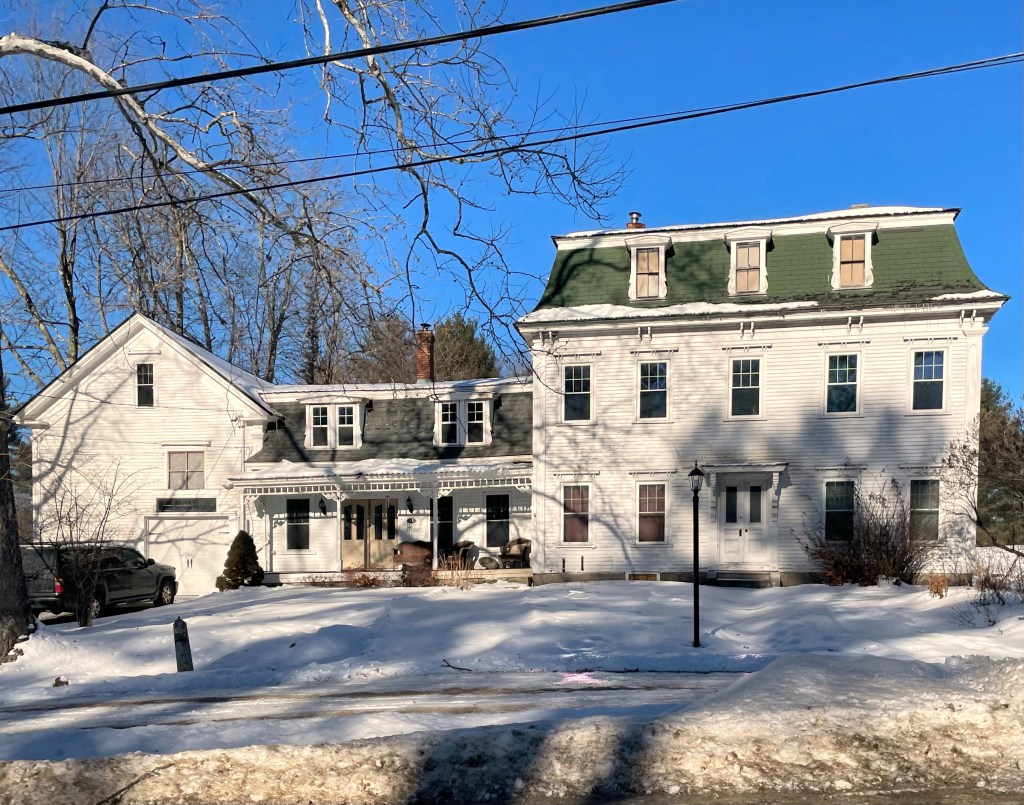
The Second Empire style did not take off in Maine as it did in other parts of New England (and the U.S. for that matter), so it’s always a treat to spot one driving the backroads of the Pine Tree State! This house in Denmark, Maine, was built around 1870 for E. A. Boothby, who worked as Assistant Engineer of the Maine Central Railroad. The Second Empire style is evident here from the mansard (French style) roof, bracketed eaves, and a hooded double-door entry.
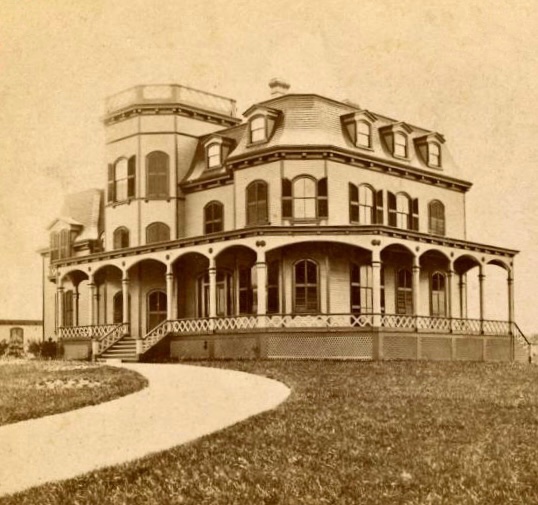
Not to be confused with The Villa, an extant mansard-roofed cottage in Newport, this beautiful example of the Second Empire style sadly is no longer around for us to gawk at. “Train Villa” was built as a summer cottage for George Francis Train (1829-1904), a nutty, attention-seeking businessman, who in 1870-1, traveled around the world in 80 days. The feat caused a sensation, but only after a writer named Jules Verne fictionalized it, naming the main character Phileas Fogg. Train was already one of the most famous men in America, but he was not happy that Verne co-opted his story. “Remember Jules Verne’sAround the World in 80 Days?” he told English reporters. “He stole my thunder. I’m Phileas Fogg.” Train undertook a total of three trips around the world, each time attempting to beat the record of 80 days, with his final trip clocked in at just sixty days. Ironically, Amazon Prime just released the story as a new series (literally airing days ago). Before his inaugural trip around the globe, Train had this summer cottage built in Newport, where he could relax after his globetrotting. After his death, the property was renamed “Beachholm” and owned by Woodbury Blairof Washington D.C..The home was one of the most eye-catching in town and was located in front of the Seaweed Cottage (featured previously), until a fire in the early 1970s led to its demolition.
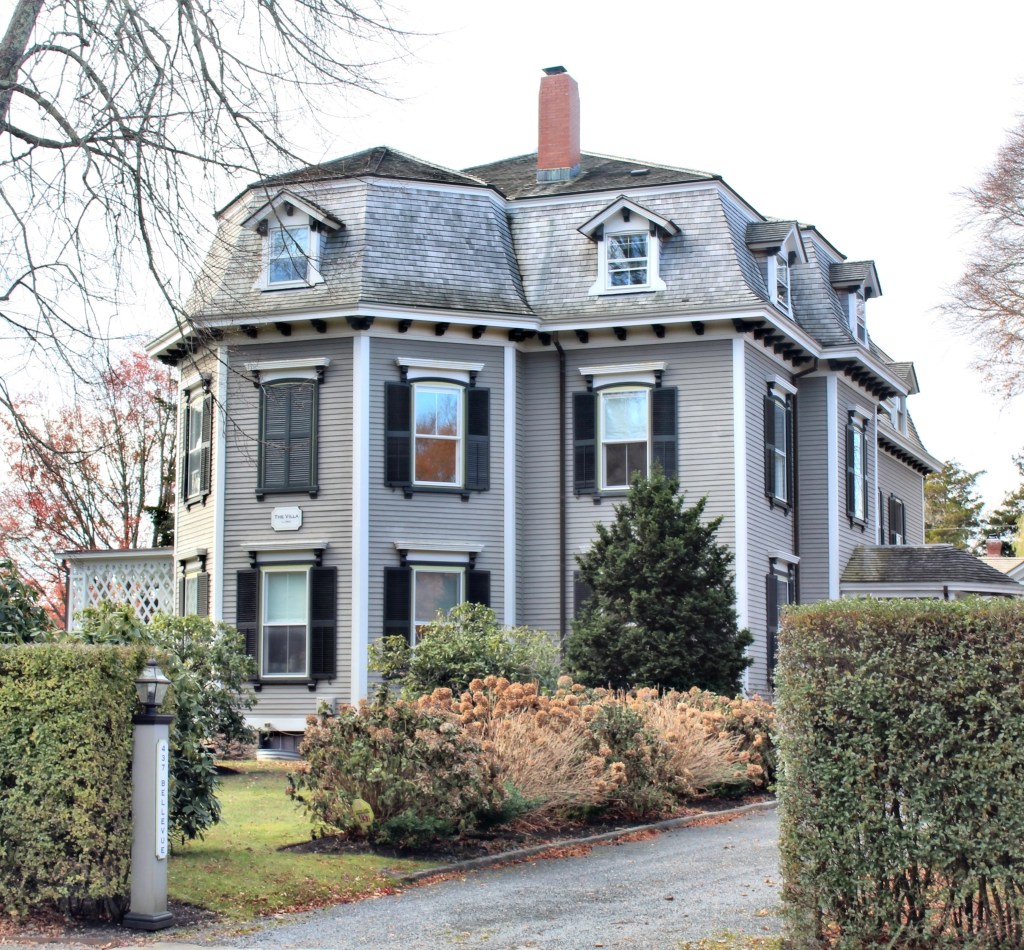
Margaret Barker Sigourney was the wife of Boston lawyer Henry Sigourney (1783–1849). In 1864, just as the Civil War was coming to a close, Sigourney purchased a piece of land on Bellevue Avenue in Newport soon after the time that Newport had been rediscovered as a tourist destination for the elite class. Sigourney wanted to make a splash as a single woman summering in Newport, so she hired local architect George Champlin Mason to design her cottage in the fashionable Second Empire style. The refined facade is more academic, while the rear and side facades exhibit porches with delicate bargeboards and trim. Sigourney spent summers at her cottage with her only son until 1873 when he and his family perished and were lost at sea aboard the Ville du Havre, when it collided in the Atlantic with another ship, killing a total of 226 aboard the ships, many of which drowned and their bodies never recovered. Alone, Margaret Sigourney continued to spend her summers in Newport until her own death in 1885.
One of the more architecturally modest and refined Gilded Age summer cottages of Newport sits on one of the most picturesque pieces of land at the southeastern point of Aquidneck Island and is aptly named Land’s End. The cottage was built in 1864, Land’s End was designed by John Hubbard Sturgis for Boston banker, Samuel Gray Ward, his father’s business associate. The home features a refined Italianate style base with a roof comprised of a variation of the Second Empire mansard style called a “turtleback roof”. Land’s End is probably most famous as the residence of Edith Wharton (1862-1937) after she acquired the property in 1889. She worked with Boston designer Ogden Codman, Jr., to experiment with a style of subdued classical interiors and a remodel of the exterior, which was later featured in their book, “The Decoration of Houses”. Wharton was inspired to show what good taste is after the influx of Vanderbilts and other newly moneyed summer residents of Newport. The book focused on how to build and decorate houses with nobility, grace, and timelessness. It would, they hoped, lead its readers out of what Wharton called (pace the Vanderbilts) a “Thermopylae of bad taste” and into an aesthetic Promised Land. Wharton only lived at Land’s End for a decade, when the “stuffiness” of high-society there led her to move to the Berkshires in Massachusetts, where she worked with architect Ogden Codman to design her new home, The Mount. It the monstrous Lippitt Mansion, Breakwater was built at the time, just next door! did not help that Sadly, many of the interiors have been altered since Wharton’s time there, but with more recent interventions, but the book did help shift some of Newports later homes to a more refined, classical taste.
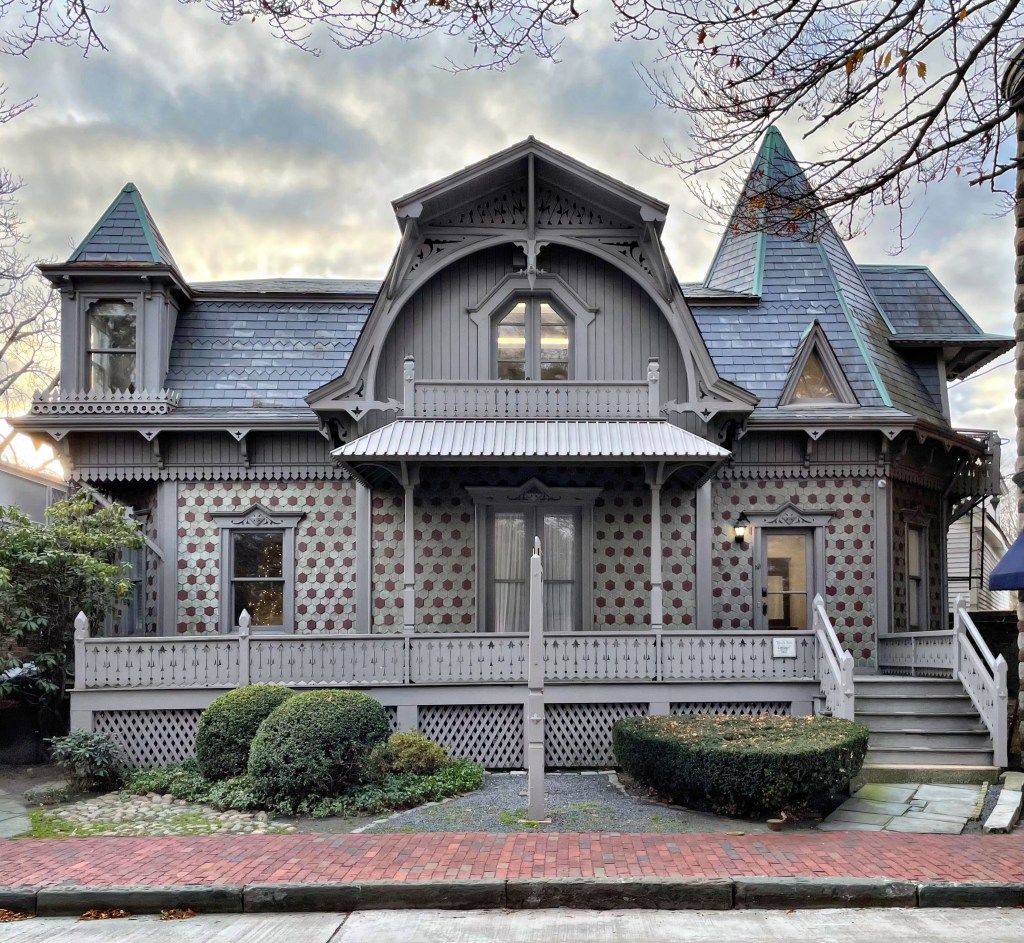
One of the more unique and relatively modest summer cottages in Newport, Rhode Island is Bird’s Nest Cottage on Bellevue Avenue. The cottage was built in 1871-2 for Samuel Freeman Pratt, who lived his early life in Boston. The son of a carpenter, Pratt was was working as a carver in Boston, where he saw success as an inventor with several patents to his credit. From the success of one of his inventions, a device for sewing machines, the invention gave him the financial freedom to explore other interests, namely architecture. In Boston, he likely learned his craft from partner John Stevens, before setting out on his own. He designed buildings in Oak Bluffs on Martha’s Vineyard, but decided to reside in Newport. While many state that this cottage for Pratt was designed by the Newport resident and star-chitect Richard Morris Hunt, the design and the fact that it was his own cottage lead me to believe it was designed by Pratt himself. The eclectic cottage features complex gable shapes, fancy stickwork under the eaves, projecting corner bays, and a wall covering of multicolored slate roof shingles. It is now a professional office.

 Buildings of New England