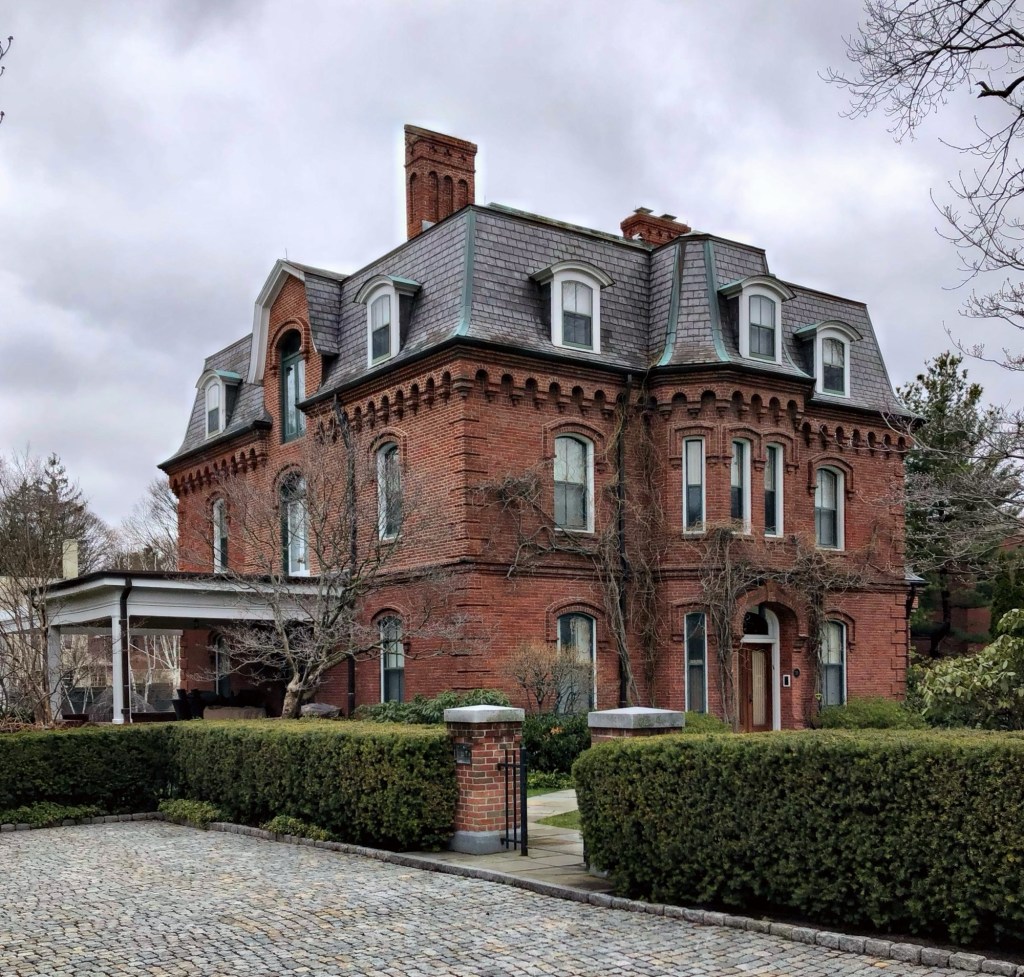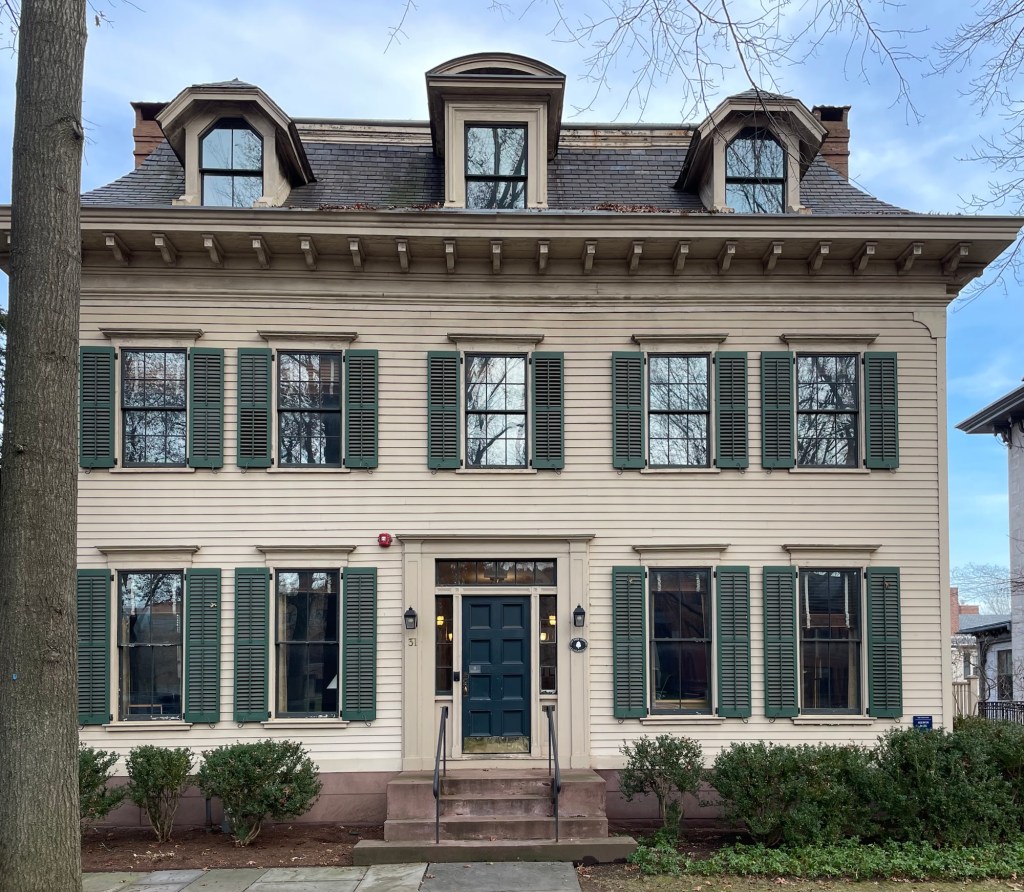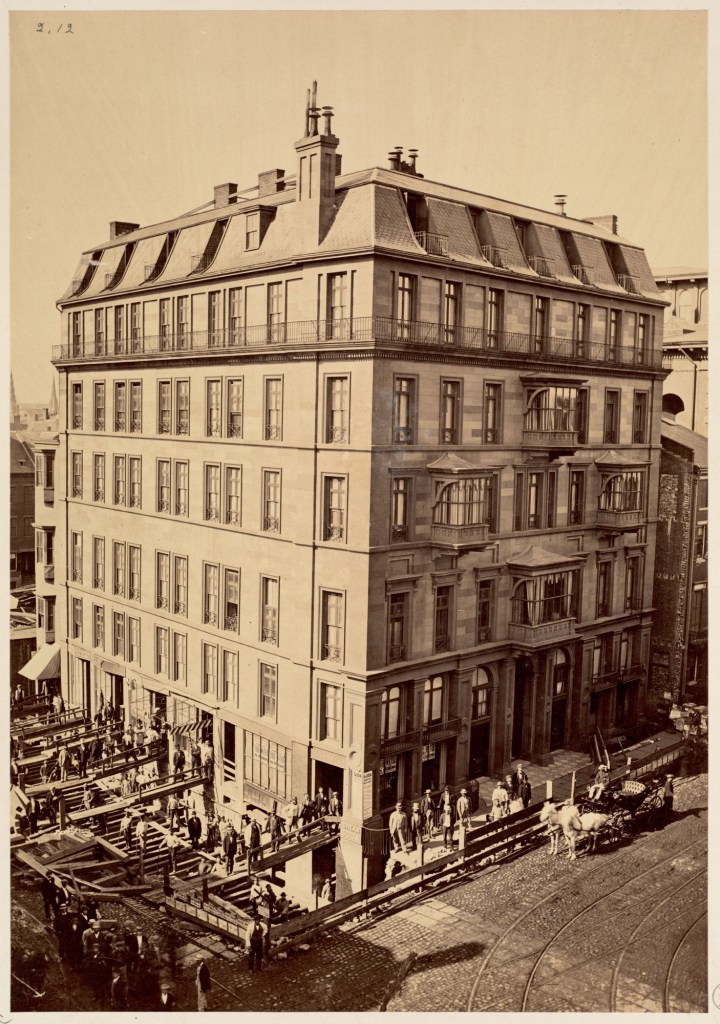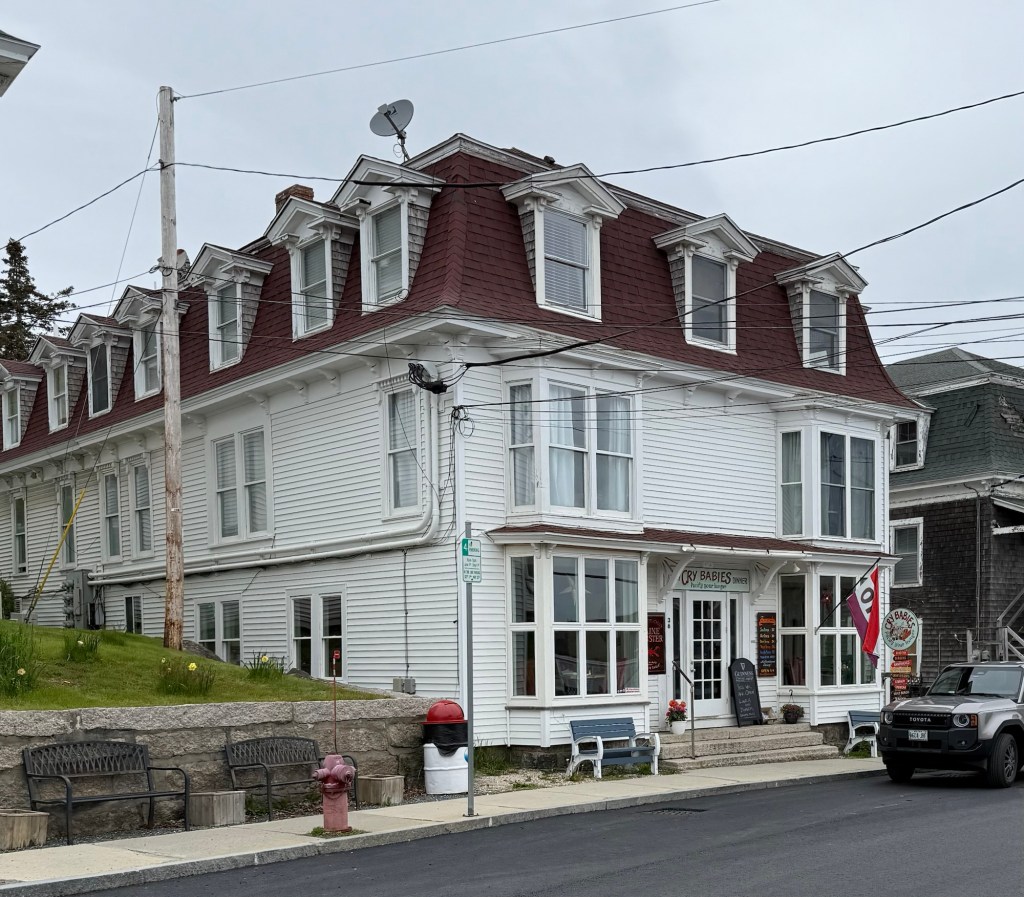
Church of the Holy Name of Jesus Rectory //1857

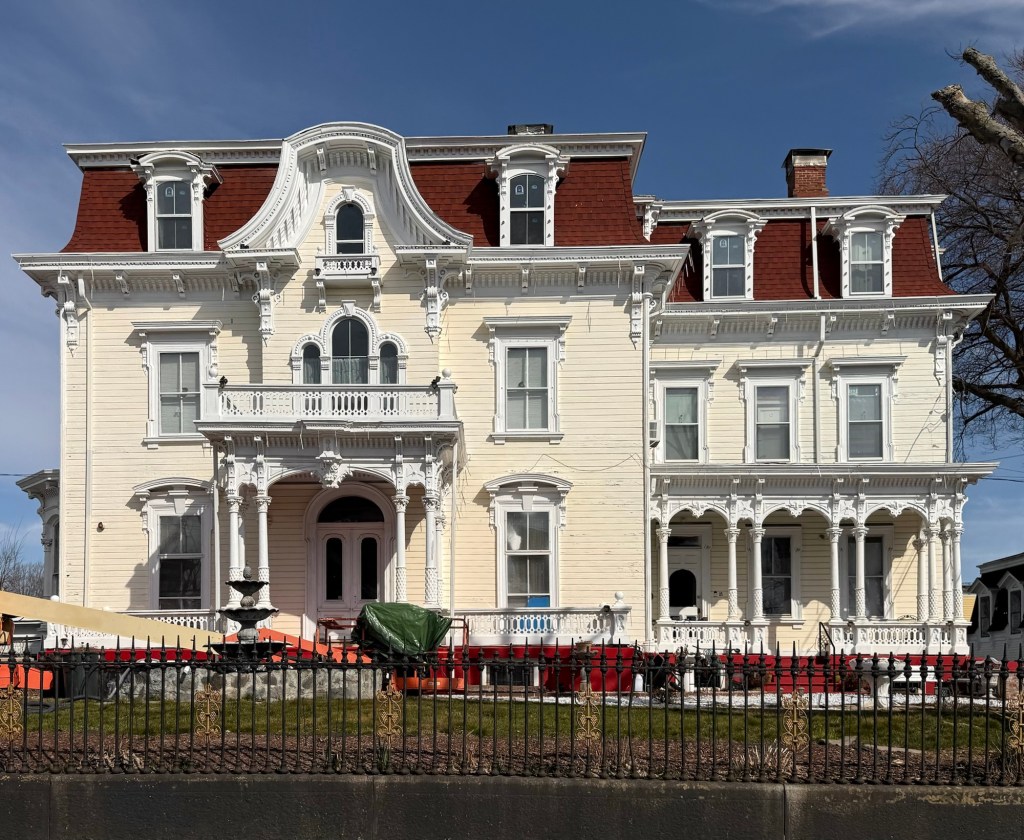
In 1857, the same year that the Diocese of Springfield built the Church of the Holy Name of Jesus in Chicopee, they also broke ground on an adjacent rectory, a residence for its priest. Like the church, the brick rectory was possibly designed by Irish-born architect, Patrick Keely. The Italianate style building originally was capped by a shallow hipped roof, but a renovation in 1871 added the mansard roof, two-story bays, and the portico at the entrance. The building served as the church rectory for over a century but eventually closed by 2011, and the future of the site was uncertain. Luckily, the Polish Center of Discovery and Learning have rented and occupied the rectory, serving as an important cultural institution educating and collecting to tell the story of Polish history in Chicopee and beyond. Fitting that many early-arriving Poles in the late 19th century to Chicopee attended this church before establishing their own.

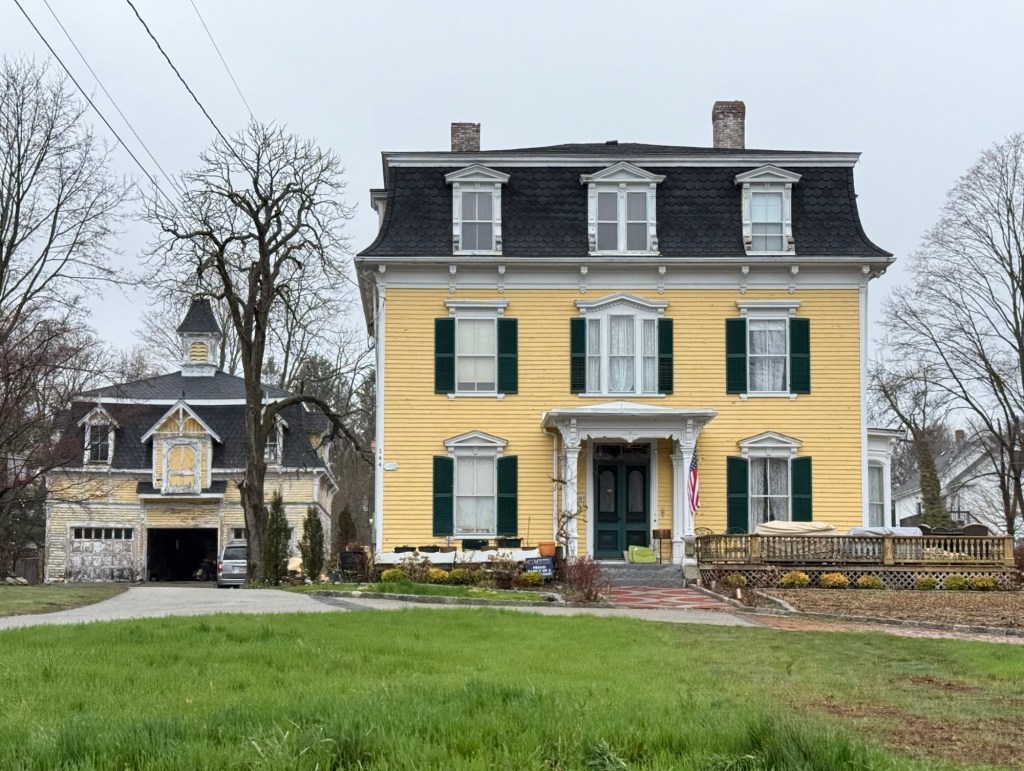
Emerson Gaylord Mansion // c.1871

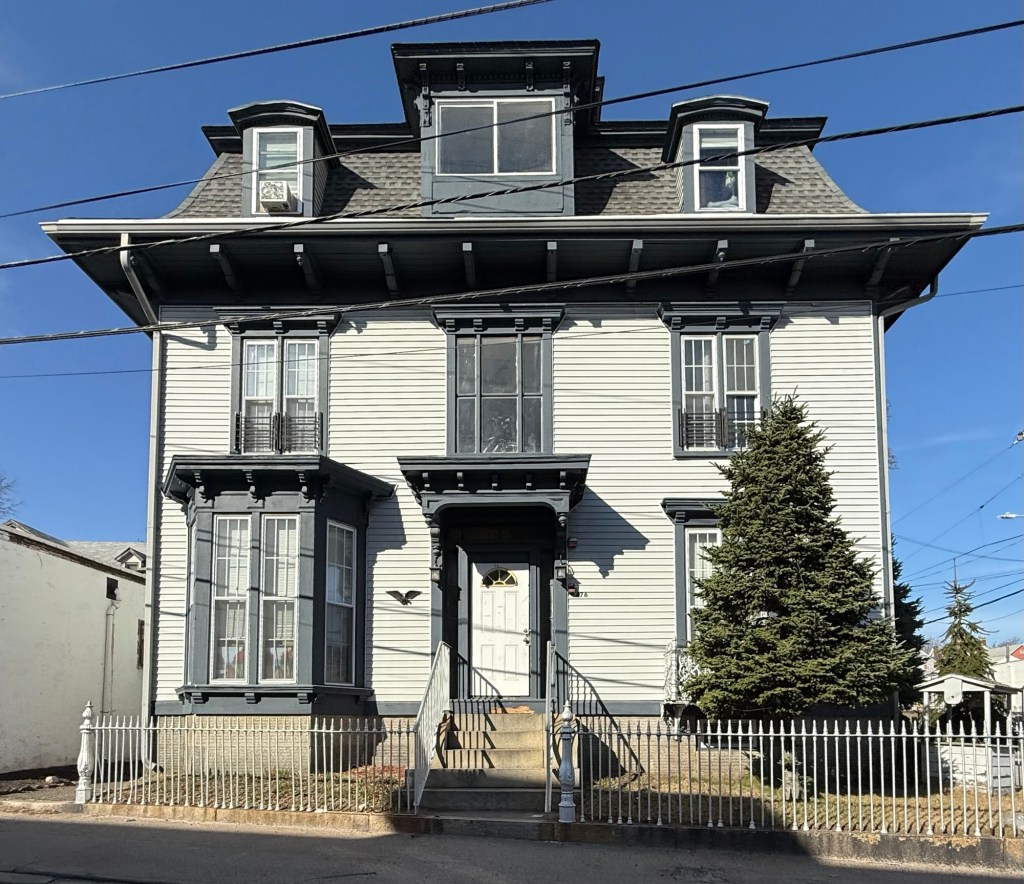
Emerson Gaylord (1817-1899) was a businessman and politician from Chicopee, Massachusetts, who operated the Gaylord Manufacturing Company and later, the Ames Sword Company, furnishing military swords and other goods for the Union during the Civil War. His business did extremely well and he became one of the wealthiest men in the industrial city. In 1856, Gaylord purchased the property at the corner of Springfield Street and Fairview Avenue and resided in a home here until years following the war, when he demolished the original structures on the site in 1870 to build a new home currently known as the Gaylord Mansion, worthy of his stature and notoriety in Chicopee. In 1962, Elms College purchased the Gaylord Mansion for $50,000. In 1997, an Elms College Cornerstone Campaign raised $100,000 to refurbish the exterior of this historical treasure. In February 2020, the Gaylord mansion underwent another renovation by the college to transform the interior into a classroom-meeting space with dorm residences on the top floors dubbing it “Living-Learning, Community and Cultural Center”.

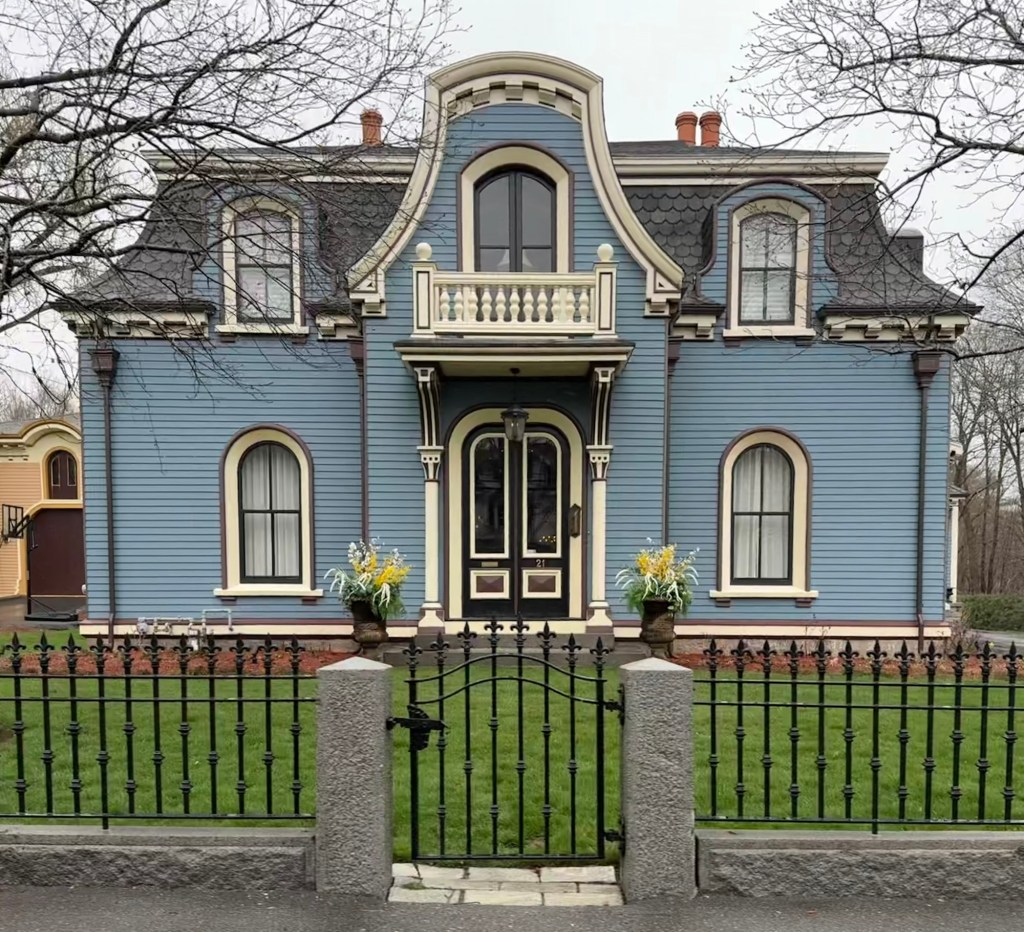
Langley-Dudley Cottage // c.1870

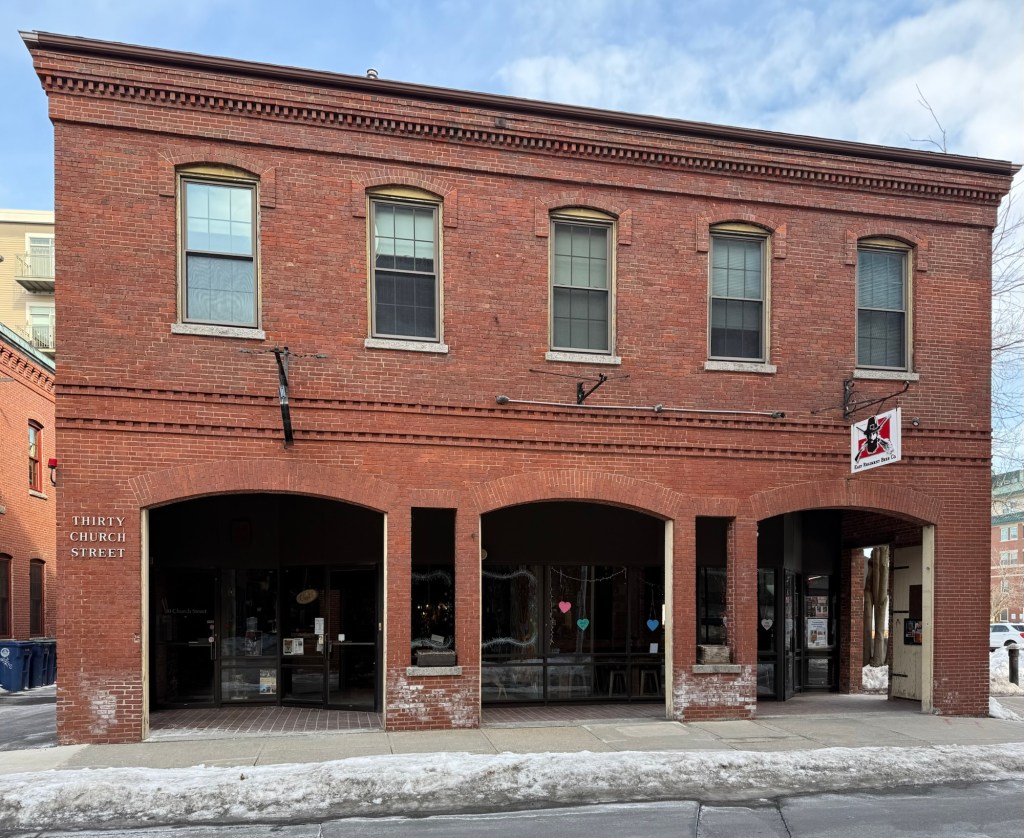
This charming mansard-roofed cottage can be found at 54 Prospect Hill Street in Newport, Rhode Island. While presently a residence, the cottage was originally built around 1870 as a stable or carriage house for the former Bowen-Newton-Tobin House at 204 Spring Street. After the Bowen heirs sold the property, this structure was owned by Mr. John S. Langley, an furniture dealer (who also made coffins and caskets) with the firm Langley & Bennett. The building may have been used for the storage of horses or as a workshop until it was purchased by Mary B. and Dudley Newton, a prominent local architect. They appear to have converted the former stable into a cottage, and rented the property out for additional income. In the renovation, Dudley Newton preserved much of the original detailing above the cornice, and altered openings to provide windows and doors convert the formerly utilitarian structure into a cottage.

Dexter Asylum // 1828-1958

C.1958 photo before demolition. Courtesy of Library of Congress.

Built in 1828, Dexter Asylum was a “poor farm,” an institution housing the indigent, elderly, and chronically unemployed, located in the East Side of Providence, Rhode Island. Poor farms were common before the introduction of Social Security and welfare benefits in the United States, considered a progressive method for dealing with poverty. Ebenezer Knight Dexter (1773-1824) was a wealthy mercantile trader in Providence, who in 1800, built Rose Farm, a gentleman’s farmhouse on what was then, the outskirts of Providence. Upon his death in 1824, he bequeathed to the town 40-acres of the farmland to the north for use as a poor farm or almshouse site. The building was completed by 1828 and was originally three stories, and later expanded with a mansard roof and dormers sometime later in the 19th century. Dexter also stipulated that a stone wall would surround the site, and parts of it remain to this day. As with many poor farms and almshouses of the period, residents worked farmland and cared for pigs and a herd of dairy cows; they lived in this large building, strictly segregated by sex. Residents were essentially inmates, indentured for periods of six to twelve months, and could not leave the property without a ticket of permission. In the interwar period, “inmate” population there declined and changing views on how to assist the poor caused the City to abandon the facility. After decades of legal troubles and stipulations of the Dexter will, in 1956, the plot was auctioned off, and Brown University purchased the site. The grounds are now used by some of the Brown University athletic facilities. The city set aside the money from the sale to create the Dexter Donation, which gives annual grants to assist the city’s poor, providing an enduring legacy of Dexter’s Asylum.

Captain Albert F. Ames Mansion // 1874

Located next door to the William H. Glover House on Talbot Avenue in Rockland, Maine, this equally impressive Second Empire style Victorian residence stands as one of the finest in town. The abode was built in 1874 for Captain Albert Franklin Ames (1831-1887) by the architectural firm of Kimball & Coombs of Maine. Albert F. Ames was a sea captain and merchant who would later own many ships to distribute his manufacturing of lime casks which were sold and transported all down the east coast to build American cities. The stately home would later be the subject of one of artist Edward Hopper‘s paintings in Rockland, titled, “Talbot House” after a later owner.

William H. Glover House // 1873

William Hurd Glover (1834-1910) was a prominent lumber dealer and builder in Rockland, Maine, and would built this house as his residence on Talbot Avenue. Mr. Glover hired architect Charles F. Douglas, to furnish the plans for the Second Empire style mansion. While covered in vinyl siding, the handsome residence features a slate mansard roof, central tower, delicate projecting portico over the entrance, and decorative window hoods and brackets. The house is one of the best examples of the style in Maine, even with the later siding.

Rockland Custom House & Post Office // 1873-1969

Photo included in HABS documentation

It saddens me to see photos and learn about some of the amazing buildings demolished in the name of “progress”; it is even more disappointing when said building is replaced by a surface parking lot (over 50 years later)! This great stone building was built in Rockland, Maine, in 1876 as the town’s post office and custom house by the Federal government. Relatively unknown architect Alfred B. Mullett is credited with the design as he served from 1866 to 1874 as Supervising Architect of the United States Treasury Department. The building can be classified as Italianate-Second Empire in style and is constructed of massive, rough-faced granite block walls with a shallow mansard roof above. The building was offered for sale by the U.S. Government in 1967, likely due to the upkeep costs and a shrinking local population with the dependency on maritime trade diminished. The building was ultimately razed in late 1969, with a new, uninspiring, post office built next door to this site.

Joshua Silvester House // 1857

This large house sits on Peabody Avenue in Danvers, Massachusetts, and is thought to be the oldest house built of cement in the United States! Joshua Sylvester Silvester (1803-1888), the house’s original owner, was born in Wiscasset, Maine, and began working in the shoemaking business, expanding his products in England, taking many business trips there. While in England, he is said to have particularly admired Charles Dickens’s estate, Gad’s Hill, and modeled his Danvers home after it. Joshua Silvester not only designed this house, but directly supervised its construction which is of hand-poured cement/stucco by two masons imported to town to work on the house. The fifteen-room residence with octagon-shaped barn was complete by 1858. In 1880, the property was purchased by Isaac B. Howe of Clinton, Iowa. Howe was a civil engineer who had helped to lay out the Transcontinental Railroad and had been superintendent of the Iowa division of the Chicago and Northwestern Railroad. Howe died within a year of moving to Danvers,
but his family continued to live in the house for many years.


Colby Hall – Andover Newton Theological School // 1866

Colby Hall sits perched atop a hill overlooking Newton Centre, Newton, and is located in the Andover Newton Theological School campus. The building was constructed in 1886 for the Newton Theological Institution, which was founded on this site in 1825, and used for the a Baptist seminary, educating young students in theology. By the 1860s, the school had outgrown its space and following a donation from benefactor,  Gardner Colby (1810–1879), who was treasurer of the school (and was also the benefactor and namesake of Colby College in Maine) plans were drawn up for the new lecture spaces and chapel building. The unique building was designed by Alexander Rice Esty, a prominent architect at the time, and it blends Second Empire and Romanesque Revival styles under one roof. The three-story structure is of a light buff, rough cut stone with sandstone trim and features an imposing four-story tower at the eastern end. In November 2015, the school announced that it would sell its campus and become part of Yale Divinity School in New Haven, Connecticut. The Newton campus was purchased by the Windsor Park School with Colby Hall now occupied by the Boston Psychoanalytic Society & Institute.

Farwell Hall – Andover Newton Theological School // 1829

The Newton Theological Institution, a school originally founded for the Baptist ministry, opened on Institution Hill in Newton Center in 1825. The 40-acre campus started with six buildings, including this one, Farwell Hall, built in 1829. Farwell Hall is the oldest extant building on the campus today and is named after benefactor and early founder of the school, Levi Farwell. The brick building began as a late-Federal-designed building with a classic Federal Style window fenestration and Adamesque brick arches on the first story side elevations, but the formerly Federal style building was modernized in 1871 with the addition of a fourth floor via a mansard roof, and a more recent, unfortunate altered entry with projecting roof. After the Andover Newton Theological School sold their campus, the building has since been home to an assisted care facility.