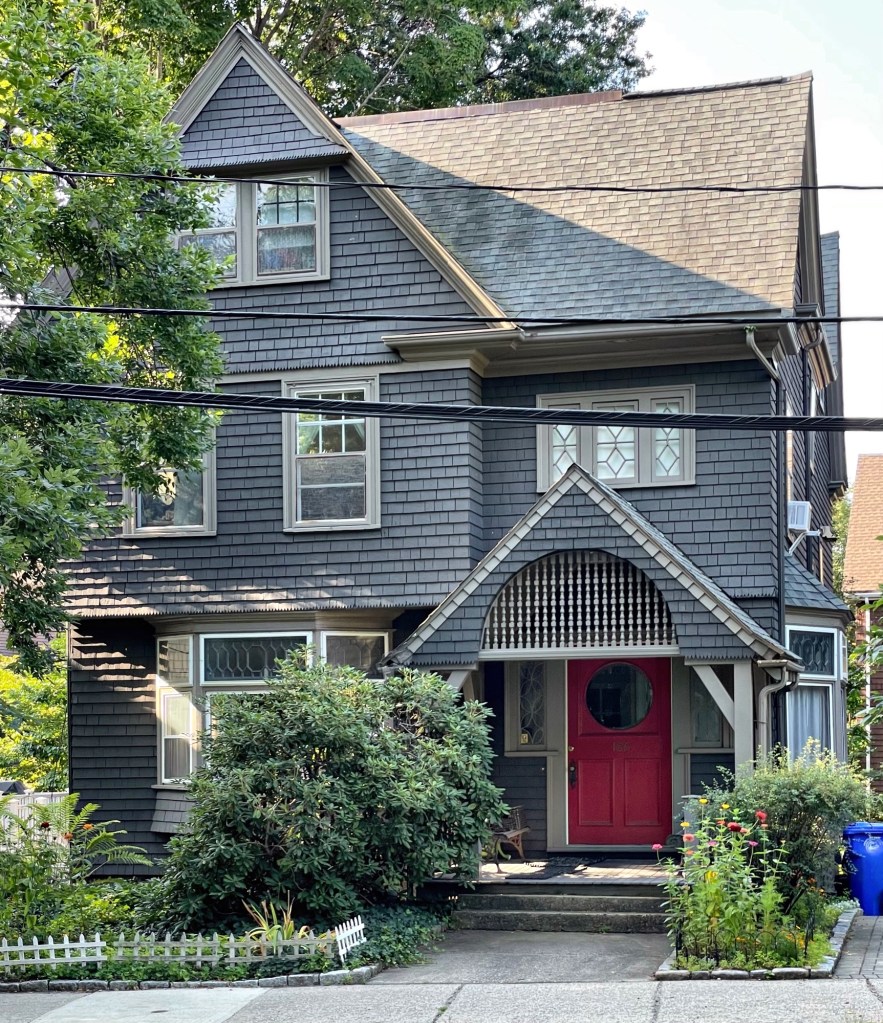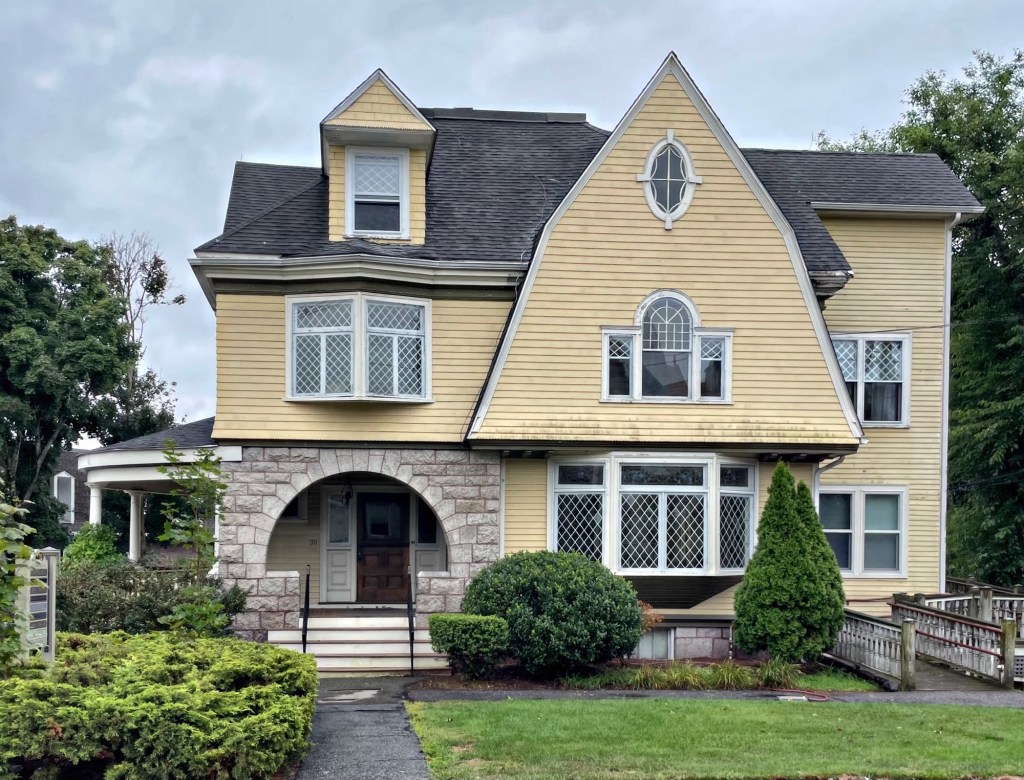
Oliver J. Barr House // 1908

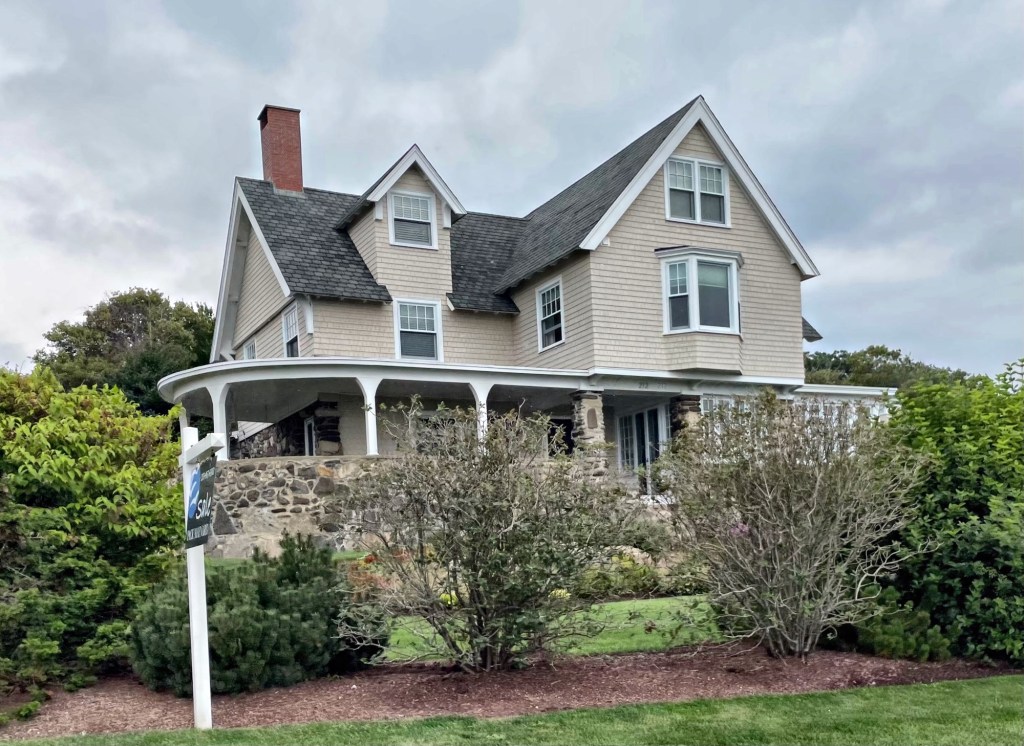
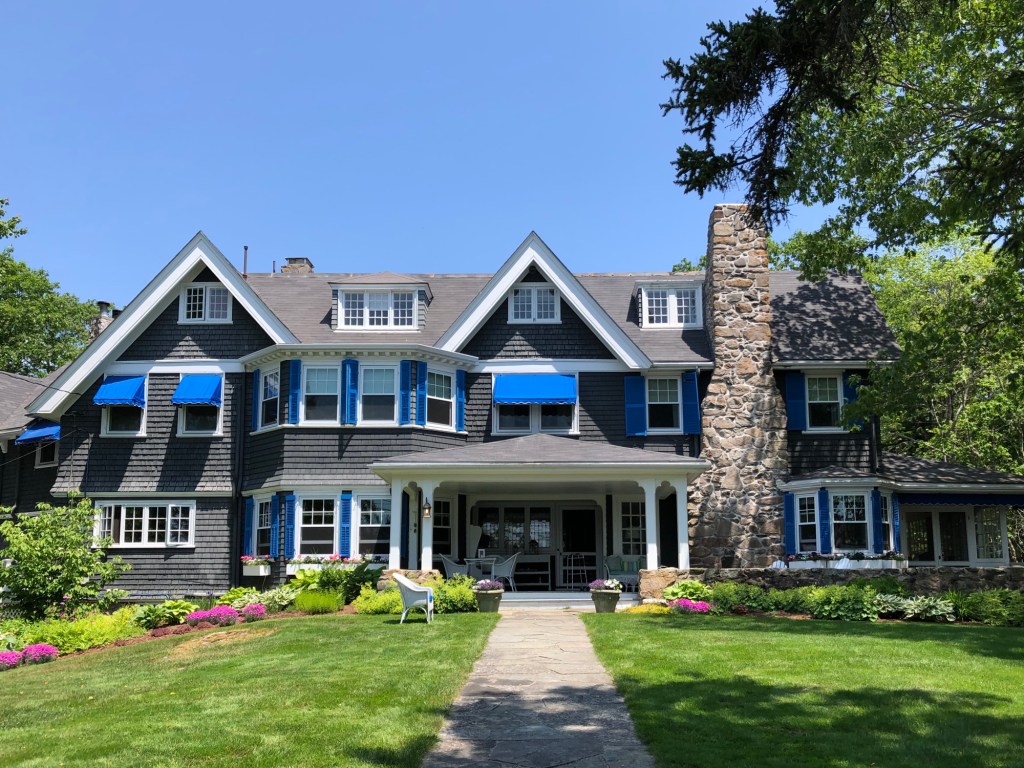
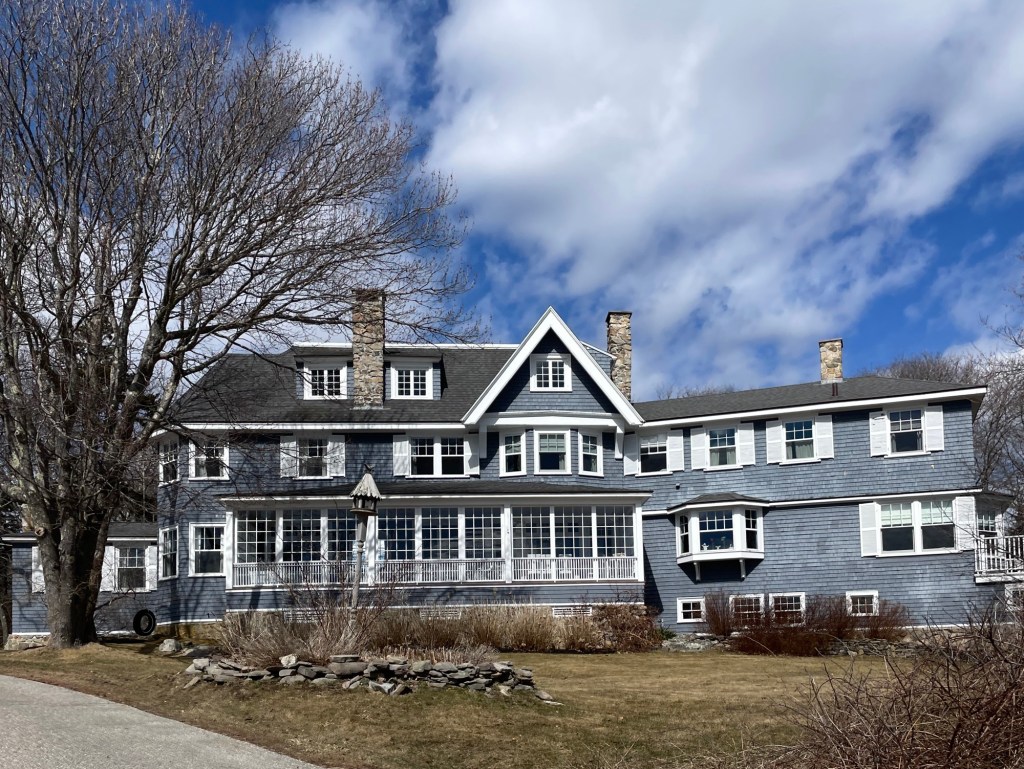
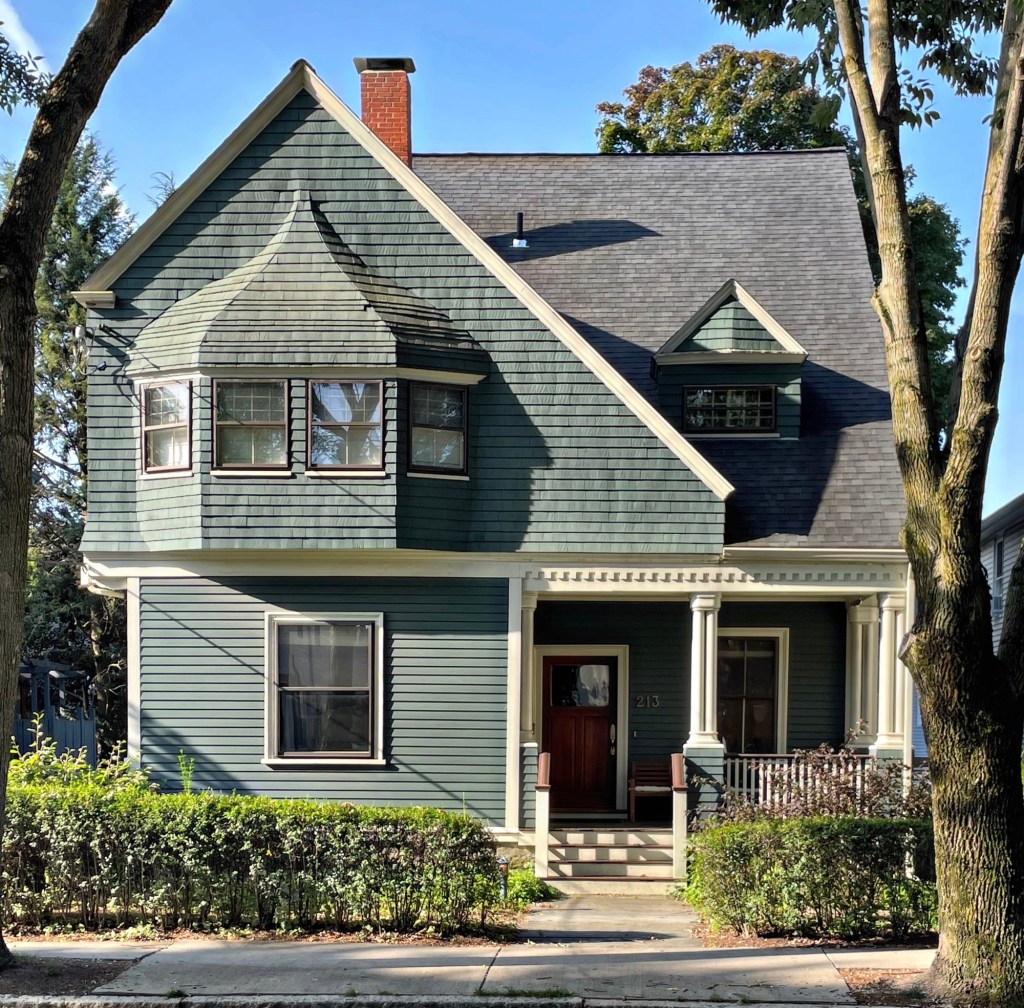
Built in 1908 as a late example of the Queen Anne and Shingle styles, the Oliver J. Barr House is one of the finest Victorian buildings in Norwood, Massachusetts. The residence was built for Oliver J. Barr (1863-1935), who served as the General Manager of the Norwood Press in town, following his company from Boston to Norwood. The house was designed by Eugene Clark a Boston-area architect who specialized in suburban houses in the late 19th and early 20th centuries. The dwelling is noteworthy for its distinctive form, intact and rough textured wood shingle siding, and complex roof configuration. Particularly noteworthy is the verandah which encircles its northeast corner and rounded conically capped tower.

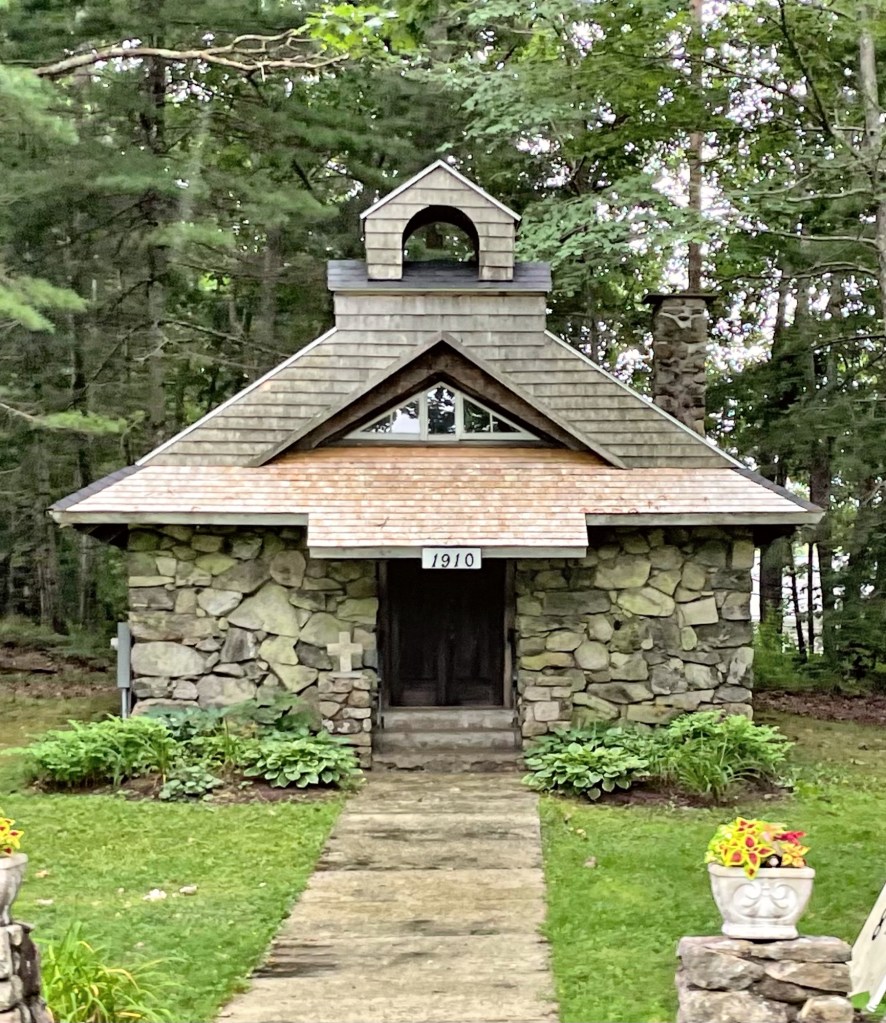
Wildwood Baptist Chapel // 1910

Tucked away on a wooded lot, away from the main villages of Kennebunkport, Maine, the Wildwood Baptist Chapel sits on the side of the road looking like a scene from a storybook. The chapel was built in 1910 for Baptists residing in the Wildes District of town, between the busier Kennebunkport Village and Cape Porpoise. The stone used in the construction of the chapel was taken from nearby properties and assembled on site by a skilled mason who built the walls with a Shingle style roof. Services here were limited and eventually ceased in earnest in 1935, as personal automobile allowed residents to travel to the church in the village for services. The poorly insulated chapel and small fireplace made the sanctuary inside difficult to heat in the cold winter months. The chapel is maintained well to this day, and is primarily used for summer services and special events.

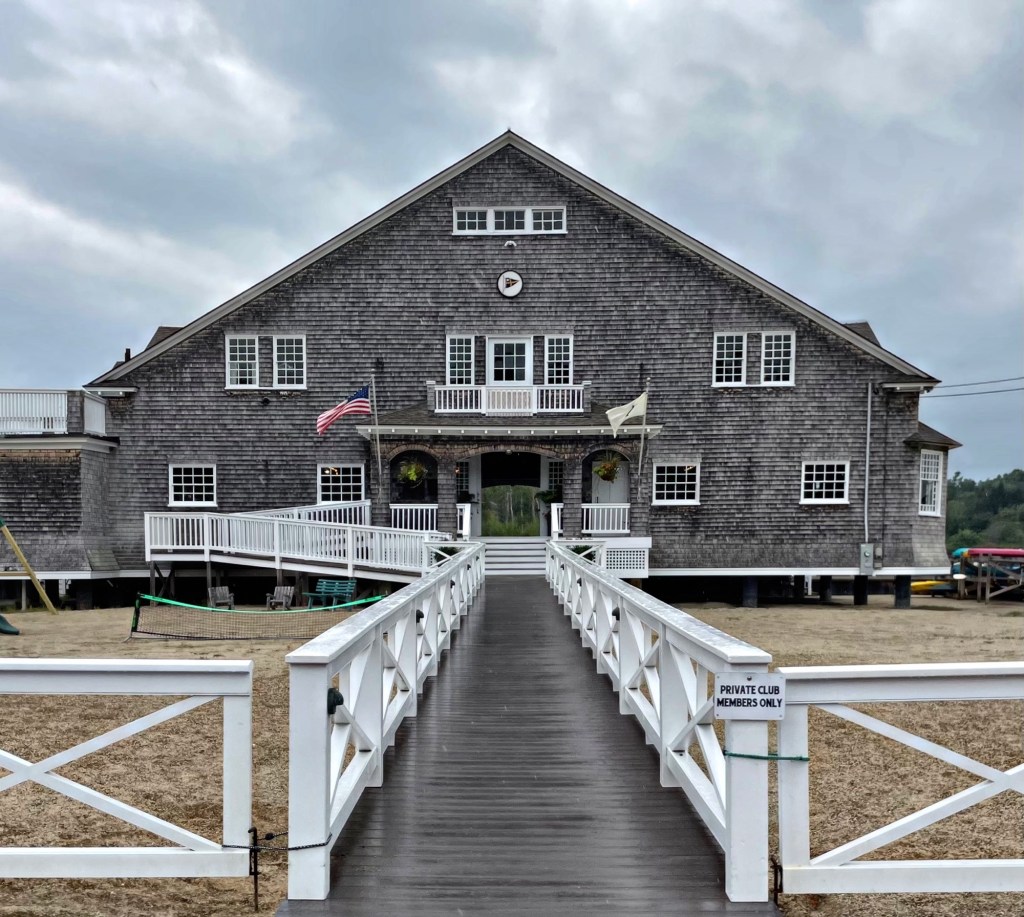
Kennebunk River Clubhouse // 1889

A canoe club formed by John B. McMaster, Prosper L. Senat and Henry E. Woods in the early 1880’s grew to a large “Lobster Club” by 1888. In 1889, the club decided to build this Shingle style boat house and the organization changed their name to the ‘Kennebunk River Club’ and hired Lowell, Massachusetts architect, Frederick W. Stickney to design a new boathouse. It opened in August 1890. The club grew quickly as Kennebunkport continued to become a premier summer destination with wealthy residents building summer “cottages” in town. In the building, canoes were built and hired out to club members by members of the Penobscot tribe who came to Kennebunkport from Old Town each summer working here. The clubhouse is one of the finest Shingle style recreational buildings in New England.

Point O’ View Cottage // 1892

The Point O’ View Cottage in Kennebunkport sits on a large lawn on the rugged Maine coast, with sweeping views of the Atlantic Ocean. Built in 1892 by Burleigh S. Thompson as a rental property (he rented it for $1,500 for the summer) the nine-bedroom “cottage” was designed in a Tudoresque version of the Queen Anne architectural style and originally named Fort Bradford. The cottage (like others built for Mr. Thompson) was designed by Henry Paston Clark, THE architect for the Cape Arundel Summer Colony in the 1890s, who also designed St. Ann’s Episcopal Church and other cottages nearby. The cottage was renovated more in keeping with the Shingle style and was entirely clad in cedar shingles, but it retains its perfect, rustic stone foundation and rounded porch. It is now known as Point O’ View Cottage. What a view it has!

Kewaydin Cottage // 1900

Every good summer cottage needs a name, and this charmer in the Cape Arundel Summer Colony of Kennebunkport, Maine, is no exception! This is “Kewaydin” a massive summer home built for Eben Caldwell Stanwood Jr. (1856-1906) a merchant and later banker of Boston, Massachusetts. Stanwood hired the Boston firm of Chapman & Frazer to design the cottage, which blends Shingle style and Queen Anne elements in a rustic composition that has such great curb appeal! The use of cedar shingles and rubblestone chimneys, paired with the vergeboards and complex roofline with dormers, makes this one of the gems of Kennebunkport!

Pine Haven Cottage // 1902

Pine Haven Cottage sits on a rise overlooking the Atlantic Ocean in the Cape Arundel summer colony in Kennebunkport, Maine. Built in 1902 for Thomas Brodhead Van Buren, Jr., a silk importer in Manhattan as a summer home, the cottage was designed by Henry Paston Clark and his partner, John W. Russell in an eclectic example of the Shingle style with gable roofs, vergeboards, stone foundation, and a prominent porch that has since been enclosed.

Chester Guild Cottage // 1902

One of the many stunning summer “cottages” built in the Cape Arundel summer colony of Kennebunkport, Maine, is this turn-of-the-century Shingle style dwelling built for Chester Guild of Boston. Chester Guild III was born into the wealthy Guild Family of Roxbury with his father being a successful leather dealer. Chester Guild spent summers with his family in Kennebunkport beginning in the 1890s, eventually had this cottage built in 1902. The Shingle style dwelling remained in the family for five generations and is very well-preserved, showcasing the hallmark elements of the ubiquitous coastal Maine architectural style.

The Billingsgate Cottage // 1892

In 1892, this large summer “cottage” was built in the Land’s End section on the coast of Rockport, Massachusetts. The large summer residence was built for the Thatcher sisters of Roxbury and was named “The Billingsgate” after their mother’s maiden name, Billings. Caroline Billings Thatcher would summer here with upwards of her four other sisters, Lillian, Margaret, Mary, and Elizabeth, to escape from the city. The large summer cottage features a rubblestone first floor with stone columns supporting the shingled floor above. A large gambrel roof and dormers punctuate the façade and showcase the simplicity and elegance of the Shingle style.

Windswept Cottage // 1909

The coastal towns of Gloucester, Manchester, and Beverly on the North Shore of Massachusetts often are known for their historic summer “cottages” but great examples can be found right here in Rockport! This is “Windswept”, the W. W. Blunt cottage, located in the Headlands section of town, just south of the harbor. Walton W. Blunt worked as the Treasurer and General Manager of the Boston Journal newspaper and resided in Boston, later purchasing multiple adjoining house lots in Rockport for a summer residence. The two-and-a-half story house was designed by a Rutherford Smith, who sought to utilize fieldstone found nearby for the foundation and chimneys and shingle siding above. Detailed descriptions of the new house were featured in a local newspaper in 1909 and mentioned tennis courts on the grounds, an apartment for servants, and a billiard room in the third floor. It is not clear when the house got its name, “Windswept”, but the name is just too fitting!

Commercial Cable Company Relay House // 1884

This shingled house in Rockport may look like an ordinary 1880s residence, but it was actually built as an important piece of infrastructure! This is the Commercial Cable Company’s Relay House, built in 1884 to serve as a terminus to a transatlantic cable providing communication across the Atlantic Ocean. Up until 1884, a French company, the Atlantic Telegraph Company, was the sole provider of transatlantic telegraph cables. James Gordon Bennett, editor of the New York Herald, was dissatisfied was the 50 cents per word he had to pay for transatlantic telegraphs. Seeking to break ATC’s monopoly, he convinced millionaire John W. Mackay to create the Commercial Cable Company. That company put down two cables from Ireland to Nova Scotia with two other lines to the United States, one to Rockaway Beach, Long Island, and the other to Rockport. This building housed offices on the first floor and a billiards room for employees on the second floor with machine shop in the basement to service equipment. Cable operations continued from this building until 1935 when newer international communications made cable lines obsolete. The Relay House was converted to residential use, and while it has been altered, it still maintains its significance architecturally and historically.