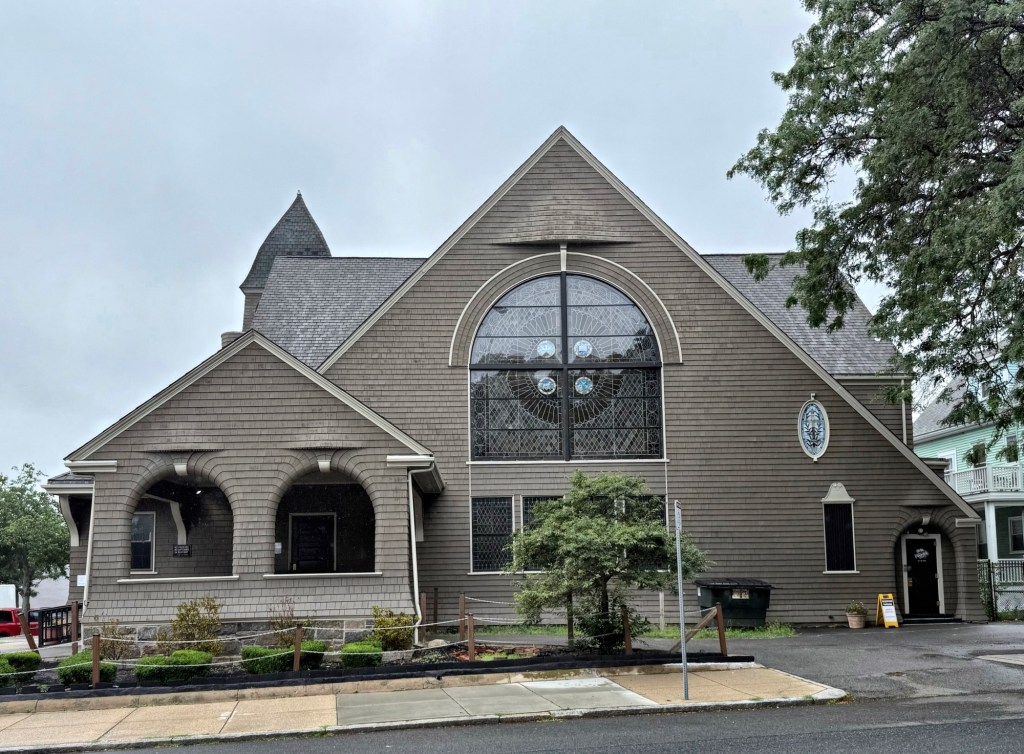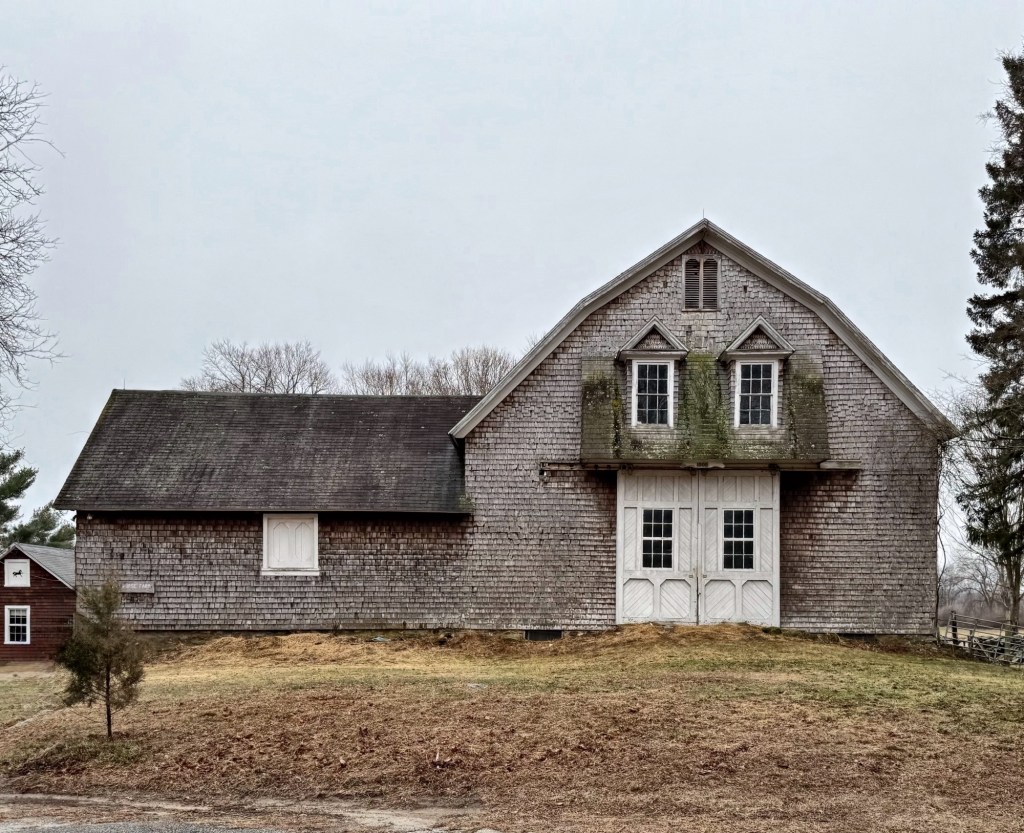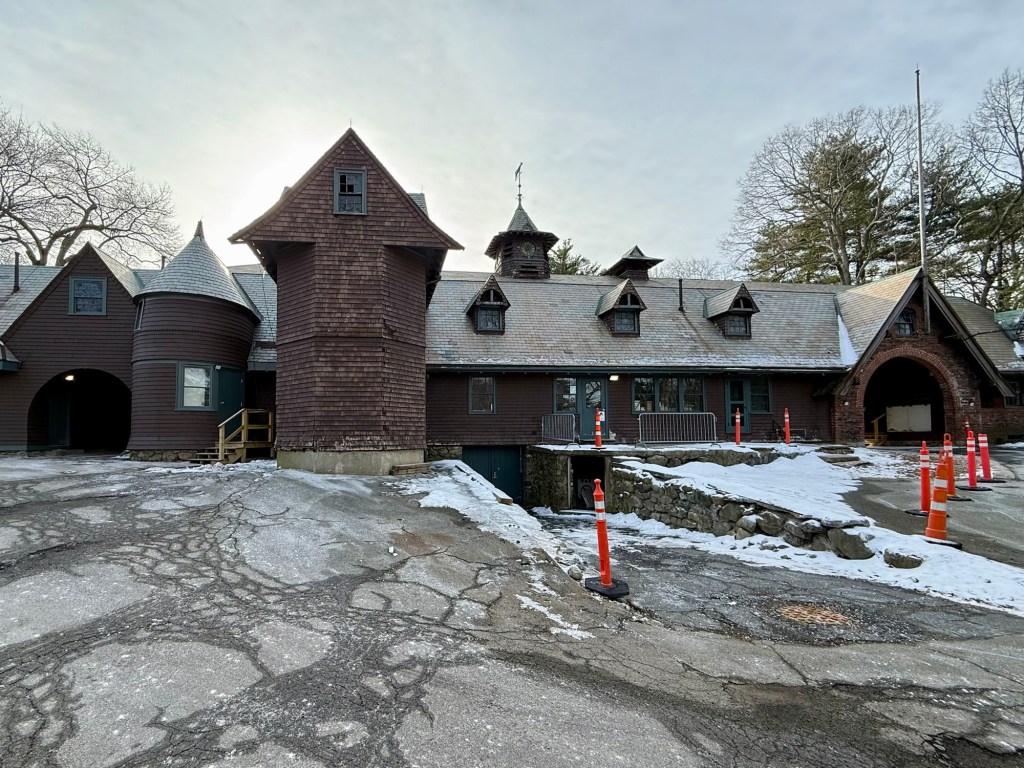
Roughwood Estate Cow Barn // 1892

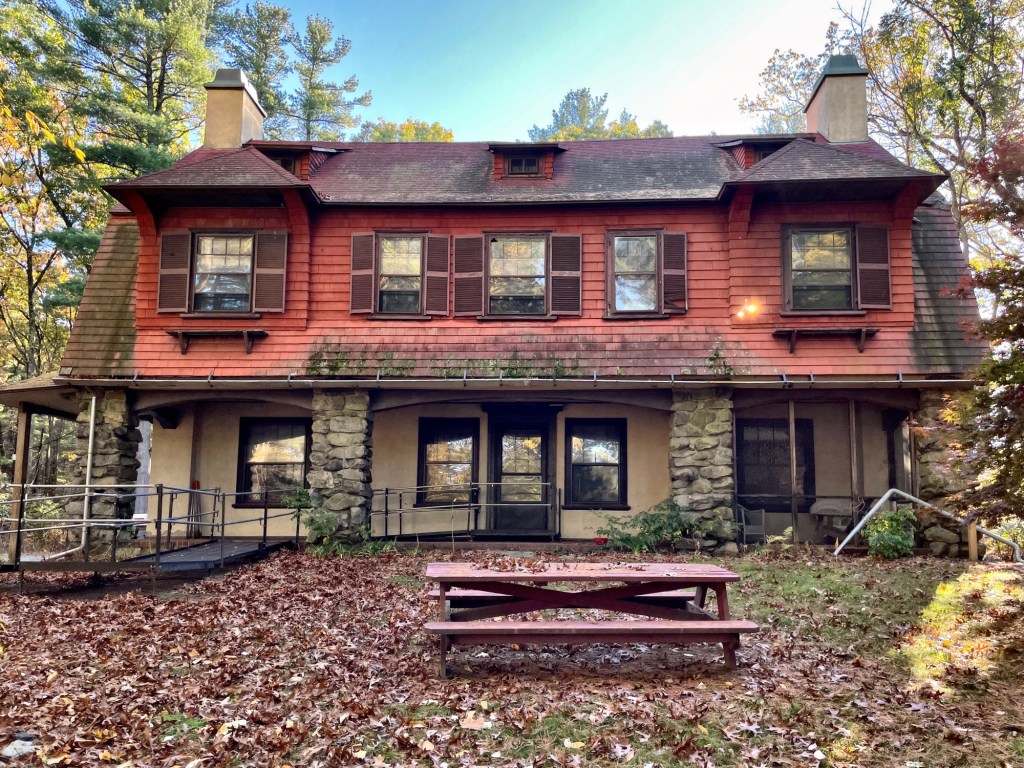
Like the Roughwood Mansion and carriage house, this building was designed and built in Brookline, Massachusetts, in the early 1890s as part of the “Roughwood” estate. Despite its high-style and ornate detailing, the building was actually constructed as a cow barn. Built in two phases for its two owners, William Cox and Ernest Dane, the large barn structure blends Victorian design into a use more reserved for vernacular detailing. The building was designed by Andrews, Jacques and Rantoul, and like the mansion and carriage house, blends Queen Anne and Shingle styles under one roof. Ever-since the estate became a college in the 1960s, the building has been used as a maintenance building. It appears that since it has been owned by Boston College as part of it’s Messina Campus, it is undergoing a thoughtful restoration!

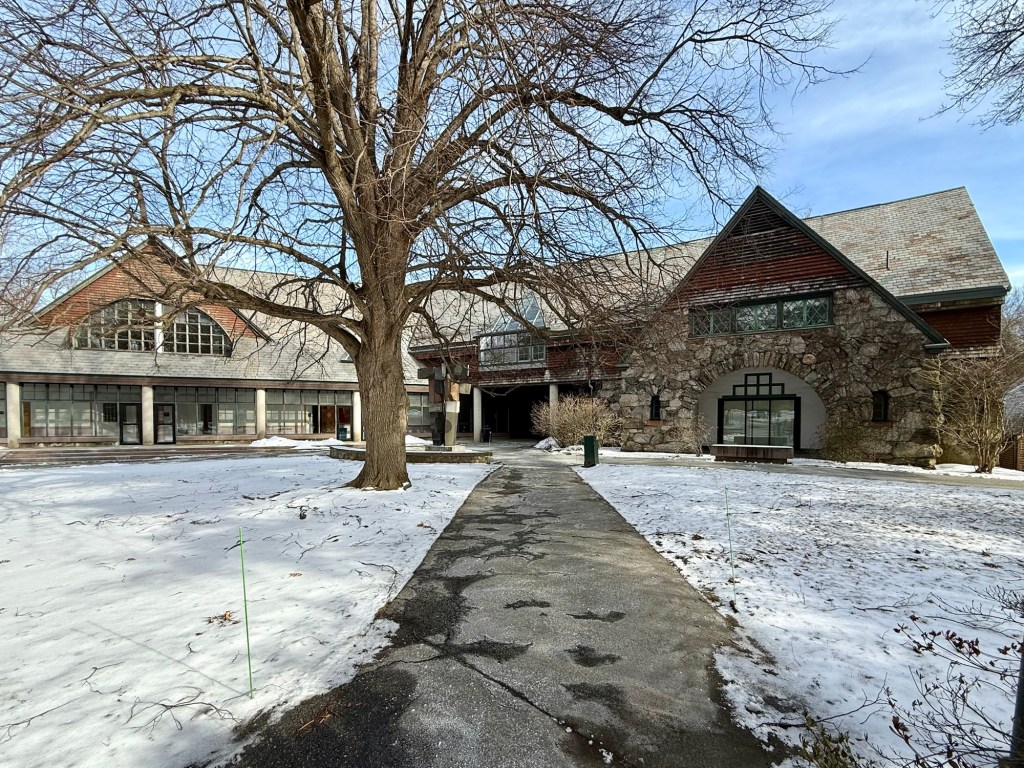
Roughwood Estate Carriage House // 1891

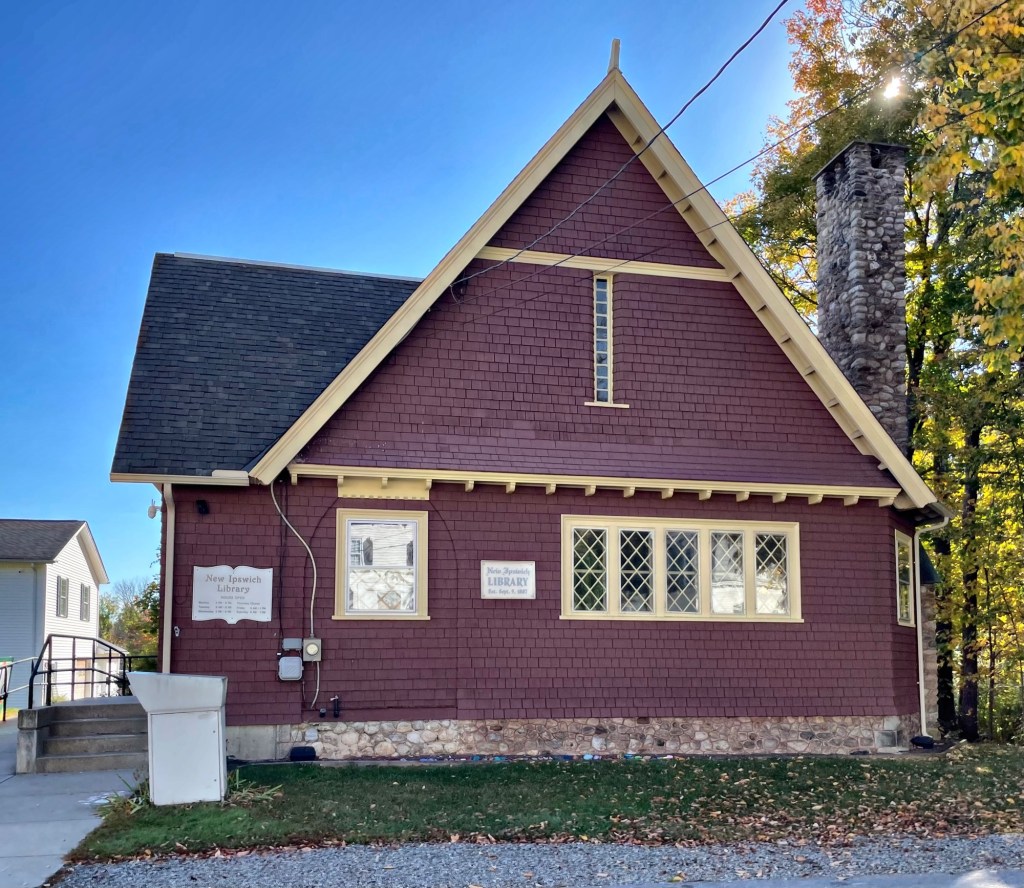
Built on the expansive grounds of “Roughwood”, a country estate in Brookline, Massachusetts, this former carriage house has seen many iterations in its lifetime. Like the mansion house, the carriage house is a blending of Queen Anne/Shingle styles with fieldstone and shingle construction, designed by the architectural firm of Andrews, Jacques & Rantoul. When the Roughwood Estate was purchased and converted to Pine Manor College, the carriage house was adaptively reused and added onto as the Annenberg Library with a large imaginatively designed wing by Shepley, Bulfinch, Richardson and Abbott completed in 1986. The building remains as a library as part of the newly established Messina College, a campus of Boston College, which opened in July 2024 for over 100 first-generation college students. Gotta love adaptive reuse!

Roughwood // 1891

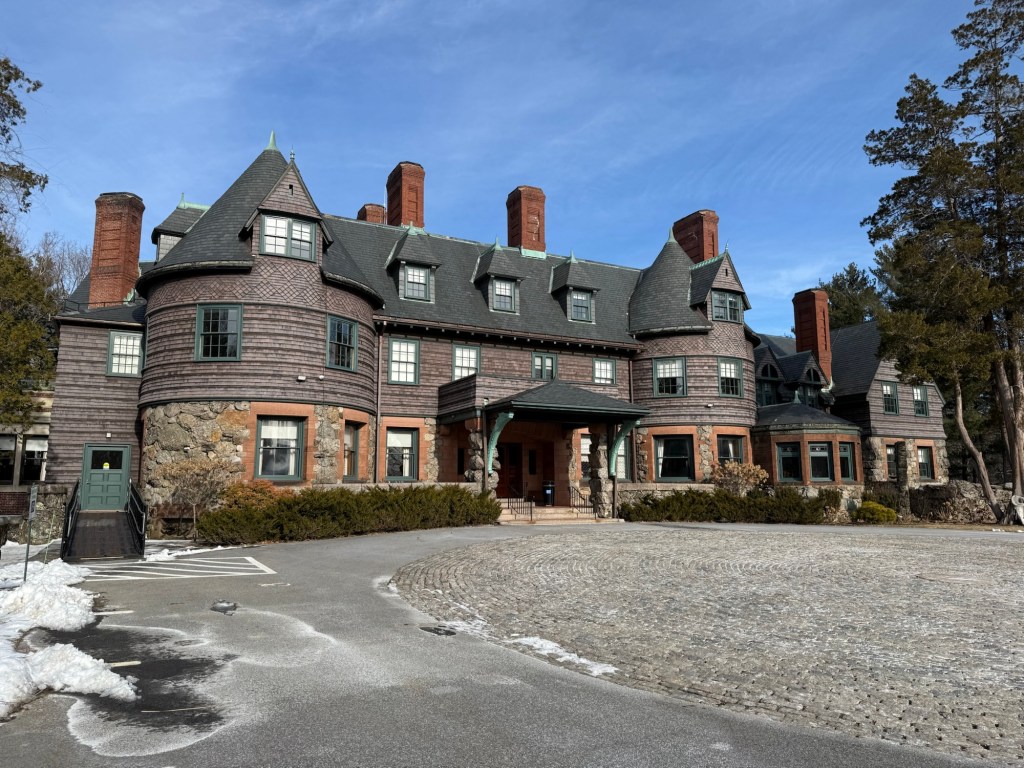
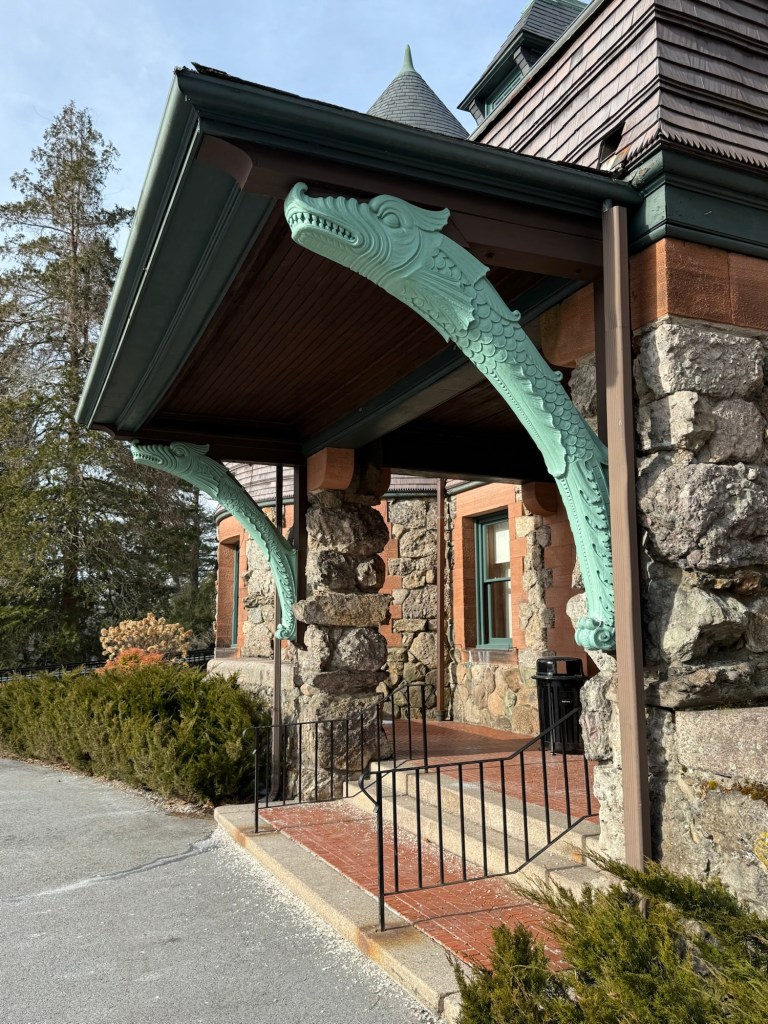
Roughwood is a historic estate house on Heath Street in Brookline, Massachusetts. The main residence and the various outbuildings on the grounds were designed by the Boston architectural firm of Andrews, Jaques and Rantoul, and built in 1891 as the summer estate of William Cox, a wholesale dealer in the footwear industry. Mr. Cox died in 1902 and the property was sold to Ernest Dane, the year before he married Helen Pratt, the daughter of Charles Pratt, a wealthy New York businessman and philanthropist. Mr. Dane was a banker who served as President of the Brookline Trust Company. The Dane’s owned the property for decades until the property was eventually purchased by Pine Manor Junior College in 1961. The estate house remained a centerpiece of the campus. In the early 21st century, Pine Manor College saw financial distress, and was saved by Boston College, who acquired the campus and its existing students as Messina College, which opened in July 2024 for over 100 first-generation college students. Architecturally, Roughwood is a high-style example of the Queen Anne/Shingle style of architecture. The mansion is built with a puddingstone and brownstone first floor and a second floor of varied patterns of wood shingles, all capped by a slate roof. The facade is dominated by towers and dormers and the great rustic entrance portico with dragon’s head brackets. To its side, a 1909 Tudor Revival addition served as a music room for the Dane’s family and while stylistically unique, is designed with impeccable proportions.

Thurston-Gladding House // 1886

One of the finest Victorian-era houses in the College Hill/East Side area of Providence is this stately residence at 30 Stimson Avenue, known as the Thurston-Gladding House. The house was built for newlyweds, John Russell Gladding and Ellen (Thurston), on land given to the couple by Ellen’s father, attorney and judge, Benjamin Thurston. John Gladding was originally from Connecticut and the couple split their time between their Providence home and a country retreat in Thompson, Connecticut. Architects Thomas J. Gould and Frank W. Angell (Gould & Angell) furnished the plans for the home, which features a ground floor faced with textured brick and walls adorned by continuous wood shingle siding above. A rounded tower, projecting bays and dormers, and a elongated front porch break up the massing into a pleasing composition.

Crandall-Peirce House // 1890

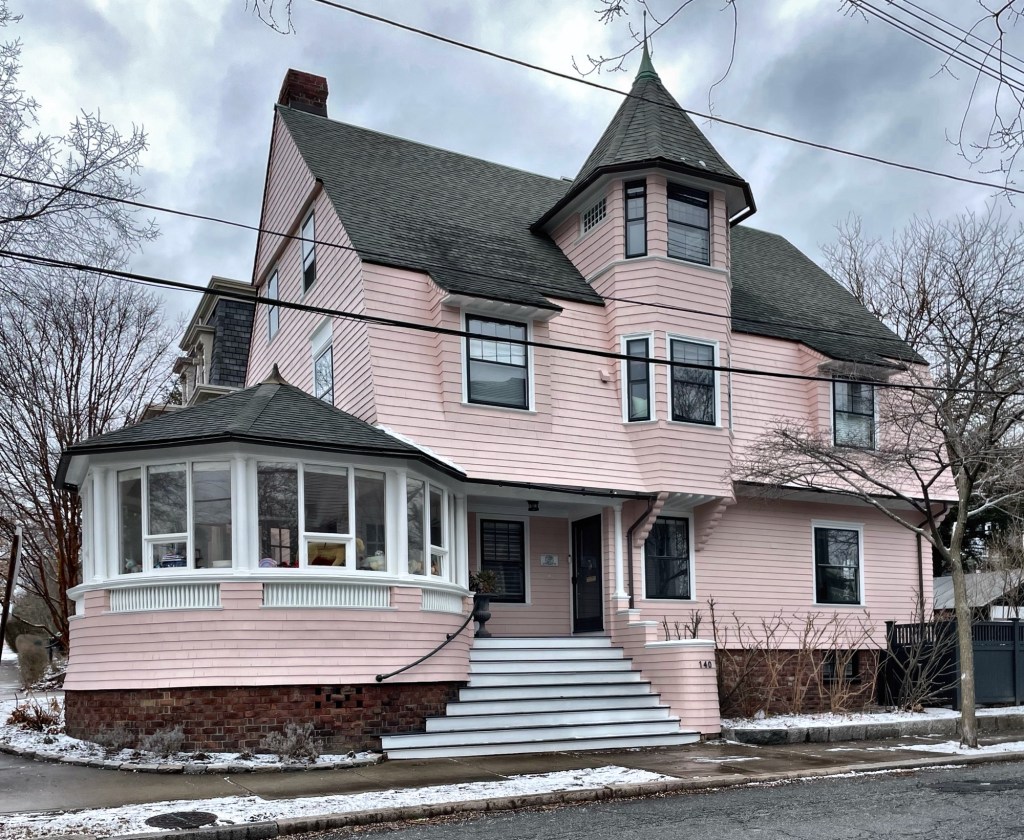
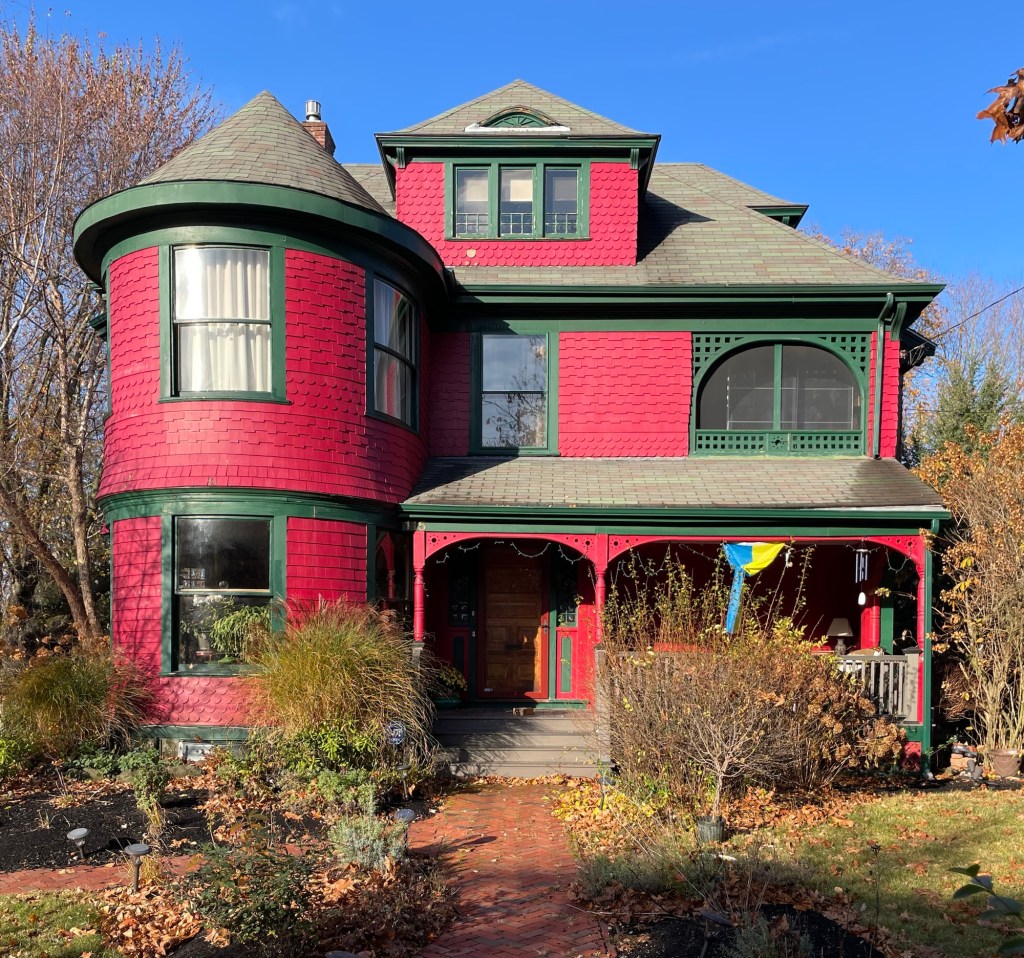
Talk about a statement! This pink, Shingle style house is located at 140 Brown Street in the fashionable College Hill section of Providence, Rhode Island. Built in 1890 for William and Katherine Crandall, the Shingle style residence stands out for its cantilevered two-story tower and corner rounded porch at the corner, and of course the continuous shingled facades. William T. Crandall was the president of the Union for Christian Work, a religious charitable institution which provided aid to needy children in Providence. Augustus R. and Ida W. Peirce would board in the home for decades, and were likely family, inheriting the property upon Katherine’s death in 1932. The architect could not be located.

Bird-Crane House // c.1891

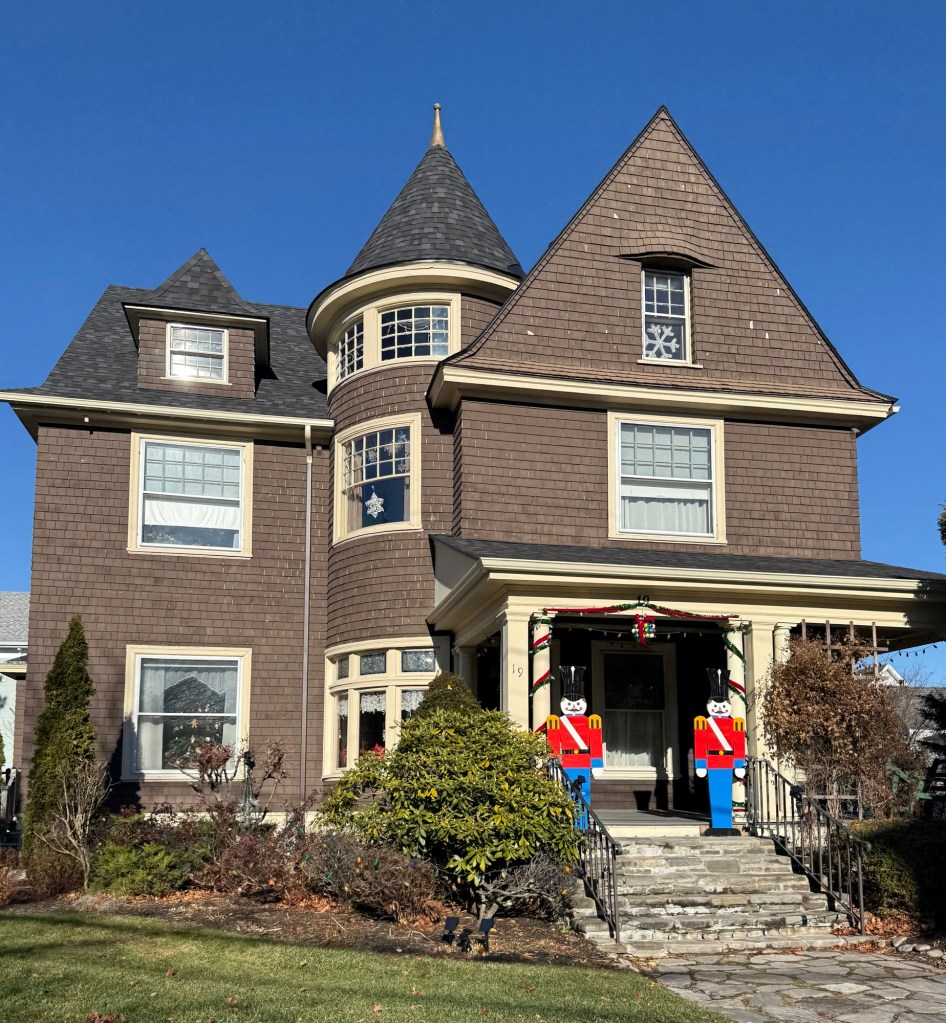
The Bird-Crane House is located at 19 Beech Street in the charming coastal community of Rockland, Maine. The house was built c.1891 for  Maynard Sumner Bird (1869-1960) and his wife, Mary Hawkins Bird, who married that year. Mr. Bird was a businessman who originally worked in insurance before joining Bond & Goodwin. Inc., which dealt in investment securities with offices in Boston and New York. The couple would move to Florida, and the house was later owned by Kennedy Crane Jr., who operated the local Senter-Crane’s Department store in downtown Rockland. The house is a great example of the Shingle style of architecture with continuous shingled siding, rounded corner tower with curved sash windows, and shingled flared lintel over the window in the gable. What a great house!

Frank and Elizabeth Ratcliffe House // 1890

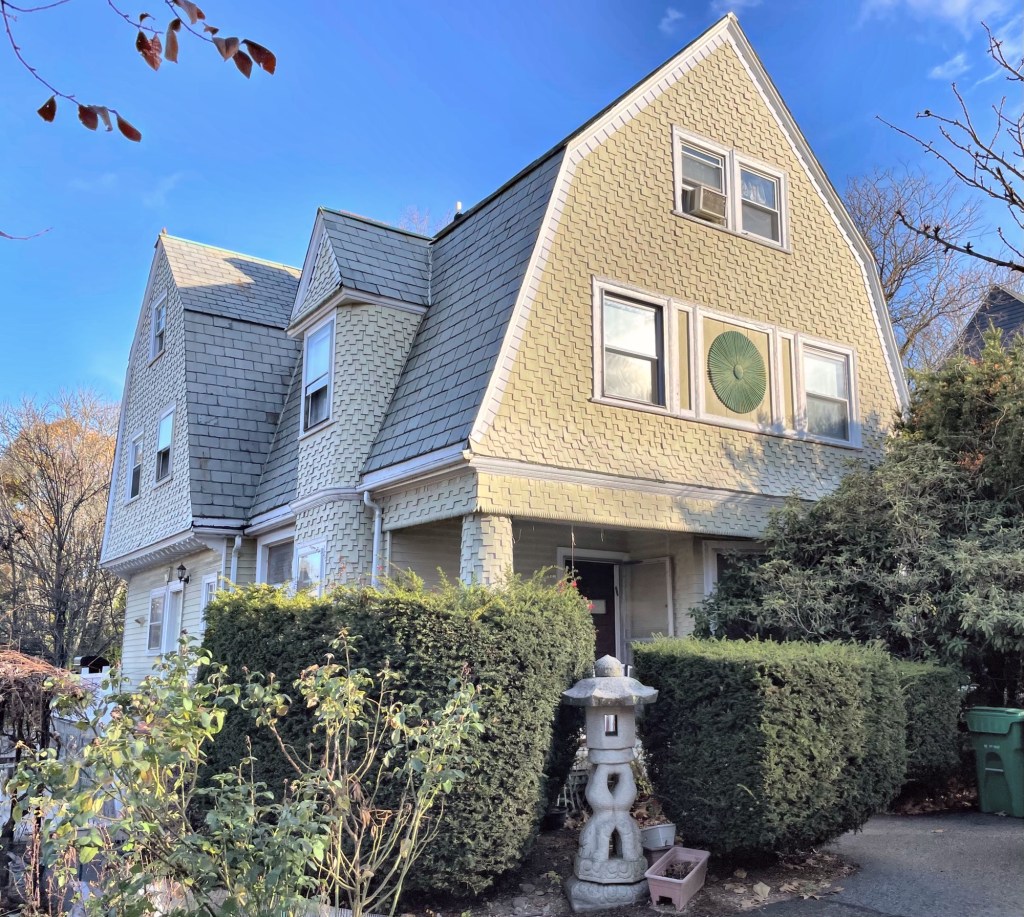
I do not think that I have ever seen rounded shingled columns like this before… What a treat! This house is located on Rice Street in Newton Centre, and was built in 1890 by Henry H. Read, a leather dealer who developed the entire street. This house was built on speculation and initially rented out to tenants before it was sold to Frank Ratcliffe and his wife, Elizabeth Ratcliffe. Frank Ratcliffe was born in England and would become treasurer of the Boston & Albany Railroad, which had a stop in Newton Centre. Frank and Elizabeth would sell or gift this property to their daughter, Mary Elizabeth Ratcliffe Holt and her husband, Warner R. Holt. Besides the unique shingled columns, the house features a broad gambrel roof and sunburst panels and a two-story rounded shingled bay. I could not locate the architect for this one, sadly.

Daniel T. Kidder House // 1884

This charming Shingle/Queen Anne style house is located on Sumner Street in Newton Centre, a street of fine suburban houses built for businessmen who commuted into Boston. This house was built in 1884 for Daniel Tufts Kidder (1852-1941), a glass dealer. Daniel got his start under the employ of Hills, Turner & Harmon, jobbers of plate, window and mirror glass, and manufacturers of mirrors, eventually working his way up to salesman and later as president of the consolidated company, Boston Plate and Window Glass Co. It is believed that Mr. Kidder used antique and imported glass in his home when it was built. The house remains well-preserved and characteristic example of the fanciful Victorian styles.

Kennard Estate // 1907

A significant house and grounds are tucked away, hidden off Dudley Road in Newton, Massachusetts. This is the Kennard Estate. Frederic Hedge Kennard (1865-1937) was born in Brookline and attended Harvard College. He did graduate work for a time at the Bussey Institution and the Lawrence Scientific School, and entered the employ of Frederick Law Olmsted, the noted landscape architect, with his office in Brookline. By 1906, he decided to open his own landscape architecture office, opening locations in Boston and Philadelphia. He would purchase this expansive wooded property, and had this house built by 1907. He laid out the grounds, creating paths and gardens on the property and planted native trees. It is unclear who designed the house, sadly. Mr. Kennard was also a noted ornithologist (an expert on birds) and would host visiting scholars at his home, walking the grounds and studying birds there. After his death in 1937, the property was inherited by his son, Harrison Eisenbrey Kennard, and ultimately willed to the City of Newton upon his death in 1982. Since then, Newton Parks and Recreation have maintained the house (though they could be doing more to preserve it), and opened the grounds as Kennard Park, a free public park comprised of wooded trails and streams.

Mighill House – Baldpate Inn – Baldpate Hospital // 1733

Just below the summit of Baldpate Hill in Georgetown, Massachusetts, stands an architecturally idiosyncratic old structure with a long history. The oldest part of the structure was built in 1733, as a residence for Stephen Mighill (1707-1783), a Deacon of the town’s church and brewer of beer. The early years were filled with much sadness, as Stephen and his wife Elizabeth, lost six of their nine children in youth or infancy, including an eight-year-old son who died after falling into a scalding hot vat of liquid in a malt house on the property. The Mighills also owned slaves, who tended to the house and malting operations here. In the 1890s, the property was acquired by Paul Nelson Spofford, a Georgetown native who moved to New York to make his fortune. It was Mr. Spofford who greatly enlarged the dwelling for use as an inn, naming it the Baldpate Inn. The gambrel-roofed tower was reportedly Spofford’s private space to look out over the rolling hills and forests. After Spofford’s death in 1912, coupled with the tourist trade falling off in the Depression years, the property was sold to a group of physicians who established a psychiatric facility, known as Baldpate Hospital, here in 1939. Today, the complex is known as the Baldpate Treatment Center, an addiction recovery center, who do a great job at maintaining the main structure and former stable on site.