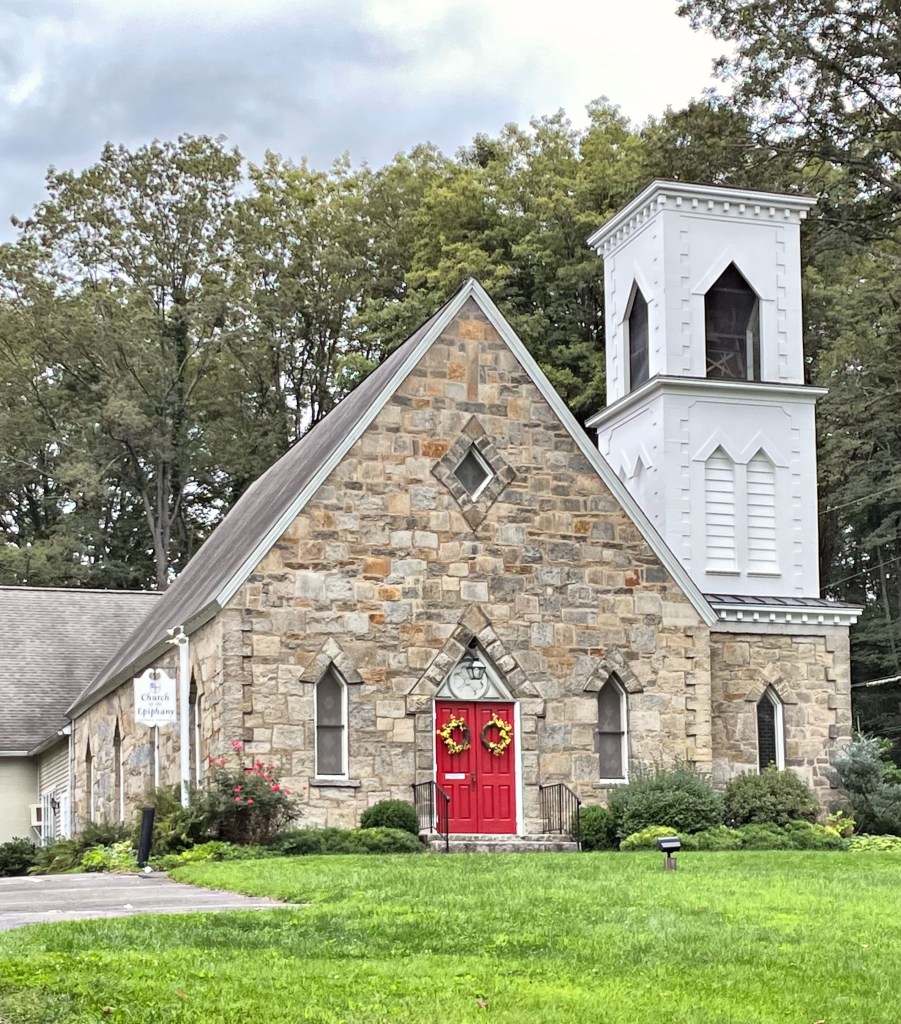
The stereotypical church in New England is the usual wooden structure with a central steeple and painted a bright white. Whenever I see an old church that breaks that oh-so-common mold, I have to snap a photo and learn more! This is the Church of the Epiphany, located on Main Street in Southbury, Connecticut. The church is an example of the Gothic style built in the Victorian period and is constructed of stone with a wooden corner belfry. Construction started in 1863, and the church was not completed until four years later in 1867. I could not locate who the architect was, but I am dying to know!
Built in 1875, this large Gothic Revival church was built specifically to serve as a place of worship for the French Roman Catholic immigrants from Canada who began moving northern Berkshire County, Massachusetts, who were arriving to work in North Adams’ brickyards and textile factories. Before 1875, the Catholic community in the region had to make due with only occasional visits from a Vermont missionary. In 1871, Father Charles Crevier arrived in North Adams to take charge of the French flock and officially form the parish of Notre Dame du Sacre Coeur, with 750 new parishioners. Funding was acquired to purchase a property in town and erect a suitable church for the large (and growing) congregation. Architect James Murphy, a relatively unknown architect who specialized in ecclesiastical designs, furnished the plans for the church. After loss of industry and a declining population, the church closed in 2005, and the property was sold to the city of North Adams in 2008. The city faced repairing the church building as recently as 2016 with about half of the $100,000 budget coming from the city directly. Its future is unknown, but the town hoped to sell it for a renovation into a hotel or other use to activate the downtown area.
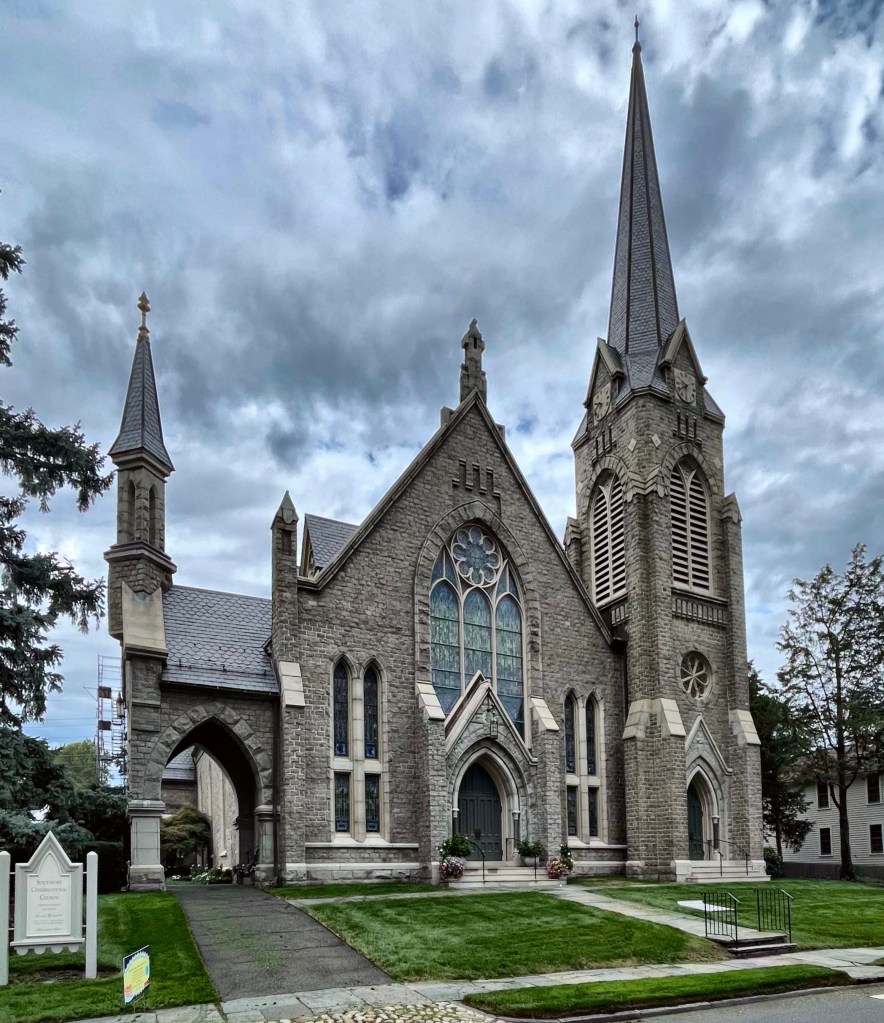
Southport was and still is a part of Fairfield, Connecticut, but it has long been very different from the geographic center of town. Largely due to distance, Fairfield Congregationalists in the Southport area of town sought to establish a new parish to worship closer to home. By the 1840s, their request was granted and a small wood-frame Greek Revival house of worship was built in 1843. By 1871, the increase in population and wealth in the village necessitated a new, larger church. The congregation hired the architectural team of Lambert and Bunnell who made a huge statement here! It is constructed of granite ashlar masonry with a steeply pitched roof and soaring spires.
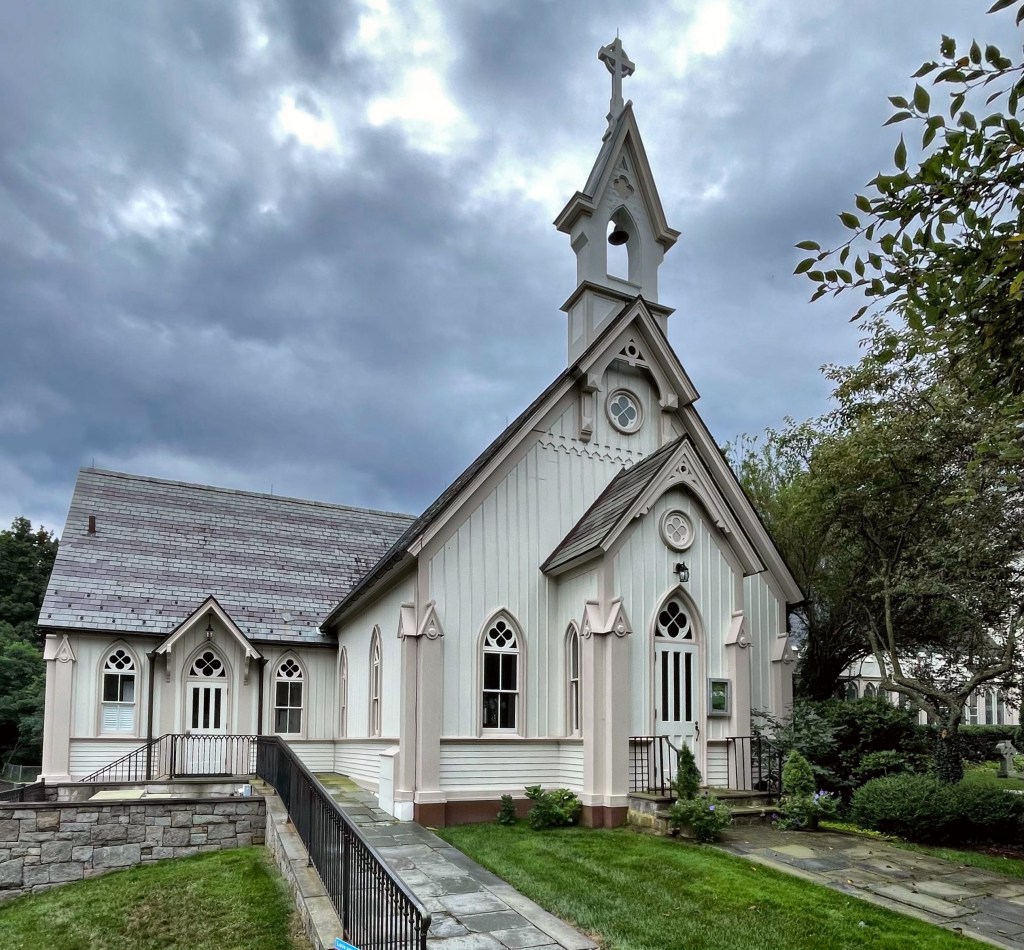
The Trinity Episcopal Church in the Southport section of Fairfield, Connecticut was established in 1725. As the parish and town grew, a large and architecturally stunning church was erected in 1862, and housed services for some of the wealthiest and well-connected residents of Connecticut. During Rev. Edward Wells’ rectorship, it was decided that a parish school was needed, and as an ardent believer in religious training, he started planning for a new chapel for use as a school. The Trinity Parish Chapel was designed by Southport architects Disbrow & Taylor and erected 1871-72. This Gothic Revival building is an excellent example of the rural church architecture which enjoyed widespread popularity throughout the country during the mid 19th century. Designed on a simple rectangular and decorative wooden bell cote, the small chapel’s board-and-batten siding and modest though strong Gothic details create a composition which compliments the more grand church just steps away. The chapel was originally built as a free-standing building, but was connected by a large, brick addition in the 20th century.
Another stately Victorian-era house on Nashua’s Concord Street is this brick beauty, known as the Dana King House. The property was constructed in 1879 for Dana William King (1832-1912) who had quite a history. He was born in Alstead, New Hampshire where he lived until he was 19, moving to Boston to “make his fortune”. In 1852, he shipped aboard a whale boat in East Boston, and realized that whaling wasn’t for him. He was persuaded by his brother to move in with him in Detroit, where he worked as a grocery clerk before moving back to New Hampshire, settling in Nashua, where he did make his fortune. He began working at a local mill until the outbreak of the American Civil War, where he enlisted in the First Regiment of New Hampshire, eventually rising to the rank of Lt. Colonel. He was captured during the war and held in prison in Shreveport for over seven months, failing at least one prison escape. He was eventually included in a prisoner swap and returned to Nashua in 1865. Upon his return, King used his war stories to gather favor locally, and he was elected Register of the Hillsborough County of Deeds, a position he held for over 30 years. The King House is a great, and rare example of the Victorian Gothic style of architecture in Nashua, notable for its steeply pitched slate gable roof with octagonal corner tower serving as a belvedere or cupola.
Dr. Eugene Forrest McQuesten was born in Litchfield, NH, on October 11, 1843. He enrolled at local schools before graduating from theJefferson Medical College in 1866. He practiced medicine in Lynn, Massachusetts for two years before moving to Nashua, New Hampshire to run a medical office. He worked in Nashua for years, later being nominated President of the New Hampshire Medical Society. In 1886, he purchased a house lot on Nashua’s Concord Street and razed the existing dwelling, building this stunning brick residence a year later.
Originally built in the Carpenter Gothic style in 1863, the Sawyer-Gillett Mansion in Whitingham, Vermont, is the highest-style house in town today. Indistinguishable from its Civil War-era original construction, the house was greatly expanded and altered into an elaborate take on Queen Anne / Shingle styles in 1914. The house was originally constructed by John W. Sawyer, but it was his son, Lincoln H. Sawyer who renovated the house and etched his name “L.H. Sawyer” on the glass of the new front door. The updated house style reflects a nostalgic Victorian preference by the owner, who sawed all the trim and materials on site at the family sawmill. It was recently sold and is now a B&B!
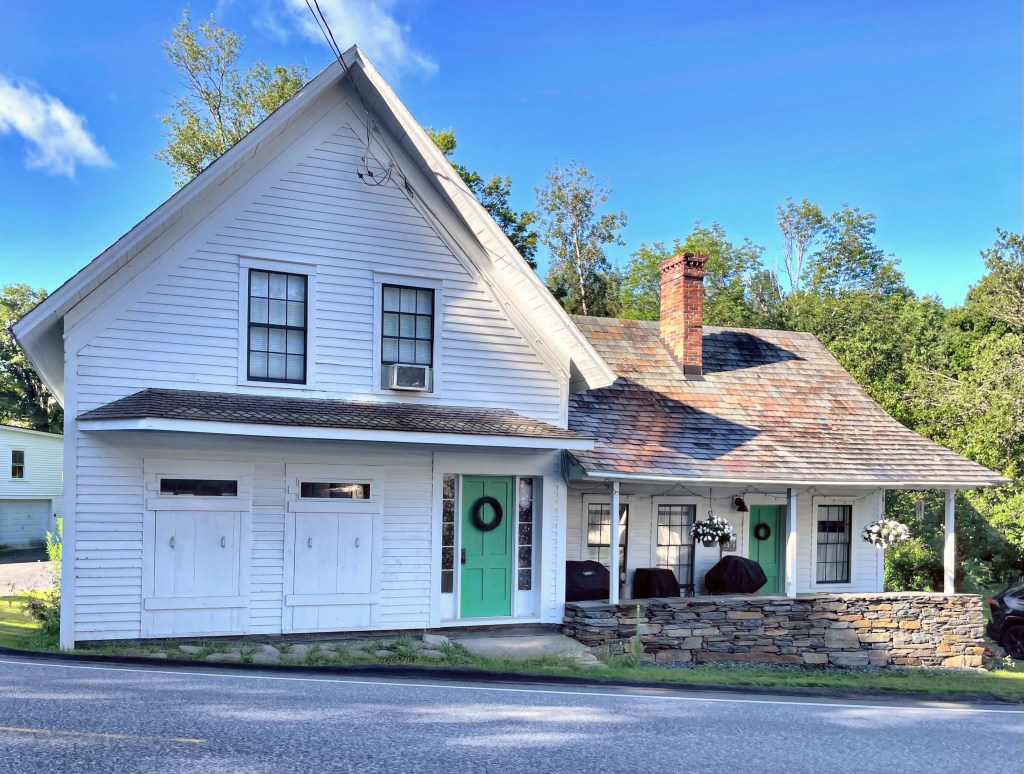
One of the cutest old houses in Whitingham Village in Vermont is the Abraham F. Chase House, just a stone’s throw from the country store and post office. Abraham Chase was a dealer in dry goods, groceries, boots, shoes, and hardware in this village, possibly from half of this building. The vernacular one-story clapboarded frame house has some Gothic details like the rear steep double gable wall dormer. I am actually a huge fan of the green doors and newer stone porch wall, they really make this cottage pop!
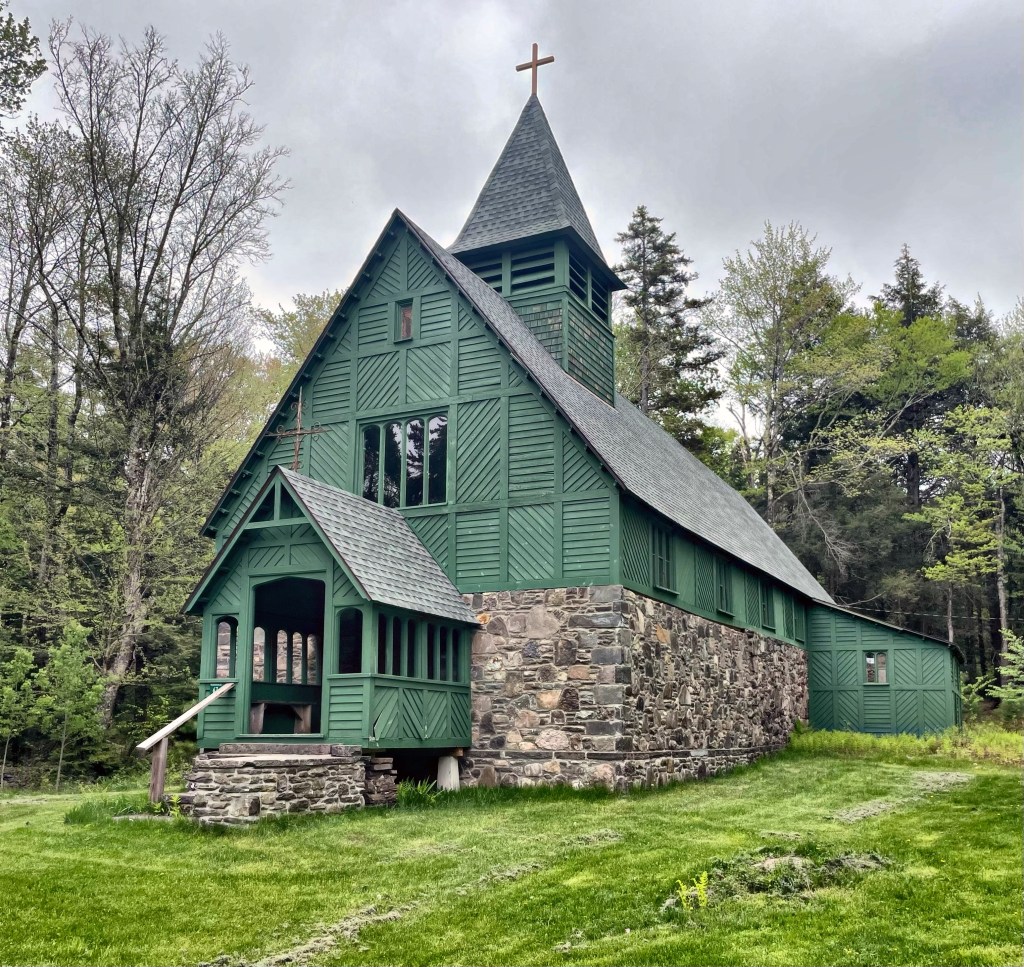
One of the most bucolic and beautiful buildings I have ever seen is this church in the Catskills, just outside of Elka Park, NY. Wow I wish New England could claim this one! The St. John the Evangelist Chapel was developed as part of a smaller enclave of summer cottages for rusticators from the Philadelphia-area, which was largely established by Mr. Alexander Hemsley (1834-1904) a chemist from Philadelphia who would later die from anaccidental chemical explosion at his factory. In 1883, Hemsley sold cottage lots to friends and family to erect summer houses in the Catskills and in 1884, decided to develop a lot for an Episcopal summer chapel. In that same year, Hemsley hired his future son-in-law, William Halsey Wood, to design the chapel. The Stick-style Victorian chapel blends the rustic use of natural materials found on the property with an elegant siting and attention to detail, not typically found in rural chapels. The native stone and stylized half-timbering really stood out to me. The church is used still in the summer with regular services on Sundays in July and August.
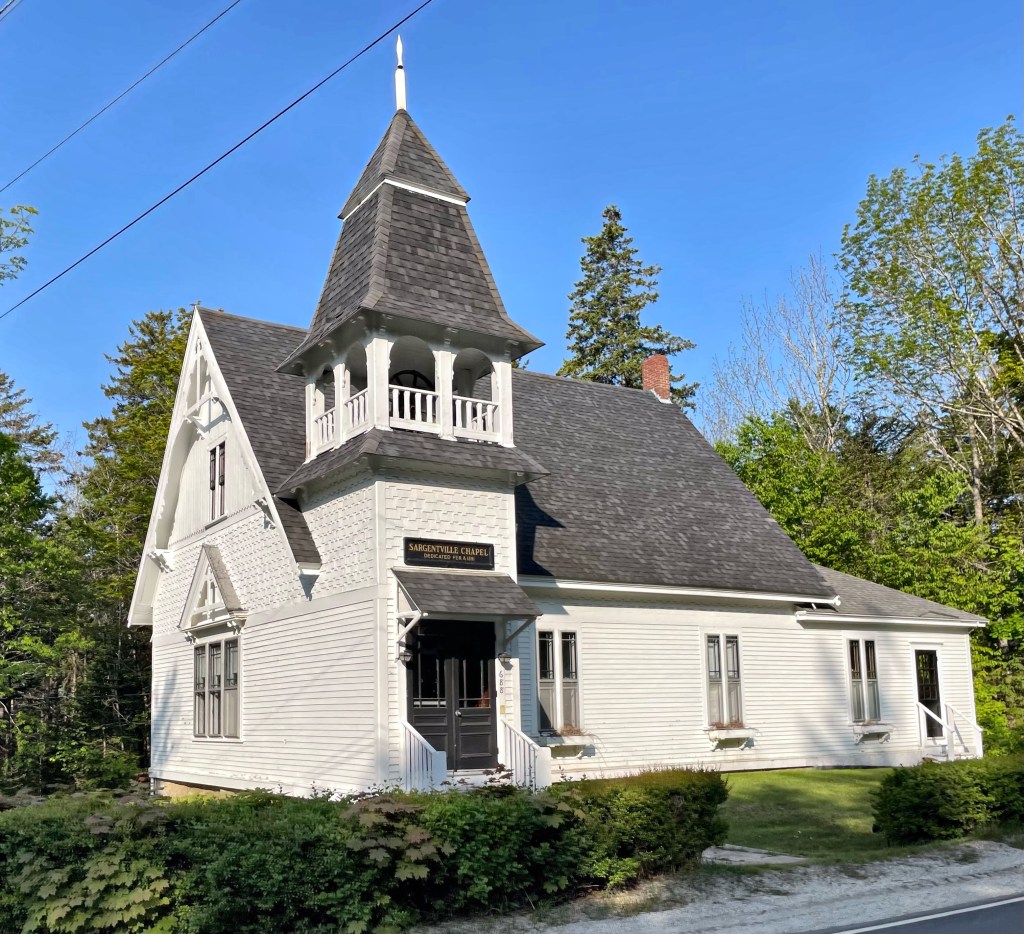
The Sargentville Chapel in Sedgwick, Maine was built in 1889 to provide a more convenient site for services, meetings and other community activities for residents of the Sargentville Village in town, a distance from Sedgwick’s main village. A building committee was established with the goal to erect a new chapel, and A.J. Long, a lumber manufacturer and builder submitted the lowest bid of $1,100 to “put up the building, finish the outside, and put on one coat of paint”. The offer was accepted and the first meeting in the chapel took place in January. 1890. The small chapel has been an active community space for members of the Sargentville section of Sedgwick since the late 19th century and the group continues to maintain the Victorian Gothic building extremely well to this day.




 Buildings of New England