Eliot School // 1931

The Eliot School is a descendant of the first Eliot School in the North End, which opened in 1713 on the present North Bennet Street. Aside from Boston Latin, Eliot School is the oldest public school in Boston. Originally known as the North Latin School, it was renamed in 1821 likely after the former pastor of New North Congregational Church, Rev. Andrew Eliot. Constructed as an elementary school in 1931, this building occupies the site of the former Freeman School, one of the smaller 19th-century school buildings in the North End. This school building was designed in the Art Deco style by Cambridge-based architect Charles Greco. The building features decorative use of brick with stone incised pilasters and highly ornamental lintels over each entry, incorporating the name of the school,
carved foliate designs and shields, and the 1931 construction date.

Richards Building // 1859

One of my favorite buildings in Downtown Boston is the Richards Building on State Street for its rare and lavish cast-iron facade. Built in about 1859, the building was developed by Quincy A. Shaw and Gardiner H. Shaw (uncles of Robert Gould Shaw, who led the famed African American regiment that is the subject of St. Gaudens’ and Charles McKim’s Boston Common monument), merchants who then leased out commercial space in the building. The architect of the building is unknown; however, the sheet metal was supplied by E.B. Badger & Sons. The original design was a five-story, eight-bay cast iron front structure, in the Northern Italian mode of the Renaissance Revival style. The facade is only a screen attached to the front of the building. It is made of pieces of cast iron that were fabricated in Italy and bolted together in Boston. In 1889, the building was sold to Calvin A. Richards, a wealthy street railway tycoon and it is presumed that the two upper stories and corner oriels were added at that time. The building features one of a handful of extant cast-iron facades in Boston, which was restored in the 1980s.

Massachusetts Normal Arts School // 1886-1967

The Massachusetts Normal Art School was one of the many Richardsonian Romanesque buildings constructed in the Back Bay, but it did not survive like so many others did. The building’s history goes back to the 1860s, when wealthy Bostonians petitioned for the Commonwealth of Massachusetts (State Government) to assist with the founding of new institutions to enhance the quality of life in the state. Due to this, the legislature funded three major institutions including the Massachusetts Institute of Technology (1860) and the Museum of Fine Arts (1870), and founded in 1873, the Massachusetts Normal Art School. The Normal Arts School was tasked with training future teachers for public schools and budding professional artists in the arts, with courses ranging from drawing to architecture. The Commonwealth of Massachusetts rented space in various buildings in Downtown Boston before they appropriated $85,000 and hired the firm of Hartwell & Richardson to design and oversee construction of the new school at the corner of Newbury and Exeter Streets. The Richardsonian Romanesque building was constructed of red brick and brown freestone, featured entrances on both street facades, and held gallery spaces inside for members of the public to view the work created at the school. The school outgrew the original building, which could comfortably fit just 100 students, and in 1929, a new building was constructed at Brookline and Longwood Avenues. Before moving one more time to its current location in 1983, the school was renamed to the Massachusetts College of Art and is best known as MassArt today. The original school in Back Bay was demolished in 1967 and was home to a surface parking lot before the existing building was constructed.

Porter House // 1906

Built for “the best-known real estate operator in the city [Boston]”, this stunning townhouse, while narrow, packs a punch among the gorgeous homes on Marlborough Street in the Back Bay. This home was designed by the architectural firm of Winslow & Bigelow and built for Alexander Sylvanus Porter, Jr., and his wife Henrietta Goddard Wigglesworth. Mr. Porter was a partner of J.K. Porter & Co., auctioneers and real estate brokers. He was crucial for the development of many iconic buildings in Boston and New York, including the Touraine Hotel, the Boston Stock Exchange, the Brazer Building, and more. The townhome can be classified as Classical Revival with the symmetrical facade with central door, use of classical pilasters at the central bay, and decorative stone ornamentation on every floor.

Yankee Publishing Building // 1874

One of my favorite commercial buildings in Downtown Boston is the former Yankee Publishing Building on Union Street, for its architecture and the fact its surrounded by some great pubs! The building was constructed in 1874 for Cyrus Carpenter (1821-1893), a prominent manufacturer and dealer of furnaces and stoves in Boston. He owned the building, but ended up leasing the space to a competing furnace company, Walker & Pratt Manufacturing Company. Carpenter owned the building until his unexpected death in 1893 when he was run over by a Back Bay horse car, when it was conveyed to his wife until her death. The building was later purchased by the long-time tenants who continued to sell furnaces and other goods out of the store with offices above.

The business by which the building is currently known is Yankee Publishing. It is an independent family-owned business that was founded in 1935 and based out of Dublin, New Hampshire. It publishes Yankee Magazine ten times a year (the magazine has a paid circulation of 500,000; subscribers primarily residing in the Northeast) as numerous travel guides and other publications in print and online to guide locals and tourists of New England alike.

Union Block // c.1842

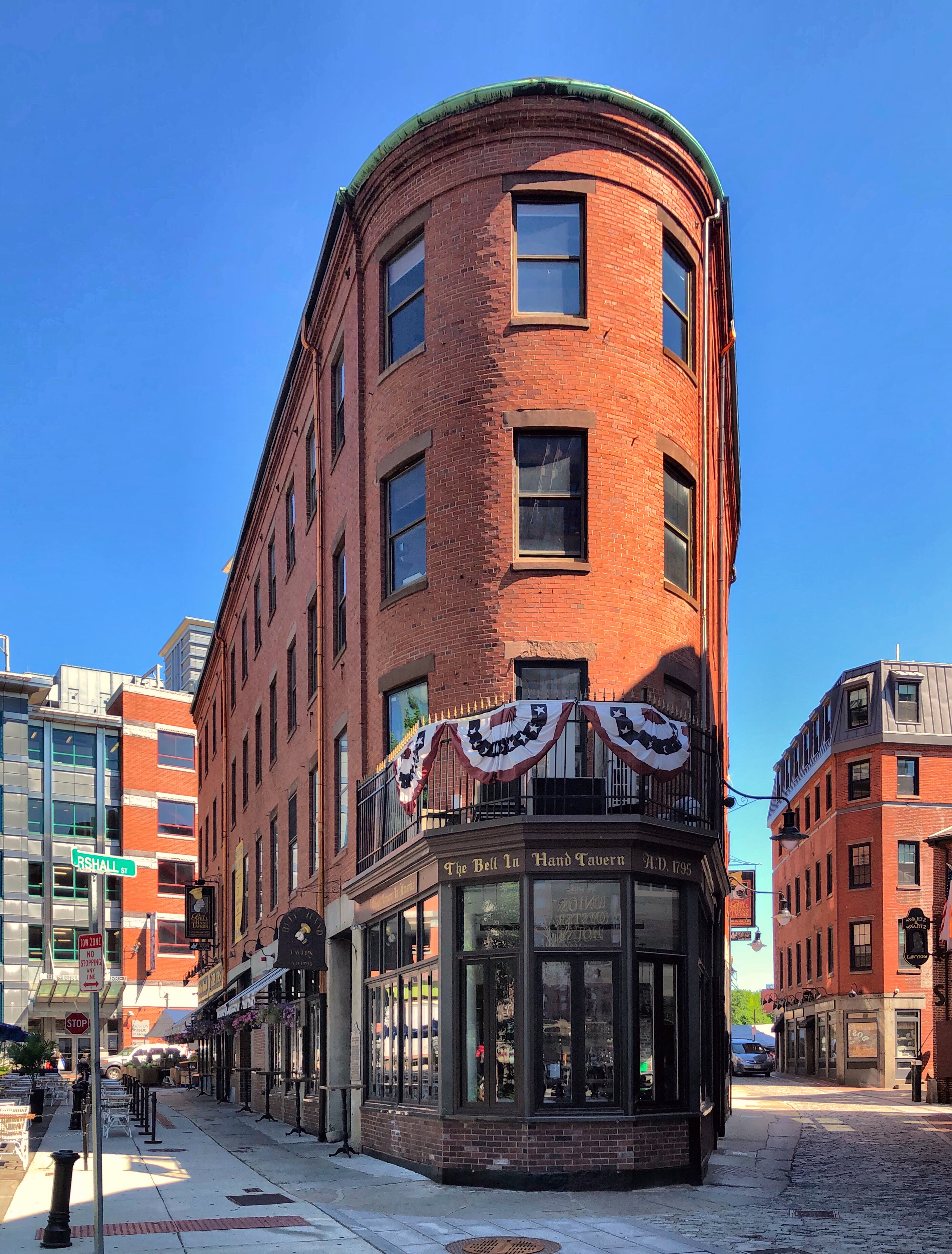
Located in the Blackstone Block of Downtown Boston, this flatiron building encloses Marshall Street on the Freedom Trail, creating a tight, pedestrian-oriented street that once covered old Boston. The Union Block (c.1842) is a Greek Revival commercial block which typifies this network of short, narrow streets which somehow survived Urban Renewal and the coming of the highway in Boston. The longest running occupant of the building was Ward & Waldron Paper Hangings, which from my understanding, made wallpaper for the estates of Beacon Hill which were being built on the other side of town. After successive ownership, atlas maps show the ownership of the building in 1888 conveyed to Massachusetts General Hospital, which still held title to it past 1938. The building is now home to Bell in Hand, an iconic local pub that was founded in 1795 at another location.

Hotel Boylston // 1870-1894

C.1875 image of Hotel Boylston, BPL image.

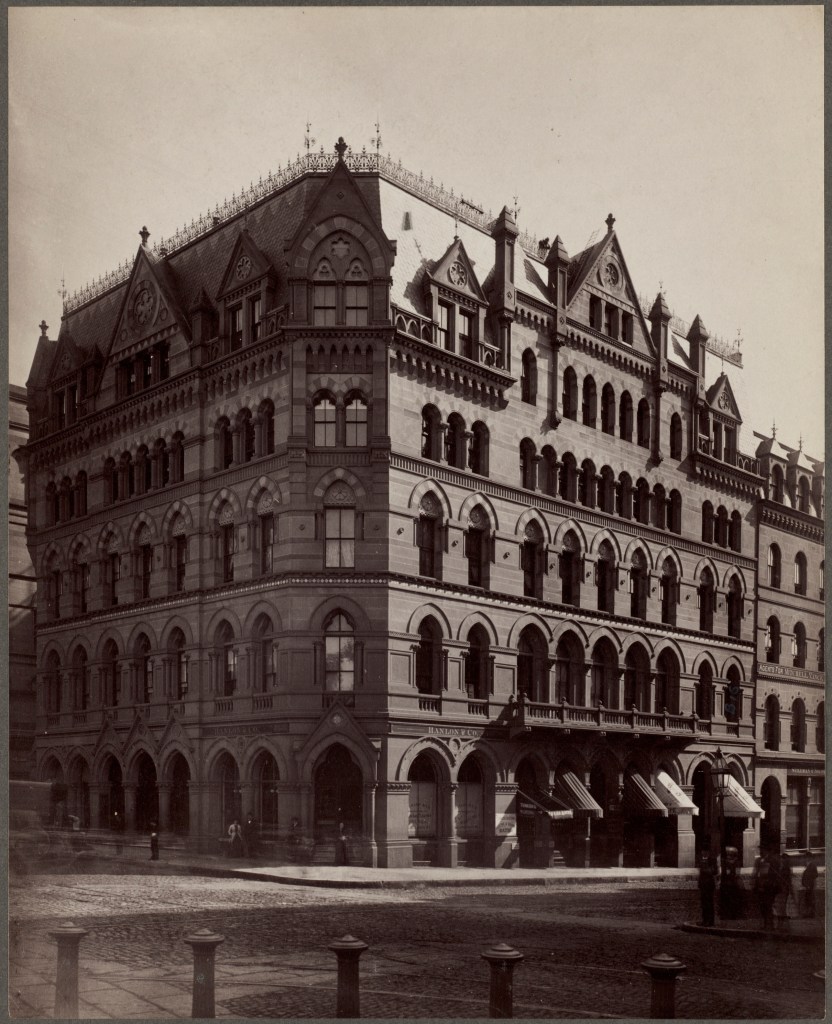
Standing just 24 years, the Hotel Boylston at the corner of Boylston and Tremont Streets, evoked the Victorian-era grandeur of Boston. Built in 1870, the Victorian Gothic hotel (what we consider apartment building today) was designed by the architectural team of Cummings and Sears, who were very busy at the time in Boston and beyond. The 5 1/2-story building was constructed of sandstone and featured Gothic arches, dormers of varied sizes and shapes, and a mansard roof with iron cresting. The building (and the three others on Tremont Street) was razed in 1894 and replaced with the Hotel Touraine a few years later.

General Crane House // c.1670-1908

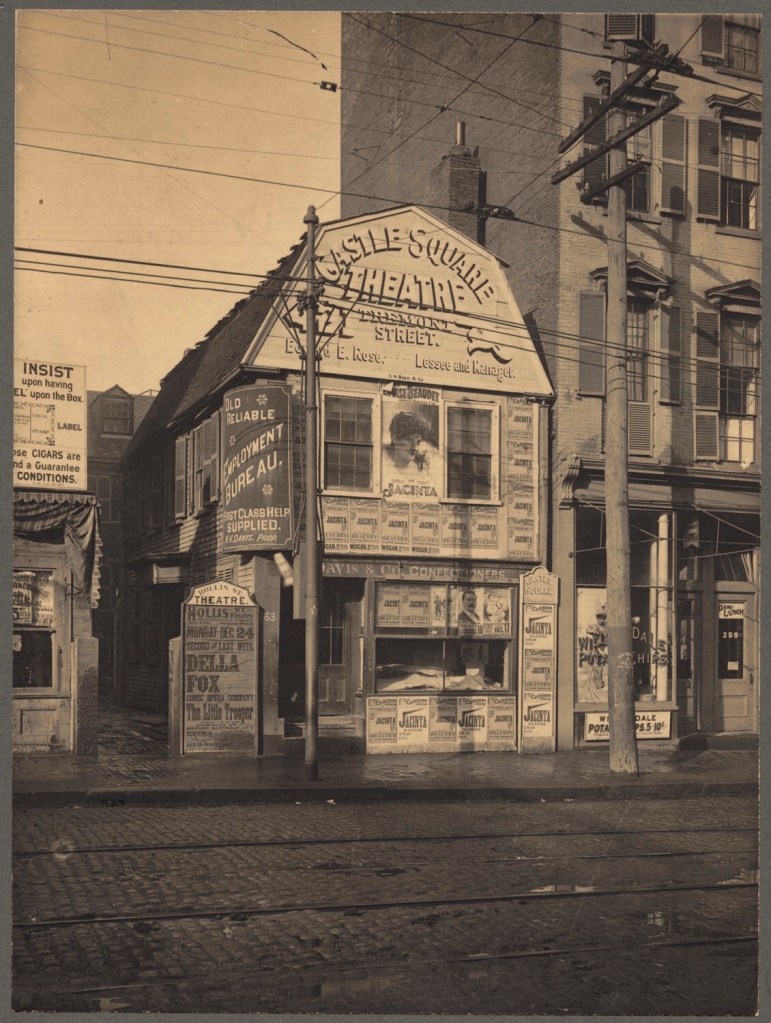
Crane House c.1900, courtesy of BPL.

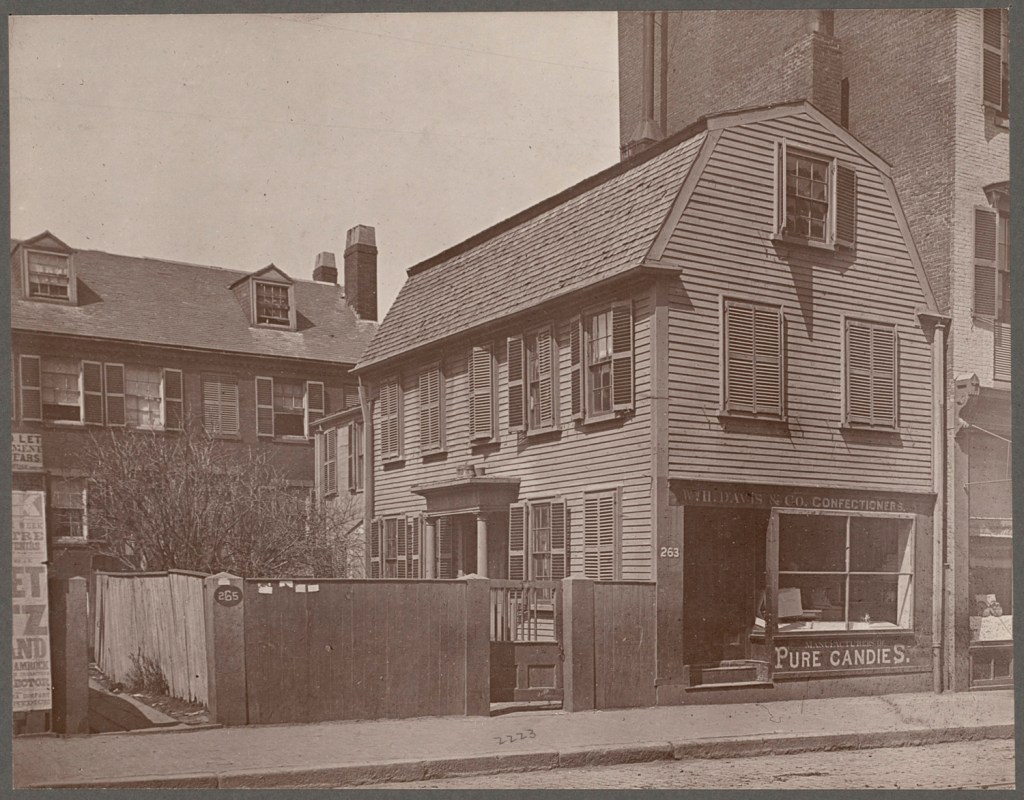
Formerly located on Tremont Street in Downtown Boston, this ca.1670 Georgian gambrel home went from residence to candy shop to billboard in its lifetime. The home was constructed by John Crane (1744-1805), who was a housewright by trade but a patriot and soldier most importantly. At the tender age of 12, he had an early military experience when he substituted for his father in the French and Indian War when his father received the draft. Records state that Crane was an active member the Sons of Liberty, a secret revolutionary organization that was founded by Samuel Adams to fight taxation from the British government. Hours before the Boston Tea Party, Crane and the other participants met at his shop at his home to disguise themselves as American Indians as disguises for the events that would take place that night. He was in the hold of one ship when he was knocked unconscious by a falling crate of tea. His fellow patriots thought him dead and hid him under a pile of wood shavings in a carpenter’s shop off the harbor, only for Crane to recover later. Less than a year later, Crane and his family moved to Providence, Rhode Island where he would later serve under a militia there in the Revolutionary War. After serving, and seeing battle, he was awarded land in Whiting, Maine (Maine was part of Massachusetts at the time) where he built a home and spent his last days.

Crane House, c.1880s, courtesy of BPL.

His former house on Tremont Street in Boston was occupied as a home until the late 19th century until it was occupied by a confectionary shop, with a storefront added on the street. Due to the shifting demand for theater-oriented development and lodging, the candy shop began struggling. The owner, James Grace, then allowed for the home to be covered with signage and notices advertising various theaters nearby. Ironically, the home was demolished by 1908 for the Shubert Theater, which remains today.

Jacob Wirth Building // 1844

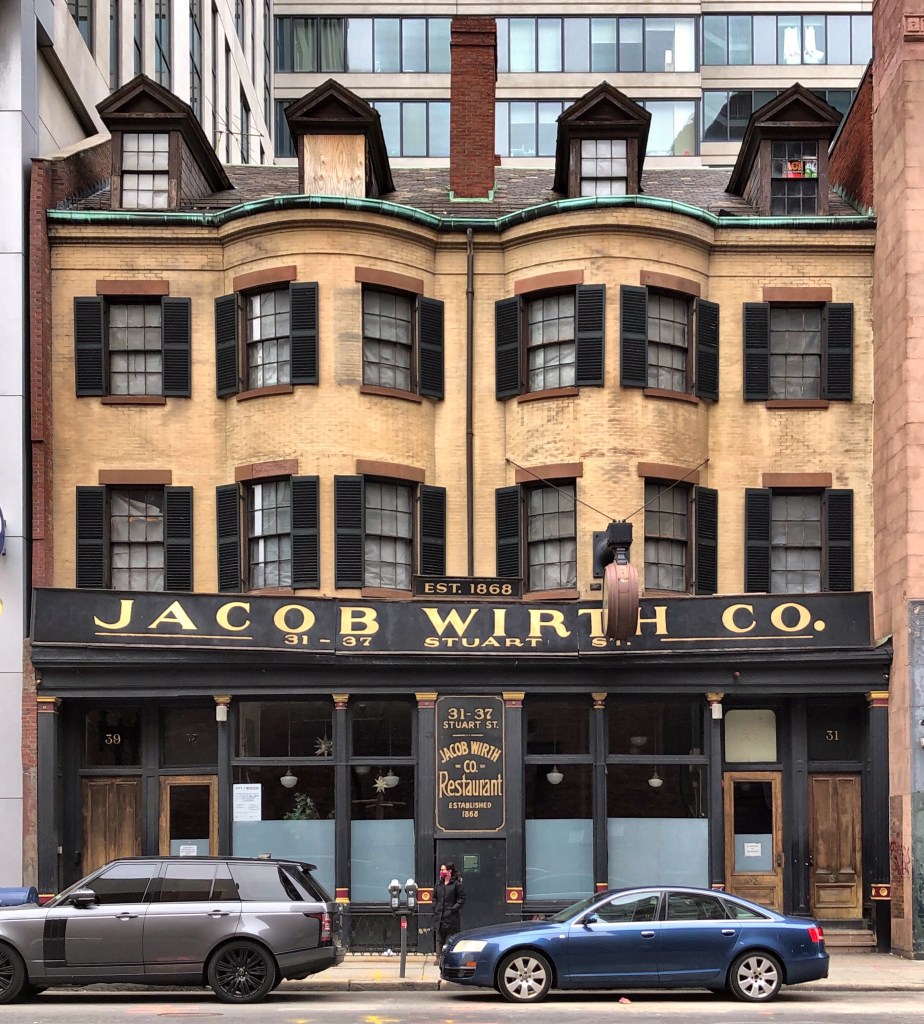
Comprising twin bowfront Greek Revival rowhouses, the Jacob Wirth Restaurant buildings on Stuart Street are scarce survivors of a century of urban change in an area in which the building type once abounded. Built by developer housewrights quite active in the area, the twin houses were soon sold to “gentlemen” for rental purposes. Jacob Wirth, a German emigrated to Boston from Bingen, Germany, and began work as a baker before getting into the restaurant business. Wirth bought the left building seen here in 1878 as his dwelling above and ran his authentic German restaurant below. Due to the success of the restaurant, he purchased the adjacent home in 1889 and constructed the storefront that now unites them. Jacob Wirth ran the restaurant until his death in 1892, which was then managed by his son, Jacob Wirth Jr., who also managed it until his death in 1965! In 2018, Jacob Wirth’s, the second oldest continuously operated restaurant in Boston, closed its doors following a fire. The future is somewhat uncertain for the space, but as it is landmarked, there are protections (even at the interior) of the building.

Did you get a chance to eat at Jacob Wirth’s before it closed?

Old State House // 1713

Nestled among the towering skyscrapers of Downtown Boston, the Old State House stands proudly, giving us a glimpse into pre-Revolutionary life and events. Happy Fourth of July!

Built in 1713, the “Town House” as it was originally known, served as a merchants’ exchange on the first floor and the seat of colonial and later state government on the second floor throughout the 1700s. The royal governor, appointed by the King of Great Britain, held his office in the building until 1775, and from the balcony gave voice via decrees and speeches to the King 3000 miles removed from London. Above the balcony, a lion and unicorn—royal symbols of the King of Great Britain—graced the main façade facing the public square.

“A cobblestone circle beneath the Old State House balcony marks the site of the 1770 Boston Massacre. Tensions ran high in Boston in early 1770. More than 2,000 British soldiers occupied the city of 16,000 colonists and tried to enforce Britain’s tax laws, like the Stamp Act and Townshend Acts. American colonists rebelled against the taxes they found repressive, rallying around the cry, “no taxation without representation.” On the frigid, snowy evening of March 5, 1770, Private Hugh White was the only soldier guarding the King’s money stored inside the Custom House on King Street. It wasn’t long before angry colonists joined him and insulted him and threatened violence. Calling reinforcements, a group of British soldiers stood near the Town House and were pelted with snowballs and rocks, with one soldier firing out of panic. Once the first shot rang out, other soldiers opened fire, killing five colonists–including Crispus Attucks, a local dockworker of mixed racial heritage–and wounding six. The event was one of the flashpoints which began the American Revolution.

Six years later, on July 18, 1776, Colonel Thomas Crafts read the Declaration of Independence from the balcony of the Old State House as a statement of strength from where the King’s declarations were given just years prior.