Point Allerton Life Saving Station // 1889

The United States Life-Saving Service was a United States government agency that grew out of private and local humanitarian efforts to save the lives of shipwrecked mariners and ship passengers. It began in 1848 when the congress appropriated $10,000 to establish unmanned lifesaving stations along the New Jersey coast south of New York Harbor. That same year the Massachusetts Humane Society also received funds from Congress for lifesaving stations on the Massachusetts coastline. It was decided to establish a life saving service station at Point Allerton after 61-year-old Joshua James and his crew rescued 29 people from four vessels wrecked in the Boston Harbor during the great storm of November, 1888. The United States Corps of Engineers had this Queen Anne style life saving station built at the northern shores of town, overlooking the Boston harbor. Joshua James became the Keeper of the station at 62, seventeen years past the mandatory retirement age of 45 for a federal appointment with the new U.S. Life–Saving Service. The station is the best-preserved of 32 stations that once lined the Massachusetts coast (most have since been demolished or adapted to other uses). It is now operated as the Hull Lifesaving Museum.

Point Allerton Artillery Fire Control Tower // 1942

Those who have visited the tip of the coastal Boston suburb of Hull, Massachusetts, will recognize this tall tower, but may not have known its intended purpose. This is the Point Allerton Artillery Fire Control Tower, built atop the highest point in the town, to serve as part of the Coastal Defenses built around the World Wars. Several fire-control stations were built at Point Allerton going back to 1907, but this seven-story concrete tower is the last to remain here. This tower was built around 1942, as the US Government grew increasingly serious about the potential for war, with new batteries and surveillance bases built all along the coast, many of which remain to this day. Fort Revere, a remnant of the coastal defenses, remains in Hull, nearby. This 7-story fire control tower is the center of Point Allerton, and by virtue of its base elevation (124 feet), had its top observation level at 179 feet above sea level, making this the tallest observation point in the Boston harbor defenses. The tower was later deaccessioned by the government and is owned and maintained lovingly by a private homeowner on their land. The tower is luckily preserved for future generations to learn about this lesser-known part of Boston-area history.

Conant-Cushing House // c.1890

Atop the Great Hill on Point Allerton in Hull, Massachusetts, this large summer “cottage” stands out for its unique architecture and siting overlooking the bluffs and Atlantic Ocean. The Shingle style house was built around 1890 by Edward D. Conant, a real estate agent and developer of Newton as his family summer home. The architect is not clear, but the house exhibits a unique four-story crenellated tower, giving the appearance of a castle from a distance. The house was later owned by Cardinal Richard Cushing (1895-1970) as his own summer residence. Cardinal Cushing served as Archbishop of Boston from 1944 to 1970 and was made a cardinal in 1958. Cushing’s main role was as fundraiser and builder of new churches, schools, and institutions, and he helped then-presidential candidate John F. Kennedy deflect fears of papal interference in American government if a Catholic became president. Kennedy grew up spending summers at his grandfather’s home in Hull (featured previously). The Conant-Cushing House remains significant even with 20th century renovations.

Former Allerton Point Post Office // c.1890

By the end of the 19th century, various coastal developments on the elongated coastal town of Hull, Massachusetts, developed into established neighborhoods of cottages. As a result, new stores, schools, and post offices were built to accommodate the increase in population. William Henry Sylvester (1840-1923) a local resident, built this structure to serve as a store, professional offices, and post office. Like other buildings in the area constructed in the 1890s, the structure blends Queen Anne and Craftsman elements in a great composition. Sadly, the building has not been maintained and the windows are now boarded up, with the entire waterfront parcel selling in 2018. Plans to demolish the buildings on the site, including this charming structure were proposed to erect new townhomes, but they have not materialized. I’d love to see the site redeveloped with much-needed housing, but this structure should be incorporated in the development.

Winfield S. Richards Cottage // c.1890

Summer cottages of the late 19th century are always a treat to come across! While most cottages I feature on here are more high-style and were built for the wealthy, Hull, Massachusetts, has some of the best middle-class summer cottages in New England! Steamships and rail service from Boston and other cities opened up Hull and Nantasket Beach to summer residents and day visitors alike, creating a massive increase in building in the latter decades of the 19th and early 20th centuries. This cottage was owned by Winfield S. Richards and his wife Myra of Newton, Massachusetts. The cottage blends Queen Anne and Craftsman styles with complex Queen Anne massing, turned posts, and recessed second story porch, and sloping roof extension to create the Craftsman-esque front porch. The cottage is one of the better-preserved in town and an excellent blending of architectural styles.

John Smith House // c.1895

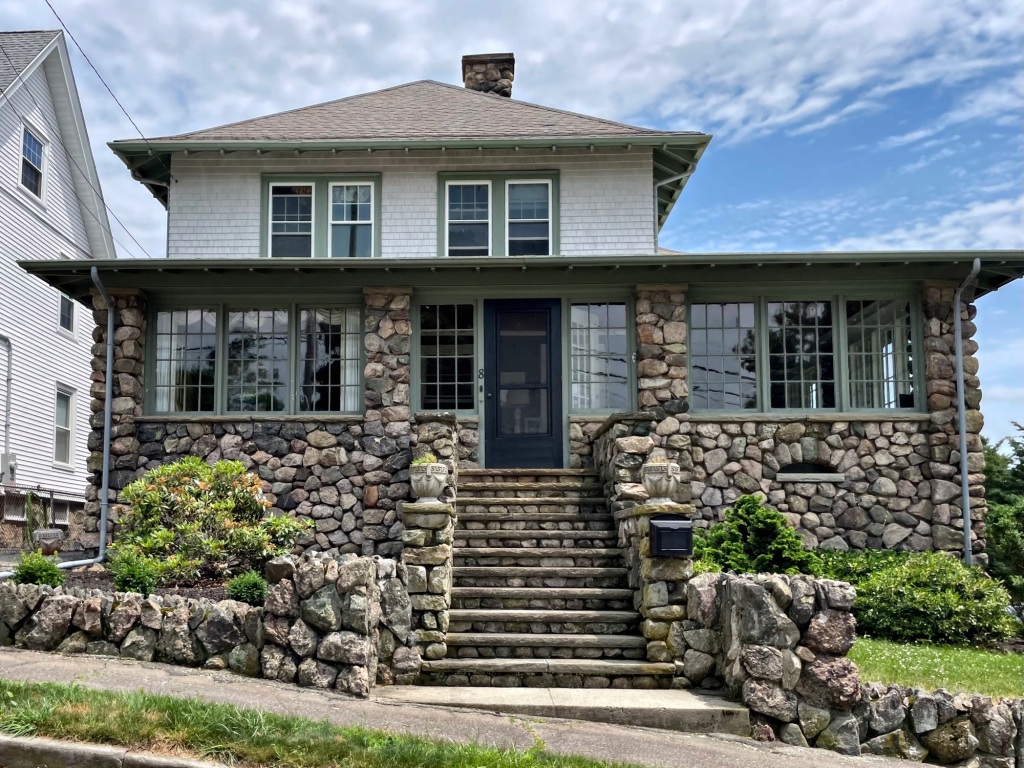
Hull, Massachusetts is an often overlooked town (besides Nantasket Beach Reservation), but there are some really great old houses and buildings to be found in the seaside town. This is the John Smith House on Meade Avenue in the Atlantic Hill neighborhood inland from the peninsular part of town. Development here was fairly slow, but took-off in the late 19th century when cottagers began to develop some house lots here. They were soon joined by year-round residents like John Smith, an ice merchant who built this home around 1895. Craftsman in style, the house exhibits a mix of building materials with a rough fieldstone porch and two matching stone chimneys together with wood shingle siding. The stunning stonework extends from the foundation, uniting the house to its terraced, rocky site. It is one of a handful of homes here that have not yet been altered or covered up by vinyl siding.

Old Nantasket Beach Police Station // c.1930

The area of Nantasket Beach in Hull in the late 19th century was a hotbed of taverns, thievery, and brothels. To counter this trend of unsavory uses, the Metropolitan Park Commission (MPC) of Greater Boston acquired about 25 acres of land at Nantasket, which included roughly one mile of shoreline extending north from Atlantic Hill in 1900. The initial appropriations provided for only minimal facilities, such as a bathhouse and a few incidental buildings, one of which was a waiting room for those arriving or departing from the new railroad station (since demolished) at the beach. The MPC hired the Olmsted Brothers landscape architects to design the paths and landscaping for the new park, and they worked with architects Stickney & Austin who designed many of the early buildings here. This stucco structure was built around 1930 and served as MPC offices and a police station until 1992. The building has been vacant since 1992, but a recent push to convert the nearly 100 year old structure into the Nantasket Center for the Arts is slowly materializing. Fingers crossed to see this building preserved and used for the arts!

Bread Loaf Campus – Treman Cottage // c.1890

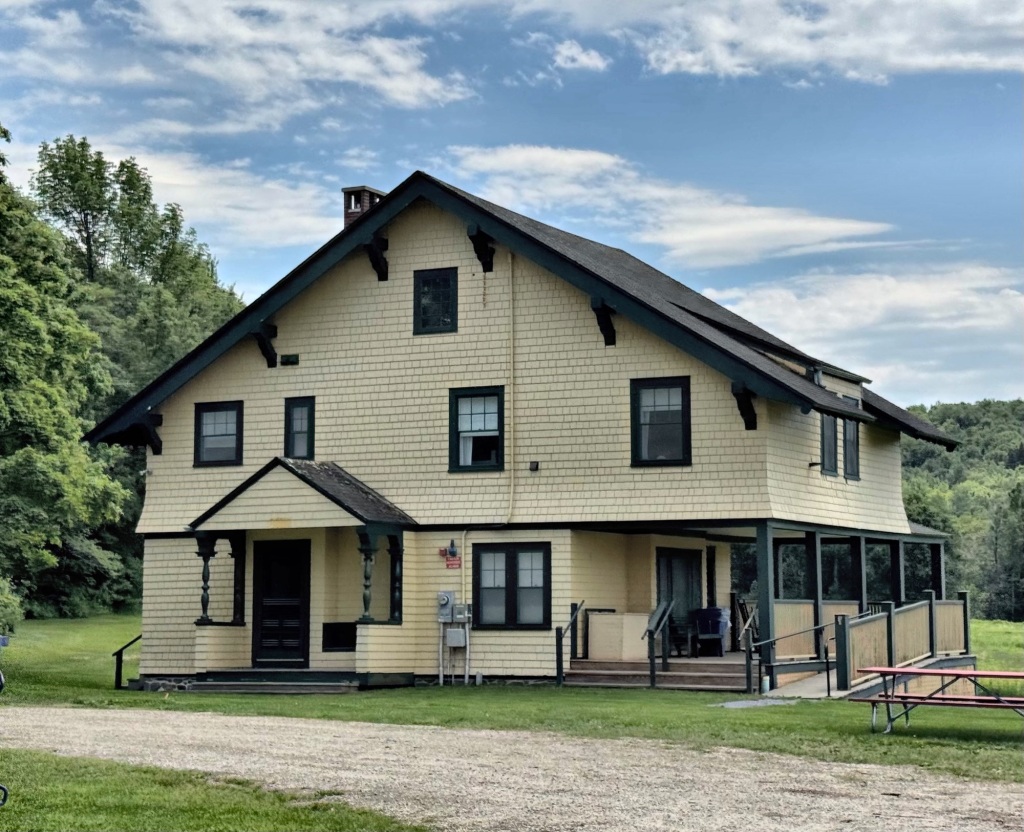
This is the last building to be featured on the Bread Loaf Campus! For more early history and context of the complex, check out the post on the Bread Loaf Inn. By 1900, owner Joseph Battell’s enterprise exceeded the capacity of the original inn, and cottages were added to accommodate more guests visiting his new permanent home in the mountains of Ripton, Vermont. Special friends who summered regularly at Bread Loaf purchased lots with water and sewage rights, and with Battell’s assistance, built their own family cottages to spend their summers. This is Treman Cottage, a shingled beauty which appears to have been built for a friend (though I am not sure who), and has since become the faculty cottage on the campus. As we wrap up this series, here is an interesting fact about the mountain campus: All buildings here that are painted the ochre color were built during Mr. Battell’s lifetime (by 1915), with later buildings painted white.

Bread Loaf Campus – Bridgman & Cornwall Cottages // 1881

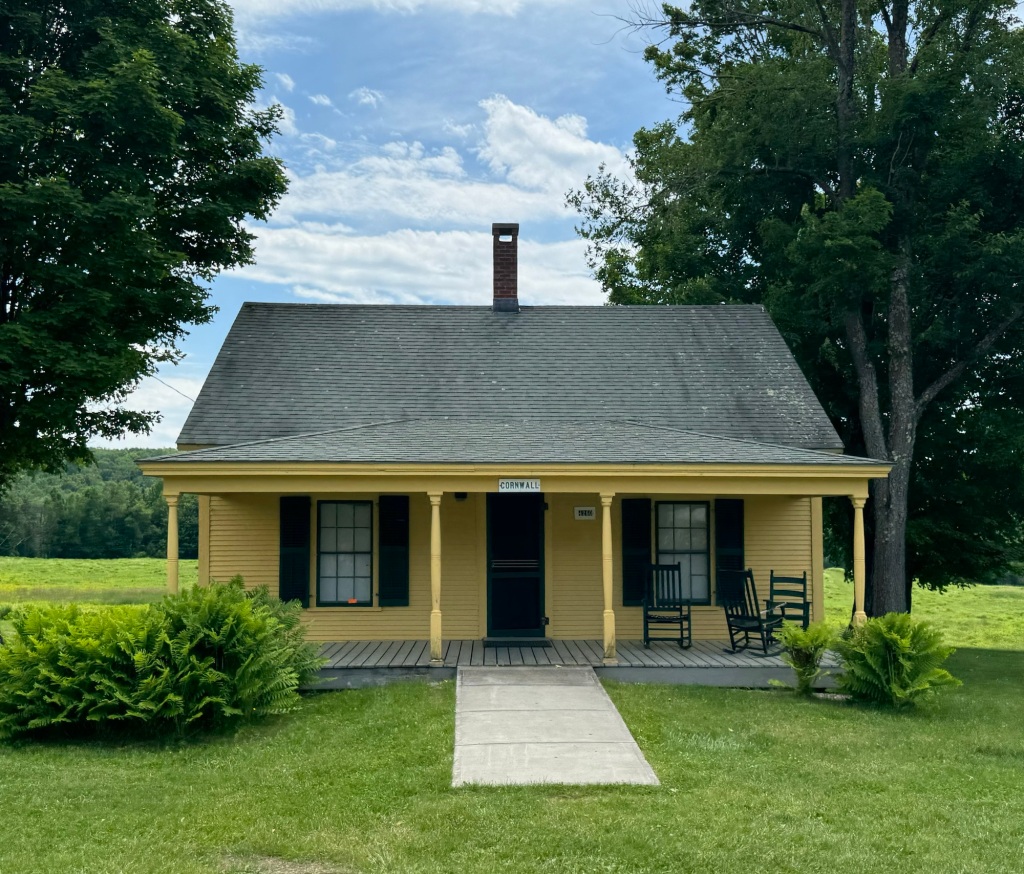
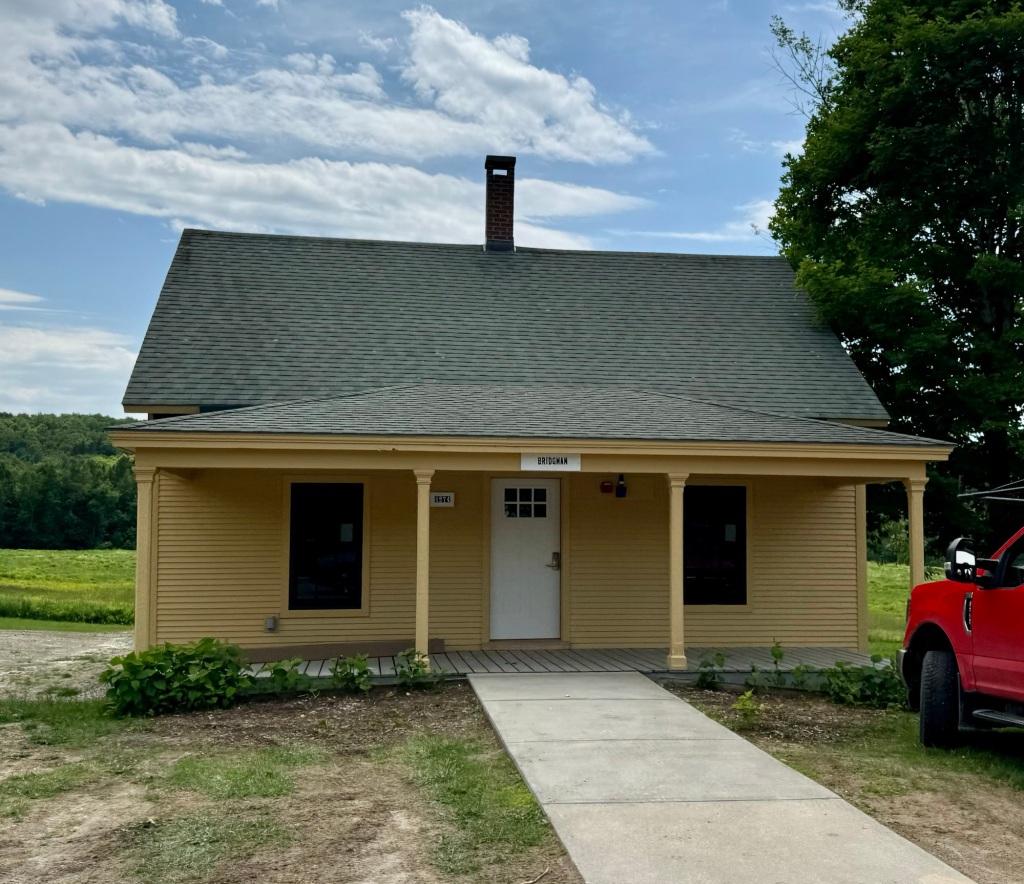
Welcome back to the Bread Loaf Campus! For more early history and context of the complex, check out the post on the Bread Loaf Inn. By 1900, owner Joseph Battell’s enterprise exceeded the capacity of the original inn, and cottages were added to accommodate more guests visiting his new permanent home in the mountains of Ripton, Vermont. Special friends who summered regularly at Bread Loaf purchased lots with water and sewage rights, and with Battell’s assistance, built their own family cottages to spend their summers. The first two, Bridgman and Cornwall, were constructed across the street from the Inn around 1881 and are near-identical, modest vernacular cape houses with full-length front porches. The original owners were Charles William and Ellen Campbell Bridgman and Henry Bedinger Cornwall respectively. Both cottages have since been donated to Middlebury College and are important preserved pieces of its Bread Loaf campus.

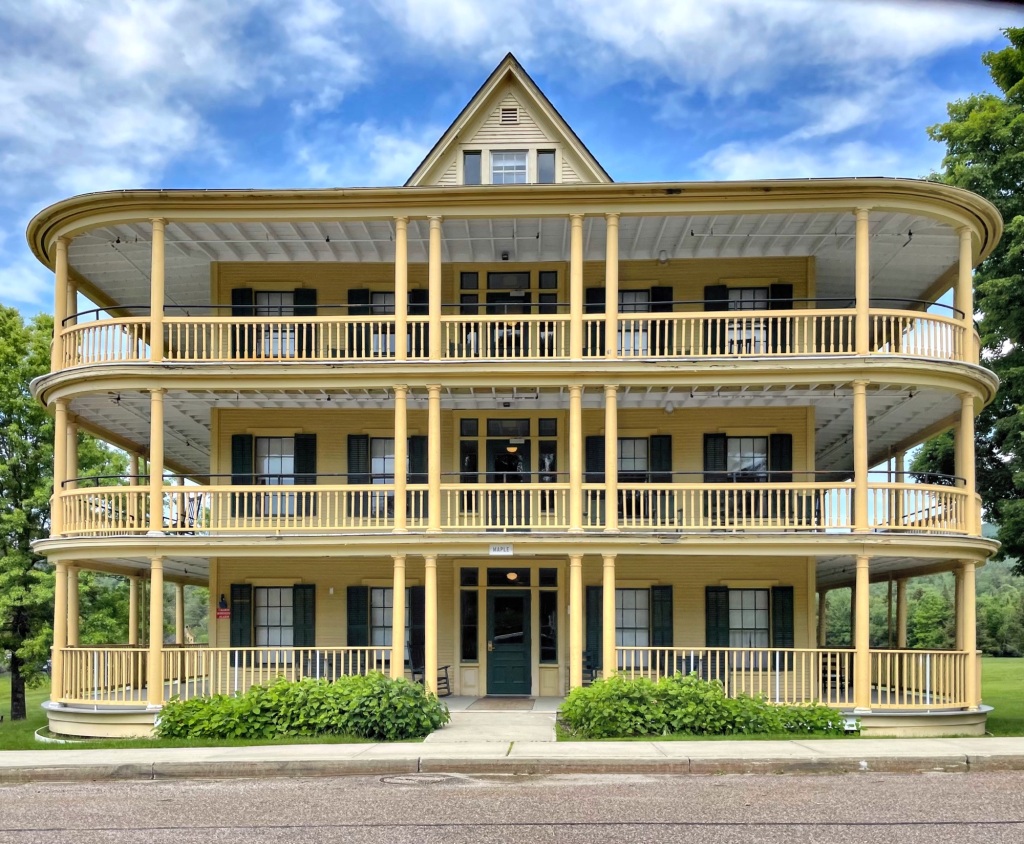
Bread Loaf Campus – Maple Cottage // c.1900

Welcome back to the Bread Loaf Campus! For more early history and context of the complex, check out the post on the Bread Loaf Inn. By 1900, owner Joseph Battell’s enterprise exceeded the capacity of the original inn, and cottages were added to accommodate more guests visiting his new permanent home in the mountains of Ripton, Vermont. Located adjacent to the Mansard-roofed Birch Cottage, one of the most visually striking buildings in the campus is Maple Cottage, which reads more porch than cottage, but it’s 100% perfect. It was the last cottage built by Battell for his family and friends to stay at when visiting. They must have loved evenings on the three-floors of porches looking out over the Green Mountains.