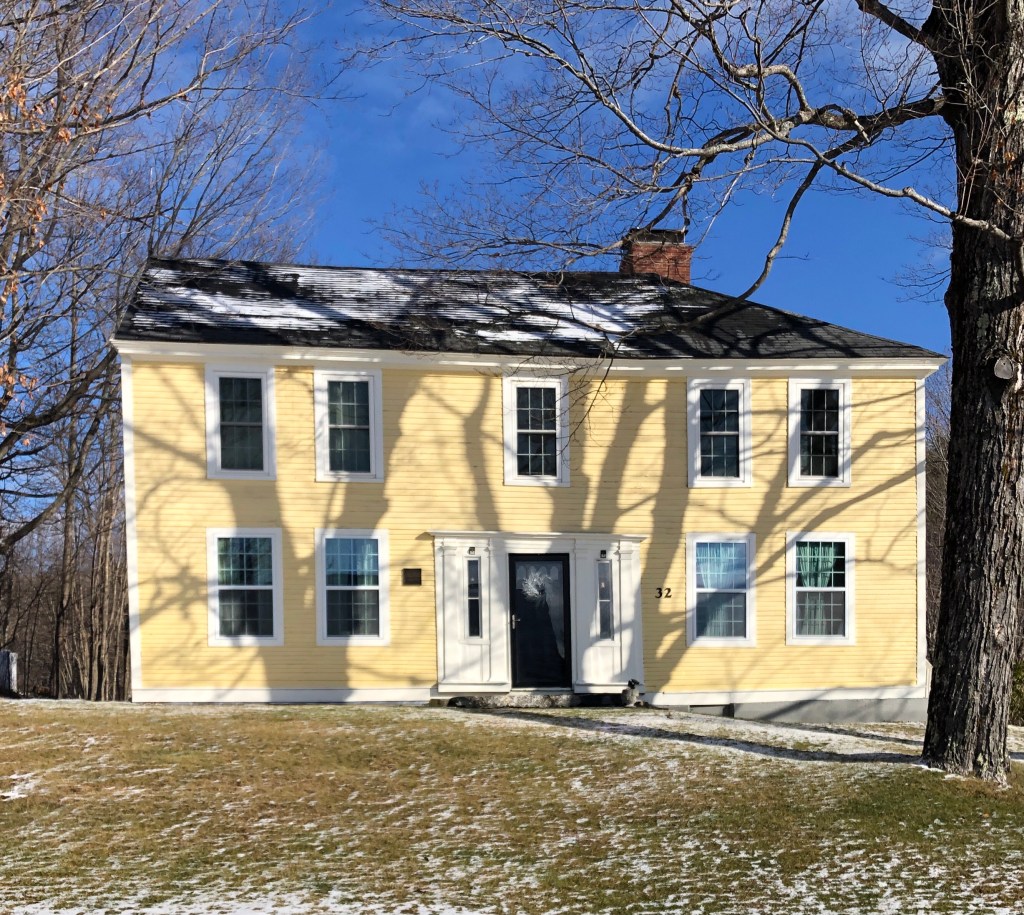
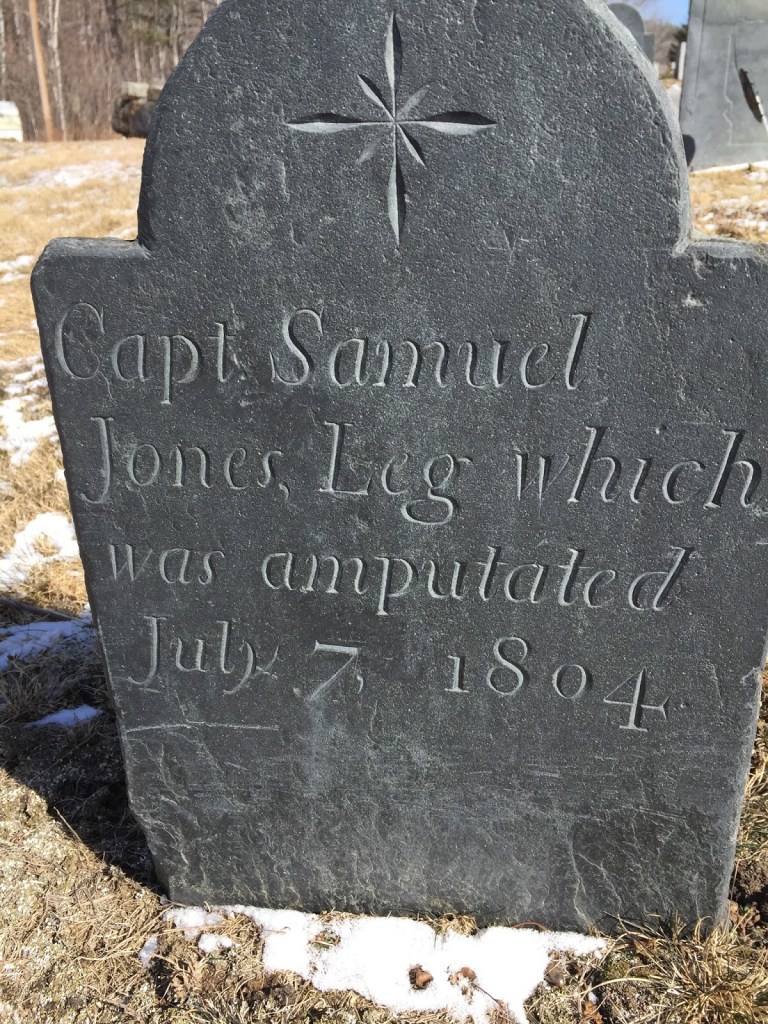
Samuel Jones House and Leg Grave //

Samuel Jones Jr. was born in Hillsboro in 1777. His family was among the first to settle in that town in the 1770s. Jones married Deborah Bradford in 1799, and the couple soon settled in Washington, New Hampshire that next year. Samuel ran a tavern out of the new family house which was built around that time. When he was 27 years old, Jones was helping a friend hoist and move a building on logs, when his leg became was caught and crushed by the building. His friends brought him to his house where he laid on a table awaiting a doctor. This occurred in the days prior to knowledge of anesthesia so his friends and neighbors treated him with whisky or rum. When the leg was removed they decided it should have a “proper burial” so it still rests with its marker in the old cemetery in Washington. Samuel survived the amputation and later moved to Boston, where he worked at the Customs House and later moved to New York where the rest of his body was buried upon his death in 1851.
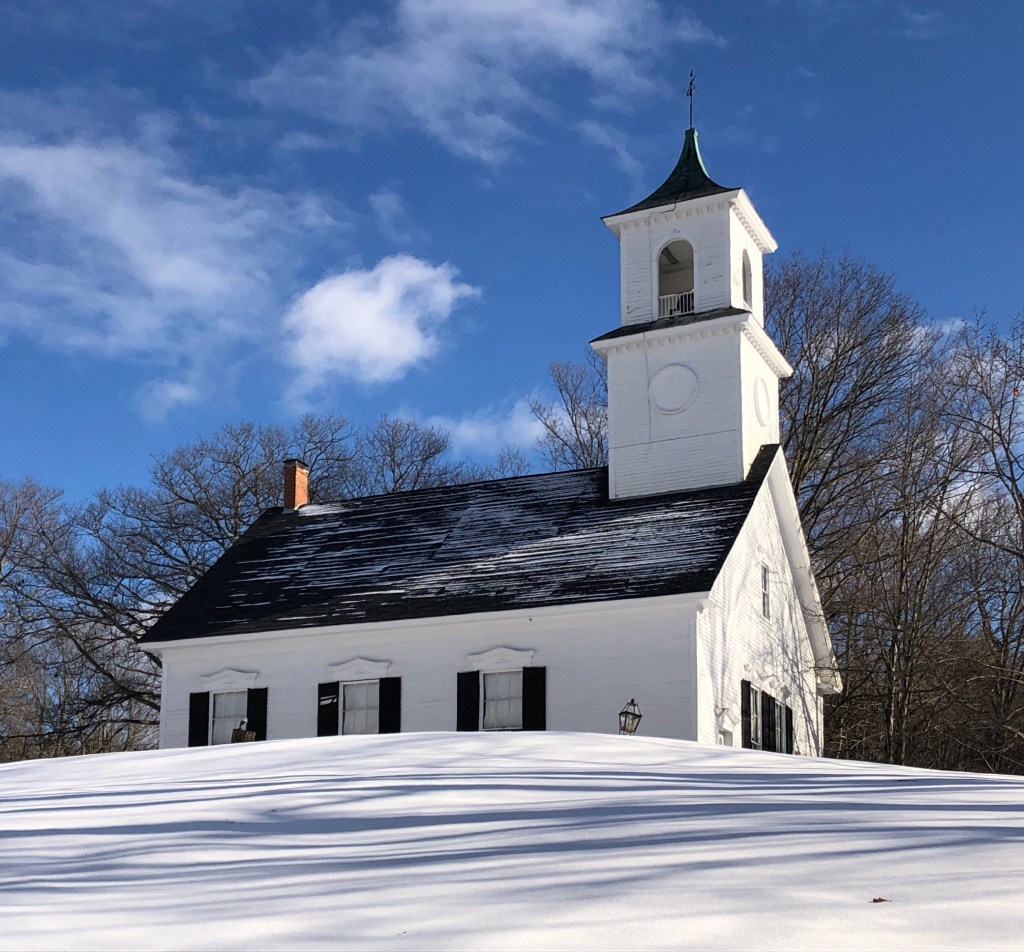
East Washington Baptist Church // 1877

Residents in the eastern portion of the rural town of Washington, NH found it very inconvenient to attend church at the center of town. In 1800, a group of residents on the east side of town banded together to create a new congregation, building a church perched on a low hill soon by 1826. The church was used for decades until it burned in 1844, it was replaced a year later, but that burned as well. Undeterred, the small congregation had yet another church built in 1877. The church remains in great condition, and is still active.

Shedd Free Library // 1881

Aren’t tiny old libraries just the best?!

Located in Washington, NH, the Shedd Free Library is the only Victorian Gothic building in town, and packs a punch for its small size. The library was named for Sarah Shedd, a Washington teacher and poet who went to work in the cotton mills of Lowell, Massachusetts to support her family and educate her siblings. When she died in 1867 she bequeathed $2,500 to her hometown to establish a free public library, an amazing gift! The gift did not appear to be enough as nothing was built until 1881, after Boston architect S. S. Woodcock was selected by Luman T. Jefts, a wealthy shoe manufacturer in Massachusetts, to design the library after a gift to his hometown.

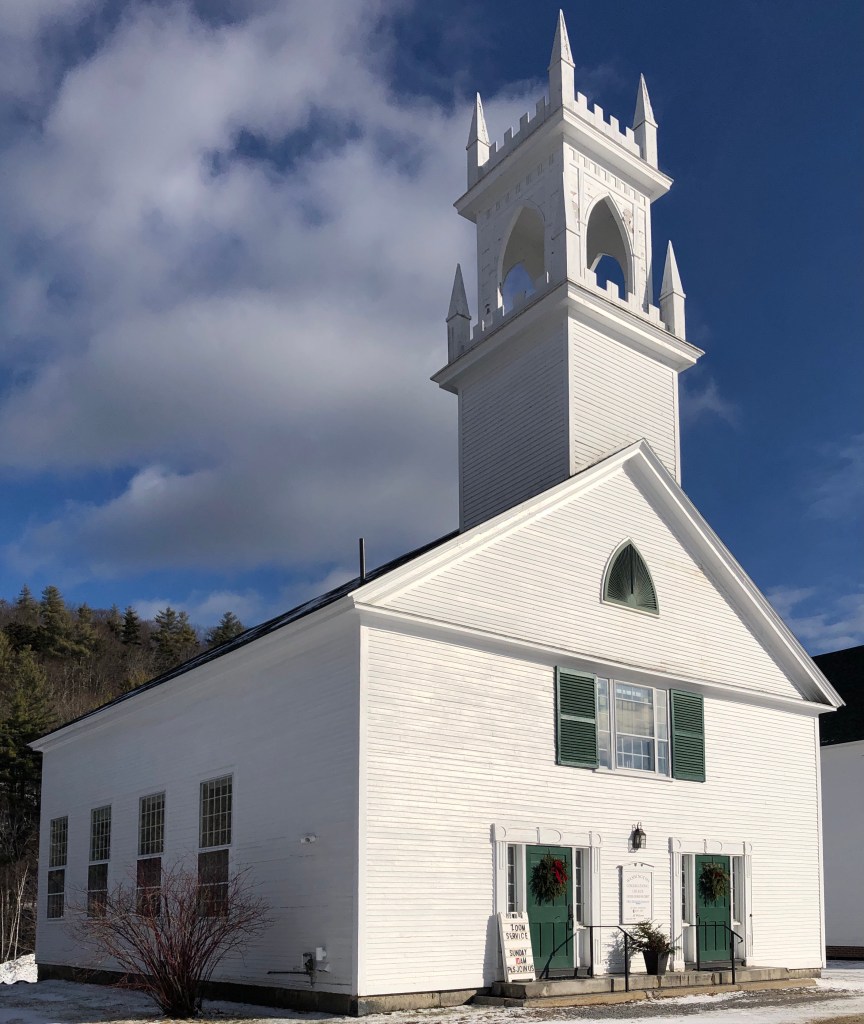
Washington Congregational Church // 1840

Located adjacent to the Washington Meeting House and Central Schoolhouse on the Washington, New Hampshire Town Green, the Washington Congregational Church perfectly compliments the collection of vernacular buildings here to create a very cohesive, three-building historic district. The church is dominated by a Gothic-inspired two stage square tower adorned by pointed pinnacles and crenellation. The building, constructed in 1840, is a great example of a Gothic Revival vernacular church building in rural New Hampshire and has been well-maintained over the years. In 1960, a fire in the church resulted in several thousand dollars worth of damage. A full basement was built under the church in 1985 to provide space for Sunday School classes and events. The simple arched sanctuary has remained in keeping with the original interior design, and features wide board wainscoting and wooden pews, taken from the old Meeting House.

Old Brick Store // c.1810

While many buildings around the Town Green in Washington, NH are wood-frame construction, some brick buildings stand out. This brick building was constructed in the early 19th century, possibly as a single-family home. The building had commercial use after the Civil War, when Benjamin Muzzey ran a store out of the building with a business partner. After successive owners and uses, Pearl Young leased it around 1920. Pearl saw the use of automobiles growing and had gasoline pumps installed, turning the old brick store into a gas station. Pearl and Mary Young operated a successful a store and post office here for over 30 years before closing up shop. The brick building has since reverted back to a residence.

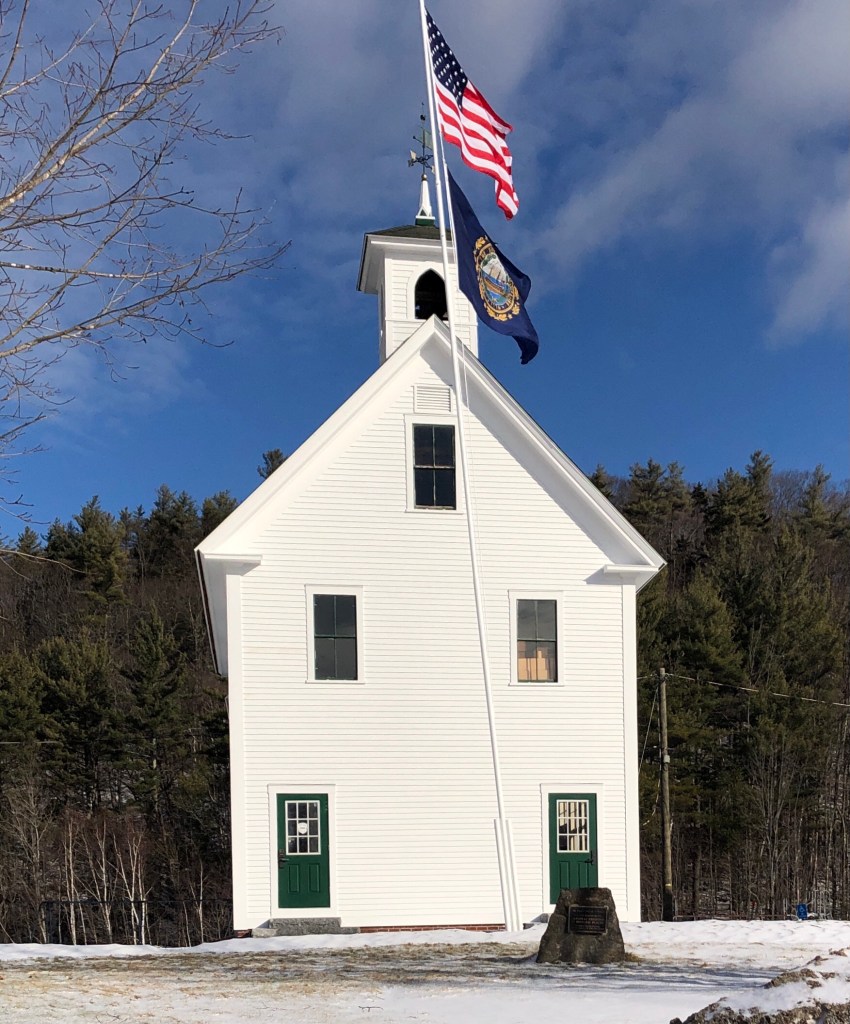
Washington Center Schoolhouse // 1883

Adjacent to the Washington Meeting House, the Washington Center Schoolhouse perfectly compliments the Georgian building, despite being constructed 100 years later. Constructed in 1883, this building served as the principal school house in Washington, and was known as the Center School. There had been an earlier school house near this site, a small brick structure, but by the 1880s it was both worn out and too small and replaced. Eventually, it was decided to build a new school in the general style of the other town buildings, and place its facade flush with the Church (next post). The building now appears to be home to the town’s police department.

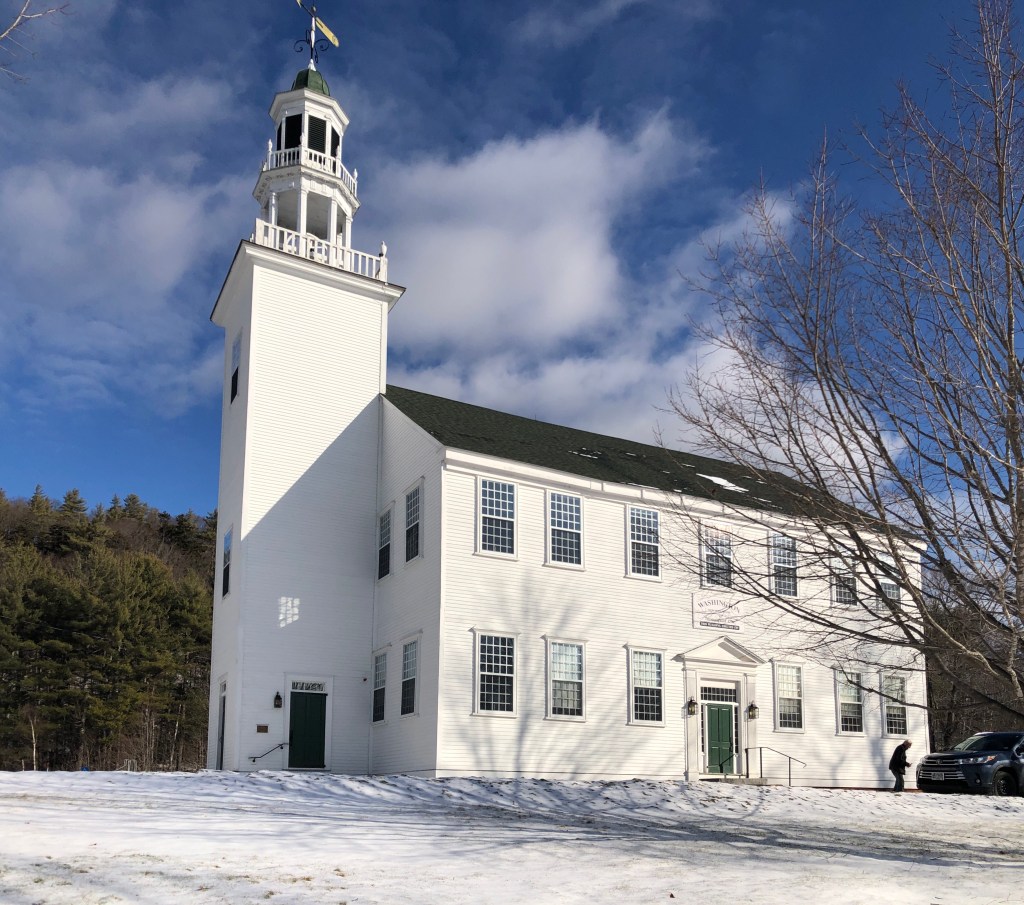
Washington Meeting House // 1787

The Washington Town Hall, originally raised as a meetinghouse in 1787, is the civic and visual focal point of Washington Center in New Hampshire. Land here was first granted in 1735 by Colonial Governor Jonathan Belcher of Massachusetts. The town was one of the fort towns designated to protect the colonies from attack by Native peoples, and it was named “Monadnock Number 8”. The first permanent settlers arrived in 1768 and built log houses. By 1773, the community had 132 inhabitants. On December 13, 1776, the newly established American revolutionary government incorporated the town as “Washington”, after George Washington — one of the first named in his honor. A small townhouse was built but was replaced a decade later with what we see today. The current structure was originally a simple, two-story clapboarded structure, with east and west porches. The tower and belfry rising from the end were added in 1820. The building committee specified all details of the meeting house, including “that the windows should be glazed with squares of glass, seven by nine inches, forty panes to the window”. This attention to detail shows how the meeting house would be a source of pride for the new town and all details were to be discussed to the smallest detail.

Williams-Sears House // 1905

Why cant we all have siblings this generous??

Located in Boston’s Back Bay neighborhood, this home was actually constructed as two attached homes for Ralph Blake Williams and his sister, Ruth (Williams) Sears, the wife of Dr. George Gray Sears. In 1905, Ralph B. Williams hired architect Julius A. Schweinfurth, who trained in the architectural firm of Peabody and Stearns, to design a double-townhouse, for him and his sister. After completion, Williams lived in the larger side (right three bays) with his widowed mother, and Ruth lived in the smaller home (left two bays) with her husband. After successive ownership, the buildings were and turned into a lodging house, soon after purchased together in 1955 and turned into a school, the Chandler School for Women. The homes remained separate until 1959, when the school demolished the interior party wall, effectively combining the two properties into one, this is likely when the Sears’ front door was filled in, leaving one front door in the center bay. In 1971, the New England College of Optometry purchased the building and occupies it to this day for classrooms and offices.

The Charlesgate // 1891

One of the most grand apartment hotels in Boston, The Charlesgate, serves as one of many architectural anchors for the Back Bay neighborhood from Kenmore Square. The apartment hotel was constructed in 1891 and so named after the Charlesgate Park which was created by landscape architect Frederick Law Olmsted as part of the glorious Emerald Necklace park system. The Back Bay Fens was the first park designed by Olmsted for the City of Boston. Creating the Back Bay Fens was as much a sanitary as an aesthetic project, because the water was heavily polluted and often stagnant; Olmsted envisioned Charlesgate as the meeting point of the Back Bay Fens with the Charles River. The apartment hotel was actually designed and was financed by the architect, John Pickering Putnam, and members of his family. The basement and first story are constructed of Indiana limestone with the remainder of brick, with limestone trimmings. A picturesque effect is obtained by grouping the bays in pairs, and surmounting each pair with gables in the Queen Anne style, and by relieving these features against a high roof of green slate. The building originally featured 30 apartments and has since been reconfigured into over 50. The architectural landmark is one of the best statement-pieces in the neighborhood, and shows that apartment design can be done very very well!

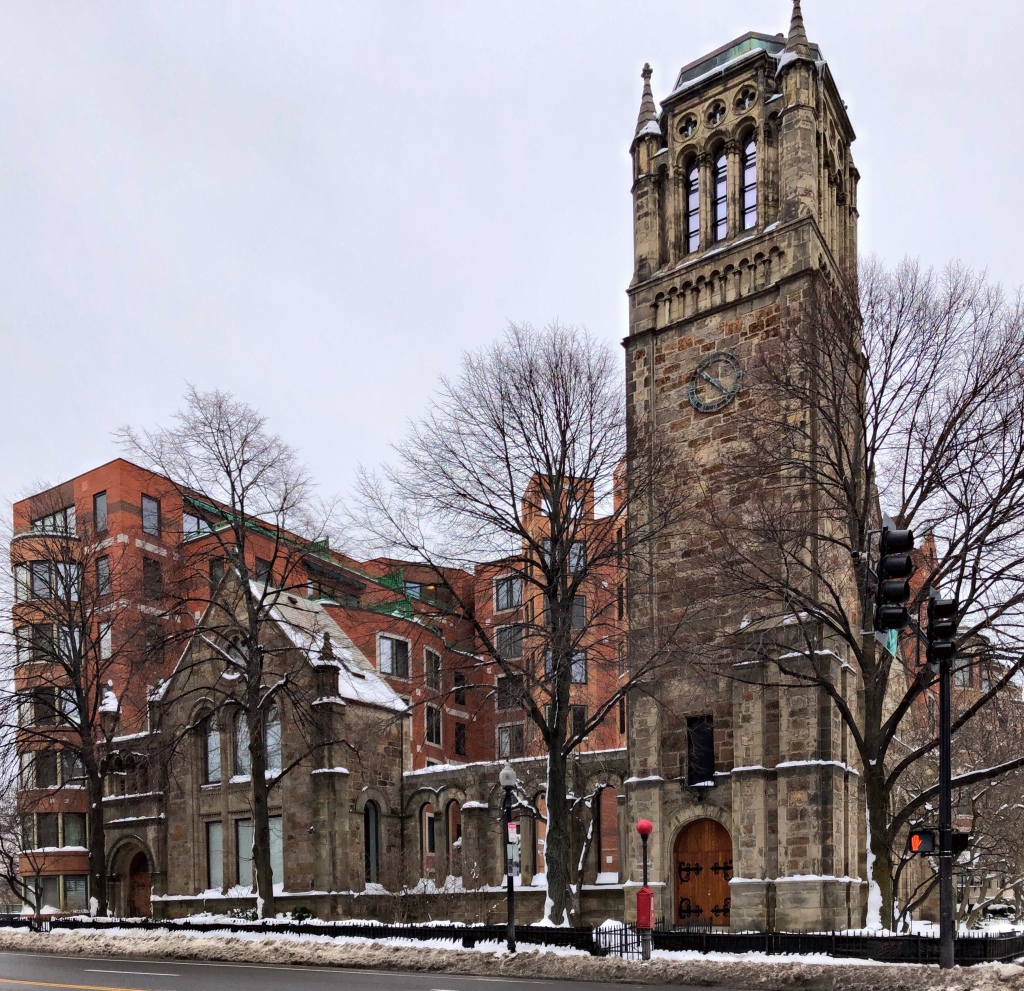
Mount Vernon Congregational Church // 1892 & 1984

The Mount Vernon Congregation Church was founded in 1842 and originally was located in Ashburton Place on Beacon Hill (which I featured previously). As its members moved to the Back Bay, the congregation decided to build a new church in the western portion of the neighborhood. They hired architect C. Howard Walker to design the new church building, with stained glass windows by John LaFarge and Louis Comfort Tiffany added as memorials to several members of the congregation over subsequent years. As originally designed, the church had a 45-foot high steeple on top of its 85-foot square tower, but over the years it became structurally unsound, and it was removed just before the Hurricane of 1938, which toppled many steeples all over the region. In 1970, the church merged with the Old South Church in the Back Bay. In 1977, developers proposed to remodel the church building into retail and office space. The proposal was approved by the Boston Redevelopment Authority in January of 1978. Before work could commence, a fire destroyed much of the church building leaving a shell of Roxbury Puddingstone walls and the tower, the developer pulled its funding and the building’s future was uncertain. One year later, architect Graham Gund purchased the building. Gund was familiar with adaptive reuse projects, like his restoration of the Middlesex County Courthouse in Cambridge for his own office in Cambridge in the 1970s. Gund redesigned the building into 43 condominium units called Church Court. What are your thoughts on the architecture?