Former West Acton Universalist Church // 1868

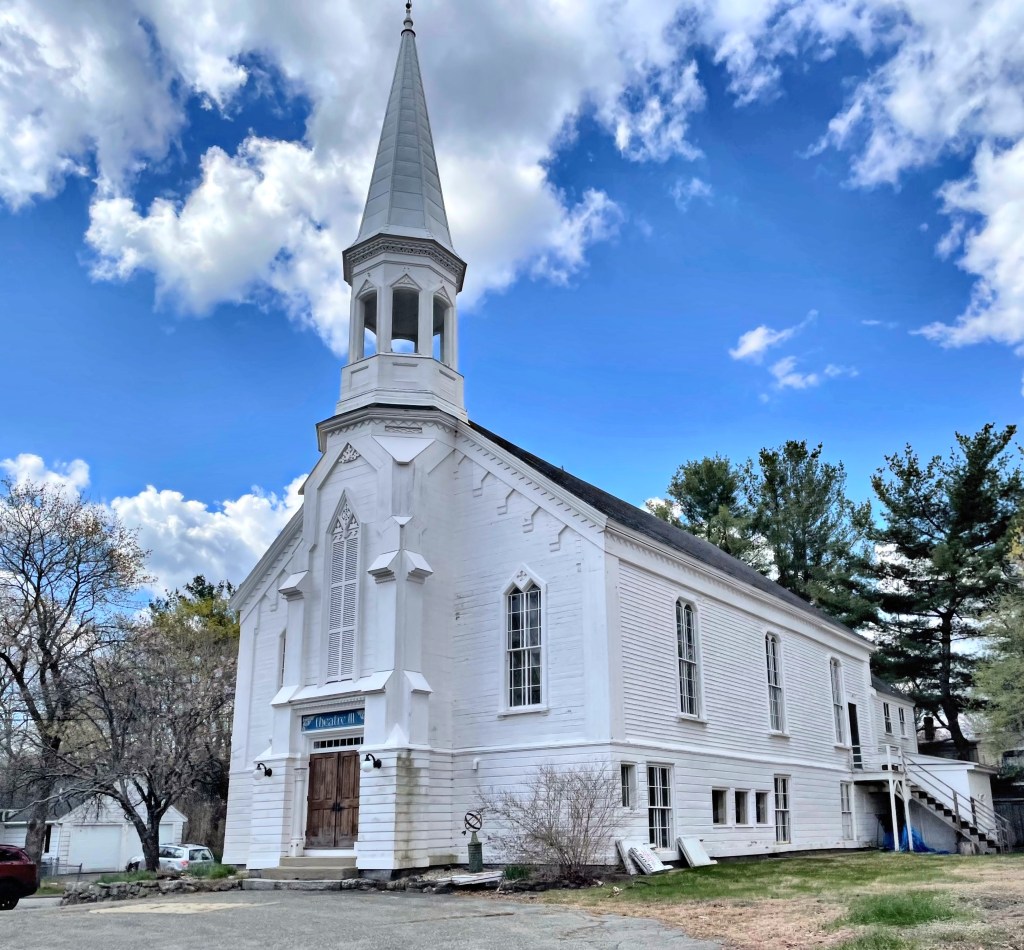
This beautiful church in Acton, Massachusetts was built in 1868 by the Universalists of West Acton who sought a house of worship closer to their homes, rather than taking horses to the other part of town every week. The building exemplifies the influence of both Gothic Revival and Italianate styles on rural churches of the time. Gothic elements include the double pointed lancet windows with quatrefoil ornament, buttresses, and pointed lancet panels on the tower and belfry. Italianate elements include the rusticated base and the corbel table at the eaves. Religious services ceased in 1925. At that time, the church building was bought by leading men in the village who gave the building to the West Acton Women’s Club, which began in 1890 by Lucy Mead (the wife of Oliver Mead, who built the Mansard home nearby). In the 1950’s, the church was used as a community center. It is now home to a local performing arts center, Theatre III Box Office.

West Acton Citizens Library // c.1845

Old houses adapted for other uses always deserves a highlight! The West Acton Citizens Library was originally constructed in 1840 as a small, one-story Greek Revival style cape house either for or purchased by Phineas Wetherbee, a farmer and early landowner in the village. The modest house features little detailing besides the recessed entrance composed of wide, flat pilasters and a lintel decorated with square corner blocks and a central keystone. In 1883, Phineas Wetherbee met with thirty-nine others to form the Citizens Library in West Acton. The organization accessioned the collection of the former Farmers Club Library. When Mr. Wetherbee died in 1895, he bequeathed his house to the library, who later moved into the house by 1900. Today, the house remains a library space for the West Acton village.

Samuel Jones House // 1806

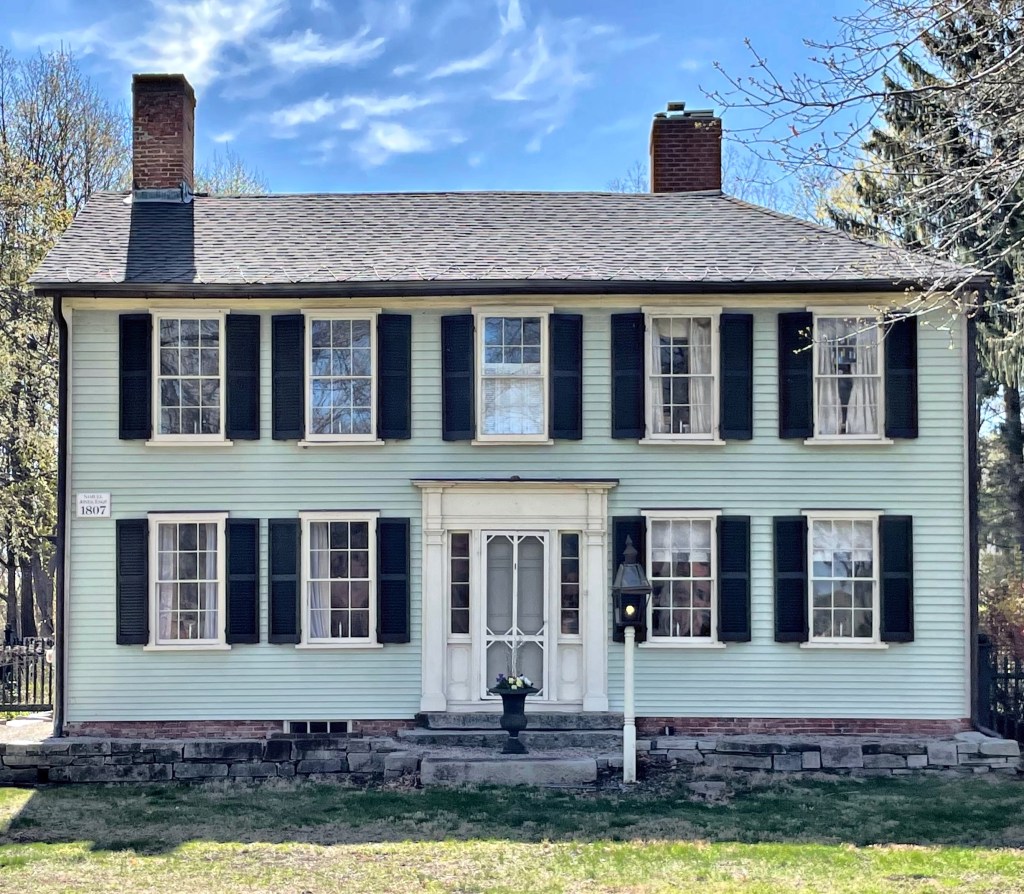
This home in Acton Center was built in 1806 by Samuel Jones, shortly after he and other esteemed residents laid out house lots just south of the Town Green. Samuel Jones worked as an attorney and he lived here with his family and widowed mother, who operated a dame school, where she taught local children out of the house. The Federal style farmhouse sits upon a brick and stone foundation and is five-bays at the facade. The entry features a panel front door with sidelights flanking it. The entry is surrounded by a traditional Federal style frame with pilasters and entablature. There is something so beautiful about the simplicity and proportions of old Federal style houses.

Edgar Hall House // 1889

Another of Acton’s amazing old Queen Anne homes is the Edgar Hall House, an 1889 gem on Windsor Avenue. The house was built for Edgar Henry Hall and his wife Angelina who raised their daughter, Alice, in the home. Edgar and his brother inherited the family business from their father, Enoch Hall, and they produced wooden pails, tubs, clothing racks, and other wooden goods. The company employed over 30 workers in the early 20th century until it closed during the Great Depression. Edgar retired and relaxed from this stunning Victorian home until his death in 1954.

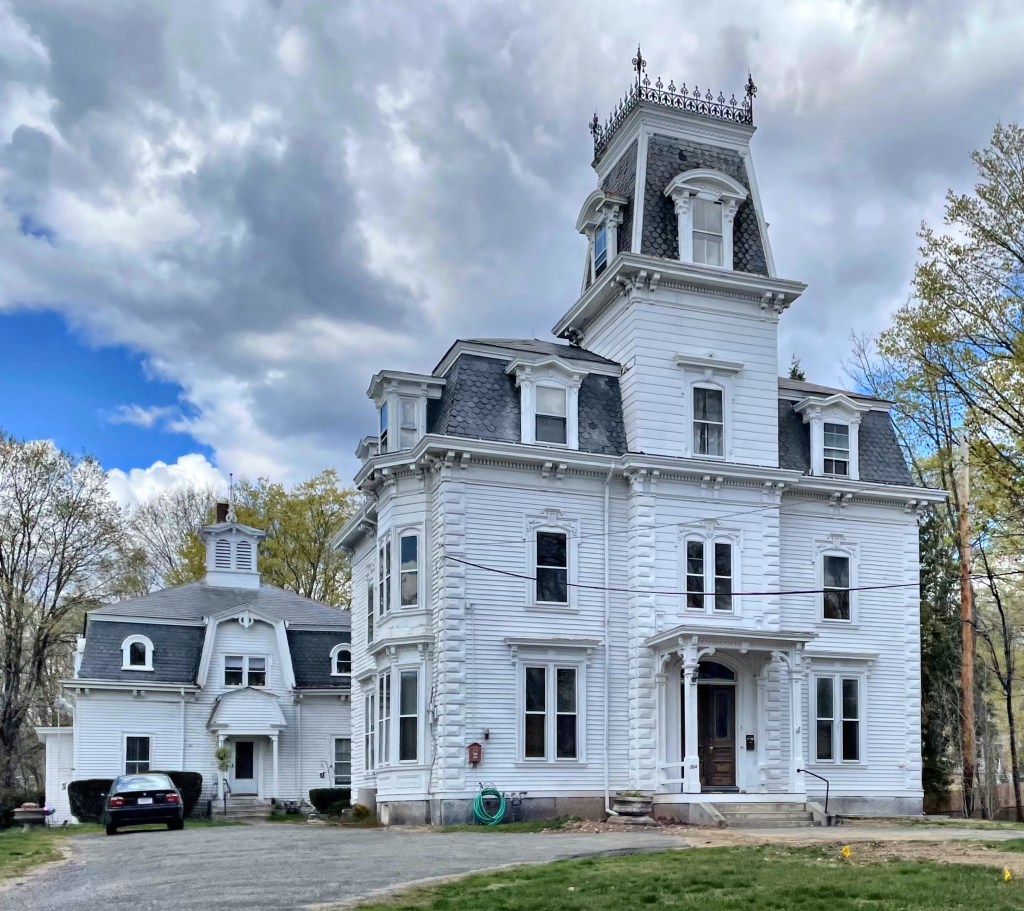
Oliver Mead Mansion // c.1870

Acton, Massachusetts is one of the more underrated Massachusetts towns for great old buildings, many of which are well-preserved and taken care of by their owners. The Oliver Mead Mansion in West Acton Village is among the largest in this part of town and is a stellar example of the Second Empire style. The house and adjacent carriage house was built around 1870 for Oliver Mead (1823-1912), who co-owned the A. O. W. Mead Company with his two brothers, a successful produce marketing company where they sold poultry, eggs, cheese, fruit, and other goods from farms in Acton and Boxborough to their shop on Market Street in Downtown Boston. The company did well, and Oliver and his brother Adelbert built matching mansions in West Acton after the Civil War and business picked up. The house exhibits a central projecting tower bordered by quoins and topped by a mansard roof with iron cresting on top. The original carriage house remains in a great state of preservation as well. The Adelbert House and Carriage house nextdoor were demolished in the 1950s for the fire station on the site.

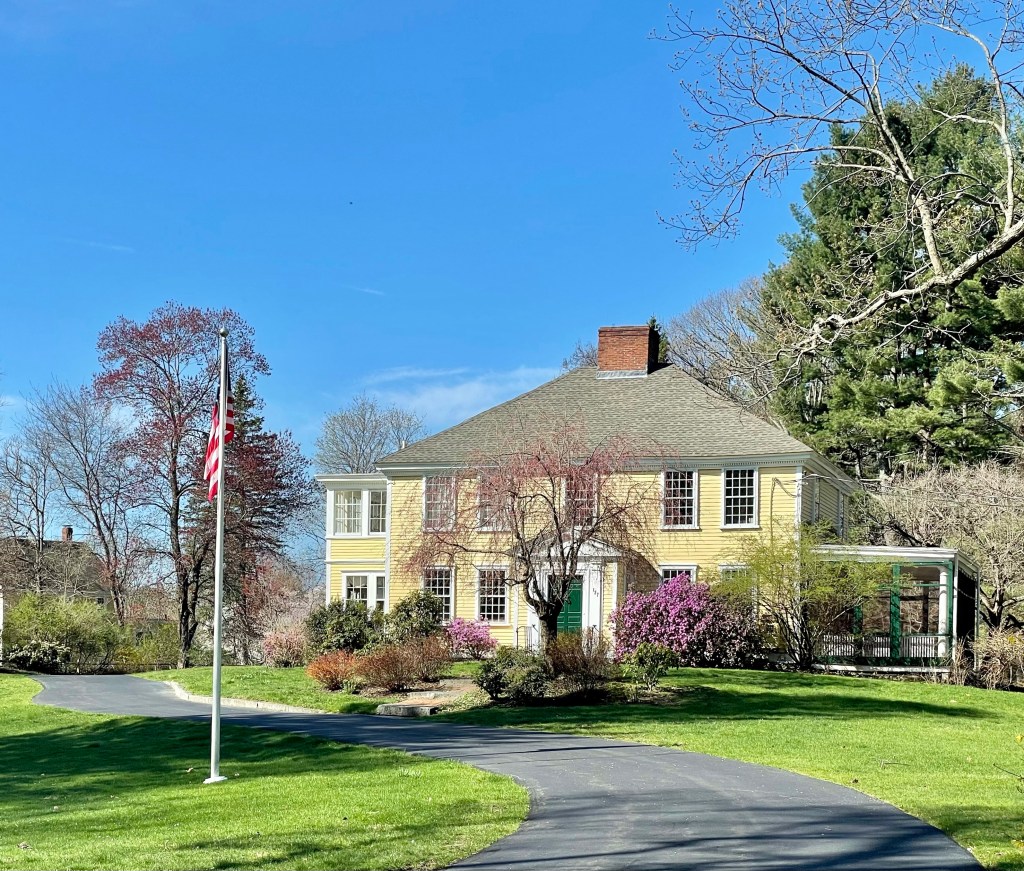
Stoneymeade Farm // c.1773

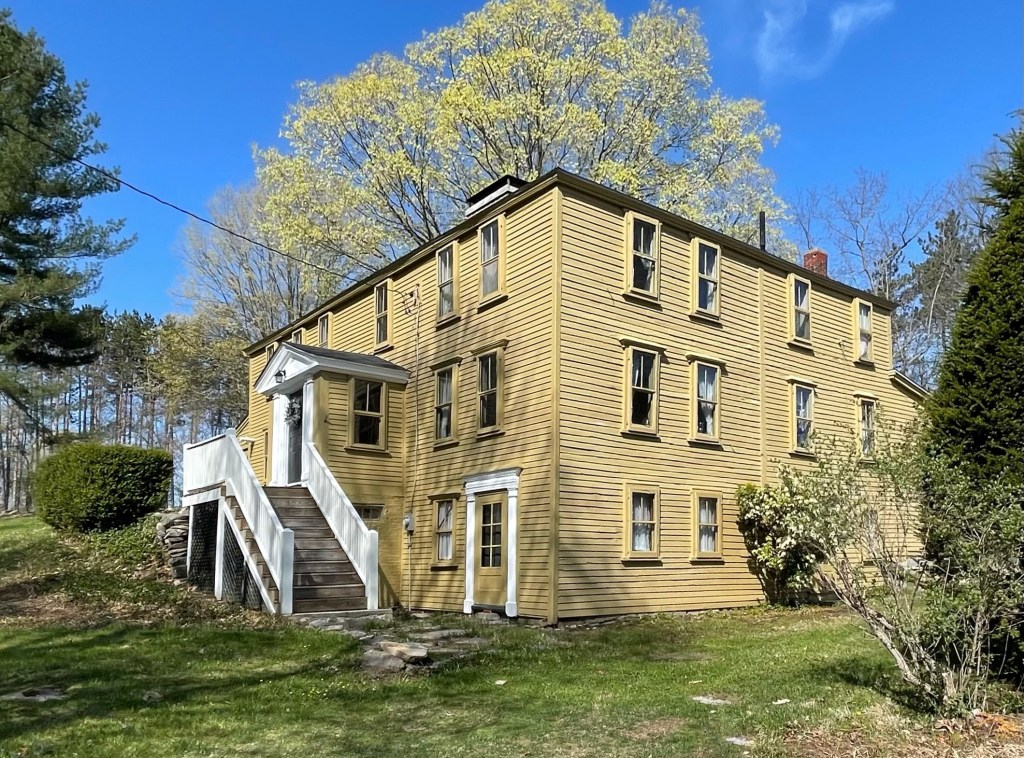
This stunning Georgian farmhouse in Acton, Massachusetts, was built around 1773 for Seth Brooks (1740-1831) and his wife Molly Conant Brooks, on land that had belonged to her father, William Conant of Concord (part of which was later annexed to Acton). Seth Brooks fought under Captain Isaac Davis on April 19th, 1775 at the Battle of Concord, who was among the first killed and was the first American officer to die in the Revolution. It was Brooks who ordered Davis’ body carried from the field after he fell, so he could be buried with honor. After the war, the family suffered an unfathomable tragedy. Seth and his wife, all their nine children, and all but one of their grandchildren died of the same type of tuberculosis, “slow consumption.” The family “curse” appears to have been broken by grandson Nathan Brooks, Jr., (1799-1881,) who inherited the property. According to local legend, a room beside the center chimney sheltered runaway slaves, as Nathan Brooks was an avid abolitionist. At the turn of the 20th century, the farm was purchased by Brookline timber merchant Benjamin Pope, owner of the Pope and Cottle Company of Boston. For many years, the Pope family used the house as a summer residence, with managers working the property as a dairy farm. It was Pope who named the farm “Stoneymeade,” and added greenhouses, an icehouse, and had an elaborate water system installed. Stoneymeade Farm continues to this day as an equestrian farm with boarding space for horses.

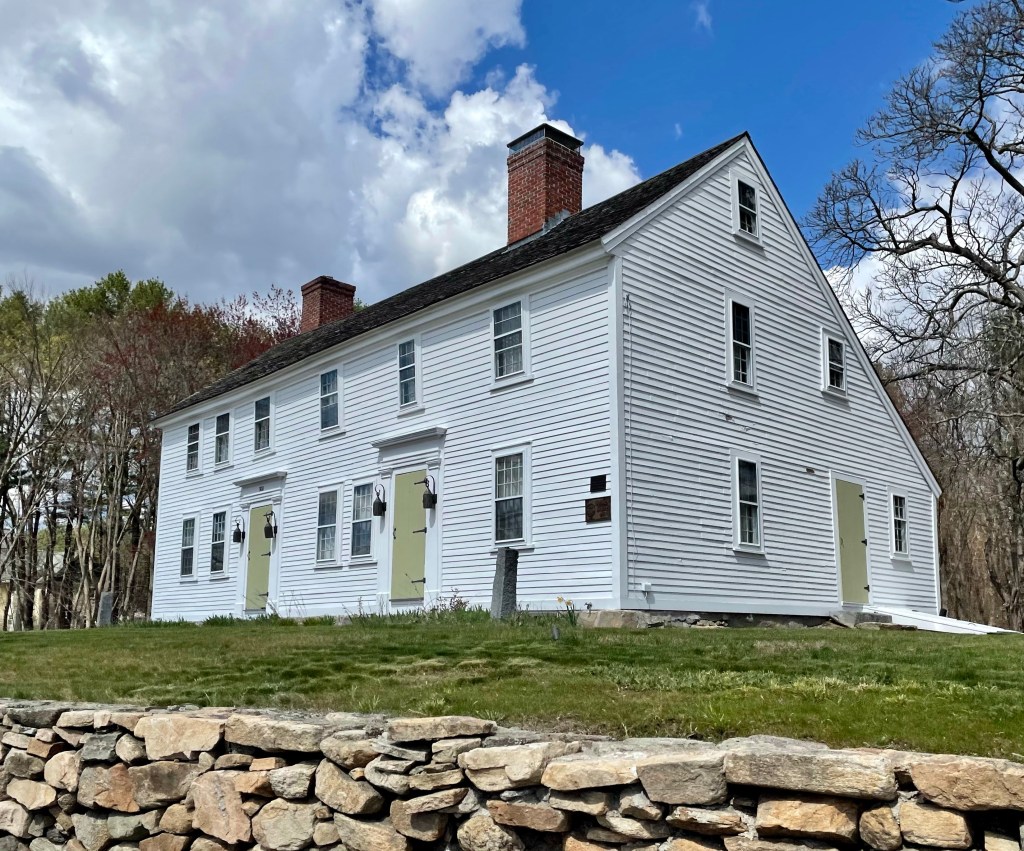
Hosmer House // 1760

This 2-1/2 story wood frame house in Acton, Massachusetts was built in 1760, and is one of the town’s best-preserved colonial-era houses. It is an unusual double house, consisting of one section with a square plan, and the other with a typical colonial “half house” plan, having three bays and an off-center chimney. The house was built by Jonathan Hosmer, Jr., a bricklayer whose workmanship is evident in the house’s many fireplaces. Hosmer was also prominent in civic and military affairs; he served (along with his son, who was killed at 17 years old) in the 1777 Battle of Bennington. The home was later owned by Jonathan’s son Simon, who may have added the attached dwelling, creating the double-house form we see today. In 1974 the property was acquired by the Acton Historical Society, which rents one of the units, and operates the rest of the property as a museum. The home is a great example of a Georgian double-house with a saltbox roof.

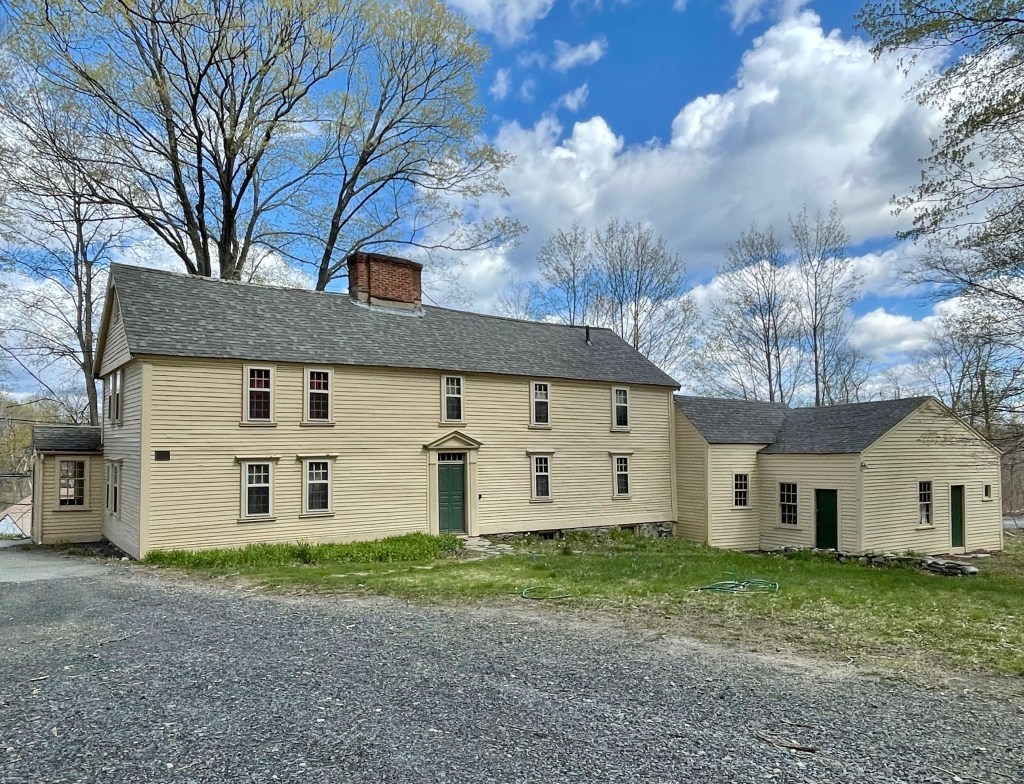
Faulkner Homestead // 1707

One of three pre-1725 houses in South Acton, the Faulkner Homestead is the best preserved First Period house in the area and displays elements from its First Period construction date of 1707 and from the later Georgian period. The home was built for Ephraim Jones, who was one of the first millers starting what was to become the Faulkner mills located near the old homestead. The home was known as a Garrison House, built as a refuge for the settlers in times of Indian raids, but there is no record that it was ever used for that purpose. In the 1730s, the home was rented by Ammi R. Faulkner (1692-1756), who purchased it years after he moved in. The Faulkner Homestead remained in the Faulkner Family for over 300 years, when it sold our of the family in the 1940s.

Exchange Hall // 1860

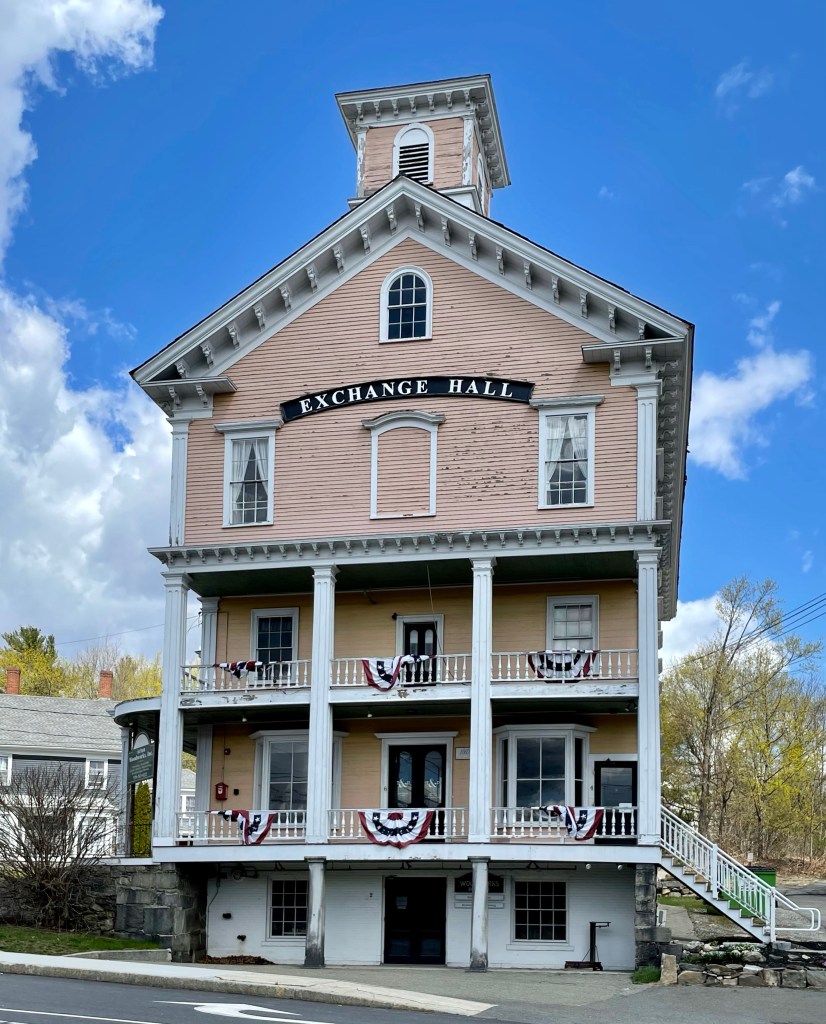
Arguably the most identifiable and iconic building in Acton is Exchange Hall, towering above the small village of South Acton. Exchange Hall was built in South Acton in 1860 to serve a variety of functions, primarily commercial. South Acton, with small milling operations and an ironworks established along Fort Pond Brook, had been a locus of
settlement since the earliest years of the 18th century. While the town’s village center evolved to the north, South Acton remained the site for industrial and economic development into the 19th century, spurred by the arrival of the Fitchburg Railroad from Boston in 1844. On the eve of the Civil War, South Acton supported a number of thriving
businesses, most under the aegis of three men: James Tuttle, his brother Varnum Tuttle, and Elnathan Jones Jr. The latter was the great-grandson of Samuel Jones, who established a successful tavern and store across the road from the site (a previous post). At the cost of $10,000, the three men financed the construction of Exchange Hall, designed to serve as the focus for the group of shops they ran together. The Italianate style Exchange Hall is 3 1/2-stories atop a raised foundation, with full length porches, stunning proportions, and a cupola at the roof.

Old Acton Parsonage // c.1740

Not far off Main Street in Acton Center, this stunning old Georgian home was built around 1740 for Jacob Hooker a tailor and later served as the home of James Dudley, a blacksmith in the village. After the American Revolution, Acton called on Reverend Moses Adams (1749-1819) to be the minister for the Acton Meetinghouse. The town acquired the old Dudley House for Reverend Adams to reside in with his family. In 1780, the home was enlarged, and possibly given the raised foundation we see today. Mrs. Adams ran a store out of the basement, accessed by the doorway in the brick foundation. After Adams’ death in 1819, the property went to the next reverend in town, until his death decades later. In 1889, a carpenter, Moses Taylor, purchased the home, restored much of the woodwork, and replaced the historic windows with 2-over-1 windows, popular at the time. Moses moved a house on Main Street to make way for the new Acton Memorial Library, and was active in building and renovating homes in Acton until his death.