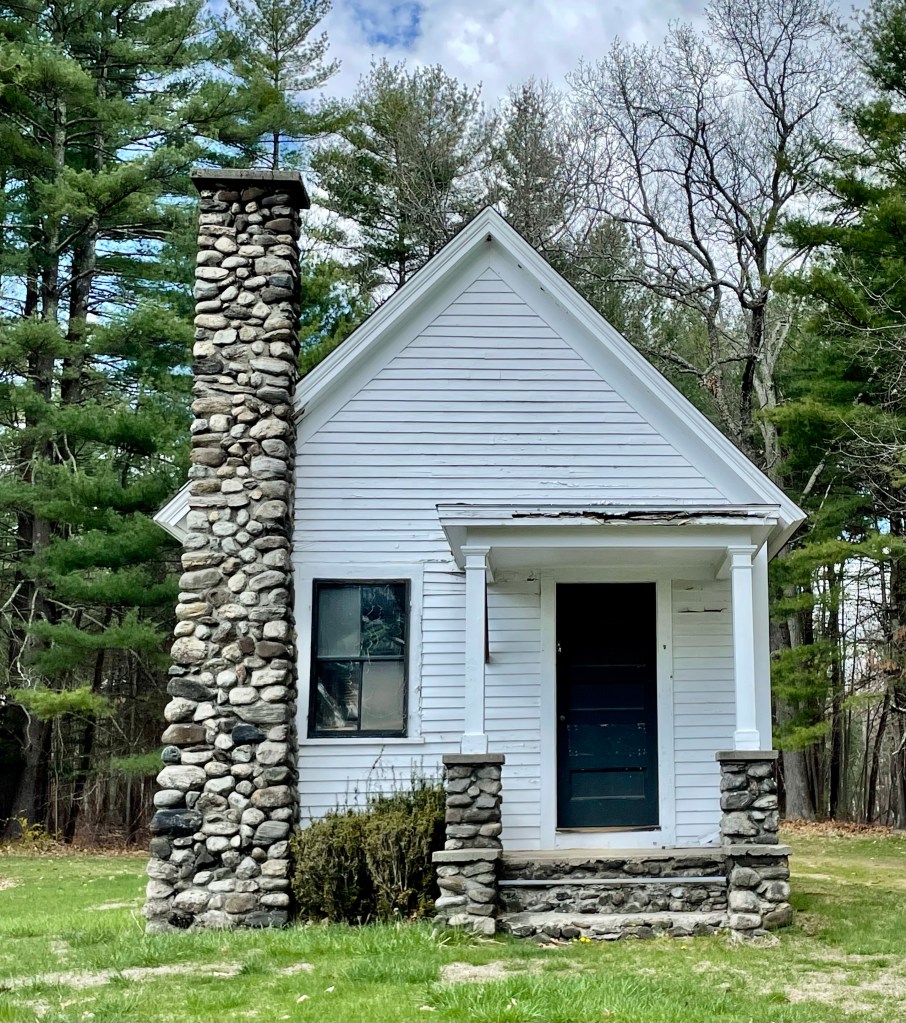
Mount Hope Cemetery Chapel // 1908

Mount Hope Cemetery in Acton was laid out in 1848 as the third municipal burying ground for the town. Before that, there was a need for a cemetery between the West and South Acton villages, closer to the developing parts of town, without a cemetery of their own. The cemetery was laid out with paths following a grid pattern, with land tapering off towards the rear. The cemetery, used by many prominent families of Acton, was without a chapel for over 50 years until funds were donated by George C. Wright a wealthy resident who lived nearby (featured in the last post). Town officials proceeded to build a small building that was apparently was quite different from the vision that Mr. Wright had for the building, but Mr. Wright generously agreed to accept what had been done and presented it to the town. At the 1909 annual town meeting, the town formally acknowledged the gift. It saw some use as a chapel in the early days, but has since been used for storage and an office for groundskeeping.
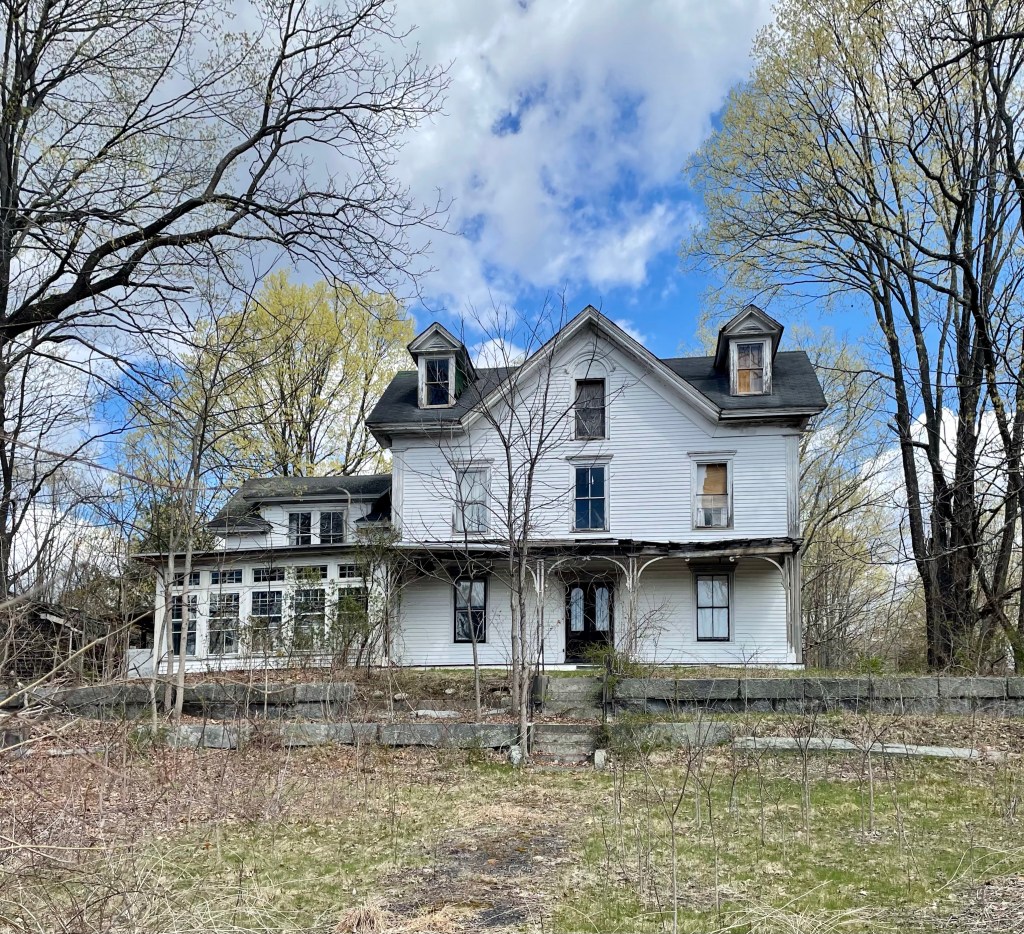
George C. Wright House // 1861

Perched high on a hill in Acton, Massachusetts, this once grand Italianate mansion has been slowly deteriorating without a caretaker. The home was built in 1861 for George C. Wright (1823-1910), a wealthy coffee and spice merchant at Dwinell, Hayward, and Co., a powerhouse in the coffee industry in Boston. In 1855, he was overworked in Boston and fell ill for two years, which worried his wife, who convinced him to relinquish some of his work and move back to Acton, which he did. Soon after he built this house, not too far from the village train depot which would give him easy access to Boston. In papers, he stated, “I felt that good air and a plenty of sunshine would do more for my health than anything else. For this reason, we built upon a hill and arranged the rooms of the house so as to get the sun to its fullest degree.” Wright later served as a State Representative, and remained active in local politics in the suburban town. His home was connected to a large barn (since demolished) and featured a large belvedere (removed after a hurricane) to provide sweeping views from his house on the hill. In recent years, an absentee owner did not appear to maintain the home and it has deteriorated, but good news! The house sold the week that I took these photos, so hopefully it will be restored to its former glory soon!

Jones & Wetherbee Houses // 1873

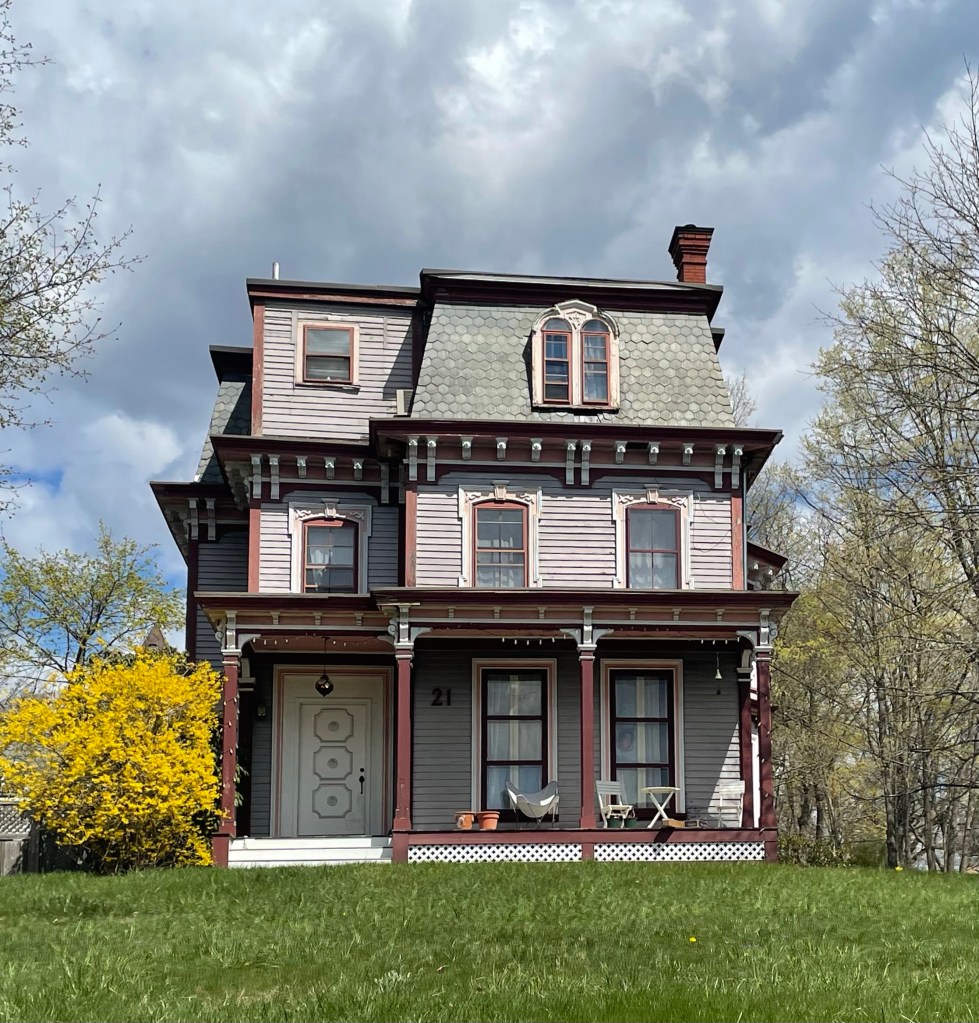
In 1873 Elnathan Jones, Jr.(1829-1904) purchased house plans from a friend in Groton, adapted the plans, and built these two houses, in Acton. One home for himself, and one for his business partner Jonathan Wetherbee (1832 1926). Also near these two houses is the Tuttle House (featured last), in a different style. All three of these men were family by marriage, and ran businesses in the village of South Acton. The Jones and Wetherbee houses were built as sister houses, identical; but over the years, the Jones House has seen some unsympathetic alterations which diminish its architectural significance. The Wetherbee House (yellow) retains its original detailing and corner, towered mansard roof.

Henry Tuttle House // 1873

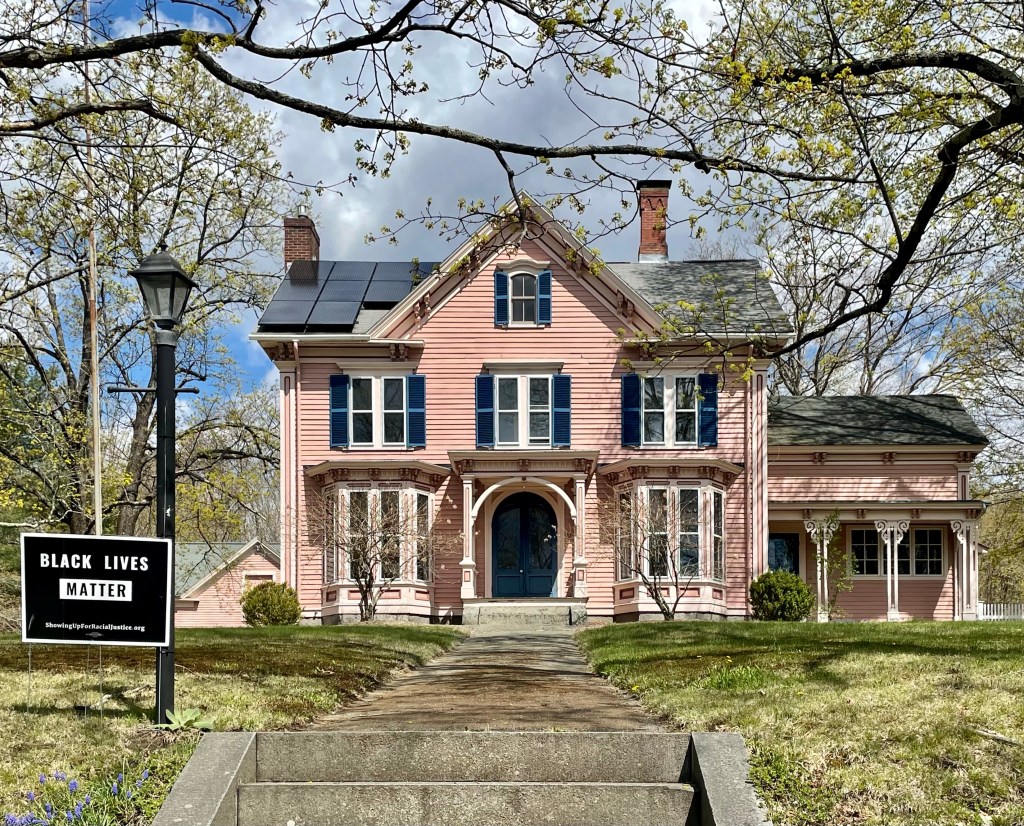
This large Italianate house in Acton was built in 1873 for Henry Waldo Tuttle (1847-1916), who ran a grocery store business in town with his father, James Tuttle. The business did quite well as Henry built this massive home around his 26th birthday, likely around the time of his marriage. The exuberant Italianate home features a wide central gable and a projecting central entrance porch accessed by double entrance doors. The home has a detached stable to the left of the home too!

Dr. Skinner “Lottery” House // c.1800

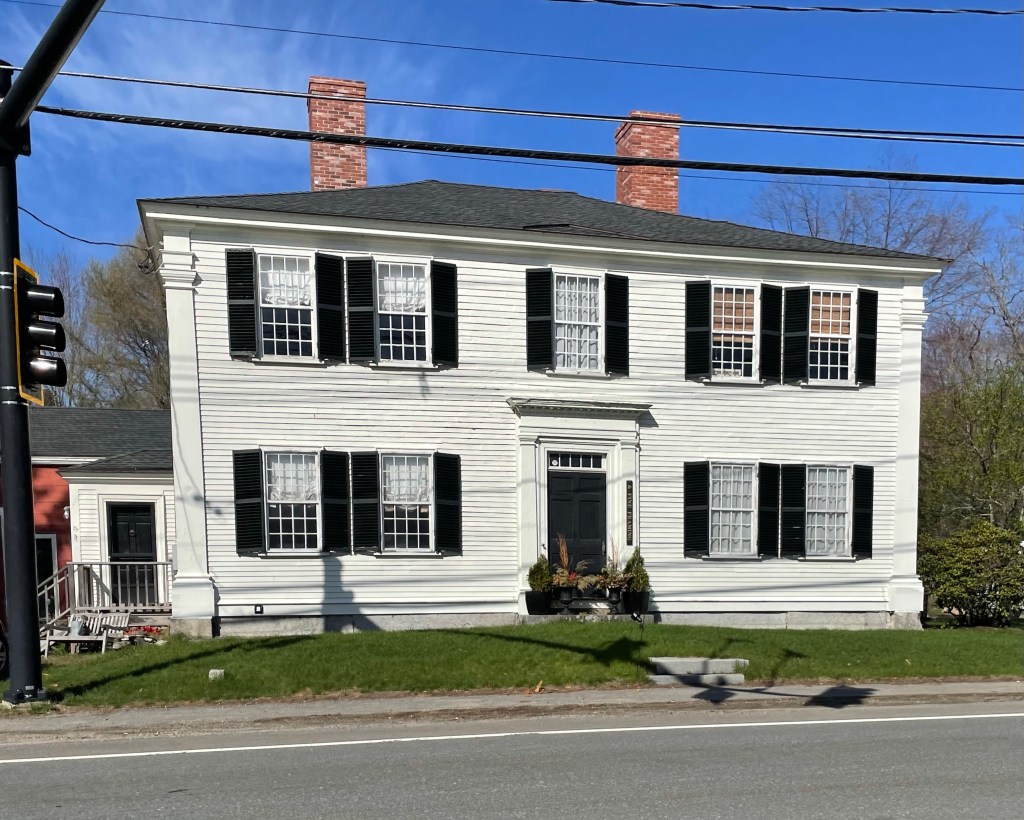
In 1794, four men from Acton, Abel Conant, Dr. Abraham Skinner, John Robbins and Horace Tuttle, jointly purchased a $5.00 ticket in a lottery run by Harvard College to raise funds for the construction of Stoughton Hall in Harvard Yard. This house, built for Dr. Abraham Skinner, is one of the four, and is the most grand of the four. Dr. Skinner was the third physician to practice in Acton and the first to arrive from out of town. He came to Acton in 1781 from Woodstock, Connecticut, and continued in practice until his death in 1810. The Federal style home is nearly square with five bays on all sides, with the facade and rear being slightly less crowded. The main entry includes a pediment with dentils, 4-pane side lights and a 4-panel, wooden door with elongated, rectangular, top panels. A similar entry, without sidelights, centers the south elevation. Time to buy some lottery tickets!

Robbins “Lottery” House // 1800

Government-sanctioned lotteries originated in Massachusetts as an alternative to taxation, but soon expanded as a fundraising tool to help fund building projects and support charities. In 1765, the General Court passed the first legislation allowing Harvard College to run a lottery to support dormitory building projects. Before Harvard University accepted multi-million dollar donations, they drew lotteries between 1794 and 1797 to build the second Stoughton Hall and in the early 1800s, for the building of Holworthy Hall. In Harvard’s lottery of 1794-1796 which John Robbins, a farmer and Revolutionary War veteran, entered, together with three friends, each of whom purchased a quarter-share in one ticket. They won! This Federal style home with hipped roof and symmetrical facade is one of four built in Acton.

Acton Memorial Library // 1889

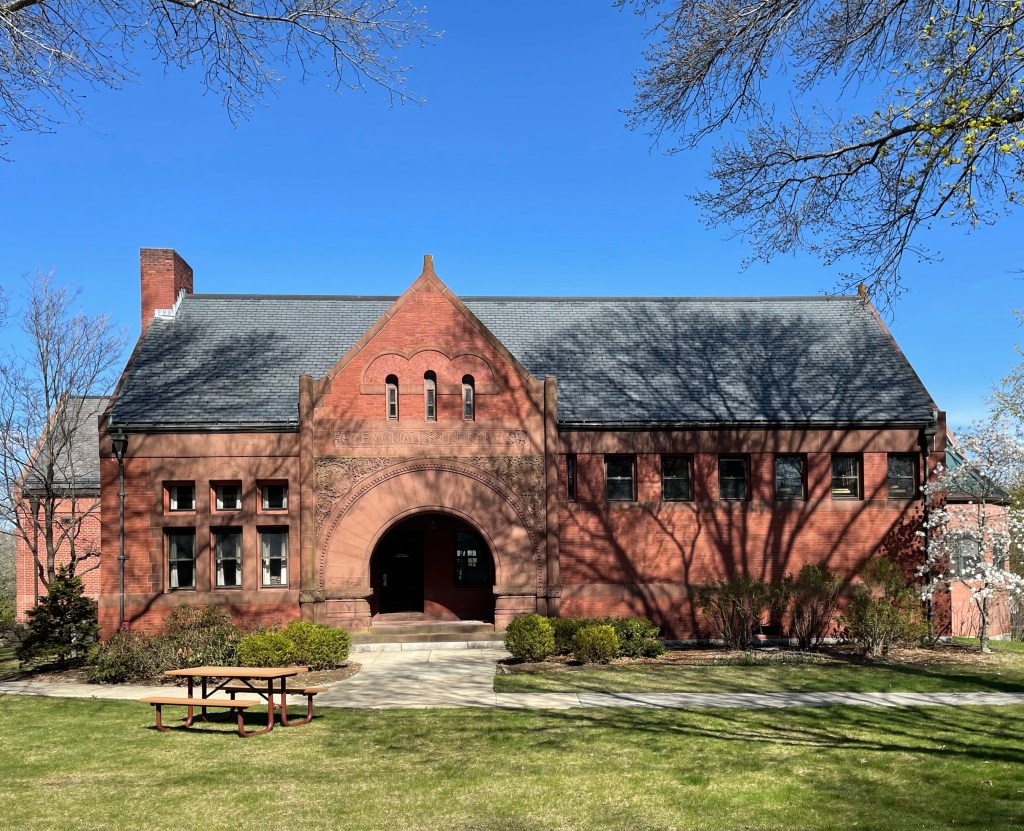
In 1888, William Allan Wilde, a Boston publisher who grew up in Acton, purchased land on Main Street to be used as the site for a new memorial library, in “memory of those brave and patriotic men of Acton who so freely gave Time, Strength and Health, and many of them their Lives in the war of the Rebellion, 1861-65.” The former Fletcher Homestead which was located here, was moved to a nearby street. The Richardsonian Romanesque building was designed by the Boston architectural firm of Hartwell and Richardson. The building displays traditional Romanesque materials with its brick wall surfaces, brownstone and terra cotta trim and detailing, and slate roof. The large Syrian arched entry is a hallmark in the Richardsonian Romanesque style, which works extremely well with this design.

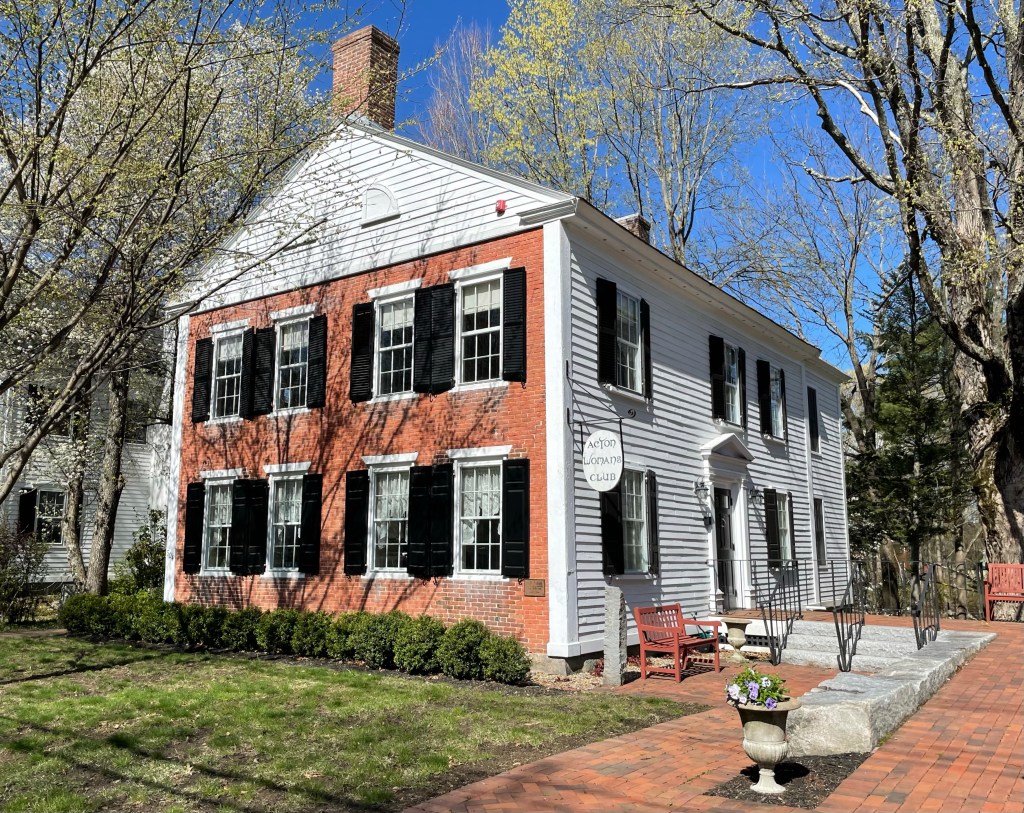
Acton Women’s Clubhouse // 1829

In 1912, a group of under twenty young mothers of Acton, Massachusetts, formed a club to provide a space to discuss issues ranging from child-rearing to larger topics like prohibition and women’s right to vote. The women began meeting at their homes before it was determined that they would need a permanent home. In 1915, the Acton Women’s Club acquired the old Dr. Cowdrey House (last post) next door occupying it and the attached barn. The 1829 Chapel for the Evangelical Society in Acton was part of the property and deteriorating. The Acton Women’s Club decided to sell the historic Cowdrey Home and use those funds to restore and occupy the old brick-end chapel. In 1940, the Club ceremoniously held a Mortgage Burning Party, having proudly paid off its debt. Today, the Acton Woman’s Club is the oldest and last standing brick- ended Federal structure in town.

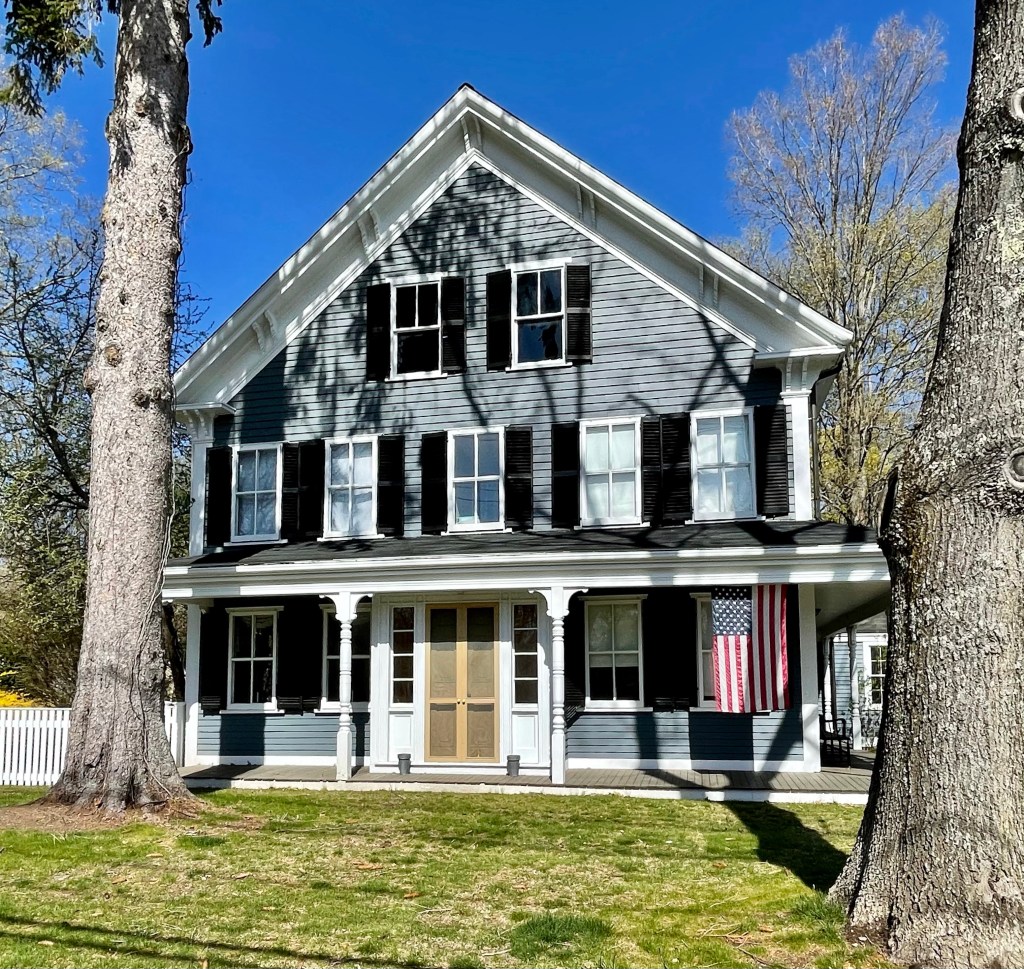
Dr. Cowdrey House // 1830

Located in Acton Center, the Dr. Harris Cowdrey House represents the emergence of Acton, Massachusetts from a sleepy rural town to a wealthy suburban town. This home was built in 1830 by Dr. Harris Cowdrey (1802-1875) as a 1 1/2-story gable end Greek Revival home. It was evidently enlarged to its present size decades later, possibly around the time Dr. Cowdrey and his wife Abigail growing their family. The Cowdreys had two children , Arthur who became a physician, after serving in the Civil War as a surgeon, and a daughter Helen who married a doctor herself, Dr. Charles Little also of Acton. After Dr. Harris Cowdrey died in 1875, Helen Cowdrey Little (who’s husband died young at just 32 years old) remained in Acton living with her mother in this house until 1886 when both women died. The home was later occupied by the Acton Women’s Club, who ran a crafts school for children out of the barn. The house showcases the original Greek Revival form, but features mostly Italianate detailing from the brackets, to the wrap-around front porch supported by turned posts.

Acton Town Hall // 1863

Acton, Massachusetts, was once part of Concord, the first inland colonial town established in the Massachusetts Bay Colony in 1635. 100 years later in 1735, land that we know today as Acton, separated from Concord to become their own town. Acton’s second Meetinghouse was located here in Acton Center, which was selected for its location more accessible to all houses and farms in the town. The Second Meetinghouse was built in 1806, and burned to the ground in 1862. Immediately after, a town committee was formed to construct a new town hall. Opening in 1863, Acton’s Town Hall stands as a stunning Italianate building with tripartite arched windows, corner quoins, a two-stage cupola with clock, and a bold (and historically appropriate) paint scheme. Acton’s Town Hall remains as one of the finest extant in the state.