The Stephen and Maria Mansfield House is located at 70 Concord Street in Nashua, New Hampshire, and is one of many stunning old houses along the largely residential street. The dwelling was built in 1888 for Stephen Willard Mansfield, a shoe dealer in Nashua, and his wife, Maria. The Mansfield House is a great example of a more modestly sized Queen Anne style house, which is typified by the asymmetrical plan, varied siding types, and intricate carvings and turned posts. This house is dominated by a two-story rounded bay which is capped by a conical roof. She could definitely use a good paint job but it’s a really sturdy old home built from old-growth lumber. She’s here to stay!
I do not feature enough Queen Anne style buildings on my account, as penance, I present this beautiful example of the style with a painted lady color scheme! Located on Windsor Avenue in West Acton, Massachusetts, this house was built in 1892 and has all the hallmarks of the Queen Anne style. The use of varied siding materials and forms, asymmetrical form, applied ornament, and large five-sided tower capped by a conical slate roof with weathervane. The home was built for Arthur F. Blanchard, a local businessman who operated an apple farm and marketing business opened by his father. Mr. Blanchard was a philanthropist in town and used his wealth to enhance his hometown by funding the Blanchard Auditorium at the Acton High School (1925) and was a benefactor of the West Acton Women’s Club in 1925. He and his son, Webster, also founded the Blanchard Foundation in town in 1946, an organization which funded and sponsored educational projects for the community.
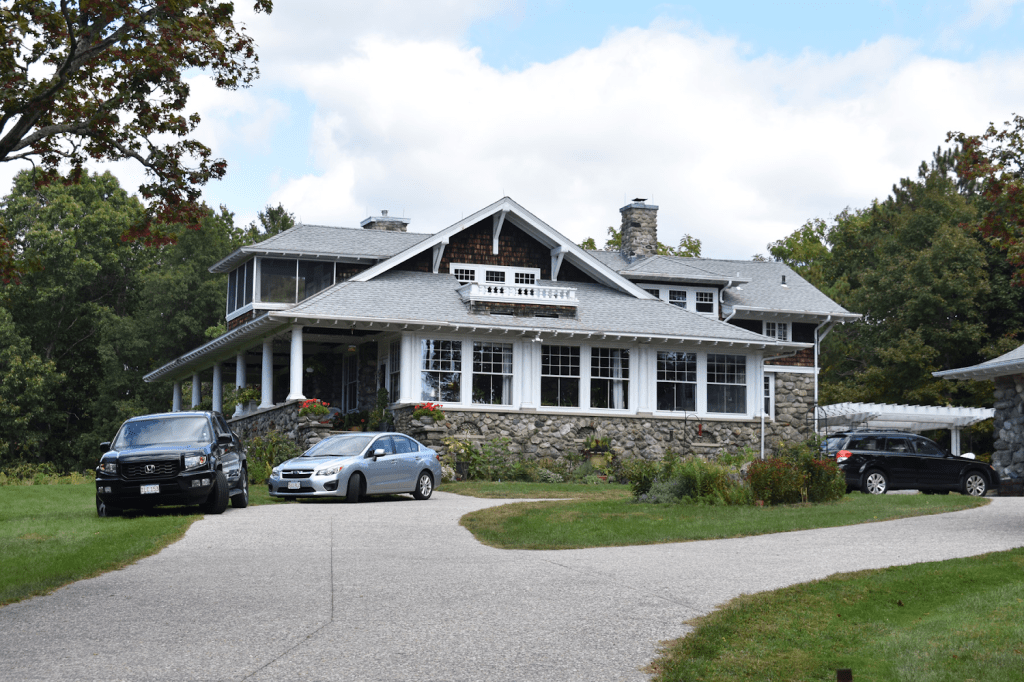
Prominently sited upon a hill on a dead-end street in West Acton, Massachusetts, this Craftsman Bungalow is a very elaborate and well-preserved example of the style. The house was built in 1911 for George Varnum Mead (1861-1940) and his wife Effie Wright Mead (1860-1926) as their summer home when they weren’t living in Somerville. Mr. Mead was born in West Acton to Varnum Balfour Mead, who operated the A. O. W. Mead Company, a produce marketing business in Acton and Boston. Varnum’s brother built an elaborate Second Empire style mansion in town which was featured on here yesterday. George Mead followed his father’s footsteps and worked in the family business, which was in operation starting in the 1840s. The A. O. W. Mead Company gathered produce from farmers all over West Acton, kept the produce in cold storage facilities erected by the family, and sent it to Boston for sale at Quincy Market until George’s death in 1940. The Craftsman style house has a fieldstone base, low, overhanging flared gable roof, and is sheathed in shingle siding. Characteristic features include the multiple dormers, exposed rafter tails, grouped windows, and the large fieldstone chimney.
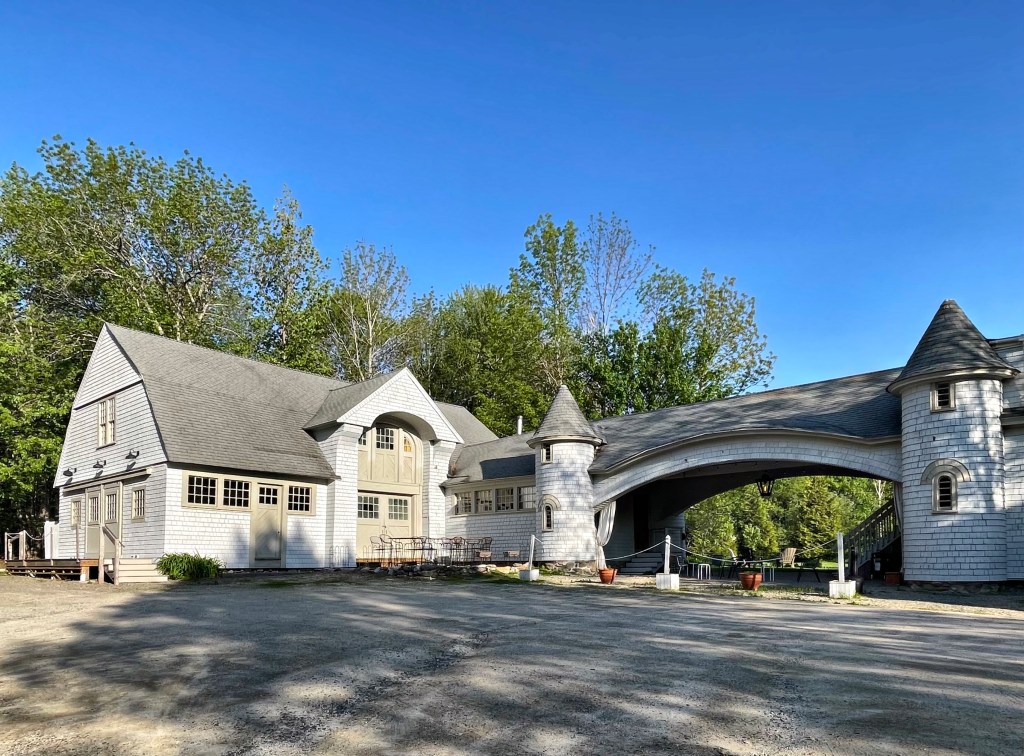
Barncastle, located in the Town of Blue Hill, Maine, is an elaborate and distinctive house. Designed by George A. Clough and built in 1884, the building is a sprawling complex in the Shingle style with additional eccentric details. As Blue Hill and other coastal communities of Down East Maine saw popularity as summer colonies of wealthy city-dwellers flocking to the rugged coastline, many new residents either built new “cottages” or renovated older (often ancestral) homes. Effie Hinckley Ober (1843-1927) who was born in town, married Virgil P. Kline, personal attorney to John D. Rockefeller, and for thirty years worked as attorney for the Standard Oil Co. of Ohio. Effie founded the Boston Ideal Opera Company in 1879 and traveled with the group extensively, retiring in 1885, upon that time, she would move into Barncastle for summers (then named “Ideal Lodge” after her opera company). In 1884, before her retirement, Effie hired her childhood friend, architect George A. Clough, who was born in Blue Hill and worked in Boston, to completely redesign her ancestral home. Clough’s design engulfed a smaller Cape Cod-style house owned by Effie’s mother Mary Peters Hinckley Ober Atherton, a descendant of early Blue Hill settlers, creating an absolutely elegant Shingle-style summer cottage. The house is highly visible on a main street, but what many do not see is the arch-and-turret link between kitchen wing and carriage barn. “Barncastle” is now home to an elegant inn and restaurant!
Wrapping up this series on a tour of buildings in Blue Hill, Maine, we have two stunning old homes left!
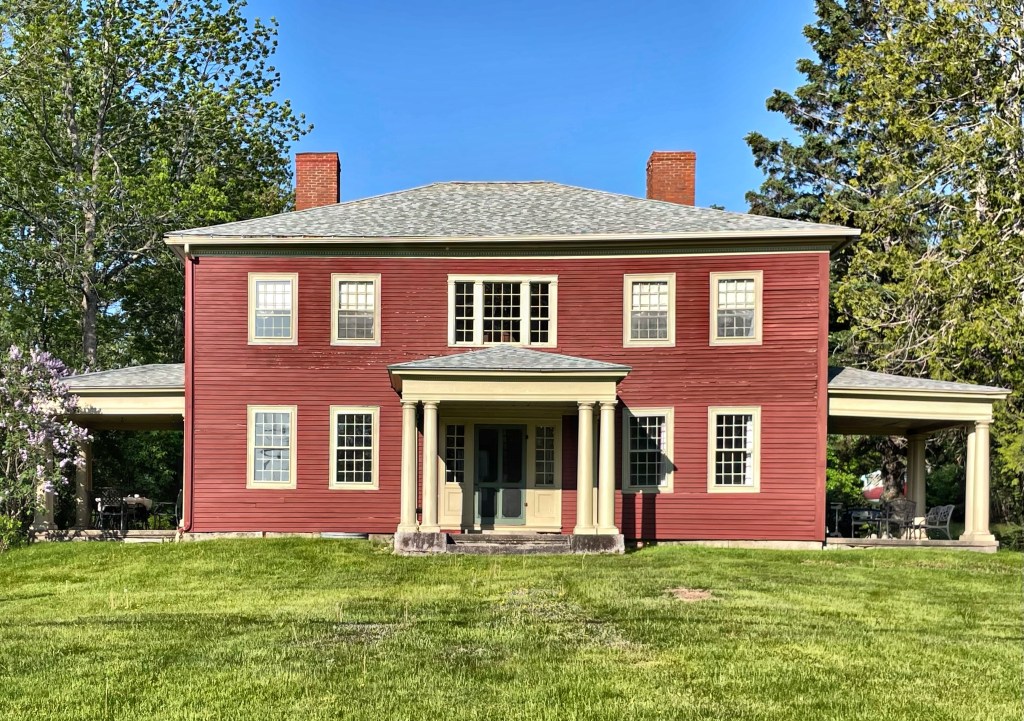
This landmark Federal style house was built sometime between 1812 and 1816 by Robert Parker, whose wife was a daughter of Joseph Wood, one of the first two white settlers of Blue Hill. The home is significant not only architecturally, but for its connections to a number of old settlers to Blue Hill and their families.
By the turn of the 20th century the farming, mining and granite producing town of Blue Hill had been discovered. Writers, artists, musicians, and wealthy urban families from all over the East Coast found inspiration or retreat in many coastal Maine communities including Blue Hill, building “cottages” to summer at. Not all those who arrived to Maine were ‘from away’, as many built new or renovated their old ancestral homes to be occupied when seeking the peace and tranquility of coastal Maine. The Parker House was no different. In 1900, it was renovated in the Colonial Revival style as a summer home for Frederick A. Merrill and his wife, Elizabeth, residents of Boston. The couple hired George A. Clough, who worked as the first City Architect of Boston, but grew up locally in Blue Hill. Mrs. Merrill was descended from Mrs. Robert Parker’s sister. The current owner, the Merrill’s great-grandson, has undertaken a restoration of the house which pays homage to its Colonial Revival past. The stunning house can even be rented!
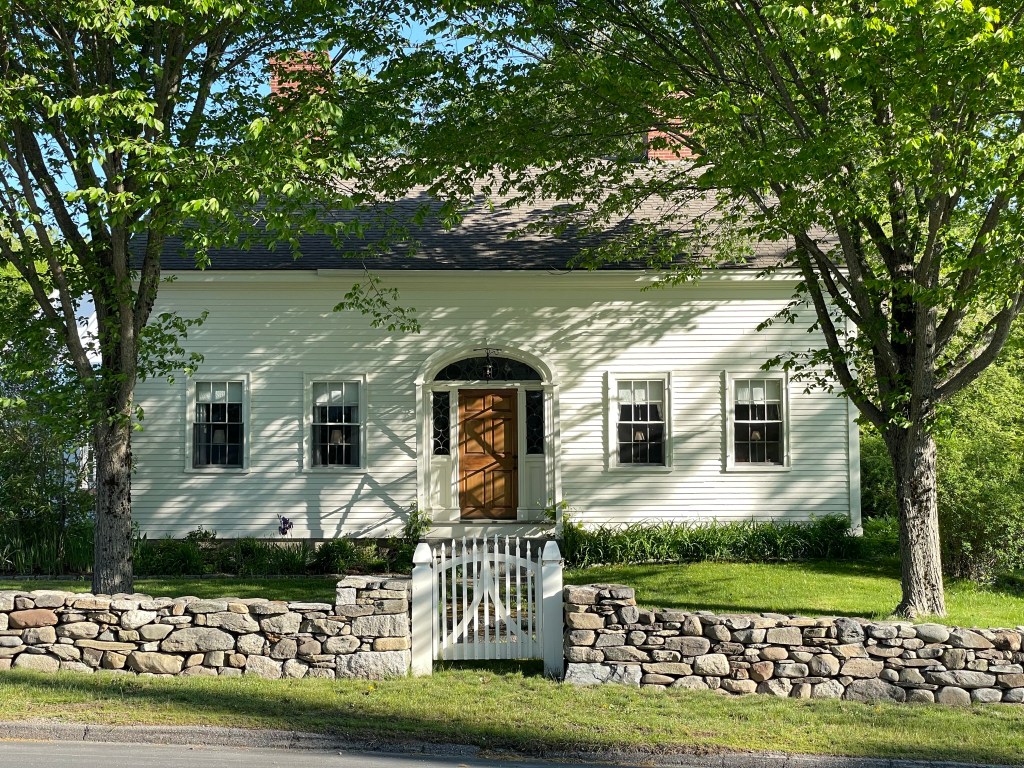
This charming Federal style cape in Blue Hill Maine was built in 1832 by Moses P. Clough, a sea captain seemingly as a wedding gift to his new bride of that year, Sally Prince. He resided in the home off-and-on between excursions and trips at sea until his untimely death at sea in 1836 of bilious fever, possibly caused by malaria. After his death, his widow Sally, remarried and moved to Cherryfield, Maine. The old family home was sold to Bushrod W. Hinckley, an attorney who was involved in the town affairs. Today, the old Clough-Hinckley home is known as Arborvine, a great restaurant known for using local, farm-to-table ingredients. The home is excellently preserved by the owners, down to the leaded glass fanlight and sidelights at the entrance. Swoon!
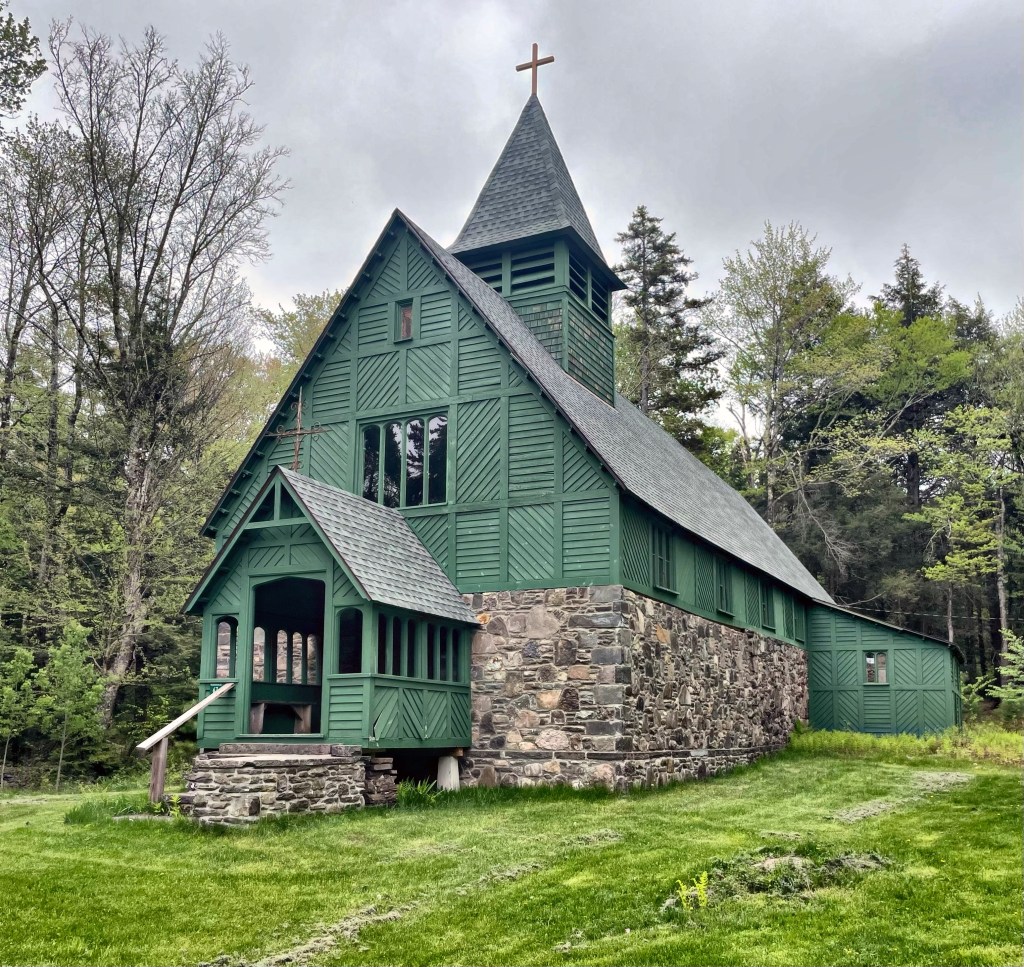
One of the most bucolic and beautiful buildings I have ever seen is this church in the Catskills, just outside of Elka Park, NY. Wow I wish New England could claim this one! The St. John the Evangelist Chapel was developed as part of a smaller enclave of summer cottages for rusticators from the Philadelphia-area, which was largely established by Mr. Alexander Hemsley (1834-1904) a chemist from Philadelphia who would later die from anaccidental chemical explosion at his factory. In 1883, Hemsley sold cottage lots to friends and family to erect summer houses in the Catskills and in 1884, decided to develop a lot for an Episcopal summer chapel. In that same year, Hemsley hired his future son-in-law, William Halsey Wood, to design the chapel. The Stick-style Victorian chapel blends the rustic use of natural materials found on the property with an elegant siting and attention to detail, not typically found in rural chapels. The native stone and stylized half-timbering really stood out to me. The church is used still in the summer with regular services on Sundays in July and August.
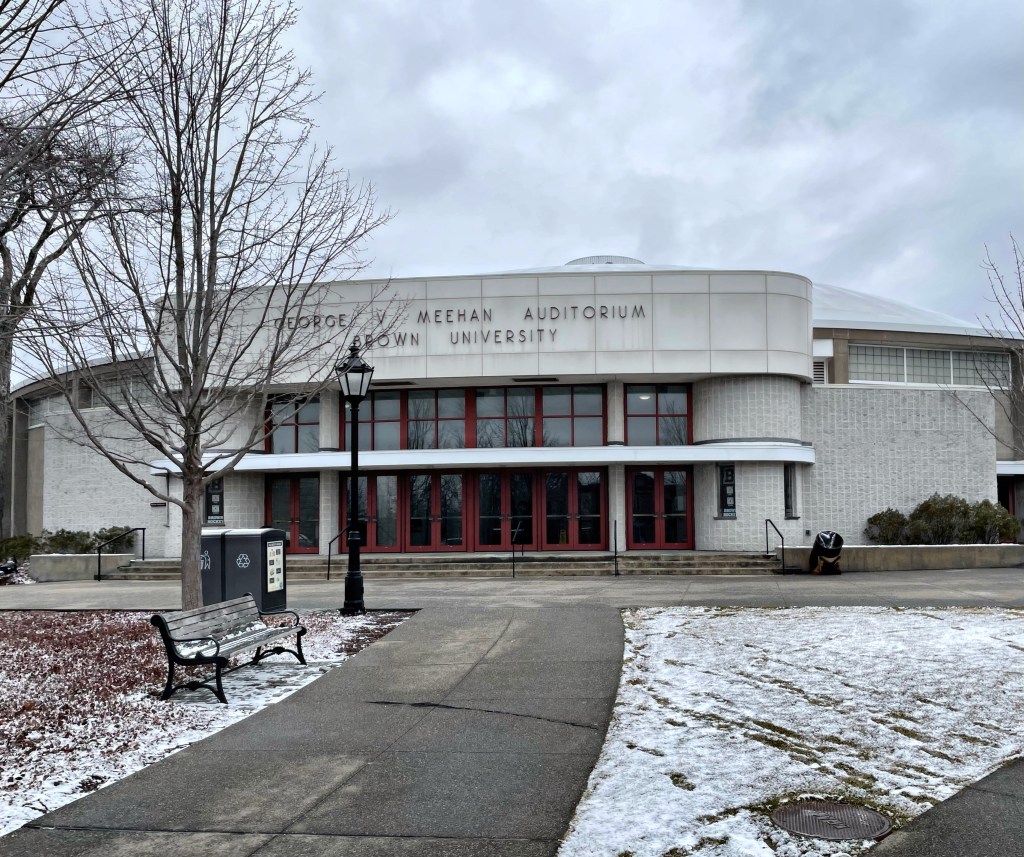
Across from the new Nelson Fitness Center at Brown University in Providence, Rhode Island,Meehan Auditorium is an excellent example of a 1960s institutional athletic facility. The auditorium was dedicated at the Brown-Princeton hockey game on January 6, 1962 and was named after George V. Meehan, donor of half a million dollars for its construction. The new facility filled the need for a skating rink and large auditorium for indoor functions, specifically for ice skating and hockey and was the first building of the new athletic plant at Aldrich-Dexter Field east of the campus. The building was designed by Perry, Shaw, Hepburn & Dean, a prominent firm who designed many collegiate buildings in the 20th century, all over New England.
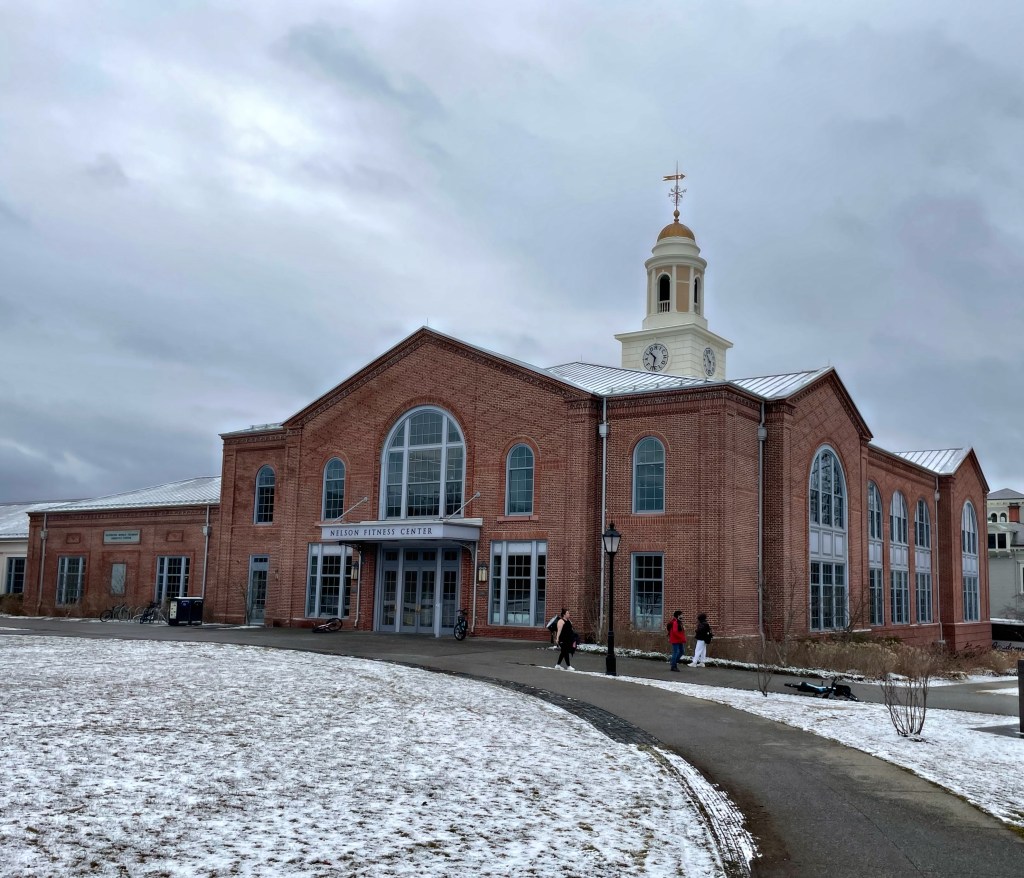
When I walked by Brown University’s athletic center, I assumed it was an older building, but was so plesantly surprised to learn that the building was actually completed in 2012! The 84,000-square foot aquatics and fitness center is a $46-million addition to the existing athletic facilities built on and near the site of the former Smith Swim Center. Designed by Robert A.M. Stern Architects and constructed by Shawmut Design and Construction, the project includes the Katherine Moran Coleman Aquatics Center, the Nelson Fitness Center, the David J. Zucconi Varsity Strength and Conditioning Center. Architecturally, the buildings seamlessly blend into their surroundings thanks to timeless traditional design and high-quality materials. The stunning cupola was actually the original cupola from Marvel Gymnasium, a Brown University gymnasium demolished in 2002, it was added atop the Nelson Fitness Center preserving some history of old Brown. American colleges and universities need more of this high-quality design, kudos RAMSA Architects.
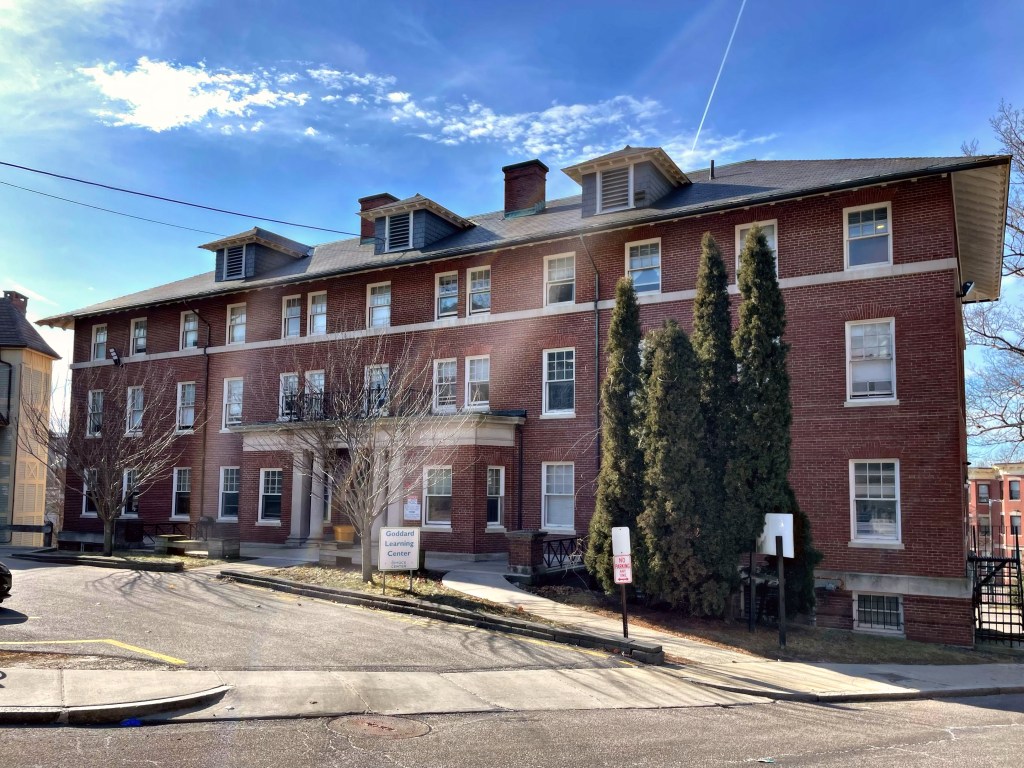
Located adjacent to the Zakrzewska Building and Cary Cottage at the former New England Hospital for Women and Children is the 1909 Goddard Nurses Home, designed by John A. Fox. This three story brick building typifies the Classical Revival style with its recessed central entranceway and symmetrical fenestration with flared brick keystone lintels. The slate hipped roof is perforated by three dormers on the front facade. The broad overhanging eaves have exposed rafters which is an element of Craftsman design, common at the time. The Goddard Nurses Home provided living accomodations for up to fifty nurses who worked at the hospital. It was named after Lucy Goddard, one of the original incorporators of the women’s hospital, she served as president for twenty-five years.




 Buildings of New England