Baker-Byrd House // 1888

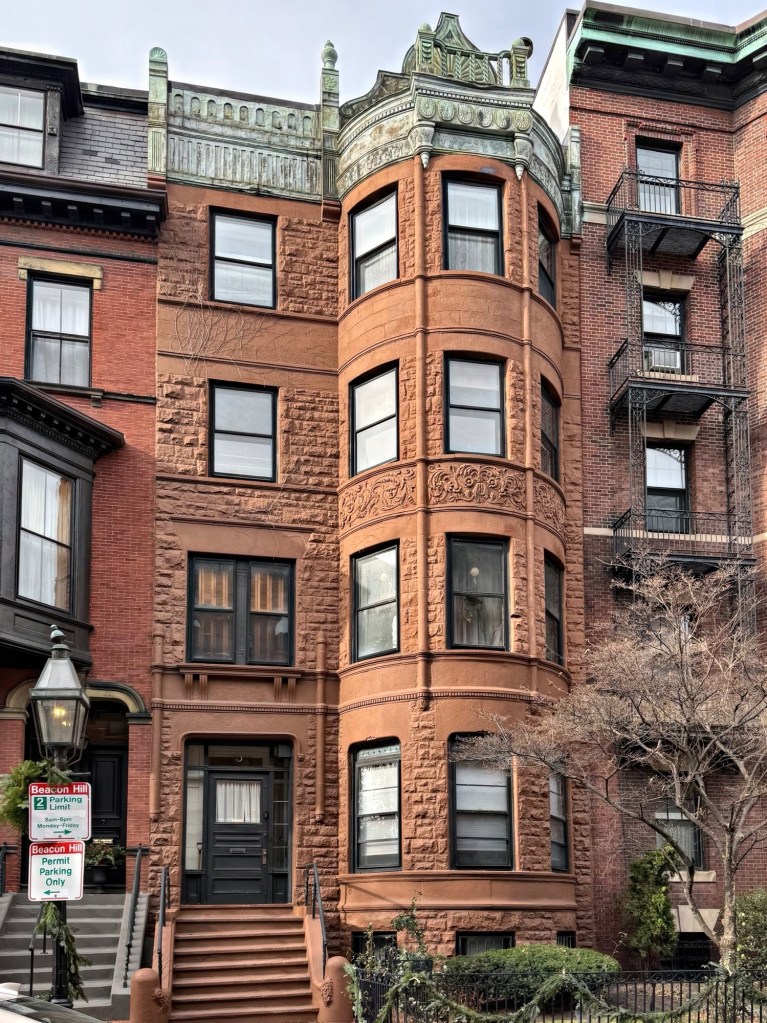
Located on Brimmer Street in Beacon Hill, this handsome residence is constructed of rough-faced brownstone laid in a random ashlar pattern and is among the most unique in a neighborhood known for brick townhouses. Decorative treatment includes a stone band that is carved with foliate and faces, colonettes that rise along the facade at the bay, and an ornate molded copper entablature and parapet at the roof. The residence dates to 1888 and was built for Seth R. Baker, a Boston real estate developer at the end of the 19th century. It can be inferred that the building was designed by architect, Ernest N. Boyden, as Baker hired Boyden as architect for a half-dozen other apartment buildings between 1888-1890. Antoino Xavier, a Portuguese-born mason is listed as the builder. In the 1910s, the property was purchased by Marie Ames Byrd, wife of polar explorer Richard A. Byrd, who lived a few houses away at 9 Brimmer Street. She rented the four apartments to boarders through the 1930s.
Eliot C. Clarke Townhouse // 1884

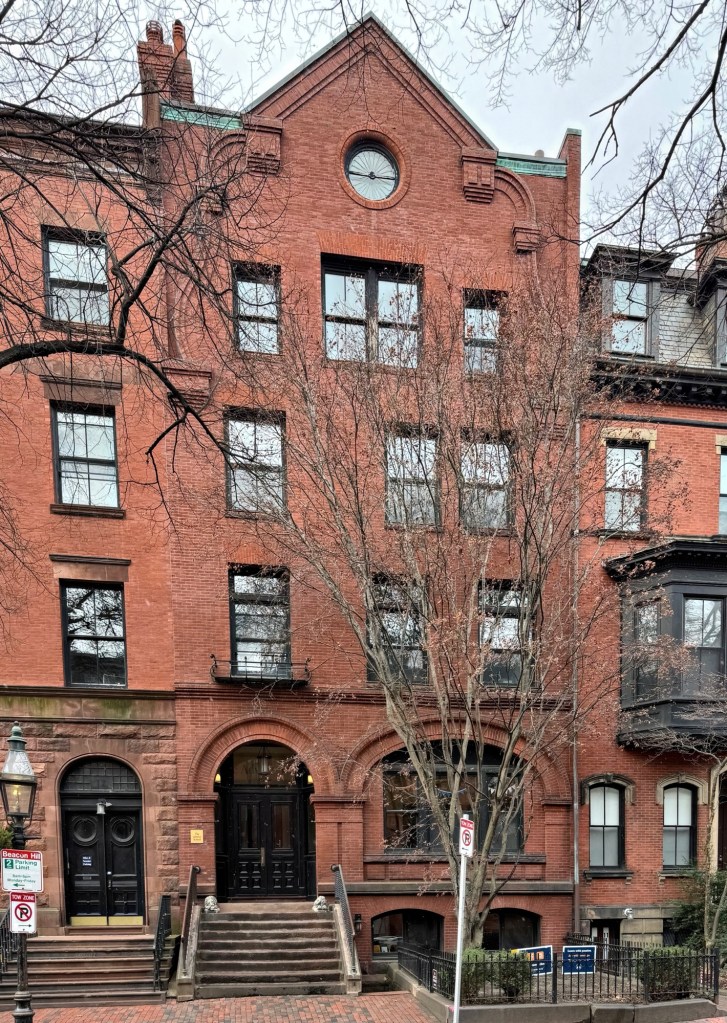
One of the many great townhouses on Brimmer Street in Boston’s Beacon Hill neighborhood is this residence designed as a unique interpretation of Queen Anne and Romanesque Revival styles. Original owner, Eliot Channing Clarke (1845-1921), an MIT-educated civil engineer. His uncle, Thomas Curtis Clarke, was a noted civil engineer, a member of the firm of Clarke, Reeves & Co., Bridge Builders in Pennsylvania, and served later as President of the American Society of Civil Engineers. When Thomas Clarke’s firm was designing and building a new bridge over the Mississippi River in Quincy, Illinois, he had his nephew lead in the design. In 1876, Eliot was appointed engineer in charge of a survey for a main drainage system for Boston. The project was adopted and construction began a year later, taking years to complete. In 1885, Clarke published the work that he oversaw, modernizing a rapidly growing Boston water and plumbing system. He became one of the leading sanitary engineers of the United States. In 1884, Clarke hired architect, S. Edwin Tobey, who designed this townhouse with a unique gable containing a ocular window and panel brick parapet as an interpretation of a Flemish gable. A traditional arched entry in brick is a nod to the Romanesque Revival style, which surged in popularity in Boston following the completion of H. H. Richardson’s Trinity Church. In 1969, the Clarke house’s interior was connected with its neighbor as the Advent School, a private K-6 school associated with the Church of the Advent across the street.

Perkins House – Diocesan House // 1832

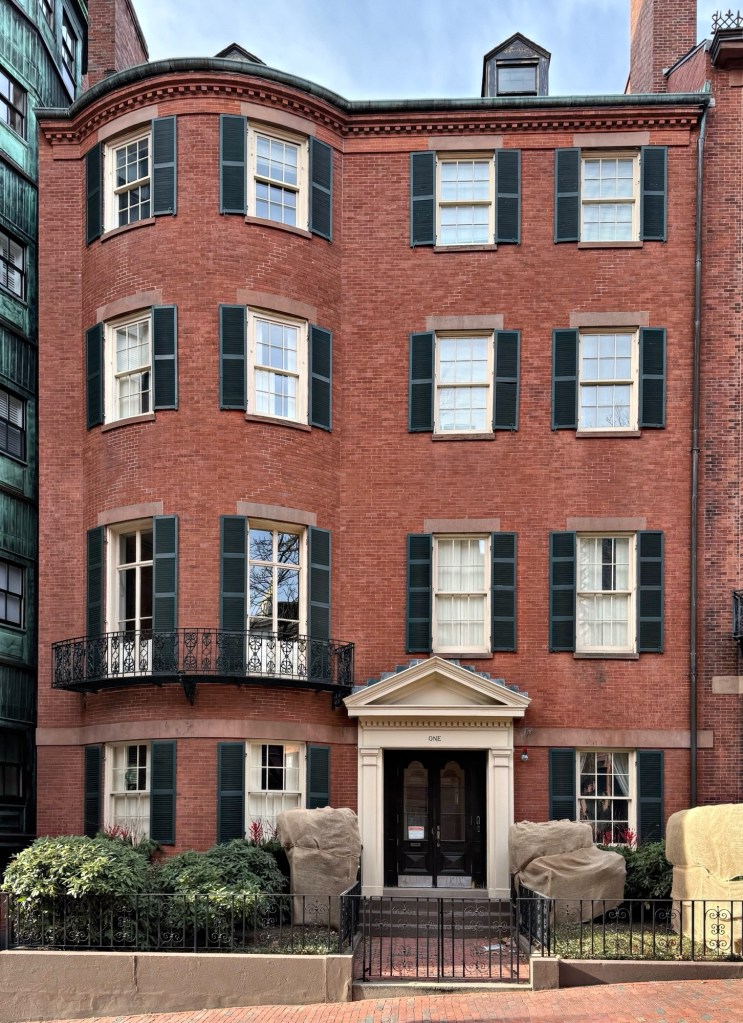
Constructed of red brick and trimmed with brownstone, the beautiful townhouse at 1 Joy Street, is one of a few properties in Boston’s Beacon Hill neighborhood to have a front yard. Built in 1832, the four-story residence has its primary facade characterized by a flat entrance with a rounded bay extending upwards to the roof. Designed by architect, Cornelius Coolidge, who designed many other homes in this section of Beacon Hill, the completed house was purchased by Thomas Handasyd Perkins, Jr. (1796-1850), the eldest son of the enormously wealthy and influential Thomas Handasyd Perkins, Sr., who is considered by many to have been the most successful merchant prince of Boston’s Federal period. In 1892, the Episcopal Association purchased 1 Joy Street for use as headquarters of the diocese, and it became known as the Diocesan House. Today, the building is divided up into condominium units, providing residences just steps from the Boston Common.

Russell-Bradlee Mansion // 1825

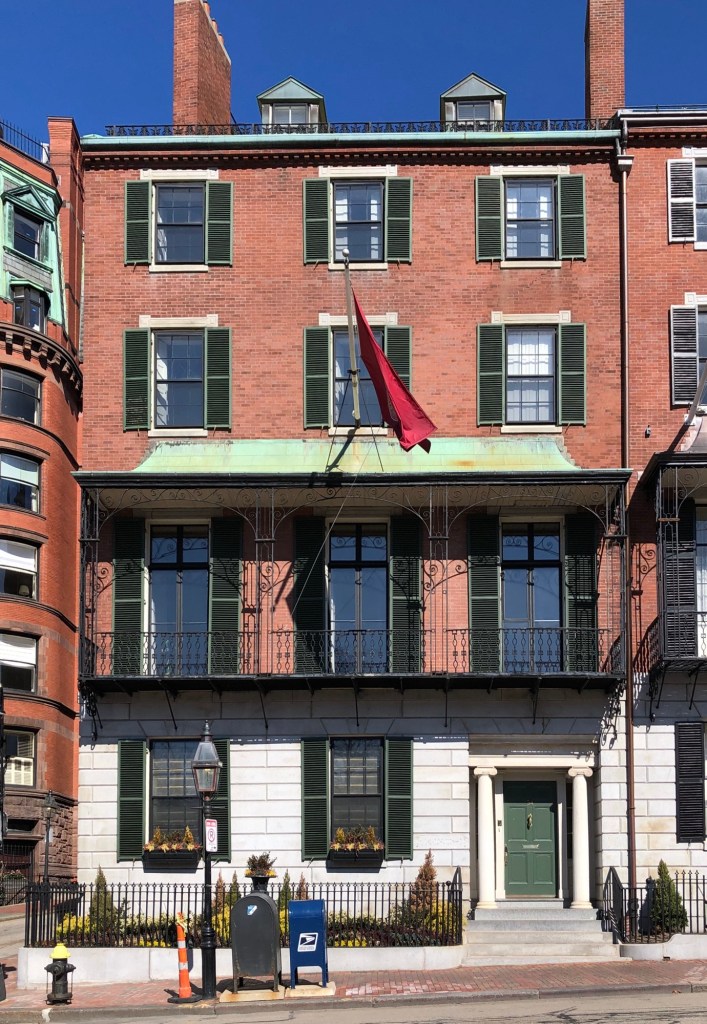
The land at the corner of Beacon and Joy streets in Boston’s Beacon Hill neighborhood was once John Hancock’s west pasture for his grand manor (razed in 1863) until 1819, when subdivision of the Hancock estate began following his death. In 1821, Israel Thorndike, one of the leading land speculators of early nineteenth-century Boston, began buying out the Hancock heirs and house lots overlooking the Boston Common were sold to John Hubbard and George Williams Lyman, who hired architect Cornelius Coolidge, to build some stately Greek Revival townhomes for wealthy Boston elites. The house at the corner of Beacon and Joy streets, 34 Beacon Street, was built in 1825 for Nathaniel Pope Russell, a leading Federal period China Trade merchant. By 1850, James B. Bradlee, a wealthy merchant, had acquired the property. Bradlee’s grandson Ogden Codman Jr., the influential late nineteenth- and early twentieth-century architect and interior decorator, was born in this house in 1863. Codman later collaborated with novelist and tastemaker Edith Wharton on ‘The Decoration of Houses‘, a book that had an enormous impact on the direction of interior design when it was published in the 1890s. Little, Brown and Company, a publishing company founded in 1837, purchased the former residence and moved their headquarters here in 1909. The publishing company sold the property in 1997, and it converted to a single-family home. In 2007, the residence was purchased by Northeastern University and has since been the President’s House.

Converse Townhouse // 1886

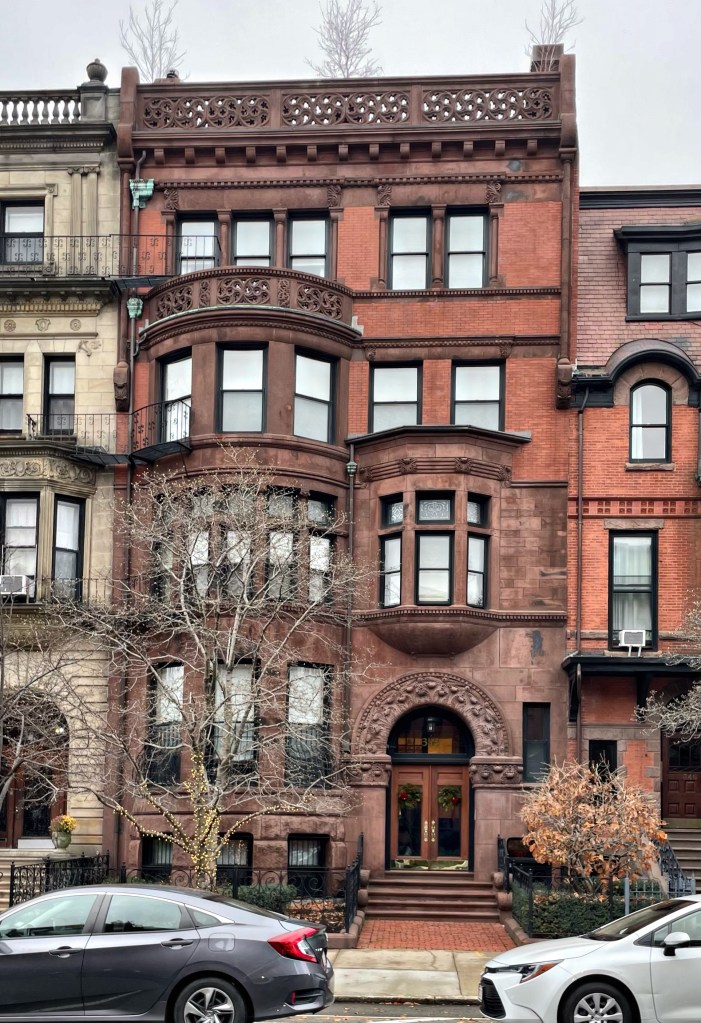
One of the best townhouses on Beacon Street in the Back Bay neighborhood of Boston is this absolute stunner! Built in 1886-7 from plans by architects Allen and Kenway and constructed by Norcross Brothers, builders, this was the Boston home of Elisha Slade Converse and his wife, Mary Diana (Edmands) Converse. Also residing in the newly built home was their son-in-law and daughter, Costello Coolidge Converse and Mary Ida (Converse) Converse, who were first cousins… Elisha Slade Converse was founder and treasurer of the Boston Rubber Shoe Company, president of the Rubber Manufacturers Mutual Insurance Company, and president of the First National Bank of Malden. He was Malden’s first mayor and had represented it in the Massachusetts legislature in the early 1880s. Costello Converse was treasurer of the Boston Cold Storage and Freezing Company and later assumed his father-in-law’s interests in the Boston Rubber Shoe Company. The families shared their Boston residence when not at their Malden or summer homes on the North Shore until their deaths. The house was later converted to a boarding house and is now five condominium units. The Richardsonian Romanesque style townhouse has an ornate pierced stone parapet at the roof and rounded bay and detailed carved stone arch at the entrance. So much detail!

John and Gertrude Parkinson House // 1902

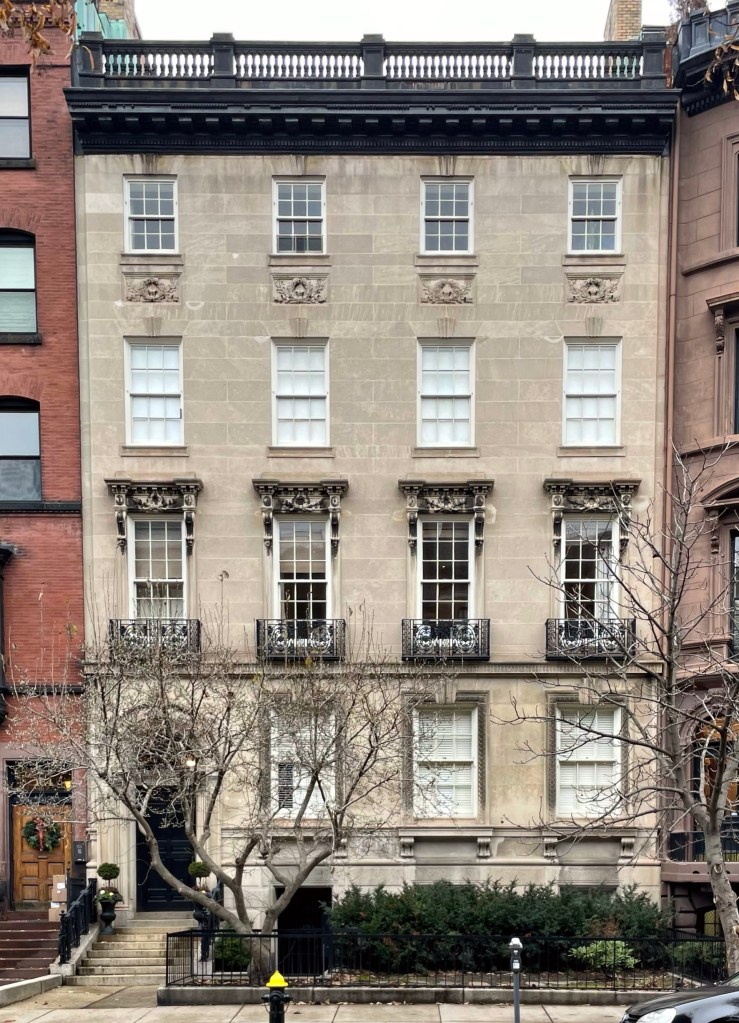
Teardowns have always been a common occurrence in cities, though replacement buildings from before WWII tended to be more substantially designed and built. This stately manse on Beacon Street in the Back Bay was built in 1902 on a lot previously comprised of two townhouses! This residence was built in 1902 for John and Gertrude Weld Parkinson from plans by the renowned firm of Peabody and Stearns. The Classical Revival style house has a limestone face and chunky stone lintels at the second floor to break up the facade. After income tax was introduced in the early 1900s and changing economic conditions for wealthy homeowners shifted, large single-family homes were no longer the norm. This home (and many others in Back Bay) was converted to a multi-family apartment building and today is home to eight condo units.

Tilia Jamaica Plain // 2020

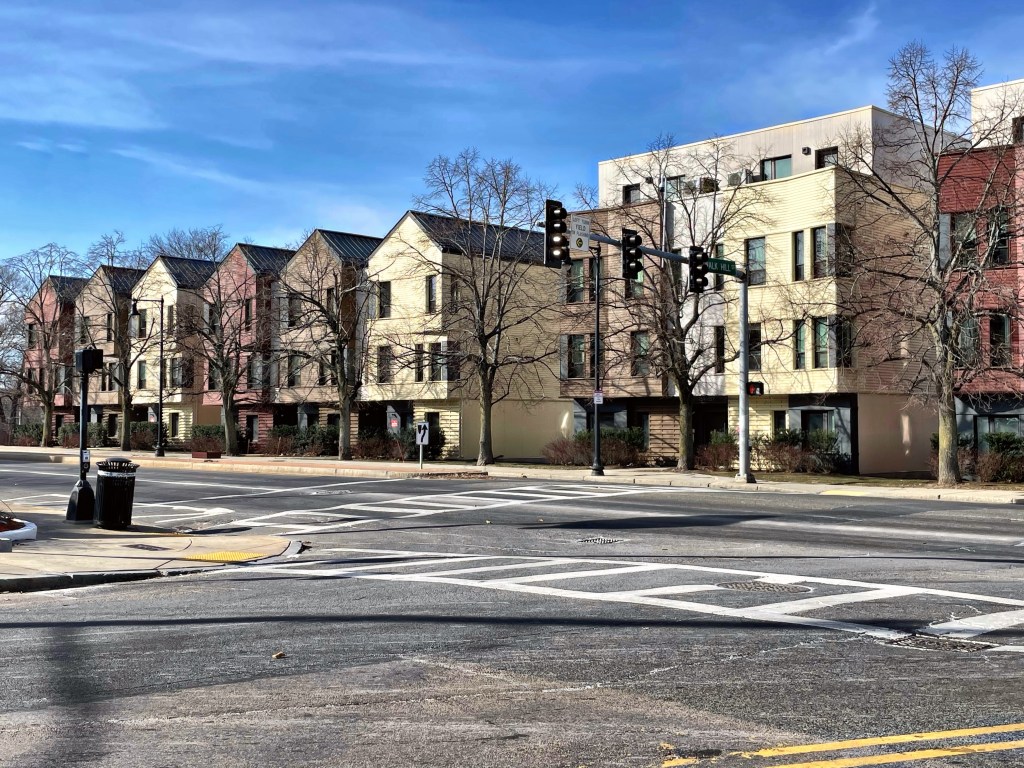
As many of you likely agree with me, most contemporary architecture and buildings in Boston (and in many U.S. cities) is bland and mundane, but there are some projects that really stand out for creative and contextual designs. Tilia in Jamaica Plain is one of the latter! When the Massachusetts Bay Transportation Authority (MBTA) began accepting bids for the development of an undeveloped linear parcel along Washington Street just south of the Forest Hills T-stop, developers jumped at the opportunity. Urbanica Inc., a local design/development group had the winning proposal which consists of approximately 110‐120 residential units in buildings of varied density ranging from a larger apartment building to more human-scaled townhouses. Led by architect Stephen Chung with Kamran Zahedi as developer, the design for the townhouses specifically is a contemporary nod to the triple-decker form we see so much in the surrounding area. The varied color and recessed sections provide a lot of depth and character to the development along the streetwall.