Jones-Sinclair House // 1865

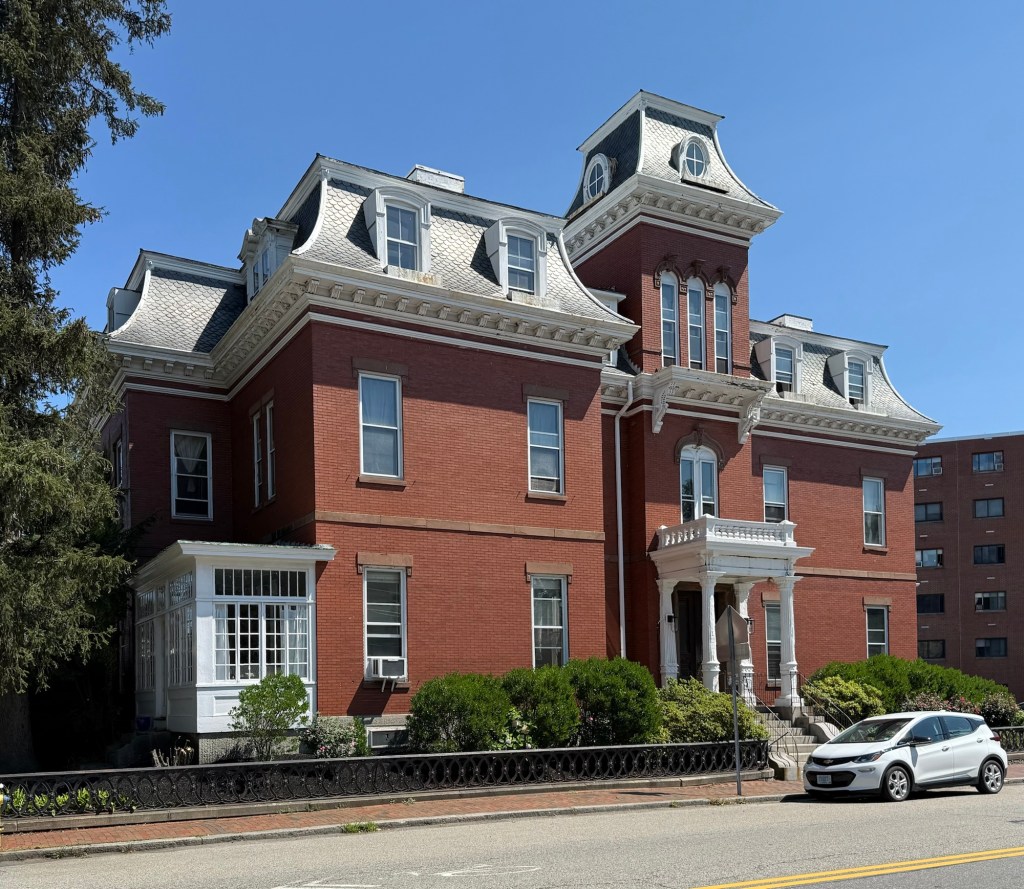
One of the finest Victorian-era residences in Portsmouth, the Jones-Sinclair House at 241 Middle Street, is a stately and oversized Second Empire style mansion built in the location of an even more significant home. Originally on this site, at the convergence of two busy streets, Thomas Haven, a wealthy merchant and half-brother to William Haven who lived across the street, built an impressive brick, Federal style mansion here in around 1818. Admiral George Washington Storer, Commander in Chief of the Brazil squadron of the U.S. Navy, later purchased the Federal style octagonal house. Mary Washington Storer, inherited the house after her father’s death in 1864, and she with her husband, Albert L. Jones, demolished the old octagonal-shaped house around 1865-1867, replacing it with this mansard-villa style mansion. By about 1890, Charles A. Sinclair and his wife, Emma, is said to have received the house as a gift from her uncle, the famous Portsmouth industrialist and politician, Frank Jones

William Fraser House // c.1873

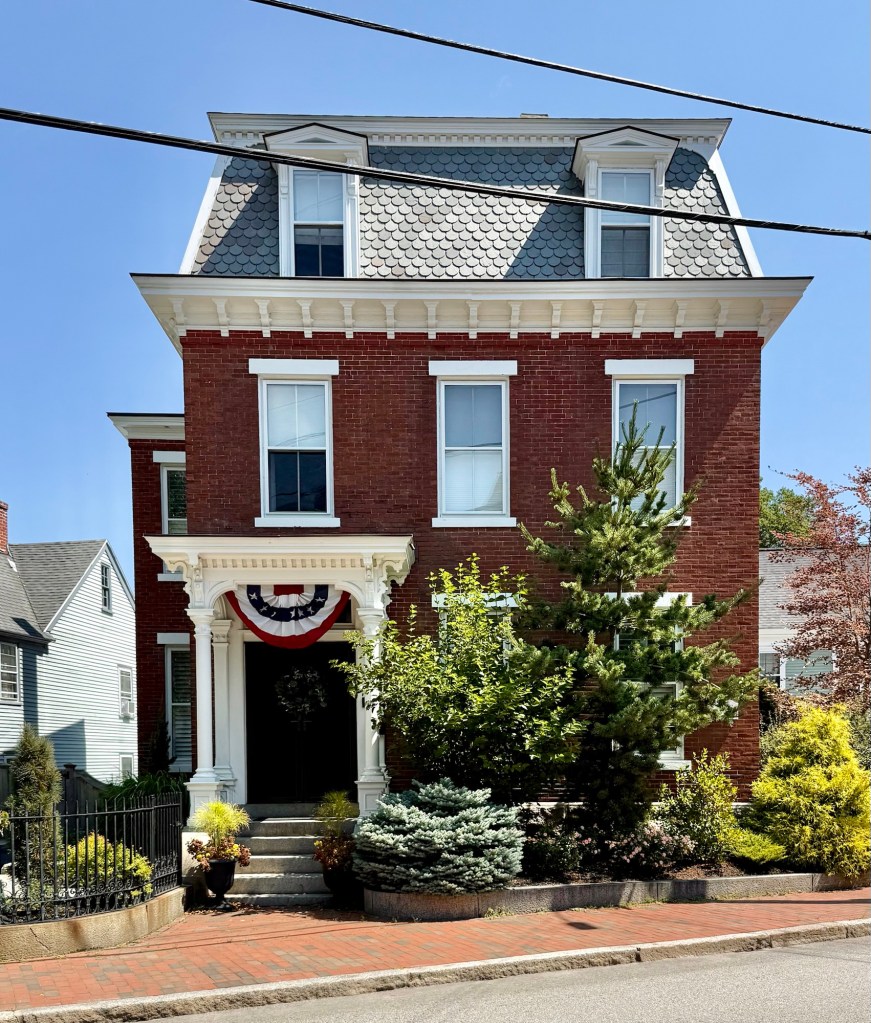
In a town full of clapboards and shingles, brick houses really do stand out! This is the William Fraser House, located at 303 Pleasant Street in the ever-charming town of Portsmouth, New Hampshire, a stately example of the Second Empire style as a single-family residence. The house was built by 1873 for William James Fraser (1836-1930), a Canadian-born mason who immigrated to Portsmouth in 1850 and began a successful career as a mason, building many of the town’s great masonry buildings. The Fraser House has a slate mansard roof with overhanging eaves, bracketed cornice, and paired gable dormers and a double wood-paneled entrance door with transom under a flat roof portico.

Wells-Bullard House // c.1868

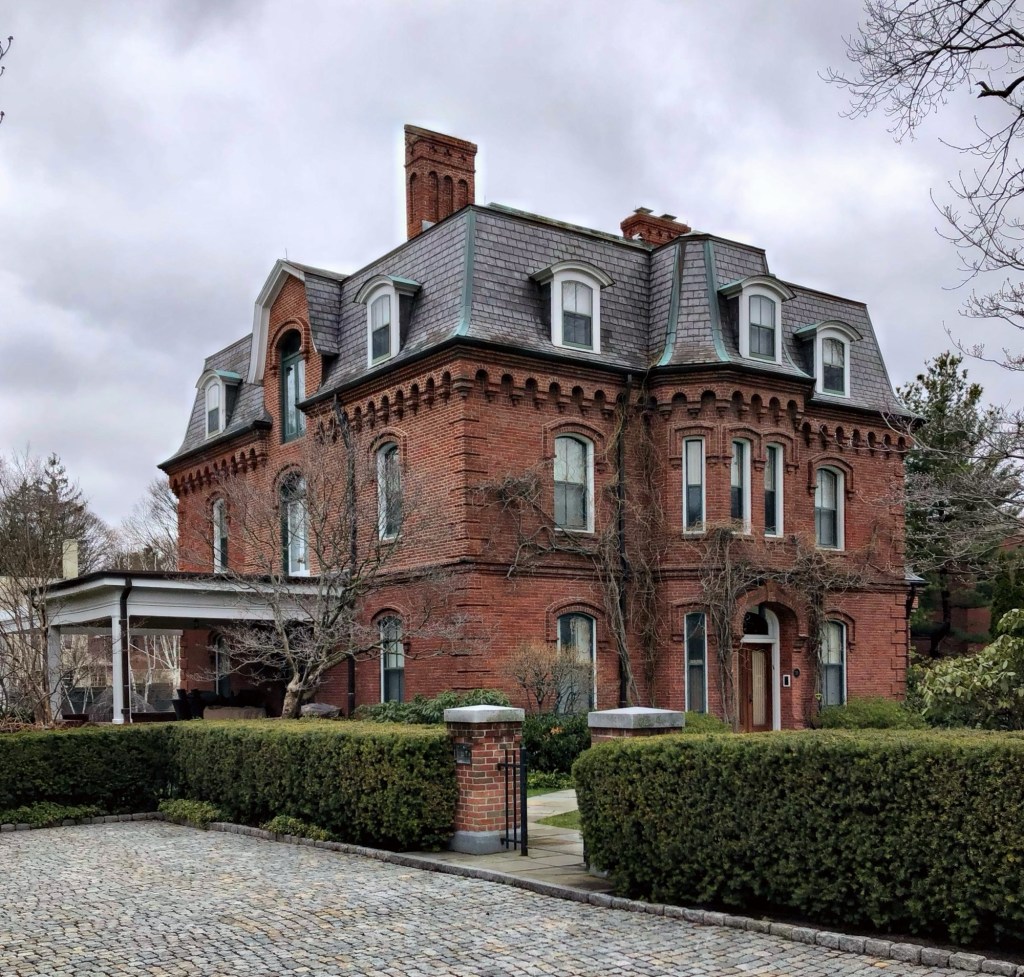
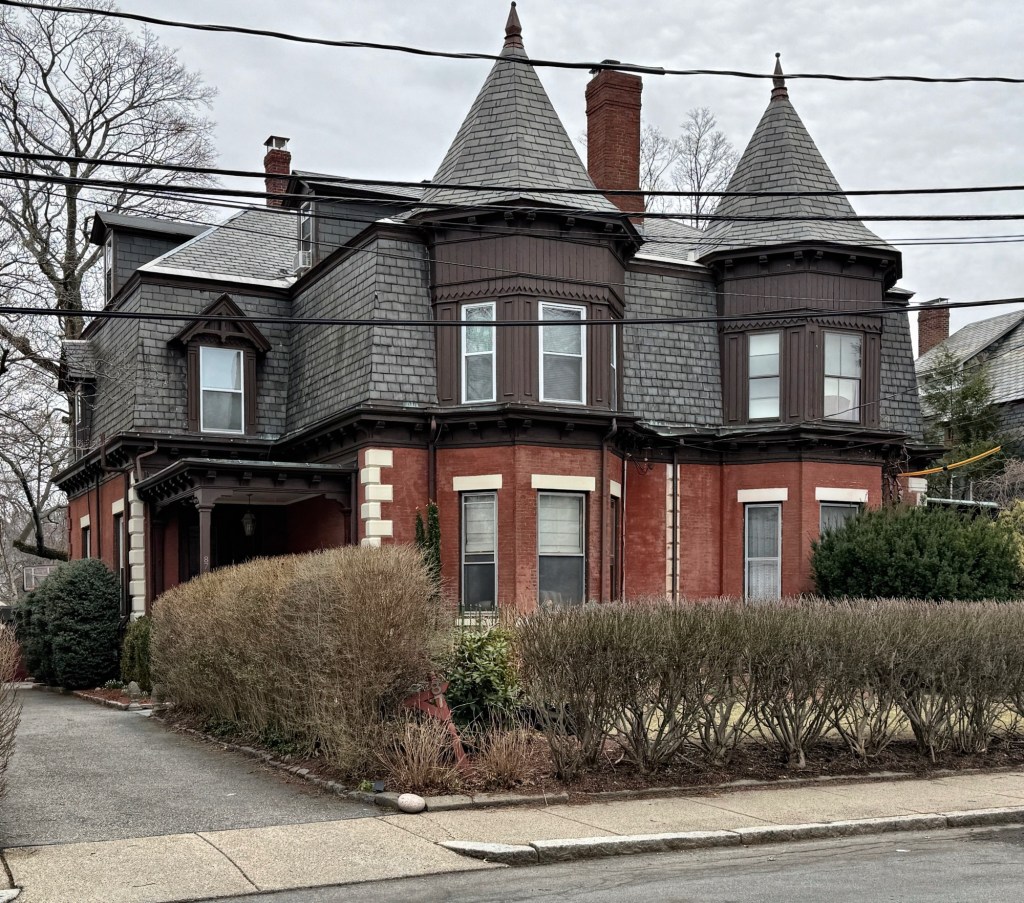
One of the finest Second Empire style houses in Brookline can be found on Prescott Street in the fashionable Cottage Farm neighborhood of the city. Built around 1868 by Amos A. Lawrence, who lived in a house nearby, this “cottage” was rented out to John Wells (1819-1875), a Judge on the Massachusetts State Supreme Court until his death. The property remained in the Lawrence family into the 20th century and was later rented to George E. Bullard, a banker. The brick house is notable for its siting at the center of the lot, corner quoins, brick corbelled cornice, arched door and windows, and slate mansard roof.

Governor Robinson House – Assumption Church Rectory // c.1870

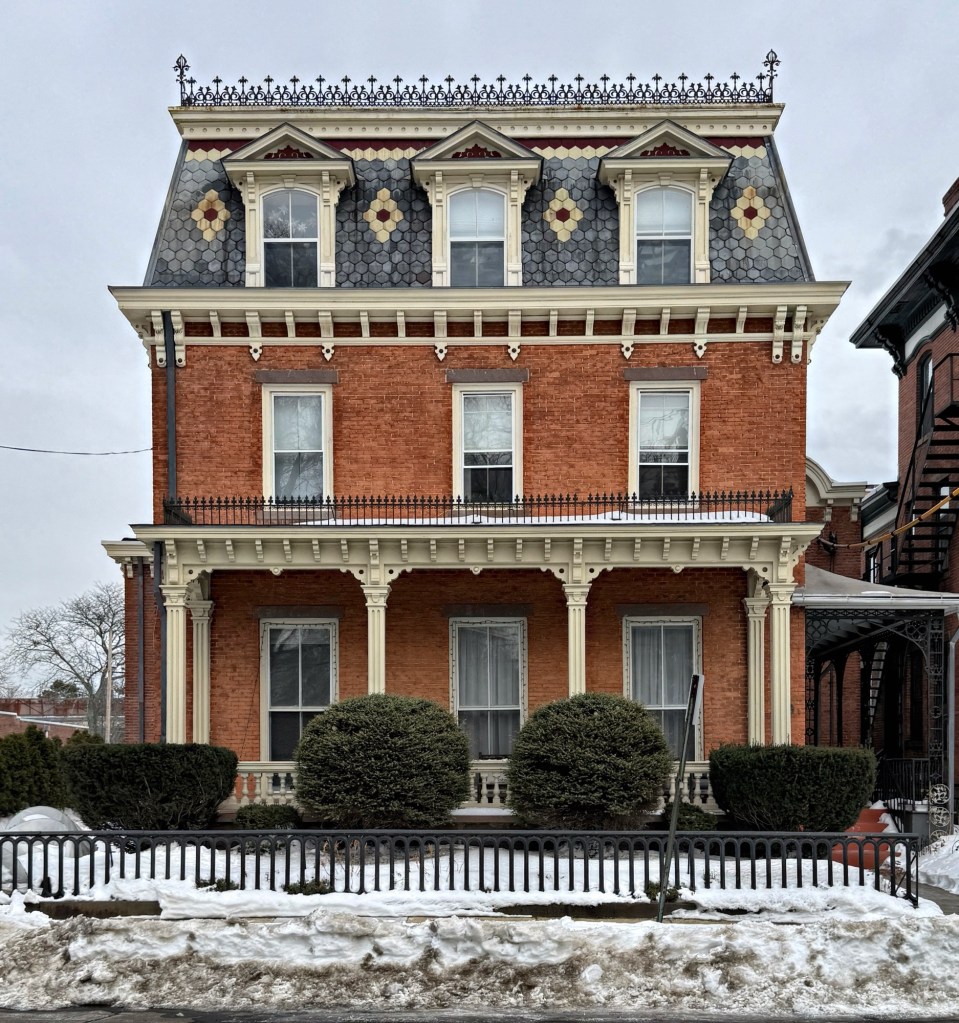
Located next to the Assumption Roman Catholic Church of Chicopee, this handsome Second Empire style residence is significant not only architecturally, but as the residence of a Massachusetts Governor. This house was built around 1870 for a Frank D. Hale, who resided here until 1878, when the property was purchased by George Dexter Robinson (1834-1896), who moved to Chicopee and eventually got engaged in politics, in 1873 winning election to the Massachusetts House of Representatives, and was elected to the Massachusetts Senate in 1875. In 1876, Robinson was elected to the United States House of Representatives, where he served most of four terms, buying this home about half-way through his time as a Representative in Washington. While serving in Congress, Robinson was nominated to run for Governor of Massachusetts in 1883, he won and served three, one-year terms. After his time as Governor, he went back to his law practice, and in 1892, Robinson took on his most famous client, Lizzie Borden. During the infamous trial, Robinson was also able to cast significant doubt on the reliability of several witnesses to the events surrounding the murders. Lizzie Borden was ultimately acquitted of the criminal charges, and Robinson was a highly visible presence in the media circus that attended the trial. In the 20th century, this handsome property was acquired by the Assumption R.C. Church of Chicopee, who used the house as a rectory for its new church next door. It remains a well-preserved example of the Second Empire architectural style with slate mansard roof crowned by iron cresting.

Luques Store // 1827

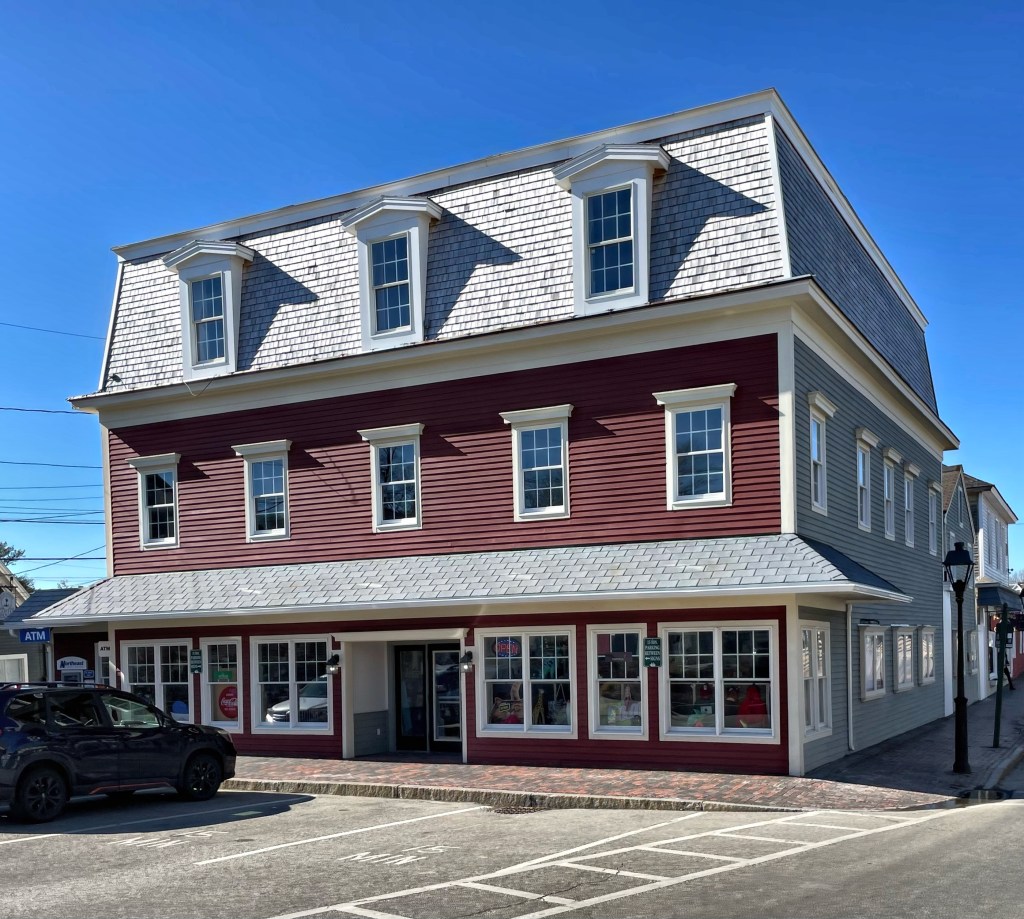
In 1827, a young Andrew Luques (1791-1873) built a store in the village of Kennebunkport, Maine where he sold dry goods, hardware, and fancy goods to the area’s citizens. As the village grew around him, the store grew and occupied the entire block near a drawbridge, which spanned the Kennebunk River to Harbor Village in adjacent Kennebunk. The business did well and the store was eventually inherited by Anthony Luques in the late 1850s. Anthony expanded the store, modernizing it and added a Mansard roof for an additional floor. Anthony continued operating the store until his death in 1890, when it was sold to a member of the Dennett Family. Around 1900, the building was occupied by a few businesses, with one taking advantage of the town’s recent desirability as a summer resort colony by selling bathing suits and hammocks. The building remains a visual and important anchor to the human-scaled and walkable village of Kennebunkport.

Old Brick Tavern // 1804

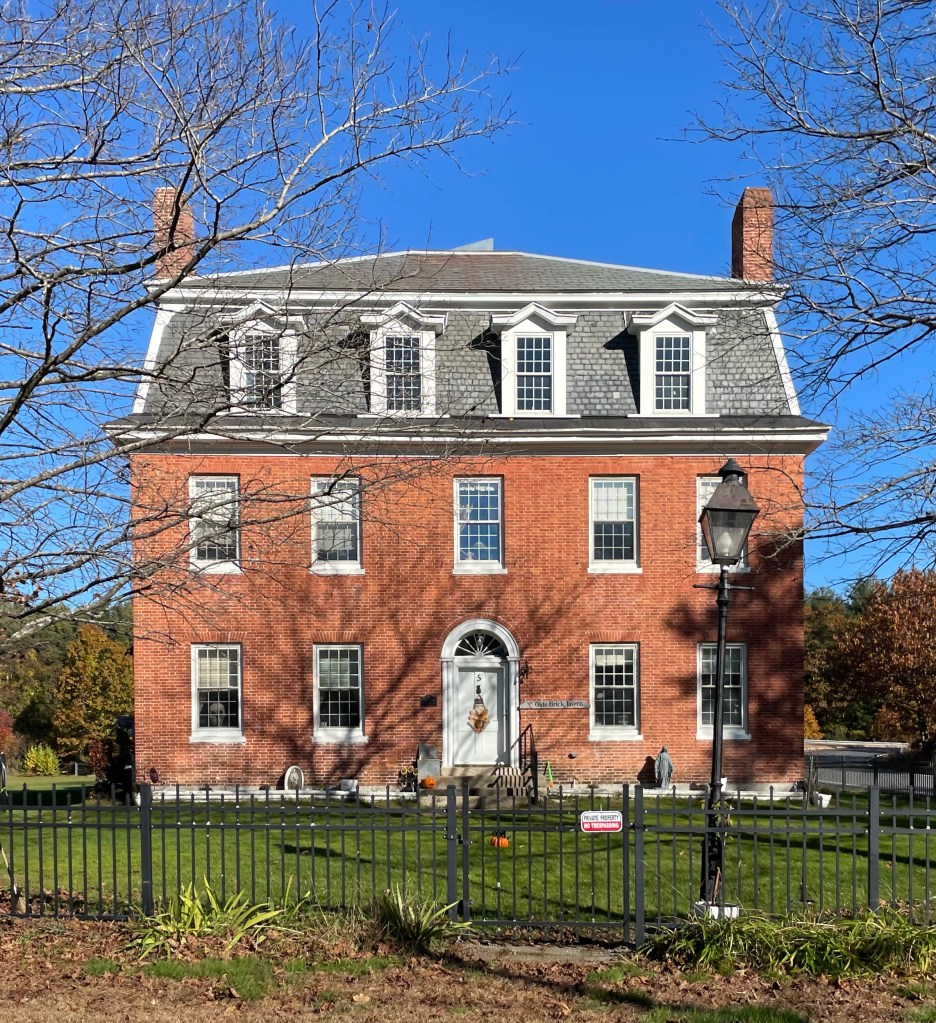
The Brick Tavern was an important stopping point on the old Union Turnpike, and the original two-story brick structure was completed about the time of the turnpike construction by Paul Willard, who with his heirs, operated the inn for 25 years. In the first years of the 1800s, the Union Turnpike Company planned and built a road providing a link for travel from Boston to Albany. Realizing the possibility for an inn along the first leg of the route, Willard financed this substantial brick building for travellers to stop, eat and spend the night. The tollroad was later made free, and less people stayed at the inn. After subsequent ownership, the building started to suffer from deferred maintenance and it was sold to a local Quaker group. The Quakers modernized the building by constructing the mansard roof and updating the interior. They never occupied it, but rented it to tenants for income. After, it was a hospital, boarding house, and in WWII, as a barracks of sorts for soldiers training nearby at a military base. The building is now a house!

Hooper Mansion // 1860

Located on Commonwealth Avenue in Boston’s Back Bay neighborhood, the Hooper Mansion represents one of the most elegant examples of Second Empire architecture style in the city. This home was actually constructed as a double-house for Samuel Hooper and his wife Anne, with a separate, semi-detached home for his son and his own family. The double-mansion was designed by esteemed architect Arthur Gilman, who used pressed brick contrasted with the tan sandstone on the home. Additionally, he designed the dentillated cornice, lavish door and window surrounds, and octagonal bays, all capped with a mansard roof with many windows laid inset to the roof, a stunning feature. The house was designed symmetrically, with entrances on each side elevation. In the early 1890s, later owners extended the eastern half of the façade so that it would be on the same plane as the western half, with an entrance at street level (seen in the right of this photo). Today, the double house is broken up into four large condominium units. When the conversion was approved, the developer wrote into the deed that the open space at the corner, used as a garden, would remain open space in perpetuity.