Dana House // 1896

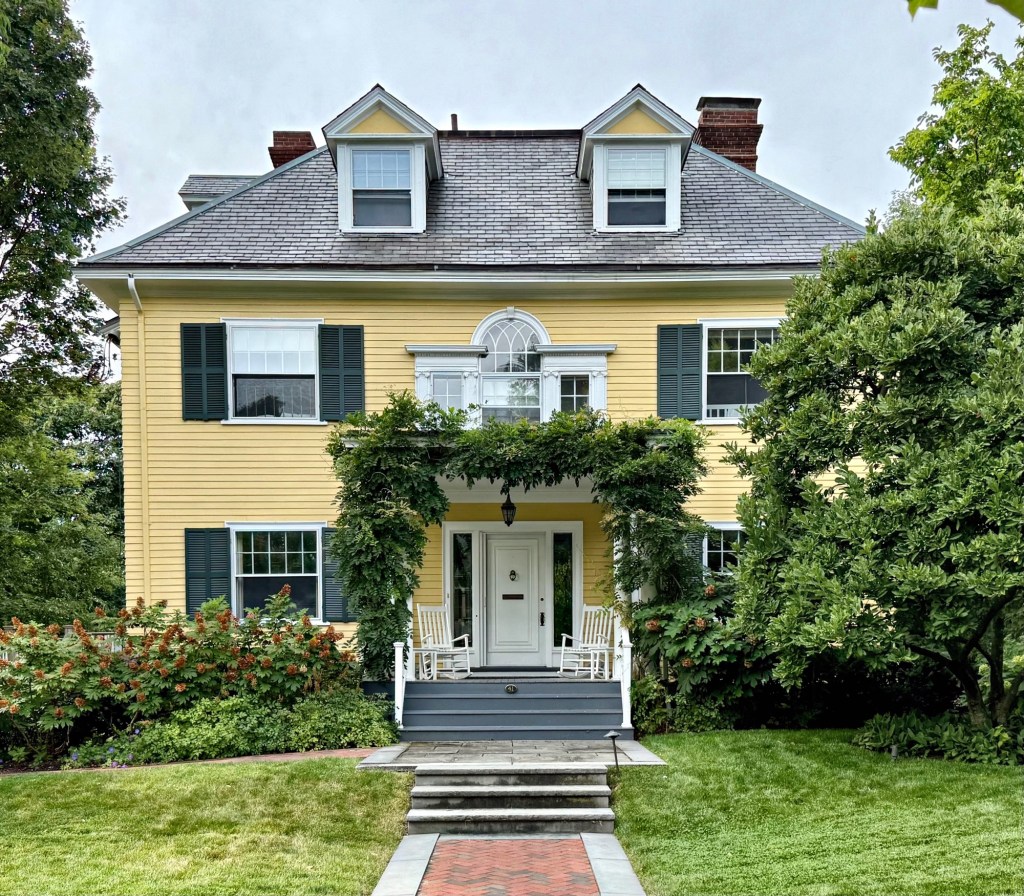
The Dana House at 41 Allerton Street in Brookline, Massachusetts, is one of many stately suburban residences designed in the Colonial Revival style here. Built in 1896 for Ms. Julia Hurd Dana (1825-1914), a widow of James Dana, who was a Mayor of Charlestown between 1858-1860, before it was annexed to Boston. The Dana House was designed by the important architectural firm of Chapman & Frazer, who specialized in higher-end suburban housing at the turn of the 20th century. Julia Hurd Dana was the daughter of William Hurd of Charlestown, and after her husband’s death, moved to Brookline in this new home with her daughter, Mary. The residence is notable for its ample setback from the street, providing a front yard garden, hipped roof of slate with pedimented dormers, and palladian window over the portico which is now covered in crawling ivy.
Joseph and Jane Cotton House // c.1905

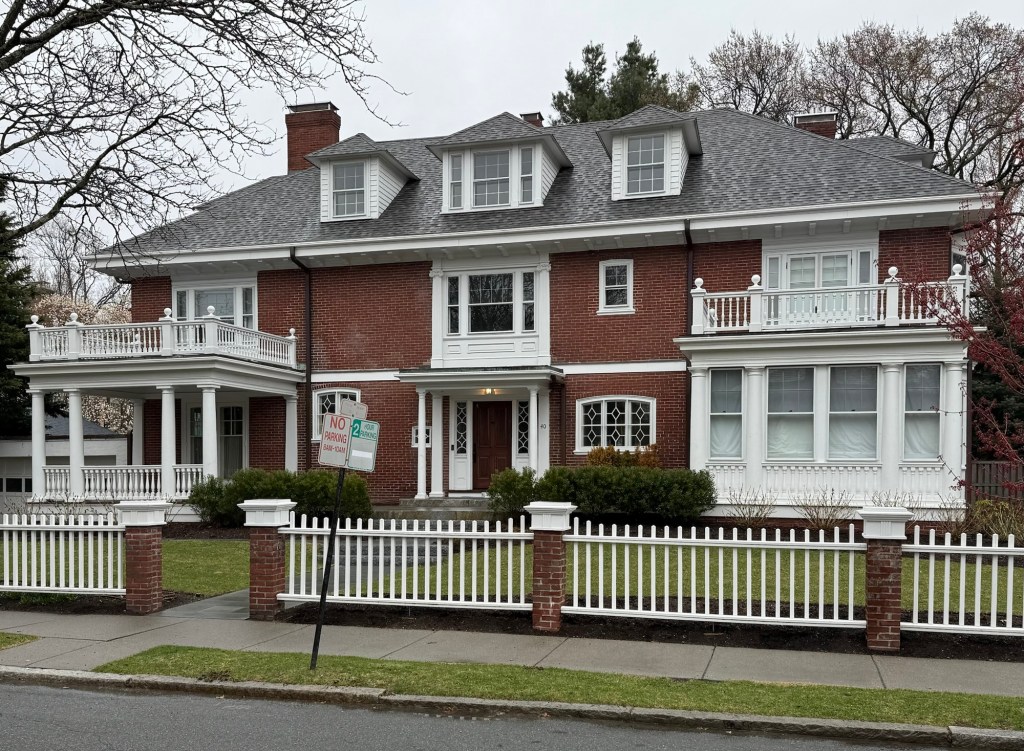
As the heirs of Amos A. Lawrence began subdividing and selling off desirable house lots in the Cottage Farm neighborhood of Brookline in the 20th century, we can see a visual representation as to the ever-changing architectural tastes of wealthy residents, from Colonial Revival to Tudor Revival. This residence, the Joseph and Jane Cotton House, was built adjacent to the Amos A. Lawrence Cottage, and is an excellent example of a Colonial Revival style brick home. The property was built for Joseph Hall Cotton (1869-1919), treasurer of the American Tube Works, and his wife, Jane Eaton Cotton. The couple remained in the home for about a decade until they relocated to the Back Bay neighborhood of Boston. The architectural firm of Chapman & Frazer, esteemed suburban architects, designed the house as an elongated rectangle with projecting columned porches on the first floor, pilastered entrance and window above, and hipped roof with overhanging eaves and shed dormers, a nod to the Arts and Crafts style.

Wright Estate Gatehouse // 1907

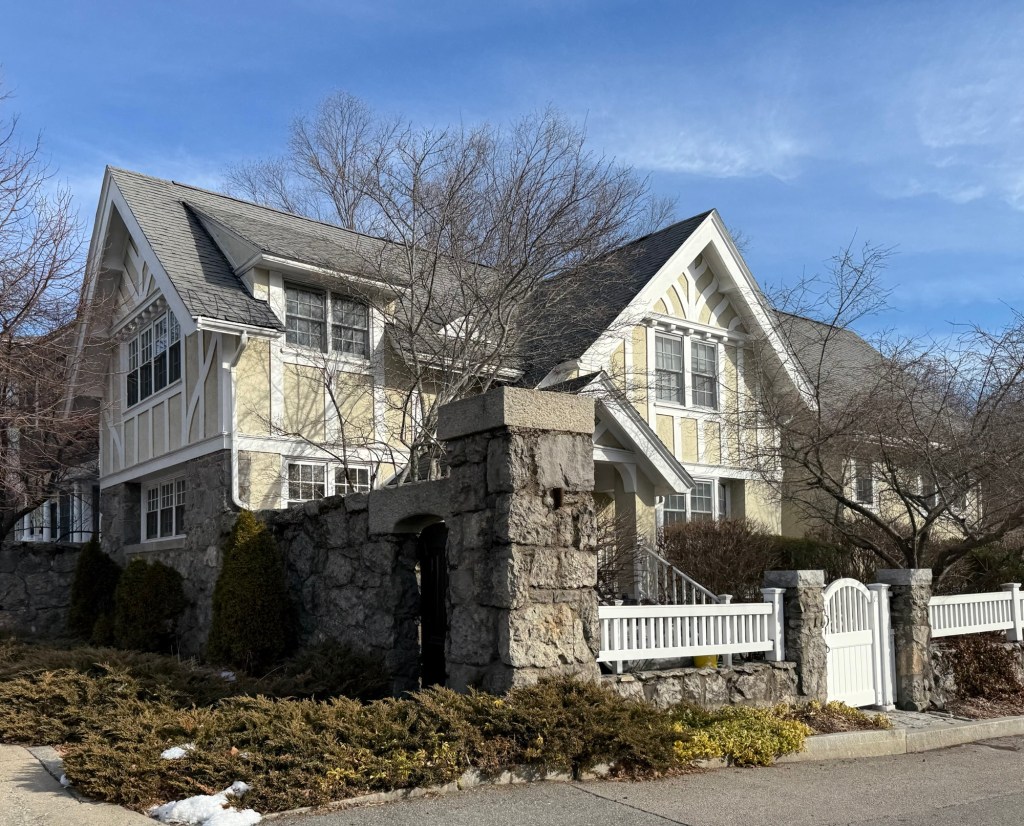
Besides the former Wright Carriage House (now the Soule Recreation Center), the only other extant building that was built on the grounds of the former John G. Wright Estate in Brookline, Massachusetts, is this structure, the historic gatehouse to the property. Built in 1907 at the same time as the manor house, the gatehouse was also designed by architects Chapman & Frazer and served as the entry to the expansive grounds with a room for the gatekeeper to sleep in overnight. The Tudor Revival style building is less ornate than the stone mansion, the half timbering and stucco work well to compliment the other buildings. While the formerly dark half timbering has since been painted a white, the building still maintains its character. While the remainder of the Wright Estate was subdivided and sold off by the heirs of next owner, wool merchant, Andrew Adie, the gatehouse remained and survived the destruction that befell the main manor. The old gatehouse was converted to a full-time residence and remains to this day.

John G. Wright Mansion // 1907-1967

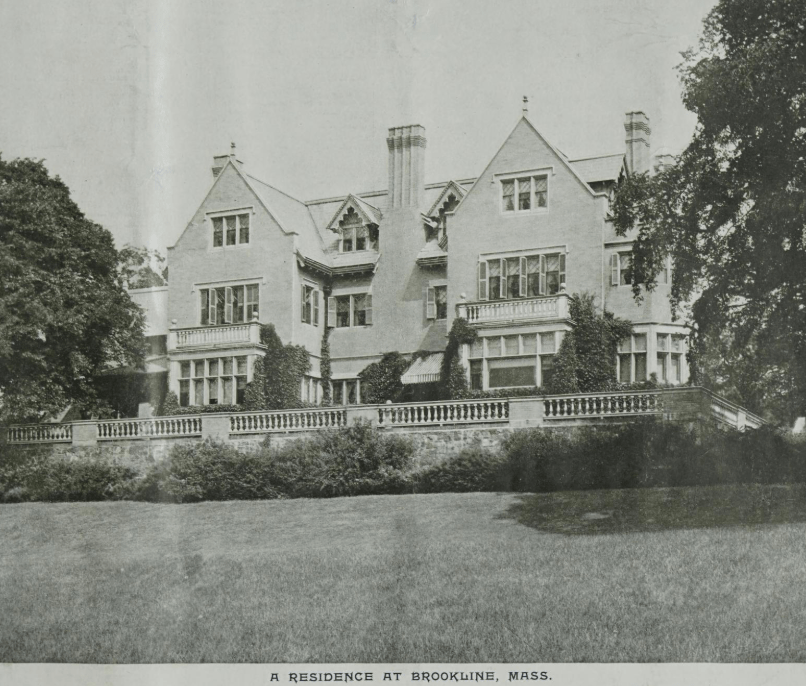
John Gordon Wright (1843-1912), was a Boston wool merchant who purchased farmland on this site in the 1890s and hired architects Chapman & Frazer, to design this stone mansion as an estate house. He previously moved into an earlier wood-frame home on the site and a decade earlier, had the architects design his carriage house and stable, which survive today as the Soule Recreation Center. The stone Tudor Revival style mansion house was massive and featured in national periodicals when completed. The estate was beautified by landscaping designed and laid-out by the Olmsted firm. In 1942, the property was purchased by the Rivers School (now located in Weston) and converted into classrooms and administrative offices for the private school. When the school moved to Weston, the Town of Brookline in 1961 bought property for recreational purposes. Sadly, in 1967, the mansion house burned down, but the carriage house and gate lodge remain as lasting remnants of a once great Brookline estate.

Wright Carriage House – Soule Recreation Center // 1897

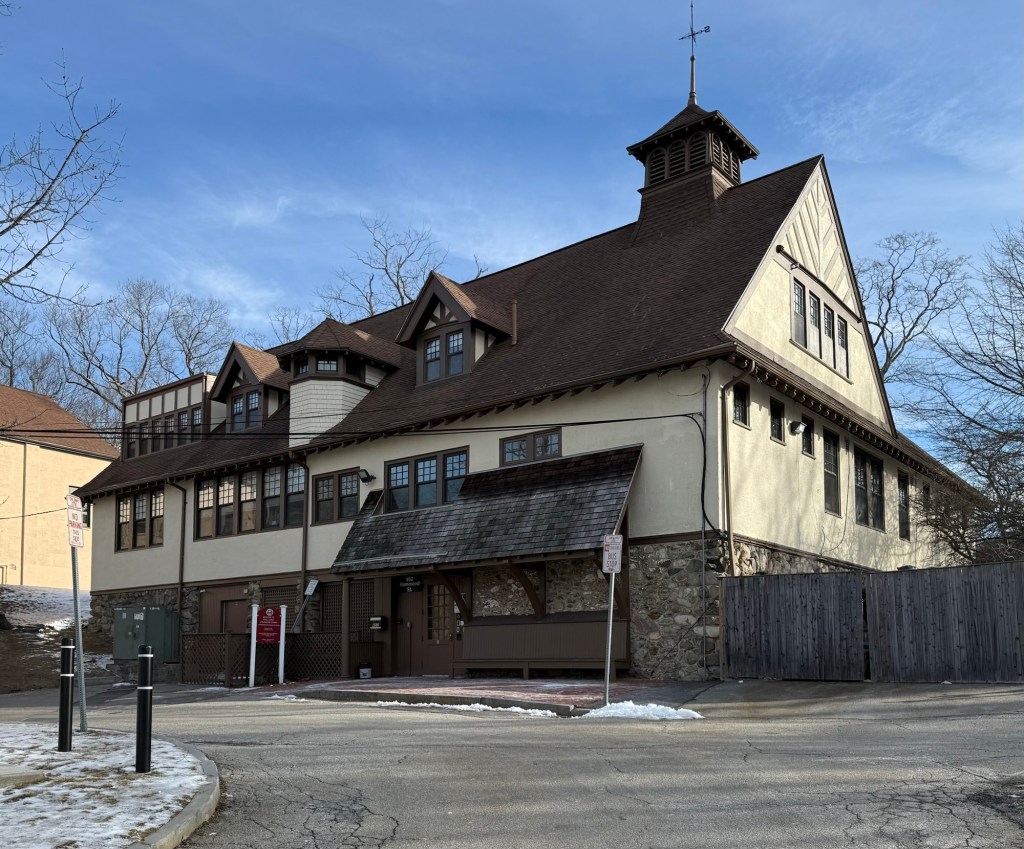
The Soule Recreation Center in Brookline, Massachusetts, was originally the stable and carriage house on the John G. Wright estate. John Gordon Wright (1843-1912), was a Boston wool merchant who purchased farmland on this site in the 1890s and hired architects Chapman & Frazer , to design an estate house (since demolished), and this building to serve as a carriage house and stable for horses. The stone Tudor Revival style mansion house was complemented by the earlier wood-frame Tudor carriage house, resembling an English manor with grounds designed and laid-out by the Olmsted firm. In 1942, the property was purchased by the Rivers School (now located in Weston) and converted into classrooms and administrative offices for the private school. When the school moved to Weston, the Town of Brookline in 1961 bought property for recreational purposes. Sadly, in 1967, the mansion house burned down, but the carriage house and gate lodge remain as lasting remnants of a once great Brookline estate.

Kewaydin Cottage // 1900

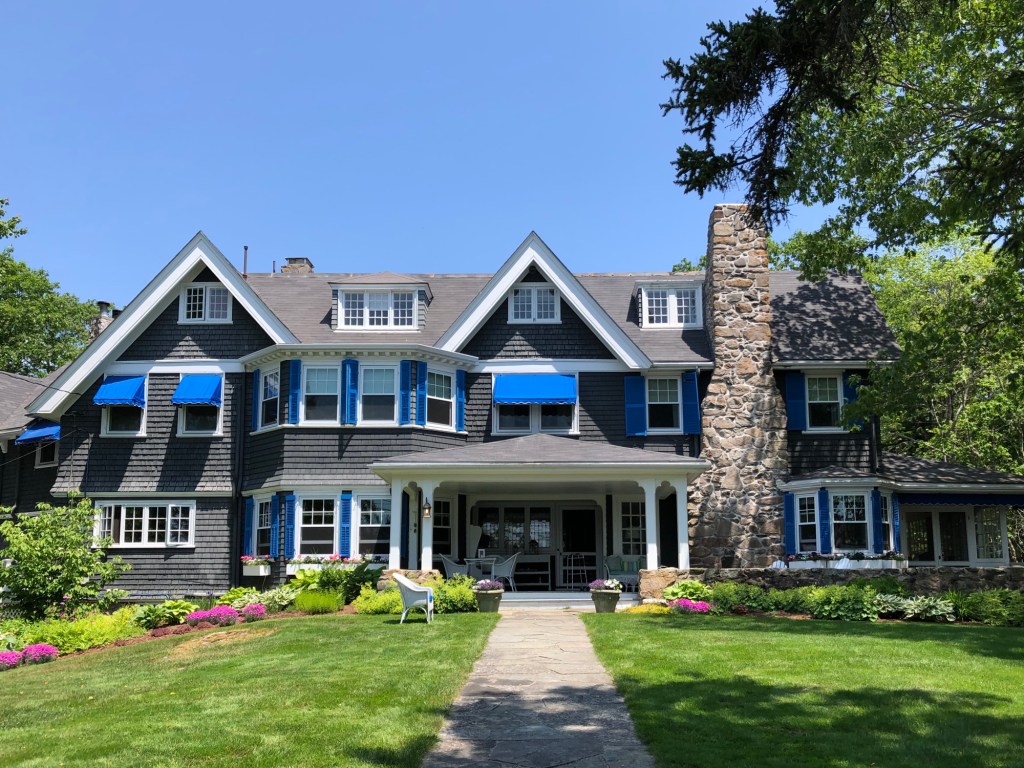
Every good summer cottage needs a name, and this charmer in the Cape Arundel Summer Colony of Kennebunkport, Maine, is no exception! This is “Kewaydin” a massive summer home built for Eben Caldwell Stanwood Jr. (1856-1906) a merchant and later banker of Boston, Massachusetts. Stanwood hired the Boston firm of Chapman & Frazer to design the cottage, which blends Shingle style and Queen Anne elements in a rustic composition that has such great curb appeal! The use of cedar shingles and rubblestone chimneys, paired with the vergeboards and complex roofline with dormers, makes this one of the gems of Kennebunkport!