John G. Wright Mansion // 1907-1967

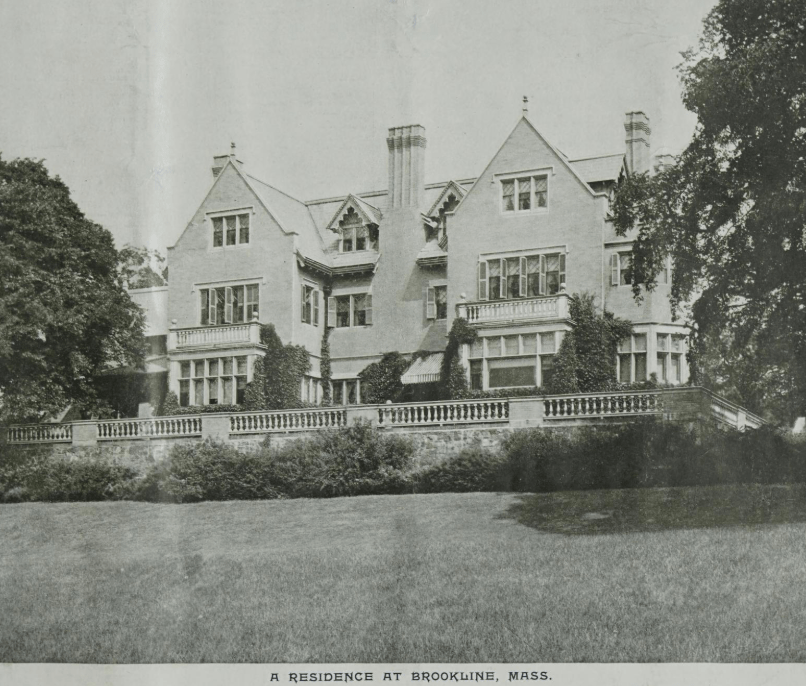
John Gordon Wright (1843-1912), was a Boston wool merchant who purchased farmland on this site in the 1890s and hired architects Chapman & Frazer, to design this stone mansion as an estate house. He previously moved into an earlier wood-frame home on the site and a decade earlier, had the architects design his carriage house and stable, which survive today as the Soule Recreation Center. The stone Tudor Revival style mansion house was massive and featured in national periodicals when completed. The estate was beautified by landscaping designed and laid-out by the Olmsted firm. In 1942, the property was purchased by the Rivers School (now located in Weston) and converted into classrooms and administrative offices for the private school. When the school moved to Weston, the Town of Brookline in 1961 bought property for recreational purposes. Sadly, in 1967, the mansion house burned down, but the carriage house and gate lodge remain as lasting remnants of a once great Brookline estate.

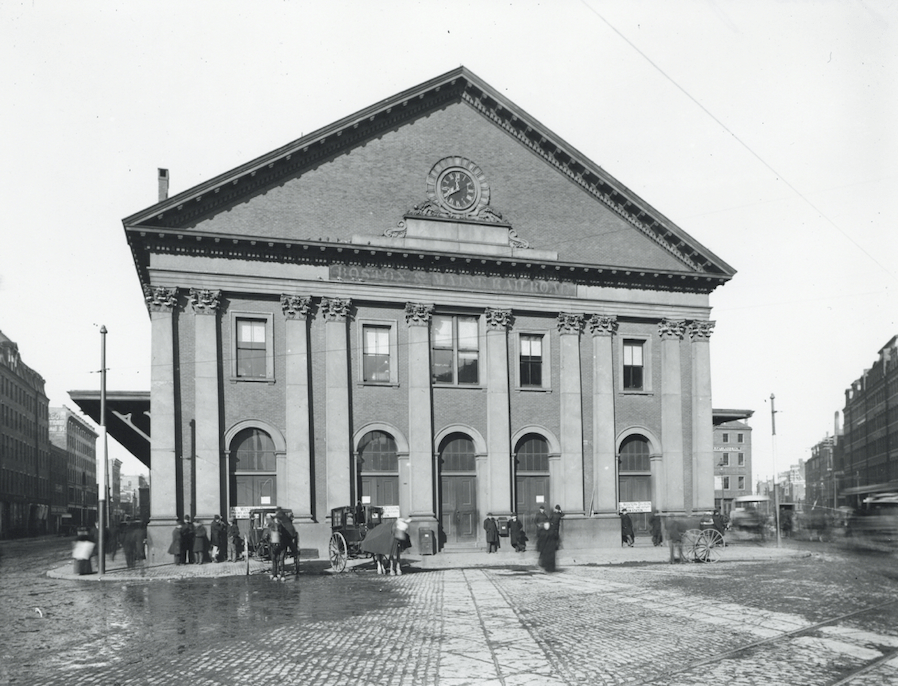
Boston & Albany Depot // 1881-1958

Courtesy of Digital Commonwealth

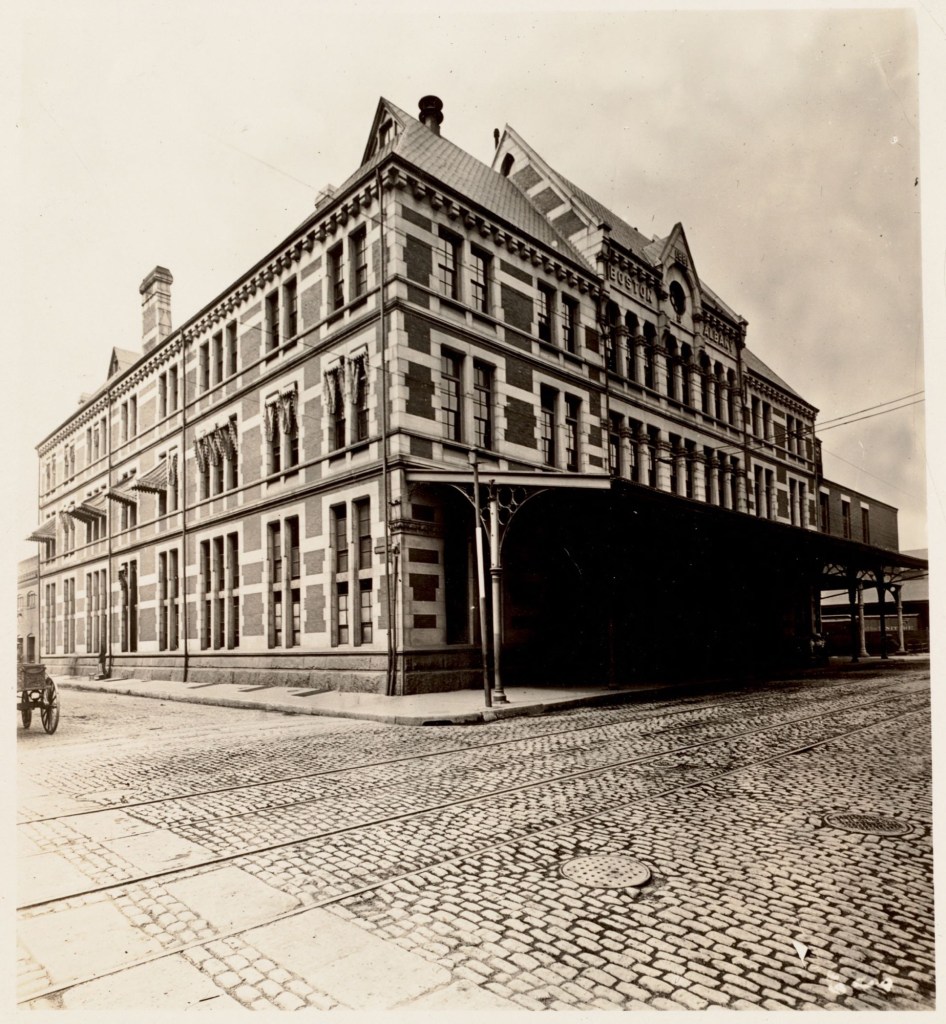
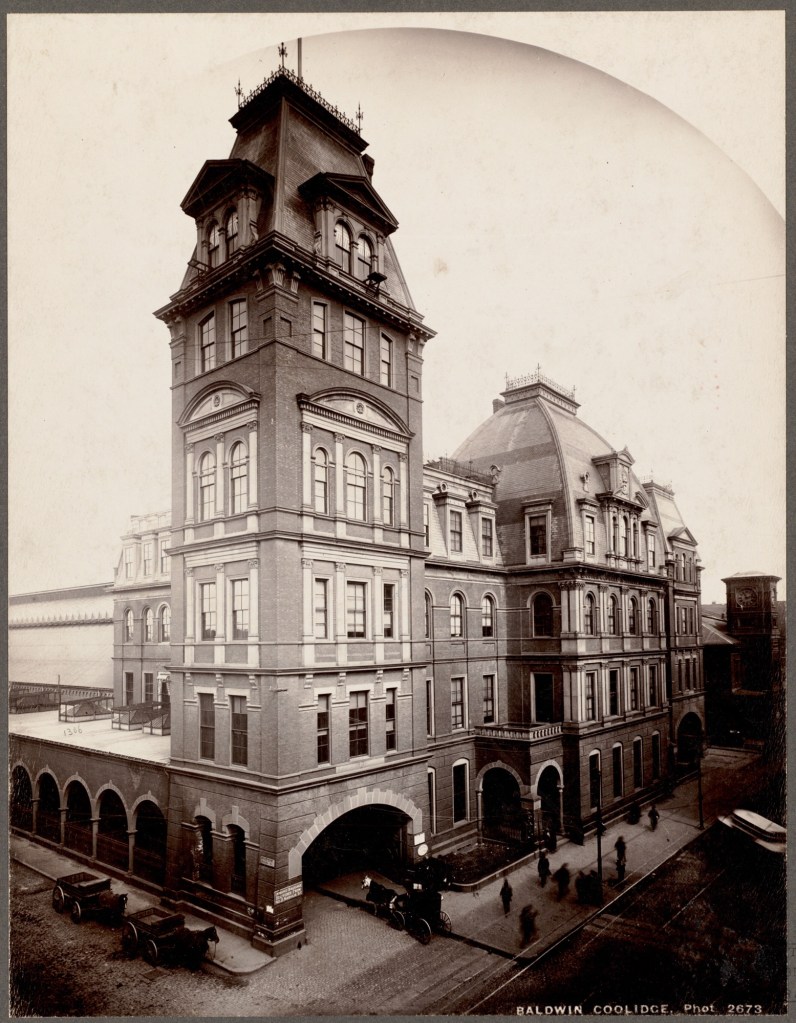
When the Erie Canal opened in 1825, New York City’s advantageous water connection through the Hudson River threatened Boston’s dominance as a historic trade center. Since the topography of the Berkshires in Western Massachusetts made construction of a canal infeasible, Boston turned to the emerging railroad technology for a share of the freight to and from the Midwestern United States. The Boston and Worcester Railroad was chartered in 1831 and construction began the next year. Stations and rail lines were built westward of Boston and would eventually reach the Berkshires and the Hudson Valley with three existing lines merging in 1867 as the Boston and Albany Railroad, becoming the longest and most expensive point-to-point railroad yet constructed in the United States. The B&A undertook a significant program of improvement and beautification in the 1880s and 1890s, when the railroad hired architect Alexander Rice Esty to design this building, the Boston passenger station which was completed in 1881, the year of Esty’s death. That same year, the B&A hired architect Henry Hobson Richardson to design a series of passenger stations, connecting suburban villages west of Boston to the city. This station was located on Kneeland Street and serviced passenger service from Boston until the new South Station, a consolidated train station of various lines, was completed in 1899. This station later became a freight and storage warehouse for the railroad until the 1950s when the building was razed for the Central Artery, signaling the death of train travel as we knew it for decades to come. The site of the former station has remained undeveloped since then.

Rockland Custom House & Post Office // 1873-1969

Photo included in HABS documentation

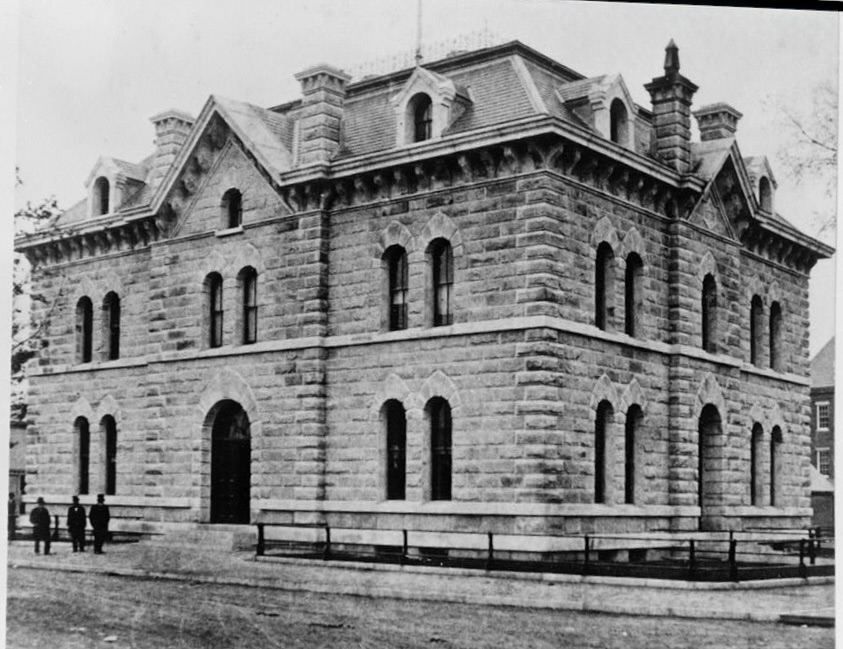
It saddens me to see photos and learn about some of the amazing buildings demolished in the name of “progress”; it is even more disappointing when said building is replaced by a surface parking lot (over 50 years later)! This great stone building was built in Rockland, Maine, in 1876 as the town’s post office and custom house by the Federal government. Relatively unknown architect Alfred B. Mullett is credited with the design as he served from 1866 to 1874 as Supervising Architect of the United States Treasury Department. The building can be classified as Italianate-Second Empire in style and is constructed of massive, rough-faced granite block walls with a shallow mansard roof above. The building was offered for sale by the U.S. Government in 1967, likely due to the upkeep costs and a shrinking local population with the dependency on maritime trade diminished. The building was ultimately razed in late 1969, with a new, uninspiring, post office built next door to this site.

Poland Springs House // 1876-1975

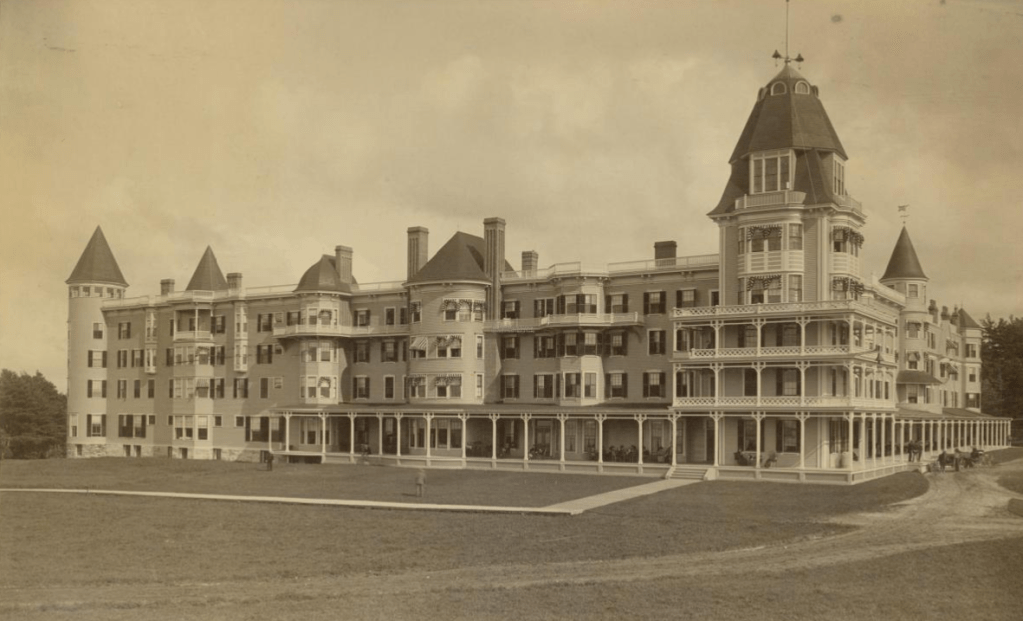
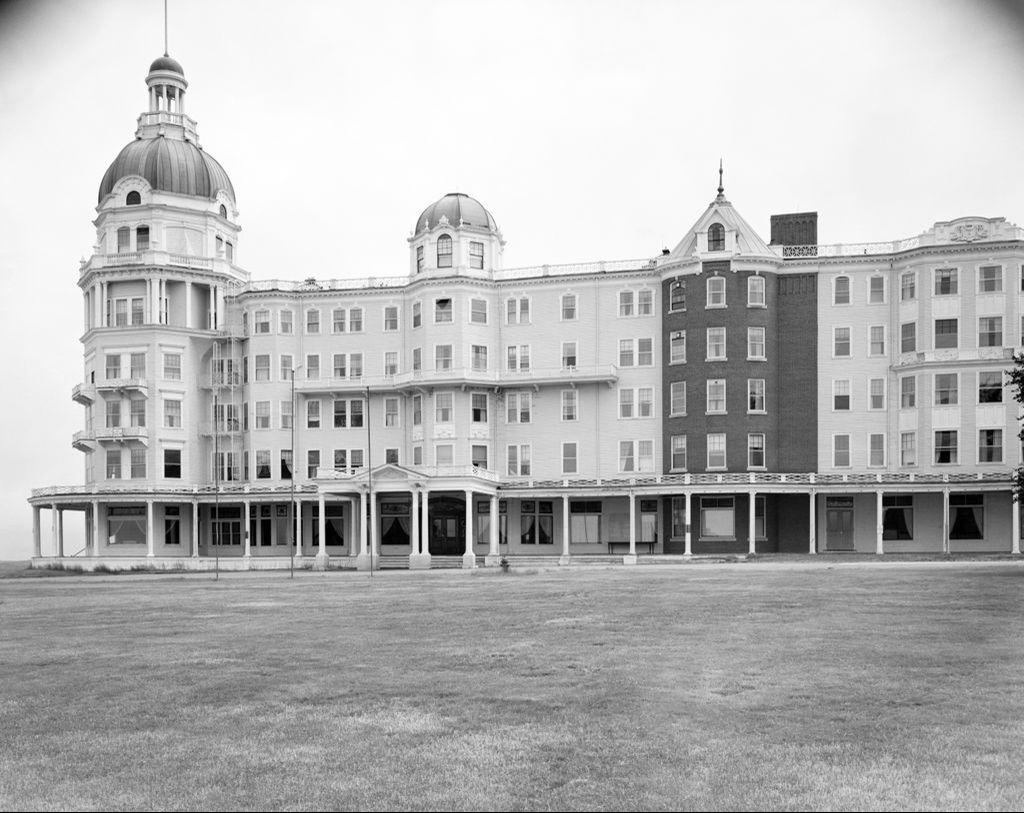
In 1844, Hiram Ricker (1809-1893) of Poland, Maine, drank spring water on his property and found that his chronic dyspepsia was cured. As a result, he began touting the medicinal qualities of the water and in 1859 started selling the water commercially. While the first water was bottled and sold in 1859, it was not until after the Civil War that Hiram Ricker and his sons began heavily promoting the spring as a destination for medical cures – and at the same time promoted the inn and resort that they were building in association with the spring. From this, the Poland Springs Resort (and Poland Springs bottled water) was born. The development saw swarms of tourists looking to escape the polluted cities for clean Maine air and natural spring water, therefore, the Ricker Family built the great Poland Spring House in 1876 to cater to resort visitors taking its waters. The original hotel was Second Empire in style and stood four-stories tall containing 100 rooms. Throughout the 1880s and 1890s, the resort building was expanded, quadrupling its size to 450 rooms as the demand for the resort increased every summer. An annex was also built nearby, named the Riccar Inn, providing even more hotel rooms for guests. By the early 20th century, the 1870s hotel was completely remodeled in the Beaux Arts style by architect Henry Wilkinson with domed roofs and sweeping verandas. After WWII, the resort saw diminishing visitors and would ultimately close in the 1960s. During a period in the 1960s, the hotel was operated as the country’s largest Women’s Job Corps Training Center, but deferred maintenance caught up to the building and it was ultimately shuttered, suffering a devastating fire in 1975, it was demolished soon after. While the large hotel no longer stands, there are many other amazing buildings on the grounds, stay tuned!

Former Boston & Lowell Railroad Depot // 1871-1927

Courtesy of Boston Public Library collections

The Boston and Lowell Railroad was established in 1830 as one of the first rail lines in North America. The first track was completed in 1835, and freight service began immediately connecting Boston to the newly established town of Lowell, which had just 6,400 residents at the time (compared to Boston which had 10x that). The original Boston depot was a modest structure, but after the Civil War, it was decided that a new station connecting two of the most important industrial cities in Massachusetts, should be built. Architect Edgar Allen Poe Newcomb and his father’s firm, L. Newcomb & Son, was selected to design a new station on Causeway Street. The French Second Empire masterpiece was built between 1871-1878. Inside, the concourse was lined with oak walls and marble flooring. The depot was added onto in 1893 and incorporated into a Union Station of multiple former lines, and ultimately demolished in 1927 for the first North Station.

Boston City Hospital Relief Station, Haymarket // 1902-1960s

Image courtesy of City of Boston Archives

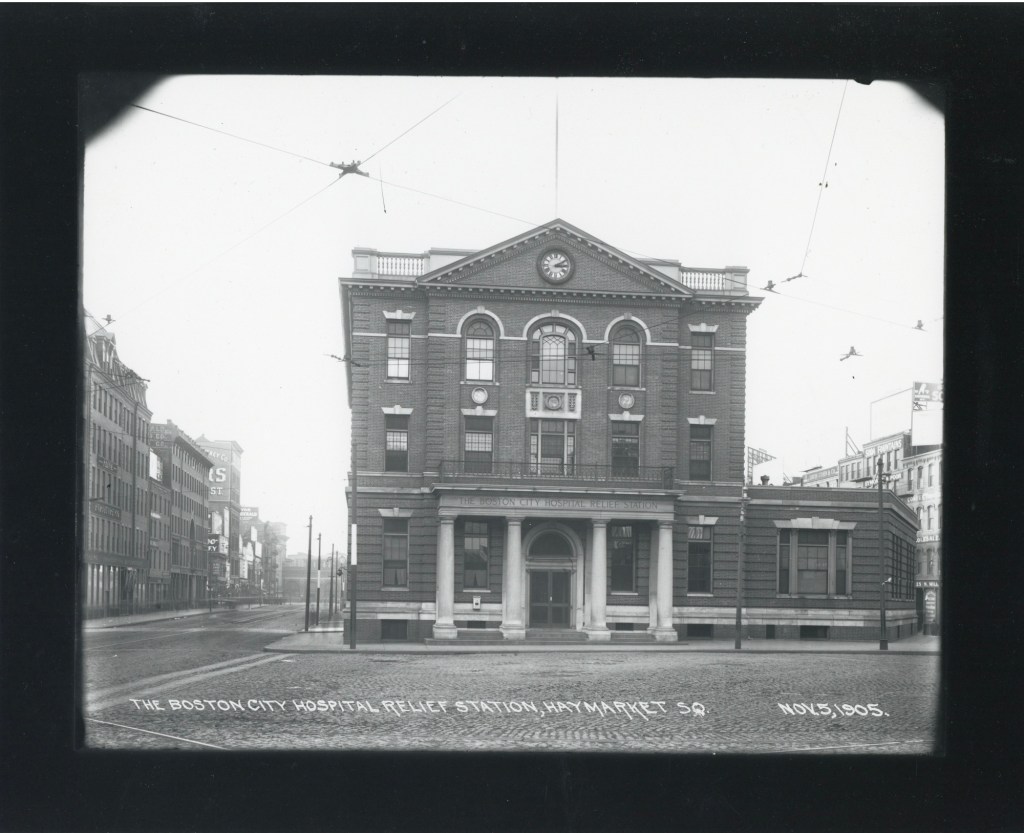
In 1858, as Boston began to see a massive influx of immigration into the city and rapid industrialization, the City of Boston authorized the creation of a new hospital whose purpose was the “reception of those sick and injured: citizens of Boston who, from any cause, were unable to otherwise obtain care and treatment,” especially in cases of “acute illness and for the victims of accident or injury.” This was the Boston City Hospital, which was established in the South End, and is now known as the Boston Medical Center. The hospital was thought to be too far away for victims of injury of illness to get to promptly, so a relief station was built in Haymarket Square, replacing the recently demolished Boston & Maine Railroad Station. The new, standalone hospital building was constructed of brick and stood three stories tall and opened in 1902. On its first day of operation, doctors and staff saved the life of a man who had attempted suicide by ingesting carbolic acid. A Boston Globe reporter speculated that had the patient been  transported to the more distant Massachusetts General or City Hospitals, he would have surely died. The Colonial Revival style building was designed by the firm of Kendall, Taylor & Stevens, who specialized in medical facilities and other institutional building designs. The structure was demolished by the 1960s, when much of the Government Center/West End areas were razed for urban renewal.

Former Boston & Maine Railroad Station // c.1845-1893

Photo courtesy of City of Boston Archives

The Boston & Maine Railroad opened in 1845, and over the years, became the dominant railroad in northern New England with many of its lines terminating at this station for a half-century until the original Union/North Station was built in 1893 consolidating many of these northbound lines under one roof. The Boston & Maine Station was located in Haymarket Square, southeast of the present North Station and the building was a landmark in the Greek Revival style. The brick building with monumental pilasters and pediment at the facade commanded the heavily trafficked site until it was demolished in 1893 when the lines relocated to the newly built Union Station on Causeway Street. The architect for the station was Richard Bond.

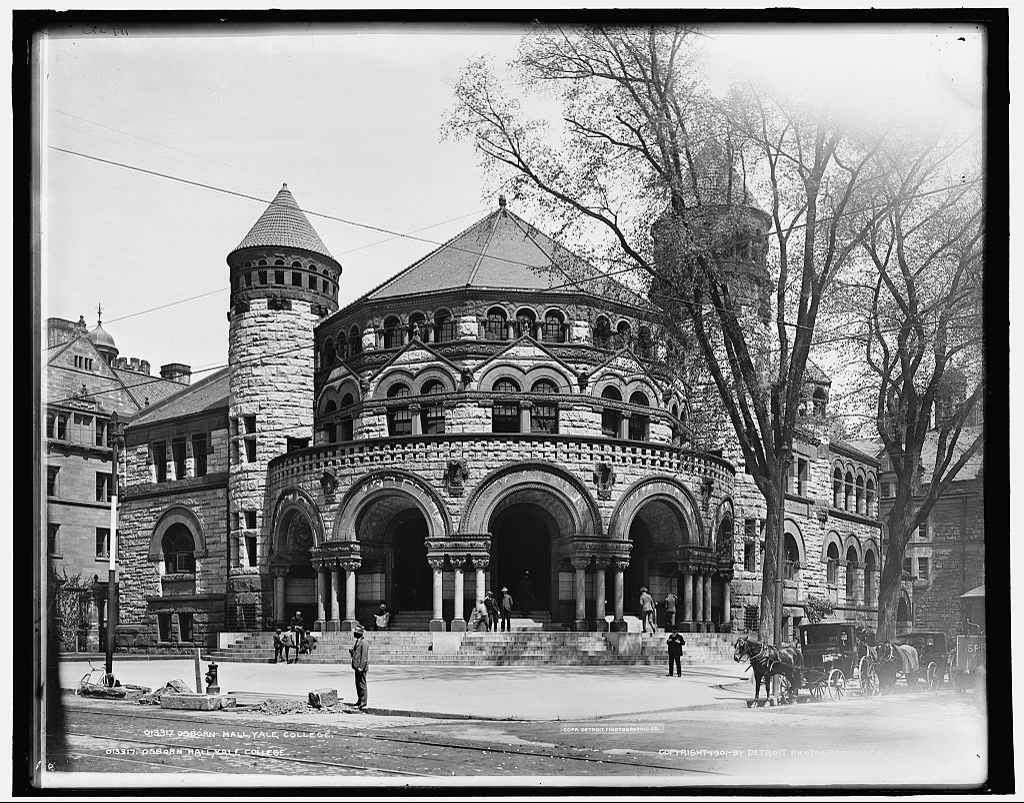
Yale University – Osborn Hall // 1888-1926

One of the biggest architectural losses at Yale was the demolition of the grandiose Osborn Hall in 1926, after standing less than 38 years! The building was constructed in 1888 at the southeast corner of the Old Yard at Yale, at the corner of College and Chapel streets, and was a landmark example of the Richardsonian Romanesque style of architecture. Designed by architect Bruce Price, the building was designed to face outward and was said to resemble a “squating toad with an open lip”. While architecturally stunning, the building was immediately met with criticism. Its construction necessitated the removal of the cherished Yale fence and the outward-facing design made it hard for students to focus on lectures while the sounds of horses and carriages on the cobblestone streets just outside. The short-lived Osborn Hall was razed in 1926 for Bingham Hall (next post), a prominently designed, but inward-facing building.

Powell Building // 1921-1990

Even skyscrapers face the wrecking-ball…The Powell Building was among New Haven’s first building recognized as a “skyscraper.” Built in 1921, the commercial building is Neo-Gothic Revival in style with the two bottom stories and the two top stories are detailed in Gothic motifs, with eight more plain floors between. The resulting shaft-like appearance distinguishes the Powell Building from other contemporary commercial structures in the city, which are essentially heightened versions of various historical styles. The architect, Roy W. Foote, was among New Haven’s leading architects in the first half of the 20th century, largely due to his local efforts in high-rise construction. The Powell Building was erected as a speculative venture by Albert H. Powell, whose primary business was a wholesale coal dealership. Early occupants were professional offices and a bank at the first floor. The building historically was located at the New Haven Green, between the Victorian Gothic City Hall and Classical Federal Courthouse. The building was sadly razed by 1990 by the New Haven Redevelopment Authority, who were VERY active in town knocking down neighborhoods in the second half of the 20th century. It was replaced by the Connecticut Financial Center skyscraper, currently New Haven’s tallest building.

Horatio Harris Villa // 1857

Not much remains of one of Roxbury’s once grand rural estates, but as there is some left, I want to feature it before it’s all gone, possibly any day now! Horatio Harris was born in Dorchester (present-day South Boston) in 1821 and ran a prominent auction house in Boston. He built his country estate in Roxbury beginning in 1857 in the Gothic Revival style, adding on and updating numerous times. During the Civil War, the firm of Horatio Harris & Co. obtained the contract to sell at auction all goods which were confiscated by the United States’ land or naval forces and brought to Boston. He made a lot of money and added to his land holdings and estate house in Roxbury. The mansion’s construction was timely as Roxbury was transitioning from a rural town, with farms and country estates of wealthy Boston merchants, to a streetcar suburb, increasing the land value of his holdings. The estate included nearly 30 acres of meandering paths, a lake with an island, outbuildings, and an observation tower – one of which remain today besides the ruin of the former mansion. Horatio died in 1876, in the decades following his death, his heirs began subdividing the estate, developing some and selling other plots off for houselots. By the early 1900s, Jewish people began moving into Roxbury, mixing with the predominantly Yankee population. By 1915, the Harris manor house was owned by the Hebrew Alliance of Roxbury, Inc. By the 1920s, they expanded facilities, adding a school building to the front of the former Harris Mansion, completely obscuring the facade of the old estate. In the 1940s, the upper stories were removed. Seemingly the death knell of the old Harris Villa was a fire in 2019, which gutted much of the remaining original fabric of the estate. All that remains is a bay window, some window trim details and a Gothic porte-cochere at the rear of the estate. See it before it’s too late!