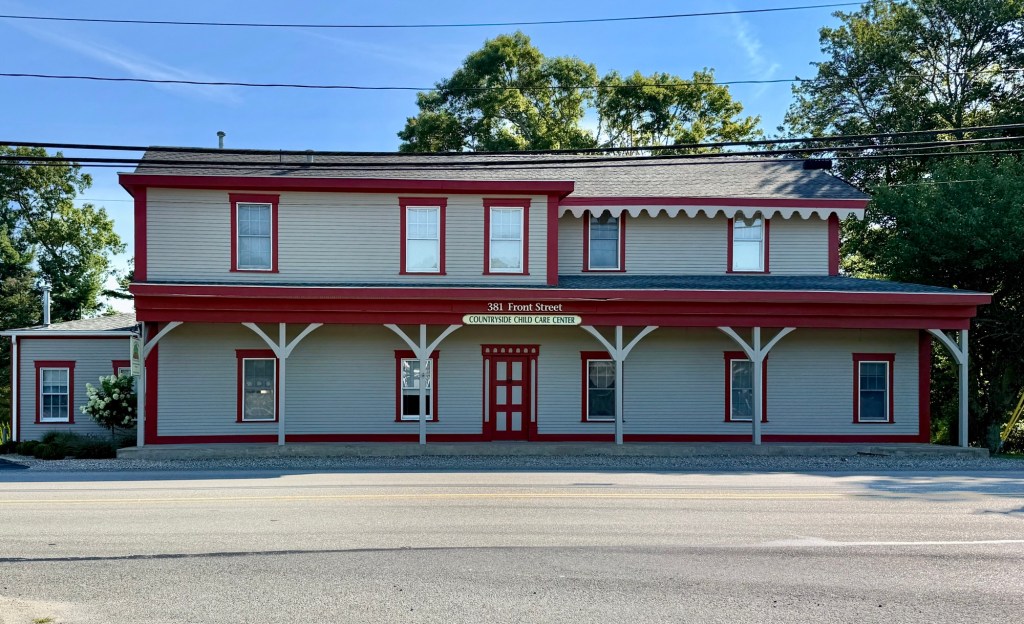
Cape Cod Railroad, Marion Station // c.1855

The Marion Railroad Station was built in about 1855, around the time of the arrival of the first passenger rail service to Marion, Massachusetts, a new town which incorporated just three years prior. While no train service runs through the town today, historically, the community was well-connected to Boston, Cape Cod, and towns all over the South Coast of Massachusetts. The Fairhaven Branch Railroad was incorporated in 1849, chartered in 1851, and built from 1852 to 1854 to connect Fairhaven with West Wareham and lines beyond in Cape Cod and Boston. This station was built by the time the line opened and it stands as a larger, two-story Victorian station which serviced the area’s passenger and freight travel here. The New Bedford and Taunton Railroad bought the line in 1861, which too merged into the Old Colony Railroad in 1883. As use of rail travel declined, passenger service ended in Marion by 1935, followed by freight service in 1953.The former station was sold to private owners and since 1988, has housed a childcare center. Despite the second story addition and later renovations, the building still retains its unique character and bargeboard detailing.
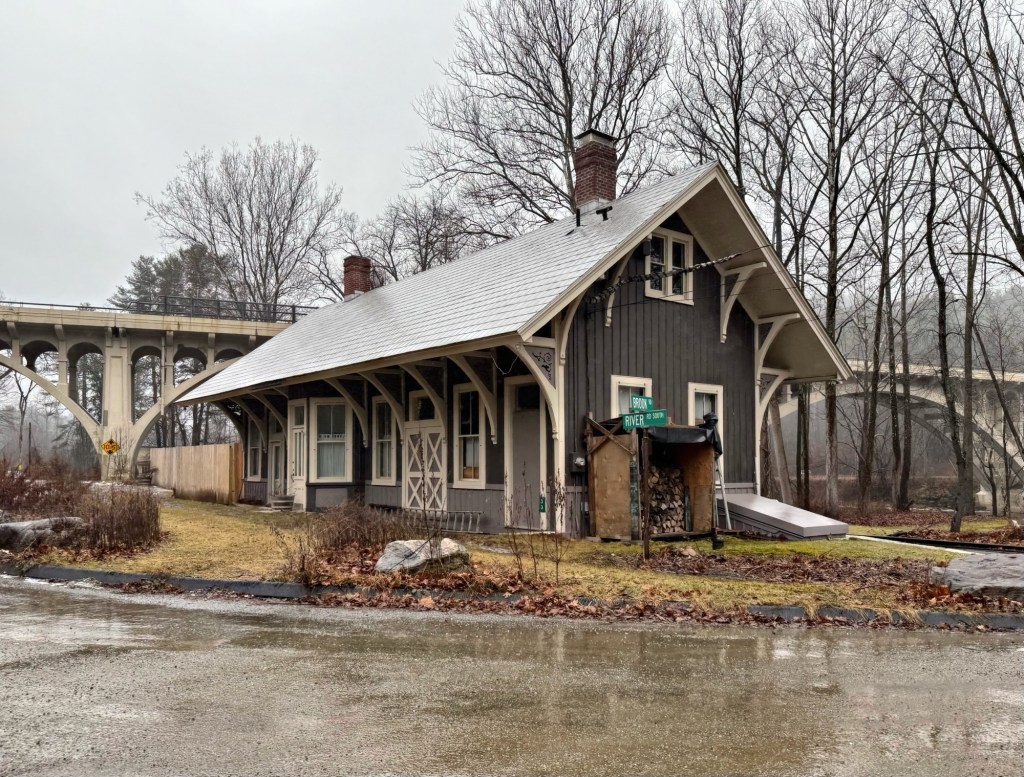
Cornwall Bridge Railroad Station // 1886

One of the most attractive railroad depots in Connecticut, the Cornwall Bridge Railroad Station exists in almost complete originality. Its siding is board and batten and its slate roof with a wide overhang supported by the original brackets, showcases the attention to detail railroad companies paid to design and appoint these important landmarks. Built in 1886, the building can be classified as Stick Style and is one of a few buildings in town of the style, adding to its significance. The station was built by the Housatonic Railroad to replace an earlier station on the site. The Housatonic line was acquired by the New York, New Haven and Hartford Railroad in 1892 and later by the Penn Central Railroad in 1969, which went bankrupt by 1970. This station was subsequently sold to private ownership and listed on the National Register of Historic Places as a tool to bring awareness to its significance and threatened status. Luckily, the building was preserved and has been converted to a private residence.

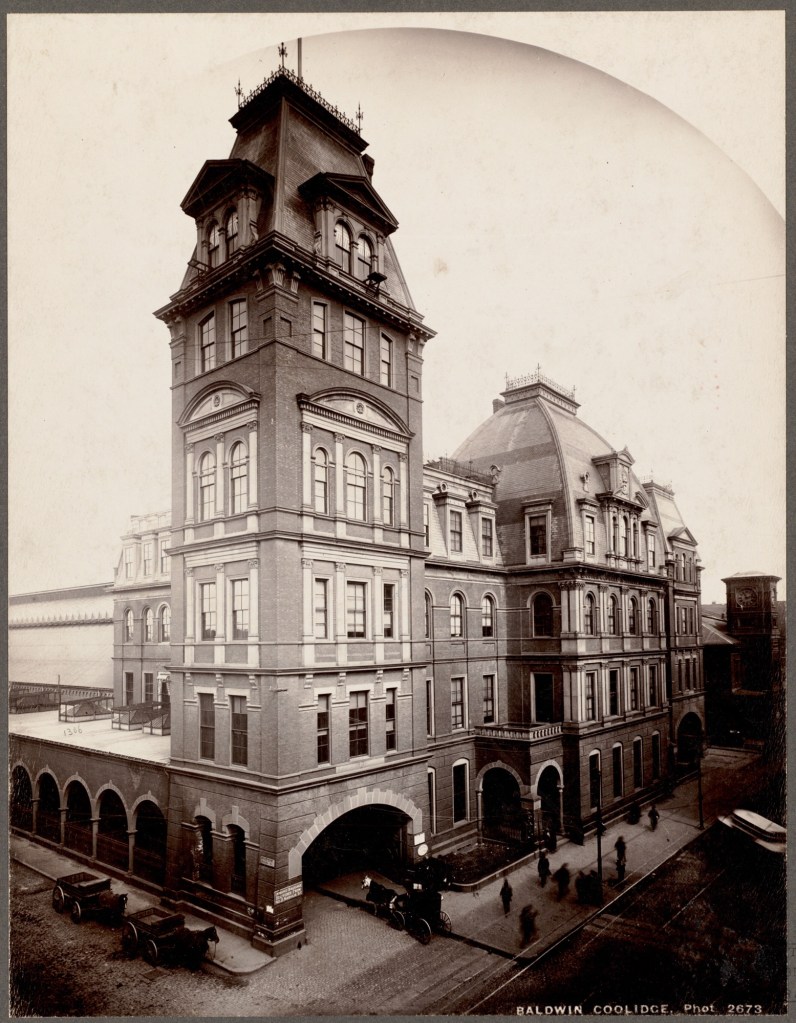
Former Boston & Lowell Railroad Depot // 1871-1927

Courtesy of Boston Public Library collections

The Boston and Lowell Railroad was established in 1830 as one of the first rail lines in North America. The first track was completed in 1835, and freight service began immediately connecting Boston to the newly established town of Lowell, which had just 6,400 residents at the time (compared to Boston which had 10x that). The original Boston depot was a modest structure, but after the Civil War, it was decided that a new station connecting two of the most important industrial cities in Massachusetts, should be built. Architect Edgar Allen Poe Newcomb and his father’s firm, L. Newcomb & Son, was selected to design a new station on Causeway Street. The French Second Empire masterpiece was built between 1871-1878. Inside, the concourse was lined with oak walls and marble flooring. The depot was added onto in 1893 and incorporated into a Union Station of multiple former lines, and ultimately demolished in 1927 for the first North Station.