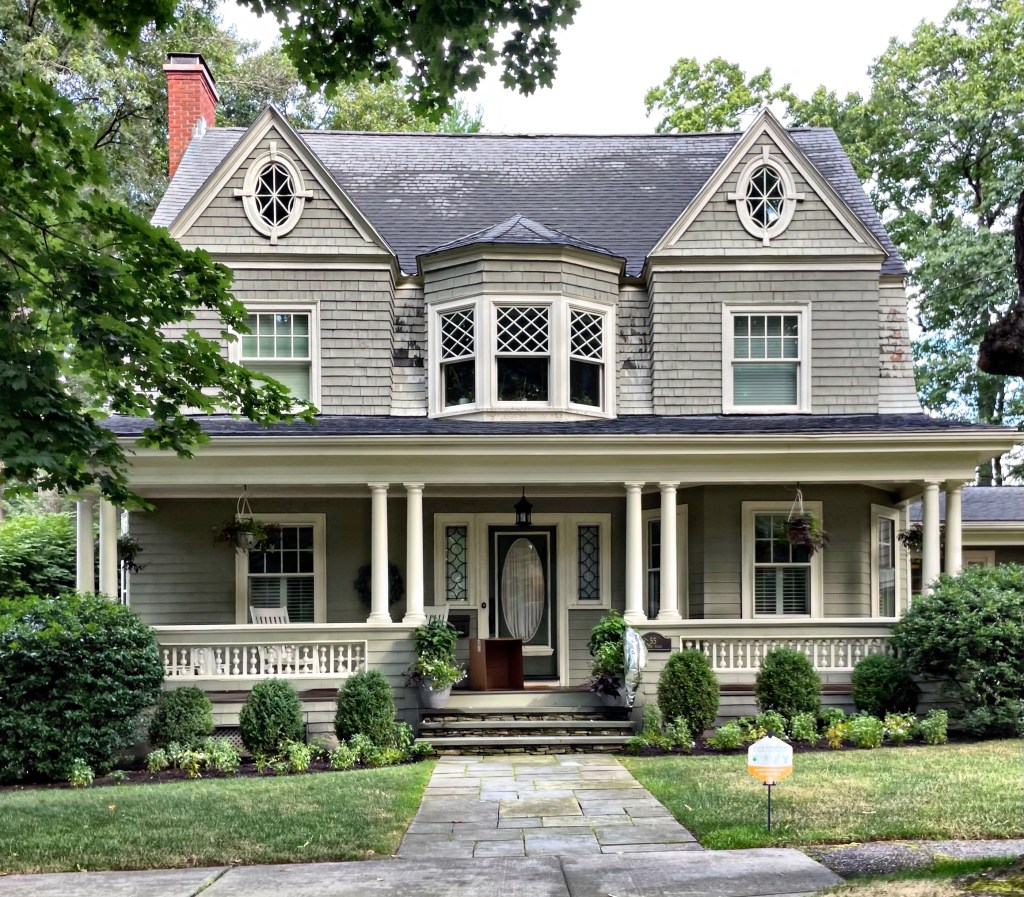
Stetson House // 1897

Waban is full of eclectic homes from the end of the 19th century, and this example is probably my favorite! The Herbert and Georgia Stetson House was built in 1897 and demonstrates how elements of the Colonial Revival style were incorporated into a less rigid Queen Anne style plan. Herbert was a lumber dealer, and likely used his own product in his home. The mixture of ornament includes Colonial
Revival style pedimented dormers, a Palladian motif window, oval windows, and a modillion cornice in combination with bays, oriels, a dramatically overshot gable roof, and a swept dormer reminiscent of the Queen Anne style. Together, the composition is perfection, and really makes you stop and analyze all the details!

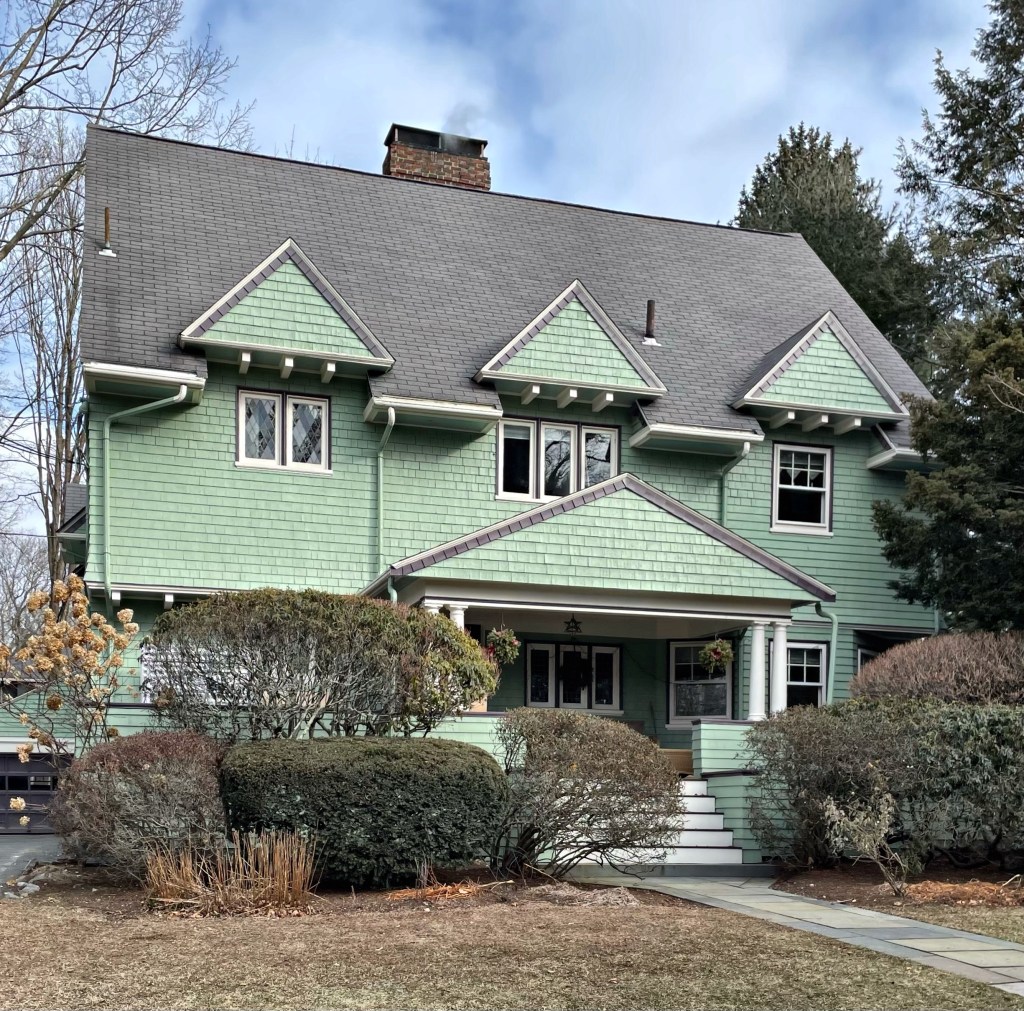
Hovey House // 1897

In 1897, tailor Charles L. Hovey and his wife Bertha, had this house in Waban built for their family. The architecture really stands out as an eclectic blending of styles, common at the end of the 19th century, when architects and builders would design homes to exhibit architectural details from multiple styles, all under one roof. The shingled house has a steep gable roof and three gabled dormers, which reflects Queen Anne theme. The diamond-pane windows and the technique of cantilevered dormers and the second floor overhanging the first, is First Period-Medieval in style, a unique interpretation of American architecture. What do you think of this home?

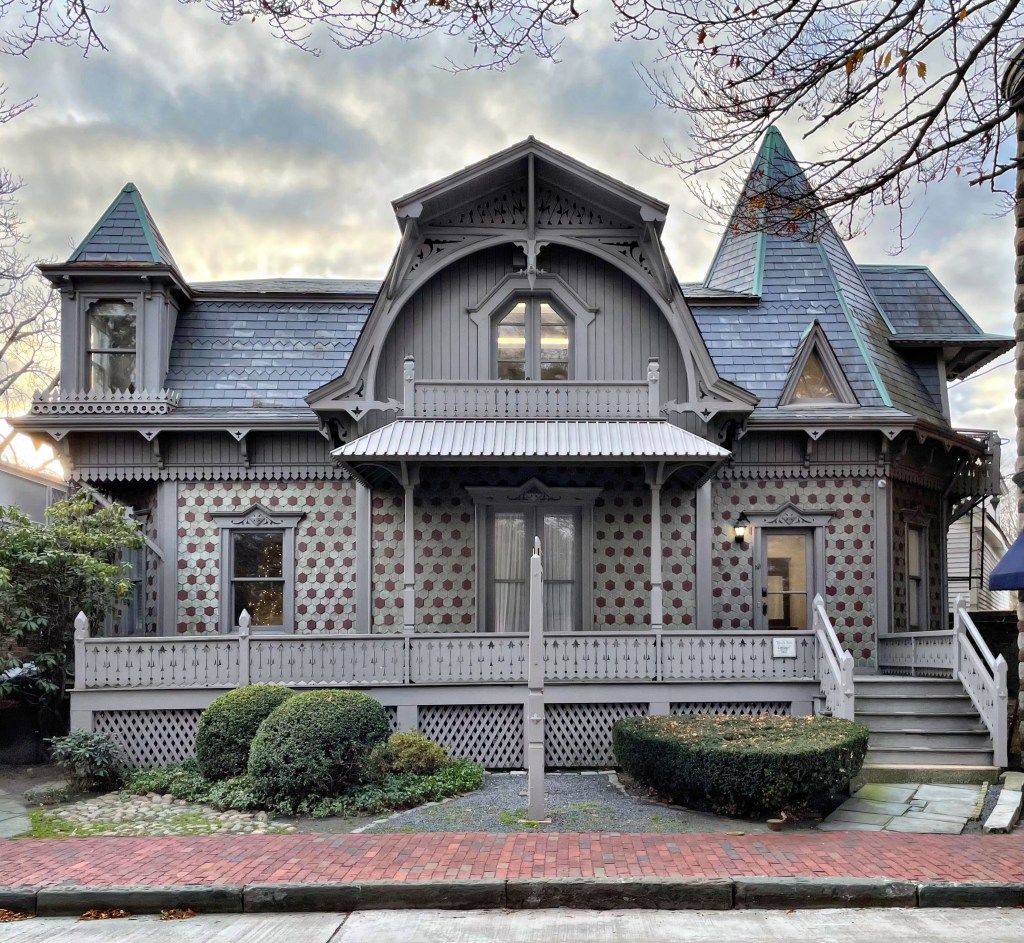
Bird’s Nest Cottage // 1872

One of the more unique and relatively modest summer cottages in Newport, Rhode Island is Bird’s Nest Cottage on Bellevue Avenue. The cottage was built in 1871-2 for Samuel Freeman Pratt, who lived his early life in Boston. The son of a carpenter, Pratt was was working as a carver in Boston, where he saw success as an inventor with several patents to his credit. From the success of one of his inventions, a device for sewing machines, the invention gave him the financial freedom to explore other interests, namely architecture. In Boston, he likely learned his craft from partner John Stevens, before setting out on his own. He designed buildings in Oak Bluffs on Martha’s Vineyard, but decided to reside in Newport. While many state that this cottage for Pratt was designed by the Newport resident and star-chitect Richard Morris Hunt, the design and the fact that it was his own cottage lead me to believe it was designed by Pratt himself. The eclectic cottage features complex gable shapes, fancy stickwork under the eaves, projecting corner bays, and a wall covering of multicolored slate roof shingles. It is now a professional office.

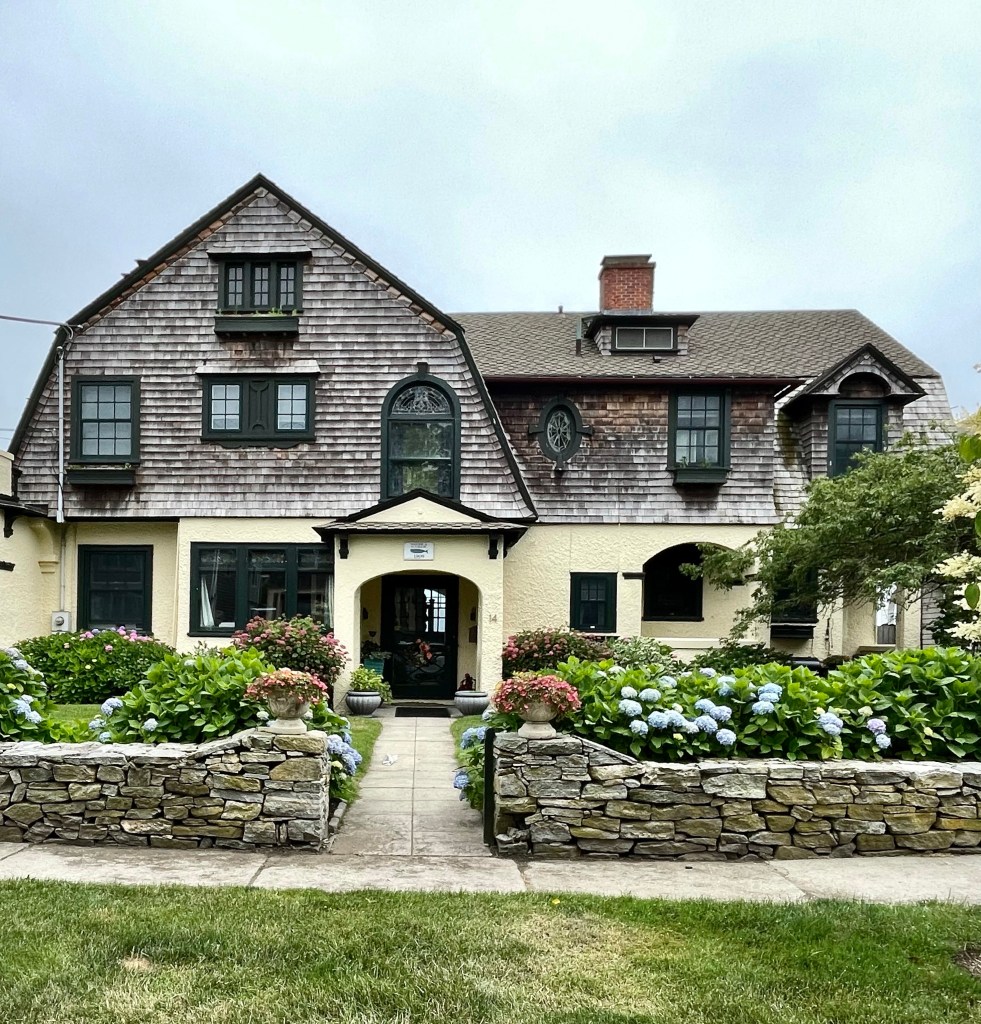
Walter Garde Cottage // c.1910

This summer cottage in the Neptune Park development of New London, Connecticut, was built around 1910 for Walter Garde, a resident of Hartford and New London. Walter built this home as a retreat from city-living where he could breathe the fresh sea breeze and not worry about smoke and pollution from the growing industrial cores of Hartford and New London. The home blends styles and forms elegantly with a stuccoed ground floor and shingles above. A cross-gambrel roof adds depth with windows in various shapes and sizes creating a pleasing composition at the street. Walter Garde was a businessman who notably opened the Garde Theatre (now Garde Arts Center) in Downtown New London.

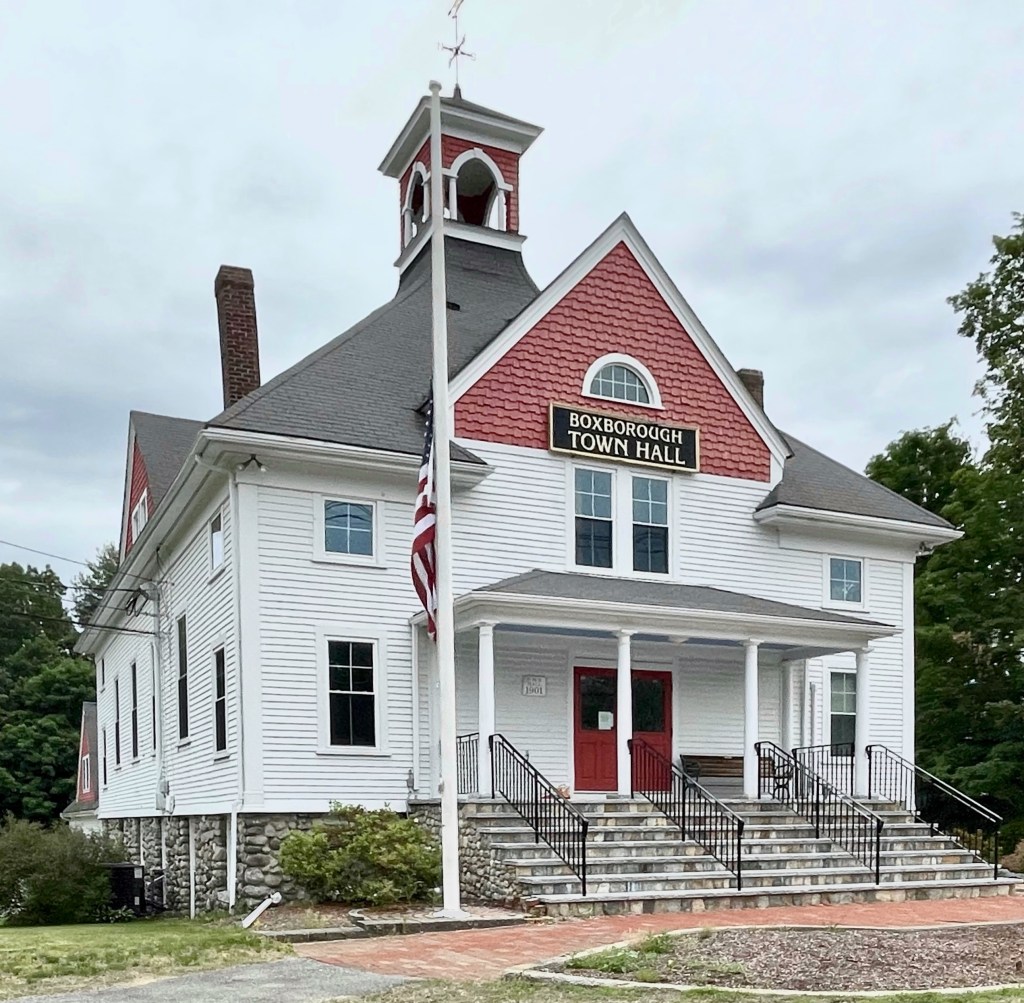
Boxborough Town Hall // 1901

The area which became the town of Boxborough, Massachusetts, was first inhabited by the Native Americans of the Nipmuc and Pennacook tribes. Land in Boxborough was not settled by colonists until the beginning of the eighteenth century by farmers looking for fertile land to establish farms, who branched out from nearby Acton. Boxborough was formed from Harvard, Littleton, and Stow in 1783 and was incorporated as its own town. With the exception of small local industries including gristmills, sawmills, and cooperages as well as some minor boot and shoemaking, comb-making, and a lime quarry and kiln, Boxborough’s economy remained almost entirely agricultural through the 19th century. The town grew steadily and a Town Hall building was funded by the turn of the 20th century. This Queen Anne/Colonial Revival Town Hall building was constructed in 1901, atop the foundation which was constructed of locally gathered cobblestone by local volunteer farmers. Today, the town retains much of its agricultural heritage, but it is definitely under threat by subdivisions and Neo-Colonial mansions further contributing to Bostons suburban sprawl.