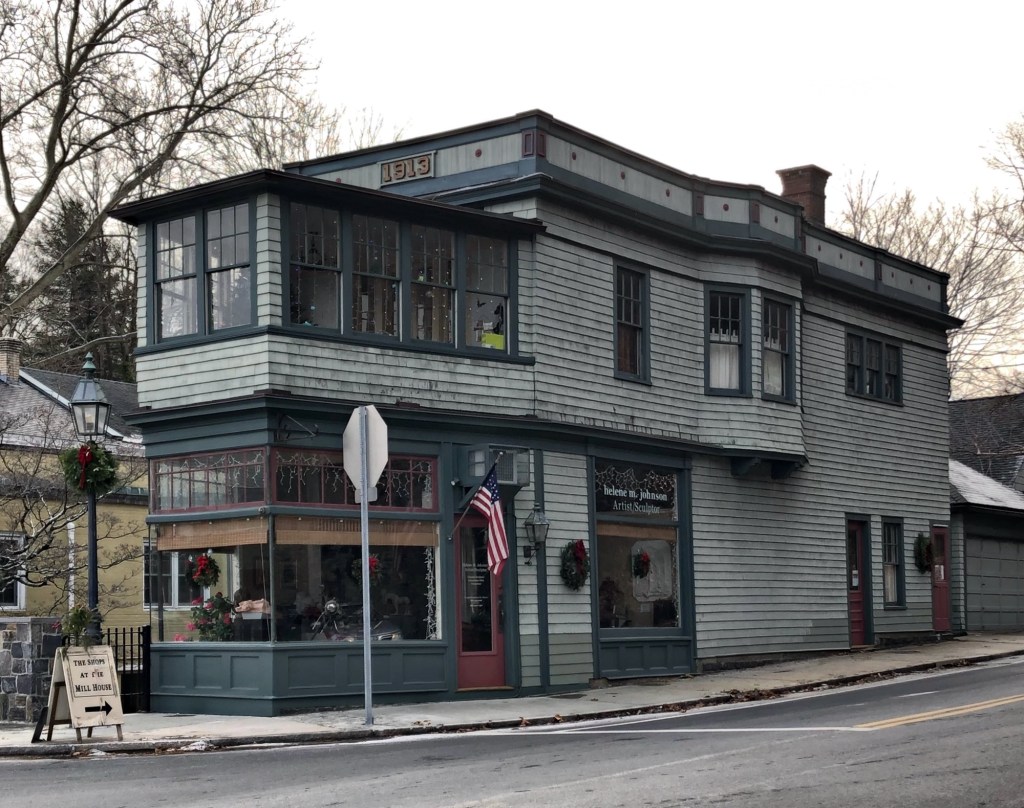
At the junction of West Main and Main Streets in Chester Village, Connecticut, this unique flatiron commercial building stands overlooking the Pattaconk Brook that cuts through the center of town. In 1913, this two-story block was built with ground floor retail and a second floor residence for owner, Elmer Pierce, who ran his pharmacy downstairs. By 1920, the building was owned by Jacob Feinstein, who raised his family on the second floor and had his clothing business, “Feinsteins” in the store below. Later, the retail space was occupied by Child Design, a wooden toy store, and after that, a lighting fixture store. Historic main street buildings are often incubators for small and local businesses, keep the chain stores near the highways!
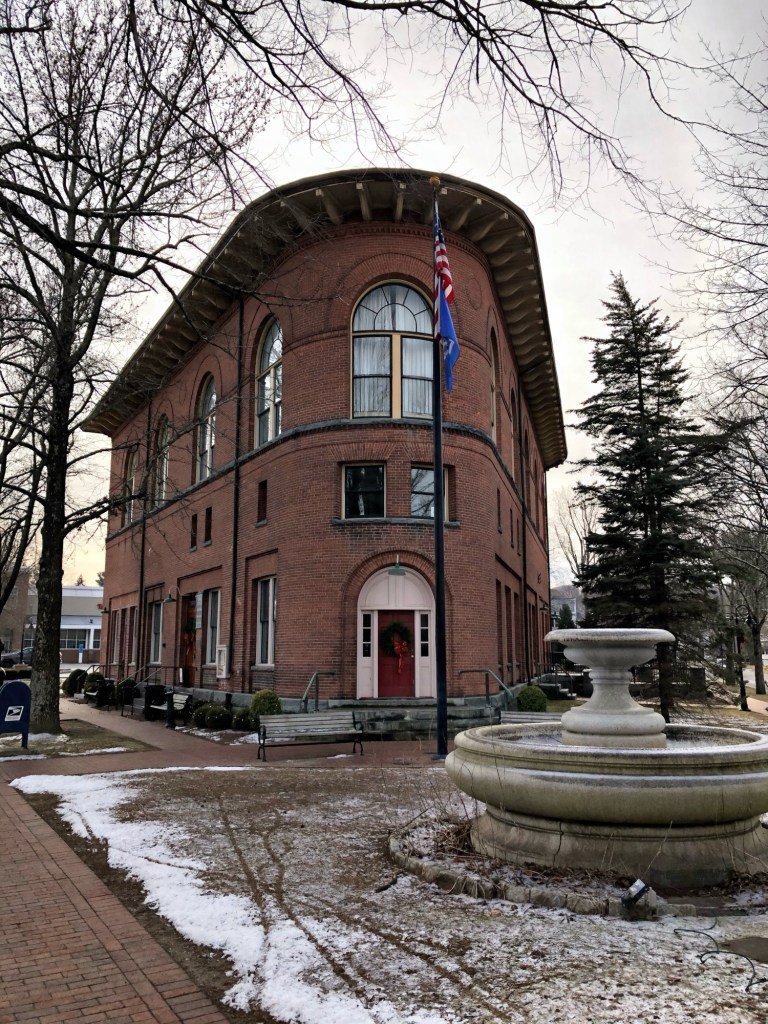
The town of Deep River, in Middlesex County, is located in the lower Connecticut River Valley and was originally colonized as part of the Saybrook Colony. The community was incorporated in 1859 as Saybrook and renamed Deep River in 1947. An early shipbuilding and quarrying town, it later manufactured wire goods, lace, glass, ivory combs, and piano keys and is today a small community of just over 4,500 residents. The original town hall for Saybrook (Deep River) was used until it was destroyed by fire in 1891. The community, which was bolstered by a vibrant industrial community, began planning for a new, stately town hall at a triangular lot at the corner of Elm and Main streets. Plans were completed by Springfield architect, Francis R. Richmond, who laid out the flatiron building with town offices on the ground floor with an auditorium/opera house space on the upper floors. The Romanesque Revival style building features prominent rounded corners with arched openings, a granite string course, and overhanging bracketed eaves.
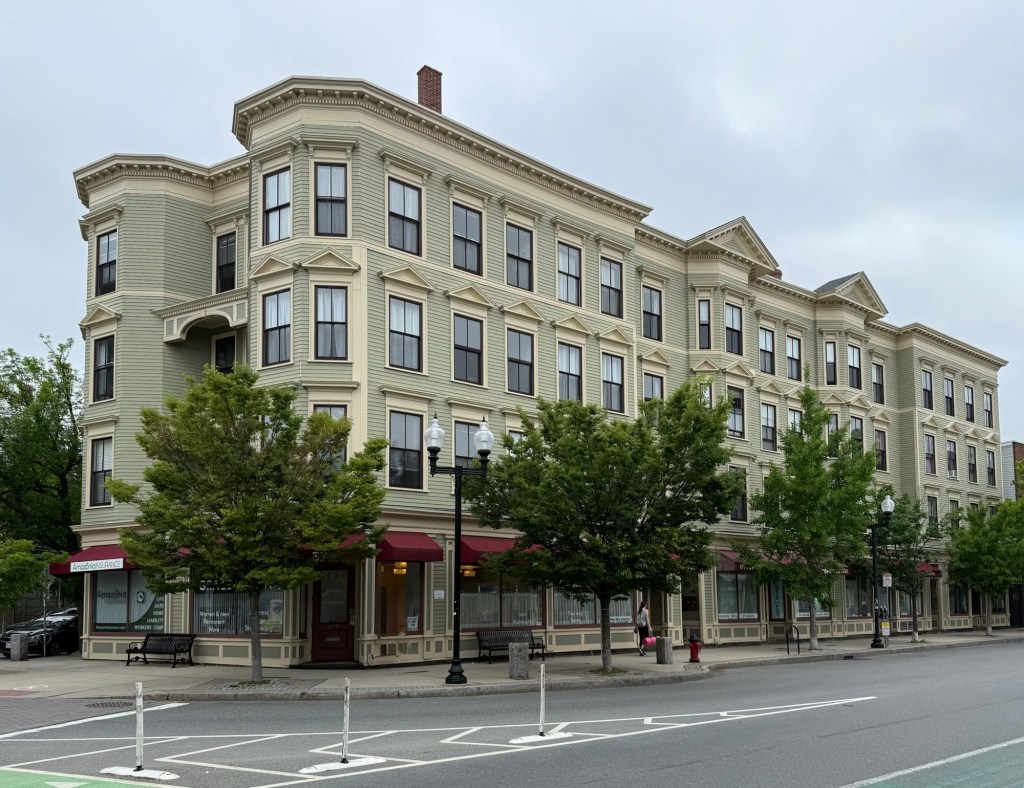
Built in 1896, this handsome, four-story flatiron building at the corner of Bow Street and Somerville Avenue in Union Square, Somerville, was the largest tenement building in the city when completed. The property was developed by Charles Drouet, from plans by local architect, Aaron Hibert Gould. The block originally housed 37 apartments above six retail spaces at the street-level. The series of projections and an interior courtyard provided light and air into the apartments, which made them highly functional and desirable for families in the area. The building is more Colonial Revival than the 1892 Queen Anne style Richmond Apartments, also designed by Aaron H. Gould for Mr. Drouet nearby. The Drouet Block is a well-preserved example of late 19th century tenements in Somerville.
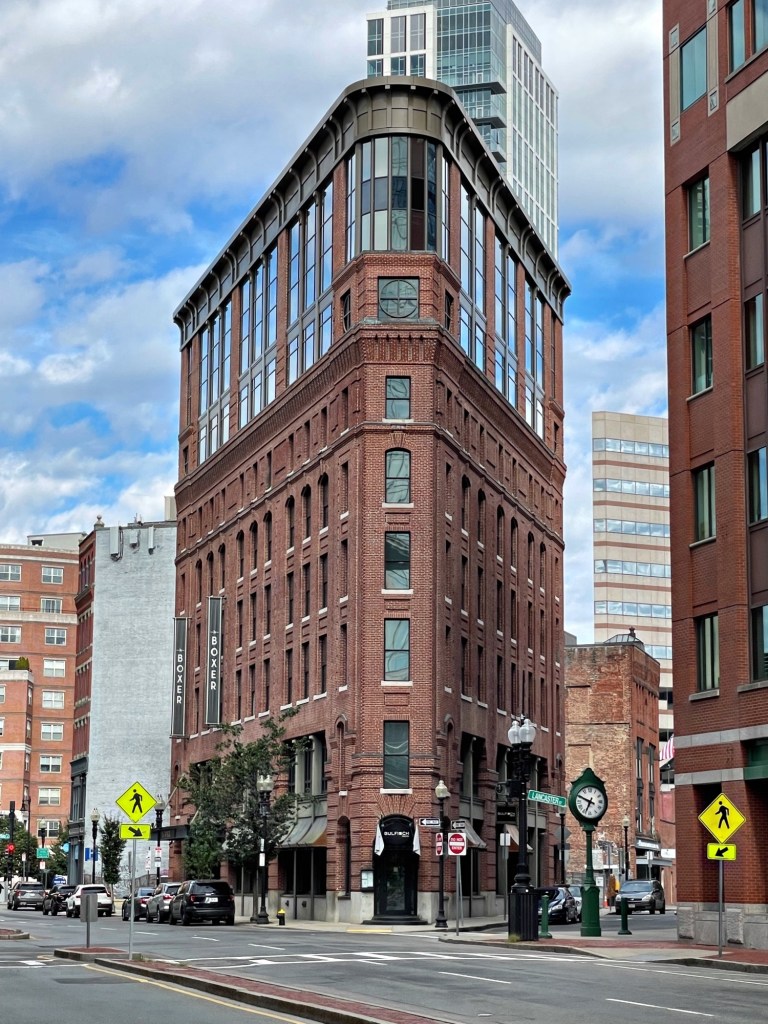
The interesting street-layout of the Bulfinch Triangle area of Boston created some oddly shaped triangular building lots which for decades, saw only small, modest wood-frame structures built upon them. By 1900, Boston’s own Flatiron Building (built two years before New York’s more iconic example) was constructed on this site and it has been an icon ever since. The structure was built by ownerCharles Pelham Curtis III (1860-1948), who was born in Boston and graduated from Harvard Law School and became a police commissioner and attorney in the city before moving into real estate development. He hired architect Stephen Codman to design this commercial block, which was rented out to local businesses and professional offices. The building has been home to a hotel for a number of decades, with a major renovation undertaken beginning in 2000, 100 years after the building was constructed. Three floors were added to the top of the original six-story, which are Modernistic in design with large expanses of windows within three center bays that align with the bays of the original building and which are defined by brick piers. The hotel today, The Boxer Hotel, perfectly blends the history of the building with modernity and style. What a gem of a building!
Who doesn’t love a good flatiron building?! This charming three-story with Mansard roof building is located in the Bulfinch Triangle district of Boston. The triangular-shaped building was built around 1860 as an apothecary shop for Dr. Thomas Leighton Jenks (1829-1899), a doctor who was born in Conway, New Hampshire, but left for Boston while still a teenager. When the Mexican-American War broke out in 1846 he enlisted in the Navy, where he served for three years in the hospital ward of the frigate U.S.S. United States. Upon returning from the war, Jenks attended Harvard Medical School, and wrote his thesis on Syphilis. Dr. Jenks apprenticed in a building on this site under Dr. Samuel Trull. He likely redeveloped or modernized the 1850s building, adding the mansard roof by the 1860s. During the Civil War, Dr. Jenks served as a front line surgeon. After returning home, he grew tired of the medical profession, and got involved with local politics. He was elected as an alderman, Massachusetts state representative, and in later years he earned appointments as Chairman of the Boston Board of Police, and Chairman of the Board of Commissioners of Public Institutions. He tragically collapsed and died in 1899 at a Boston courthouse. As a tribute to his birthplace, Dr. Jenks made a provision in his will for the funds necessary to build a public library in Conway, New Hampshire, which is still in use today. Somehow, the old Dr. Jenks Apothecary Shop has survived all this time as the city grows and changes all around it. The building saw life later as a restaurant and offices.
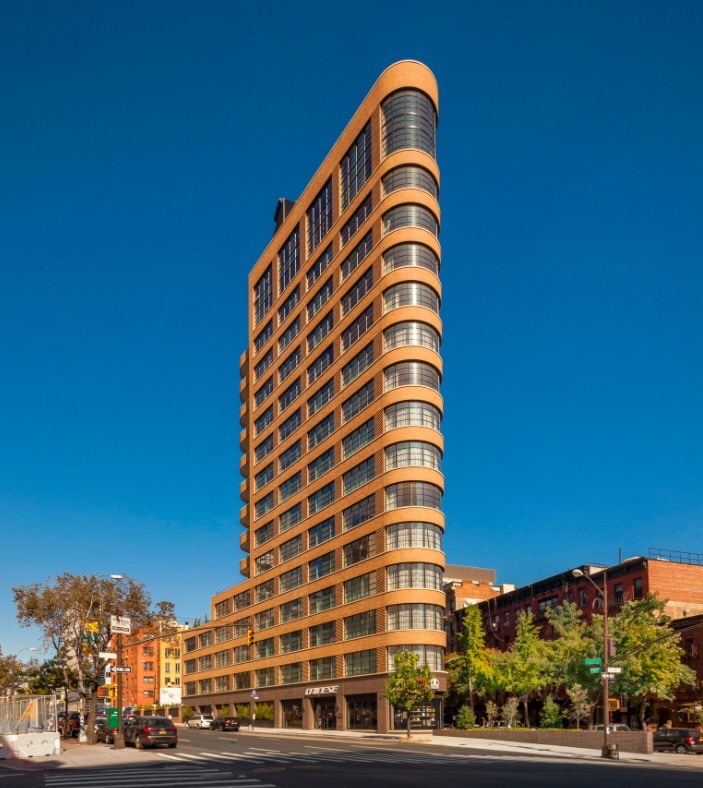
The Flatiron Building in New York is an excellent example of how New Yorkers maximize any piece of land, no matter how small or what shape, to generate an amazing architectural statement. This skinny lot was previously home to a one-story car wash, serving as an unacceptable entry into the SoHo neighborhood. The tight wedge-shaped lot was envisioned for a higher use and Tamarkin Co. Architects developed one of my favorite recent projects in the city, 10 Sullivan. The innovative design gives me serious Art Moderne vibes with the curving forms and strong horizontal lines. The use of brick creates a feeling of warmth and blends the modern building in with the surrounding historic structures nearby.
The 22-story Flatiron Building in New York is easily one of the most recognizable and iconic buildings in the world. Built in 1902, the building replaced a collection of smaller commercial buildings on one of the most visible lots in this section of the city, thanks to the convergence of 5th Avenue and Broadway at Madison Square Park. The lot was developed by Harry S. Black, President of the Fuller Company, a general contracting company whose specialty was the construction of skyscrapers for their own offices. The company hired Chicago architect Daniel Burnham, who was known throughout the world for his skyscraper designs. Upon completion after just 9 months of construction, the building was called the “Fuller Building”, which was quickly overtaken by the public who named the building the “Flatiron” thanks to its footprint resembling an old flat iron. The building was recently vacant and has been undergoing a complete update inside with sprinkler systems, new floorplans and HVAC.
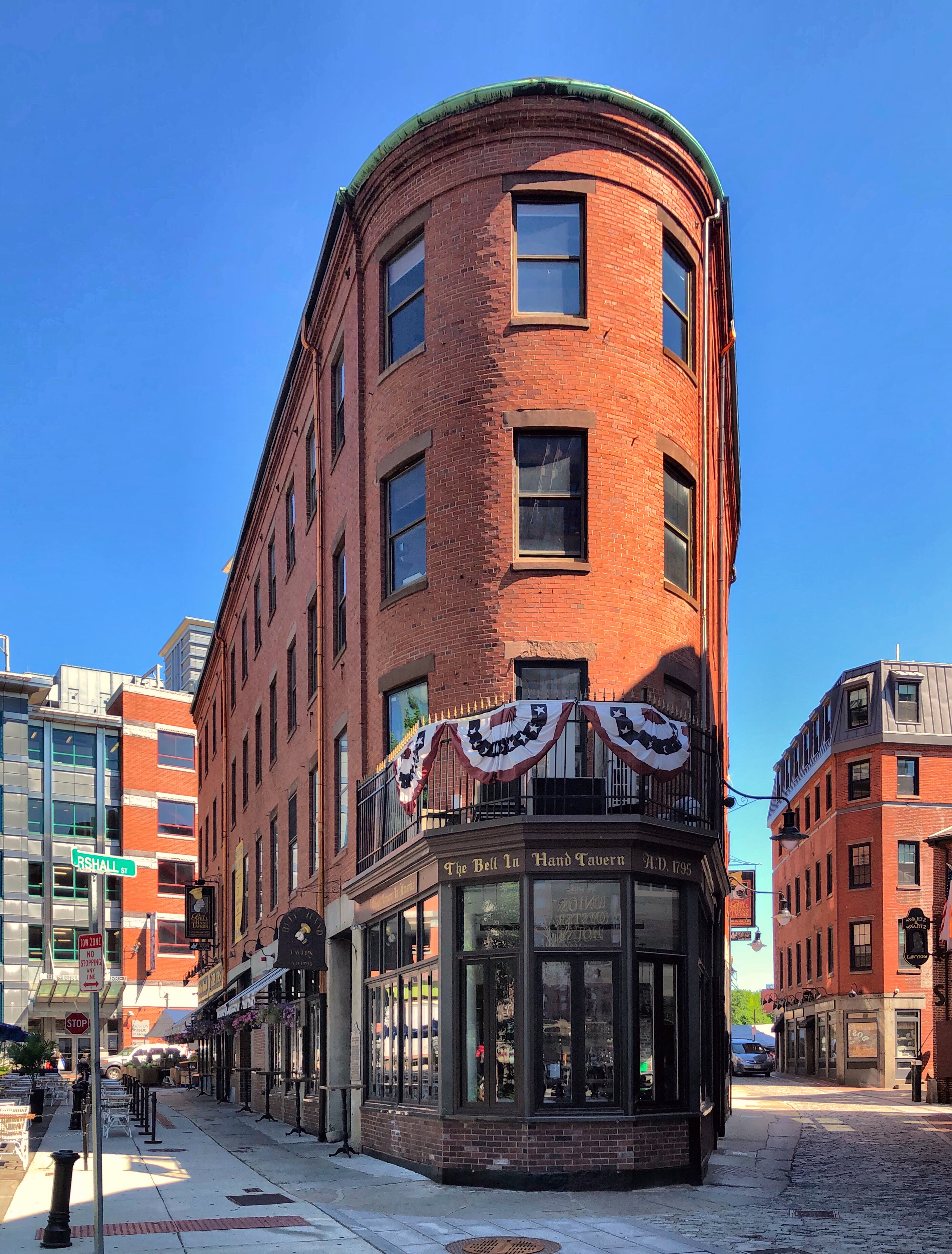
Located in the Blackstone Block of Downtown Boston, this flatiron building encloses Marshall Street on the Freedom Trail, creating a tight, pedestrian-oriented street that once covered old Boston. The Union Block (c.1842) is a Greek Revival commercial block which typifies this network of short, narrow streets which somehow survived Urban Renewal and the coming of the highway in Boston. The longest running occupant of the building was Ward & Waldron Paper Hangings, which from my understanding, made wallpaper for the estates of Beacon Hill which were being built on the other side of town. After successive ownership, atlas maps show the ownership of the building in 1888 conveyed to Massachusetts General Hospital, which still held title to it past 1938. The building is now home to Bell in Hand, an iconic local pub that was founded in 1795 at another location.


 Buildings of New England