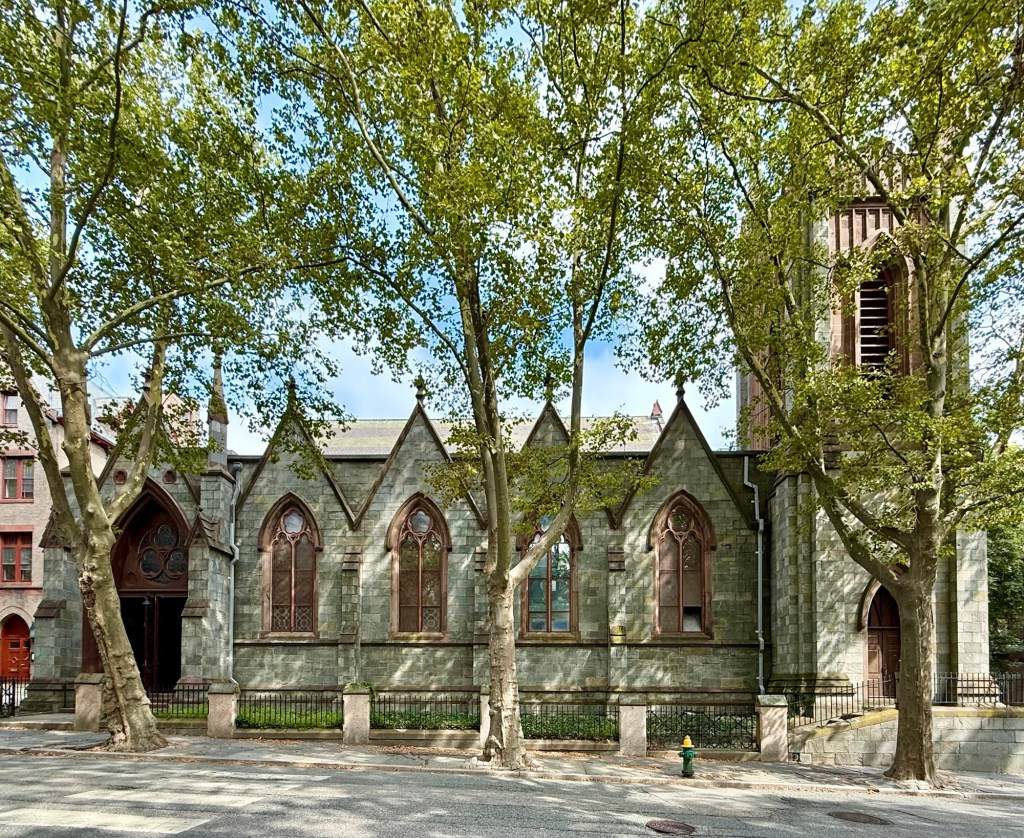
St. Stephen’s Episcopal Church // 1860

St. Stephen’s Episcopal Church is a landmark Gothic Revival church in Providence, Rhode Island, built in 1860 from plans by famed architect, Richard Upjohn. Constructed of gray stone with brownstone trim, the church is unique for its siting with the nave/long-side parallel to the street. The church was built for the local congregation, who two decades earlier, constructed the original St. Stephen’s Church on Benefit Street (now home to the Barker Playhouse), but sought to relocate to a more central location and in a more substantial building. With its entrance at one end and tower at the other, the nave is lined with a row of four gabled bays with lancet windows connecting the two. The church was modified over time, with Upjohn’s original intention for a 180-foot stone tower never undertaken, it would be capped by a copper-clad conical spire in 1900 from architects, Hoppin and Ely. The chancel was remodeled in 1882 by Henry Vaughan, and the Tudor Revival style Guild House immediately west of the church was built in the late 1890s Martin & Hall, architects. The congregation continues to this day, and preserves this significant building fitting of an English estate.
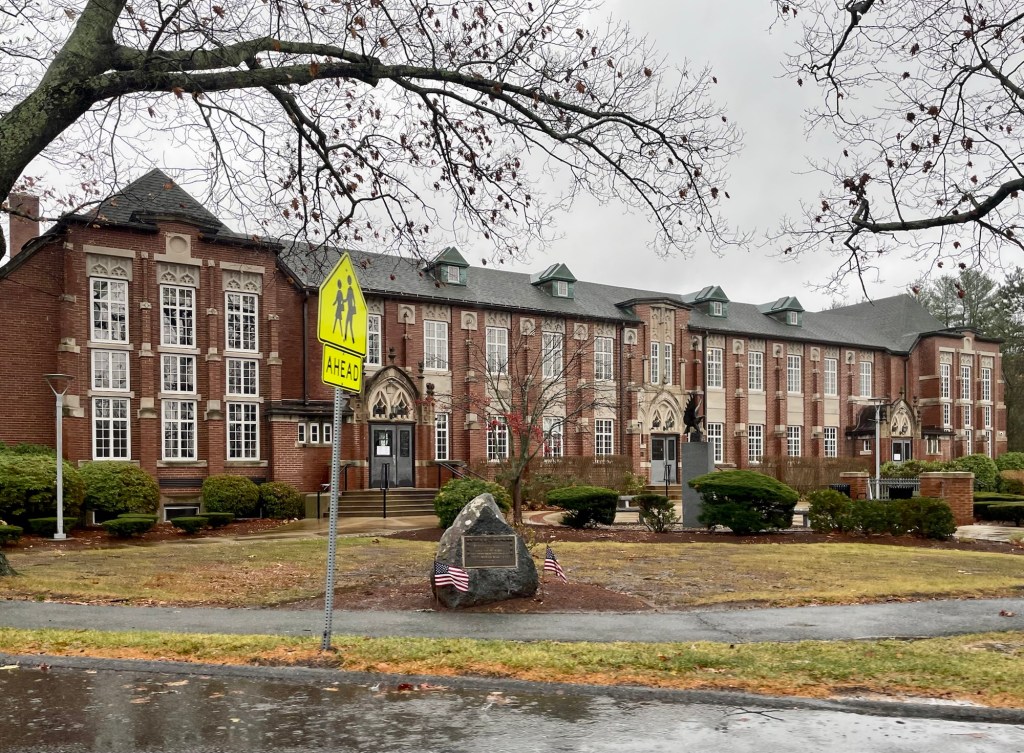
St. John’s Memorial Dining Hall // 1925

Built in 1925 as the cafeteria for St. John’s Prep School in Danvers, Massachusetts, this handsome brick building is sited across Summer Street from Porphyry and Xavier halls, both built decades earlier. The structure was designed by architect, Matthew Sullivan, a member of the notable firm, Maginnis, Walsh & Sullivan, who specialized in ecclesiastical design in the Boston area. The firm disbanded in 1907 with Sullivan creating his own practice, where he won the commission for this building years later. The cafeteria is Neo-Gothic in style with Gothic tracery, lancet arches, buttresses and pinnacles at the entrances. This is a really underrated and stunning structure. I am glad to see it so well-preserved 100 years later!

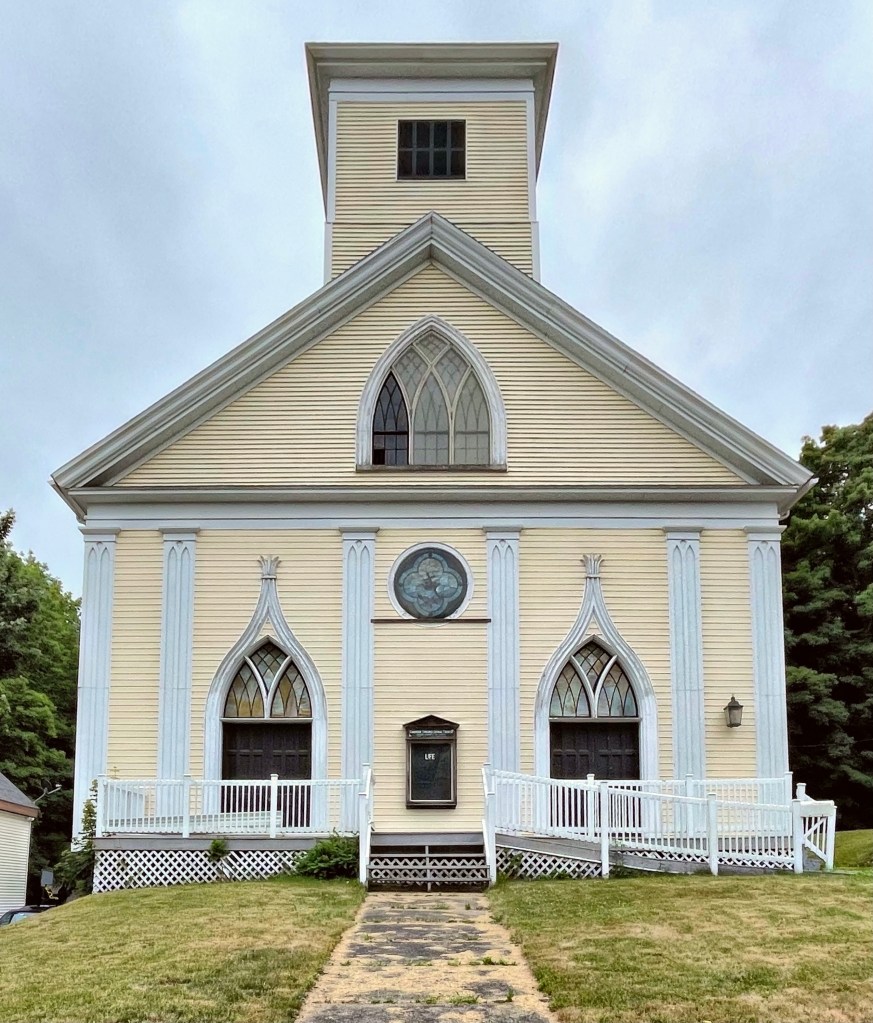
East Congregational Society Chapel // 1881

I love exploring old industrial towns. In Ware, Massachusetts, the urban decay of some buildings provides opportunity and potential, but also so much negative thoughts for long-time residents as it reminds some of the town’s once thriving past. Just off Ware’s Main Street, I spotted this former chapel and had to learn more. This structure was built in 1881 as the second East Congregational Church chapel. The congregation was largely made up of immigrant laborers who worked in the town’s mills. This chapel replaced a Greek Revival building erected in 1857 on Water (Pulaski) Street that was later remodeled by the town into a fire station. That building was destroyed during the Hurricane of 1938. This Victorian Gothic chapel was designed by architect Eugene C. Gardner of Springfield, who was very busy in central/western Massachusetts. The chapel long was used by church members for spillover events and social gatherings. Later, the building became the office of the Ware River News.

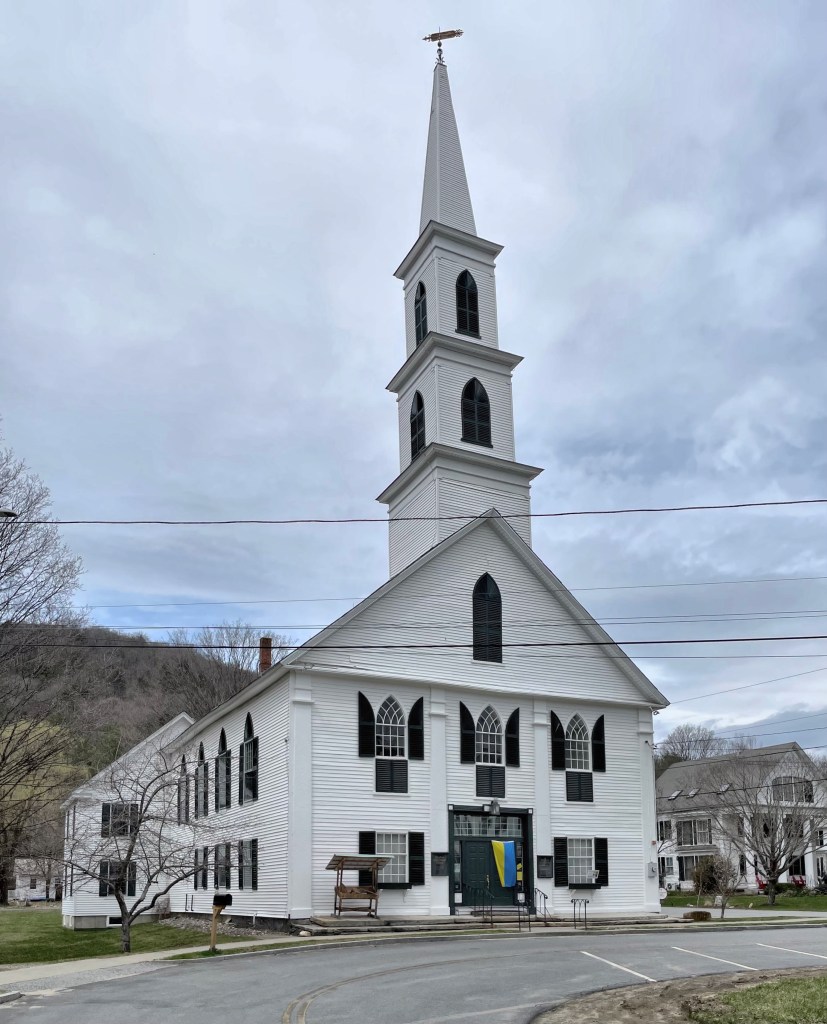
Newfane Congregational Church // 1839

The town of Newfane, Vermont was chartered on June 19, 1753, by Governor Benning Wentworth, who named it Fane after John Fane, the 7th Earl of Westmoreland. But hostilities during the French and Indian War prevented its settlement, and because a first town meeting was not held within the required five years, the charter was annulled. From this, Wentworth issued an entirely new charter in 1761, as New Fane. The town was eventually settled in 1766 from families that moved there from Worcester County, Massachusetts. Newfane became the shire town of the county before 1812 and county buildings were constructed. The village’s location up the hill was not ideal and was difficult to access in the winter, so many new buildings were constructed on the flat of town. The village has retained its rural character, but packs a punch in terms of architecture, especially for a town of under 2,000 people. One of the landmarks in town is the Newfane Congregational Church, constructed in 1839 in the Gothic Revival style. The large lancet (pointed arch) windows with corresponding shutters and spire are eye-catching.

Church of the Holy Redeemer // 1907

Built to replace the former St. Sylvia’s Catholic Church (1881-1909), the Church of the Holy Redeemer in Bar Harbor stands as one of the more imposing religious buildings in town. The new church was envisioned by Rev. James O’Brien, who wanted a larger church structure closer to downtown Bar Harbor than the current St. Sylvia’s. The Neo-Gothic stone church was designed by Bangor architect Victor Hodgins, and was constructed from granite blocks quarried from Washington County, Maine. Inside, massive trusses from felled cyprus trees nearby support the roof and stone walls. Gorgeous stained glass windows line the walls which flood the interior with color.

Gardiner Universalist Church // 1843

This stunning Gothic Revival church was built in 1843, on the site of the blockhouse, erected 80 years prior for the settlers of the area from native attack. In the 17th and 18th centuries, many rural parts of New England had blockhouses erected to allow the settlers a defensive fort from attack. The blockhouses were often garrisoned wooden structures with small windows on all sides to allow for gunfire to attackers below. The structure would protect those inside from arrows and melee weapons. This building however, was constructed later for the Universalists, who believed in “universal salvation,” who had been meeting since 1821 in a schoolhouse beside the town common. The church, in its original state with its steeple and clock, was an extremely sophisticated example in wood of the Gothic Revival style with its pinnacles, lancet windows and pilasters. Sadly, the steeple and clock were removed in the early 1920’s for safety reasons as the structure could not support it without significant engineering. The church and congregation changed to the United Church of Christ-Congregational denomination in 1964. After that, the building was occupied by a brewery (believe it or not), before being reverted back to a church by the current congregation.

Trinity Methodist Church // 1878

Located on Trinity Park in Wesleyan Grove (aka the Martha’s Vineyard Camp Meeting Association), this 1878 church served the year round Methodist community in Oak Bluffs. The Trinity Methodist Church is a towered, Victorian Gothic structure of some distinction. Edward M. Hyde, a Methodist minister who had trained in architecture and art, designed it. The property that the church and Parish House sit on belongs to the Association, but the buildings are maintained by the congregation. Interestingly, should the congregation disband, the buildings would return to the Association.