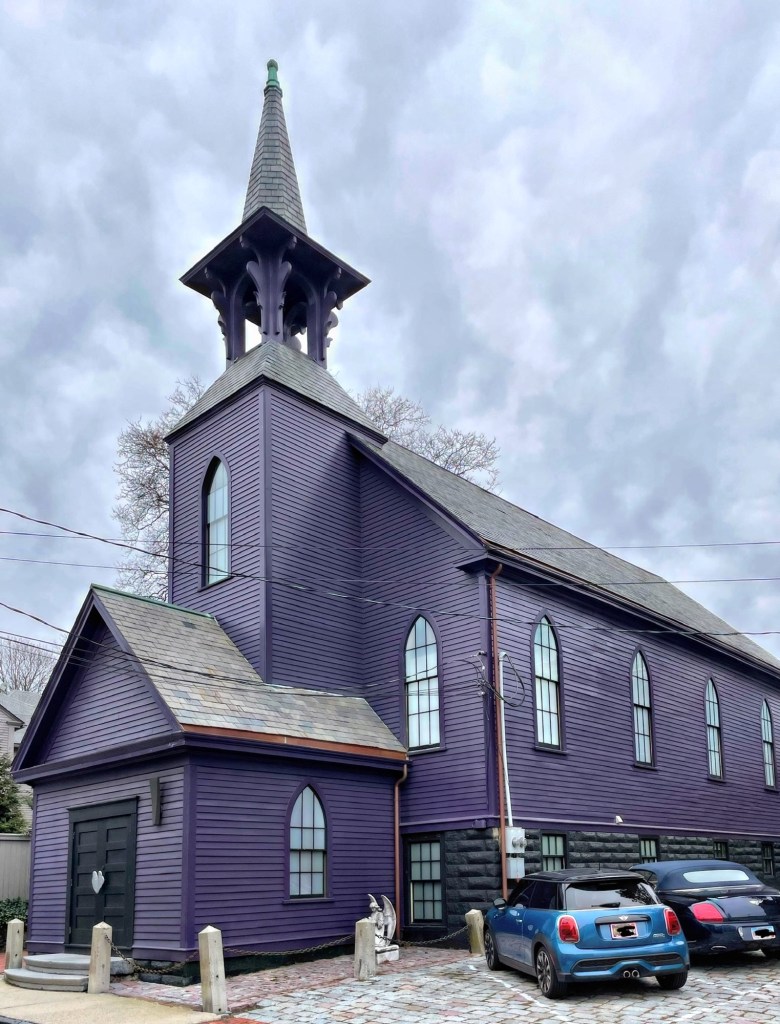
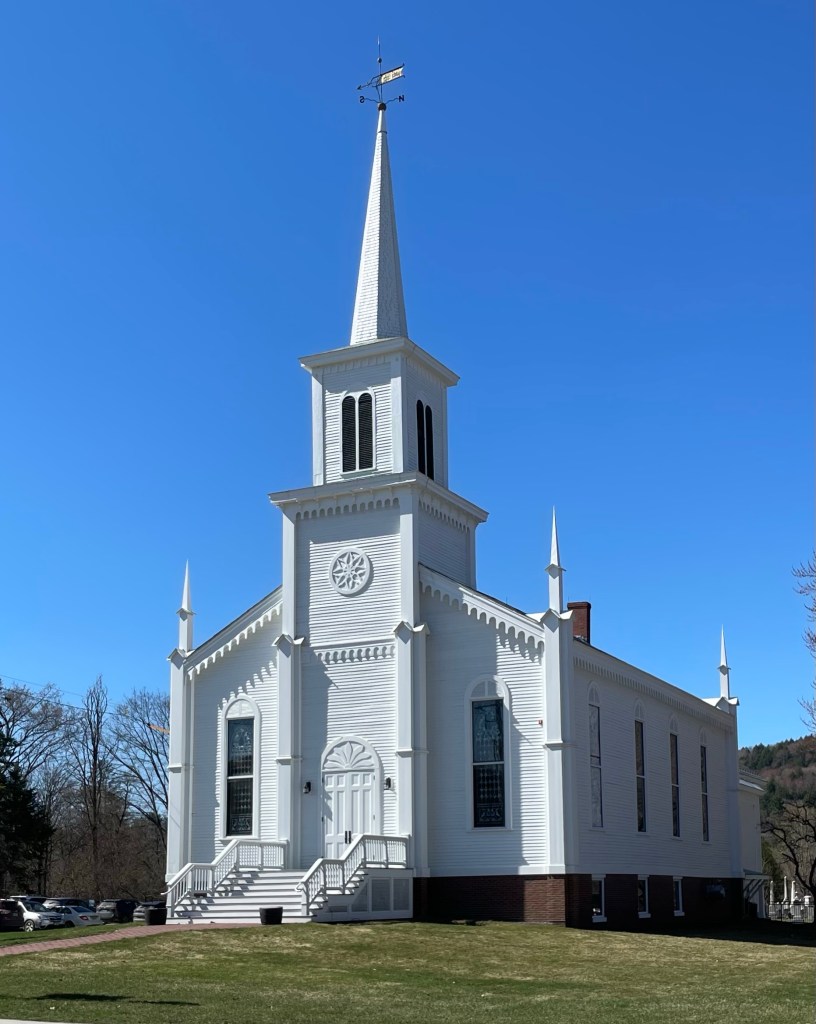
Troy Meeting House // 1840

Located in the rural town of Troy, Maine, the 1840 Troy Meeting House is a classic example of a type of meeting house or church that was built by some rural communities in the state in the decades prior to the Civil War. Built as a Union Church, without a specific denomination, the building served the members of the Troy Meeting House Society, and by extension as the only church in the town. The building features both Greek Revival and Gothic Revival stylistic details on the exterior and its design is similar to others in the surrounding towns, likely being from the same builder.

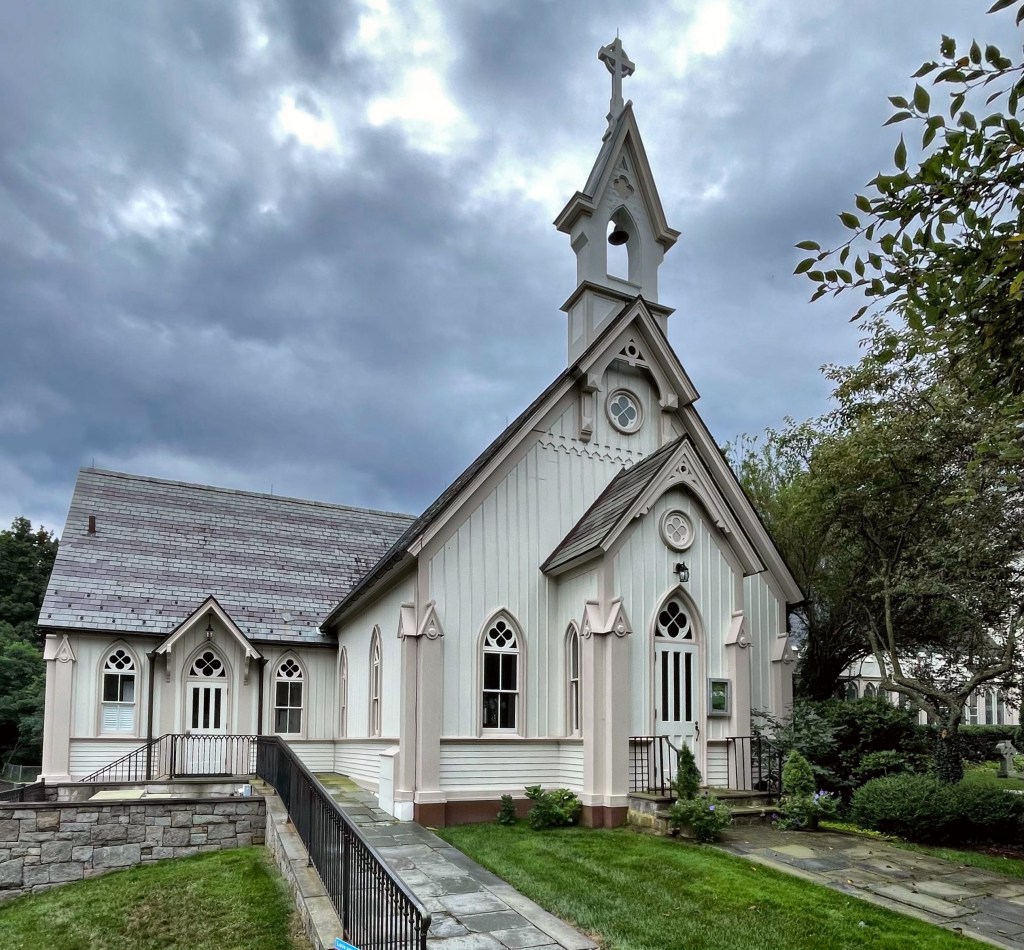
Trinity Parish Chapel, Southport // 1872

The Trinity Episcopal Church in the Southport section of Fairfield, Connecticut was established in 1725. As the parish and town grew, a large and architecturally stunning church was erected in 1862, and housed services for some of the wealthiest and well-connected residents of Connecticut. During Rev. Edward Wells’ rectorship, it was decided that a parish school was needed, and as an ardent believer in religious training, he started planning for a new chapel for use as a school. The Trinity Parish Chapel was designed by Southport architects Disbrow & Taylor and erected 1871-72. This Gothic Revival building is an excellent example of the rural church architecture which enjoyed widespread popularity throughout the country during the mid 19th century. Designed on a simple rectangular and decorative wooden bell cote, the small chapel’s board-and-batten siding and modest though strong Gothic details create a composition which compliments the more grand church just steps away. The chapel was originally built as a free-standing building, but was connected by a large, brick addition in the 20th century.

United Church of Christ, Waterbury // 1824

As soon as settlers arrived in Waterbury, they began worshipping their respective religions, largely out of private homes. The town’s meeting house was occupied by some congregations, but there was no real union church for the many growing congregations. This edifice was originally erected in 1824 as a united Congregational church by local builders, the Carpenter Brothers (how perfect is that?) The church was modernized in about 1860 with Gothic Revival detailing, which included the raising of its foundation, bargeboard, spires, and a new steeple. It was updated later in 1880 with a new chapel and ten years later, with stained glass windows. It remains today as an active church and is in a great state of preservation.

Versailles United Methodist Church // 1876

After the Civil War, the Village of Versailles’ Congregational Church was seeing less attendance and its deathknell was a fire which destroyed the building in 1870. That next year, a vote was taken by members of the Congregational Church as to a preference for their denomination. A majority voted for Methodist Episcopal and asked the New England Conference to appoint a Pastor for the new church. Funds were gathered and this church was opened in 1876, in the Italianate and Victorian Gothic styles. The building sits upon a raised brick foundation with small windows on the facade. In 1887, the Versailles church was linked with Baltic and Greenville (Norwich) the following year.

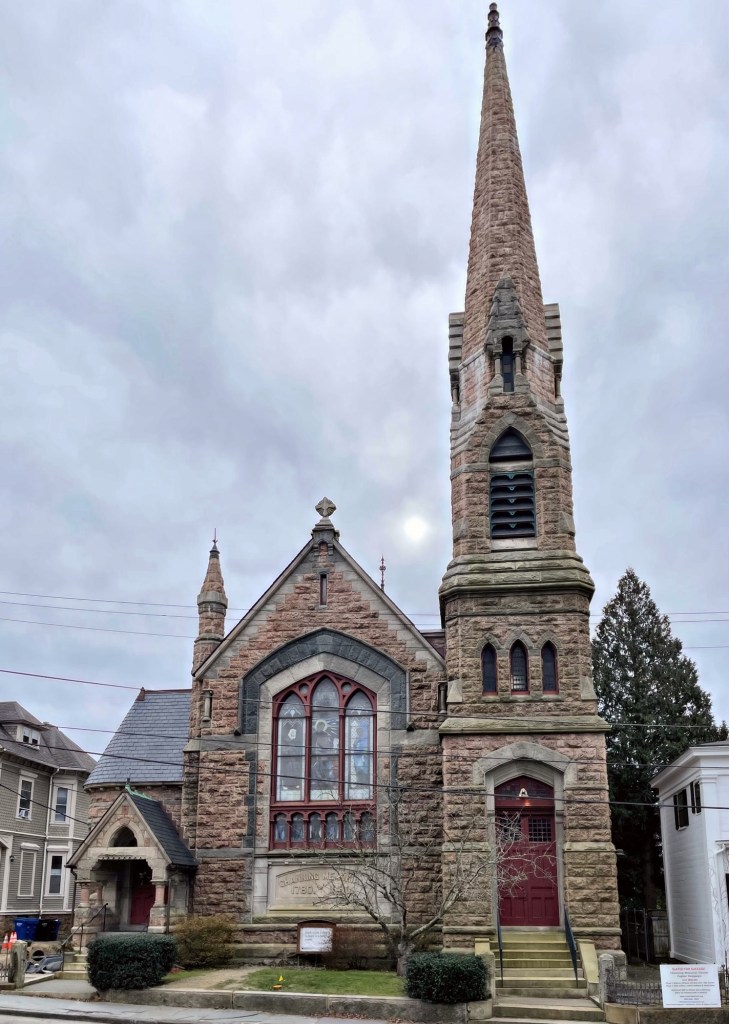
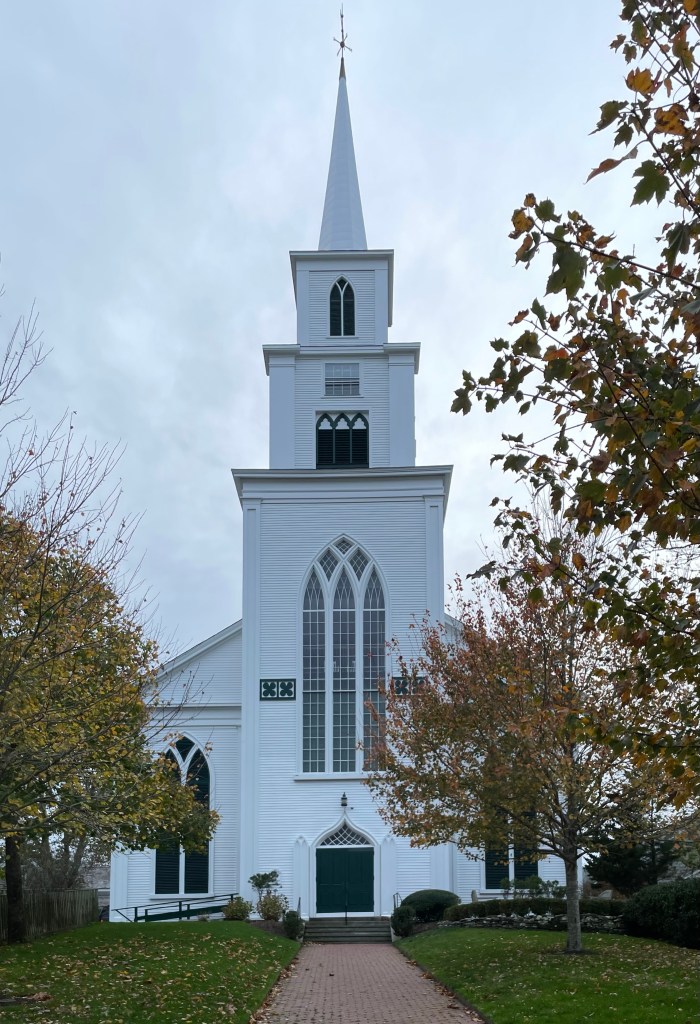
First Congregational Church of Nantucket // 1834

The First Congregational Church is one of Nantucket’s most prominent historic landmarks and is prominently located on a hilltop, being one of the first buildings you’ll see when arriving to the island by ferry. Constructed from a design by Samuel Waldron, a Boston housewright, the present church blends the Greek and Gothic Revival styles elegantly into a single composition. The interior of the church was painted with architectural trompe l’oeil paintings by E.H. Whitaker of Boston in 1852. The steeple was removed in 1849, likely from engineering concerns and high winds on the island. In 1968, the steeple was reconstructed from historic drawings by Philip Graves of Ames & Graves.

Dorset Congregational Church // 1909

Arguably the most high-style building in the quaint village of Dorset, Vermont is the Congregational Church, which appropriately sits on Church Street. The original congregational church in Dorset was located in nearby Maple Hill Cemetery. When the wood structure burned in 1832, an new wooden church was built on this site. The second wooden building burned in 1907, and then this church was built, but of fireproof construction. Jordan Greene, an architect from New York, designed this Neo Gothic Revival style in the historic district. The church was constructed by the contracting firm of O. W. Norcross, partner in the Norcross-West Marble Company, which donated the building stone from its South Dorset quarry. The design is dominated by a massive square central tower that ascends its facade and is capped by pinnacles. Behind the tower, the gable-roofed church is built of rough-faced Dorset marble laid in patterned coursed ashlar and trimmed with dressed stone. How many other marble churches can you think of?

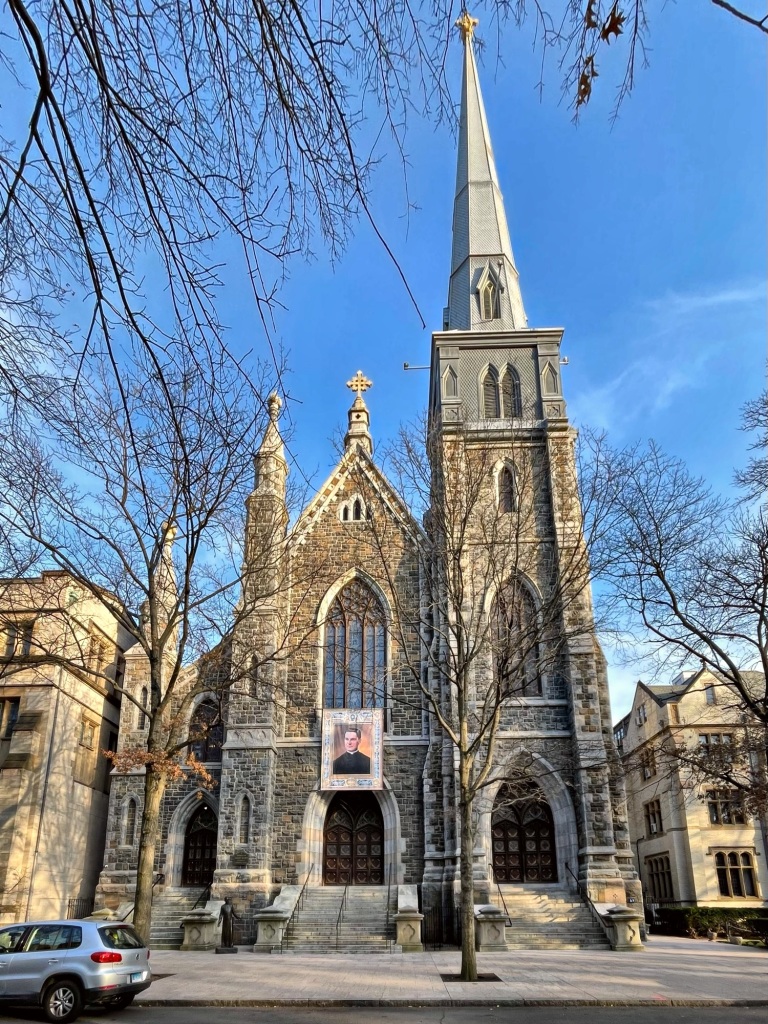
Immaculate Conception Catholic Church // 1896

The Immaculate Conception Roman Catholic Church in Everett, Massachusetts, is an imposing Gothic Revival building, that shows how the church spared no expense to build imposing and awe-inspiring edifices all over New England. Constructed of red brick with Longmeadow brownstone trim, the church was designed by preeminent Catholic Church architect Patrick W. Ford and the cornerstone was laid in 1896. Ford was born in Ireland and in 1872, he moved to Boston and opened his own practice. He was widely recognized as an authority on church architecture and his practice focused primarily on designing churches and institutional buildings for the Roman Catholic Church in New England. Ford died suddenly at age 52 in August 1900. Due to a lack of funds, the church was not completed until 1908, so Ford did not see this church completed in his lifetime. The work was completed by architects Reid & McAlpine and is stunning with its square corner tower topped by a pyramidal spire with smaller pinnacles marking the corners of the tower. The projecting entry porch has three, pointed arch openings and is topped by crenellation. The congregation appears pretty active to this day.

Newfane Congregational Church // 1839

The town of Newfane, Vermont was chartered on June 19, 1753, by Governor Benning Wentworth, who named it Fane after John Fane, the 7th Earl of Westmoreland. But hostilities during the French and Indian War prevented its settlement, and because a first town meeting was not held within the required five years, the charter was annulled. From this, Wentworth issued an entirely new charter in 1761, as New Fane. The town was eventually settled in 1766 from families that moved there from Worcester County, Massachusetts. Newfane became the shire town of the county before 1812 and county buildings were constructed. The village’s location up the hill was not ideal and was difficult to access in the winter, so many new buildings were constructed on the flat of town. The village has retained its rural character, but packs a punch in terms of architecture, especially for a town of under 2,000 people. One of the landmarks in town is the Newfane Congregational Church, constructed in 1839 in the Gothic Revival style. The large lancet (pointed arch) windows with corresponding shutters and spire are eye-catching.

Brookline Baptist Church // 1836

Brookline, Vermont is home to just 540 people but has one of the most beautiful brick churches in the state! The Brookline Baptist Church sits along a quiet road in town and is an excellent example of vernacular Gothic Revival architecture in the Vermont. Brookline’s first organized church congregation were Baptists, who established a formal organization in 1785 out of local homes and barns. By 1836, enough funds were gathered to erect a church, but of brick, a more substantial building material than traditional wood-frame buildings. The church remained active throughout the nineteenth century, and the vestry addition was constructed off the rear in 1895 to provide space for community gatherings and meals. Dwindling membership led the church to become mostly used for weddings, funerals, graduation ceremonies, and craft fairs by the second half of the 20th century. The Town of Brookline presently owns the significant structure, and while preserved, it does not appear to get much use.

Church of the Holy Redeemer // 1907

Built to replace the former St. Sylvia’s Catholic Church (1881-1909), the Church of the Holy Redeemer in Bar Harbor stands as one of the more imposing religious buildings in town. The new church was envisioned by Rev. James O’Brien, who wanted a larger church structure closer to downtown Bar Harbor than the current St. Sylvia’s. The Neo-Gothic stone church was designed by Bangor architect Victor Hodgins, and was constructed from granite blocks quarried from Washington County, Maine. Inside, massive trusses from felled cyprus trees nearby support the roof and stone walls. Gorgeous stained glass windows line the walls which flood the interior with color.