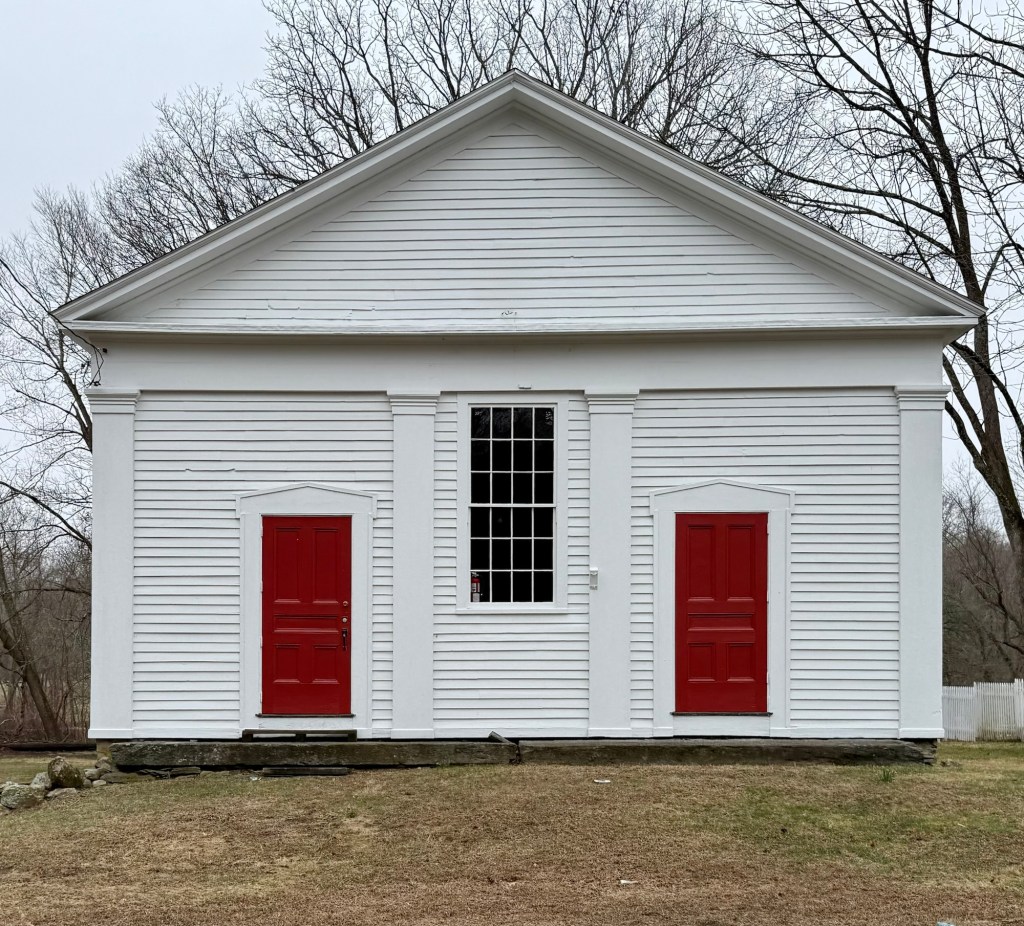
Scotland Universalist Church – Shetucket Grange Hall // 1843

This charming, Greek Revival style building near the town green in Scotland, Connecticut, was built in 1843 as a Universalist Church for area residents who split off from more Congregationalist beliefs. By the end of the 19th century, populations shifted heavily to industrial centers where work was more plentiful, the church appears to have lost much of its membership and the building became a local grange hall. The Shetucket Grange was organized in June 1887, and was a meeting place for local farmers and their families to promote the economic and political well-being of the community and agricultural pursuits. Today, the building is owned by the town, but it’s use is unclear. Greek Revival in style, the building retains much of its original architecture, from its simple form, facade with two entrances flanking a central hung window, and pilasters framing the bays.
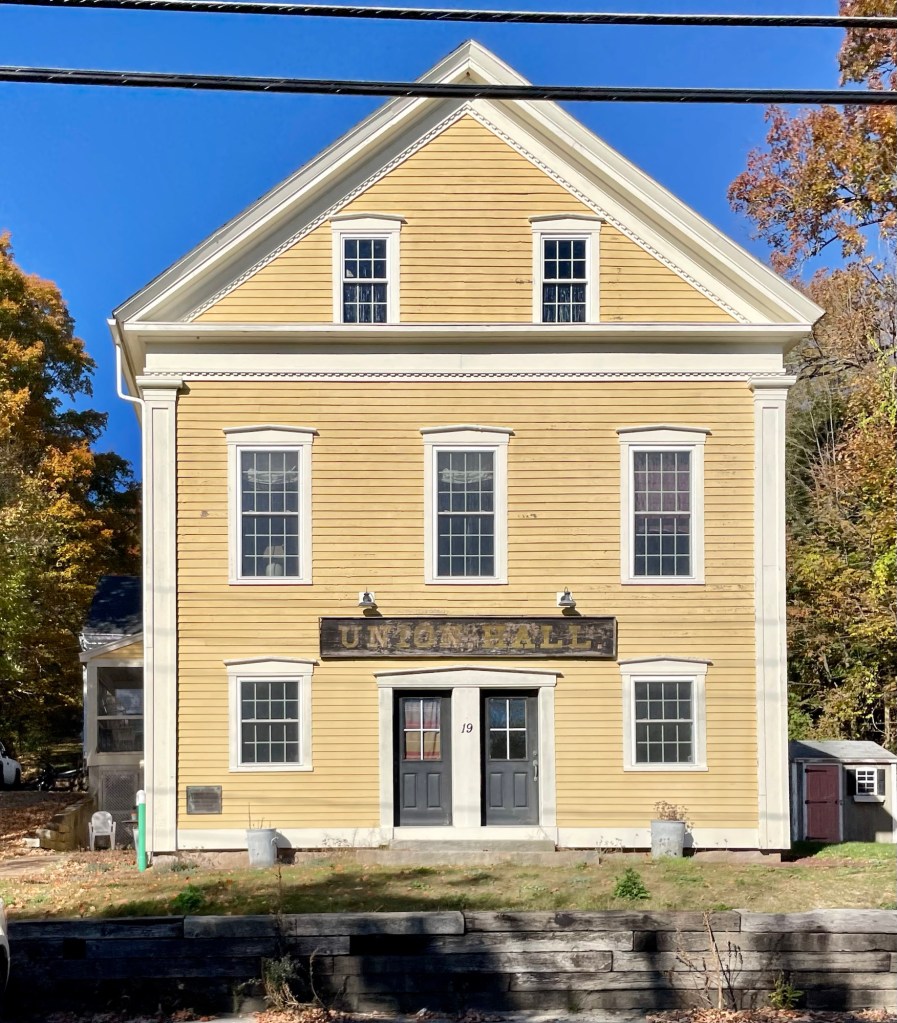
New Ipswich Union Hall // c.1845

This large, wood-frame building on Main Street in New Ipswich, New Hampshire, dates to the 1840s and has long served as a meeting place for local social groups and organizations. The building is a vernacular example of the Greek Revival style with corner pilasters, a dentiled entablature and slightly pedimented lintels over the windows and paired doors. The building was used by various groups including the local chapter of the International Order of Odd Fellows (IOOF), the Women’s Relief Corps, and as the Watatic Grange Hall.

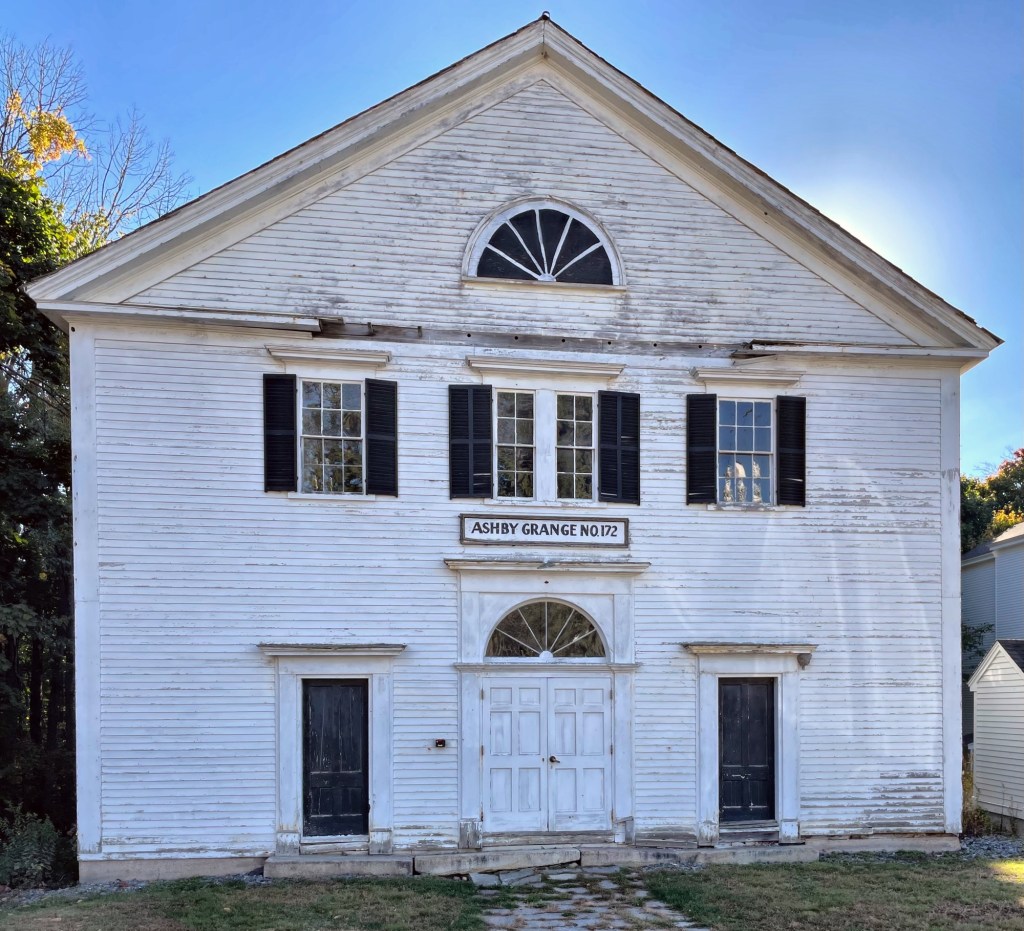
Old Ashby Academy – Ashby Grange Hall // 1820

In 1819, less than a decade after the First Parish Church in Ashby, Massachusetts was built, a group of parishioners split to form their own congregation, erecting this Federal style building as its new house of worship a year later. The congregation grew and eventually would build a new church, the Ashby Congregational Church, in 1835. The building was soon after, sold to a group of citizens interested in starting an academy. In 1836 they opened Ashby Academy, which offered education beyond the eighth grade for those who could afford it. Ashby Academy closed in 1860 and the Town of Ashby purchased the building in 1864 for a high school and town offices, a use that remained until a new school was built in 1902. Since the 1970s, the building has been occupied as a local grange hall, and maintained by a local group, the Friends of the Ashby Grange Hall. The building is a significant, transitional Federal/Greek Revival style building in town with its pediment and elliptical windows.

Mount Cutler Grange Hall // 1875

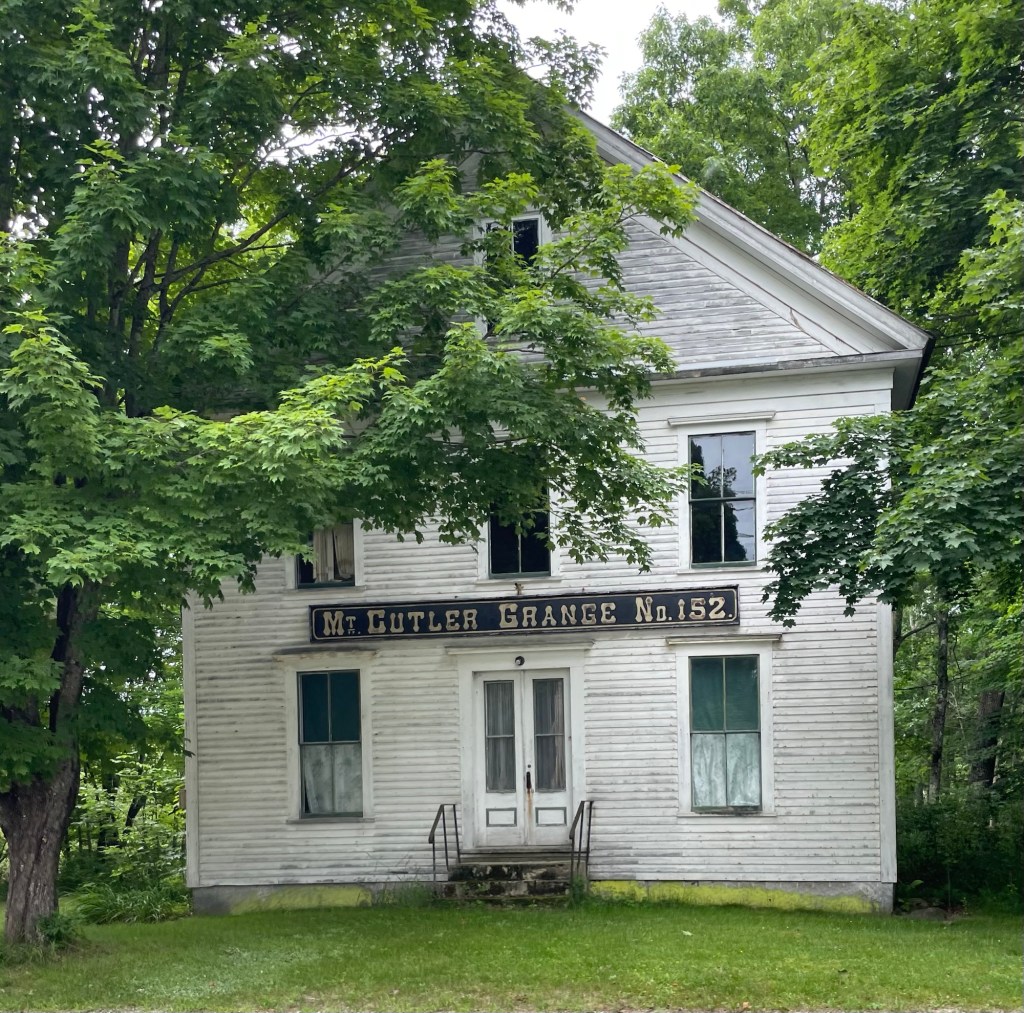
The two-and-a-half story Mount Cutler Grange Hall in Hiram, Maine, is a plain but important vernacular structure near the western end of the town’s Main Street. Originally organized in 1875 by local farmers, the local grange was able to dedicate its present building in late December of that year. Attributed to local builder James Lot Hill, the clapboard-covered frame building has a three-bay facade and retains its original windows. Once the site of grange store, the well-preserved structure still displays a fine late-nineteenth century sign above its first story. Little changed over the years, the Mount Cutler Grange Hall remains an important part of Hiram’s social fabric, but appears vacant or largely unused. Hopefully some life can be brought back to this significant building (and other abandoned Grange Halls in New England).

Whitefield Union Hall // 1900

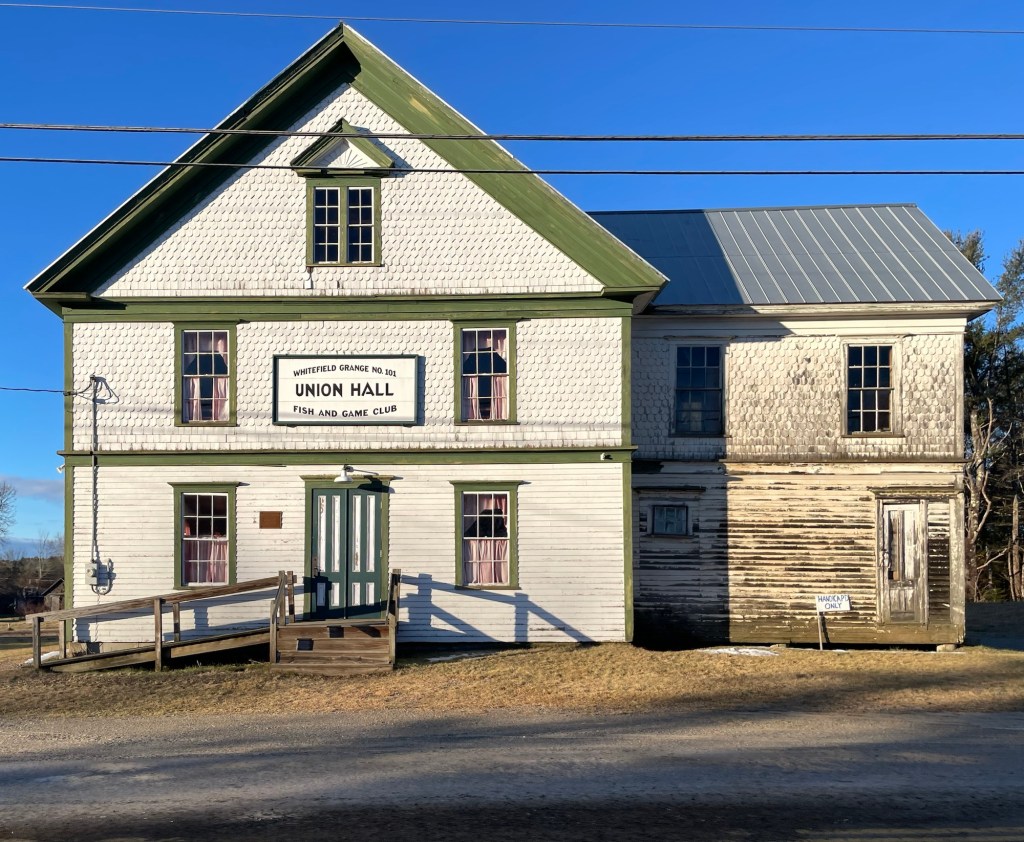
Finding a Grange Hall in Maine are almost as common as finding an old church, they are everywhere! Located the next town over from Jefferson, Maine’s Willow Grange Hall, the town of Whitefield has an equally charming example. The National Grange of the Order of Patrons of Husbandry was established in 1867 to advance methods of agriculture, as well as to promote the social and economic needs of farmers in the United States. Communities all over built grange halls where farmers and residents could meet and discuss prices, trade, and share tips for larger crop yields. The Whitefield Union Hall was built in 1900, primarily under the auspices of the Whitefield Fish and Game Club, but with design input from the local Grange chapter, which contributed funds to its construction and was also a tenant. It was until 1919 the only public hall with a stage in southern Whitefield, playing host to dances, meetings of fraternal and social organizations, and other community events. The hall was managed by an association of the two organizations until 1947, and by the Fish and Game Club after the Grange chapter merged with another in 1969. The club closed down in 1974, and the hall is now managed by a union consortium of village community groups. The building is listed on the National Register of Historic Places.

Jefferson Willow Grange Hall // c.1901

Grange Halls have long been vitally important buildings in agricultural towns all over New England and are becoming threatened due to shifting development patterns and dwindling membership. The National Grange of the Order of Patrons of Husbandry was established in 1867 to advance methods of agriculture, as well as to promote the social and economic needs of farmers in the United States. Communities all over built grange halls where farmers and residents could meet and discuss prices, trade, and share tips for larger crop yields. The Willow Grange Hall in Jefferson, Maine was built in 1901 and is a vernacular building which remains a community meeting hall to this day.

Union Hall // 1832

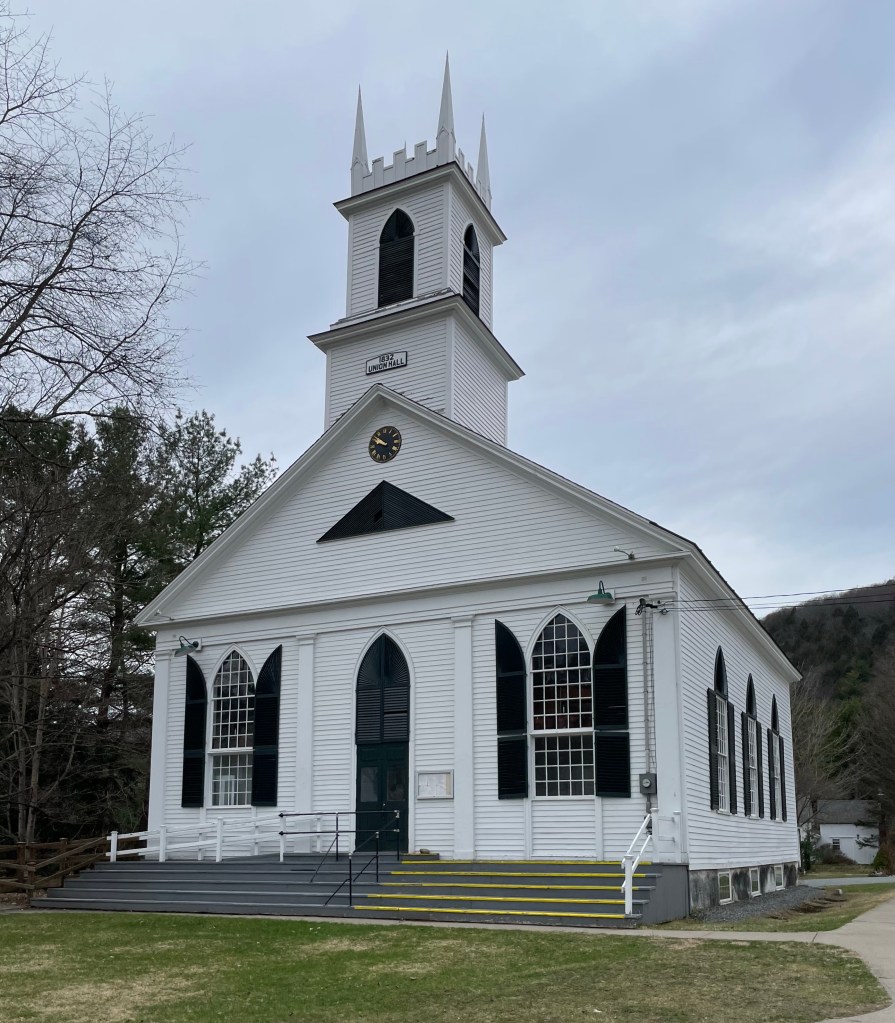
When the village of Newfane, Vermont moved down the hill to the flat of town, new buildings were constructed for county and religious uses almost immediately. The local Baptists, Congregationalists, and Universalists together pooled their funds together to erect this church building, which became known as Union Hall as they organized together to construct it. The design follows Gothic Revival principles with the lancet windows and crenelated tower cresting. The design features were later expanded into the larger Congregational church constructed years later when that group built their own church on a nearby site (featured in the last post). The “Union” did not last long as all the congregations built new structures. This building was vacant for years and was later converted to a Grange Hall and town meetings were held in the structure.

Evening Star Grange Hall // c.1874

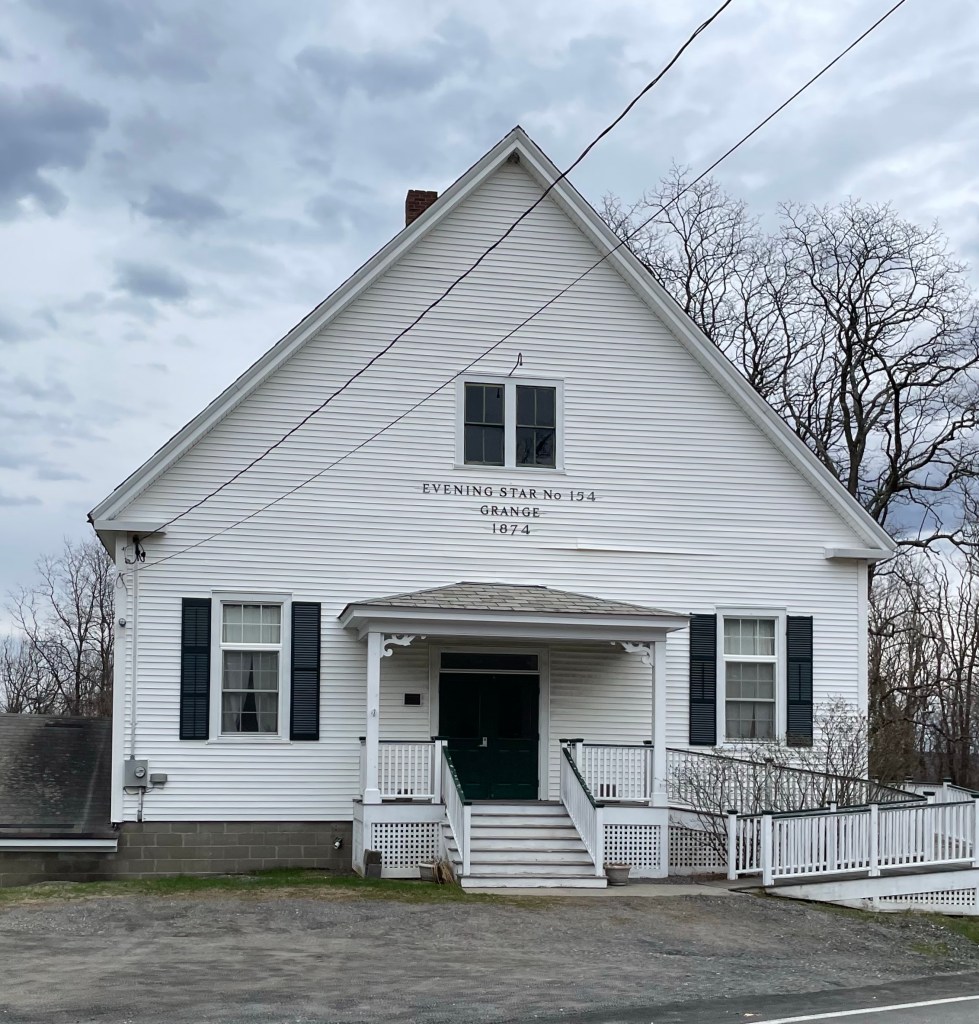
Rural New England towns like Dummerston, Vermont long relied on agriculture as a means of life. From this, local farmers and their families would organize in regional Grange Halls through the The National Grange of the Order of Patrons of Husbandry, an agricultural advocacy group. Many rural communities in the United States still have a Grange Hall and local Granges still serve as a center of rural life for many farming communities. The local Evening Star Grange was organized in Dummerston Center in 1874 with 32 members, growing by the end of the 19th century. This building would have held meetings where farmers could share trade secrets, make deals, and “talk shop” regarding farm life. Such buildings are significant as community centers for agricultural communities and should be preserved for future generations.

Bear Mountain Grange Hall // 1844

This large wooden building in Waterford, Maine, looks much like a church, because it was built as one in 1844! The building was constructed as a Universalist Church just over a decade after a local Universalist Society was formed in the area in 1830. In the subsequent decades of the church’s founding, dwindling membership by the time of the Civil War required the group to sell the building to local businessmen. The town rented a space in the building which used a floor as a school, after an additional floor was added to the base, giving the building the vertical appearance it has today. in 1896, the Bear Mountain Grange purchased the building as a meeting hall, allowing the school to operate in the building (an arrangement that lasted until 1949)! The building has seen better days, but besides the chipping paint and some wood-rot, it retains the original windows and has been relatively un-altered!

East Freetown Grange // 1916

The East Freetown Grange is a community organization founded in 1912, as a meeting place for the local chapter of The National Grange of the Order of Patrons of Husbandry. Granges have been the heart of rural American communities for generations. The home of local chapters of the Order of Patrons of Husbandry, Grange Halls are where farmers have traditionally gathered to learn new agricultural practices, develop strategic business partnerships, and barter for goods and services. Grange Halls also serve as a gathering place for community celebrations and annual agricultural fairs. These social halls can be found in agricultural towns and villages all over New England, and historically have been as important (or more) to farming communities as churches in those areas. Within years of the East Freetown forming an organization, they gathered enough funding to erect this Arts and Crafts style building, with rustic fieldstone piers, likely from stone pulled off farmland nearby. The hall is still used today for everything from agriculture fairs to Girl Scout meetings!