Bailey’s Mills // 1837

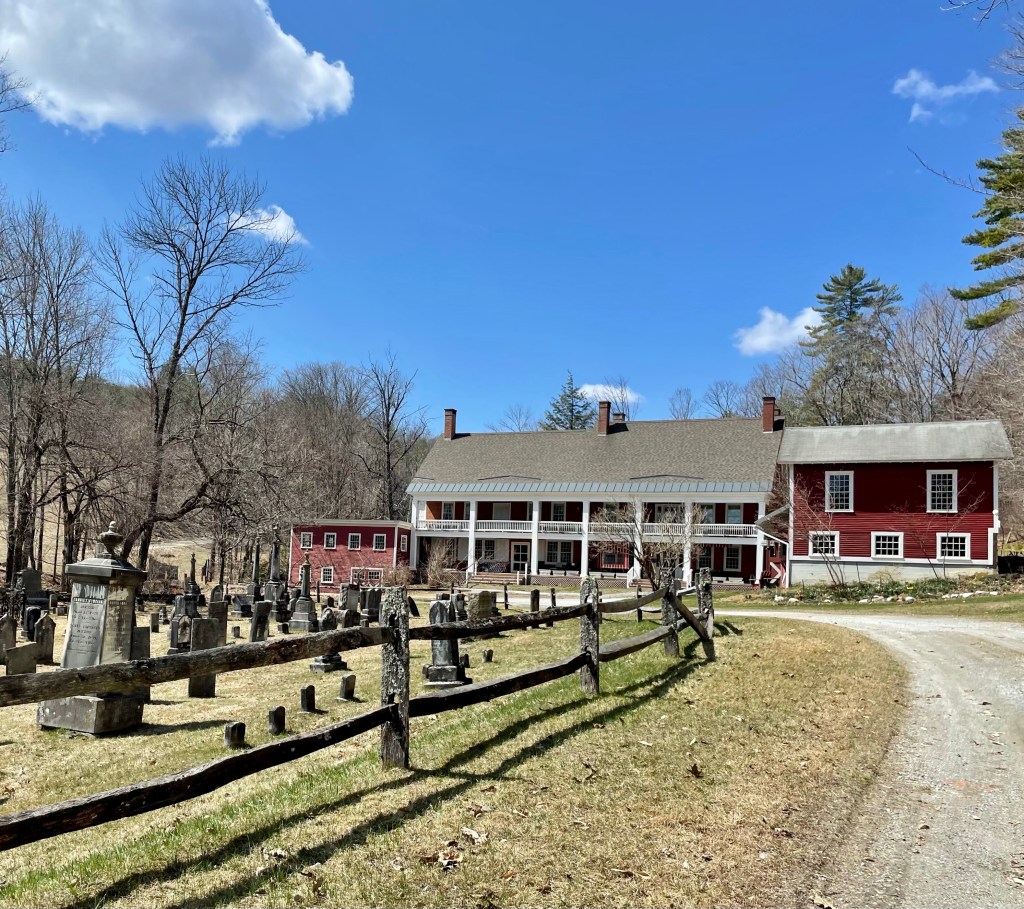
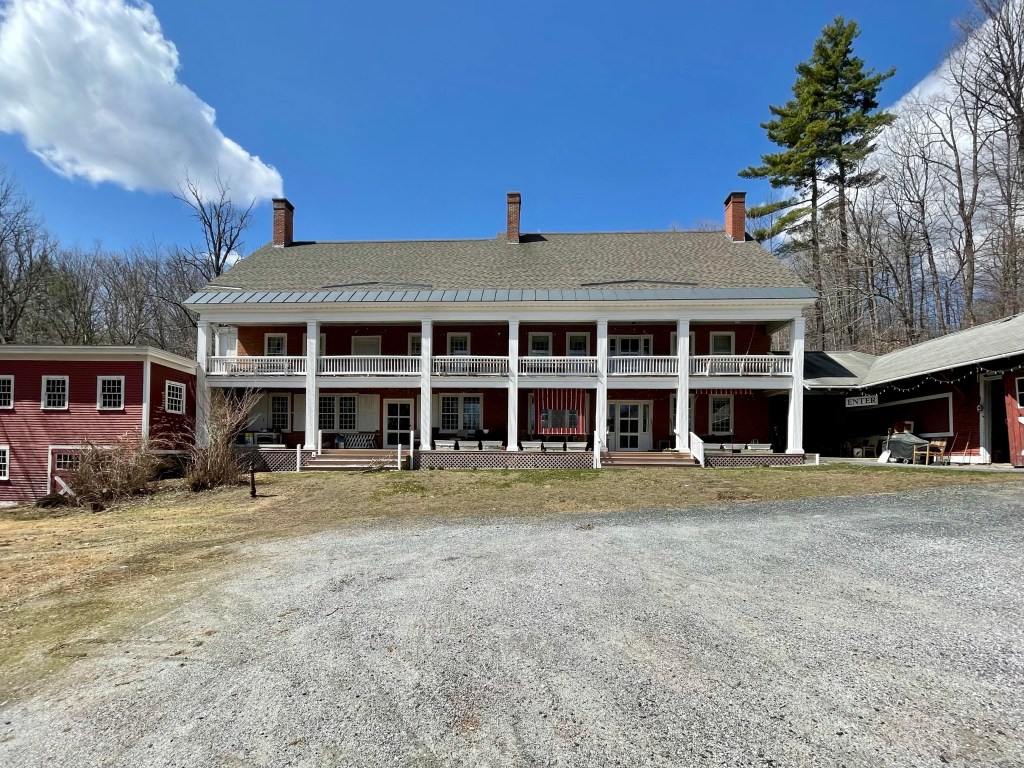
Driving down the dirt roads of rural Vermont with no cell phone service can be a great way to explore, so imagine my delight when i drove past this stunning old building tucked behind a historic cemetery! The building was erected in 1835-1837 by Levi Bailey, a local entrepreneur and mill owner who, in 1794, in partnership with a George Betterley, purchased the mill site and proceeded to build a dam, for later development. Legend says, in 1808, he required the good will of David Hapgood, his next door neighbor, so he could buy more land in front of his proposed mill. But, in fact, Levi had so irritated Hapgood somehow, that he instead donated the coveted acre to the Town of Reading for use as a town cemetery, ensuring that Bailey could never control it. Thus a “spite” cemetery was laid out, the only one I am aware of! Underterred, Bailey erected over the next two decades the series of buildings to manufacture goods, the buildings we see today. Bailey’s Mills in Reading, Vermont, is actually three connected, 2 1/2-story, brick, Greek Revival style buildings with several attached wood frame appendages added over time. He lived in the building and a store was run out of the building for locals. The building is now home to the Bailey Mills Bed & Breakfast.

Levi F. Hartshorn House // c.1853

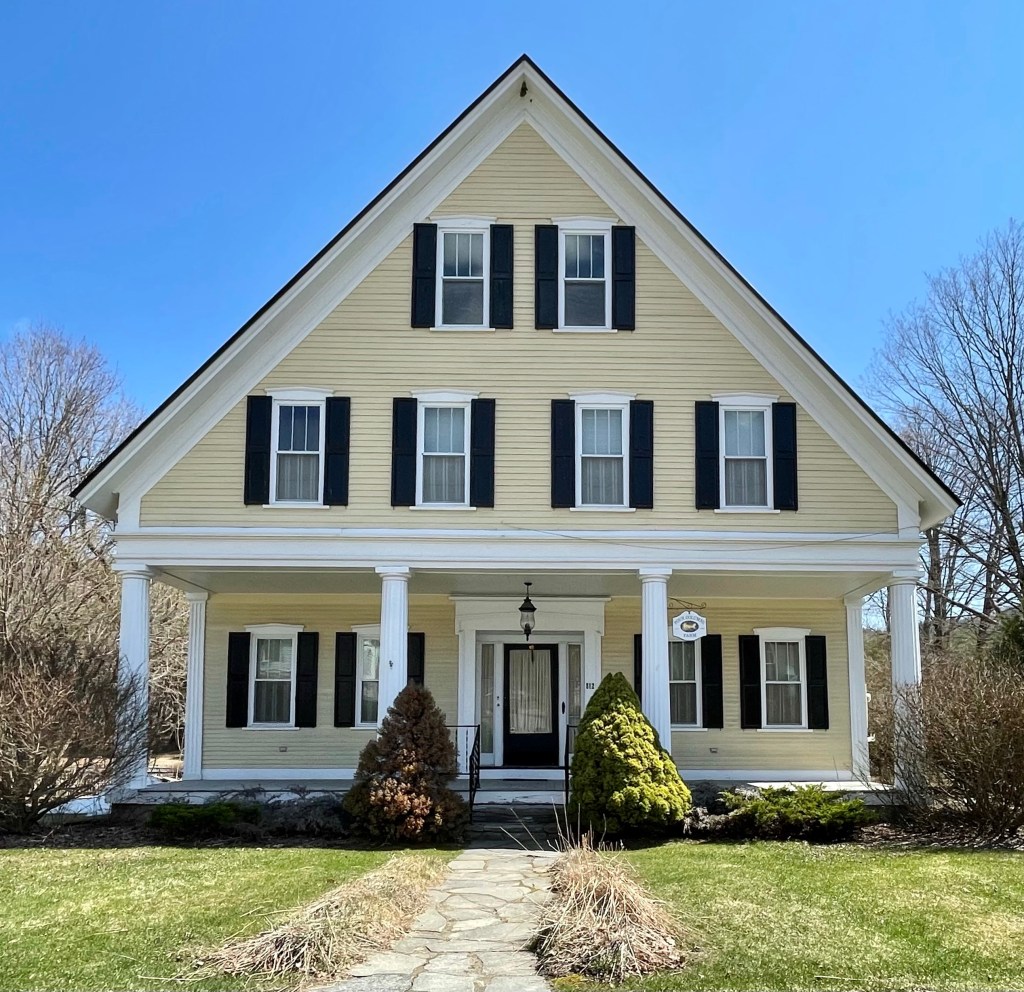
This Greek Revival home in Reading, Vermont was built around 1853 for Levi Fay Hartshorn, and is an excellent example of a vernacular Greek Revival house in Central Vermont. Levi F. Hartshorn moved to Reading, Vermont and opened up a store, also built this home for his family. It appears that Mr. Hartshorn gifted the village one of his shops to be used as a local library, before the present building was constructed.

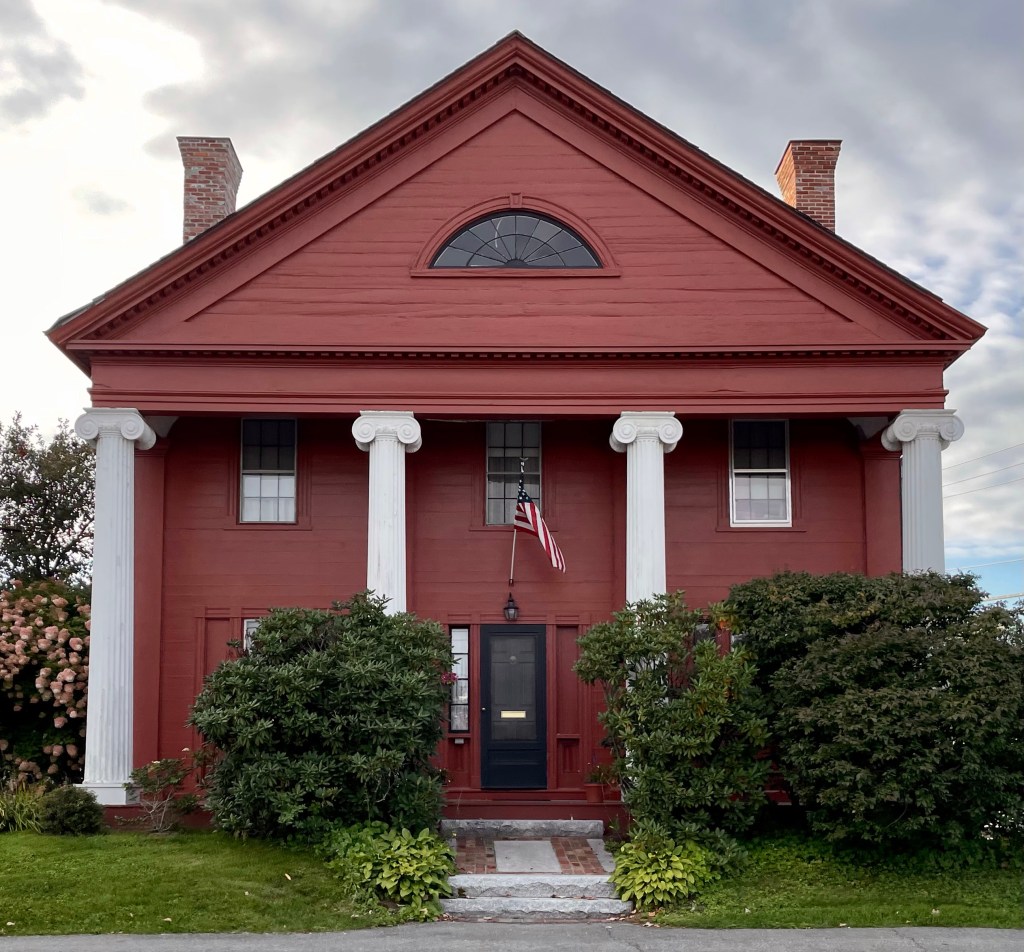
Francis M. Dimond House // 1838

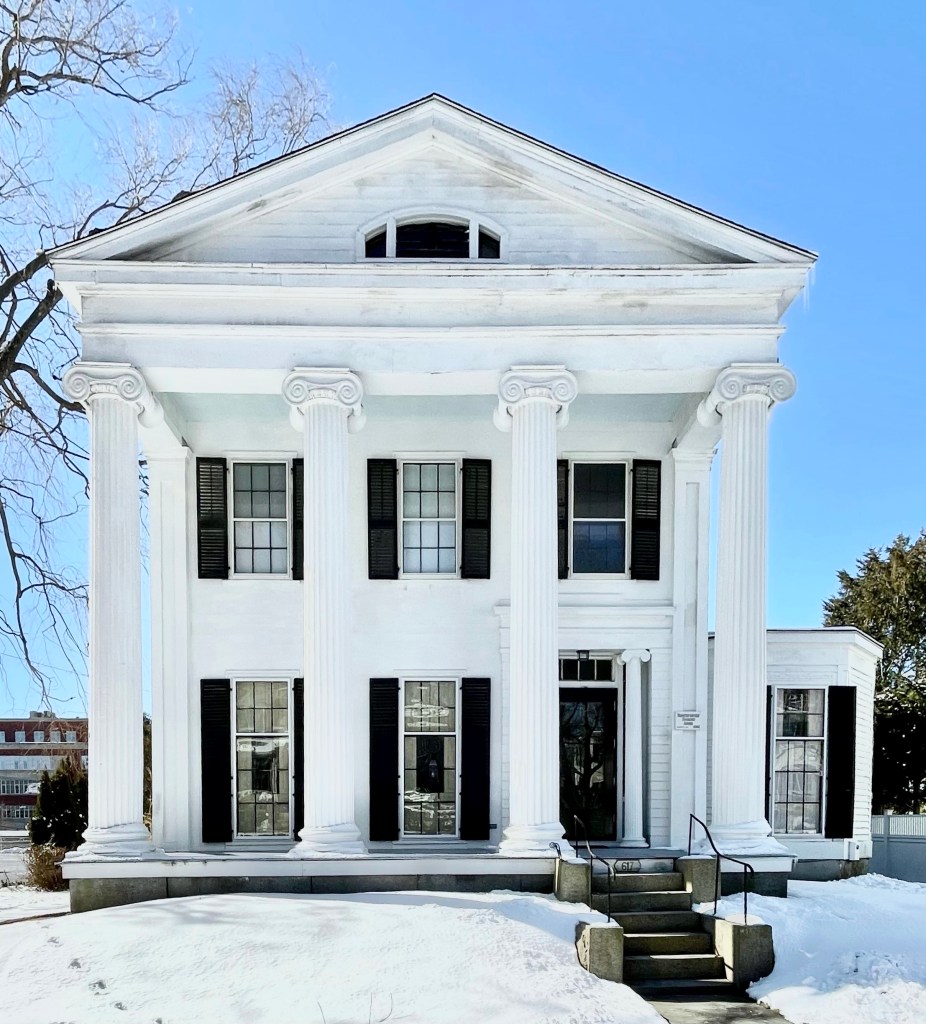
Built in 1838, just three years after the Talbot House in Bristol, Rhode Island, (just two houses away), the Dimond House remains as the other of the two remaining Greek, temple-front homes in town. Like the Talbot House, this home was also designed by Russell Warren, but is unique as it is in the tetrastyle (with four columns) and utilizes the Ionic order with the capitals featuring volutes (scrolls). Additionally, a polygonal bay can be seen on the right side of the home. Images show that the bay features stunning lancet windows! The home was designed for Francis Moore Dimond (1796-1859), who was born in Bristol, and later traveled to the Caribbean and served for several years (1832-1835) as the United States consul at Port-au-Prince. It is entirely possible that Dimond was involved in the slave trade, but I wasn’t able to find more than a couple articles referencing his connections to the infamous DeWolf Family. From 1842 to 1849, Dimond was United States Consul to the Mexican port city of Veracruz. When he returned to Rhode Island, he promoted the Southern Pacific Railway and presided over its construction. He was elected lieutenant governor of Rhode Island in 1853. He became the governor of Rhode Island when Philip Allen, then Governor, resigned to become a Senator. He held the governor’s office just one year. He moved back to Bristol and lived out his final days at his home.

Austin Perry House // c.1830

One of the nicest examples of residential Greek Revival architecture I have ever seen is the Austin Perry House (c.1830) in the Southport area of Fairfield, CT. Austin Perry (1798-1864) was a member of a prominent merchant family, holding businesses in Fredericksburg, Virginia, before returning to Southport to manage a general store. He retired in his forties and resided at this home until his death. His home is a balanced, symmetrical design with massive Corinthian columns surmounted by a carved anthemion motif ornamenting the gable pediment.

Perry House-Trinity Church Rectory // 1832

I have a thing for temple-front Greek Revival homes, and this is no exception. This marvelous home was built in 1832 for Francis Dimon Perry (1809-1884), who inherited some of his father’s wealth and became President of Southport National Bank in town. He was a devoted member of Trinity Church throughout his life. Upon Mrs. Perry‘s death in 1893, couple left their residence to the Trinity Church to be used as the parish rectory.

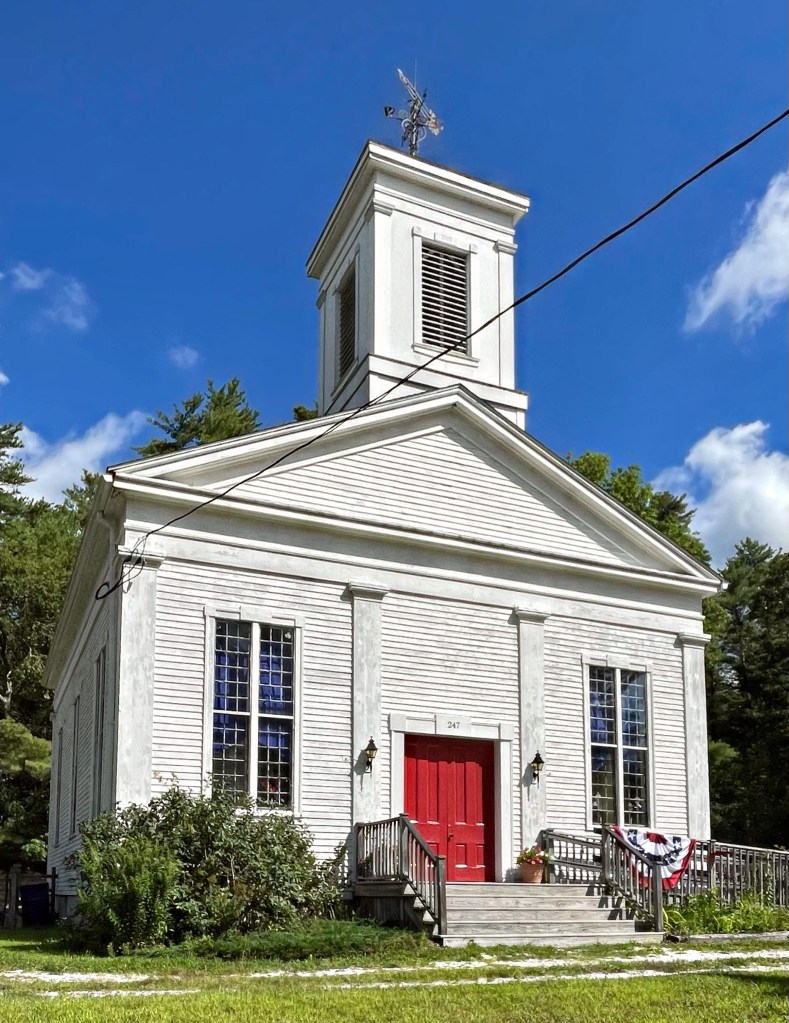
Pomfret Methodist Church // c.1850

Located across the street from the Congregationalist Church (now Town Hall) in Pomfret Center, the Methodists in Pomfret Vermont built this church building just a couple years after their neighbor was completed. Replicating the Greek Revival style seen across the street, the building showcases a templed form with projecting portico, as an excellent vernacular example of the style. Similar to its neighbor, this church was sold to the Town of Pomfret in the 1880s, modernized in the early 20th century, and converted to a district schoolhouse.

Pomfret Town Hall // 1845

The quaint town of Pomfret, Vermont sees flocks of “leaf-peepers” and Instagrammers every Fall who are in awe of the natural scenery and historic farms seen there. The town was first settled in 1770 when Bartholomew Durkee travelled from Pomfret, Connecticut, along with his family and friends and named the town “New Pomfret” at first to show their roots in Connecticut. The tiny town grew to its peak population in 1830 at just under 1,900 residents, declining steadily over time to roughly 900 today, greatly adding to the rural character of the town.

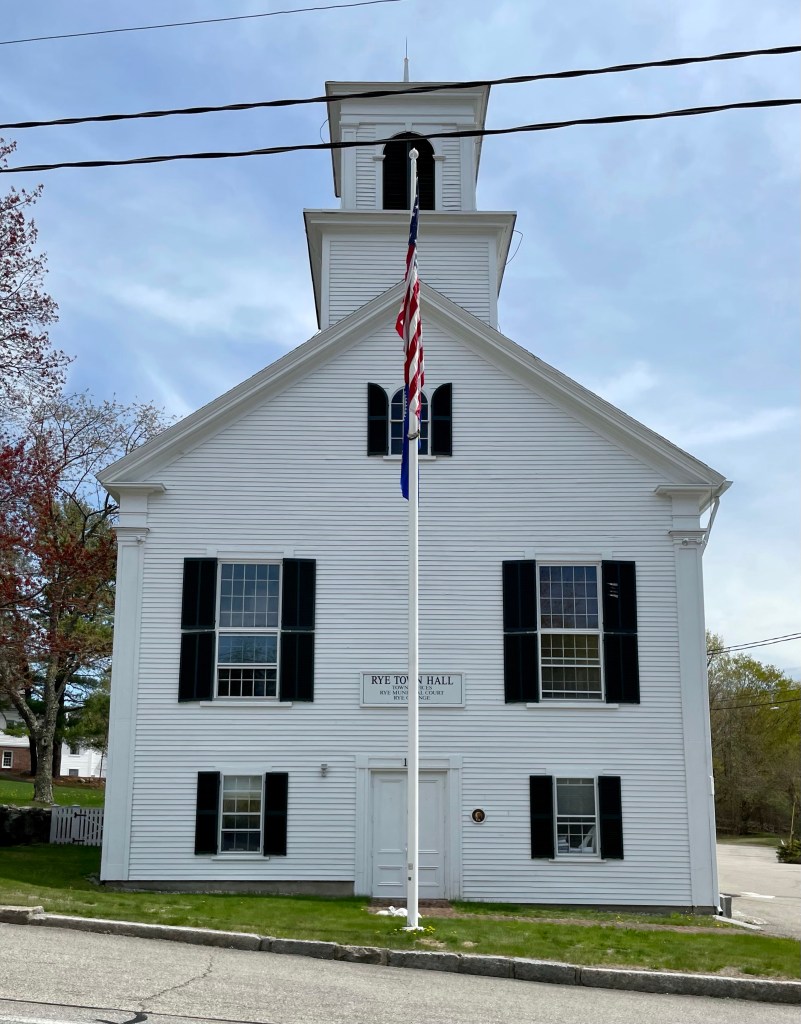
In Pomfret Center, the local Congregationalists sought a new place of worship and had this structure constructed as their church in 1845. Local builder Eli Buch constructed the Greek Revival edifice with its projecting portico, doric columns, and corner pilasters. As nearby Woodstock Vermont grew, many families moved there and the church sold their building to the Town of Pomfret in 1872 and the building has since been used as Pomfret’s Town Hall.

Second Baptist Church, Suffield // 1840

In early New England, the Congregational Church had a near monopoly on churches. Congregational churches had lost much of its hold on its members and on government by 1725. Eventually, some of its ministers decided a religious revival was needed, creating the emergence of new Baptist and Methodist churches all over the region. Baptists erected a church in West Suffield, far from the town center, which began to rapidly develop in the early 19th century. In 1805, they petitioned to create a second Baptist church, and succeeded. By 1840, the members collected funds to erect this stunning Greek Revival church on Main Street. The congregation hired architect Henry Sykes, who had trained under Chauncey Shepherd of Springfield, Mass and Ithiel Town of New Haven, clearly learning a lot on church design.

West Suffield Congregational Church // 1839

Suffield (originally Southfield) Connecticut, was once a part of Massachusetts, incorporated as a town in 1682. After having to travel to downtown Suffield to worship at the church there, the families in the west part of town established the Second Ecclesiastical Society in 1743. The first meeting house was built in 1744 on what was known as “Ireland Plain”, now the southwestern corner of the West Suffield Cemetery. In 1775, a second meeting house was erected on the site of the present building. It was rebuilt in 1839 using the earlier foundation. The Greek Revival church building is very charming with its columned portico and belfry surmounted above a stepped parapet. The church is very well preserved and a lasting remnant of West Suffield’s early days.

Captain Valentine Pease House // c.1830

This charming little Greek Revival house has a lot of history, tied to literature and the whaling industry that shaped Edgartown in the 19th century. The home was built in around 1830 for Captain Valentine Pease (1797-1870), a master mariner and captain of the Acushnet, a prominent whaling vessel which often departed from New Bedford. In 1841, Captain Valentine Pease, his crew, and a 21-year-old Herman Melville shipped out of New Bedford 1841 for eighteen months as Melville’s only whaling voyage. Melville took part in the hunting and killing of whales and in harvesting and processing whale oil aboard ship. He endured gales and calm, experienced excitement and boredom, followed ship’s discipline, all the while absorbing the lore of the veteran seamen who made up the Acushnet’s diverse and colorful crew. It is speculated that Valentine Pease was an inspiration for the character of Captain Ahab in Melville’s book “Moby Dick”.