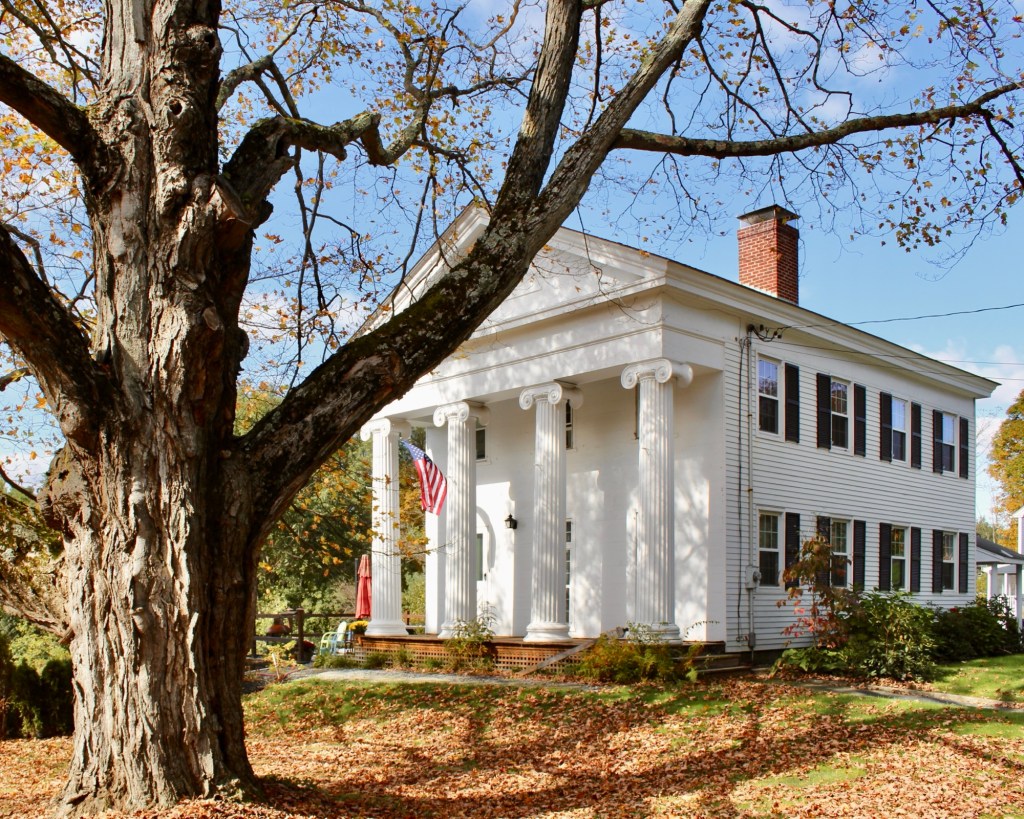
Joseph Andrews House // 1831

This stately temple-front Greek Revival style house in Lancaster, Massachusetts, faces southward and when originally built, had sweeping views of fields and the Nashua River which abuts the property. The residence was built in 1831 for Joseph Andrews (1806-1873), a renowned 19th century artist who engraved portraits and landscapes, and was also an elder in the local Swedenborgian Church when it still met at residences. The Andrews House was likely a wedding gift to his wife, Thomazine Minot of Brookline, when they married. Tragically, Thomazine died just years later in 1834 at the age of 22. Joseph Andrews remarried soon after and would later move to Waltham. The house, which is listed on the National Register of Historic Places, features a full-length projecting porch with pediment supported by four, two-story fluted Ionic columns and a flush-board facade.

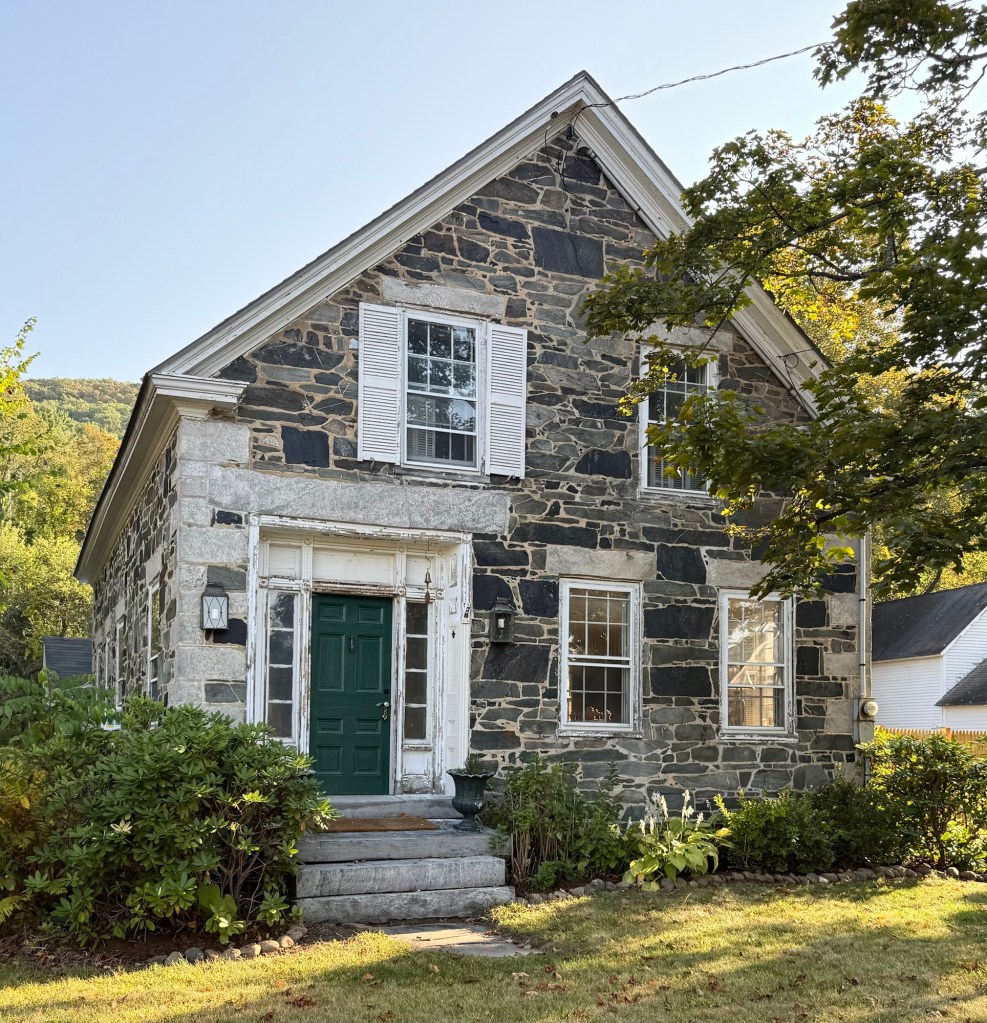
Sherwin-Goldsmith House // 1844

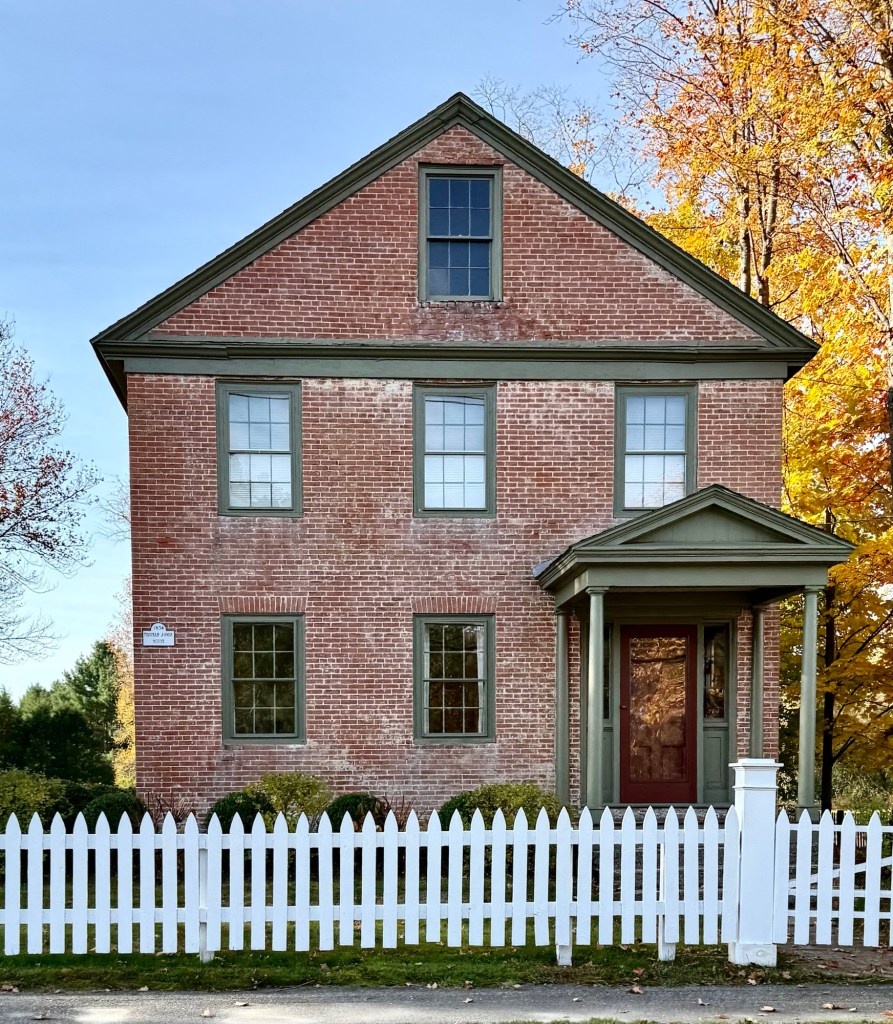
The Stone Village of Chester, Vermont, is said to be the largest collection of stone buildings in the state. Built around 1844, the Sherwin-Goldsmith House is one of a few dozen “snecked ashlar” buildings in the region, where rubblestone is laid up with mortar using long stones called “snecks” to tie an outer and an inner wall together. The construction method is said to have been brought to the area by masons from Scotland and Ireland which is known there as ‘Celtic Bond’. Oral tradition state that Scottish masons from Canada introduced the technique to local masons while erecting a mill in nearby Cavendish in 1832. Local Chester resident, Dr. Ptolemy Edson became such a fan of the building that in 1834, he had his home, the first stone building in Chester, built in this method. He then would influence the rest of the North Village of Chester, where many of his neighbors, as well as the church and schoolhouse, built their structures in snecked ashlar. The Sherwin House is one of three near-identical houses built around the same time that are colloquially known as the “Three Sisters” because they were built for members of the same family. The Greek Revival form is toned down in this smaller side-hall house, which playfully uses large blocks of schist and mica which read as quoins at the corners. Simeon Sherwin (1813-1874) was a farmer, postmaster, and justice of the peace in Chester. Later owner, Olivia Goldsmith, wrote her bestseller, First Wives Club when she lived here. 

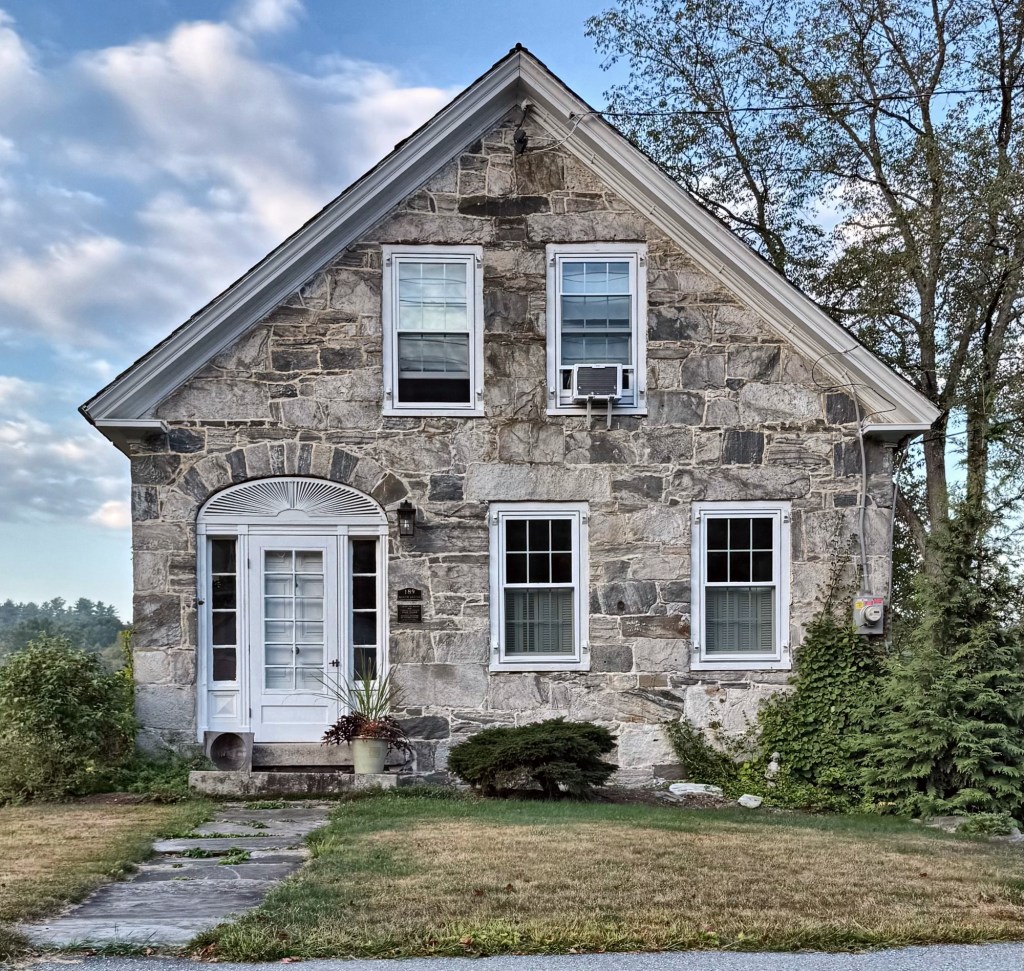
Gideon M. Lee House // c.1836

The Stone Village of Chester, Vermont, is said to be the largest collection of stone buildings in the state. Built around 1836, the Gideon Lee House is one of a few dozen “snecked ashlar” buildings in the region, where rubblestone is laid up with mortar using small long stones called “snecks” to tie an outer and an inner wall together. The construction method is said to have been brought to the area by masons from Scotland and Ireland which is known there as ‘Celtic Bond’. Oral tradition state that Scottish masons from Canada introduced the technique to local masons while erecting a mill in nearby Cavendish in 1832. Local Chester resident, Dr. Ptolemy Edson became such a fan of the building that in 1834, he had his home, the first stone building in Chester, built in this method. He then would influence the rest of the North Village of Chester, where many of his neighbors, as well as the church and schoolhouse, built their structures in snecked ashlar. The first residence besides Dr. Edson’s home built this way in the village was this home, built nextdoor for Dr. Edson’s friend, Gideon Merrick Lee (1811-1880). Designed in a more vernacular version of the Federal style with emerging Greek Revival side-hall form, the Lee House features a charming entry with sidelights and a blind fan over the door.

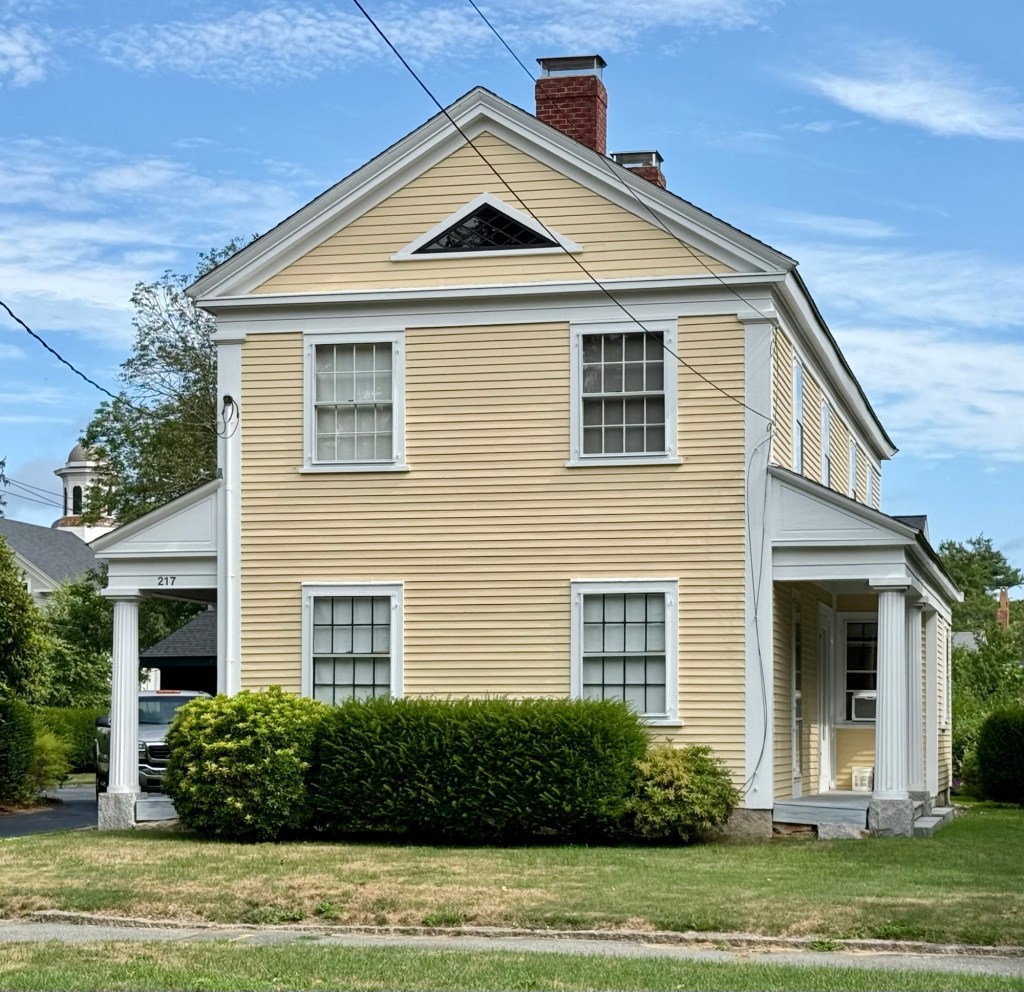
Holmes-Stetson House // 1841

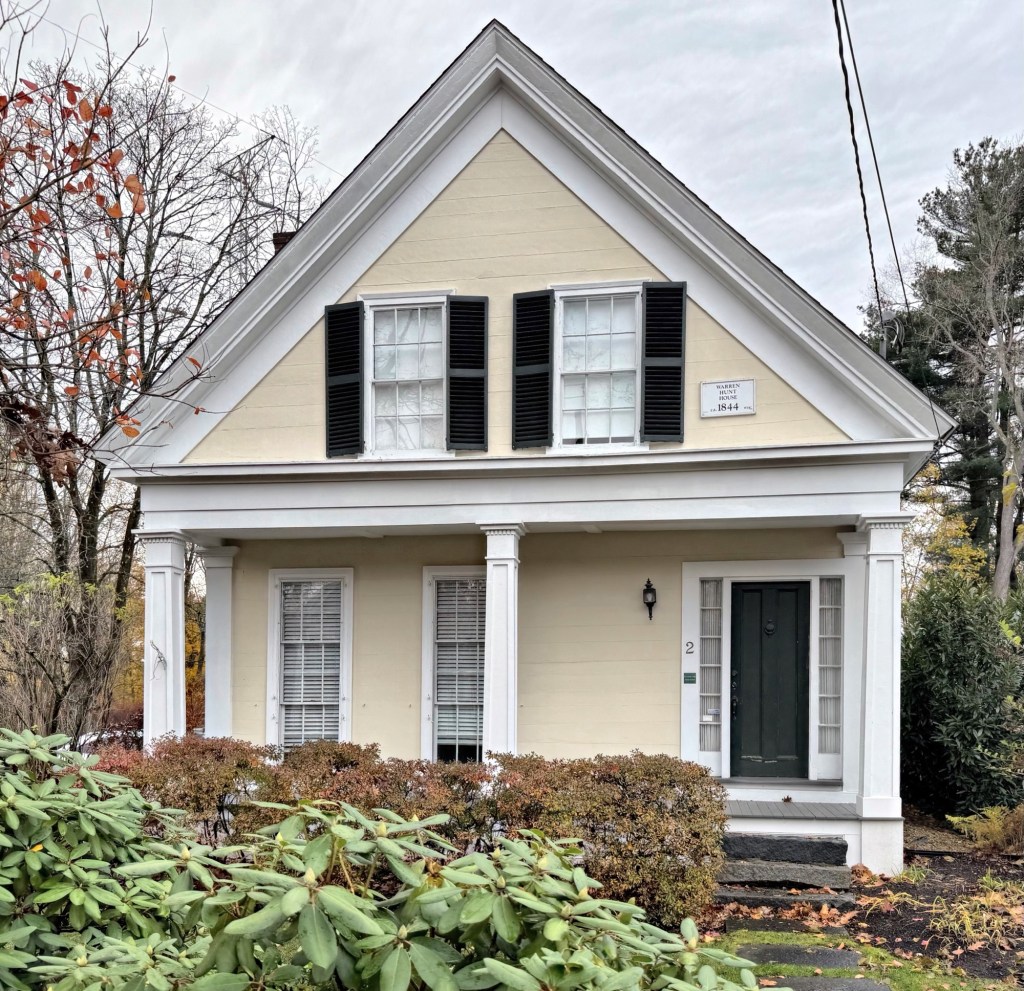
Built the same year as the Old Kingston Town House in Kingston, Massachusetts, this handsome Greek Revival style house sits on the town’s Main Street and has ties to two of the communities oldest and most significant families. The house was constructed in 1841 with matching side porches for Horace Holmes (1809-1855), a merchant and son of Joseph Holmes, a wealthy ship owner and builder. Horace operated a store near his home until his death in 1855. The property was later purchased by Captain Charles Stetson, a master mariner. The couple’s weath soon allowed them to sell this older residence and they built a “modern” Italianate style house at the rear garden (now 20 Green Street) to reside in. After successive ownership, the Greek Revival style house was converted to a store, but has since been reverted back to a residence, retaining much of its original fabric.

Fay House // c.1840

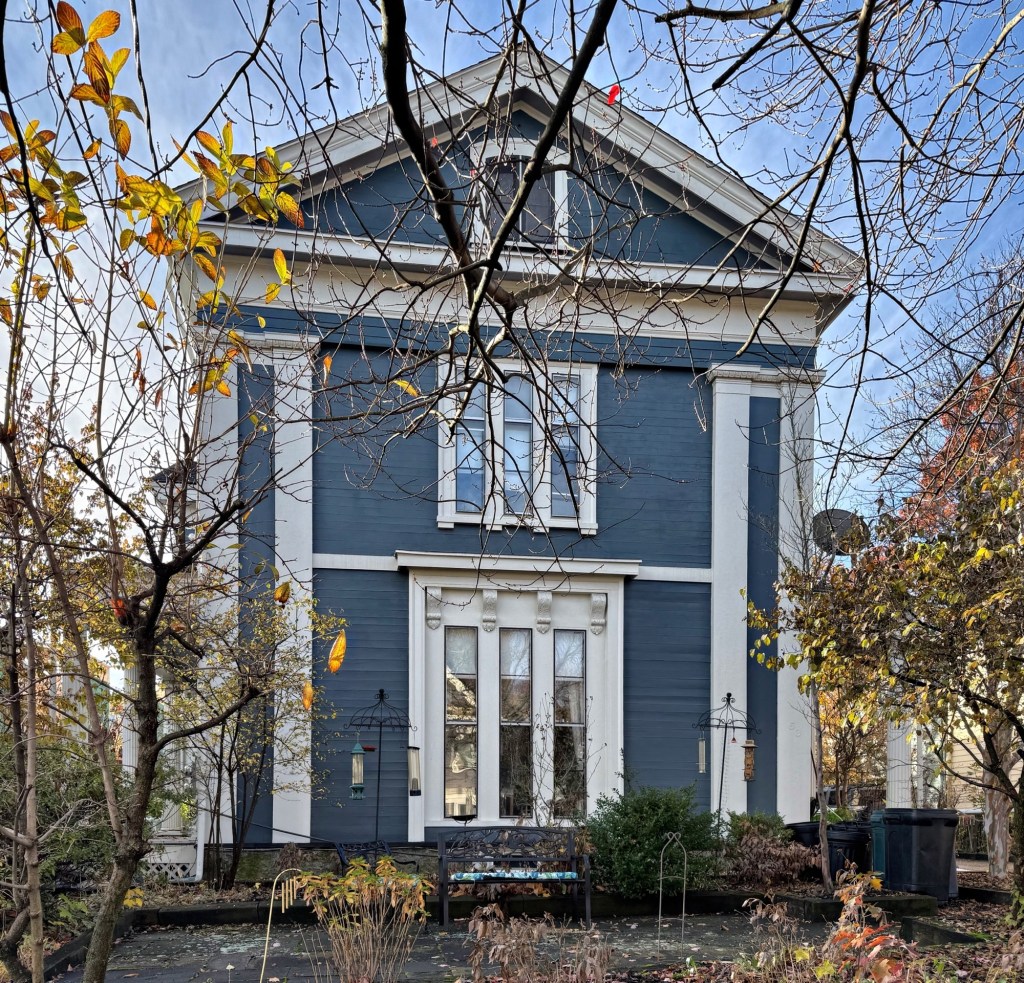
One of the most spectacular residences in Westborough, Massachusetts, can be found on Church Street, which is a unique blending of two distinct architectural styles. The house here was originally built around 1840 as a Greek Revival style residence, which would have had a gabled roof, and it retains the original corner pilasters and Ionic columned porch. Records state the the house was built for Cyrus Fay (1812-1884), possibly around the time of his marriage in 1837 to Caroline Pope. Caroline passed away in 1852 at the age of 36, and Cyrus remarried in 1855 to Nancy Avery White. It was likely after his second marriage, and after he became the first president of the Westborough Savings Bank in 1869, that the house was modernized with a Mansard roof with belvedere.

Gilman Morse House // c.1850

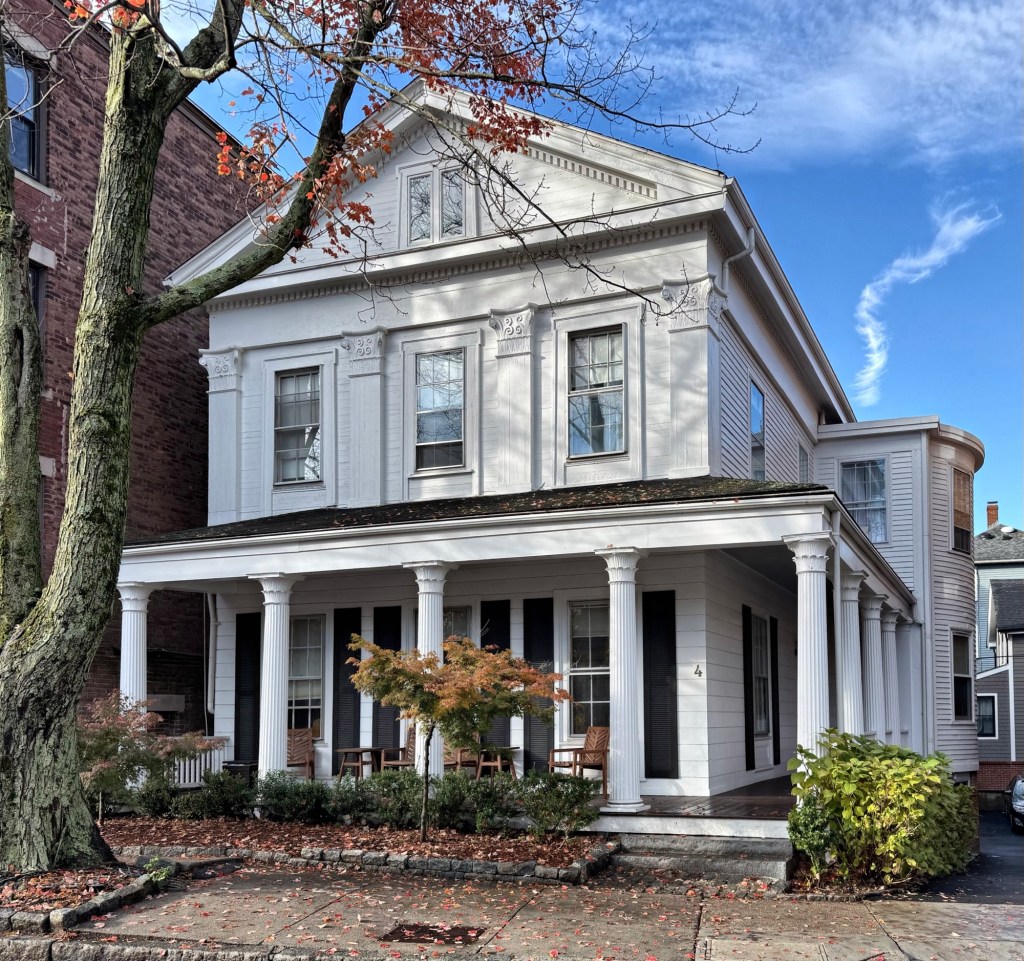
As the town of Westborough emerged from rural agricultural community to commercial center, connections to Worcester and Boston via rail service opened the town to prosperity. As businessmen accumulated wealth, these merchants built stately homes to showcase their position in the community. Before the Civil War, the Greek Revival style was ever-popular in Westborough, even though the style was already waning in popularity in larger cities. This is the Gilman Morse House, built around 1850 for Mr. Gilman Wood Morse (1810-1899) on East Main Street. Morse was a merchant in town and clearly did well for himself, building this stately house for his family. The residence is Greek Revival in style with its facade bays broken up by pilasters capped with Corinthian capitals adorned by acanthus leaves. The house also features ornate window and door hoods, showcasing the emerging Italianate style influence.

Gilmore-Mason House // c.1850

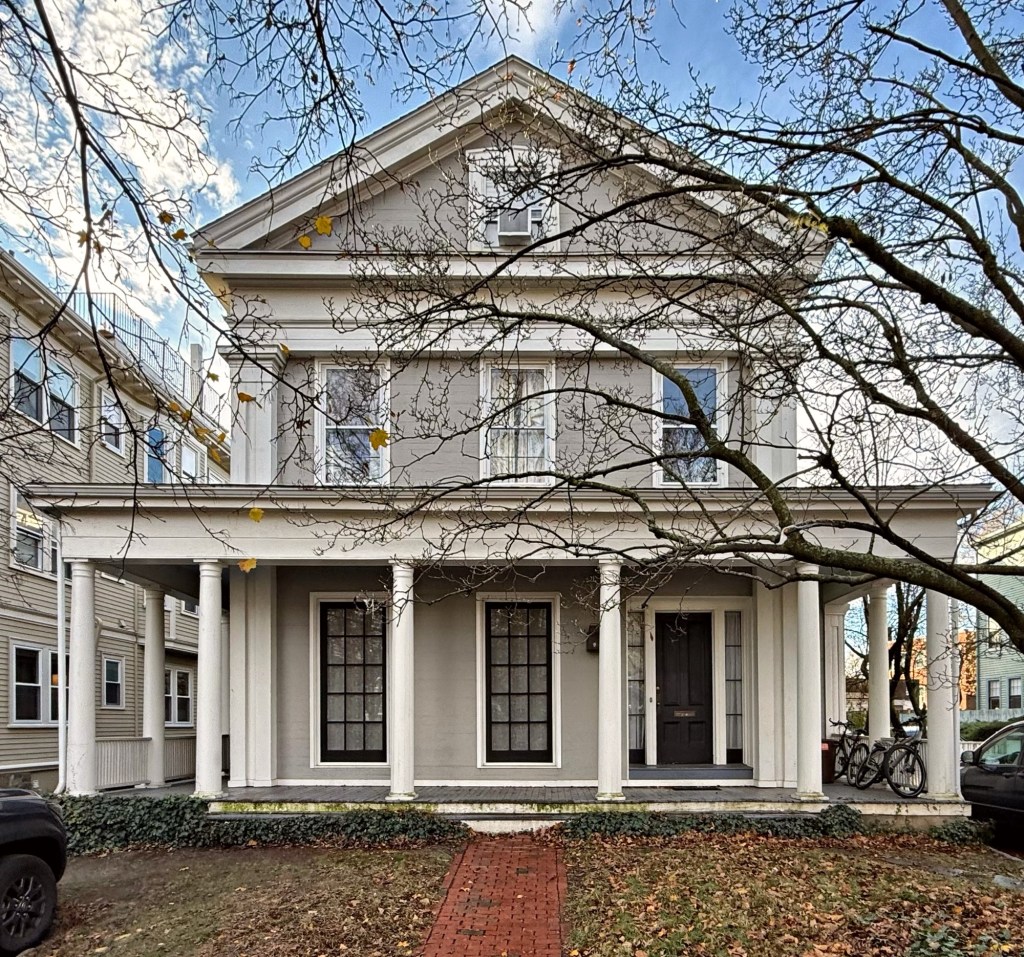
As the town of Westborough emerged from rural agricultural community to commercial center, connections to Worcester and Boston via rail service opened the town to prosperity. As businessmen accumulated wealth, these merchants built stately homes to showcase their position in the community. Before the Civil War, the Greek Revival style was ever-popular in Westborough, even though the style was already waning in popularity in larger cities. The Gilmore-Mason House on Church Street, is an excellent example of the Greek Revival style in a temple form. The form is seen in this house at the facade, with a portico of four two-story Corinthian columns supporting the pediment above. The house was built for George A. Gilmore and later sold to Alonzo W. Porter, an inventor, who would later move to New York. By the early 20th century, the residence was the home to Joseph S. Mason, a manufacturer who operated a weaving mill in Westborough.

Lane-Smith-Bailey House // 1848

The most colorful house in Rockland, Massachusetts can be found on Union Street, the town’s busiest corridor, lined with houses and buildings of all ages and styles. The Lane-Bailey House was built in 1848 for Marshall Lane, a shoe manufacturer in town. The Greek Revival style residence features a gable roof oriented towards the street, which reads as a pediment and a full-length columned porch that wraps around the side of the home. The property was purchased in the early 20th century by William Andrew Grant Smith (1863-1908), a wealthy jeweler, who apparently added a second floor to the house, up from a 1-1/2 story cottage, and likely added the wrap-around porch at this time. Jumping ahead to the turn of the 21st century, the prominent house was owned by Brad and Sam Bailey, who painted the residence bold colors, added a wishing well and birdhouses to the front yard, and replaced the traditional grass lawn with crushed seashells. In an article talking about the house, Brad Bailey stated, “We do it because lots of things in life [that] are dull. Our house shouldn’t have to be.” Despite the polarizing thoughts and opinions from those who walk or drive by, the house is loved and certainly causes people to stop and smile!

Payson-Fettyplace House // 1845

Behold, one of the finest, and well-preserved Greek Revival style homes in Salem. This is the Payson-Fettyplace House on Winter Street, built in 1845 with its gable facing the street to create a pediment, a wide entablature and cornice, and pilasters on the flushboard façade, which together make the building read more like a Greek temple than a residential home. The residence was built for Edward H. Payson, a bank officer, and his wife, Amelia, who lived in the home for only two years before moving into a larger residence across the street just two years after this house was completed. The property was sold to a Carleton Dole of Maine and again sold in 1850 to Thomas J. Fettyplace. The Fettyplace family were based out of Marblehead and many of them relocated to Mobile, Alabama, to make money in the cotton and shipping industry in the South. Thomas purchased this home in Salem for his mother who spent her final years here until 1861. After the Civil War, the Fettyplace brothers would move back north and this home remained in the family until 1912. The house is now a bed & breakfast known as the Amelia Payson House, named after the original owner.

Conway-Trumbull House // 1848

Built in 1848 for Rev. James Conway of Salem, this stunning Greek Revival home on Winter Street blends architectural integrity with a bold pop of color! James Conway was born in Ballinamore, Ireland and moved to the United States and was ordained as a Catholic priest. He was a missionary with the Penobscot Tribe in Maine, before preaching in Lowell and later in Salem, Massachusetts. When he moved to Salem, he had this house on Winter Street built with flush board siding, paneled side-hall entry, and moulded window surrounds with corner blocks. Conway would later sell the property to Edward Trumbull, a Salem merchant and later to Ebenezer Putnam. It was likely Putnam who added the oversized second-story bay window on the facade of the house.