Amos Chase House and Mill // 1836

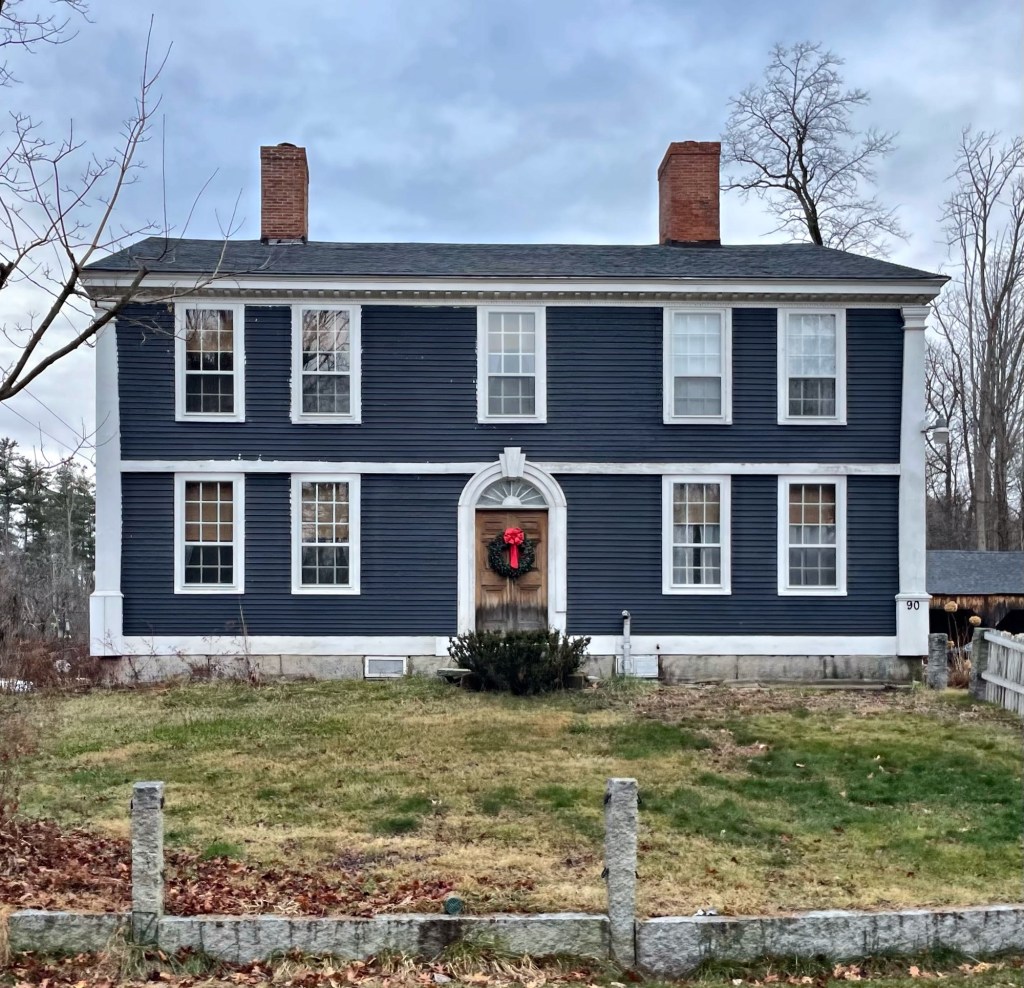
The Amos Chase House and Mill are located in Weare, New Hampshire, on the banks of the Piscataquog River. The house is oriented facing the road, while the mill is behind it, on the bank of the river. The mill is the only surviving 19th-century mill building in Weare. The house was built about 1836 by Amos Chase, as was a mill. That mill burned in 1844; the present mill was built by Chase as a replacement a few years later. This mill was the only one in the town to survive the New England Hurricane of 1938, although its waterwheel was washed away. Amos Chase was a tool manufacturer and one of several members of a locally prominent family operating small mills in the town. His son later used the mill in the manufacture of baskets. The large Greek Revival style home has all the hallmarks of the style, from the pediment facing the street, to the pilasters at the entrance and corners.
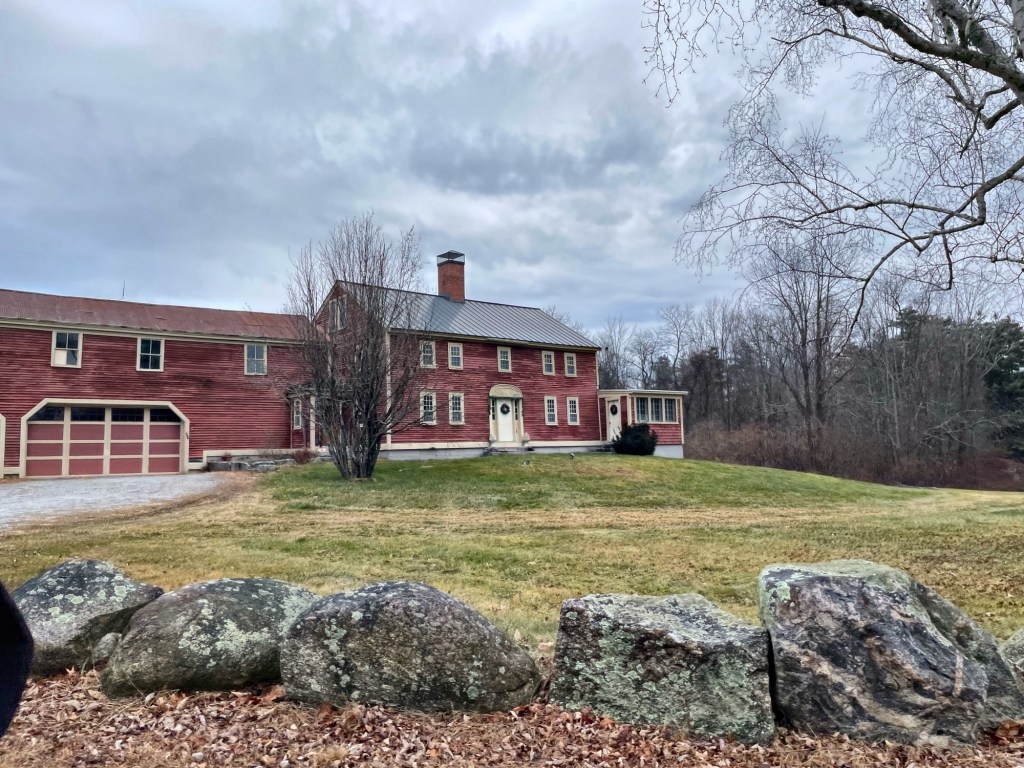
Elijah Purington Homestead // 1768

One of the earlier settlers to Weare, New Hampshire was Elijah Purington, who purchased a lot in the center of town in 1768 and built this large farmhouse for his family. Elijah was one of the first Quakers to move to Weare, and the next year, he was elected a selectman in town. The farm remained in the ownership of his descendants through the end of the 19th century. A trotting park was built on a piece of the property covering an earlier pond, which seems to have since been restored back to a pond. After Elijah Purington III died in 1890, the property was purchased by Oliver Dennett Sawyer, who operated it as the Apple Tree Inn until his death in 1921. It has remained a private home ever since.

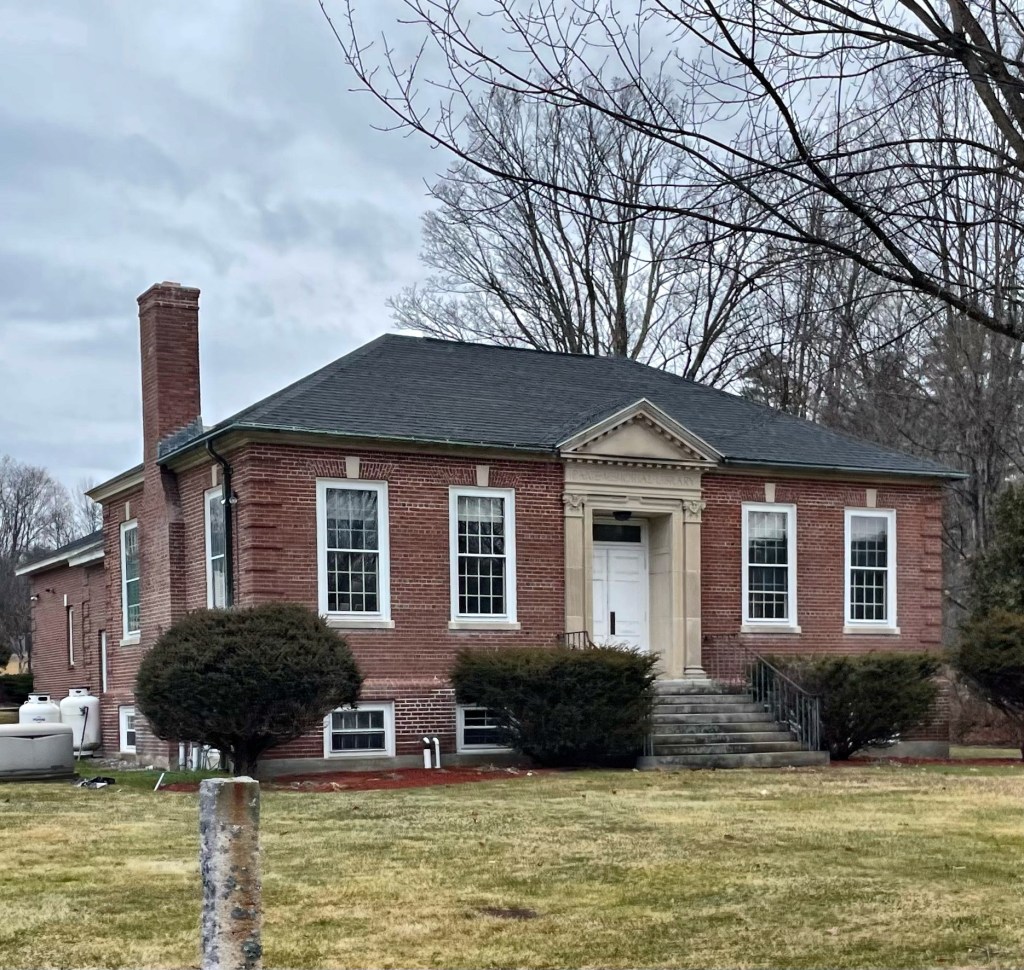
Weare Public Library // 1926

The Colonial Revival style Weare Public Library was built in 1926, being the second purpose-built library building for the town of Weare, New Hampshire. After the Neo-Classical style Stone Memorial Building was taken over as town offices following a fire of the old town hall, local resident Eben Paige saw the need for a new designated library building. Upon his death in 1923, he left his entire estate, over $30,000, to the town to build a new free library. The Boston architectural firm of Kreider and Peterson were selected to design the building, which is still in use today.

Stone Memorial Building // 1896

Designed by New Hampshire architect William Butterfield in 1896, the Stone Memorial building in Central Weare is a significant example of a Neo-Classical style structure in a village setting. The building was constructed with money donated by Joseph Stone in honor of his father, Phineas J. Stone, who was born in Weare and moved to Charlestown, MA, later serving as its seventh Mayor. The building would “provide suitable room for a public town library” and a room for memorials to the Civil War soldiers who fought and died for the Union. When the town hall burned, offices there were relocated to this building. Eventually, the library and town offices left this small building, and it has since been home to the Weare Historical Society.

Hadley Homestead // c.1776

George Hadley (1740-1823) moved to Weare, NH in 1775, buying lot sixty-one in town from the proprietors. Captain Hadley served in the French and Indian War and later in the Revolutionary War, though he was not so eager to serve again. He built his home soon after, living here with his family. The original Hadley Homestead would have been a more traditional Georgian farmhouse with large central chimney and minimal glass/windows. Sometime in the early 19th century – after his wife’s death in 1806 or after his own death in 1823 – the house was modernized in the Federal style. The stunning home has a fan light transom over the door, narrow corner pilasters and twin chimneys projecting through the roof. It sits next door to the South Weare Union Church.

South Weare Union Church // 1875

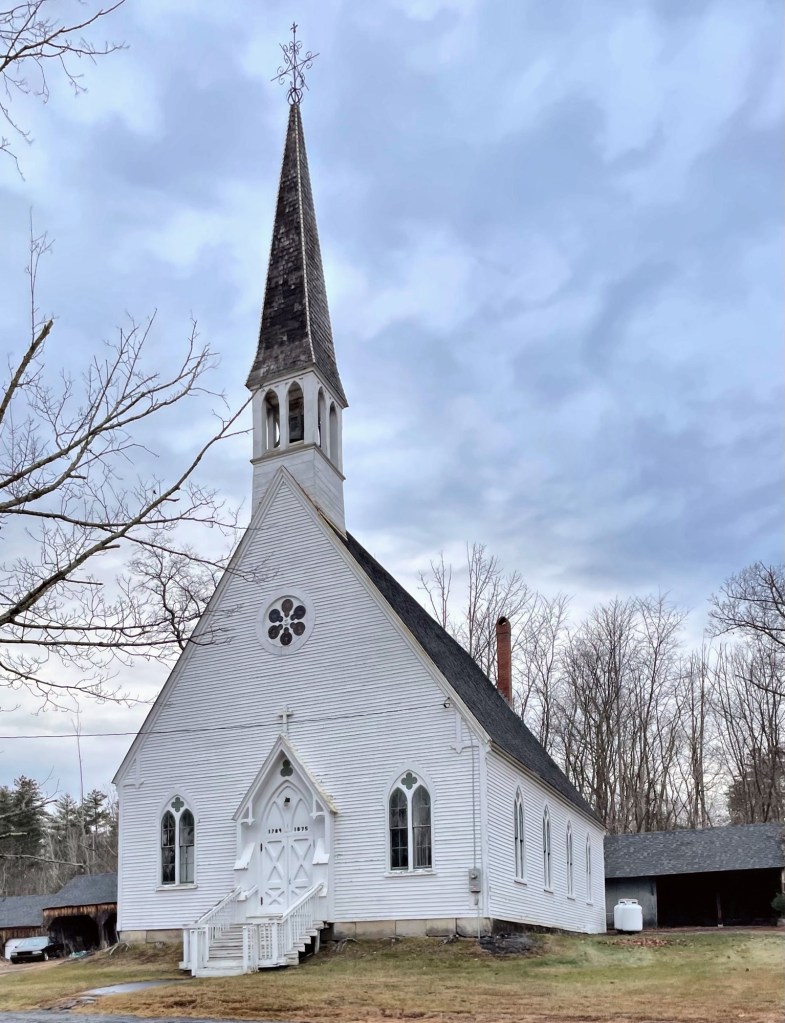
In 1874, the Congregationalist citizens at South Weare, New Hampshire, decided to tear down their old church as it was in very poor condition and build a new one. The issue was that the Universalists owned a share of the old church, so, they decided to build a Union Church together. They broke ground in 1875 and it was completed months later in January 1876. The construction and furnishings were a group effort. The interior was furnished with circular ash pews, trimmed with black walnut. Osgood Fifield of Boston, a native of Weare, gave the beautiful pulpit; the Ladies Sewing Circle gave the carpet, assisted by the Universalists. The Victorian Gothic church building is impressive for such a small, rural congregation at the time. It has lancet windows, a circular rosette window in the gable end, and a steep gable roof capped by a towering belfry. The church even retains its historic horse sheds at the rear!

Bailey Farmhouse // c.1767

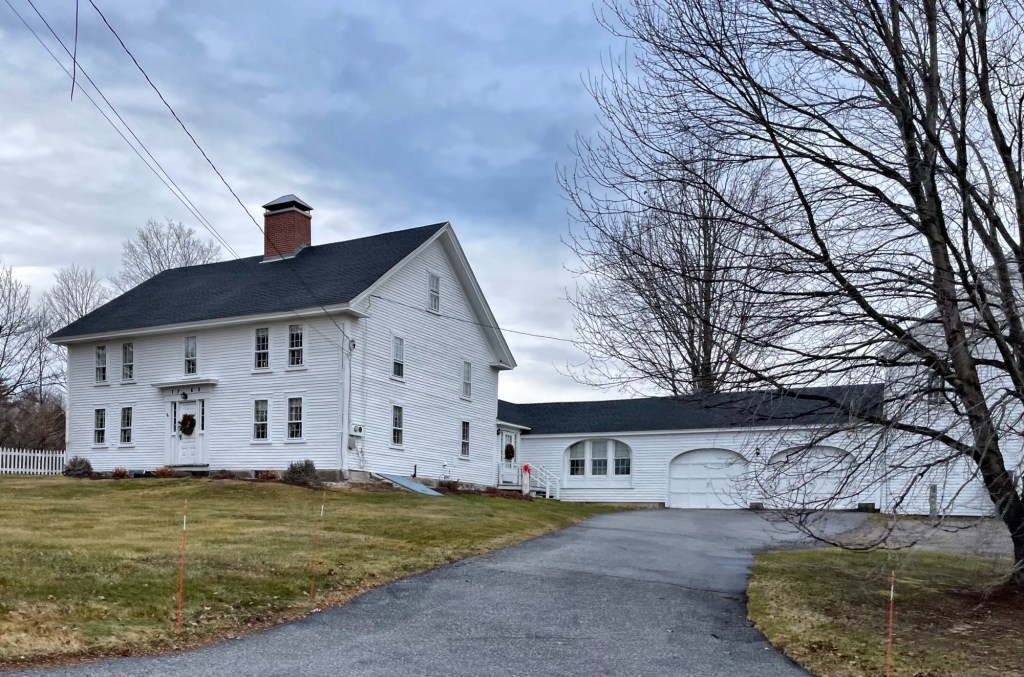
One of the oldest homes in Weare, New Hampshire is this large, Georgian farmhouse apparently constructed around 1767 by Samuel Bailey. Samuel’s father, Ebenezer Bailey, had purchased a property called “Lot 54, Range 1” in Weare, New Hampshire, which he then divided among his sons, Daniel, Samuel and Ebenezer Jr. for their own settlement in about 1767. Samuel received this lot in South Weare, upon which, the twenty-two-year-old and his wife established a farm and a family of at least eight children. Samuel died in 1824 and the farm was inherited by his son, Amos Wood Bailey, who continued operations here. Today, the large five-bay Georgian farmhouse is connected to a massive barn. It is a really spectacular property.

Osborne Memorial Hall // 1920

Weare is the largest town in Hillsborough County, New Hampshire by land area. As a result, the town’s villages historically were fairly isolated (especially before the arrival of the automobile). Social halls were important gathering places for some of these rural communities, allowing for events and celebrations to be held in a designated location. Before 1920, South Weare only had a Union Church which could meet this demand. In her will, Nellie Osborne donated funds in the memory of her husband Wellman Osborne, who grew up in Weare, to erect a social hall there. South Weare residents established the South Weare Improvement Society to make use of the money and oversee construction of the Memorial Hall. The Arts and Crafts style community building with its pyramidally roof opened in 1921. After numerous decades of deferred maintenance and dwindling use of the facilities, Osborne Hall was in decline and danger of demolition. Luckily, new members banded together and funded a restoration and modernization of the building. Here’s to another 100 years!

Clinton Grove Academy // 1874

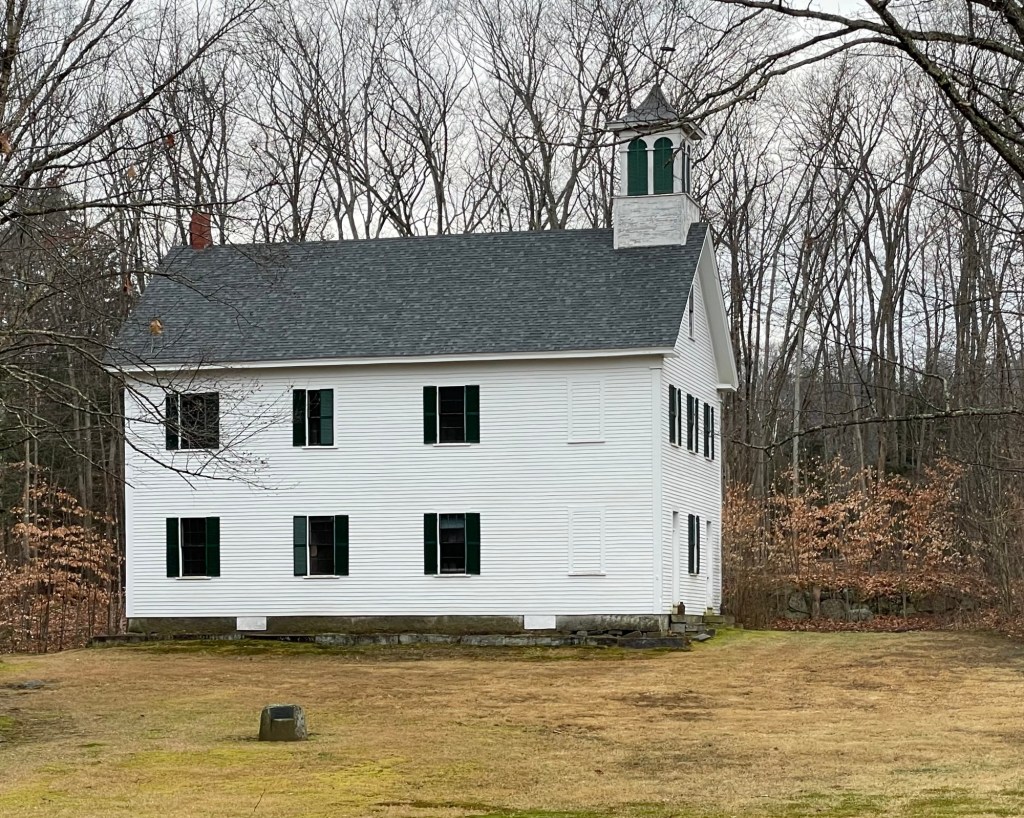
Clinton Grove Academy of Weare, New Hampshire was the first Quaker seminary in the state when it was founded in 1834 by Moses Cartland (1805–1863). Moses Cartland was a Quaker abolitionist who served as the first Principal of the school and for fourteen years after. He later would move to Lee, NH, and aided those who escaped slavery in the south, sheltering them and assisting them on their way north to Canada. The original Academy here served as a private high school and included a classroom building, boarding house, barn and sheds. Students came from as far away as Ontario, Nova Scotia, Minnesota and Texas to study here under Mr. Cartland. In 1872, the Academy complex burned. It was quickly rebuilt as one structure here, in 1874. This building served as a district school until the 1930s. Today, it looks like the building is largely vacant, anyone know what its purpose is?

Weare Town House // 1837

Weare, New Hampshire has a pretty cool history. Located at the northern edge of Hillsborough County, the land presently known as Weare was granted to veterans of the Canadian wars in 1735 by Governor Jonathan Belcher, who named it “Beverly-Canada” after many of the veteran’s hometown, Beverly, Massachusetts. After various disputes over the settlement and naming of the town, it became known as “Weare’s Town” before being incorporated by Governor Benning Wentworth in 1764 as Weare, after Meshech Weare, who served as the town’s first clerk and later went on to become New Hampshire’s first Governor. The town grew slowly during the 18th and 19th centuries around five major villages, with farmland and forests connecting them. Near the geographic center of town, this Town House was built in 1837 to be a government and religious center of the town. Originally, town meetings were held on the first floor and the Universalist Church met on the second floor and the local high school was installed on the second floor in 1919. The building remains the town offices with event space for rent inside today. The building is a great example of a vernacular Greek/Gothic Revival town house of the period with a two-stage tower with pinnacles at the corners of each stage and a louvered belfry at the bell.