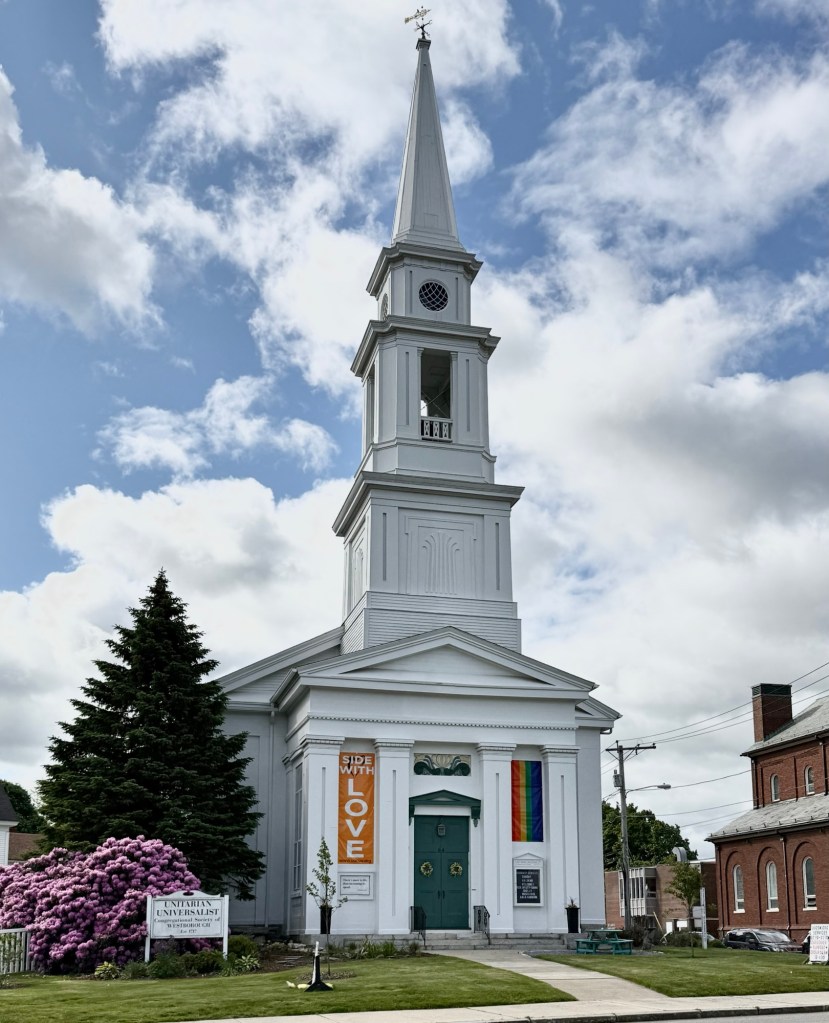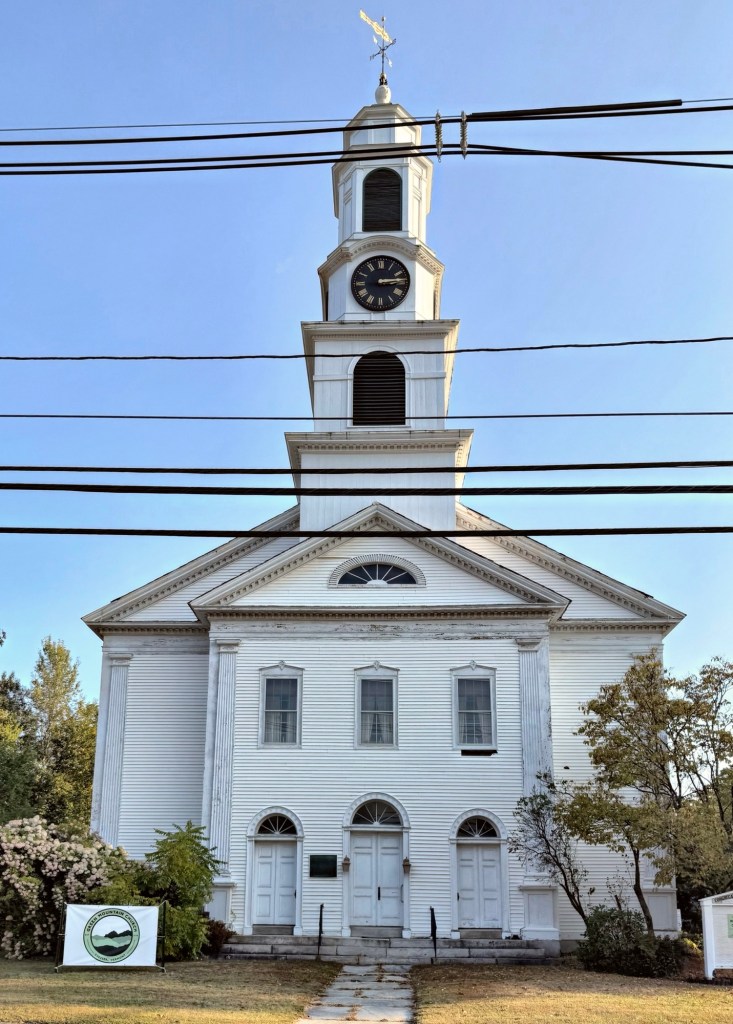
Congregational Church of Westborough // 1834

The Evangelical Congregational Church of Westborough, Massachusetts, has its roots in the first church in Westborough, established on Powder Hill in 1724 under Reverend Ebenezer Parkman. The Religious Freedom Act of 1811 and the official separation of church and state, encouraged a diversity of religious views in Westborough and a branching out from the First Church. As a result the church here split in 1834, with some members forming the Evangelical Society, and those who remained, became the First Congregational Unitarian Society. The newly formed Evangelical Congregation built this church at the corner of West Main and Church streets in 1834 and the building is a typical 1830s Greek Revival style religious building in the state. In 1869, the church was remodeled, where the first floor was jacked up to provide basement meeting rooms.

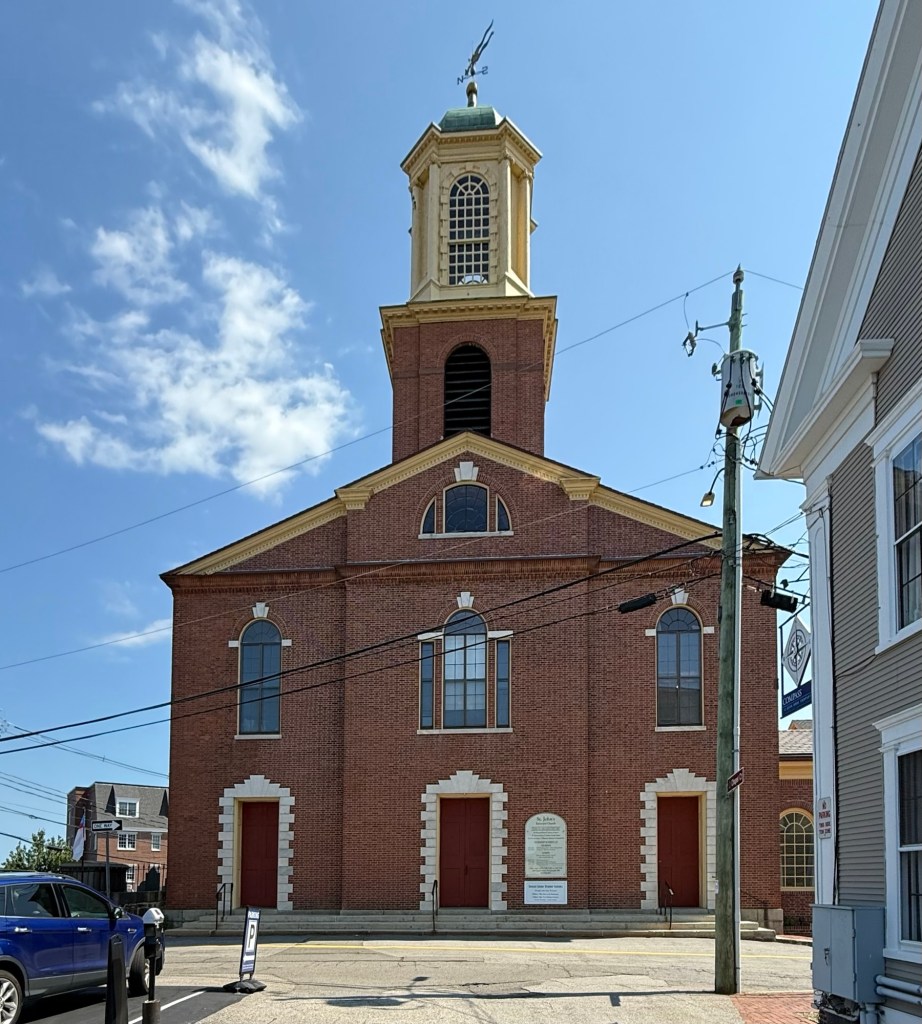
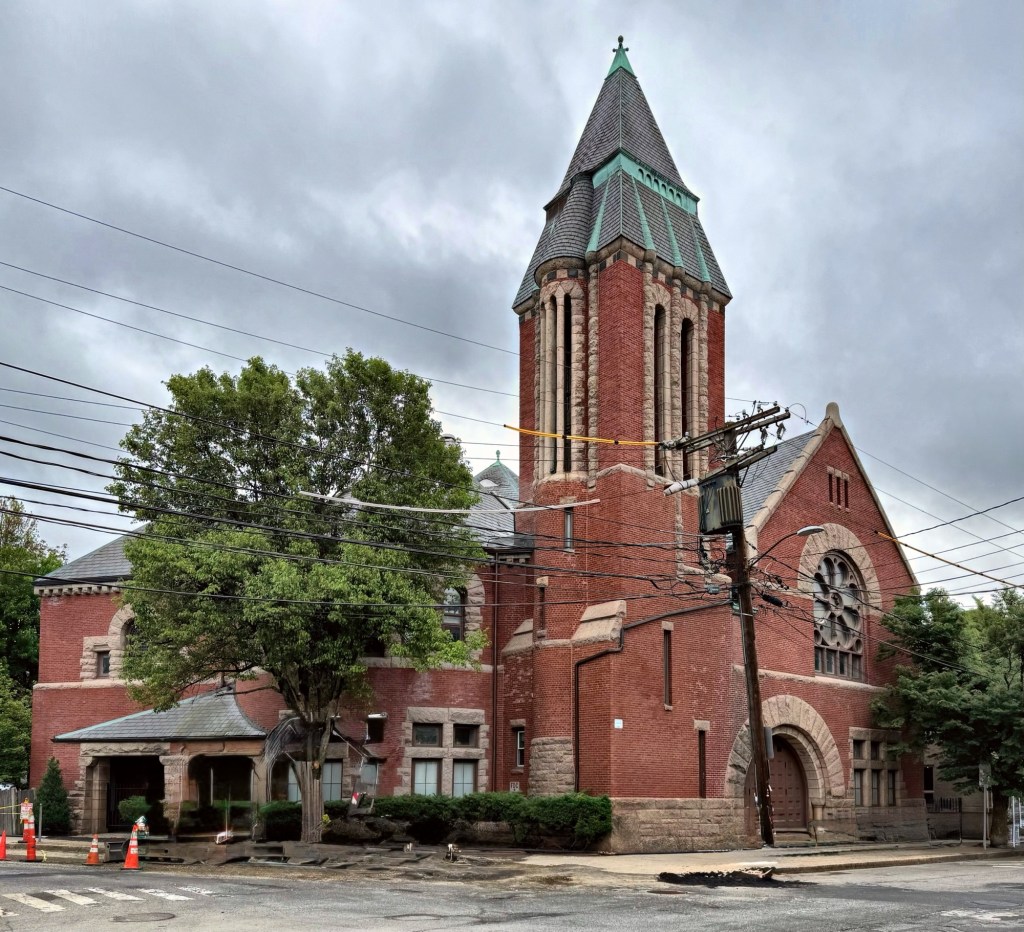
Prospect Hill Congregational Church // 1887

Located at the corner of Bow and Walnut streets in Somerville’s Union Square commercial center, the former Prospect Hill Congregational Church is one of the finest examples of the Richardsonian Romanesque style in the city. The congregation here was established in 1874 and originally met in private residences before erecting its first building on Warren Street in 1876. After two decades, the membership and prosperity of the congregation grew, allowing it to purchase a more prominent lot nearby and the ability to hire an architect for a new, substantial building. Architect Henry Squarebridge McKay furnished plans for the masonry building in 1887, clearly taking inspiration from the late Henry Hobson Richardson, who died the year prior. The church is constructed of brick with stone trimmings, features irregular massing with tall belfry tower, and a large arched entrance. After WWII, the congregation dwindled, and the building was later sold off. In the 1980s, the church was converted to residential use but without altering the exterior. 

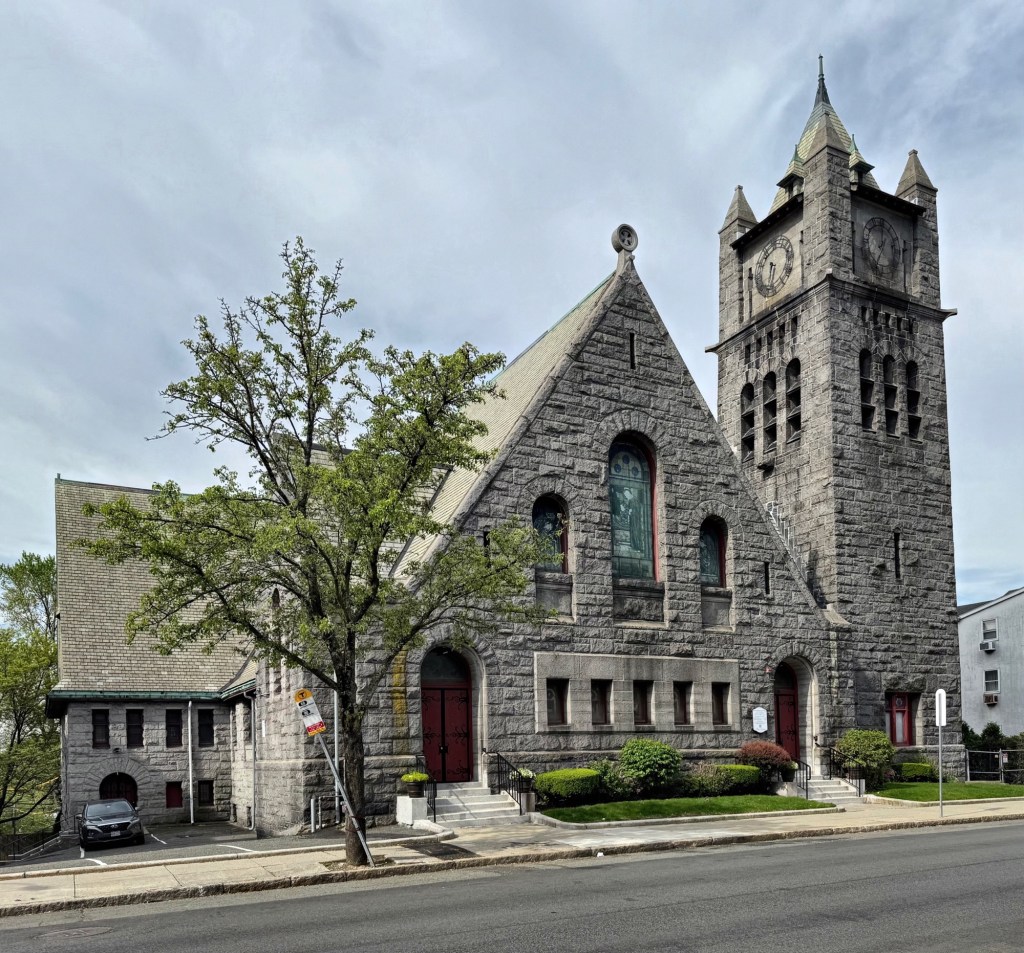
First Unitarian Church of Somerville // 1895

Located on Highland Avenue in the Central Hill section of Somerville, Massachusetts, the First Unitarian Church of Somerville is a landmark example of a church in the Romanesque Revival style. The church was built in 1895 from plans by the esteemed architectural firm of Hartwell & Richardson, and was the fourth and final building of the congregation, which was originally established in 1844. The congregation’s first church was a Gothic Revival style building designed by Richard Bond, but was destroyed by fire in 1852. A year later, the second edifice was designed and built by architect Thomas W. Silloway, which also burned in 1867. The church was replaced again by a Romanesque style structure in 1869. In the 1890s, when the City of Somerville purchased the building as part of the site for the new Somerville High School, a lot down Highland Avenue was secured and planning began for this building. The church is built of granite block with a steeply pitched gable roof, and a square tower at its right front corner. The prominent gable contains two arched entrances with a bank of five rectangular stained-glass windows below three tall round-arch stained glass windows. The congregation was dissolved in 1975 and a year later, the building was purchased by the Mission Church of Our Lord Jesus Christ, an Apostolic Pentacostalist church, who continue to use the building today.

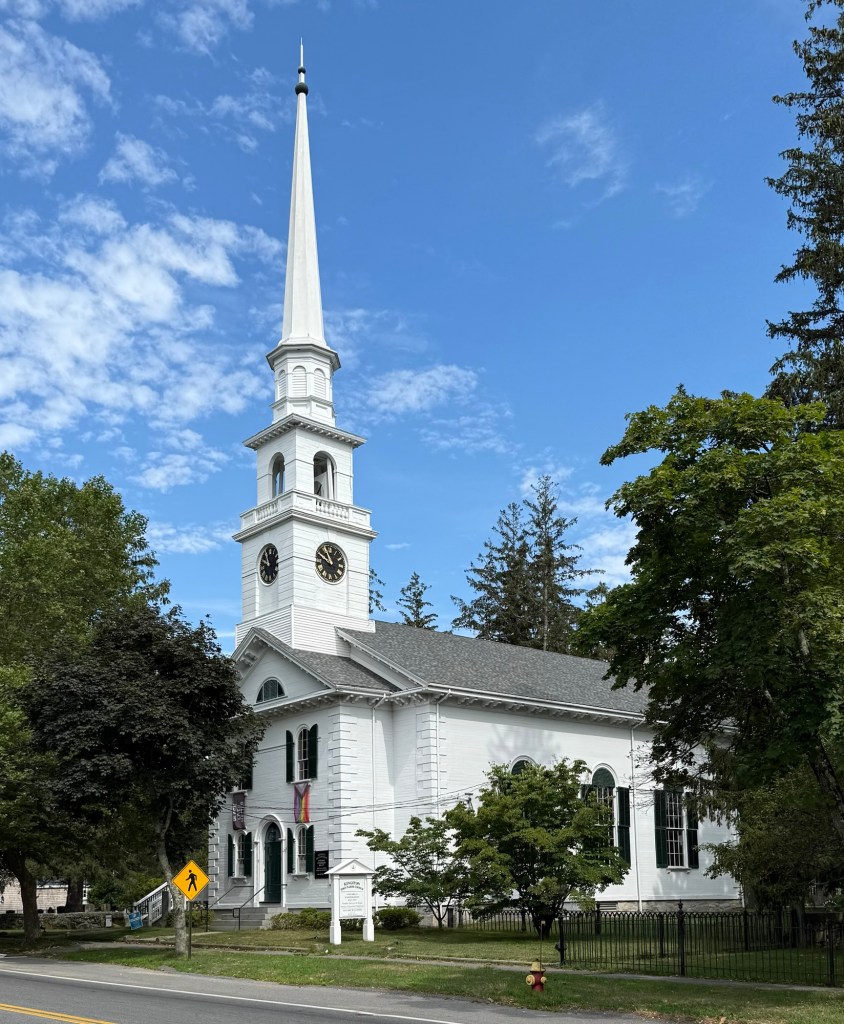
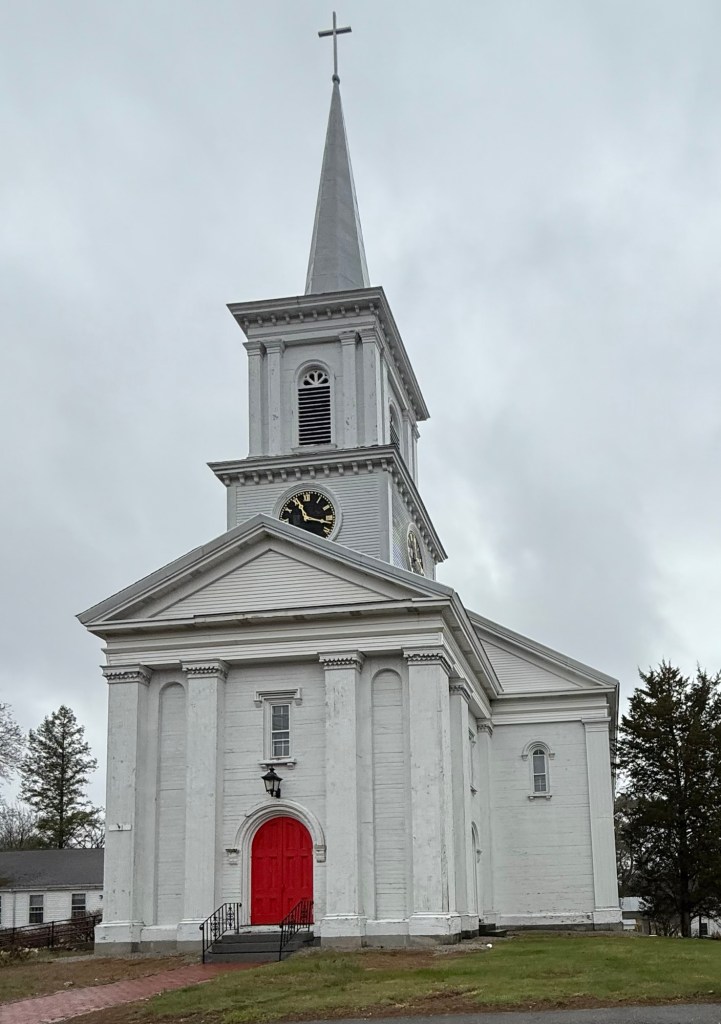
First Congregational Church of Abington // 1849

Abington, Massachusetts was first settled by Europeans in 1668 and was officially incorporated in 1712. Its namesake was is said to have been set by Governor Joseph Dudley as a tribute to Anne Bertie Venables, Countess of Abingdon, wife of the second Earl of Abingdon, who helped Dudley secure the governorship of the Colony of Massachusetts from Queen Anne. Governor Dudley noted in its decree that, “the Town be named Abingdon”. A marginal note on the document gave the spelling as “Abington” with a “t”, which has served as the spelling ever-since. At the center of town, this handsome church is the fourth edifice of the Congregational Church Society in Abington, Massachusetts, and replaced the third church, which was occupied for just thirty years until 1849, when this Greek Revival structure was built. Located a stone’s throw from its former home, this church showcases the increase in membership and relative wealth of the congregation by the middle of the 19th century. The structure with its flushboard siding and bold Doric pilasters, features an arched center entrance and multi-stage tower containing a clock and enclosed belfry.

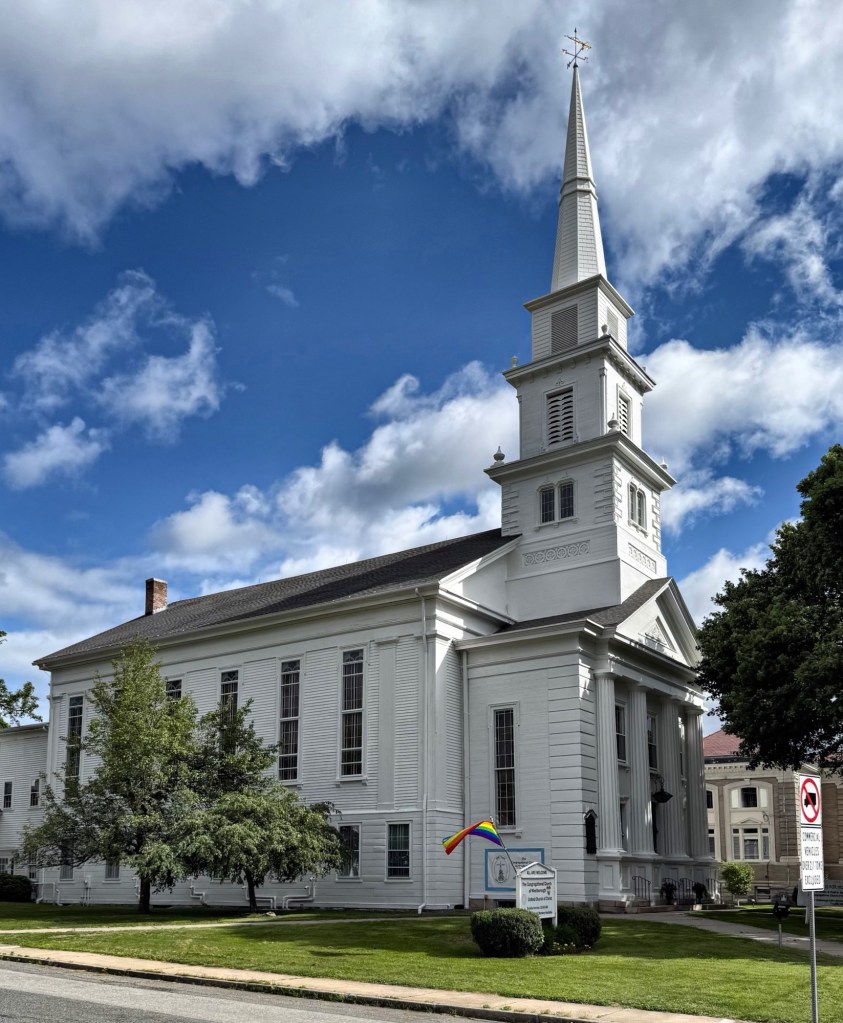
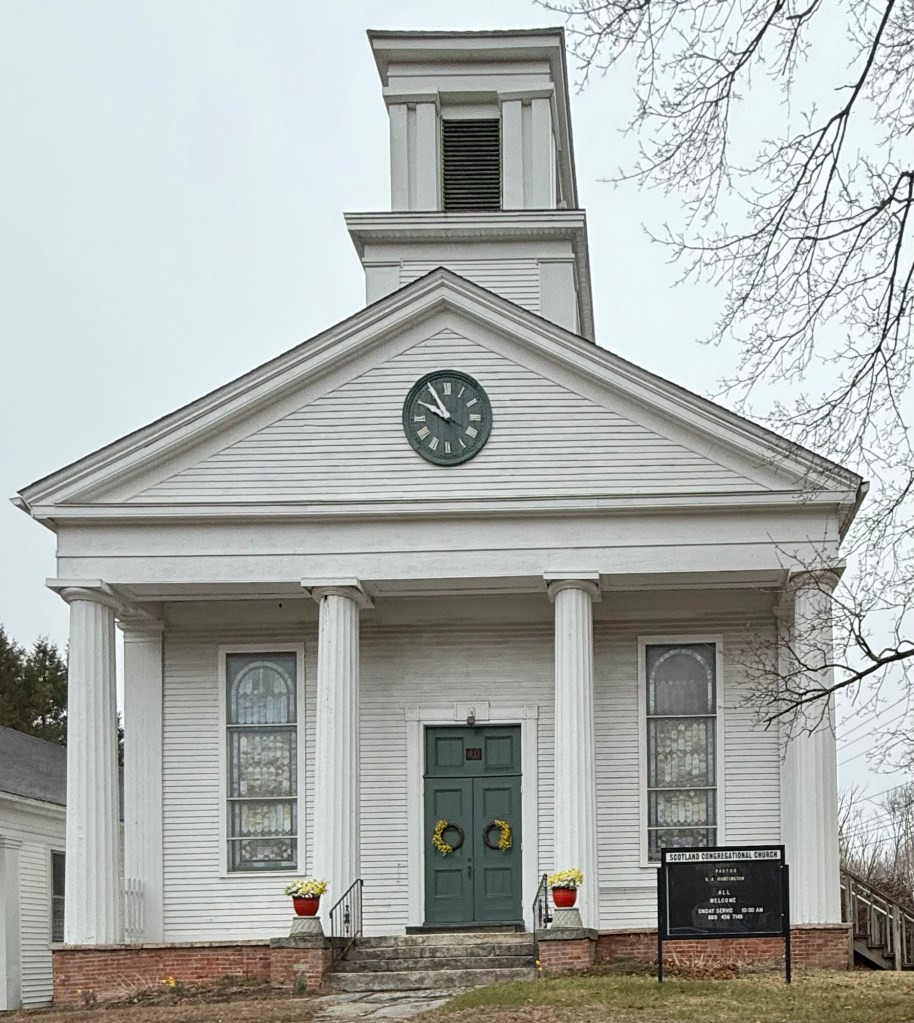
Scotland Congregational Church // 1842

The main visual anchor of the charming town green of Scotland, Connecticut, is this building, the Scotland Congregational Church. Built in 1842 as the congregation’s third building, this Greek Revival style edifice features stately proportions, temple-front with four large Doric columns supporting the portico, and a two-stage belfry. The chapel (some say it was converted from the original town hall) was acquired by the congregation in 1867, and has remained in its new location ever since. Later alterations include the stained glass windows and clock in the pediment, which dates to the early 20th century.

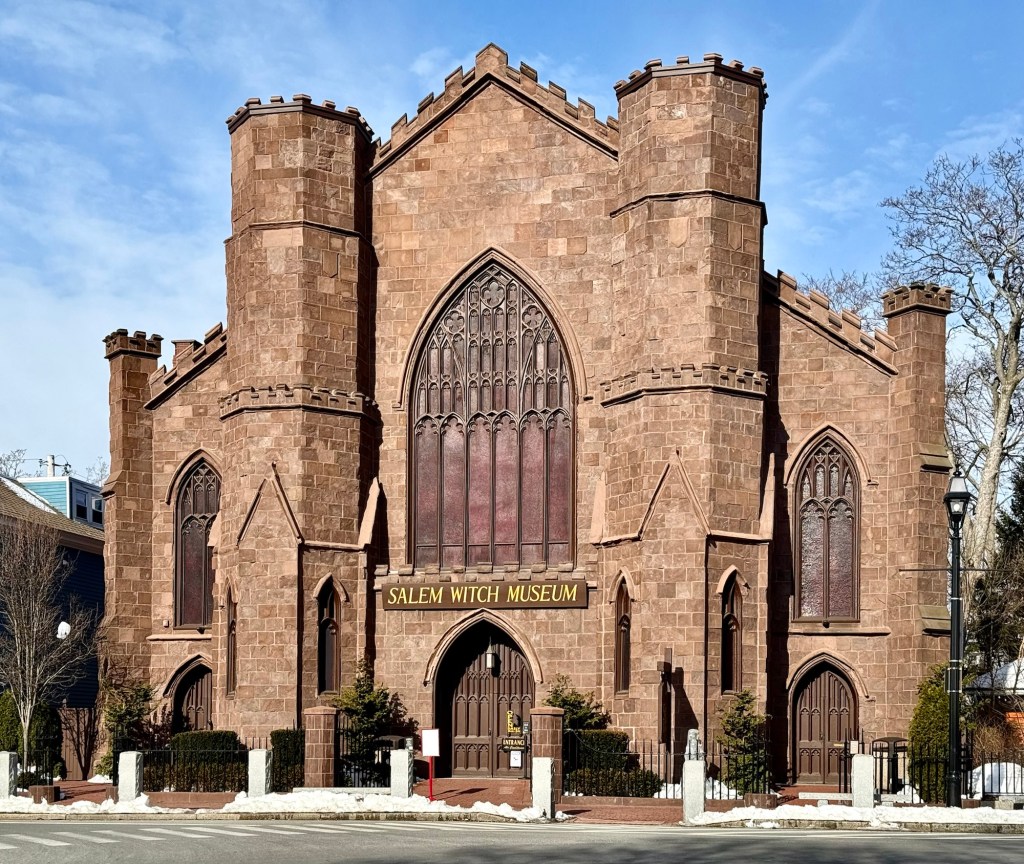
East Church of Salem – Salem Witch Museum // 1844

One of the most recognizable buildings in Salem is the former East Church, now occupied by the Salem Witch Museum. The East Church was constructed between 1844 and 1846 for the oldest branch of the First Church of Salem, which originally organized in 1718. The stunning Gothic Revival church has been credited to architect Minard Lafever (1798-1854), a prominent New York architect known for his Gothic, Greek and other Exotic Revival style buildings. Constructed of brownstone, a material Lafever utilized for his New York City churches built at the same time, the East Church exhibited pointed arch stained glass windows, crenellation resembling battlements, and once featured two, four-stage octagonal towers, which were cut down in the 1920s to their current height. The church suffered from a massive fire in the early 20th century and the church eventually moved out in the 1950s. The building was occupied by the Salem Auto Museum until another fire in 1969. In 1972, the Salem Witch Museum moved in and completely updated the interior.

Assumption Roman Catholic Church // 1922

As Chicopee developed into one of the major industrial cities in Western Massachusetts, immigrant groups moved there, finding work at some of the major manufacturing companies. Irish and Polish churches were built and French and French Canadian residents too built their own church, where they could gather and worship in their native language. A wood-frame church was first built in the 1870s and used until it was destroyed by fire in 1912. It took a decade for the congregation to gather enough funds to purchase a new lot and build a new church, but patience was a virtue as their church is a stunner! The cornerstone for the church was laid in 1922 and the building was designed by local architect, George P. Dion, and constructed at the cost of $200,000. The building was dedicated in 1925 and is one of the finest, and most unique churches in the state. Italian Renaissance Revival in style, the church stands out for its 85-foot-tall campanile and cast-stone high-relief in the pediment at the facade. It is believed that within the relief, that depicts the figure of Mary surrounded by Cherubs, depicting the “Assumption of the Virgin,” George P. Dion used the likeness of his granddaughter as a face of one of the cherubs. The congregation moved out of the building but has been recently mortgaged to a new church, Iglesia Cristiana Casa De Paz y Restauración, showcasing the ever-changing demographics that keep our cities vibrant and stewards that do right by our collective history and buildings.

Basilica of St. Stanislaus // 1908

The Basilica of St. Stanislaus is a landmark church building in Chicopee, Massachusetts, with strong ties to the city’s industrial and immigrant past as well as a landmark of the city’s rebirth and growth. The congregation was founded and financed by Polish immigrants who had arrived in Chicopee, beginning in the 1880’s. The young Poles were determined to establish and finance their own church in which they could worship in their own native language and espouse their Polish customs and traditions with a sense of community. The church was founded at a time where Polish immigrants were settling in Chicopee, finding work at local factories. The Polish population of Chicopee surged in the late 19th into the early 20th centuries from just 200 residents in 1885 to over 9,000 in 1914. The first St. Stanislaus Church was a small frame structure built on this site in 1891. The present church was built in 1908 from the designs of architects Robert J. Reiley and Gustave E. Steinback and is Byzantine Revival in style. Constructed of brownstone with cathedral-like qualities, the facade is dominated by a pair of monumental masonry towers. Its spires are composed of copper drums which are surmounted by graceful belvederes and are pierced by arched openings. In 1991, Pope John Paul II raised the status of the church to a “minor basilica“, a classification that remains to today, one of just a handful in New England.

Church of the Holy Name of Jesus, Chicopee // 1857

With crop failure a common occurrence in 1830s Ireland, immigration from Irish to New England surged with workers and families looking for a better life. Labor opportunities were abundant in the newly established mill town of Chicopee, with the Irish flocking here to dig canals, build dams and mills and later work in those same buildings. Their wives and daughters would work as cooks and maids, but later as operatives in those same mills. As many Irish were Catholic, it became apparent that a Catholic congregation should be established, St. Matthew’s was first organized in Chicopee in 1838. An earlier wood-frame church was built and used for a number of years until a large site on South Street was purchased by the Diocese for a new campus. Irish-born ecclesiastical architect Patrick Keely designed the church building which was constructed between 1857-1859 in the Gothic Revival style. The church was dedicated the “Holy Name of Jesus” church and exhibited sandstone-topped buttresses, rows of pointed dormers running down the clerestory on the sides, and a prominent central steeple. In 1910, the present copper spire replaced the original steeple which was damaged and burned in a lightning strike. The complex grew throughout the 19th and 20th centuries, with a rectory, schools, convent and monastery built on the site. Sadly, due to dwindling membership and fiscal considerations, many of these buildings were demolished in the past decades. The church appears now to be closed and is still owned by the Archdiocese of Springfield. I hope something can be done to preserve this landmark structure and the remaining buildings on the site.

North Cornwall Congregational Church // 1826

During the nineteenth century several small rural settlements dotted the landscape in Cornwall, Connecticut. In 1782, a group of “strict Congregationalists” seceded from the established Congregational church in town and constructed a “second” church in Cornwall Center. Following this, the town was divided into north and south parishes, with First Church built on the town center and the Second Church, this building, constructed in North Cornwall village in 1826. The North Congregational church is among the town’s finest Federal style buildings in the region and features three entrances with fanlight transoms and the bays of the facade are broken up by two-story fluted pilasters.